User login
SVS Vascular Quality Initiative® Rapidly Expanding
The Society for Vascular Surgery® (SVS) launched the Vascular Quality Initiative® (VQI) in February 2011. Today, VQI has more than 160 participating centers with more than 850 participating physicians. The high level of initial interest in VQI® continues with additional centers in the contracting phase and new regional quality groups under development. SVS encourages all vascular surgeons to join the initiative as well as cardiologists, radiologists, and other specialists who perform vascular procedures captured in VQI.
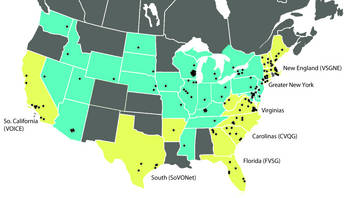
A key component of VQI is the regional quality groups that provide an opportunity to develop specific quality improvement projects based on regional data in order to change practice, improve outcomes, and reduce costs. The continued formation and expansion of regional quality groups creates a greater value for benchmarking clinical data among providers as well as the rapid accumulation of data that can influence quality improvement initiatives and quality research.
As of June 2012, the eight regional quality groups accredited by the SVS Patient Safety Organization (PSO) were: Carolinas Vascular Quality Group, Florida Vascular Study Group, Rocky Mountain Vascular Study Group, Southern California Vascular Outcomes Improvement Collaborative, Southern Vascular Outcomes Network, Vascular Study Group of Greater New York, Vascular Study Group of New England, and Virginias Vascular Study Group. Each regional group has a representative on the SVS PSO Governing Council and Quality Committee.
Committees of the SVS PSO provide medical expertise, data analyses, and oversight of quality improvement activities. Currently, the Quality Committee reviews all data elements based on requests from members and comparison with other registries. This activity coincides with software development at the medical image and data management services company M2S that increases the functionality of the VQI cloud-based system thus providing a reporting engine that allows for customized quality reports with more risk-adjustments and detailed data analysis. This reporting functionality is set to be released into the database within the next few months. It is available for demonstration purposes.
Two major current projects of the SVS PSO are: implementation of EMR integration for data entry, and development of methods to incorporate cost data to understand the value as well as the quality of care. In addition, the SVS PSO has embarked on its first full audit by comparing registry data with physician billing data in order to assure complete data entry.
As of June 2012, the VQI had collected data on more than 50,000 procedures and accumulates more than 3,000 procedures each month. The VQI collects perioperative and one year follow-up data for patients undergoing carotid endarterectomy, carotid artery stenting, open and endovascular repair of abdominal aortic aneurysms, infra-inguinal and supra-inguinal bypass, peripheral vascular interventions, thoracic and complex endovascular aortic repair, and hemodialysis access. An amputation procedure module will be added in the near future.
For a list of participating centers, physicians, and regional quality group information, visit http://www.vascularqualityinitiative.org/participants.
The Society for Vascular Surgery® (SVS) launched the Vascular Quality Initiative® (VQI) in February 2011. Today, VQI has more than 160 participating centers with more than 850 participating physicians. The high level of initial interest in VQI® continues with additional centers in the contracting phase and new regional quality groups under development. SVS encourages all vascular surgeons to join the initiative as well as cardiologists, radiologists, and other specialists who perform vascular procedures captured in VQI.
A key component of VQI is the regional quality groups that provide an opportunity to develop specific quality improvement projects based on regional data in order to change practice, improve outcomes, and reduce costs. The continued formation and expansion of regional quality groups creates a greater value for benchmarking clinical data among providers as well as the rapid accumulation of data that can influence quality improvement initiatives and quality research.
As of June 2012, the eight regional quality groups accredited by the SVS Patient Safety Organization (PSO) were: Carolinas Vascular Quality Group, Florida Vascular Study Group, Rocky Mountain Vascular Study Group, Southern California Vascular Outcomes Improvement Collaborative, Southern Vascular Outcomes Network, Vascular Study Group of Greater New York, Vascular Study Group of New England, and Virginias Vascular Study Group. Each regional group has a representative on the SVS PSO Governing Council and Quality Committee.
Committees of the SVS PSO provide medical expertise, data analyses, and oversight of quality improvement activities. Currently, the Quality Committee reviews all data elements based on requests from members and comparison with other registries. This activity coincides with software development at the medical image and data management services company M2S that increases the functionality of the VQI cloud-based system thus providing a reporting engine that allows for customized quality reports with more risk-adjustments and detailed data analysis. This reporting functionality is set to be released into the database within the next few months. It is available for demonstration purposes.
Two major current projects of the SVS PSO are: implementation of EMR integration for data entry, and development of methods to incorporate cost data to understand the value as well as the quality of care. In addition, the SVS PSO has embarked on its first full audit by comparing registry data with physician billing data in order to assure complete data entry.
As of June 2012, the VQI had collected data on more than 50,000 procedures and accumulates more than 3,000 procedures each month. The VQI collects perioperative and one year follow-up data for patients undergoing carotid endarterectomy, carotid artery stenting, open and endovascular repair of abdominal aortic aneurysms, infra-inguinal and supra-inguinal bypass, peripheral vascular interventions, thoracic and complex endovascular aortic repair, and hemodialysis access. An amputation procedure module will be added in the near future.
For a list of participating centers, physicians, and regional quality group information, visit http://www.vascularqualityinitiative.org/participants.
The Society for Vascular Surgery® (SVS) launched the Vascular Quality Initiative® (VQI) in February 2011. Today, VQI has more than 160 participating centers with more than 850 participating physicians. The high level of initial interest in VQI® continues with additional centers in the contracting phase and new regional quality groups under development. SVS encourages all vascular surgeons to join the initiative as well as cardiologists, radiologists, and other specialists who perform vascular procedures captured in VQI.
A key component of VQI is the regional quality groups that provide an opportunity to develop specific quality improvement projects based on regional data in order to change practice, improve outcomes, and reduce costs. The continued formation and expansion of regional quality groups creates a greater value for benchmarking clinical data among providers as well as the rapid accumulation of data that can influence quality improvement initiatives and quality research.
As of June 2012, the eight regional quality groups accredited by the SVS Patient Safety Organization (PSO) were: Carolinas Vascular Quality Group, Florida Vascular Study Group, Rocky Mountain Vascular Study Group, Southern California Vascular Outcomes Improvement Collaborative, Southern Vascular Outcomes Network, Vascular Study Group of Greater New York, Vascular Study Group of New England, and Virginias Vascular Study Group. Each regional group has a representative on the SVS PSO Governing Council and Quality Committee.
Committees of the SVS PSO provide medical expertise, data analyses, and oversight of quality improvement activities. Currently, the Quality Committee reviews all data elements based on requests from members and comparison with other registries. This activity coincides with software development at the medical image and data management services company M2S that increases the functionality of the VQI cloud-based system thus providing a reporting engine that allows for customized quality reports with more risk-adjustments and detailed data analysis. This reporting functionality is set to be released into the database within the next few months. It is available for demonstration purposes.
Two major current projects of the SVS PSO are: implementation of EMR integration for data entry, and development of methods to incorporate cost data to understand the value as well as the quality of care. In addition, the SVS PSO has embarked on its first full audit by comparing registry data with physician billing data in order to assure complete data entry.
As of June 2012, the VQI had collected data on more than 50,000 procedures and accumulates more than 3,000 procedures each month. The VQI collects perioperative and one year follow-up data for patients undergoing carotid endarterectomy, carotid artery stenting, open and endovascular repair of abdominal aortic aneurysms, infra-inguinal and supra-inguinal bypass, peripheral vascular interventions, thoracic and complex endovascular aortic repair, and hemodialysis access. An amputation procedure module will be added in the near future.
For a list of participating centers, physicians, and regional quality group information, visit http://www.vascularqualityinitiative.org/participants.
New Website for SVS Vascular Quality Initiative®
The new Society for Vascular Surgery® Vascular Quality Initiative® website www.vascularqualityinitiative.org includes:
• benefits of participation, regional quality groups, the SVS Patient Safety Organization, and M2S’s cloud-based system
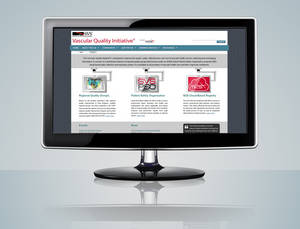
• current regional quality groups, how to join or form a regional group
• current participating centers and physicians
• resources including whitepapers, newsletters, regional group meeting documents, and procedure forms
• online tools such as the cardiac risk predictor which aids with calculating the likelihood of post-operative myocardial infarction, congestive heart failure, or arrhythmia requiring treatment
• data entry workflow best practices
• FAQs on the contracting process for joining the VQI
• recent news and upcoming events
The Vascular Quality Initiative® is designed to improve the quality, safety, effectiveness, and cost of vascular health care by collecting and exchanging information. It consists of a distributed network of regional quality groups that function under the SVS Patient Safety Organization using the M2S Cloud-based data collection and reporting system. It is available to all providers of vascular health care and their respective institutions.
The new Society for Vascular Surgery® Vascular Quality Initiative® website www.vascularqualityinitiative.org includes:
• benefits of participation, regional quality groups, the SVS Patient Safety Organization, and M2S’s cloud-based system
• current regional quality groups, how to join or form a regional group
• current participating centers and physicians
• resources including whitepapers, newsletters, regional group meeting documents, and procedure forms
• online tools such as the cardiac risk predictor which aids with calculating the likelihood of post-operative myocardial infarction, congestive heart failure, or arrhythmia requiring treatment
• data entry workflow best practices
• FAQs on the contracting process for joining the VQI
• recent news and upcoming events
The Vascular Quality Initiative® is designed to improve the quality, safety, effectiveness, and cost of vascular health care by collecting and exchanging information. It consists of a distributed network of regional quality groups that function under the SVS Patient Safety Organization using the M2S Cloud-based data collection and reporting system. It is available to all providers of vascular health care and their respective institutions.
The new Society for Vascular Surgery® Vascular Quality Initiative® website www.vascularqualityinitiative.org includes:
• benefits of participation, regional quality groups, the SVS Patient Safety Organization, and M2S’s cloud-based system
• current regional quality groups, how to join or form a regional group
• current participating centers and physicians
• resources including whitepapers, newsletters, regional group meeting documents, and procedure forms
• online tools such as the cardiac risk predictor which aids with calculating the likelihood of post-operative myocardial infarction, congestive heart failure, or arrhythmia requiring treatment
• data entry workflow best practices
• FAQs on the contracting process for joining the VQI
• recent news and upcoming events
The Vascular Quality Initiative® is designed to improve the quality, safety, effectiveness, and cost of vascular health care by collecting and exchanging information. It consists of a distributed network of regional quality groups that function under the SVS Patient Safety Organization using the M2S Cloud-based data collection and reporting system. It is available to all providers of vascular health care and their respective institutions.
Match Day is All About March Madness
There was a balloon drop at the 2012 Brown University Alpert Medical School Match Day ceremony.
At the University of California Los Angeles David Geffen School of Medicine the Match Day 2012 ceremony had a dancing flash mob. The school’s associate dean and the student affairs director were "front-and-center."
At the University of Maryland School of Medicine Match Day ceremony, tradition dictates that graduating medical students donate an envelope full of cash upon receiving their much-anticipated National Residents Matching Program® (NRMP) letter. The last student to receive a NRMP letter becomes the recipient of the cash-filled envelopes. This is the slush fund for the after-Match party.

Thanks to YouTube, all of these Match Day moments are frozen in time.
Across the U.S., 16,000 medical school students learned their medical education fate on March 16, 2012 a.k.a. Match Day 2012. In unison, the students read their NRMP letters which matched them with a teaching hospital of their choice. Match Day 2012 was the largest Match Day in history. For more than 56 percent of students, the NRMP computer matched them to the hospital of their first choice.
"Every doctor remembers their Match Day," said Erica Mitchell, MD. "It’s exciting and nerve-racking all at the same time. The hospital destination indicated in the Match Day letter impacts your future as a doctor."
The most competitive 2012 specialty fields were dermatology, orthopedic surgery, otolaryngology, plastic surgery, radiation oncology, thoracic surgery, and vascular surgery. Thirty-five programs provided 41 vascular surgery positions. On March 16, all 41 positions were filled.
"It’s exciting when new, young surgeons decide to join our ranks," said Dr. Mitchell. "Vascular surgery is a demanding and ever-changing field. These new surgeons represent the future of vascular surgery."
There was a balloon drop at the 2012 Brown University Alpert Medical School Match Day ceremony.
At the University of California Los Angeles David Geffen School of Medicine the Match Day 2012 ceremony had a dancing flash mob. The school’s associate dean and the student affairs director were "front-and-center."
At the University of Maryland School of Medicine Match Day ceremony, tradition dictates that graduating medical students donate an envelope full of cash upon receiving their much-anticipated National Residents Matching Program® (NRMP) letter. The last student to receive a NRMP letter becomes the recipient of the cash-filled envelopes. This is the slush fund for the after-Match party.
Thanks to YouTube, all of these Match Day moments are frozen in time.
Across the U.S., 16,000 medical school students learned their medical education fate on March 16, 2012 a.k.a. Match Day 2012. In unison, the students read their NRMP letters which matched them with a teaching hospital of their choice. Match Day 2012 was the largest Match Day in history. For more than 56 percent of students, the NRMP computer matched them to the hospital of their first choice.
"Every doctor remembers their Match Day," said Erica Mitchell, MD. "It’s exciting and nerve-racking all at the same time. The hospital destination indicated in the Match Day letter impacts your future as a doctor."
The most competitive 2012 specialty fields were dermatology, orthopedic surgery, otolaryngology, plastic surgery, radiation oncology, thoracic surgery, and vascular surgery. Thirty-five programs provided 41 vascular surgery positions. On March 16, all 41 positions were filled.
"It’s exciting when new, young surgeons decide to join our ranks," said Dr. Mitchell. "Vascular surgery is a demanding and ever-changing field. These new surgeons represent the future of vascular surgery."
There was a balloon drop at the 2012 Brown University Alpert Medical School Match Day ceremony.
At the University of California Los Angeles David Geffen School of Medicine the Match Day 2012 ceremony had a dancing flash mob. The school’s associate dean and the student affairs director were "front-and-center."
At the University of Maryland School of Medicine Match Day ceremony, tradition dictates that graduating medical students donate an envelope full of cash upon receiving their much-anticipated National Residents Matching Program® (NRMP) letter. The last student to receive a NRMP letter becomes the recipient of the cash-filled envelopes. This is the slush fund for the after-Match party.
Thanks to YouTube, all of these Match Day moments are frozen in time.
Across the U.S., 16,000 medical school students learned their medical education fate on March 16, 2012 a.k.a. Match Day 2012. In unison, the students read their NRMP letters which matched them with a teaching hospital of their choice. Match Day 2012 was the largest Match Day in history. For more than 56 percent of students, the NRMP computer matched them to the hospital of their first choice.
"Every doctor remembers their Match Day," said Erica Mitchell, MD. "It’s exciting and nerve-racking all at the same time. The hospital destination indicated in the Match Day letter impacts your future as a doctor."
The most competitive 2012 specialty fields were dermatology, orthopedic surgery, otolaryngology, plastic surgery, radiation oncology, thoracic surgery, and vascular surgery. Thirty-five programs provided 41 vascular surgery positions. On March 16, all 41 positions were filled.
"It’s exciting when new, young surgeons decide to join our ranks," said Dr. Mitchell. "Vascular surgery is a demanding and ever-changing field. These new surgeons represent the future of vascular surgery."
Register Now for the Third Annual International Women in Surgery Symposium
The progress of women surgeons has been a long and often difficult journey. While there are many pioneers to thank and accomplishments to celebrate, breaking the glass ceiling in the surgical field is still not easy for women. To help promote both personal and professional growth among current and future women surgeons, this year, the Society for Vascular Surgery is participating in the Third Annual International Women in Surgery (WIS) Symposium, May 31-June 2 at the Hyatt Regency on the Inner Harbor, Baltimore, MD.
The WIS Symposium is designed to promote and foster mentorship and establish a peer network for current and future women in surgery. It will provide a forum to discuss contemporary issues and opportunities for women who have chosen or may choose a career in surgery. Participants will learn from and interact with women leaders in surgery. Topics range from balancing children and marriage in the face of a demanding profession to determining the subspecialty women surgeons most commonly pursue.
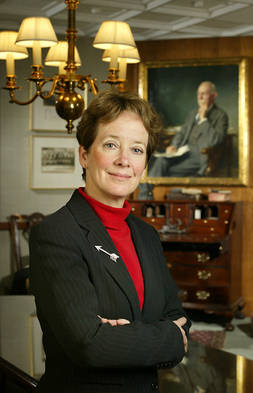
Julie Ann Freischlag, MD, SVS vice president is a co-chair of the symposium. Her presentation, "A Decade of Experience from a Women Chair," will deal with her experience at The Johns Hopkins Hospital in Baltimore.
"There’s been a lot of cultural change since I came to Hopkins," Dr. Freischlag said. "This Symposium is valuable because although attendees might not see many women in leadership positions at their place–through attendance they can see how many women there are in leadership positions at other places. There is so much energy and enthusiasm here, this is a great event."
The SVS Women’s Leadership Committee developed a session to encourage more women to pursue careers in surgery. The SVS session will be held from 8:00 a.m. – 10:15 am on Saturday, June 2. Topics include:
-- Communication tools to make mentors more effective
-- How mentees can have more successful communication with mentors
-- Boundaries that decrease communication between diverse groups and cultures
-- Communication among generations
-- Advantages women have in communication
"The WIS Symposium is a great opportunity for women to network and discuss contemporary issues for women in the field of surgery," said Eva Rzucidlo, chair of the SVS Women’s Leadership Committee. "This is an exciting time in surgery for women. SVS has 175 women members, with 51 serving on committees and councils, three are committee and council chairs, and two serve on the SVS Board of Directors. Women now account for 40 percent of all vascular surgery integrated residents. The WIS will help us to network and learn skills to become better mentors for these up and coming women leaders in vascular surgery. "
To learn more about the WIS Symposium and for complete accreditation and registration information, go to www.cme.hsc.usf.edu/wis/
The progress of women surgeons has been a long and often difficult journey. While there are many pioneers to thank and accomplishments to celebrate, breaking the glass ceiling in the surgical field is still not easy for women. To help promote both personal and professional growth among current and future women surgeons, this year, the Society for Vascular Surgery is participating in the Third Annual International Women in Surgery (WIS) Symposium, May 31-June 2 at the Hyatt Regency on the Inner Harbor, Baltimore, MD.
The WIS Symposium is designed to promote and foster mentorship and establish a peer network for current and future women in surgery. It will provide a forum to discuss contemporary issues and opportunities for women who have chosen or may choose a career in surgery. Participants will learn from and interact with women leaders in surgery. Topics range from balancing children and marriage in the face of a demanding profession to determining the subspecialty women surgeons most commonly pursue.
Julie Ann Freischlag, MD, SVS vice president is a co-chair of the symposium. Her presentation, "A Decade of Experience from a Women Chair," will deal with her experience at The Johns Hopkins Hospital in Baltimore.
"There’s been a lot of cultural change since I came to Hopkins," Dr. Freischlag said. "This Symposium is valuable because although attendees might not see many women in leadership positions at their place–through attendance they can see how many women there are in leadership positions at other places. There is so much energy and enthusiasm here, this is a great event."
The SVS Women’s Leadership Committee developed a session to encourage more women to pursue careers in surgery. The SVS session will be held from 8:00 a.m. – 10:15 am on Saturday, June 2. Topics include:
-- Communication tools to make mentors more effective
-- How mentees can have more successful communication with mentors
-- Boundaries that decrease communication between diverse groups and cultures
-- Communication among generations
-- Advantages women have in communication
"The WIS Symposium is a great opportunity for women to network and discuss contemporary issues for women in the field of surgery," said Eva Rzucidlo, chair of the SVS Women’s Leadership Committee. "This is an exciting time in surgery for women. SVS has 175 women members, with 51 serving on committees and councils, three are committee and council chairs, and two serve on the SVS Board of Directors. Women now account for 40 percent of all vascular surgery integrated residents. The WIS will help us to network and learn skills to become better mentors for these up and coming women leaders in vascular surgery. "
To learn more about the WIS Symposium and for complete accreditation and registration information, go to www.cme.hsc.usf.edu/wis/
The progress of women surgeons has been a long and often difficult journey. While there are many pioneers to thank and accomplishments to celebrate, breaking the glass ceiling in the surgical field is still not easy for women. To help promote both personal and professional growth among current and future women surgeons, this year, the Society for Vascular Surgery is participating in the Third Annual International Women in Surgery (WIS) Symposium, May 31-June 2 at the Hyatt Regency on the Inner Harbor, Baltimore, MD.
The WIS Symposium is designed to promote and foster mentorship and establish a peer network for current and future women in surgery. It will provide a forum to discuss contemporary issues and opportunities for women who have chosen or may choose a career in surgery. Participants will learn from and interact with women leaders in surgery. Topics range from balancing children and marriage in the face of a demanding profession to determining the subspecialty women surgeons most commonly pursue.
Julie Ann Freischlag, MD, SVS vice president is a co-chair of the symposium. Her presentation, "A Decade of Experience from a Women Chair," will deal with her experience at The Johns Hopkins Hospital in Baltimore.
"There’s been a lot of cultural change since I came to Hopkins," Dr. Freischlag said. "This Symposium is valuable because although attendees might not see many women in leadership positions at their place–through attendance they can see how many women there are in leadership positions at other places. There is so much energy and enthusiasm here, this is a great event."
The SVS Women’s Leadership Committee developed a session to encourage more women to pursue careers in surgery. The SVS session will be held from 8:00 a.m. – 10:15 am on Saturday, June 2. Topics include:
-- Communication tools to make mentors more effective
-- How mentees can have more successful communication with mentors
-- Boundaries that decrease communication between diverse groups and cultures
-- Communication among generations
-- Advantages women have in communication
"The WIS Symposium is a great opportunity for women to network and discuss contemporary issues for women in the field of surgery," said Eva Rzucidlo, chair of the SVS Women’s Leadership Committee. "This is an exciting time in surgery for women. SVS has 175 women members, with 51 serving on committees and councils, three are committee and council chairs, and two serve on the SVS Board of Directors. Women now account for 40 percent of all vascular surgery integrated residents. The WIS will help us to network and learn skills to become better mentors for these up and coming women leaders in vascular surgery. "
To learn more about the WIS Symposium and for complete accreditation and registration information, go to www.cme.hsc.usf.edu/wis/
Historical Interviews with Vascular Surgery Leaders
The vascular surgery specialty has been blessed with outstanding innovators who are responsible for the advancements the field has experienced throughout the years. Several of those who led the way are featured on video-taped interviews on VascularWeb.org. Their stories detail how the specialty grew during their practices. Some of the historical interviews have been donated to the library by SVS members.
This series of interviews may be viewed on VascularWeb.org in the About Us / History section or downloaded to your computer. DVDs are available upon request. (See Instructions that are available on VascularWeb.org.)
Interviews currently available include the following, and additional interviews will be posted in the future:
? Ronald Baird, MD: Our Northern Cardiovascular Partner
? Wiley Barker, MD: A True Leader in Vascular Surgery
? William Blaisdell, MD: A True Pioneer in Vascular Surgery
? John Connolly, MD: American Ambassador in Vascular Surgery
? Denton Cooley, MD: Pioneer Cardiac and Vascular Surgeon
? Richard Dean, MD: Young Vascular Surgery Advocate
? Michael E. DeBakey, MD: Rudolph Matas, MD: How I Remember Him
? James DeWeese, MD
? Anthony Imparato MD: Insight into the Carotid Plaque Morphology
? Julius Jacobson, MD: Renaissance Man
? John L . Ochsner, MD: Giants in Vascular Surgery - Childhood Memories
? Norman Rich, MD: Military Surgeon at War and Peace
? Charles Rob, MD: Reflections Military Surgical Heritage Uniformed Services University
? Harris B. Shumacker, Jr., MD: Reflection, Military Surgical Heritage Uniformed Services Univer-sity
? Harry B. Schumacker, Jr., MD and Michael DeBakey, MD: SVS 50th Anniversary
? Frank Spencer, MD: Vascular Surgeon, the Voice of Reason
? Emerick Szilagyi, MD: Remembrance and Reflections
? Frank Veith, MD: The Origin of a Species and Future of a Specialty
? Leonel J. Villavicencio, MD: The Mexican Maestro
? James S.T. Yao, MD: International Star of Vascular Surgery
The History Workgroup on this project includes: James S.T. Yao, MD, Chair; William Baker, MD; Calvin Ernst, MD, Consultant; Mark Eskandari, MD; Roger Gregory, MD; Melina Kibbe, MD; Peter Lawrence, MD; Walter McCarthy, MD; and Norman Rich, MD.
Body text starts here....
Second and subsequent grafs
Doctor?s Name and Bio
Body text starts here....
Second and subsequent grafs
Doctor?s Name and Bio
Body text starts here....
Second and subsequent grafs
Doctor?s Name and Bio
The vascular surgery specialty has been blessed with outstanding innovators who are responsible for the advancements the field has experienced throughout the years. Several of those who led the way are featured on video-taped interviews on VascularWeb.org. Their stories detail how the specialty grew during their practices. Some of the historical interviews have been donated to the library by SVS members.
This series of interviews may be viewed on VascularWeb.org in the About Us / History section or downloaded to your computer. DVDs are available upon request. (See Instructions that are available on VascularWeb.org.)
Interviews currently available include the following, and additional interviews will be posted in the future:
? Ronald Baird, MD: Our Northern Cardiovascular Partner
? Wiley Barker, MD: A True Leader in Vascular Surgery
? William Blaisdell, MD: A True Pioneer in Vascular Surgery
? John Connolly, MD: American Ambassador in Vascular Surgery
? Denton Cooley, MD: Pioneer Cardiac and Vascular Surgeon
? Richard Dean, MD: Young Vascular Surgery Advocate
? Michael E. DeBakey, MD: Rudolph Matas, MD: How I Remember Him
? James DeWeese, MD
? Anthony Imparato MD: Insight into the Carotid Plaque Morphology
? Julius Jacobson, MD: Renaissance Man
? John L . Ochsner, MD: Giants in Vascular Surgery - Childhood Memories
? Norman Rich, MD: Military Surgeon at War and Peace
? Charles Rob, MD: Reflections Military Surgical Heritage Uniformed Services University
? Harris B. Shumacker, Jr., MD: Reflection, Military Surgical Heritage Uniformed Services Univer-sity
? Harry B. Schumacker, Jr., MD and Michael DeBakey, MD: SVS 50th Anniversary
? Frank Spencer, MD: Vascular Surgeon, the Voice of Reason
? Emerick Szilagyi, MD: Remembrance and Reflections
? Frank Veith, MD: The Origin of a Species and Future of a Specialty
? Leonel J. Villavicencio, MD: The Mexican Maestro
? James S.T. Yao, MD: International Star of Vascular Surgery
The History Workgroup on this project includes: James S.T. Yao, MD, Chair; William Baker, MD; Calvin Ernst, MD, Consultant; Mark Eskandari, MD; Roger Gregory, MD; Melina Kibbe, MD; Peter Lawrence, MD; Walter McCarthy, MD; and Norman Rich, MD.
The vascular surgery specialty has been blessed with outstanding innovators who are responsible for the advancements the field has experienced throughout the years. Several of those who led the way are featured on video-taped interviews on VascularWeb.org. Their stories detail how the specialty grew during their practices. Some of the historical interviews have been donated to the library by SVS members.
This series of interviews may be viewed on VascularWeb.org in the About Us / History section or downloaded to your computer. DVDs are available upon request. (See Instructions that are available on VascularWeb.org.)
Interviews currently available include the following, and additional interviews will be posted in the future:
? Ronald Baird, MD: Our Northern Cardiovascular Partner
? Wiley Barker, MD: A True Leader in Vascular Surgery
? William Blaisdell, MD: A True Pioneer in Vascular Surgery
? John Connolly, MD: American Ambassador in Vascular Surgery
? Denton Cooley, MD: Pioneer Cardiac and Vascular Surgeon
? Richard Dean, MD: Young Vascular Surgery Advocate
? Michael E. DeBakey, MD: Rudolph Matas, MD: How I Remember Him
? James DeWeese, MD
? Anthony Imparato MD: Insight into the Carotid Plaque Morphology
? Julius Jacobson, MD: Renaissance Man
? John L . Ochsner, MD: Giants in Vascular Surgery - Childhood Memories
? Norman Rich, MD: Military Surgeon at War and Peace
? Charles Rob, MD: Reflections Military Surgical Heritage Uniformed Services University
? Harris B. Shumacker, Jr., MD: Reflection, Military Surgical Heritage Uniformed Services Univer-sity
? Harry B. Schumacker, Jr., MD and Michael DeBakey, MD: SVS 50th Anniversary
? Frank Spencer, MD: Vascular Surgeon, the Voice of Reason
? Emerick Szilagyi, MD: Remembrance and Reflections
? Frank Veith, MD: The Origin of a Species and Future of a Specialty
? Leonel J. Villavicencio, MD: The Mexican Maestro
? James S.T. Yao, MD: International Star of Vascular Surgery
The History Workgroup on this project includes: James S.T. Yao, MD, Chair; William Baker, MD; Calvin Ernst, MD, Consultant; Mark Eskandari, MD; Roger Gregory, MD; Melina Kibbe, MD; Peter Lawrence, MD; Walter McCarthy, MD; and Norman Rich, MD.
Quality and Performance Measures Committee: How It is Working For SVS Members
The Quality and Performance Measures Committee oversees the quality measure portfolio for SVS. Members develop, test, and submit quality measures for national endorsement. It begins with measure concepts, builds on those concepts by using data from registries, tests the concepts, and then submits them to the National Quality Forum for endorsement, a process which can take up to a year. Also, measures are submitted to the Physician Quality Reporting System through the Centers for Medicare and Medicaid Services.
The committee tracks national trends in quality, represents SVS at quality-related organizations such as the Surgical Quality Alliance and the American Medical Association’s Physician Consortium for Performance Improvement, and works closely with federal agencies including CMS, AHRQ, the NIH and AQA on a variety of national quality initiatives.
There are three new nationally endorsed quality measures, with two additional measures pending endorsement. The new measures include:
• Statin Therapy at Discharge after Lower Extremity Bypass
• Postoperative Stroke or Death in Asymptomatic Patients Undergoing Carotid Endarterectomy
• Postoperative Stroke or Death in Asymptomatic Patients Undergoing Carotid Artery Stenting
• In-Hospital Mortality following Elective Open Repair of AAAs (pending)
• In-Hospital Mortality following Elective EVAR of AAAs (pending)
In response to the recently endorsed measures, Quality and Performance Measures Committee Chair Dr. Timothy Kresowik stated, "In the current era of public reporting and pay for performance, it is essential that SVS continue to develop and promote clinically valid performance measures, especially in the areas of outcomes and cost. If we don't stay out in front, we will be saddled with measures developed by those who do not fully understand the complexities of what we do, potentially resulting in not only a financial harm to us, but more importantly a decline in quality of care for patients with vascular disease."
Building a strong quality portfolio, along with maintaining that portfolio, is an often labor-intensive process, but vital to the future of SVS as a leader in the quality arena. Thanks to the talent of SVS members and those who serve on the Quality and Performance Measures Committee, SVS continues to be a leader in the area of health care quality.
The Quality and Performance Measures Committee oversees the quality measure portfolio for SVS. Members develop, test, and submit quality measures for national endorsement. It begins with measure concepts, builds on those concepts by using data from registries, tests the concepts, and then submits them to the National Quality Forum for endorsement, a process which can take up to a year. Also, measures are submitted to the Physician Quality Reporting System through the Centers for Medicare and Medicaid Services.
The committee tracks national trends in quality, represents SVS at quality-related organizations such as the Surgical Quality Alliance and the American Medical Association’s Physician Consortium for Performance Improvement, and works closely with federal agencies including CMS, AHRQ, the NIH and AQA on a variety of national quality initiatives.
There are three new nationally endorsed quality measures, with two additional measures pending endorsement. The new measures include:
• Statin Therapy at Discharge after Lower Extremity Bypass
• Postoperative Stroke or Death in Asymptomatic Patients Undergoing Carotid Endarterectomy
• Postoperative Stroke or Death in Asymptomatic Patients Undergoing Carotid Artery Stenting
• In-Hospital Mortality following Elective Open Repair of AAAs (pending)
• In-Hospital Mortality following Elective EVAR of AAAs (pending)
In response to the recently endorsed measures, Quality and Performance Measures Committee Chair Dr. Timothy Kresowik stated, "In the current era of public reporting and pay for performance, it is essential that SVS continue to develop and promote clinically valid performance measures, especially in the areas of outcomes and cost. If we don't stay out in front, we will be saddled with measures developed by those who do not fully understand the complexities of what we do, potentially resulting in not only a financial harm to us, but more importantly a decline in quality of care for patients with vascular disease."
Building a strong quality portfolio, along with maintaining that portfolio, is an often labor-intensive process, but vital to the future of SVS as a leader in the quality arena. Thanks to the talent of SVS members and those who serve on the Quality and Performance Measures Committee, SVS continues to be a leader in the area of health care quality.
The Quality and Performance Measures Committee oversees the quality measure portfolio for SVS. Members develop, test, and submit quality measures for national endorsement. It begins with measure concepts, builds on those concepts by using data from registries, tests the concepts, and then submits them to the National Quality Forum for endorsement, a process which can take up to a year. Also, measures are submitted to the Physician Quality Reporting System through the Centers for Medicare and Medicaid Services.
The committee tracks national trends in quality, represents SVS at quality-related organizations such as the Surgical Quality Alliance and the American Medical Association’s Physician Consortium for Performance Improvement, and works closely with federal agencies including CMS, AHRQ, the NIH and AQA on a variety of national quality initiatives.
There are three new nationally endorsed quality measures, with two additional measures pending endorsement. The new measures include:
• Statin Therapy at Discharge after Lower Extremity Bypass
• Postoperative Stroke or Death in Asymptomatic Patients Undergoing Carotid Endarterectomy
• Postoperative Stroke or Death in Asymptomatic Patients Undergoing Carotid Artery Stenting
• In-Hospital Mortality following Elective Open Repair of AAAs (pending)
• In-Hospital Mortality following Elective EVAR of AAAs (pending)
In response to the recently endorsed measures, Quality and Performance Measures Committee Chair Dr. Timothy Kresowik stated, "In the current era of public reporting and pay for performance, it is essential that SVS continue to develop and promote clinically valid performance measures, especially in the areas of outcomes and cost. If we don't stay out in front, we will be saddled with measures developed by those who do not fully understand the complexities of what we do, potentially resulting in not only a financial harm to us, but more importantly a decline in quality of care for patients with vascular disease."
Building a strong quality portfolio, along with maintaining that portfolio, is an often labor-intensive process, but vital to the future of SVS as a leader in the quality arena. Thanks to the talent of SVS members and those who serve on the Quality and Performance Measures Committee, SVS continues to be a leader in the area of health care quality.
IPAB Repeal Passes the U.S. House of Representatives
Background
The U.S. Medicare payment policy requires a broad and thorough analysis regarding how it affects providers and beneficiaries. The U.S. Congress has always played an essential role in shaping policies that meet the needs of their communities and constituents to ensure the health care system is equipped to care for diverse populations of this country. Unfortunately, the Independent Payment Advisory Board (IPAB), created by the Patient Protection and Affordable Care Act (PPACA), threatens the ability of Congress to ensure access to needed health care.
Consisting of 15 members appointed solely by the President, with fewer than half being health care providers and none permitted to be otherwise employed, IPAB will be required to recommend cuts based on unrealistic spending targets starting in 2014. IPAB recommendations are "fast-tracked" and automatically go into effect starting in Fiscal Year 2015 unless blocked or amended by Congress, which would require a majority in the House and a super-majority of 60 votes in the Senate. If IPAB fails to report recommendations, the power will rest in the hands of the Secretary of the U.S. Department of Health and Human Services.
Providers representing approximately 37 percent of all Medicare payments, including hospitals and hospice care, are exempt from IPAB cuts until 2020. Initial IPAB cuts will disproportionately fall on all other providers including vascular surgeons. Furthermore, without a permanent solution to the Sustainable Growth Rate (SGR) formula, physicians are essentially subject to "double jeopardy" with cuts from both the SGR and IPAB. Not only does the creation of IPAB severely limit congressional authority, it essentially eliminates the transparency of hearings, debate and meaningful opportunity for stakeholder input.
Action on IPAB Repeal
The Society for Vascular Surgery (SVS) is committed to improving the value and cost-effectiveness of health care for Medicare beneficiaries. However, IPAB is not a suitable mechanism to achieve these goals. SVS is an active member of a coalition of 21 medical organizations, representing 400,000 physicians, that is supporting repeal of IPAB. The coalition convinced many members of the U.S. House of Representatives to become co-sponsors of the Medicare Decisions Accountability Act, H.R. 452, sponsored by Representative Roe, MD (R-TN), which repeals IPAB, with the result being a bipartisan majority of the House signing onto the bill.
After being voted out of the House Energy and Commerce and Ways and Means Committees, the House passed the bill on March 22 by a vote of 223 to 118 with 23 members not voting. In a political move, the Republican leadership attached the bill to H.R. 5 prior to the vote. This bill would establish comprehensive medical liability reform. Three amendments to the bill relating to liability reform were also approved by the House.
In the U.S. Senate, Senator Cornyn (R-TX) introduced S. 668, Health Care Bureaucrats Elimination Act, which also repeals IPAB. The bill presently has 32 Republican co-sponsors. The Senate is unlikely to take up the bill this year. IPAB was added to PPACA by the Senate Finance Committee and was supported by a majority of Senate members in 2010.
Background
The U.S. Medicare payment policy requires a broad and thorough analysis regarding how it affects providers and beneficiaries. The U.S. Congress has always played an essential role in shaping policies that meet the needs of their communities and constituents to ensure the health care system is equipped to care for diverse populations of this country. Unfortunately, the Independent Payment Advisory Board (IPAB), created by the Patient Protection and Affordable Care Act (PPACA), threatens the ability of Congress to ensure access to needed health care.
Consisting of 15 members appointed solely by the President, with fewer than half being health care providers and none permitted to be otherwise employed, IPAB will be required to recommend cuts based on unrealistic spending targets starting in 2014. IPAB recommendations are "fast-tracked" and automatically go into effect starting in Fiscal Year 2015 unless blocked or amended by Congress, which would require a majority in the House and a super-majority of 60 votes in the Senate. If IPAB fails to report recommendations, the power will rest in the hands of the Secretary of the U.S. Department of Health and Human Services.
Providers representing approximately 37 percent of all Medicare payments, including hospitals and hospice care, are exempt from IPAB cuts until 2020. Initial IPAB cuts will disproportionately fall on all other providers including vascular surgeons. Furthermore, without a permanent solution to the Sustainable Growth Rate (SGR) formula, physicians are essentially subject to "double jeopardy" with cuts from both the SGR and IPAB. Not only does the creation of IPAB severely limit congressional authority, it essentially eliminates the transparency of hearings, debate and meaningful opportunity for stakeholder input.
Action on IPAB Repeal
The Society for Vascular Surgery (SVS) is committed to improving the value and cost-effectiveness of health care for Medicare beneficiaries. However, IPAB is not a suitable mechanism to achieve these goals. SVS is an active member of a coalition of 21 medical organizations, representing 400,000 physicians, that is supporting repeal of IPAB. The coalition convinced many members of the U.S. House of Representatives to become co-sponsors of the Medicare Decisions Accountability Act, H.R. 452, sponsored by Representative Roe, MD (R-TN), which repeals IPAB, with the result being a bipartisan majority of the House signing onto the bill.
After being voted out of the House Energy and Commerce and Ways and Means Committees, the House passed the bill on March 22 by a vote of 223 to 118 with 23 members not voting. In a political move, the Republican leadership attached the bill to H.R. 5 prior to the vote. This bill would establish comprehensive medical liability reform. Three amendments to the bill relating to liability reform were also approved by the House.
In the U.S. Senate, Senator Cornyn (R-TX) introduced S. 668, Health Care Bureaucrats Elimination Act, which also repeals IPAB. The bill presently has 32 Republican co-sponsors. The Senate is unlikely to take up the bill this year. IPAB was added to PPACA by the Senate Finance Committee and was supported by a majority of Senate members in 2010.
Background
The U.S. Medicare payment policy requires a broad and thorough analysis regarding how it affects providers and beneficiaries. The U.S. Congress has always played an essential role in shaping policies that meet the needs of their communities and constituents to ensure the health care system is equipped to care for diverse populations of this country. Unfortunately, the Independent Payment Advisory Board (IPAB), created by the Patient Protection and Affordable Care Act (PPACA), threatens the ability of Congress to ensure access to needed health care.
Consisting of 15 members appointed solely by the President, with fewer than half being health care providers and none permitted to be otherwise employed, IPAB will be required to recommend cuts based on unrealistic spending targets starting in 2014. IPAB recommendations are "fast-tracked" and automatically go into effect starting in Fiscal Year 2015 unless blocked or amended by Congress, which would require a majority in the House and a super-majority of 60 votes in the Senate. If IPAB fails to report recommendations, the power will rest in the hands of the Secretary of the U.S. Department of Health and Human Services.
Providers representing approximately 37 percent of all Medicare payments, including hospitals and hospice care, are exempt from IPAB cuts until 2020. Initial IPAB cuts will disproportionately fall on all other providers including vascular surgeons. Furthermore, without a permanent solution to the Sustainable Growth Rate (SGR) formula, physicians are essentially subject to "double jeopardy" with cuts from both the SGR and IPAB. Not only does the creation of IPAB severely limit congressional authority, it essentially eliminates the transparency of hearings, debate and meaningful opportunity for stakeholder input.
Action on IPAB Repeal
The Society for Vascular Surgery (SVS) is committed to improving the value and cost-effectiveness of health care for Medicare beneficiaries. However, IPAB is not a suitable mechanism to achieve these goals. SVS is an active member of a coalition of 21 medical organizations, representing 400,000 physicians, that is supporting repeal of IPAB. The coalition convinced many members of the U.S. House of Representatives to become co-sponsors of the Medicare Decisions Accountability Act, H.R. 452, sponsored by Representative Roe, MD (R-TN), which repeals IPAB, with the result being a bipartisan majority of the House signing onto the bill.
After being voted out of the House Energy and Commerce and Ways and Means Committees, the House passed the bill on March 22 by a vote of 223 to 118 with 23 members not voting. In a political move, the Republican leadership attached the bill to H.R. 5 prior to the vote. This bill would establish comprehensive medical liability reform. Three amendments to the bill relating to liability reform were also approved by the House.
In the U.S. Senate, Senator Cornyn (R-TX) introduced S. 668, Health Care Bureaucrats Elimination Act, which also repeals IPAB. The bill presently has 32 Republican co-sponsors. The Senate is unlikely to take up the bill this year. IPAB was added to PPACA by the Senate Finance Committee and was supported by a majority of Senate members in 2010.
Register Today for the Vascular Annual Meeting®
Be part of the excitement and make plans now to experience the Vascular Annual Meeting. Learn about the latest and best information on new technologies and techniques while earning up to 30.25 AMA PRA Category 1 Credits™ at this premier meeting for vascular health professionals.
Attendees can "hit the ground running" and start their educational experience before the meeting even begins with the Postgraduate Courses on Wednesday, June 6. From learning about the business of stand-alone centers to a presentation on emerging technologies, there’s something for all vascular practitioners at these sessions - offered free this year to all SVS members.

Following those courses, on Wednesday evening at a new time slot, from 5:00 pm - 6:30 pm, there will be concurrent breakout sessions on topics ranging from mentorship to improving practice revenues.
The Vascular Annual Meeting will officially begin on Thursday, June 7. The SVS Program Committee has put together a stimulating program with topics which include: mechanochemical ablation (MOCA) of the great saphenous vein; long-term durability of branched and fenestrated endografts; improving patient selection for carotid endarterectomy in asymptomatic patients based on predicted five-year survival, and more. The meeting will also feature late-breaking clinical trial sessions delivering the latest developments in research that will impact the practice of vascular surgery.
"The SVS Vascular Annual Meeting is committed to being the primary vascular meeting that promotes the reporting of new knowledge in vascular disease management," said Ronald M. Fairman, MD, chair of the 2012 Vascular Annual Meeting Program Committee. "It is the product of contributions from hundreds of vascular surgeons and specialists from across the U.S. and internationally, and in 2012 will be truly an exceptional meeting."
In addition, the much anticipated E. Stanley Crawford Critical Issues Forum will focus on critical issues in venous disease. Joseph M. Giordano, MD, who treated President Ronald Reagan after he was shot, will be the Vascular Annual Meeting guest speaker. Dr. Giordano will share his experience of treating the famous gunshot victim and expand on his March 20 interview in the Washington Post with his talk, "Rawhide Down: An Historical Perspective."
The Exhibit Hall, open Thursday through Saturday, is also a vital part of the meeting. Vascular Annual Meeting attendees can discover cutting-edge products, services and devices, and view state-of-the-art training pavilions and see the live hybrid OR suite.
To help with scheduling, this year's Vascular Annual Meeting will feature a mobile app for iPhone/iPad and Android devices. This application will allow attendees to build their own schedule, including making personal appointments with exhibitors, searching the program by topic or speaker, and referencing the exhibit hall floor plan.
But remember, it's not all work at the Vascular Annual Meeting. Expand networking opportunities with colleagues and experts around the world while enjoying the spectacular National Harbor Waterfront resort, just minutes from Washington, D.C.
Upon conclusion of the meeting, the RPVI Exam Preparation Course: Ultrasound Physics and Case-Based Clinical Content Review, will be held Saturday afternoon and Sunday morning, June 9 and 10. This course will provide an intense, focused review in preparation for the RPVI Exam.
Learn more and register today at: VascularAnnualMeeting.org.
Be part of the excitement and make plans now to experience the Vascular Annual Meeting. Learn about the latest and best information on new technologies and techniques while earning up to 30.25 AMA PRA Category 1 Credits™ at this premier meeting for vascular health professionals.
Attendees can "hit the ground running" and start their educational experience before the meeting even begins with the Postgraduate Courses on Wednesday, June 6. From learning about the business of stand-alone centers to a presentation on emerging technologies, there’s something for all vascular practitioners at these sessions - offered free this year to all SVS members.
Following those courses, on Wednesday evening at a new time slot, from 5:00 pm - 6:30 pm, there will be concurrent breakout sessions on topics ranging from mentorship to improving practice revenues.
The Vascular Annual Meeting will officially begin on Thursday, June 7. The SVS Program Committee has put together a stimulating program with topics which include: mechanochemical ablation (MOCA) of the great saphenous vein; long-term durability of branched and fenestrated endografts; improving patient selection for carotid endarterectomy in asymptomatic patients based on predicted five-year survival, and more. The meeting will also feature late-breaking clinical trial sessions delivering the latest developments in research that will impact the practice of vascular surgery.
"The SVS Vascular Annual Meeting is committed to being the primary vascular meeting that promotes the reporting of new knowledge in vascular disease management," said Ronald M. Fairman, MD, chair of the 2012 Vascular Annual Meeting Program Committee. "It is the product of contributions from hundreds of vascular surgeons and specialists from across the U.S. and internationally, and in 2012 will be truly an exceptional meeting."
In addition, the much anticipated E. Stanley Crawford Critical Issues Forum will focus on critical issues in venous disease. Joseph M. Giordano, MD, who treated President Ronald Reagan after he was shot, will be the Vascular Annual Meeting guest speaker. Dr. Giordano will share his experience of treating the famous gunshot victim and expand on his March 20 interview in the Washington Post with his talk, "Rawhide Down: An Historical Perspective."
The Exhibit Hall, open Thursday through Saturday, is also a vital part of the meeting. Vascular Annual Meeting attendees can discover cutting-edge products, services and devices, and view state-of-the-art training pavilions and see the live hybrid OR suite.
To help with scheduling, this year's Vascular Annual Meeting will feature a mobile app for iPhone/iPad and Android devices. This application will allow attendees to build their own schedule, including making personal appointments with exhibitors, searching the program by topic or speaker, and referencing the exhibit hall floor plan.
But remember, it's not all work at the Vascular Annual Meeting. Expand networking opportunities with colleagues and experts around the world while enjoying the spectacular National Harbor Waterfront resort, just minutes from Washington, D.C.
Upon conclusion of the meeting, the RPVI Exam Preparation Course: Ultrasound Physics and Case-Based Clinical Content Review, will be held Saturday afternoon and Sunday morning, June 9 and 10. This course will provide an intense, focused review in preparation for the RPVI Exam.
Learn more and register today at: VascularAnnualMeeting.org.
Be part of the excitement and make plans now to experience the Vascular Annual Meeting. Learn about the latest and best information on new technologies and techniques while earning up to 30.25 AMA PRA Category 1 Credits™ at this premier meeting for vascular health professionals.
Attendees can "hit the ground running" and start their educational experience before the meeting even begins with the Postgraduate Courses on Wednesday, June 6. From learning about the business of stand-alone centers to a presentation on emerging technologies, there’s something for all vascular practitioners at these sessions - offered free this year to all SVS members.
Following those courses, on Wednesday evening at a new time slot, from 5:00 pm - 6:30 pm, there will be concurrent breakout sessions on topics ranging from mentorship to improving practice revenues.
The Vascular Annual Meeting will officially begin on Thursday, June 7. The SVS Program Committee has put together a stimulating program with topics which include: mechanochemical ablation (MOCA) of the great saphenous vein; long-term durability of branched and fenestrated endografts; improving patient selection for carotid endarterectomy in asymptomatic patients based on predicted five-year survival, and more. The meeting will also feature late-breaking clinical trial sessions delivering the latest developments in research that will impact the practice of vascular surgery.
"The SVS Vascular Annual Meeting is committed to being the primary vascular meeting that promotes the reporting of new knowledge in vascular disease management," said Ronald M. Fairman, MD, chair of the 2012 Vascular Annual Meeting Program Committee. "It is the product of contributions from hundreds of vascular surgeons and specialists from across the U.S. and internationally, and in 2012 will be truly an exceptional meeting."
In addition, the much anticipated E. Stanley Crawford Critical Issues Forum will focus on critical issues in venous disease. Joseph M. Giordano, MD, who treated President Ronald Reagan after he was shot, will be the Vascular Annual Meeting guest speaker. Dr. Giordano will share his experience of treating the famous gunshot victim and expand on his March 20 interview in the Washington Post with his talk, "Rawhide Down: An Historical Perspective."
The Exhibit Hall, open Thursday through Saturday, is also a vital part of the meeting. Vascular Annual Meeting attendees can discover cutting-edge products, services and devices, and view state-of-the-art training pavilions and see the live hybrid OR suite.
To help with scheduling, this year's Vascular Annual Meeting will feature a mobile app for iPhone/iPad and Android devices. This application will allow attendees to build their own schedule, including making personal appointments with exhibitors, searching the program by topic or speaker, and referencing the exhibit hall floor plan.
But remember, it's not all work at the Vascular Annual Meeting. Expand networking opportunities with colleagues and experts around the world while enjoying the spectacular National Harbor Waterfront resort, just minutes from Washington, D.C.
Upon conclusion of the meeting, the RPVI Exam Preparation Course: Ultrasound Physics and Case-Based Clinical Content Review, will be held Saturday afternoon and Sunday morning, June 9 and 10. This course will provide an intense, focused review in preparation for the RPVI Exam.
Learn more and register today at: VascularAnnualMeeting.org.
The Value of Regional Collaboration in the SVS Vascular Quality Initiative®
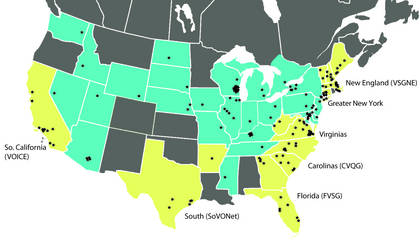
The Vascular Quality Initiative® surpassed 150 participating centers in March 2012. As the initiative continues to grow, so does the number of organized regional quality groups, a key component of the VQI®. Participation in a regional group allows for anonymous comparison of outcomes with other nearby centers, but more importantly provides an opportunity to collaborate on regional quality improvement projects. Variation that occurs across centers can be analyzed within a region to identify and implement best practices. Already the VQI has seven groups that meet semi-annually to share and analyze data and to initiate quality improvement projects (see figure), and other regional groups are in the process of forming.
Regional quality groups in the VQI are governed by the SVS Patient Safety Organization (SVS PSO). Establishing a regional group requires at least three centers that are willing to participate and benchmark results, as well as bylaws for participation, data entry, and research using non-identifiable data. A regional group can be defined by a geographic area or by a health system. By participating in a regional quality group, centers can initiate regional quality projects and perform analyses of regional data to understand which processes of care lead to best outcomes. This is feasible because of the power of combined data leading to a sufficient number of key outcomes for analysis.
Each regional quality group in the VQI has a representative on the Governing Council and Quality Committee of the SVS PSO. These committees provide medical expertise, statistical analyses, and oversight of quality improvement activities. As a member of a regional group, collaborative quality research is available through an approval mechanism whereby non-identifiable data sets from single or multiple regional groups are available.
The VQI collects pre-operative risk factors, intra-procedural variables, post-procedural outcomes, and one year follow-up data for patients undergoing carotid endarterectomy, carotid artery stenting, open and endovascular repair of abdominal aortic aneurysms, infra-inguinal and supra-inguinal bypass, peripheral vascular interventions, thoracic and complex endovascular aortic repair, and hemodialysis access. The VQI is adding advanced reporting functions, as well as an amputation procedure module in the near future. As of March 2012, the VQI has collected data on more than 45,000 procedures, as it is accumulating more than 3,000 procedures monthly.
For more information about the Vascular Quality Initiative and regional quality groups, visit www.vascularqualityinitiative.org.
The Vascular Quality Initiative® surpassed 150 participating centers in March 2012. As the initiative continues to grow, so does the number of organized regional quality groups, a key component of the VQI®. Participation in a regional group allows for anonymous comparison of outcomes with other nearby centers, but more importantly provides an opportunity to collaborate on regional quality improvement projects. Variation that occurs across centers can be analyzed within a region to identify and implement best practices. Already the VQI has seven groups that meet semi-annually to share and analyze data and to initiate quality improvement projects (see figure), and other regional groups are in the process of forming.
Regional quality groups in the VQI are governed by the SVS Patient Safety Organization (SVS PSO). Establishing a regional group requires at least three centers that are willing to participate and benchmark results, as well as bylaws for participation, data entry, and research using non-identifiable data. A regional group can be defined by a geographic area or by a health system. By participating in a regional quality group, centers can initiate regional quality projects and perform analyses of regional data to understand which processes of care lead to best outcomes. This is feasible because of the power of combined data leading to a sufficient number of key outcomes for analysis.
Each regional quality group in the VQI has a representative on the Governing Council and Quality Committee of the SVS PSO. These committees provide medical expertise, statistical analyses, and oversight of quality improvement activities. As a member of a regional group, collaborative quality research is available through an approval mechanism whereby non-identifiable data sets from single or multiple regional groups are available.
The VQI collects pre-operative risk factors, intra-procedural variables, post-procedural outcomes, and one year follow-up data for patients undergoing carotid endarterectomy, carotid artery stenting, open and endovascular repair of abdominal aortic aneurysms, infra-inguinal and supra-inguinal bypass, peripheral vascular interventions, thoracic and complex endovascular aortic repair, and hemodialysis access. The VQI is adding advanced reporting functions, as well as an amputation procedure module in the near future. As of March 2012, the VQI has collected data on more than 45,000 procedures, as it is accumulating more than 3,000 procedures monthly.
For more information about the Vascular Quality Initiative and regional quality groups, visit www.vascularqualityinitiative.org.
The Vascular Quality Initiative® surpassed 150 participating centers in March 2012. As the initiative continues to grow, so does the number of organized regional quality groups, a key component of the VQI®. Participation in a regional group allows for anonymous comparison of outcomes with other nearby centers, but more importantly provides an opportunity to collaborate on regional quality improvement projects. Variation that occurs across centers can be analyzed within a region to identify and implement best practices. Already the VQI has seven groups that meet semi-annually to share and analyze data and to initiate quality improvement projects (see figure), and other regional groups are in the process of forming.
Regional quality groups in the VQI are governed by the SVS Patient Safety Organization (SVS PSO). Establishing a regional group requires at least three centers that are willing to participate and benchmark results, as well as bylaws for participation, data entry, and research using non-identifiable data. A regional group can be defined by a geographic area or by a health system. By participating in a regional quality group, centers can initiate regional quality projects and perform analyses of regional data to understand which processes of care lead to best outcomes. This is feasible because of the power of combined data leading to a sufficient number of key outcomes for analysis.
Each regional quality group in the VQI has a representative on the Governing Council and Quality Committee of the SVS PSO. These committees provide medical expertise, statistical analyses, and oversight of quality improvement activities. As a member of a regional group, collaborative quality research is available through an approval mechanism whereby non-identifiable data sets from single or multiple regional groups are available.
The VQI collects pre-operative risk factors, intra-procedural variables, post-procedural outcomes, and one year follow-up data for patients undergoing carotid endarterectomy, carotid artery stenting, open and endovascular repair of abdominal aortic aneurysms, infra-inguinal and supra-inguinal bypass, peripheral vascular interventions, thoracic and complex endovascular aortic repair, and hemodialysis access. The VQI is adding advanced reporting functions, as well as an amputation procedure module in the near future. As of March 2012, the VQI has collected data on more than 45,000 procedures, as it is accumulating more than 3,000 procedures monthly.
For more information about the Vascular Quality Initiative and regional quality groups, visit www.vascularqualityinitiative.org.
Capitol Hill Reception for 2011-2012 PAC Contributors
To celebrate 10 years of success on Capitol Hill, members of the United States Congress - especially those who are physicians - have been invited to join 2011-2012 SVS Political Action Committee (PAC) contributors at an exclusive reception in Washington, D.C.
"The success of the SVS PAC is due to forward-thinking SVS members who have generously donated funds," said SVS PAC Committee Chair Carlo Dall'Olmo, MD. "This has provided SVS with a voice in Congress. The 10-year anniversary reception is a unique opportunity for vascular surgeons to meet and network with legislators."
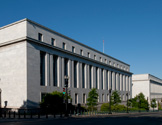
The invitation-only Capitol Hill event will be held from 5:30 pm until 7:00 pm on Wednesday, June 6 in Room 340B of the Rayburn House Office Building located on Independence Avenue and South Capitol Street in Washington, D.C. Round trip bus transportation will be provided for Vascular Annual Meeting® attendees from Gaylord National Resort & Convention Center in National Harbor, MD. Chartered buses will depart at 4:45 pm from Gaylord National's Maryland Ballroom bus loop located on the ballroom level (level 2). Upon entry into the federal office building, all guests will be required to pass through a magnetometer.
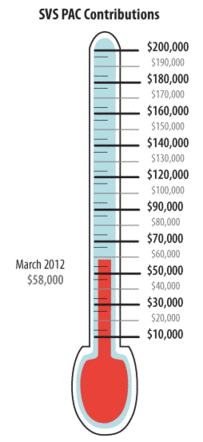
To participate in this first-ever event, simply make a contribution to the PAC. The donation form appears on the SVS website. Donations can also be submitted through the mail or faxed using a credit card. For more information about the June 6 Capitol Hill reception or the achievements of the SVS PAC, contact: pphillips@vascularsociety.org.
To celebrate 10 years of success on Capitol Hill, members of the United States Congress - especially those who are physicians - have been invited to join 2011-2012 SVS Political Action Committee (PAC) contributors at an exclusive reception in Washington, D.C.
"The success of the SVS PAC is due to forward-thinking SVS members who have generously donated funds," said SVS PAC Committee Chair Carlo Dall'Olmo, MD. "This has provided SVS with a voice in Congress. The 10-year anniversary reception is a unique opportunity for vascular surgeons to meet and network with legislators."
The invitation-only Capitol Hill event will be held from 5:30 pm until 7:00 pm on Wednesday, June 6 in Room 340B of the Rayburn House Office Building located on Independence Avenue and South Capitol Street in Washington, D.C. Round trip bus transportation will be provided for Vascular Annual Meeting® attendees from Gaylord National Resort & Convention Center in National Harbor, MD. Chartered buses will depart at 4:45 pm from Gaylord National's Maryland Ballroom bus loop located on the ballroom level (level 2). Upon entry into the federal office building, all guests will be required to pass through a magnetometer.
To participate in this first-ever event, simply make a contribution to the PAC. The donation form appears on the SVS website. Donations can also be submitted through the mail or faxed using a credit card. For more information about the June 6 Capitol Hill reception or the achievements of the SVS PAC, contact: pphillips@vascularsociety.org.
To celebrate 10 years of success on Capitol Hill, members of the United States Congress - especially those who are physicians - have been invited to join 2011-2012 SVS Political Action Committee (PAC) contributors at an exclusive reception in Washington, D.C.
"The success of the SVS PAC is due to forward-thinking SVS members who have generously donated funds," said SVS PAC Committee Chair Carlo Dall'Olmo, MD. "This has provided SVS with a voice in Congress. The 10-year anniversary reception is a unique opportunity for vascular surgeons to meet and network with legislators."
The invitation-only Capitol Hill event will be held from 5:30 pm until 7:00 pm on Wednesday, June 6 in Room 340B of the Rayburn House Office Building located on Independence Avenue and South Capitol Street in Washington, D.C. Round trip bus transportation will be provided for Vascular Annual Meeting® attendees from Gaylord National Resort & Convention Center in National Harbor, MD. Chartered buses will depart at 4:45 pm from Gaylord National's Maryland Ballroom bus loop located on the ballroom level (level 2). Upon entry into the federal office building, all guests will be required to pass through a magnetometer.
To participate in this first-ever event, simply make a contribution to the PAC. The donation form appears on the SVS website. Donations can also be submitted through the mail or faxed using a credit card. For more information about the June 6 Capitol Hill reception or the achievements of the SVS PAC, contact: pphillips@vascularsociety.org.