User login
SVS PAC: A Decade of Access to Congress
The SVS Political Action Committee (PAC) reaches a notable milestone this year. It has supported SVS members by opening doors to members of Congress whose decisions directly impact upon vascular surgeons’ practices. The SVS PAC is the only PAC that champions the unified voice of vascular surgery. Other PACs have a broader constituency and may not always represent the best interests of vascular surgeons.
"In the 10 years since its inception, SVS PAC has truly become ‘Your Voice for Your Future,’" said Carlo Dall’Olmo, MD, SVS PAC chair. "With representation from every regional society, the PAC is committed to contributing to candidates who support initiatives that benefit the care of our patients and support appropriate physician compensation for our services."
The SVS PAC was started by a team of members in 2002. Then in 2005, SVS hired a professional lobbyist with an office in Washington, D.C., who also administers the PAC. Since then, contributions have multiplied to $100,000 annually. In 2011, SVS members and staff attended approximately 80 candidate fundraisers to explain the importance of vascular surgery and its legislative issues. Without this direct contact, the voice of vascular surgery would not be heard.
Celebrating the 10th anniversary has special meaning for the SVS PAC this year because the 2012 Vascular Annual Meeting will be held in Washington, D.C. on June 7-9. Plans are being made for special events, including a reception on Capitol Hill with members of Congress.
Make your SVS PAC contribution on www.vascularweb.org or use the contribution form in this issue of Vascular Specialist.
"Going forward, we must all commit as a team to a stronger voice and a stronger PAC. There is no turning back and no other option," said Dr. Dall’Olmo.
The SVS Political Action Committee (PAC) reaches a notable milestone this year. It has supported SVS members by opening doors to members of Congress whose decisions directly impact upon vascular surgeons’ practices. The SVS PAC is the only PAC that champions the unified voice of vascular surgery. Other PACs have a broader constituency and may not always represent the best interests of vascular surgeons.
"In the 10 years since its inception, SVS PAC has truly become ‘Your Voice for Your Future,’" said Carlo Dall’Olmo, MD, SVS PAC chair. "With representation from every regional society, the PAC is committed to contributing to candidates who support initiatives that benefit the care of our patients and support appropriate physician compensation for our services."
The SVS PAC was started by a team of members in 2002. Then in 2005, SVS hired a professional lobbyist with an office in Washington, D.C., who also administers the PAC. Since then, contributions have multiplied to $100,000 annually. In 2011, SVS members and staff attended approximately 80 candidate fundraisers to explain the importance of vascular surgery and its legislative issues. Without this direct contact, the voice of vascular surgery would not be heard.
Celebrating the 10th anniversary has special meaning for the SVS PAC this year because the 2012 Vascular Annual Meeting will be held in Washington, D.C. on June 7-9. Plans are being made for special events, including a reception on Capitol Hill with members of Congress.
Make your SVS PAC contribution on www.vascularweb.org or use the contribution form in this issue of Vascular Specialist.
"Going forward, we must all commit as a team to a stronger voice and a stronger PAC. There is no turning back and no other option," said Dr. Dall’Olmo.
The SVS Political Action Committee (PAC) reaches a notable milestone this year. It has supported SVS members by opening doors to members of Congress whose decisions directly impact upon vascular surgeons’ practices. The SVS PAC is the only PAC that champions the unified voice of vascular surgery. Other PACs have a broader constituency and may not always represent the best interests of vascular surgeons.
"In the 10 years since its inception, SVS PAC has truly become ‘Your Voice for Your Future,’" said Carlo Dall’Olmo, MD, SVS PAC chair. "With representation from every regional society, the PAC is committed to contributing to candidates who support initiatives that benefit the care of our patients and support appropriate physician compensation for our services."
The SVS PAC was started by a team of members in 2002. Then in 2005, SVS hired a professional lobbyist with an office in Washington, D.C., who also administers the PAC. Since then, contributions have multiplied to $100,000 annually. In 2011, SVS members and staff attended approximately 80 candidate fundraisers to explain the importance of vascular surgery and its legislative issues. Without this direct contact, the voice of vascular surgery would not be heard.
Celebrating the 10th anniversary has special meaning for the SVS PAC this year because the 2012 Vascular Annual Meeting will be held in Washington, D.C. on June 7-9. Plans are being made for special events, including a reception on Capitol Hill with members of Congress.
Make your SVS PAC contribution on www.vascularweb.org or use the contribution form in this issue of Vascular Specialist.
"Going forward, we must all commit as a team to a stronger voice and a stronger PAC. There is no turning back and no other option," said Dr. Dall’Olmo.
Attend the 26th Vascular Research Initiatives Conference, April 17 in Chicago
"The 26th Annual Vascular Research Initiatives Conference (VRIC) is designed to encourage interaction between vascular surgeon investigators and scientists from other vascular biology - related disciplines," said conference organizer, Alan Dardik, MD, PhD.
"This meeting is the premier venue for both senior and junior level vascular surgeon-scientists," said Dr. Dardik. "Vascular surgeon-scientists will value the opportunity to interact with their vascular biology colleagues both scientifically and socially. Junior vascular surgeon-scientists can present their work among the cutting edge research of our specialty. Everyone is invited to attend and hear the newest advances in vascular biology that will predict the future of vascular surgery."
The April 17, 2012 SVS conference will feature basic science and early translational research. It precedes the Arteriosclerosis, Thrombosis, and Vascular Biology (ATVB) meeting scheduled for April 18-20, 2012 in Chicago.
Basic science and early translational research under consideration for presentation at VRIC will also be evaluated for ATVB. The two program committees will coordinate scheduling of accepted abstracts into appropriate sessions at VRIC and /or ATVB. Acceptance and presentation of an abstract at the VRIC session does not preclude additional poster presentation at the ATVB sessions.Principal investigators of selected, high-impact abstracts presented at the VRIC session may also be invited for presentation at the SVS 2012 Vascular Annual Meeting, June 7-9, 2012. For additional information, go to VascularWeb.org / Education and Meetings / VRIC. ☐
"The 26th Annual Vascular Research Initiatives Conference (VRIC) is designed to encourage interaction between vascular surgeon investigators and scientists from other vascular biology - related disciplines," said conference organizer, Alan Dardik, MD, PhD.
"This meeting is the premier venue for both senior and junior level vascular surgeon-scientists," said Dr. Dardik. "Vascular surgeon-scientists will value the opportunity to interact with their vascular biology colleagues both scientifically and socially. Junior vascular surgeon-scientists can present their work among the cutting edge research of our specialty. Everyone is invited to attend and hear the newest advances in vascular biology that will predict the future of vascular surgery."
The April 17, 2012 SVS conference will feature basic science and early translational research. It precedes the Arteriosclerosis, Thrombosis, and Vascular Biology (ATVB) meeting scheduled for April 18-20, 2012 in Chicago.
Basic science and early translational research under consideration for presentation at VRIC will also be evaluated for ATVB. The two program committees will coordinate scheduling of accepted abstracts into appropriate sessions at VRIC and /or ATVB. Acceptance and presentation of an abstract at the VRIC session does not preclude additional poster presentation at the ATVB sessions.Principal investigators of selected, high-impact abstracts presented at the VRIC session may also be invited for presentation at the SVS 2012 Vascular Annual Meeting, June 7-9, 2012. For additional information, go to VascularWeb.org / Education and Meetings / VRIC. ☐
"The 26th Annual Vascular Research Initiatives Conference (VRIC) is designed to encourage interaction between vascular surgeon investigators and scientists from other vascular biology - related disciplines," said conference organizer, Alan Dardik, MD, PhD.
"This meeting is the premier venue for both senior and junior level vascular surgeon-scientists," said Dr. Dardik. "Vascular surgeon-scientists will value the opportunity to interact with their vascular biology colleagues both scientifically and socially. Junior vascular surgeon-scientists can present their work among the cutting edge research of our specialty. Everyone is invited to attend and hear the newest advances in vascular biology that will predict the future of vascular surgery."
The April 17, 2012 SVS conference will feature basic science and early translational research. It precedes the Arteriosclerosis, Thrombosis, and Vascular Biology (ATVB) meeting scheduled for April 18-20, 2012 in Chicago.
Basic science and early translational research under consideration for presentation at VRIC will also be evaluated for ATVB. The two program committees will coordinate scheduling of accepted abstracts into appropriate sessions at VRIC and /or ATVB. Acceptance and presentation of an abstract at the VRIC session does not preclude additional poster presentation at the ATVB sessions.Principal investigators of selected, high-impact abstracts presented at the VRIC session may also be invited for presentation at the SVS 2012 Vascular Annual Meeting, June 7-9, 2012. For additional information, go to VascularWeb.org / Education and Meetings / VRIC. ☐
Interviews With Historic Vascular Leaders Available
The vascular surgery specialty has been blessed with outstanding innovators who are responsible for the advancements the field has experienced throughout the years. Now, these leaders’ stories will be archived in digital videotape interviews on VascularWeb in "About Us, History of Vascular Surgery, Interviews with Leaders."
SVS leadership formed a History Project Work Group with James S.T. Yao, MD, chair, and members: Mark Eskandari, MD; Roger Gregory: MD, Peter Lawrence, MD; Walter McCarthy, MD; Norman Rich, MD; and Calvin Ernst, MD (consultant). The work group will convert previous historical interviews in VHS tapes to DVD and develop a new series of interviews with leaders in vascular surgery for VascularWeb in DVD format. DVD hard copy is available for distribution upon request by members.
Dr. Yao provided this report: "To date, three interviews are available for viewing and downloadable on VascularWeb: Dr. Denton Cooley. Dr. John Ochsner, and Dr. Frank Veith. Interviews with Dr. Harry B. Shumacker, Jr. and Dr. Michael DeBakey during the 50th SVS anniversary are currently available on DVD and will be downloadable on VascularWeb in the future. The group is on converting VHS tape interviews with Dr. John Ochsner and Dr. Michael DeBakey to DVD. Several additional interviews have been completed and are pending final editing. They include: Dr. Juluis Jacobson, Dr. Frank Spencer, and Dr. Anthony Imparato. A DVD interview of Dr. Emerick Szilagyi (courtesy of Dr. D. Reddy) will be uploaded to VascularWeb as well. The work group is excited about the project and will continue to interview leaders in vascular surgery."
In addition to DVD-video interview library, the work group has updated the history information of the vascular specialty and SVS. ☐
The vascular surgery specialty has been blessed with outstanding innovators who are responsible for the advancements the field has experienced throughout the years. Now, these leaders’ stories will be archived in digital videotape interviews on VascularWeb in "About Us, History of Vascular Surgery, Interviews with Leaders."
SVS leadership formed a History Project Work Group with James S.T. Yao, MD, chair, and members: Mark Eskandari, MD; Roger Gregory: MD, Peter Lawrence, MD; Walter McCarthy, MD; Norman Rich, MD; and Calvin Ernst, MD (consultant). The work group will convert previous historical interviews in VHS tapes to DVD and develop a new series of interviews with leaders in vascular surgery for VascularWeb in DVD format. DVD hard copy is available for distribution upon request by members.
Dr. Yao provided this report: "To date, three interviews are available for viewing and downloadable on VascularWeb: Dr. Denton Cooley. Dr. John Ochsner, and Dr. Frank Veith. Interviews with Dr. Harry B. Shumacker, Jr. and Dr. Michael DeBakey during the 50th SVS anniversary are currently available on DVD and will be downloadable on VascularWeb in the future. The group is on converting VHS tape interviews with Dr. John Ochsner and Dr. Michael DeBakey to DVD. Several additional interviews have been completed and are pending final editing. They include: Dr. Juluis Jacobson, Dr. Frank Spencer, and Dr. Anthony Imparato. A DVD interview of Dr. Emerick Szilagyi (courtesy of Dr. D. Reddy) will be uploaded to VascularWeb as well. The work group is excited about the project and will continue to interview leaders in vascular surgery."
In addition to DVD-video interview library, the work group has updated the history information of the vascular specialty and SVS. ☐
The vascular surgery specialty has been blessed with outstanding innovators who are responsible for the advancements the field has experienced throughout the years. Now, these leaders’ stories will be archived in digital videotape interviews on VascularWeb in "About Us, History of Vascular Surgery, Interviews with Leaders."
SVS leadership formed a History Project Work Group with James S.T. Yao, MD, chair, and members: Mark Eskandari, MD; Roger Gregory: MD, Peter Lawrence, MD; Walter McCarthy, MD; Norman Rich, MD; and Calvin Ernst, MD (consultant). The work group will convert previous historical interviews in VHS tapes to DVD and develop a new series of interviews with leaders in vascular surgery for VascularWeb in DVD format. DVD hard copy is available for distribution upon request by members.
Dr. Yao provided this report: "To date, three interviews are available for viewing and downloadable on VascularWeb: Dr. Denton Cooley. Dr. John Ochsner, and Dr. Frank Veith. Interviews with Dr. Harry B. Shumacker, Jr. and Dr. Michael DeBakey during the 50th SVS anniversary are currently available on DVD and will be downloadable on VascularWeb in the future. The group is on converting VHS tape interviews with Dr. John Ochsner and Dr. Michael DeBakey to DVD. Several additional interviews have been completed and are pending final editing. They include: Dr. Juluis Jacobson, Dr. Frank Spencer, and Dr. Anthony Imparato. A DVD interview of Dr. Emerick Szilagyi (courtesy of Dr. D. Reddy) will be uploaded to VascularWeb as well. The work group is excited about the project and will continue to interview leaders in vascular surgery."
In addition to DVD-video interview library, the work group has updated the history information of the vascular specialty and SVS. ☐
Attend Challenges in Vascular Surgery 2012: Coding and Reimbursement
"Vascular surgeons and their practice managers, nurse practitioners, physician assistants, nurses, surgery schedulers, and coders are invited to attend the course, Challenges in Vascular Surgery 2012: Coding and Reimbursement for Vascular Surgeons," said course organizer, Sean P. Roddy, MD. The course will be presented from 1:00 p.m. until 5:00 pm on Friday, March 23, and from 8:00 a.m. until 4:30 p.m. on Saturday, March 24 at the Hyatt Regency Washington on Capitol Hill Hotel in Washington, D.C.
The course covers 2012 United States coding and reimbursement updates including:
• changes to renal artery selective arterial catheterization and imaging;
• vena cava filter insertion/repositioning/removal;
• PQRI measures;
• reporting standards for interventional and open surgical procedures;
• information about the global surgical package and how it impacts billing and reimbursement; and
• the application of modifiers for streamlined reimbursement.
Physicians who attend the course can receive a maximum of 11 AMA PRA Category 1 Credits TM Continuing Medical Education (CME) Credits. The American Academy of Professional Coders (AAPC) has approved 11 Continuing Education Units (CEUs) for coders who attend the course.
Immediately preceding the course, an optional workshop, E & M Coding for Vascular Surgeons will occur on Friday, March 23, from 9:00 a.m. until noon.
To register for these SVS courses, log onto: VascularWeb.org / Education and Meetings / SVS Coding and Reimbursement Course.
"Vascular surgeons and their practice managers, nurse practitioners, physician assistants, nurses, surgery schedulers, and coders are invited to attend the course, Challenges in Vascular Surgery 2012: Coding and Reimbursement for Vascular Surgeons," said course organizer, Sean P. Roddy, MD. The course will be presented from 1:00 p.m. until 5:00 pm on Friday, March 23, and from 8:00 a.m. until 4:30 p.m. on Saturday, March 24 at the Hyatt Regency Washington on Capitol Hill Hotel in Washington, D.C.
The course covers 2012 United States coding and reimbursement updates including:
• changes to renal artery selective arterial catheterization and imaging;
• vena cava filter insertion/repositioning/removal;
• PQRI measures;
• reporting standards for interventional and open surgical procedures;
• information about the global surgical package and how it impacts billing and reimbursement; and
• the application of modifiers for streamlined reimbursement.
Physicians who attend the course can receive a maximum of 11 AMA PRA Category 1 Credits TM Continuing Medical Education (CME) Credits. The American Academy of Professional Coders (AAPC) has approved 11 Continuing Education Units (CEUs) for coders who attend the course.
Immediately preceding the course, an optional workshop, E & M Coding for Vascular Surgeons will occur on Friday, March 23, from 9:00 a.m. until noon.
To register for these SVS courses, log onto: VascularWeb.org / Education and Meetings / SVS Coding and Reimbursement Course.
"Vascular surgeons and their practice managers, nurse practitioners, physician assistants, nurses, surgery schedulers, and coders are invited to attend the course, Challenges in Vascular Surgery 2012: Coding and Reimbursement for Vascular Surgeons," said course organizer, Sean P. Roddy, MD. The course will be presented from 1:00 p.m. until 5:00 pm on Friday, March 23, and from 8:00 a.m. until 4:30 p.m. on Saturday, March 24 at the Hyatt Regency Washington on Capitol Hill Hotel in Washington, D.C.
The course covers 2012 United States coding and reimbursement updates including:
• changes to renal artery selective arterial catheterization and imaging;
• vena cava filter insertion/repositioning/removal;
• PQRI measures;
• reporting standards for interventional and open surgical procedures;
• information about the global surgical package and how it impacts billing and reimbursement; and
• the application of modifiers for streamlined reimbursement.
Physicians who attend the course can receive a maximum of 11 AMA PRA Category 1 Credits TM Continuing Medical Education (CME) Credits. The American Academy of Professional Coders (AAPC) has approved 11 Continuing Education Units (CEUs) for coders who attend the course.
Immediately preceding the course, an optional workshop, E & M Coding for Vascular Surgeons will occur on Friday, March 23, from 9:00 a.m. until noon.
To register for these SVS courses, log onto: VascularWeb.org / Education and Meetings / SVS Coding and Reimbursement Course.
New Patient Education Videos Are Available on VascularWeb.org
"The Public and Patient Outreach Committee is pleased to announce new patient videos," said Steven Leers, MD, chair of the SVS Public and Professional Outreach Committee. "We have 10 broadcast quality videos available for members. The videos explain who we are and what we do in a very professional format that will be appealing to patients or referring physicians."
SVS members appear in the videos discussing vascular diseases and various treatment options with their patients. The topics of the videos are:
• What is a Vascular Surgeon?
• What is an AAA?
• AAA Treatment
• Claudication
• Critical Limb Ischemia
• Dialysis Access / Fistula Procedure
• DVT
• PAD
• Stroke
• Varicose Veins
Funded by a Cook Medical grant, the 10 videos are available through the SVS website, VascularWeb.org, and YouTube. Every other week between January 4 and May 9, 2012, a press release promoting one video will be distributed to 10,000 television stations and Internet sites throughout the United States.
"The professional quality videos are available for use as patient education resources," said Dr. Leers. "SVS members may link from their practice websites to the VascularWeb.org page as well as offer the videos to referring physicians."
To view these educational videos, log onto the SVS web VascularWeb.org/Vascular Health/Patient Success Stories .
"The Public and Patient Outreach Committee is pleased to announce new patient videos," said Steven Leers, MD, chair of the SVS Public and Professional Outreach Committee. "We have 10 broadcast quality videos available for members. The videos explain who we are and what we do in a very professional format that will be appealing to patients or referring physicians."
SVS members appear in the videos discussing vascular diseases and various treatment options with their patients. The topics of the videos are:
• What is a Vascular Surgeon?
• What is an AAA?
• AAA Treatment
• Claudication
• Critical Limb Ischemia
• Dialysis Access / Fistula Procedure
• DVT
• PAD
• Stroke
• Varicose Veins
Funded by a Cook Medical grant, the 10 videos are available through the SVS website, VascularWeb.org, and YouTube. Every other week between January 4 and May 9, 2012, a press release promoting one video will be distributed to 10,000 television stations and Internet sites throughout the United States.
"The professional quality videos are available for use as patient education resources," said Dr. Leers. "SVS members may link from their practice websites to the VascularWeb.org page as well as offer the videos to referring physicians."
To view these educational videos, log onto the SVS web VascularWeb.org/Vascular Health/Patient Success Stories .
"The Public and Patient Outreach Committee is pleased to announce new patient videos," said Steven Leers, MD, chair of the SVS Public and Professional Outreach Committee. "We have 10 broadcast quality videos available for members. The videos explain who we are and what we do in a very professional format that will be appealing to patients or referring physicians."
SVS members appear in the videos discussing vascular diseases and various treatment options with their patients. The topics of the videos are:
• What is a Vascular Surgeon?
• What is an AAA?
• AAA Treatment
• Claudication
• Critical Limb Ischemia
• Dialysis Access / Fistula Procedure
• DVT
• PAD
• Stroke
• Varicose Veins
Funded by a Cook Medical grant, the 10 videos are available through the SVS website, VascularWeb.org, and YouTube. Every other week between January 4 and May 9, 2012, a press release promoting one video will be distributed to 10,000 television stations and Internet sites throughout the United States.
"The professional quality videos are available for use as patient education resources," said Dr. Leers. "SVS members may link from their practice websites to the VascularWeb.org page as well as offer the videos to referring physicians."
To view these educational videos, log onto the SVS web VascularWeb.org/Vascular Health/Patient Success Stories .
A Brief History of the New SVS
The modern SVS is a vibrant blend of two rich historical and co-evolving traditions – the original SVS and the American Association for Vascular Surgery (AAVS) which merged in 2003 under the leadership of Dr. Jack Cronenwett (SVS) and Dr. Thomas Riles (AAVS). It was a merger that sanctified a long cooperative relationship that had existed between the two organizations.
The original SVS was the brainchild of Dr. James Ross Veal, according to Dr. James S.T. Yao in his history of the SVS beginnings. The society was inaugurated at the Fairmont Hotel in San Francisco on July 3, 1946, at a meeting which chose its name, elected its officers, and 31 charter members. A year later, its first annual meeting was held on June 8, 1947, in Atlantic City, and in a sense this heralded the dawn of modern arterial reconstructive surgery, though it was not until Dr. Robert R. Linton’s ninth presidential address in 1955, that such an address dealt with arterial reconstruction.
Among the charter members was the "father of vascular surgery," Dr. Rudolph Matas of Tulane University. In his acceptance of a ceremonial gavel in his honor, which he passed into the permanent custody of the SVS, he reminisced on how it was on May 5, 1888, "the first actual demonstration of the new principle that repair of an injured or damaged blood vessel could be obtained without the suppression of its blood-carrying function. It took place at the Charity Hospital [wood from one of its stairway posts was used to make the gavel]."
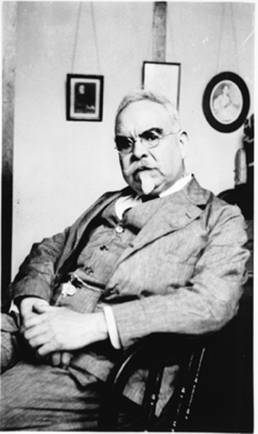
This operation, which Dr. Matas himself performed, relegated to the dustbin of history "the fundamental maxim of that great master of vascular surgery, Antonio Scarpa, in the late 18th century, namely that no wound or injury of an artery could be repaired without a total suppression of its blood-carrying function."
The Matas gavel remains a treasured artifact and was used for many years as the symbol of presidential transition in the SVS.
The first SVS president, Dr. Alton Ochsner, gave his address, entitled "Venous Thromboembolism," at the first annual meeting. From then on the SVS continued incremental growth, expanding and refining its goals and structure and improving the tenor of its annual meeting. The first SVS constitution was drawn up by the committee and then adopted in June 1949, although the documents regarding it are lost to time. The first extant version is from 1955, according to SVS chronicler and charter member Dr. Harris B. Shumacker, Jr.
The official original SVS seal, carrying the image of another vascular surgery pioneer, John Hunter, was designed and implemented on the membership certificate by SVS Secretary Henry Swan in 1955. In 1958, the journal, Surgery, became the official organ of SVS and would remain so for 25 years.
By 1964, SVS began expanding its scope. That year, the SVS requested representation on the Board of Governors of the American College of Surgeons, which occurred in 1965. Also in the 1960s, the SVS pledged its support to the National Society of Medical Research and expanded its ties to the American Heart Association, gaining representation on its Joint Committee on Stroke.
Early lobbying efforts in this period included society support for a bill to establish a National Medical Devices Standard Commission, inspired by the SVS’s keen interest in the safety and composition of surgical implants.
In June, 1973, the first proposal of a Committee for Vascular Surgery on the American Board of Surgery was made, and ultimately implemented several years later. This brought renewed and vigorous interest in the issue of vascular training, which has continued ever since, and by the early 1980s, the American Board of Surgery was offering a Special Certification in General Vascular Surgery in consultation with SVS and AAVS, which provided institutional guidelines for training.
In 1986, SVS created a Foundation for Research and Education, which would, in 1989, under the foundation presidency of Dr. Michael Ellis DeBakey (another SVS charter member), undergo a name change to the Lifeline Foundation, which included sponsorship or responsibility for a variety of research and training oriented awards, grants, and initiatives. This tradition is carried on by the SVS Foundation.
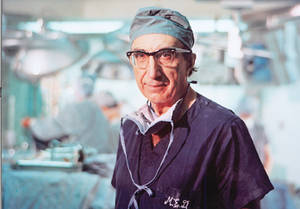
In summarizing the fifth decade of SVS (1987-1996), Dr. Yao cites the introduction of endovascular techniques as a drastic change in the landscape of vascular practice. The sixth decade (1997-2006) "witnessed a milestone of transformation" with the merger of SVS and AAVS. "We were finally united as an independent surgical specialty."
Since the earliest years, AAVS and SVS had close ties, with both cooperating in 1984 to inaugurate the Journal of Vascular Surgery, which became the official organ of both groups and remains so for the combined SVS to this day. The founding editors were Dr. Michael DeBakey and Dr. Emerick Szilagyi.
In 1988, SVS established the Crawford Critical Issues Forum at the annual meeting, which was soon to incorporate members of the then North American Chapter of the International Society for Cardiovascular Surgery, the forerunner of AAVS.
In 2001, Dr. Robert Hobson served as the first president of the renamed AAVS. In his address at the 49th annual meeting of the organization, he highlighted some of its major accomplishments including their then recent efforts to launch a new website called VascularWeb and the establishment of the American Vascular Association (AVA), with the assistance of SVS. The AVA was a division devoted to public education in vascular disease, which after the merger with SVS would become one with the Lifeline Foundation.
Summarizing the unity of the two organizations, in his SVS Presidential address in 2003, Dr. Jack Cronenwett stated, "It is clear that the SVS and AAVS have functioned as a single entity representing vascular surgery for many years."
He detailed the history of the two organizations and the logic of their merger from their consistent meetings together for more than three decades, from their fundraising effort, and from their shared committees, including the Joint Council established in 1975.
So significant was the Joint Council, according to Dr. Cronenwett, that "by the year 2000, the individual society council meetings lasted only one hour, but were followed by a seven-hour Joint Council meeting involving 45 persons, where all the important business of the societies was conducted." Surprisingly, the council was never incorporated legally or had authority to take action, but made decisions only by consensus of both societies, Dr. Cronenwett said.
It was this Joint Council that charged the SVS and AAVS presidents in 2002 to "investigate the management and governance of the societies and to develop specific proposals to address these concerns." It was a charge that led to the, almost inevitable, in retrospect, merger of the two societies a year later.
Dr. K. Craig Kent credited the merger with invigorating and transforming SVS, as he said in his 2007 presidential address: "Where was SVS five years ago? There were two societies, a division of leadership and competition between SVS and AAVS. SVS had no central administrative support ... Where is SVS today? I would say strong and well. This began with the merger of SVS and AAVS in 2003 to create an all inclusive society. We now have an office in Chicago with central administrative leadership. We have a Vascular Surgery Board within the American Board of Surgery and a primary certificate."
He went on to praise the new mature infrastructure of SVS and herald its major initiatives. Since its creation, the Chicago office has been run under the support of SVS Executive Director Rebecca M. Maron and has provided support and continuity to all SVS presidents since.
Major successes have occurred under the auspices of the SVS in promoting the interests vascular surgery in the Congress, according to Dr. K. Wayne Johnston in his 2008 presidential address.
"The first realization that we could have a direct impact in Washington came in 1997. At that time SVS faced major reductions in practice expense payments from Medicare. SVS convinced a number of key Senators and Congressmen that underrepresented specialties at the American Medical Association, such as vascular surgery, should have the opportunity to submit their supplemental practice expense data for review. SVS was the first speciality society to submit supplemental data from many members across the country, and our efforts saved millions of dollars in lost income," stated Dr. Johnston.
A second major legislative victory, The Screening Abdominal Aortic Aneurysms Very Efficiently (SAAAVE) Act occurred in 2005, two years after the merger, with the new SVS serving as the lead organization in the National Aneurysm Alliance, with Immediate Past-President Dr. Robert Zwolak as the key operative in the coalition.
A third, although only partial victory, according to Dr. Johnston, came when SVS, with the aid of the Society for Vascular Ultrasound, mounted a successful effort to remove specific ultrasound services from major cuts in the Deficit Reduction Act of 2005.
SVS continues to work to promote the interests of vascular surgeons and their patients in a period of turbulent government medical reform.
A breakthrough in education occurred when the Accreditation Council for Graduate Medical Education approved the Primary Certificate in vascular surgery, which took effect July 1, 2008, and allows for more educational options and a more focused program for vascular trainees.
A good summary of the modern SVS can be found in the words of Dr. Anton Sidawy in his 2010 presidential address.
"Over the last few decades ... the Society and the specialty had to overcome obstacles, reinvent themselves, and take on major endeavors, and in doing so, we became stronger and expanded our horizons to better serve patients with vascular disease. Throughout it all, the Society and the specialty remained true and faithful to our core values of integrity, professionalism, and commitment to our members and patients," said Dr. Sidawy.
Sources:
Cronenwett, J. L. J. Vasc. Surg. 2004; 39:1-8.
Hobson, R. W., J. Vasc. Surg. 2002; 35:1-7.
Johnston, K. W., J. Vasc. Surg. 2008; 48:1613-9.
Kent, K. C., J. Vasc. Surg. 2008; 47: 231-6.
Shumacker, H. B. "The Society for Vascular Surgery. A History: 1945- 1983," The Society for Vascular Surgery, 1984; 583 pp.
Sidawy, A. N., J. Vasc. Surg. 2011; 510-6.
Yao, J. S. T., J. Vasc. Surg. 2010;51: 776-9.
The modern SVS is a vibrant blend of two rich historical and co-evolving traditions – the original SVS and the American Association for Vascular Surgery (AAVS) which merged in 2003 under the leadership of Dr. Jack Cronenwett (SVS) and Dr. Thomas Riles (AAVS). It was a merger that sanctified a long cooperative relationship that had existed between the two organizations.
The original SVS was the brainchild of Dr. James Ross Veal, according to Dr. James S.T. Yao in his history of the SVS beginnings. The society was inaugurated at the Fairmont Hotel in San Francisco on July 3, 1946, at a meeting which chose its name, elected its officers, and 31 charter members. A year later, its first annual meeting was held on June 8, 1947, in Atlantic City, and in a sense this heralded the dawn of modern arterial reconstructive surgery, though it was not until Dr. Robert R. Linton’s ninth presidential address in 1955, that such an address dealt with arterial reconstruction.
Among the charter members was the "father of vascular surgery," Dr. Rudolph Matas of Tulane University. In his acceptance of a ceremonial gavel in his honor, which he passed into the permanent custody of the SVS, he reminisced on how it was on May 5, 1888, "the first actual demonstration of the new principle that repair of an injured or damaged blood vessel could be obtained without the suppression of its blood-carrying function. It took place at the Charity Hospital [wood from one of its stairway posts was used to make the gavel]."
This operation, which Dr. Matas himself performed, relegated to the dustbin of history "the fundamental maxim of that great master of vascular surgery, Antonio Scarpa, in the late 18th century, namely that no wound or injury of an artery could be repaired without a total suppression of its blood-carrying function."
The Matas gavel remains a treasured artifact and was used for many years as the symbol of presidential transition in the SVS.
The first SVS president, Dr. Alton Ochsner, gave his address, entitled "Venous Thromboembolism," at the first annual meeting. From then on the SVS continued incremental growth, expanding and refining its goals and structure and improving the tenor of its annual meeting. The first SVS constitution was drawn up by the committee and then adopted in June 1949, although the documents regarding it are lost to time. The first extant version is from 1955, according to SVS chronicler and charter member Dr. Harris B. Shumacker, Jr.
The official original SVS seal, carrying the image of another vascular surgery pioneer, John Hunter, was designed and implemented on the membership certificate by SVS Secretary Henry Swan in 1955. In 1958, the journal, Surgery, became the official organ of SVS and would remain so for 25 years.
By 1964, SVS began expanding its scope. That year, the SVS requested representation on the Board of Governors of the American College of Surgeons, which occurred in 1965. Also in the 1960s, the SVS pledged its support to the National Society of Medical Research and expanded its ties to the American Heart Association, gaining representation on its Joint Committee on Stroke.
Early lobbying efforts in this period included society support for a bill to establish a National Medical Devices Standard Commission, inspired by the SVS’s keen interest in the safety and composition of surgical implants.
In June, 1973, the first proposal of a Committee for Vascular Surgery on the American Board of Surgery was made, and ultimately implemented several years later. This brought renewed and vigorous interest in the issue of vascular training, which has continued ever since, and by the early 1980s, the American Board of Surgery was offering a Special Certification in General Vascular Surgery in consultation with SVS and AAVS, which provided institutional guidelines for training.
In 1986, SVS created a Foundation for Research and Education, which would, in 1989, under the foundation presidency of Dr. Michael Ellis DeBakey (another SVS charter member), undergo a name change to the Lifeline Foundation, which included sponsorship or responsibility for a variety of research and training oriented awards, grants, and initiatives. This tradition is carried on by the SVS Foundation.
In summarizing the fifth decade of SVS (1987-1996), Dr. Yao cites the introduction of endovascular techniques as a drastic change in the landscape of vascular practice. The sixth decade (1997-2006) "witnessed a milestone of transformation" with the merger of SVS and AAVS. "We were finally united as an independent surgical specialty."
Since the earliest years, AAVS and SVS had close ties, with both cooperating in 1984 to inaugurate the Journal of Vascular Surgery, which became the official organ of both groups and remains so for the combined SVS to this day. The founding editors were Dr. Michael DeBakey and Dr. Emerick Szilagyi.
In 1988, SVS established the Crawford Critical Issues Forum at the annual meeting, which was soon to incorporate members of the then North American Chapter of the International Society for Cardiovascular Surgery, the forerunner of AAVS.
In 2001, Dr. Robert Hobson served as the first president of the renamed AAVS. In his address at the 49th annual meeting of the organization, he highlighted some of its major accomplishments including their then recent efforts to launch a new website called VascularWeb and the establishment of the American Vascular Association (AVA), with the assistance of SVS. The AVA was a division devoted to public education in vascular disease, which after the merger with SVS would become one with the Lifeline Foundation.
Summarizing the unity of the two organizations, in his SVS Presidential address in 2003, Dr. Jack Cronenwett stated, "It is clear that the SVS and AAVS have functioned as a single entity representing vascular surgery for many years."
He detailed the history of the two organizations and the logic of their merger from their consistent meetings together for more than three decades, from their fundraising effort, and from their shared committees, including the Joint Council established in 1975.
So significant was the Joint Council, according to Dr. Cronenwett, that "by the year 2000, the individual society council meetings lasted only one hour, but were followed by a seven-hour Joint Council meeting involving 45 persons, where all the important business of the societies was conducted." Surprisingly, the council was never incorporated legally or had authority to take action, but made decisions only by consensus of both societies, Dr. Cronenwett said.
It was this Joint Council that charged the SVS and AAVS presidents in 2002 to "investigate the management and governance of the societies and to develop specific proposals to address these concerns." It was a charge that led to the, almost inevitable, in retrospect, merger of the two societies a year later.
Dr. K. Craig Kent credited the merger with invigorating and transforming SVS, as he said in his 2007 presidential address: "Where was SVS five years ago? There were two societies, a division of leadership and competition between SVS and AAVS. SVS had no central administrative support ... Where is SVS today? I would say strong and well. This began with the merger of SVS and AAVS in 2003 to create an all inclusive society. We now have an office in Chicago with central administrative leadership. We have a Vascular Surgery Board within the American Board of Surgery and a primary certificate."
He went on to praise the new mature infrastructure of SVS and herald its major initiatives. Since its creation, the Chicago office has been run under the support of SVS Executive Director Rebecca M. Maron and has provided support and continuity to all SVS presidents since.
Major successes have occurred under the auspices of the SVS in promoting the interests vascular surgery in the Congress, according to Dr. K. Wayne Johnston in his 2008 presidential address.
"The first realization that we could have a direct impact in Washington came in 1997. At that time SVS faced major reductions in practice expense payments from Medicare. SVS convinced a number of key Senators and Congressmen that underrepresented specialties at the American Medical Association, such as vascular surgery, should have the opportunity to submit their supplemental practice expense data for review. SVS was the first speciality society to submit supplemental data from many members across the country, and our efforts saved millions of dollars in lost income," stated Dr. Johnston.
A second major legislative victory, The Screening Abdominal Aortic Aneurysms Very Efficiently (SAAAVE) Act occurred in 2005, two years after the merger, with the new SVS serving as the lead organization in the National Aneurysm Alliance, with Immediate Past-President Dr. Robert Zwolak as the key operative in the coalition.
A third, although only partial victory, according to Dr. Johnston, came when SVS, with the aid of the Society for Vascular Ultrasound, mounted a successful effort to remove specific ultrasound services from major cuts in the Deficit Reduction Act of 2005.
SVS continues to work to promote the interests of vascular surgeons and their patients in a period of turbulent government medical reform.
A breakthrough in education occurred when the Accreditation Council for Graduate Medical Education approved the Primary Certificate in vascular surgery, which took effect July 1, 2008, and allows for more educational options and a more focused program for vascular trainees.
A good summary of the modern SVS can be found in the words of Dr. Anton Sidawy in his 2010 presidential address.
"Over the last few decades ... the Society and the specialty had to overcome obstacles, reinvent themselves, and take on major endeavors, and in doing so, we became stronger and expanded our horizons to better serve patients with vascular disease. Throughout it all, the Society and the specialty remained true and faithful to our core values of integrity, professionalism, and commitment to our members and patients," said Dr. Sidawy.
Sources:
Cronenwett, J. L. J. Vasc. Surg. 2004; 39:1-8.
Hobson, R. W., J. Vasc. Surg. 2002; 35:1-7.
Johnston, K. W., J. Vasc. Surg. 2008; 48:1613-9.
Kent, K. C., J. Vasc. Surg. 2008; 47: 231-6.
Shumacker, H. B. "The Society for Vascular Surgery. A History: 1945- 1983," The Society for Vascular Surgery, 1984; 583 pp.
Sidawy, A. N., J. Vasc. Surg. 2011; 510-6.
Yao, J. S. T., J. Vasc. Surg. 2010;51: 776-9.
The modern SVS is a vibrant blend of two rich historical and co-evolving traditions – the original SVS and the American Association for Vascular Surgery (AAVS) which merged in 2003 under the leadership of Dr. Jack Cronenwett (SVS) and Dr. Thomas Riles (AAVS). It was a merger that sanctified a long cooperative relationship that had existed between the two organizations.
The original SVS was the brainchild of Dr. James Ross Veal, according to Dr. James S.T. Yao in his history of the SVS beginnings. The society was inaugurated at the Fairmont Hotel in San Francisco on July 3, 1946, at a meeting which chose its name, elected its officers, and 31 charter members. A year later, its first annual meeting was held on June 8, 1947, in Atlantic City, and in a sense this heralded the dawn of modern arterial reconstructive surgery, though it was not until Dr. Robert R. Linton’s ninth presidential address in 1955, that such an address dealt with arterial reconstruction.
Among the charter members was the "father of vascular surgery," Dr. Rudolph Matas of Tulane University. In his acceptance of a ceremonial gavel in his honor, which he passed into the permanent custody of the SVS, he reminisced on how it was on May 5, 1888, "the first actual demonstration of the new principle that repair of an injured or damaged blood vessel could be obtained without the suppression of its blood-carrying function. It took place at the Charity Hospital [wood from one of its stairway posts was used to make the gavel]."
This operation, which Dr. Matas himself performed, relegated to the dustbin of history "the fundamental maxim of that great master of vascular surgery, Antonio Scarpa, in the late 18th century, namely that no wound or injury of an artery could be repaired without a total suppression of its blood-carrying function."
The Matas gavel remains a treasured artifact and was used for many years as the symbol of presidential transition in the SVS.
The first SVS president, Dr. Alton Ochsner, gave his address, entitled "Venous Thromboembolism," at the first annual meeting. From then on the SVS continued incremental growth, expanding and refining its goals and structure and improving the tenor of its annual meeting. The first SVS constitution was drawn up by the committee and then adopted in June 1949, although the documents regarding it are lost to time. The first extant version is from 1955, according to SVS chronicler and charter member Dr. Harris B. Shumacker, Jr.
The official original SVS seal, carrying the image of another vascular surgery pioneer, John Hunter, was designed and implemented on the membership certificate by SVS Secretary Henry Swan in 1955. In 1958, the journal, Surgery, became the official organ of SVS and would remain so for 25 years.
By 1964, SVS began expanding its scope. That year, the SVS requested representation on the Board of Governors of the American College of Surgeons, which occurred in 1965. Also in the 1960s, the SVS pledged its support to the National Society of Medical Research and expanded its ties to the American Heart Association, gaining representation on its Joint Committee on Stroke.
Early lobbying efforts in this period included society support for a bill to establish a National Medical Devices Standard Commission, inspired by the SVS’s keen interest in the safety and composition of surgical implants.
In June, 1973, the first proposal of a Committee for Vascular Surgery on the American Board of Surgery was made, and ultimately implemented several years later. This brought renewed and vigorous interest in the issue of vascular training, which has continued ever since, and by the early 1980s, the American Board of Surgery was offering a Special Certification in General Vascular Surgery in consultation with SVS and AAVS, which provided institutional guidelines for training.
In 1986, SVS created a Foundation for Research and Education, which would, in 1989, under the foundation presidency of Dr. Michael Ellis DeBakey (another SVS charter member), undergo a name change to the Lifeline Foundation, which included sponsorship or responsibility for a variety of research and training oriented awards, grants, and initiatives. This tradition is carried on by the SVS Foundation.
In summarizing the fifth decade of SVS (1987-1996), Dr. Yao cites the introduction of endovascular techniques as a drastic change in the landscape of vascular practice. The sixth decade (1997-2006) "witnessed a milestone of transformation" with the merger of SVS and AAVS. "We were finally united as an independent surgical specialty."
Since the earliest years, AAVS and SVS had close ties, with both cooperating in 1984 to inaugurate the Journal of Vascular Surgery, which became the official organ of both groups and remains so for the combined SVS to this day. The founding editors were Dr. Michael DeBakey and Dr. Emerick Szilagyi.
In 1988, SVS established the Crawford Critical Issues Forum at the annual meeting, which was soon to incorporate members of the then North American Chapter of the International Society for Cardiovascular Surgery, the forerunner of AAVS.
In 2001, Dr. Robert Hobson served as the first president of the renamed AAVS. In his address at the 49th annual meeting of the organization, he highlighted some of its major accomplishments including their then recent efforts to launch a new website called VascularWeb and the establishment of the American Vascular Association (AVA), with the assistance of SVS. The AVA was a division devoted to public education in vascular disease, which after the merger with SVS would become one with the Lifeline Foundation.
Summarizing the unity of the two organizations, in his SVS Presidential address in 2003, Dr. Jack Cronenwett stated, "It is clear that the SVS and AAVS have functioned as a single entity representing vascular surgery for many years."
He detailed the history of the two organizations and the logic of their merger from their consistent meetings together for more than three decades, from their fundraising effort, and from their shared committees, including the Joint Council established in 1975.
So significant was the Joint Council, according to Dr. Cronenwett, that "by the year 2000, the individual society council meetings lasted only one hour, but were followed by a seven-hour Joint Council meeting involving 45 persons, where all the important business of the societies was conducted." Surprisingly, the council was never incorporated legally or had authority to take action, but made decisions only by consensus of both societies, Dr. Cronenwett said.
It was this Joint Council that charged the SVS and AAVS presidents in 2002 to "investigate the management and governance of the societies and to develop specific proposals to address these concerns." It was a charge that led to the, almost inevitable, in retrospect, merger of the two societies a year later.
Dr. K. Craig Kent credited the merger with invigorating and transforming SVS, as he said in his 2007 presidential address: "Where was SVS five years ago? There were two societies, a division of leadership and competition between SVS and AAVS. SVS had no central administrative support ... Where is SVS today? I would say strong and well. This began with the merger of SVS and AAVS in 2003 to create an all inclusive society. We now have an office in Chicago with central administrative leadership. We have a Vascular Surgery Board within the American Board of Surgery and a primary certificate."
He went on to praise the new mature infrastructure of SVS and herald its major initiatives. Since its creation, the Chicago office has been run under the support of SVS Executive Director Rebecca M. Maron and has provided support and continuity to all SVS presidents since.
Major successes have occurred under the auspices of the SVS in promoting the interests vascular surgery in the Congress, according to Dr. K. Wayne Johnston in his 2008 presidential address.
"The first realization that we could have a direct impact in Washington came in 1997. At that time SVS faced major reductions in practice expense payments from Medicare. SVS convinced a number of key Senators and Congressmen that underrepresented specialties at the American Medical Association, such as vascular surgery, should have the opportunity to submit their supplemental practice expense data for review. SVS was the first speciality society to submit supplemental data from many members across the country, and our efforts saved millions of dollars in lost income," stated Dr. Johnston.
A second major legislative victory, The Screening Abdominal Aortic Aneurysms Very Efficiently (SAAAVE) Act occurred in 2005, two years after the merger, with the new SVS serving as the lead organization in the National Aneurysm Alliance, with Immediate Past-President Dr. Robert Zwolak as the key operative in the coalition.
A third, although only partial victory, according to Dr. Johnston, came when SVS, with the aid of the Society for Vascular Ultrasound, mounted a successful effort to remove specific ultrasound services from major cuts in the Deficit Reduction Act of 2005.
SVS continues to work to promote the interests of vascular surgeons and their patients in a period of turbulent government medical reform.
A breakthrough in education occurred when the Accreditation Council for Graduate Medical Education approved the Primary Certificate in vascular surgery, which took effect July 1, 2008, and allows for more educational options and a more focused program for vascular trainees.
A good summary of the modern SVS can be found in the words of Dr. Anton Sidawy in his 2010 presidential address.
"Over the last few decades ... the Society and the specialty had to overcome obstacles, reinvent themselves, and take on major endeavors, and in doing so, we became stronger and expanded our horizons to better serve patients with vascular disease. Throughout it all, the Society and the specialty remained true and faithful to our core values of integrity, professionalism, and commitment to our members and patients," said Dr. Sidawy.
Sources:
Cronenwett, J. L. J. Vasc. Surg. 2004; 39:1-8.
Hobson, R. W., J. Vasc. Surg. 2002; 35:1-7.
Johnston, K. W., J. Vasc. Surg. 2008; 48:1613-9.
Kent, K. C., J. Vasc. Surg. 2008; 47: 231-6.
Shumacker, H. B. "The Society for Vascular Surgery. A History: 1945- 1983," The Society for Vascular Surgery, 1984; 583 pp.
Sidawy, A. N., J. Vasc. Surg. 2011; 510-6.
Yao, J. S. T., J. Vasc. Surg. 2010;51: 776-9.
2011 SVS Accomplishments
Membership
• SVS membership totals 3,532 vascular surgeons and other medical professionals dedicated to vascular health
• SVS has 206 international members from 47 countries with four chapters in Columbia, Egypt, Hungary, and India
• SVS Board of Directors approved doctors of podiatric medicine for SVS Associate Membership beginning 2012
2011 Vascular Annual Meeting®
• Record-breaking attendance of 3,020
• All-time professional attendance record: 805 SVS members and 268 international attendees
• Record-breaking exhibits included 148 companies occupying 245 booths
• Eight education and device training pavilions; five satellite symposia presented
• World Federation of Vascular Societies Meeting held
Education and Publications Initiatives
•VESAP®2 launched
• First Comprehensive Vascular Review Course presented
• Two Coding and Reimbursement Courses presented
• Vascular Research Initiatives Conference integrated into the American Heart Association Atherosclerosis, Thrombosis, and Vascular Biology meeting
•2011 Coding Guide published
Journal of Vascular Surgery®
• Achieved an Impact Factor of 3.851, highest in its 27-year history
• Rated 10 among 187 surgical journals
• Mailed to nearly 6,000 subscribers
• More than 1,650 (2010) manuscripts submitted for publication; 69 percent either clinical papers or case reports and 59 percent originated from authors outside the United States
• Four Journal of Vascular Surgery Supplements published
Practice Guidelines, Reporting Standards, and Multispecialty Consensus Documents Published
• Endovascular repair of traumatic thoracic aortic injury: clinical practice guidelines of SVS
• The Care of Patients With Varicose Veins and Associated Chronic Venous Diseases: Clinical practice guidelines of SVS and the American Venous Forum
• A systematic review and meta-analysis of randomized trials of carotid endarterectomy vs. stenting
• The Methodology of the SVS Practice Guidelines: The Experience with the GRADE System
• Reporting Standards for Thoracic Endovascular Aortic Repair
• Reporting Standards for Carotid Interventions from SVS
•ACCF/AHA/ACR/SCAI/SIR/SVM/SVN/SVS 2010 performance measures for adults with peripheral artery disease
• Strategies to prevent and heal diabetic foot ulcers: Building a partnership for amputation prevention A Joint Publication of the SVS and APMA
Research
• Established $100K SVS® Foundation Multicenter Clinical Studies Planning Grant directed to members developing grant applications for high-impact multicenter clinical studies in the treatment and/or prevention of vascular diseases
• Implemented the SVS Clinical Research Study Approval Program to facilitate clinical research addressing important questions in vascular disease management and to maximize participation of SVS members in the conduct of this research. Clinical research study proposals meeting the criteria shall be eligible for recognition as an "SVS Approved Clinical Research Study Proposal"
• Collaborated with FDA, multispecialty society representatives and manufacturers to develop the Catastrophic Thoracic Aortic Indications database and two FDA Master Access Files for use by endovascular graft manufacturers as comparator datasets
• Awarded three Clinical Research Seed Grants to SVS member clinical trialists, funded by a grant from Medtronic
• Awarded four scholarships to trainees to attend the 2011 Vascular Research Initiatives Conference
• Hosted Vascular Annual Meeting 2011 concurrent session "Comparative Effectiveness in Action" to educate members on issues regarding the implementation of comparative effectiveness research in health care delivery and policymaking
Quality and Performance Initiatives
• Vascular Quality Initiative launched
• SVS listed as Patient Safety Organization by the U.S. Agency for Healthcare Research and Quality
• Six new SVS-owned national quality measures for endorsement submitted to National Quality Forum
• Five SVS-owned measures for 2012 Physician Quality Reporting System selected in addition to two previously selected
Health Policy and Government Relations
• SVS lobbied Congress to repeal the Independent Payment Advisory Committee
• SVS lobbied Congress to pass a comprehensive medical liability reform bill • SVS successfully lobbied Congress to preserve payment levels for vascular ultrasound
• SVS members emailed more than 1,000 letters and made calls to Senate offices in support of repeal of the Sustainable Growth Rate formula
• SVS provided comments to the Centers for Medicare and Medicaid Services on the following proposed/final rules: Physician Fee Schedule, Hospital Inpatient and Outpatient Prospective Payment Services, e-Prescribing, Accountable Care Organizations, and HIPAA
• SVS continues to lead the National Aneurysm Alliance and to advocate for elimination of barriers to AAA screening
• Many codes for vascular procedures were modernized by active SVS participation in the CPT Editorial Panel and Relative Value Update Committee
SVS Political Action Committee
• SVS participated in 80 PAC events for targeted Congressional members who are on committees of jurisdiction for health care, in leadership, and/or are physicians
• Peer-to-peer solicitation organized by the SVS Political Action Committee raised a total of $100,000 for the PAC; four vascular practices had 100 percent participation in contributions to the PAC
Public and Professional Outreach
• In 2011, 28 members volunteered for two-week rotations in Germany to treat coalition forces injured in Iraq and Afghanistan with a total of 76 volunteers since 2007
• VascularWeb® had 1.5 million hits
• 71 SVS press releases, ads, and radio spots submitted to medical, mass, and social media outlets
• 4,501 verified placements and airplays of the messages to a potential circulation and readership of 4.8 billion
• $6.3 million in ad value of the press releases, ads, and radio spot placements
• Patient education videos launched and promoted to SVS members and medical professionals to educate patients
Student and Resident Recruitment
• 83 Vascular Annual Meeting travel scholarships awarded
• 242 medical students and general surgery residents attended the Vascular Annual Meeting
• Section members grew to 143 Student Section and 222 General Surgery Resident Section
• SVS sponsored booths and member presentations at eight medical career events
Constituencies Relations
• Women’s Leadership Retreat held
• Two Women’s Leadership Training Grants presented
• Vascular Surgery Trainee Advocacy Travel Scholarship awarded
• Four International Scholars Grants presented
Industry Partnerships
• Corporate grants supported Clinical Seed Grants, Vascular Annual Meeting, Post Graduate Courses, Research Initiatives Conference, Women’s Leadership Retreat, and Vascular Wellness DVD/public awareness materials
• Conducted visits to corporate offices and meetings with industry partners
• New guidelines for interaction with industry implemented by SVS Board of Directors
Membership
• SVS membership totals 3,532 vascular surgeons and other medical professionals dedicated to vascular health
• SVS has 206 international members from 47 countries with four chapters in Columbia, Egypt, Hungary, and India
• SVS Board of Directors approved doctors of podiatric medicine for SVS Associate Membership beginning 2012
2011 Vascular Annual Meeting®
• Record-breaking attendance of 3,020
• All-time professional attendance record: 805 SVS members and 268 international attendees
• Record-breaking exhibits included 148 companies occupying 245 booths
• Eight education and device training pavilions; five satellite symposia presented
• World Federation of Vascular Societies Meeting held
Education and Publications Initiatives
•VESAP®2 launched
• First Comprehensive Vascular Review Course presented
• Two Coding and Reimbursement Courses presented
• Vascular Research Initiatives Conference integrated into the American Heart Association Atherosclerosis, Thrombosis, and Vascular Biology meeting
•2011 Coding Guide published
Journal of Vascular Surgery®
• Achieved an Impact Factor of 3.851, highest in its 27-year history
• Rated 10 among 187 surgical journals
• Mailed to nearly 6,000 subscribers
• More than 1,650 (2010) manuscripts submitted for publication; 69 percent either clinical papers or case reports and 59 percent originated from authors outside the United States
• Four Journal of Vascular Surgery Supplements published
Practice Guidelines, Reporting Standards, and Multispecialty Consensus Documents Published
• Endovascular repair of traumatic thoracic aortic injury: clinical practice guidelines of SVS
• The Care of Patients With Varicose Veins and Associated Chronic Venous Diseases: Clinical practice guidelines of SVS and the American Venous Forum
• A systematic review and meta-analysis of randomized trials of carotid endarterectomy vs. stenting
• The Methodology of the SVS Practice Guidelines: The Experience with the GRADE System
• Reporting Standards for Thoracic Endovascular Aortic Repair
• Reporting Standards for Carotid Interventions from SVS
•ACCF/AHA/ACR/SCAI/SIR/SVM/SVN/SVS 2010 performance measures for adults with peripheral artery disease
• Strategies to prevent and heal diabetic foot ulcers: Building a partnership for amputation prevention A Joint Publication of the SVS and APMA
Research
• Established $100K SVS® Foundation Multicenter Clinical Studies Planning Grant directed to members developing grant applications for high-impact multicenter clinical studies in the treatment and/or prevention of vascular diseases
• Implemented the SVS Clinical Research Study Approval Program to facilitate clinical research addressing important questions in vascular disease management and to maximize participation of SVS members in the conduct of this research. Clinical research study proposals meeting the criteria shall be eligible for recognition as an "SVS Approved Clinical Research Study Proposal"
• Collaborated with FDA, multispecialty society representatives and manufacturers to develop the Catastrophic Thoracic Aortic Indications database and two FDA Master Access Files for use by endovascular graft manufacturers as comparator datasets
• Awarded three Clinical Research Seed Grants to SVS member clinical trialists, funded by a grant from Medtronic
• Awarded four scholarships to trainees to attend the 2011 Vascular Research Initiatives Conference
• Hosted Vascular Annual Meeting 2011 concurrent session "Comparative Effectiveness in Action" to educate members on issues regarding the implementation of comparative effectiveness research in health care delivery and policymaking
Quality and Performance Initiatives
• Vascular Quality Initiative launched
• SVS listed as Patient Safety Organization by the U.S. Agency for Healthcare Research and Quality
• Six new SVS-owned national quality measures for endorsement submitted to National Quality Forum
• Five SVS-owned measures for 2012 Physician Quality Reporting System selected in addition to two previously selected
Health Policy and Government Relations
• SVS lobbied Congress to repeal the Independent Payment Advisory Committee
• SVS lobbied Congress to pass a comprehensive medical liability reform bill • SVS successfully lobbied Congress to preserve payment levels for vascular ultrasound
• SVS members emailed more than 1,000 letters and made calls to Senate offices in support of repeal of the Sustainable Growth Rate formula
• SVS provided comments to the Centers for Medicare and Medicaid Services on the following proposed/final rules: Physician Fee Schedule, Hospital Inpatient and Outpatient Prospective Payment Services, e-Prescribing, Accountable Care Organizations, and HIPAA
• SVS continues to lead the National Aneurysm Alliance and to advocate for elimination of barriers to AAA screening
• Many codes for vascular procedures were modernized by active SVS participation in the CPT Editorial Panel and Relative Value Update Committee
SVS Political Action Committee
• SVS participated in 80 PAC events for targeted Congressional members who are on committees of jurisdiction for health care, in leadership, and/or are physicians
• Peer-to-peer solicitation organized by the SVS Political Action Committee raised a total of $100,000 for the PAC; four vascular practices had 100 percent participation in contributions to the PAC
Public and Professional Outreach
• In 2011, 28 members volunteered for two-week rotations in Germany to treat coalition forces injured in Iraq and Afghanistan with a total of 76 volunteers since 2007
• VascularWeb® had 1.5 million hits
• 71 SVS press releases, ads, and radio spots submitted to medical, mass, and social media outlets
• 4,501 verified placements and airplays of the messages to a potential circulation and readership of 4.8 billion
• $6.3 million in ad value of the press releases, ads, and radio spot placements
• Patient education videos launched and promoted to SVS members and medical professionals to educate patients
Student and Resident Recruitment
• 83 Vascular Annual Meeting travel scholarships awarded
• 242 medical students and general surgery residents attended the Vascular Annual Meeting
• Section members grew to 143 Student Section and 222 General Surgery Resident Section
• SVS sponsored booths and member presentations at eight medical career events
Constituencies Relations
• Women’s Leadership Retreat held
• Two Women’s Leadership Training Grants presented
• Vascular Surgery Trainee Advocacy Travel Scholarship awarded
• Four International Scholars Grants presented
Industry Partnerships
• Corporate grants supported Clinical Seed Grants, Vascular Annual Meeting, Post Graduate Courses, Research Initiatives Conference, Women’s Leadership Retreat, and Vascular Wellness DVD/public awareness materials
• Conducted visits to corporate offices and meetings with industry partners
• New guidelines for interaction with industry implemented by SVS Board of Directors
Membership
• SVS membership totals 3,532 vascular surgeons and other medical professionals dedicated to vascular health
• SVS has 206 international members from 47 countries with four chapters in Columbia, Egypt, Hungary, and India
• SVS Board of Directors approved doctors of podiatric medicine for SVS Associate Membership beginning 2012
2011 Vascular Annual Meeting®
• Record-breaking attendance of 3,020
• All-time professional attendance record: 805 SVS members and 268 international attendees
• Record-breaking exhibits included 148 companies occupying 245 booths
• Eight education and device training pavilions; five satellite symposia presented
• World Federation of Vascular Societies Meeting held
Education and Publications Initiatives
•VESAP®2 launched
• First Comprehensive Vascular Review Course presented
• Two Coding and Reimbursement Courses presented
• Vascular Research Initiatives Conference integrated into the American Heart Association Atherosclerosis, Thrombosis, and Vascular Biology meeting
•2011 Coding Guide published
Journal of Vascular Surgery®
• Achieved an Impact Factor of 3.851, highest in its 27-year history
• Rated 10 among 187 surgical journals
• Mailed to nearly 6,000 subscribers
• More than 1,650 (2010) manuscripts submitted for publication; 69 percent either clinical papers or case reports and 59 percent originated from authors outside the United States
• Four Journal of Vascular Surgery Supplements published
Practice Guidelines, Reporting Standards, and Multispecialty Consensus Documents Published
• Endovascular repair of traumatic thoracic aortic injury: clinical practice guidelines of SVS
• The Care of Patients With Varicose Veins and Associated Chronic Venous Diseases: Clinical practice guidelines of SVS and the American Venous Forum
• A systematic review and meta-analysis of randomized trials of carotid endarterectomy vs. stenting
• The Methodology of the SVS Practice Guidelines: The Experience with the GRADE System
• Reporting Standards for Thoracic Endovascular Aortic Repair
• Reporting Standards for Carotid Interventions from SVS
•ACCF/AHA/ACR/SCAI/SIR/SVM/SVN/SVS 2010 performance measures for adults with peripheral artery disease
• Strategies to prevent and heal diabetic foot ulcers: Building a partnership for amputation prevention A Joint Publication of the SVS and APMA
Research
• Established $100K SVS® Foundation Multicenter Clinical Studies Planning Grant directed to members developing grant applications for high-impact multicenter clinical studies in the treatment and/or prevention of vascular diseases
• Implemented the SVS Clinical Research Study Approval Program to facilitate clinical research addressing important questions in vascular disease management and to maximize participation of SVS members in the conduct of this research. Clinical research study proposals meeting the criteria shall be eligible for recognition as an "SVS Approved Clinical Research Study Proposal"
• Collaborated with FDA, multispecialty society representatives and manufacturers to develop the Catastrophic Thoracic Aortic Indications database and two FDA Master Access Files for use by endovascular graft manufacturers as comparator datasets
• Awarded three Clinical Research Seed Grants to SVS member clinical trialists, funded by a grant from Medtronic
• Awarded four scholarships to trainees to attend the 2011 Vascular Research Initiatives Conference
• Hosted Vascular Annual Meeting 2011 concurrent session "Comparative Effectiveness in Action" to educate members on issues regarding the implementation of comparative effectiveness research in health care delivery and policymaking
Quality and Performance Initiatives
• Vascular Quality Initiative launched
• SVS listed as Patient Safety Organization by the U.S. Agency for Healthcare Research and Quality
• Six new SVS-owned national quality measures for endorsement submitted to National Quality Forum
• Five SVS-owned measures for 2012 Physician Quality Reporting System selected in addition to two previously selected
Health Policy and Government Relations
• SVS lobbied Congress to repeal the Independent Payment Advisory Committee
• SVS lobbied Congress to pass a comprehensive medical liability reform bill • SVS successfully lobbied Congress to preserve payment levels for vascular ultrasound
• SVS members emailed more than 1,000 letters and made calls to Senate offices in support of repeal of the Sustainable Growth Rate formula
• SVS provided comments to the Centers for Medicare and Medicaid Services on the following proposed/final rules: Physician Fee Schedule, Hospital Inpatient and Outpatient Prospective Payment Services, e-Prescribing, Accountable Care Organizations, and HIPAA
• SVS continues to lead the National Aneurysm Alliance and to advocate for elimination of barriers to AAA screening
• Many codes for vascular procedures were modernized by active SVS participation in the CPT Editorial Panel and Relative Value Update Committee
SVS Political Action Committee
• SVS participated in 80 PAC events for targeted Congressional members who are on committees of jurisdiction for health care, in leadership, and/or are physicians
• Peer-to-peer solicitation organized by the SVS Political Action Committee raised a total of $100,000 for the PAC; four vascular practices had 100 percent participation in contributions to the PAC
Public and Professional Outreach
• In 2011, 28 members volunteered for two-week rotations in Germany to treat coalition forces injured in Iraq and Afghanistan with a total of 76 volunteers since 2007
• VascularWeb® had 1.5 million hits
• 71 SVS press releases, ads, and radio spots submitted to medical, mass, and social media outlets
• 4,501 verified placements and airplays of the messages to a potential circulation and readership of 4.8 billion
• $6.3 million in ad value of the press releases, ads, and radio spot placements
• Patient education videos launched and promoted to SVS members and medical professionals to educate patients
Student and Resident Recruitment
• 83 Vascular Annual Meeting travel scholarships awarded
• 242 medical students and general surgery residents attended the Vascular Annual Meeting
• Section members grew to 143 Student Section and 222 General Surgery Resident Section
• SVS sponsored booths and member presentations at eight medical career events
Constituencies Relations
• Women’s Leadership Retreat held
• Two Women’s Leadership Training Grants presented
• Vascular Surgery Trainee Advocacy Travel Scholarship awarded
• Four International Scholars Grants presented
Industry Partnerships
• Corporate grants supported Clinical Seed Grants, Vascular Annual Meeting, Post Graduate Courses, Research Initiatives Conference, Women’s Leadership Retreat, and Vascular Wellness DVD/public awareness materials
• Conducted visits to corporate offices and meetings with industry partners
• New guidelines for interaction with industry implemented by SVS Board of Directors
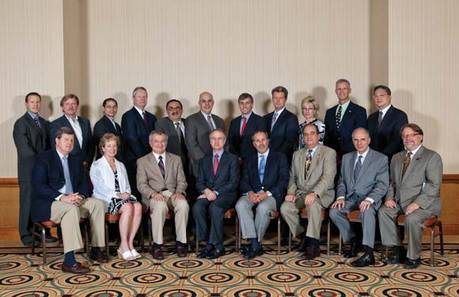
SVS 2011-2012 Board of Directors
President
Richard Cambria, MD
President-Elect
Peter Gloviczki, MD
Vice President
Julie Ann Freischlag, MD
Secretary
John Ricotta, MD
Treasurer
Clement Darling, MD
Past President
Robert Zwolak, MD
Clinical Practice Council Chair
Ruth Bush, MD
Education Council Chair
John Eidt, MD
Program Chair
Ronald Fairman, MD
Research Council Chair
Larry Kraiss, MD
Society for Clinical Vascular Surgery
Alan Lumsden, MD
Midwestern Vascular Surgery Society
Jon Matsumura, MD
Southern Association for Vascular Surgery
Scott Stevens, MD
Western Vascular Society
Ronald Dalman, MD
Peripheral Vascular Surgery Society
Marc Passman, MD
Canadian Society for Vascular Surgery
Randy Guzman, MD
International Society of Endovascular Specialists
Grayson Wheatley, MD
Eastern Vascular Society
Bruce Perler, MD
Association of Program Directors in Vascular Surgery
Michel Makaroun, MD
American Venous Forum
Fedor Lurie, MD
New England Society for Vascular Surgery
Robert Patterson, MD
Fellows Council Chair
Kimberley Hansen, MD
Fellows Council Vice Chair
Rodney White, MD
Executive Director
Rebecca M. Maron, CAE
President
Richard Cambria, MD
President-Elect
Peter Gloviczki, MD
Vice President
Julie Ann Freischlag, MD
Secretary
John Ricotta, MD
Treasurer
Clement Darling, MD
Past President
Robert Zwolak, MD
Clinical Practice Council Chair
Ruth Bush, MD
Education Council Chair
John Eidt, MD
Program Chair
Ronald Fairman, MD
Research Council Chair
Larry Kraiss, MD
Society for Clinical Vascular Surgery
Alan Lumsden, MD
Midwestern Vascular Surgery Society
Jon Matsumura, MD
Southern Association for Vascular Surgery
Scott Stevens, MD
Western Vascular Society
Ronald Dalman, MD
Peripheral Vascular Surgery Society
Marc Passman, MD
Canadian Society for Vascular Surgery
Randy Guzman, MD
International Society of Endovascular Specialists
Grayson Wheatley, MD
Eastern Vascular Society
Bruce Perler, MD
Association of Program Directors in Vascular Surgery
Michel Makaroun, MD
American Venous Forum
Fedor Lurie, MD
New England Society for Vascular Surgery
Robert Patterson, MD
Fellows Council Chair
Kimberley Hansen, MD
Fellows Council Vice Chair
Rodney White, MD
Executive Director
Rebecca M. Maron, CAE
President
Richard Cambria, MD
President-Elect
Peter Gloviczki, MD
Vice President
Julie Ann Freischlag, MD
Secretary
John Ricotta, MD
Treasurer
Clement Darling, MD
Past President
Robert Zwolak, MD
Clinical Practice Council Chair
Ruth Bush, MD
Education Council Chair
John Eidt, MD
Program Chair
Ronald Fairman, MD
Research Council Chair
Larry Kraiss, MD
Society for Clinical Vascular Surgery
Alan Lumsden, MD
Midwestern Vascular Surgery Society
Jon Matsumura, MD
Southern Association for Vascular Surgery
Scott Stevens, MD
Western Vascular Society
Ronald Dalman, MD
Peripheral Vascular Surgery Society
Marc Passman, MD
Canadian Society for Vascular Surgery
Randy Guzman, MD
International Society of Endovascular Specialists
Grayson Wheatley, MD
Eastern Vascular Society
Bruce Perler, MD
Association of Program Directors in Vascular Surgery
Michel Makaroun, MD
American Venous Forum
Fedor Lurie, MD
New England Society for Vascular Surgery
Robert Patterson, MD
Fellows Council Chair
Kimberley Hansen, MD
Fellows Council Vice Chair
Rodney White, MD
Executive Director
Rebecca M. Maron, CAE
SVS Listed as Patient Safety Organization in 2011
The Society for Vascular Surgery Patient Safety Organization (SVS PSO) is now listed by AHRQ, on behalf of the Secretary of the U.S. Department of Health and Human Services. PSOs are authorized by the Patient Safety and Quality Improvement Act of 2005 to foster a culture of safety and create a secure environment where providers can collect and analyze data to identify and reduce the risks and hazards associated with patient care.
The SVS PSO is made up of regional Vascular Quality Groups. Members of the Regional Quality Groups use an outcomes registry included in the VQI. The registry collects data on all major vascular procedures, and the regional groups analyze the registry data to initiate quality improvement activities. As de-identified data become available from Regional Quality Groups, national trend data will also be analyzed.
The Society for Vascular Surgery Patient Safety Organization (SVS PSO) is now listed by AHRQ, on behalf of the Secretary of the U.S. Department of Health and Human Services. PSOs are authorized by the Patient Safety and Quality Improvement Act of 2005 to foster a culture of safety and create a secure environment where providers can collect and analyze data to identify and reduce the risks and hazards associated with patient care.
The SVS PSO is made up of regional Vascular Quality Groups. Members of the Regional Quality Groups use an outcomes registry included in the VQI. The registry collects data on all major vascular procedures, and the regional groups analyze the registry data to initiate quality improvement activities. As de-identified data become available from Regional Quality Groups, national trend data will also be analyzed.
The Society for Vascular Surgery Patient Safety Organization (SVS PSO) is now listed by AHRQ, on behalf of the Secretary of the U.S. Department of Health and Human Services. PSOs are authorized by the Patient Safety and Quality Improvement Act of 2005 to foster a culture of safety and create a secure environment where providers can collect and analyze data to identify and reduce the risks and hazards associated with patient care.
The SVS PSO is made up of regional Vascular Quality Groups. Members of the Regional Quality Groups use an outcomes registry included in the VQI. The registry collects data on all major vascular procedures, and the regional groups analyze the registry data to initiate quality improvement activities. As de-identified data become available from Regional Quality Groups, national trend data will also be analyzed.
A Message From Richard P. Cambria, M.D.2011-2012 SVS President
Dear SVS Members:
I am extremely proud, albeit somewhat overwhelmed by the scope of its contents, to introduce the 2011 Society for Vascular Surgery Annual Report. The Society for Vascular Surgery® (SVS) continues to grow exponentially in both its membership and the scope of its activities. "Strength in numbers" seems a prerequisite for any successful medical professional group and in the context of a deliberate effort to make SVS the representative society for all vascular surgeons, our membership has increased nearly 60 percent over the past five years, now approaching 4,000 members and facilitating our goal to represent the entire vascular health care provider community. We are the largest medical professional society concentrating on the spectrum of noncardiac vascular disease.
Our activities continue to expand like the spokes of a wheel from our central hub, i.e. 1) our vision to be the recognized leader for the comprehensive care of vascular patients, 2) our mission to promote vascular health and comprehensive treatment for patients with vascular disease, and 3) our focus as being founded on our core values of integrity, professionalism, and commitment to our patients and our profession. From this central hub, our goals and objectives, delineated within the past few years, center on continuing education, defining our specialty to health care providers and the public, being the recognized source for practice guidelines on vascular disease, fostering research to optimize patient care, and the related goals of our voice in Washington, and the need to increase the supply of vascular surgeons. I am pleased to report that substantial progress has been made and is ongoing in virtually each of these strategic goals and objectives. This mission is, in turn, carried out by a broad spectrum of our members in the form of some 30 or more committees and councils staffed by nearly 300 of our members.
Perhaps symbolic of our continued growth and success is the perennially successful Vascular Annual Meeting®, which appears to break records every year for both attendance and the breadth of its educational activities. Our congratulations and thanks to Immediate Past Program Chair, Dr. Peter Lawrence, and our current Program Chair, Dr. Ronald Fairman, for outstanding efforts in the growth and the success of the Vascular Annual Meeting. In June 2012, the setting for our Vascular Annual Meeting will be our nation’s capital, and in addition to educational activities, it is our plan to visit our legislators to ensure that the voice of vascular surgery is strong in Congress. The ongoing efforts of our Political Action Committee (PAC), chaired by Dr. Carlo Dall’Omo, and our Health Policy Committee under Dr. Sean Roddy, and our now two full-time staff in the Washington, D.C., office need to be acknowledged in this regard.
An important initiative launched within the past year and entirely consistent with my vision for SVS is the SVS Vascular Quality Initiative®. This effort, as yet only seven months old, was launched by our Board of Directors because we feel it is important for SVS to be a leader in national quality efforts concerning vascular interventions. Its three component parts (a uniform registry, the SVS Patient Safety Organization (PSO), and the facilitator regional quality groups) will function jointly to achieve this goal. Currently, some 150 institutions or practices across the country are actively enrolling vascular procedures in this registry and regional quality groups are either formed or coming together nationwide. SVS is the only medical professional society with an Agency for Healthcare Research and Quality (AHRQ) – sanctioned patient safety organization. Soon a large repository of nationwide data will be available for benchmarking, quality control efforts, and research initiatives. This is an effort that I have much invested in personally, as I chair the SVS PSO Governing Council and am extremely pleased that our leadership over the past several years brought this concept to reality. An ever-increasing number of our members are involved and I urge you all to become part of this effort, which in turn will pay important dividends in your practice and quality control efforts. I would be remiss if I did not acknowledge the broad-based experience and efforts of our SVS PSO Medical Director, Dr. Jack Cronenwett.
Among the SVS strategic goals enumerated above, I have taken personal interest in what I consider to be an unmet goal, namely facilitating an increase in the number of newly trained vascular surgeons. Both projections of the total numbers of practicing vascular surgeons and the actual data from our fellowship training programs reveal a relatively flat trajectory in the vascular surgery workforce. Bringing quality vascular care at all levels of practice in all types of practice settings can only be accomplished by increasing the supply of vascular surgeons. While many surgical subspecialties have seen a dramatic decrement in the pool of qualified applicants for training programs, the now five-year-old 0-5 integrated vascular residency training paradigm has been fabulously subscribed and is among the ACGME’s most avidly sought subspecialty training programs. It is my hope to exploit the success of both our training tracks to increase the supply of vascular surgeons and a special working group has been convened to facilitate this objective.
Our vision for SVS and our specialty flows from accomplishing our goals and objectives elucidated in 2008 and detailed above. Substantial progress has been made in many arenas, not the least of which is the ever increasing number of women embarking on careers in vascular surgery.
As highlighted in the 2011 E. Stanley Crawford Critical Issues Forum, many elements of health care reform potentially threaten our ability to deliver quality health care, in particular, to our seniors. Physicians and surgical specialists, in particular, appear to be convenient targets for cost-containment efforts, although this perspective on the health care cost issue is myopic indeed. Yet, at the same time, the message should be loud and clear to our members that your involvement in tangible ways, such as supporting the SVS PAC, are vitally important to carrying our message to our legislators in Washington.
The path has been outlined in the form of our strategic goals. I urge you all to vigorously support SVS and to become involved in its broad spectrum of activities.
Sincerely,
Richard P. Cambria, M.D.
President, Society for Vascular Surgery
Dear SVS Members:
I am extremely proud, albeit somewhat overwhelmed by the scope of its contents, to introduce the 2011 Society for Vascular Surgery Annual Report. The Society for Vascular Surgery® (SVS) continues to grow exponentially in both its membership and the scope of its activities. "Strength in numbers" seems a prerequisite for any successful medical professional group and in the context of a deliberate effort to make SVS the representative society for all vascular surgeons, our membership has increased nearly 60 percent over the past five years, now approaching 4,000 members and facilitating our goal to represent the entire vascular health care provider community. We are the largest medical professional society concentrating on the spectrum of noncardiac vascular disease.
Our activities continue to expand like the spokes of a wheel from our central hub, i.e. 1) our vision to be the recognized leader for the comprehensive care of vascular patients, 2) our mission to promote vascular health and comprehensive treatment for patients with vascular disease, and 3) our focus as being founded on our core values of integrity, professionalism, and commitment to our patients and our profession. From this central hub, our goals and objectives, delineated within the past few years, center on continuing education, defining our specialty to health care providers and the public, being the recognized source for practice guidelines on vascular disease, fostering research to optimize patient care, and the related goals of our voice in Washington, and the need to increase the supply of vascular surgeons. I am pleased to report that substantial progress has been made and is ongoing in virtually each of these strategic goals and objectives. This mission is, in turn, carried out by a broad spectrum of our members in the form of some 30 or more committees and councils staffed by nearly 300 of our members.
Perhaps symbolic of our continued growth and success is the perennially successful Vascular Annual Meeting®, which appears to break records every year for both attendance and the breadth of its educational activities. Our congratulations and thanks to Immediate Past Program Chair, Dr. Peter Lawrence, and our current Program Chair, Dr. Ronald Fairman, for outstanding efforts in the growth and the success of the Vascular Annual Meeting. In June 2012, the setting for our Vascular Annual Meeting will be our nation’s capital, and in addition to educational activities, it is our plan to visit our legislators to ensure that the voice of vascular surgery is strong in Congress. The ongoing efforts of our Political Action Committee (PAC), chaired by Dr. Carlo Dall’Omo, and our Health Policy Committee under Dr. Sean Roddy, and our now two full-time staff in the Washington, D.C., office need to be acknowledged in this regard.
An important initiative launched within the past year and entirely consistent with my vision for SVS is the SVS Vascular Quality Initiative®. This effort, as yet only seven months old, was launched by our Board of Directors because we feel it is important for SVS to be a leader in national quality efforts concerning vascular interventions. Its three component parts (a uniform registry, the SVS Patient Safety Organization (PSO), and the facilitator regional quality groups) will function jointly to achieve this goal. Currently, some 150 institutions or practices across the country are actively enrolling vascular procedures in this registry and regional quality groups are either formed or coming together nationwide. SVS is the only medical professional society with an Agency for Healthcare Research and Quality (AHRQ) – sanctioned patient safety organization. Soon a large repository of nationwide data will be available for benchmarking, quality control efforts, and research initiatives. This is an effort that I have much invested in personally, as I chair the SVS PSO Governing Council and am extremely pleased that our leadership over the past several years brought this concept to reality. An ever-increasing number of our members are involved and I urge you all to become part of this effort, which in turn will pay important dividends in your practice and quality control efforts. I would be remiss if I did not acknowledge the broad-based experience and efforts of our SVS PSO Medical Director, Dr. Jack Cronenwett.
Among the SVS strategic goals enumerated above, I have taken personal interest in what I consider to be an unmet goal, namely facilitating an increase in the number of newly trained vascular surgeons. Both projections of the total numbers of practicing vascular surgeons and the actual data from our fellowship training programs reveal a relatively flat trajectory in the vascular surgery workforce. Bringing quality vascular care at all levels of practice in all types of practice settings can only be accomplished by increasing the supply of vascular surgeons. While many surgical subspecialties have seen a dramatic decrement in the pool of qualified applicants for training programs, the now five-year-old 0-5 integrated vascular residency training paradigm has been fabulously subscribed and is among the ACGME’s most avidly sought subspecialty training programs. It is my hope to exploit the success of both our training tracks to increase the supply of vascular surgeons and a special working group has been convened to facilitate this objective.
Our vision for SVS and our specialty flows from accomplishing our goals and objectives elucidated in 2008 and detailed above. Substantial progress has been made in many arenas, not the least of which is the ever increasing number of women embarking on careers in vascular surgery.
As highlighted in the 2011 E. Stanley Crawford Critical Issues Forum, many elements of health care reform potentially threaten our ability to deliver quality health care, in particular, to our seniors. Physicians and surgical specialists, in particular, appear to be convenient targets for cost-containment efforts, although this perspective on the health care cost issue is myopic indeed. Yet, at the same time, the message should be loud and clear to our members that your involvement in tangible ways, such as supporting the SVS PAC, are vitally important to carrying our message to our legislators in Washington.
The path has been outlined in the form of our strategic goals. I urge you all to vigorously support SVS and to become involved in its broad spectrum of activities.
Sincerely,
Richard P. Cambria, M.D.
President, Society for Vascular Surgery
Dear SVS Members:
I am extremely proud, albeit somewhat overwhelmed by the scope of its contents, to introduce the 2011 Society for Vascular Surgery Annual Report. The Society for Vascular Surgery® (SVS) continues to grow exponentially in both its membership and the scope of its activities. "Strength in numbers" seems a prerequisite for any successful medical professional group and in the context of a deliberate effort to make SVS the representative society for all vascular surgeons, our membership has increased nearly 60 percent over the past five years, now approaching 4,000 members and facilitating our goal to represent the entire vascular health care provider community. We are the largest medical professional society concentrating on the spectrum of noncardiac vascular disease.
Our activities continue to expand like the spokes of a wheel from our central hub, i.e. 1) our vision to be the recognized leader for the comprehensive care of vascular patients, 2) our mission to promote vascular health and comprehensive treatment for patients with vascular disease, and 3) our focus as being founded on our core values of integrity, professionalism, and commitment to our patients and our profession. From this central hub, our goals and objectives, delineated within the past few years, center on continuing education, defining our specialty to health care providers and the public, being the recognized source for practice guidelines on vascular disease, fostering research to optimize patient care, and the related goals of our voice in Washington, and the need to increase the supply of vascular surgeons. I am pleased to report that substantial progress has been made and is ongoing in virtually each of these strategic goals and objectives. This mission is, in turn, carried out by a broad spectrum of our members in the form of some 30 or more committees and councils staffed by nearly 300 of our members.
Perhaps symbolic of our continued growth and success is the perennially successful Vascular Annual Meeting®, which appears to break records every year for both attendance and the breadth of its educational activities. Our congratulations and thanks to Immediate Past Program Chair, Dr. Peter Lawrence, and our current Program Chair, Dr. Ronald Fairman, for outstanding efforts in the growth and the success of the Vascular Annual Meeting. In June 2012, the setting for our Vascular Annual Meeting will be our nation’s capital, and in addition to educational activities, it is our plan to visit our legislators to ensure that the voice of vascular surgery is strong in Congress. The ongoing efforts of our Political Action Committee (PAC), chaired by Dr. Carlo Dall’Omo, and our Health Policy Committee under Dr. Sean Roddy, and our now two full-time staff in the Washington, D.C., office need to be acknowledged in this regard.
An important initiative launched within the past year and entirely consistent with my vision for SVS is the SVS Vascular Quality Initiative®. This effort, as yet only seven months old, was launched by our Board of Directors because we feel it is important for SVS to be a leader in national quality efforts concerning vascular interventions. Its three component parts (a uniform registry, the SVS Patient Safety Organization (PSO), and the facilitator regional quality groups) will function jointly to achieve this goal. Currently, some 150 institutions or practices across the country are actively enrolling vascular procedures in this registry and regional quality groups are either formed or coming together nationwide. SVS is the only medical professional society with an Agency for Healthcare Research and Quality (AHRQ) – sanctioned patient safety organization. Soon a large repository of nationwide data will be available for benchmarking, quality control efforts, and research initiatives. This is an effort that I have much invested in personally, as I chair the SVS PSO Governing Council and am extremely pleased that our leadership over the past several years brought this concept to reality. An ever-increasing number of our members are involved and I urge you all to become part of this effort, which in turn will pay important dividends in your practice and quality control efforts. I would be remiss if I did not acknowledge the broad-based experience and efforts of our SVS PSO Medical Director, Dr. Jack Cronenwett.
Among the SVS strategic goals enumerated above, I have taken personal interest in what I consider to be an unmet goal, namely facilitating an increase in the number of newly trained vascular surgeons. Both projections of the total numbers of practicing vascular surgeons and the actual data from our fellowship training programs reveal a relatively flat trajectory in the vascular surgery workforce. Bringing quality vascular care at all levels of practice in all types of practice settings can only be accomplished by increasing the supply of vascular surgeons. While many surgical subspecialties have seen a dramatic decrement in the pool of qualified applicants for training programs, the now five-year-old 0-5 integrated vascular residency training paradigm has been fabulously subscribed and is among the ACGME’s most avidly sought subspecialty training programs. It is my hope to exploit the success of both our training tracks to increase the supply of vascular surgeons and a special working group has been convened to facilitate this objective.
Our vision for SVS and our specialty flows from accomplishing our goals and objectives elucidated in 2008 and detailed above. Substantial progress has been made in many arenas, not the least of which is the ever increasing number of women embarking on careers in vascular surgery.
As highlighted in the 2011 E. Stanley Crawford Critical Issues Forum, many elements of health care reform potentially threaten our ability to deliver quality health care, in particular, to our seniors. Physicians and surgical specialists, in particular, appear to be convenient targets for cost-containment efforts, although this perspective on the health care cost issue is myopic indeed. Yet, at the same time, the message should be loud and clear to our members that your involvement in tangible ways, such as supporting the SVS PAC, are vitally important to carrying our message to our legislators in Washington.
The path has been outlined in the form of our strategic goals. I urge you all to vigorously support SVS and to become involved in its broad spectrum of activities.
Sincerely,
Richard P. Cambria, M.D.
President, Society for Vascular Surgery