User login
Dr. Andros: An Ardent Supporter of SVS Foundation
"Charity begins at home," said SVS Member George Andros, MD, of Los Angeles, CA. "Since SVS is my professional home, I support the future of my profession by donating to the SVS Foundation."
For years, Dr. Andros has generously supported SVS Foundation research efforts. He has donated his time, talents, and treasure to the Foundation since the days in which it was known as the American Vascular Foundation / Lifeline Foundation. That name began in 1989.
In 2004, the foundation became known as the AVA Foundation. Today, it’s the SVS Foundation. To Dr. Andros, the name of the Foundation is irrelevant. He remains an ardent supporter.
"I served on the AVA Foundation’s Executive Committee from 2007 to 2009," said Dr. Andros. "Many of my colleagues have been Foundation award recipients and have benefitted from the assistance provided."
As the focal point for advancing the role of vascular surgeons in clinical and translational research, the SVS Foundation provides the following clinical and translational research grants:
PIClinical research seed grants
PIClinical study planning grant
PIMedical student and resident awards
PIPartner grants.
"In order to continue to advance the science of vascular research, I encourage all SVS members to donate to the SVS Foundation," said Dr. Andros. "It is through support for our Foundation that SVS will remain at the forefront of vascular research."
"Charity begins at home," said SVS Member George Andros, MD, of Los Angeles, CA. "Since SVS is my professional home, I support the future of my profession by donating to the SVS Foundation."
For years, Dr. Andros has generously supported SVS Foundation research efforts. He has donated his time, talents, and treasure to the Foundation since the days in which it was known as the American Vascular Foundation / Lifeline Foundation. That name began in 1989.
In 2004, the foundation became known as the AVA Foundation. Today, it’s the SVS Foundation. To Dr. Andros, the name of the Foundation is irrelevant. He remains an ardent supporter.
"I served on the AVA Foundation’s Executive Committee from 2007 to 2009," said Dr. Andros. "Many of my colleagues have been Foundation award recipients and have benefitted from the assistance provided."
As the focal point for advancing the role of vascular surgeons in clinical and translational research, the SVS Foundation provides the following clinical and translational research grants:
PIClinical research seed grants
PIClinical study planning grant
PIMedical student and resident awards
PIPartner grants.
"In order to continue to advance the science of vascular research, I encourage all SVS members to donate to the SVS Foundation," said Dr. Andros. "It is through support for our Foundation that SVS will remain at the forefront of vascular research."
"Charity begins at home," said SVS Member George Andros, MD, of Los Angeles, CA. "Since SVS is my professional home, I support the future of my profession by donating to the SVS Foundation."
For years, Dr. Andros has generously supported SVS Foundation research efforts. He has donated his time, talents, and treasure to the Foundation since the days in which it was known as the American Vascular Foundation / Lifeline Foundation. That name began in 1989.
In 2004, the foundation became known as the AVA Foundation. Today, it’s the SVS Foundation. To Dr. Andros, the name of the Foundation is irrelevant. He remains an ardent supporter.
"I served on the AVA Foundation’s Executive Committee from 2007 to 2009," said Dr. Andros. "Many of my colleagues have been Foundation award recipients and have benefitted from the assistance provided."
As the focal point for advancing the role of vascular surgeons in clinical and translational research, the SVS Foundation provides the following clinical and translational research grants:
PIClinical research seed grants
PIClinical study planning grant
PIMedical student and resident awards
PIPartner grants.
"In order to continue to advance the science of vascular research, I encourage all SVS members to donate to the SVS Foundation," said Dr. Andros. "It is through support for our Foundation that SVS will remain at the forefront of vascular research."
Online Practice Memos for Young Surgeons Now Available
The SVS Young Surgeons Advisory Committee has developed three practice memos on various topics to assist young vascular surgeons in their first few years of practice, as well as vascular surgery trainees as they prepare to enter practice.
The following practice memos can be accessed on VascularWeb.org:
• Marketing Your Practice Series, Part 1: Defining Your Competitive Edge
This is the first in a series of practice memos that are being developed to assist vascular surgeons to effectively market their practices. Defining your competitive edge is especially critical as you begin a practice, move to a new location, or encounter new competition in an established practice.
This practice memo reviews the board certification process for vascular surgery and provides some helpful hints for preparation.
The combination of practical experience, knowledge of vascular disease, and knowledge of non-invasive vascular testing makes the vascular surgeon uniquely qualified to interpret vascular laboratory testing. This practice memo describes how vascular surgeons can start a vascular laboratory
"The practice memos are tools for young members, as well as candidate members to review topics that their peers found important upon completion of their training. For example, the Vascular Lab memo offers guidance and resources to assist in starting a lab and its potential benefits to their practice. The Committee strived to create useful, practical, and accessible online documents for this target group," explained Chris Scibelli, MD, SVS Young Surgeons Advisory Committee Chair.
The Committee is currently developing additional practice memos on "How to Introduce Yourself to a New Community" and "Negotiating Contracts". These memos are expected to be completed later this year.
The SVS Young Surgeons Advisory Committee has developed three practice memos on various topics to assist young vascular surgeons in their first few years of practice, as well as vascular surgery trainees as they prepare to enter practice.
The following practice memos can be accessed on VascularWeb.org:
• Marketing Your Practice Series, Part 1: Defining Your Competitive Edge
This is the first in a series of practice memos that are being developed to assist vascular surgeons to effectively market their practices. Defining your competitive edge is especially critical as you begin a practice, move to a new location, or encounter new competition in an established practice.
This practice memo reviews the board certification process for vascular surgery and provides some helpful hints for preparation.
The combination of practical experience, knowledge of vascular disease, and knowledge of non-invasive vascular testing makes the vascular surgeon uniquely qualified to interpret vascular laboratory testing. This practice memo describes how vascular surgeons can start a vascular laboratory
"The practice memos are tools for young members, as well as candidate members to review topics that their peers found important upon completion of their training. For example, the Vascular Lab memo offers guidance and resources to assist in starting a lab and its potential benefits to their practice. The Committee strived to create useful, practical, and accessible online documents for this target group," explained Chris Scibelli, MD, SVS Young Surgeons Advisory Committee Chair.
The Committee is currently developing additional practice memos on "How to Introduce Yourself to a New Community" and "Negotiating Contracts". These memos are expected to be completed later this year.
The SVS Young Surgeons Advisory Committee has developed three practice memos on various topics to assist young vascular surgeons in their first few years of practice, as well as vascular surgery trainees as they prepare to enter practice.
The following practice memos can be accessed on VascularWeb.org:
• Marketing Your Practice Series, Part 1: Defining Your Competitive Edge
This is the first in a series of practice memos that are being developed to assist vascular surgeons to effectively market their practices. Defining your competitive edge is especially critical as you begin a practice, move to a new location, or encounter new competition in an established practice.
This practice memo reviews the board certification process for vascular surgery and provides some helpful hints for preparation.
The combination of practical experience, knowledge of vascular disease, and knowledge of non-invasive vascular testing makes the vascular surgeon uniquely qualified to interpret vascular laboratory testing. This practice memo describes how vascular surgeons can start a vascular laboratory
"The practice memos are tools for young members, as well as candidate members to review topics that their peers found important upon completion of their training. For example, the Vascular Lab memo offers guidance and resources to assist in starting a lab and its potential benefits to their practice. The Committee strived to create useful, practical, and accessible online documents for this target group," explained Chris Scibelli, MD, SVS Young Surgeons Advisory Committee Chair.
The Committee is currently developing additional practice memos on "How to Introduce Yourself to a New Community" and "Negotiating Contracts". These memos are expected to be completed later this year.
2011 SVS Foundation and SVS Awards
The SVS® Foundation and the Society for Vascular Surgery® (SVS) Awards were presented at the opening SVS session of the 2011 Vascular Annual Meeting.
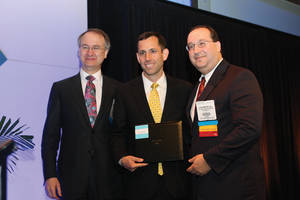
SVSFoundation/American College of Surgeons Mentored Clinical Scientist Development Award (K08) Philip P. Goodney, MD, of Dartmouth Medical School, received the SVS Foundation/American College of Surgeons Mentored Clinical Scientist Development Award. Dr. Goodney is shown with Robert M. Zwolak, MD (left), and Alan Dardik, MD (right).
EJ Wylie Traveling Fellowship
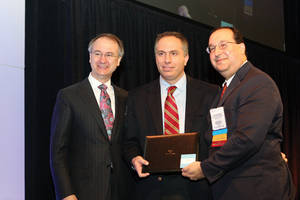
Rabih A. Chaer, MD, of the University of Pittsburgh School of Medicine, received the EJ Wylie Traveling Fellowship from Dr. Zwolak and Dr. Dardik.
SVS Foundation Resident Research Prize
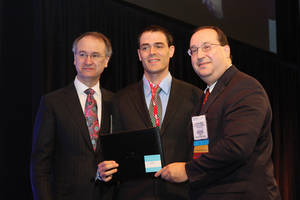
Clay C. Quint, MD, PhD, of the Cleveland Clinic Lerner College of Medicine, received the SVS Foundation Resident Research Prize for his paper "Decelluarized Human Tissue Engineered Vessel as an Arterial Conduit" from Dr. Zwolak and Dr. Dardik.
2011 SVS Women's Leadership Training Grant
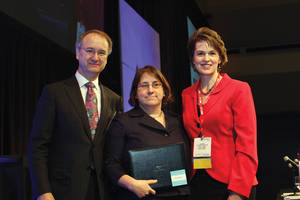
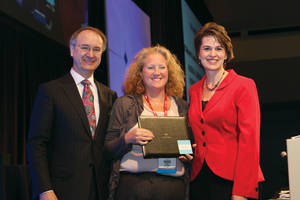
Audra A. Duncan, MD, of the Mayo Clinic (top photo, center) and Robyn A. Macsata, MD, of the Veterans Affairs Medical Center (bottom photo, center) received the 2011 SVS Women’s Leadership Training Grant from Dr. Zwolak and Amy Reed, MD.
SVS Foundation Student Research Fellowships
The following individuals received SVS Foundation Student Research Fellowships:
Sara Bartlett, Washington University
Julia Glaser, Beth Israel Deaconess Medical Center
Calvin Harberg, University of Wisconsin- Madison School of Medicine
Matthew Huber, University of Florida
Daniel Lee, University of Rochester School of Medicine and Dentistry
John Mitchell, University of Nebraska Medical Center
Doran Mix, University of Rochester Medical Center
Viraj Raygor, University of California San Francisco
SVS Clinical Research Seed Grants
Marlene Grenon, MD, University of California San Francisco
Erica Mitchell, MD, Oregon Health and Science University
David Stone, MD, Dartmouth Medical School
SVS International Scholars
Dr. Zhihui Dong -- China
US Mentor: Wei Zhou, MD
Dr. Arturs Ligers -- Latvija
US Mentor: Alik Farber, MD
Dr. Melina Vega De Ceniga -- Spain
US Mentor: Luis Echeverri, MD
Dr. Abebe Bekele Zerihun -- Ethiopia
US Mentor: Heitham Hassoun, MD
The SVS® Foundation and the Society for Vascular Surgery® (SVS) Awards were presented at the opening SVS session of the 2011 Vascular Annual Meeting.
SVSFoundation/American College of Surgeons Mentored Clinical Scientist Development Award (K08) Philip P. Goodney, MD, of Dartmouth Medical School, received the SVS Foundation/American College of Surgeons Mentored Clinical Scientist Development Award. Dr. Goodney is shown with Robert M. Zwolak, MD (left), and Alan Dardik, MD (right).
EJ Wylie Traveling Fellowship
Rabih A. Chaer, MD, of the University of Pittsburgh School of Medicine, received the EJ Wylie Traveling Fellowship from Dr. Zwolak and Dr. Dardik.
SVS Foundation Resident Research Prize
Clay C. Quint, MD, PhD, of the Cleveland Clinic Lerner College of Medicine, received the SVS Foundation Resident Research Prize for his paper "Decelluarized Human Tissue Engineered Vessel as an Arterial Conduit" from Dr. Zwolak and Dr. Dardik.
2011 SVS Women's Leadership Training Grant
Audra A. Duncan, MD, of the Mayo Clinic (top photo, center) and Robyn A. Macsata, MD, of the Veterans Affairs Medical Center (bottom photo, center) received the 2011 SVS Women’s Leadership Training Grant from Dr. Zwolak and Amy Reed, MD.
SVS Foundation Student Research Fellowships
The following individuals received SVS Foundation Student Research Fellowships:
Sara Bartlett, Washington University
Julia Glaser, Beth Israel Deaconess Medical Center
Calvin Harberg, University of Wisconsin- Madison School of Medicine
Matthew Huber, University of Florida
Daniel Lee, University of Rochester School of Medicine and Dentistry
John Mitchell, University of Nebraska Medical Center
Doran Mix, University of Rochester Medical Center
Viraj Raygor, University of California San Francisco
SVS Clinical Research Seed Grants
Marlene Grenon, MD, University of California San Francisco
Erica Mitchell, MD, Oregon Health and Science University
David Stone, MD, Dartmouth Medical School
SVS International Scholars
Dr. Zhihui Dong -- China
US Mentor: Wei Zhou, MD
Dr. Arturs Ligers -- Latvija
US Mentor: Alik Farber, MD
Dr. Melina Vega De Ceniga -- Spain
US Mentor: Luis Echeverri, MD
Dr. Abebe Bekele Zerihun -- Ethiopia
US Mentor: Heitham Hassoun, MD
The SVS® Foundation and the Society for Vascular Surgery® (SVS) Awards were presented at the opening SVS session of the 2011 Vascular Annual Meeting.
SVSFoundation/American College of Surgeons Mentored Clinical Scientist Development Award (K08) Philip P. Goodney, MD, of Dartmouth Medical School, received the SVS Foundation/American College of Surgeons Mentored Clinical Scientist Development Award. Dr. Goodney is shown with Robert M. Zwolak, MD (left), and Alan Dardik, MD (right).
EJ Wylie Traveling Fellowship
Rabih A. Chaer, MD, of the University of Pittsburgh School of Medicine, received the EJ Wylie Traveling Fellowship from Dr. Zwolak and Dr. Dardik.
SVS Foundation Resident Research Prize
Clay C. Quint, MD, PhD, of the Cleveland Clinic Lerner College of Medicine, received the SVS Foundation Resident Research Prize for his paper "Decelluarized Human Tissue Engineered Vessel as an Arterial Conduit" from Dr. Zwolak and Dr. Dardik.
2011 SVS Women's Leadership Training Grant
Audra A. Duncan, MD, of the Mayo Clinic (top photo, center) and Robyn A. Macsata, MD, of the Veterans Affairs Medical Center (bottom photo, center) received the 2011 SVS Women’s Leadership Training Grant from Dr. Zwolak and Amy Reed, MD.
SVS Foundation Student Research Fellowships
The following individuals received SVS Foundation Student Research Fellowships:
Sara Bartlett, Washington University
Julia Glaser, Beth Israel Deaconess Medical Center
Calvin Harberg, University of Wisconsin- Madison School of Medicine
Matthew Huber, University of Florida
Daniel Lee, University of Rochester School of Medicine and Dentistry
John Mitchell, University of Nebraska Medical Center
Doran Mix, University of Rochester Medical Center
Viraj Raygor, University of California San Francisco
SVS Clinical Research Seed Grants
Marlene Grenon, MD, University of California San Francisco
Erica Mitchell, MD, Oregon Health and Science University
David Stone, MD, Dartmouth Medical School
SVS International Scholars
Dr. Zhihui Dong -- China
US Mentor: Wei Zhou, MD
Dr. Arturs Ligers -- Latvija
US Mentor: Alik Farber, MD
Dr. Melina Vega De Ceniga -- Spain
US Mentor: Luis Echeverri, MD
Dr. Abebe Bekele Zerihun -- Ethiopia
US Mentor: Heitham Hassoun, MD
Vascular Surgery Jeopardy During Vascular Annual Meeting
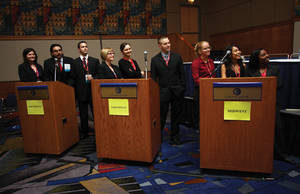
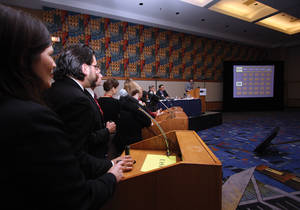
Fellows, residents, and students representing six regions of the country teamed up to compete in a lively game of vascular surgery jeopardy on Friday, June 17. Final Jeopardy featured the Mid-Atlantic and Midwest teams vying for victory as they answered the question, "Who described the use of Vinyon ‘N’ cloth tubes for treatment of AAAs in 1954." Answer: Who is Arthur Voorhees (and/or Arthur Blakemore).
1st Place:
Team Mid-Atlantic:
Tunde Almaroof, MD
Reid Armstrong Ravin
Zachary Kostun
2nd Place:
Team Midwest:
Han L. Hoang, MD
Angela Martin, MD
Jenetta Owen
Fellows, residents, and students representing six regions of the country teamed up to compete in a lively game of vascular surgery jeopardy on Friday, June 17. Final Jeopardy featured the Mid-Atlantic and Midwest teams vying for victory as they answered the question, "Who described the use of Vinyon ‘N’ cloth tubes for treatment of AAAs in 1954." Answer: Who is Arthur Voorhees (and/or Arthur Blakemore).
1st Place:
Team Mid-Atlantic:
Tunde Almaroof, MD
Reid Armstrong Ravin
Zachary Kostun
2nd Place:
Team Midwest:
Han L. Hoang, MD
Angela Martin, MD
Jenetta Owen
Fellows, residents, and students representing six regions of the country teamed up to compete in a lively game of vascular surgery jeopardy on Friday, June 17. Final Jeopardy featured the Mid-Atlantic and Midwest teams vying for victory as they answered the question, "Who described the use of Vinyon ‘N’ cloth tubes for treatment of AAAs in 1954." Answer: Who is Arthur Voorhees (and/or Arthur Blakemore).
1st Place:
Team Mid-Atlantic:
Tunde Almaroof, MD
Reid Armstrong Ravin
Zachary Kostun
2nd Place:
Team Midwest:
Han L. Hoang, MD
Angela Martin, MD
Jenetta Owen
Presidential Address
During his address, outgoing SVS President Robert M. Zwolak, MD, PhD, took the opportunity to inspire incoming students and residents, to commend the Society on its recent accomplishments, and to exhort the SVS membership to deal proactively with the current economic woes in the health care system.
Dr. Zwolak reminded students and residents that, whatever message they might take home from the economic information he presented, "the fact is that being a vascular surgeon is a fabulously rewarding career. Our work is technically complex; our patients have too many comorbidities; we work long hours. Nevertheless, we save lives, prevent strokes, and preserve our patients’ ability to walk. It’s a great career."
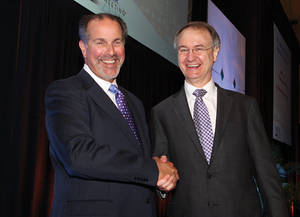
Dr. Zwolak presented a "state of the union" of the SVS, portraying its accomplishments in the last year. SVS is much better off than many other specialty societies whose membership is declining – in contrast, SVS has seen a 37% increase in membership over the last four years.
He highlighted important developments within the SVS during his tenure, but modestly indicated that "these are not my accomplishments, but the hard work of SVS members who rolled up their sleeves and did some hard work."
This past year, the SVS has implemented the Vascular Quality Initiative (VQI), a concept that involves the development of regional quality groups, "with the crown jewel being acquisition of the first professional society-owned Patient Safety Organization (PSO)," Dr. Zwolak said.
In education, a new Vascular Review Course – a concentrated two-day program for recertifying vascular surgeons – is coming this fall. VESAP 2, the follow-up to the "extraordinarily successful VESAP 1" will be ready in two weeks, and Sean Roddy, MD, has developed the first SVS coding manual. The SVS has set aside $100,000 for multicenter clinical studies, and has renamed its foundation the SVS Foundation in order to enhance its ability to attract contributions.
With regard to runaway health care costs, the need for reform, he said that the future demands that "volume-driven health care" – which focuses on number of patients and fee for service – must be replaced by "value-driven health care" – which focuses on the value of successful outcomes. Dr. Zwolak believes vascular surgery is in a good position to help enhance the health care system with its own focus on quality initiatives.
Unfortunately, Congress does not have the apparent will to fix the system, and the general public translates cost-effectiveness as rationing, and appropriate end-of-life care as "kill granny."
Dr. Zwolak pointed out that in the use of current relative value unit (RVU) payment structures, vascular surgery is not as bad off as many specialties. Major vascular procedures are still all down, however, with the sustainable growth rate (SGR) conversion factors falling well behind inflation, and reimbursement has seen a significant drop in buying power for vascular surgery codes overall since 1992.
"While Congress struggles with the SGR fix, what can SVS do to prospectively get from volume to value? We know there’s clinical value in almost everything we do, but we can define it better. Does Medicare really need 3 million carotid duplex exams and 1.6 million bilateral venous duplex exams each year? SVS has made dozens of trips to Baltimore over the past 15 years in an effort to convince the agency that vascular lab accreditation is a marker of quality and should be a requirement for Medicare reimbursement.
"They keep saying no, but we need to endure. Is it appropriate to study endovenous vein ablation or peripheral atherectomy to focus on indications, and to write and rewrite reasonable care guidelines to control the volume and enhance the clinical and economic value of the services we provide? I think so," he said.
"If SVS data and practice guidelines generate savings through responsible, evidence-based volume control, can we redirect a portion of those savings towards reimbursing complex open procedures whose inflation adjusted payments are 30% less than they were in 1991?" he asked.
For now, the answer to most of these questions is no. However, he expressed his belief that it is "worthwhile to test each of these concepts and to pursue them. Many of these questions just don’t have answers, but SVS is at the table, and we will remain so."
During his address, outgoing SVS President Robert M. Zwolak, MD, PhD, took the opportunity to inspire incoming students and residents, to commend the Society on its recent accomplishments, and to exhort the SVS membership to deal proactively with the current economic woes in the health care system.
Dr. Zwolak reminded students and residents that, whatever message they might take home from the economic information he presented, "the fact is that being a vascular surgeon is a fabulously rewarding career. Our work is technically complex; our patients have too many comorbidities; we work long hours. Nevertheless, we save lives, prevent strokes, and preserve our patients’ ability to walk. It’s a great career."
Dr. Zwolak presented a "state of the union" of the SVS, portraying its accomplishments in the last year. SVS is much better off than many other specialty societies whose membership is declining – in contrast, SVS has seen a 37% increase in membership over the last four years.
He highlighted important developments within the SVS during his tenure, but modestly indicated that "these are not my accomplishments, but the hard work of SVS members who rolled up their sleeves and did some hard work."
This past year, the SVS has implemented the Vascular Quality Initiative (VQI), a concept that involves the development of regional quality groups, "with the crown jewel being acquisition of the first professional society-owned Patient Safety Organization (PSO)," Dr. Zwolak said.
In education, a new Vascular Review Course – a concentrated two-day program for recertifying vascular surgeons – is coming this fall. VESAP 2, the follow-up to the "extraordinarily successful VESAP 1" will be ready in two weeks, and Sean Roddy, MD, has developed the first SVS coding manual. The SVS has set aside $100,000 for multicenter clinical studies, and has renamed its foundation the SVS Foundation in order to enhance its ability to attract contributions.
With regard to runaway health care costs, the need for reform, he said that the future demands that "volume-driven health care" – which focuses on number of patients and fee for service – must be replaced by "value-driven health care" – which focuses on the value of successful outcomes. Dr. Zwolak believes vascular surgery is in a good position to help enhance the health care system with its own focus on quality initiatives.
Unfortunately, Congress does not have the apparent will to fix the system, and the general public translates cost-effectiveness as rationing, and appropriate end-of-life care as "kill granny."
Dr. Zwolak pointed out that in the use of current relative value unit (RVU) payment structures, vascular surgery is not as bad off as many specialties. Major vascular procedures are still all down, however, with the sustainable growth rate (SGR) conversion factors falling well behind inflation, and reimbursement has seen a significant drop in buying power for vascular surgery codes overall since 1992.
"While Congress struggles with the SGR fix, what can SVS do to prospectively get from volume to value? We know there’s clinical value in almost everything we do, but we can define it better. Does Medicare really need 3 million carotid duplex exams and 1.6 million bilateral venous duplex exams each year? SVS has made dozens of trips to Baltimore over the past 15 years in an effort to convince the agency that vascular lab accreditation is a marker of quality and should be a requirement for Medicare reimbursement.
"They keep saying no, but we need to endure. Is it appropriate to study endovenous vein ablation or peripheral atherectomy to focus on indications, and to write and rewrite reasonable care guidelines to control the volume and enhance the clinical and economic value of the services we provide? I think so," he said.
"If SVS data and practice guidelines generate savings through responsible, evidence-based volume control, can we redirect a portion of those savings towards reimbursing complex open procedures whose inflation adjusted payments are 30% less than they were in 1991?" he asked.
For now, the answer to most of these questions is no. However, he expressed his belief that it is "worthwhile to test each of these concepts and to pursue them. Many of these questions just don’t have answers, but SVS is at the table, and we will remain so."
During his address, outgoing SVS President Robert M. Zwolak, MD, PhD, took the opportunity to inspire incoming students and residents, to commend the Society on its recent accomplishments, and to exhort the SVS membership to deal proactively with the current economic woes in the health care system.
Dr. Zwolak reminded students and residents that, whatever message they might take home from the economic information he presented, "the fact is that being a vascular surgeon is a fabulously rewarding career. Our work is technically complex; our patients have too many comorbidities; we work long hours. Nevertheless, we save lives, prevent strokes, and preserve our patients’ ability to walk. It’s a great career."
Dr. Zwolak presented a "state of the union" of the SVS, portraying its accomplishments in the last year. SVS is much better off than many other specialty societies whose membership is declining – in contrast, SVS has seen a 37% increase in membership over the last four years.
He highlighted important developments within the SVS during his tenure, but modestly indicated that "these are not my accomplishments, but the hard work of SVS members who rolled up their sleeves and did some hard work."
This past year, the SVS has implemented the Vascular Quality Initiative (VQI), a concept that involves the development of regional quality groups, "with the crown jewel being acquisition of the first professional society-owned Patient Safety Organization (PSO)," Dr. Zwolak said.
In education, a new Vascular Review Course – a concentrated two-day program for recertifying vascular surgeons – is coming this fall. VESAP 2, the follow-up to the "extraordinarily successful VESAP 1" will be ready in two weeks, and Sean Roddy, MD, has developed the first SVS coding manual. The SVS has set aside $100,000 for multicenter clinical studies, and has renamed its foundation the SVS Foundation in order to enhance its ability to attract contributions.
With regard to runaway health care costs, the need for reform, he said that the future demands that "volume-driven health care" – which focuses on number of patients and fee for service – must be replaced by "value-driven health care" – which focuses on the value of successful outcomes. Dr. Zwolak believes vascular surgery is in a good position to help enhance the health care system with its own focus on quality initiatives.
Unfortunately, Congress does not have the apparent will to fix the system, and the general public translates cost-effectiveness as rationing, and appropriate end-of-life care as "kill granny."
Dr. Zwolak pointed out that in the use of current relative value unit (RVU) payment structures, vascular surgery is not as bad off as many specialties. Major vascular procedures are still all down, however, with the sustainable growth rate (SGR) conversion factors falling well behind inflation, and reimbursement has seen a significant drop in buying power for vascular surgery codes overall since 1992.
"While Congress struggles with the SGR fix, what can SVS do to prospectively get from volume to value? We know there’s clinical value in almost everything we do, but we can define it better. Does Medicare really need 3 million carotid duplex exams and 1.6 million bilateral venous duplex exams each year? SVS has made dozens of trips to Baltimore over the past 15 years in an effort to convince the agency that vascular lab accreditation is a marker of quality and should be a requirement for Medicare reimbursement.
"They keep saying no, but we need to endure. Is it appropriate to study endovenous vein ablation or peripheral atherectomy to focus on indications, and to write and rewrite reasonable care guidelines to control the volume and enhance the clinical and economic value of the services we provide? I think so," he said.
"If SVS data and practice guidelines generate savings through responsible, evidence-based volume control, can we redirect a portion of those savings towards reimbursing complex open procedures whose inflation adjusted payments are 30% less than they were in 1991?" he asked.
For now, the answer to most of these questions is no. However, he expressed his belief that it is "worthwhile to test each of these concepts and to pursue them. Many of these questions just don’t have answers, but SVS is at the table, and we will remain so."
Welcome New SVS Members
The Society for Vascular Surgery membership has approved the following list of 142 new members (89 Active, 13 Affiliate, and 40 International):
Active
Oliver Aalami, MD
Christopher Abularrage, MD
Abedelkarim Abushmaies, MD
Eric Adams, MD
Paul Aka, MD
Grady Alsabrook, MD
Mehrdad Amirhamzeh, MD
James Anderson, MD
Omar Araim, MD
Clinton Atkinson, MD
Joseph Babrowitcz, MD
Zachary Baldwin, MD
Joel Barbato, MD
Donald Baril, MD
Shelly Beldsoe, MD
Kendall Boone, MD
Jonathan Bowman, MD
Christopher Chambers, MD
Mohiuddin Cheema, MD
Jason Chiriano, DO
Tze Tec Chong, MD
Marco Cioppi, MD
John Conra, MD
Daniel Cox, MD
Brian DeRubertis, MD
James Ebaugh, MD
Thomas Evans, MD
Giovanni Ferrante, MD
Mark Fugate, MD
J. Timothy Fulenwider, MD
Clifford Louis Garrard, MD
Ramyar Gilani, MD
Joseph Griffin, MD
Gary Gwertzman, MD
Stuart Harlin, MD
James Herrington, MD
Chantel Hile, MD
Benjamin Jackson, MD
Kevin James, MD
Prasad Jetty, MD
Jeffrey Kalish, MD
Pierre Karam, MD
Kamran Karimi, MD
Thomas Kartis Jr., MD
Ahmed Khalil, MD
Todd Kihara, MD
Alfred Laborde, MD
Charles Larosa, MD
William Lee, MD
Fedor Lurie, MD
John Marek, MD
Tara Mastracci, MD
Jaro Mayda, MD
Kevin McBride, MD
Jose Mena, MD
Robert Moglia, MD
Raghunandan Motagananahalli, MD
Albier Mousa, MD
Firas Mussa, MD
Sephere Naficy, MD
Mohammad Nasir Khan, MD
Mark Ombrellaro, MD
Peter Patetsios, MD
Jateen Prema, MD
Reagan Quan, MD
Saum Rahimi, MD
Michael Resnikoff, MD
Jorge Rey, MD
William Robinson, MD
Allen Rubin, MD
Patrick Ryan, MD
Rakesh Safaya, MD
James Scanlon, MD
Christopher Scibelli, MD
Brian Sellers, MD
Chinmaya Shelgikar, MD
Kapil Simlote, MD
Tae Song, MD
Walter Surowiec, DO
Robert Tahara, MD
Subhash Thakur, MD
James Tober, MD
Nirman Tulsyan, MD
Julio Vasquez, MD
Trung Vo, MD
Grace Wang, MD
Michael Wilderman, MD
Karen Woo, MD
Dai Yamanouchi, MD
Affiliate
John Cullen
Vickie Franck, RN
Rebecca Herlitz, NP
Jaclyn Kournoian, NP-C
Mari Kramer, RVT
Jason Lenz, NP
Carol Madia, PA-C
Margaret "Megann" Mosley, NP-C
Dawn Olsen, PA-C
Daniel Quist, PA
Jim Smurro
Penny Vinnedge, PA-C
Laurie Vlasak, RN, CNP
International
Amr Abdulbaky, MD
Sherif Balbaa, MD
Luis Bechara-Zamudio, MD
Rashad Bishara, MD
Jazsef Csordas, MD
Nelson Delucci, MD
Bendi Divakar, MD
Wassila Elkashishi, MD
Mostafa El-lekawy, MD
Said Elmallah, MD
Hisham Elsharkawy, MD
Hussein Elwan, MD
Keresztury Gabor, MD
Rafael Garrido, MD
Gregory Gosi, MD
Wei Guo, MD
Stephan Haulon, MD
Ashraf Hidayet, MD
Ahmed Hosny, MD
Nikola Hristov, MD
Usama Imam Abdulaal, MD
Zaiping Jing, MD
Jin Hyun Joh, MD
Gyorgy Juhasz, MD
Mamdouh Kotb, MD
Qinsheng Lu, MD
Hossam Mansour, MD
Alaa Marzouk, MD
Tarek Radwan, MD
Alvaro Razuk, MD
Ehab Saad, MD
Abpbaker Salama Elssedik, MD
Ahmed Sayed, MD
Alaaeldin Sharaby, MD
Hassan Soliman, MD
Jorge Sorraco, MD
Peter Sotonyi, MD
Ahmed Taha, MD
Istan Thomka, MD
Baixi Zhuang, MD
The Society for Vascular Surgery membership has approved the following list of 142 new members (89 Active, 13 Affiliate, and 40 International):
Active
Oliver Aalami, MD
Christopher Abularrage, MD
Abedelkarim Abushmaies, MD
Eric Adams, MD
Paul Aka, MD
Grady Alsabrook, MD
Mehrdad Amirhamzeh, MD
James Anderson, MD
Omar Araim, MD
Clinton Atkinson, MD
Joseph Babrowitcz, MD
Zachary Baldwin, MD
Joel Barbato, MD
Donald Baril, MD
Shelly Beldsoe, MD
Kendall Boone, MD
Jonathan Bowman, MD
Christopher Chambers, MD
Mohiuddin Cheema, MD
Jason Chiriano, DO
Tze Tec Chong, MD
Marco Cioppi, MD
John Conra, MD
Daniel Cox, MD
Brian DeRubertis, MD
James Ebaugh, MD
Thomas Evans, MD
Giovanni Ferrante, MD
Mark Fugate, MD
J. Timothy Fulenwider, MD
Clifford Louis Garrard, MD
Ramyar Gilani, MD
Joseph Griffin, MD
Gary Gwertzman, MD
Stuart Harlin, MD
James Herrington, MD
Chantel Hile, MD
Benjamin Jackson, MD
Kevin James, MD
Prasad Jetty, MD
Jeffrey Kalish, MD
Pierre Karam, MD
Kamran Karimi, MD
Thomas Kartis Jr., MD
Ahmed Khalil, MD
Todd Kihara, MD
Alfred Laborde, MD
Charles Larosa, MD
William Lee, MD
Fedor Lurie, MD
John Marek, MD
Tara Mastracci, MD
Jaro Mayda, MD
Kevin McBride, MD
Jose Mena, MD
Robert Moglia, MD
Raghunandan Motagananahalli, MD
Albier Mousa, MD
Firas Mussa, MD
Sephere Naficy, MD
Mohammad Nasir Khan, MD
Mark Ombrellaro, MD
Peter Patetsios, MD
Jateen Prema, MD
Reagan Quan, MD
Saum Rahimi, MD
Michael Resnikoff, MD
Jorge Rey, MD
William Robinson, MD
Allen Rubin, MD
Patrick Ryan, MD
Rakesh Safaya, MD
James Scanlon, MD
Christopher Scibelli, MD
Brian Sellers, MD
Chinmaya Shelgikar, MD
Kapil Simlote, MD
Tae Song, MD
Walter Surowiec, DO
Robert Tahara, MD
Subhash Thakur, MD
James Tober, MD
Nirman Tulsyan, MD
Julio Vasquez, MD
Trung Vo, MD
Grace Wang, MD
Michael Wilderman, MD
Karen Woo, MD
Dai Yamanouchi, MD
Affiliate
John Cullen
Vickie Franck, RN
Rebecca Herlitz, NP
Jaclyn Kournoian, NP-C
Mari Kramer, RVT
Jason Lenz, NP
Carol Madia, PA-C
Margaret "Megann" Mosley, NP-C
Dawn Olsen, PA-C
Daniel Quist, PA
Jim Smurro
Penny Vinnedge, PA-C
Laurie Vlasak, RN, CNP
International
Amr Abdulbaky, MD
Sherif Balbaa, MD
Luis Bechara-Zamudio, MD
Rashad Bishara, MD
Jazsef Csordas, MD
Nelson Delucci, MD
Bendi Divakar, MD
Wassila Elkashishi, MD
Mostafa El-lekawy, MD
Said Elmallah, MD
Hisham Elsharkawy, MD
Hussein Elwan, MD
Keresztury Gabor, MD
Rafael Garrido, MD
Gregory Gosi, MD
Wei Guo, MD
Stephan Haulon, MD
Ashraf Hidayet, MD
Ahmed Hosny, MD
Nikola Hristov, MD
Usama Imam Abdulaal, MD
Zaiping Jing, MD
Jin Hyun Joh, MD
Gyorgy Juhasz, MD
Mamdouh Kotb, MD
Qinsheng Lu, MD
Hossam Mansour, MD
Alaa Marzouk, MD
Tarek Radwan, MD
Alvaro Razuk, MD
Ehab Saad, MD
Abpbaker Salama Elssedik, MD
Ahmed Sayed, MD
Alaaeldin Sharaby, MD
Hassan Soliman, MD
Jorge Sorraco, MD
Peter Sotonyi, MD
Ahmed Taha, MD
Istan Thomka, MD
Baixi Zhuang, MD
The Society for Vascular Surgery membership has approved the following list of 142 new members (89 Active, 13 Affiliate, and 40 International):
Active
Oliver Aalami, MD
Christopher Abularrage, MD
Abedelkarim Abushmaies, MD
Eric Adams, MD
Paul Aka, MD
Grady Alsabrook, MD
Mehrdad Amirhamzeh, MD
James Anderson, MD
Omar Araim, MD
Clinton Atkinson, MD
Joseph Babrowitcz, MD
Zachary Baldwin, MD
Joel Barbato, MD
Donald Baril, MD
Shelly Beldsoe, MD
Kendall Boone, MD
Jonathan Bowman, MD
Christopher Chambers, MD
Mohiuddin Cheema, MD
Jason Chiriano, DO
Tze Tec Chong, MD
Marco Cioppi, MD
John Conra, MD
Daniel Cox, MD
Brian DeRubertis, MD
James Ebaugh, MD
Thomas Evans, MD
Giovanni Ferrante, MD
Mark Fugate, MD
J. Timothy Fulenwider, MD
Clifford Louis Garrard, MD
Ramyar Gilani, MD
Joseph Griffin, MD
Gary Gwertzman, MD
Stuart Harlin, MD
James Herrington, MD
Chantel Hile, MD
Benjamin Jackson, MD
Kevin James, MD
Prasad Jetty, MD
Jeffrey Kalish, MD
Pierre Karam, MD
Kamran Karimi, MD
Thomas Kartis Jr., MD
Ahmed Khalil, MD
Todd Kihara, MD
Alfred Laborde, MD
Charles Larosa, MD
William Lee, MD
Fedor Lurie, MD
John Marek, MD
Tara Mastracci, MD
Jaro Mayda, MD
Kevin McBride, MD
Jose Mena, MD
Robert Moglia, MD
Raghunandan Motagananahalli, MD
Albier Mousa, MD
Firas Mussa, MD
Sephere Naficy, MD
Mohammad Nasir Khan, MD
Mark Ombrellaro, MD
Peter Patetsios, MD
Jateen Prema, MD
Reagan Quan, MD
Saum Rahimi, MD
Michael Resnikoff, MD
Jorge Rey, MD
William Robinson, MD
Allen Rubin, MD
Patrick Ryan, MD
Rakesh Safaya, MD
James Scanlon, MD
Christopher Scibelli, MD
Brian Sellers, MD
Chinmaya Shelgikar, MD
Kapil Simlote, MD
Tae Song, MD
Walter Surowiec, DO
Robert Tahara, MD
Subhash Thakur, MD
James Tober, MD
Nirman Tulsyan, MD
Julio Vasquez, MD
Trung Vo, MD
Grace Wang, MD
Michael Wilderman, MD
Karen Woo, MD
Dai Yamanouchi, MD
Affiliate
John Cullen
Vickie Franck, RN
Rebecca Herlitz, NP
Jaclyn Kournoian, NP-C
Mari Kramer, RVT
Jason Lenz, NP
Carol Madia, PA-C
Margaret "Megann" Mosley, NP-C
Dawn Olsen, PA-C
Daniel Quist, PA
Jim Smurro
Penny Vinnedge, PA-C
Laurie Vlasak, RN, CNP
International
Amr Abdulbaky, MD
Sherif Balbaa, MD
Luis Bechara-Zamudio, MD
Rashad Bishara, MD
Jazsef Csordas, MD
Nelson Delucci, MD
Bendi Divakar, MD
Wassila Elkashishi, MD
Mostafa El-lekawy, MD
Said Elmallah, MD
Hisham Elsharkawy, MD
Hussein Elwan, MD
Keresztury Gabor, MD
Rafael Garrido, MD
Gregory Gosi, MD
Wei Guo, MD
Stephan Haulon, MD
Ashraf Hidayet, MD
Ahmed Hosny, MD
Nikola Hristov, MD
Usama Imam Abdulaal, MD
Zaiping Jing, MD
Jin Hyun Joh, MD
Gyorgy Juhasz, MD
Mamdouh Kotb, MD
Qinsheng Lu, MD
Hossam Mansour, MD
Alaa Marzouk, MD
Tarek Radwan, MD
Alvaro Razuk, MD
Ehab Saad, MD
Abpbaker Salama Elssedik, MD
Ahmed Sayed, MD
Alaaeldin Sharaby, MD
Hassan Soliman, MD
Jorge Sorraco, MD
Peter Sotonyi, MD
Ahmed Taha, MD
Istan Thomka, MD
Baixi Zhuang, MD
Dr. Wesley Moore: SVS Lifetime Achievement Award
The Society for Vascular Surgery Lifetime Achievement Award was presented to Dr. Wesley Moore at this year’s Vascular Annual Meeting.
The SVS Lifetime Achievement Award is the highest honor that the Society bestows on one of its members. Selection for this honor recognizes an individual’s outstanding and sustained contributions both to the profession and to SVS, as well as exemplary professional practice and leadership.
The recipient of this year’s SVS Lifetime Achievement Award exemplifies the qualities for which the award is intended to recognize. Dr. Moore has been a leading figure and a national and international force in vascular surgery for nearly five decades and still maintains that preeminence today.
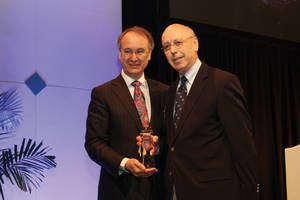
Dr. Moore has contributed enormously to our specialty and to the SVS, serving as Secretary in the early 1980’s and then as the youngest vascular surgeon elected to President in 1986. Since his term as President, he has continuously contributed important articles to the SVS annual meeting and chaired numerous key SVS committees, especially those having to do with establishing standards of practice and training for vascular surgeons. Because of his contributions to our specialty and the SVS, he is among the most recognized and respected vascular surgeons in our country and the world. His reputation has been further enhanced by his selection as Chair for key committees and duties in the American Heart Association and the American College of Surgeons. He has also served as President of several regional vascular societies and represented our specialty and the SVS well by his actions and leadership.
In his position as Chief of Vascular Surgery at the University of AZ and UCLA for over three decades, Dr. Moore served as a mentor and role model for countless vascular surgeons. In addition he founded and led the UCLA’s annual vascular fellows and residents course for over 25 years. Because of this course and his numerous other awards for excellence in teaching, he is one of the most preeminent and respected educators in the field.
He is a leader in clinical vascular surgery research and innovations. He has authored approximately 300 important peer reviewed articles, over 200 book chapters and served as chief editor or author of more than 15 widely read vascular textbooks or monographs. Dr. Moore has been at the leading edge of research in many areas of vascular surgery throughout his long career. First in the development of prosthetic vascular grafts and the treatment of graft infections; next in improving lower extremity bypass procedures; and throughout his career he has been a leader in studying and improving carotid surgery.
In the last 15 years, he has been at the forefront of the endovascular revolution, and was one of the first senior vascular surgeons to embrace and promote EVAR and other endovascular treatments. He was the first to place an FDA-approved endograft in a patient with AAA in 1993. He has been the principal investigator of a number of EVAR device trials and many of his articles in this field have achieved landmark status. And finally, he was one of the key vascular surgeons to organize and complete the recently published CREST study comparing carotid endarterectomy with stenting.
In addition to all of these achievements throughout his career and the countless prestigious awards he has received for them, Dr. Moore has been an outstanding clinical vascular surgeon. He is still the "go to expert" for difficult aortic and carotid cases in his institution and his area.
The Society for Vascular Surgery Lifetime Achievement Award was presented to Dr. Wesley Moore at this year’s Vascular Annual Meeting.
The SVS Lifetime Achievement Award is the highest honor that the Society bestows on one of its members. Selection for this honor recognizes an individual’s outstanding and sustained contributions both to the profession and to SVS, as well as exemplary professional practice and leadership.
The recipient of this year’s SVS Lifetime Achievement Award exemplifies the qualities for which the award is intended to recognize. Dr. Moore has been a leading figure and a national and international force in vascular surgery for nearly five decades and still maintains that preeminence today.
Dr. Moore has contributed enormously to our specialty and to the SVS, serving as Secretary in the early 1980’s and then as the youngest vascular surgeon elected to President in 1986. Since his term as President, he has continuously contributed important articles to the SVS annual meeting and chaired numerous key SVS committees, especially those having to do with establishing standards of practice and training for vascular surgeons. Because of his contributions to our specialty and the SVS, he is among the most recognized and respected vascular surgeons in our country and the world. His reputation has been further enhanced by his selection as Chair for key committees and duties in the American Heart Association and the American College of Surgeons. He has also served as President of several regional vascular societies and represented our specialty and the SVS well by his actions and leadership.
In his position as Chief of Vascular Surgery at the University of AZ and UCLA for over three decades, Dr. Moore served as a mentor and role model for countless vascular surgeons. In addition he founded and led the UCLA’s annual vascular fellows and residents course for over 25 years. Because of this course and his numerous other awards for excellence in teaching, he is one of the most preeminent and respected educators in the field.
He is a leader in clinical vascular surgery research and innovations. He has authored approximately 300 important peer reviewed articles, over 200 book chapters and served as chief editor or author of more than 15 widely read vascular textbooks or monographs. Dr. Moore has been at the leading edge of research in many areas of vascular surgery throughout his long career. First in the development of prosthetic vascular grafts and the treatment of graft infections; next in improving lower extremity bypass procedures; and throughout his career he has been a leader in studying and improving carotid surgery.
In the last 15 years, he has been at the forefront of the endovascular revolution, and was one of the first senior vascular surgeons to embrace and promote EVAR and other endovascular treatments. He was the first to place an FDA-approved endograft in a patient with AAA in 1993. He has been the principal investigator of a number of EVAR device trials and many of his articles in this field have achieved landmark status. And finally, he was one of the key vascular surgeons to organize and complete the recently published CREST study comparing carotid endarterectomy with stenting.
In addition to all of these achievements throughout his career and the countless prestigious awards he has received for them, Dr. Moore has been an outstanding clinical vascular surgeon. He is still the "go to expert" for difficult aortic and carotid cases in his institution and his area.
The Society for Vascular Surgery Lifetime Achievement Award was presented to Dr. Wesley Moore at this year’s Vascular Annual Meeting.
The SVS Lifetime Achievement Award is the highest honor that the Society bestows on one of its members. Selection for this honor recognizes an individual’s outstanding and sustained contributions both to the profession and to SVS, as well as exemplary professional practice and leadership.
The recipient of this year’s SVS Lifetime Achievement Award exemplifies the qualities for which the award is intended to recognize. Dr. Moore has been a leading figure and a national and international force in vascular surgery for nearly five decades and still maintains that preeminence today.
Dr. Moore has contributed enormously to our specialty and to the SVS, serving as Secretary in the early 1980’s and then as the youngest vascular surgeon elected to President in 1986. Since his term as President, he has continuously contributed important articles to the SVS annual meeting and chaired numerous key SVS committees, especially those having to do with establishing standards of practice and training for vascular surgeons. Because of his contributions to our specialty and the SVS, he is among the most recognized and respected vascular surgeons in our country and the world. His reputation has been further enhanced by his selection as Chair for key committees and duties in the American Heart Association and the American College of Surgeons. He has also served as President of several regional vascular societies and represented our specialty and the SVS well by his actions and leadership.
In his position as Chief of Vascular Surgery at the University of AZ and UCLA for over three decades, Dr. Moore served as a mentor and role model for countless vascular surgeons. In addition he founded and led the UCLA’s annual vascular fellows and residents course for over 25 years. Because of this course and his numerous other awards for excellence in teaching, he is one of the most preeminent and respected educators in the field.
He is a leader in clinical vascular surgery research and innovations. He has authored approximately 300 important peer reviewed articles, over 200 book chapters and served as chief editor or author of more than 15 widely read vascular textbooks or monographs. Dr. Moore has been at the leading edge of research in many areas of vascular surgery throughout his long career. First in the development of prosthetic vascular grafts and the treatment of graft infections; next in improving lower extremity bypass procedures; and throughout his career he has been a leader in studying and improving carotid surgery.
In the last 15 years, he has been at the forefront of the endovascular revolution, and was one of the first senior vascular surgeons to embrace and promote EVAR and other endovascular treatments. He was the first to place an FDA-approved endograft in a patient with AAA in 1993. He has been the principal investigator of a number of EVAR device trials and many of his articles in this field have achieved landmark status. And finally, he was one of the key vascular surgeons to organize and complete the recently published CREST study comparing carotid endarterectomy with stenting.
In addition to all of these achievements throughout his career and the countless prestigious awards he has received for them, Dr. Moore has been an outstanding clinical vascular surgeon. He is still the "go to expert" for difficult aortic and carotid cases in his institution and his area.
SVS New Distinguished Fellows
At the Distinguished Fellows Luncheon on June 18, 12 members were approved as Distinguished Fellows. Distinguished Fellow designation is bestowed upon Active, International, or Senior members who are vascular surgeons and who distinguish themselves in a sustained manner by making substantial contributions in two of three categories: research, service, or education. The new Fellows are the following:
Neal Cayne, MD
Rabih Chaer, MD
Carlo Dall’Olmo, MD
Ellen Dillavou, MD
Paul Joseph DiMuzio, MD
Matthew S. Edwards, MD
Harvey Edward Garrett, MD
Greg Landry, MD
Sean Lyden, MD
Gustavo Oderich, MD
Vincent L. Rowe, MD
Marc Schermerhorn, MD
At the Distinguished Fellows Luncheon on June 18, 12 members were approved as Distinguished Fellows. Distinguished Fellow designation is bestowed upon Active, International, or Senior members who are vascular surgeons and who distinguish themselves in a sustained manner by making substantial contributions in two of three categories: research, service, or education. The new Fellows are the following:
Neal Cayne, MD
Rabih Chaer, MD
Carlo Dall’Olmo, MD
Ellen Dillavou, MD
Paul Joseph DiMuzio, MD
Matthew S. Edwards, MD
Harvey Edward Garrett, MD
Greg Landry, MD
Sean Lyden, MD
Gustavo Oderich, MD
Vincent L. Rowe, MD
Marc Schermerhorn, MD
At the Distinguished Fellows Luncheon on June 18, 12 members were approved as Distinguished Fellows. Distinguished Fellow designation is bestowed upon Active, International, or Senior members who are vascular surgeons and who distinguish themselves in a sustained manner by making substantial contributions in two of three categories: research, service, or education. The new Fellows are the following:
Neal Cayne, MD
Rabih Chaer, MD
Carlo Dall’Olmo, MD
Ellen Dillavou, MD
Paul Joseph DiMuzio, MD
Matthew S. Edwards, MD
Harvey Edward Garrett, MD
Greg Landry, MD
Sean Lyden, MD
Gustavo Oderich, MD
Vincent L. Rowe, MD
Marc Schermerhorn, MD
Chinese Vascular Surgeons at 2011 Vascular Annual Meeting
Chinese vascular surgeons were well represented at the 2011 Vascular Annual Meeting. A group of 23, headed by Professor YuQi Wang, President of Chinese Society of Vascular Surgery, attended. This is the first time a large group of Chinese vascular surgeons, including 16 professors of surgery, have attended the meeting at one time.
The Chinese surgeons and SVS leadership had a luncheon during the Vascular Annual Meeting where they discussed the role of China within the World Federation of Vascular Societies. During the luncheon, Past SVS President, Dr. Robert M. Zwolak, spoke about the future of SVS followed by President YuQi Wang’s discussion of the current activities of the Chinese Society of Vascular Surgery. Both leaders talked about the potential to develop a Chinese SVS chapter. In his closing remarks, Dr. James S. T. Yao urged Chinese surgeons to work closely with U.S. surgeons to create further progress in both countries and encouraged Chinese surgeons to participate on the world stage of vascular surgery. Dr. Yao reminded all that such a cooperative effort will be good for future generations of young vascular surgeons from both China and the United States.
In addition to attending the Vascular Annual Meeting, Northwestern University, with the Vascular Surgery Division, hosted a special meeting with the visiting Chinese surgeons prior to the meeting. This meeting was an additional venue for the Chinese surgeons to showcase their practices and presentations.
Both meetings were successful with discussions on the rich experience of the Chinese surgeons in treating aortic dissection. Professor Zaiping Jing of Second Military Medical University of Shanghai and Professor Shu Chang of Central South University, Hunan, presented their experience in managing 1,000 and 600 cases of aortic dissection, respectively. Dr. Dong of Beijing presented his research experience in the management of critical ischemia with stem cell therapies. The open forum ended with emphasis on the use of the Internet for future exchange between the Chinese and U.S. surgeons.
The trip was supported by Cordis Endovascular China and was organized by Dr. Yao in conjunction with the SVS International Relations Committee, Dr. Enrico Ascher, chair of the committee, and Drs. Greg Sicard, Zwolak, Richard Cambria, and Peter Gloviczki. n
Chinese vascular surgeons were well represented at the 2011 Vascular Annual Meeting. A group of 23, headed by Professor YuQi Wang, President of Chinese Society of Vascular Surgery, attended. This is the first time a large group of Chinese vascular surgeons, including 16 professors of surgery, have attended the meeting at one time.
The Chinese surgeons and SVS leadership had a luncheon during the Vascular Annual Meeting where they discussed the role of China within the World Federation of Vascular Societies. During the luncheon, Past SVS President, Dr. Robert M. Zwolak, spoke about the future of SVS followed by President YuQi Wang’s discussion of the current activities of the Chinese Society of Vascular Surgery. Both leaders talked about the potential to develop a Chinese SVS chapter. In his closing remarks, Dr. James S. T. Yao urged Chinese surgeons to work closely with U.S. surgeons to create further progress in both countries and encouraged Chinese surgeons to participate on the world stage of vascular surgery. Dr. Yao reminded all that such a cooperative effort will be good for future generations of young vascular surgeons from both China and the United States.
In addition to attending the Vascular Annual Meeting, Northwestern University, with the Vascular Surgery Division, hosted a special meeting with the visiting Chinese surgeons prior to the meeting. This meeting was an additional venue for the Chinese surgeons to showcase their practices and presentations.
Both meetings were successful with discussions on the rich experience of the Chinese surgeons in treating aortic dissection. Professor Zaiping Jing of Second Military Medical University of Shanghai and Professor Shu Chang of Central South University, Hunan, presented their experience in managing 1,000 and 600 cases of aortic dissection, respectively. Dr. Dong of Beijing presented his research experience in the management of critical ischemia with stem cell therapies. The open forum ended with emphasis on the use of the Internet for future exchange between the Chinese and U.S. surgeons.
The trip was supported by Cordis Endovascular China and was organized by Dr. Yao in conjunction with the SVS International Relations Committee, Dr. Enrico Ascher, chair of the committee, and Drs. Greg Sicard, Zwolak, Richard Cambria, and Peter Gloviczki. n
Chinese vascular surgeons were well represented at the 2011 Vascular Annual Meeting. A group of 23, headed by Professor YuQi Wang, President of Chinese Society of Vascular Surgery, attended. This is the first time a large group of Chinese vascular surgeons, including 16 professors of surgery, have attended the meeting at one time.
The Chinese surgeons and SVS leadership had a luncheon during the Vascular Annual Meeting where they discussed the role of China within the World Federation of Vascular Societies. During the luncheon, Past SVS President, Dr. Robert M. Zwolak, spoke about the future of SVS followed by President YuQi Wang’s discussion of the current activities of the Chinese Society of Vascular Surgery. Both leaders talked about the potential to develop a Chinese SVS chapter. In his closing remarks, Dr. James S. T. Yao urged Chinese surgeons to work closely with U.S. surgeons to create further progress in both countries and encouraged Chinese surgeons to participate on the world stage of vascular surgery. Dr. Yao reminded all that such a cooperative effort will be good for future generations of young vascular surgeons from both China and the United States.
In addition to attending the Vascular Annual Meeting, Northwestern University, with the Vascular Surgery Division, hosted a special meeting with the visiting Chinese surgeons prior to the meeting. This meeting was an additional venue for the Chinese surgeons to showcase their practices and presentations.
Both meetings were successful with discussions on the rich experience of the Chinese surgeons in treating aortic dissection. Professor Zaiping Jing of Second Military Medical University of Shanghai and Professor Shu Chang of Central South University, Hunan, presented their experience in managing 1,000 and 600 cases of aortic dissection, respectively. Dr. Dong of Beijing presented his research experience in the management of critical ischemia with stem cell therapies. The open forum ended with emphasis on the use of the Internet for future exchange between the Chinese and U.S. surgeons.
The trip was supported by Cordis Endovascular China and was organized by Dr. Yao in conjunction with the SVS International Relations Committee, Dr. Enrico Ascher, chair of the committee, and Drs. Greg Sicard, Zwolak, Richard Cambria, and Peter Gloviczki. n
Three Winners Chosen for SVS Poster Competition
A moderated poster competition took place at the 2011 Vascular Annual Meeting. Accepted abstracts selected by the SVS Program Committee for poster presentation went through a two-round judging process. The first round was a poster presentation of accepted posters divided into topic groups. The winners from each group went to a final round to present their poster in a Plenary Session Championship Round.
1st Prize Winner:
Warren J. Gasper, MD
University of California San Francisco, San Francisco, CA
Percutaneous Peri-Adventitial Guanethidine Delivery Induces Renal Artery Sympathectomy: Preclinical Experience and Implication for Refractory Hypertension
2nd: Omar P. Haqqani, MD
The Cardiovascular Center, Tufts Medical Center, Boston, MA
Radiation Exposure to Vascular Surgeons: Minimizing Your Risk
3rd: Marlin Wayne Causey, MD
Vascular Surgery, University of Washington, Seattle, WA
Imaging of Abdominal Aortic Aneurysms – Computerized Tomography and Three Dimensional Ultrasound Scan: A Comparison
A moderated poster competition took place at the 2011 Vascular Annual Meeting. Accepted abstracts selected by the SVS Program Committee for poster presentation went through a two-round judging process. The first round was a poster presentation of accepted posters divided into topic groups. The winners from each group went to a final round to present their poster in a Plenary Session Championship Round.
1st Prize Winner:
Warren J. Gasper, MD
University of California San Francisco, San Francisco, CA
Percutaneous Peri-Adventitial Guanethidine Delivery Induces Renal Artery Sympathectomy: Preclinical Experience and Implication for Refractory Hypertension
2nd: Omar P. Haqqani, MD
The Cardiovascular Center, Tufts Medical Center, Boston, MA
Radiation Exposure to Vascular Surgeons: Minimizing Your Risk
3rd: Marlin Wayne Causey, MD
Vascular Surgery, University of Washington, Seattle, WA
Imaging of Abdominal Aortic Aneurysms – Computerized Tomography and Three Dimensional Ultrasound Scan: A Comparison
A moderated poster competition took place at the 2011 Vascular Annual Meeting. Accepted abstracts selected by the SVS Program Committee for poster presentation went through a two-round judging process. The first round was a poster presentation of accepted posters divided into topic groups. The winners from each group went to a final round to present their poster in a Plenary Session Championship Round.
1st Prize Winner:
Warren J. Gasper, MD
University of California San Francisco, San Francisco, CA
Percutaneous Peri-Adventitial Guanethidine Delivery Induces Renal Artery Sympathectomy: Preclinical Experience and Implication for Refractory Hypertension
2nd: Omar P. Haqqani, MD
The Cardiovascular Center, Tufts Medical Center, Boston, MA
Radiation Exposure to Vascular Surgeons: Minimizing Your Risk
3rd: Marlin Wayne Causey, MD
Vascular Surgery, University of Washington, Seattle, WA
Imaging of Abdominal Aortic Aneurysms – Computerized Tomography and Three Dimensional Ultrasound Scan: A Comparison