User login
In JIA, etanercept associated with lower uveitis risk compared with methotrexate
AMSTERDAM – Etanercept does not appear to increase the risk of uveitis relative to methotrexate in children with juvenile idiopathic arthritis (JIA), according to a large retrospective cohort study presented at the EULAR 2018 Congress.
“When we added in a fully adjusted hazard ratio, it showed a lower risk in the development of uveitis in patients on etanercept [compared with methotrexate],” reported Rebecca Davies, a research assistant at the University of Manchester (England).
These data were characterized as reassuring for JIA patients being considered for etanercept, but Ms. Davies was cautious about suggesting that etanercept has a protective effect. Even though hazard ratios were calculated with propensity-adjusted Cox regression analyses, Ms. Davies believes the best interpretation of these data is that etanercept therapy is not likely to contribute significantly to the risk of uveitis.
The substantial differences between the comparator groups provide one reason to refrain from speculating that etanercept is protective against uveitis. The risk of uveitis is greater both in younger patients and in the first year after diagnosis. Patients in the etanercept group were older than patients in the methotrexate group and they started etanercept a longer time after the JIA diagnosis.
“The initiation of etanercept later in the disease may mean that more of these patients had already passed through the window of greatest risk,” Ms. Davies explained.
The data for this study were drawn from a British Society for Pediatric and Adolescent Rheumatology cohort registry. Confined to patients first starting as opposed to restarting therapy, 1,009 patients initiating etanercept were compared to 508 patients initiating methotrexate.
In addition to an older age (11 vs. 9 years) and disease duration at start of therapy (3 vs. 1 years), a lower proportion of patients in the etanercept group had a persistent oligoarthritis subtype (5% vs. 17%). During follow-up, there were 15 cases (0.15%) of uveitis in the etanercept group and 18 (3.5%) in the methotrexate group.
The crude incidence of uveitis was 0.6 per 100 patient-years for etanercept versus 2.4 per 100 patient-years for methotrexate, according to Ms. Davies. After adjustment for a broad number of variables, including age, gender, disease scores, disease duration, baseline steroid use, and the presence of comorbidities, there was still a 70% lower risk of uveitis among those treated with etanercept (hazard ratio 0.30; 95% confidence interval, 0.1-0.9).
The low relative rate of uveitis after starting etanercept is discordant with several previous studies, according to Ms. Davies. In two retrospective studies conducted in the United States and one in Canada, etanercept treatment was associated with higher rates of uveitis than other tumor necrosis factor inhibitors. In a German study, etanercept was associated with a higher risk of uveitis than that of methotrexate.
Although a highly effective anti-inflammatory agent such as etanercept might be expected to have a protective effect against uveitis, at least relative to methotrexate, Ms. Davies suggested that the previous reports of potential causal association and the limitations of this retrospective analysis require a more cautious interpretation.
“It is possible that those considered to be at high risk of developing uveitis were kept away from etanercept,” said Ms. Davis, providing one of several explanations why skepticism is needed in regard to assuming uveitis protection from etanercept.
With up to 1 in 10 patients with JIA eventually developing sight-threatening uveitis, risk management is a priority, according to Ms. Davies. Current guidelines in the United Kingdom call for an ophthalmologist consult within 6 weeks of a diagnosis. Although several risk factors for uveitis have been published, the goal of this study was to determine whether exposure to etanercept is among these risks. According to Ms. Davies, these data suggest that this is not the case, but prospective studies comparing etanercept to other biologics would be particularly helpful in determining which therapy is most appropriate in order to reduce uveitis risk.
SOURCE: EULAR 2018 Congress. Abstract OP0351.
AMSTERDAM – Etanercept does not appear to increase the risk of uveitis relative to methotrexate in children with juvenile idiopathic arthritis (JIA), according to a large retrospective cohort study presented at the EULAR 2018 Congress.
“When we added in a fully adjusted hazard ratio, it showed a lower risk in the development of uveitis in patients on etanercept [compared with methotrexate],” reported Rebecca Davies, a research assistant at the University of Manchester (England).
These data were characterized as reassuring for JIA patients being considered for etanercept, but Ms. Davies was cautious about suggesting that etanercept has a protective effect. Even though hazard ratios were calculated with propensity-adjusted Cox regression analyses, Ms. Davies believes the best interpretation of these data is that etanercept therapy is not likely to contribute significantly to the risk of uveitis.
The substantial differences between the comparator groups provide one reason to refrain from speculating that etanercept is protective against uveitis. The risk of uveitis is greater both in younger patients and in the first year after diagnosis. Patients in the etanercept group were older than patients in the methotrexate group and they started etanercept a longer time after the JIA diagnosis.
“The initiation of etanercept later in the disease may mean that more of these patients had already passed through the window of greatest risk,” Ms. Davies explained.
The data for this study were drawn from a British Society for Pediatric and Adolescent Rheumatology cohort registry. Confined to patients first starting as opposed to restarting therapy, 1,009 patients initiating etanercept were compared to 508 patients initiating methotrexate.
In addition to an older age (11 vs. 9 years) and disease duration at start of therapy (3 vs. 1 years), a lower proportion of patients in the etanercept group had a persistent oligoarthritis subtype (5% vs. 17%). During follow-up, there were 15 cases (0.15%) of uveitis in the etanercept group and 18 (3.5%) in the methotrexate group.
The crude incidence of uveitis was 0.6 per 100 patient-years for etanercept versus 2.4 per 100 patient-years for methotrexate, according to Ms. Davies. After adjustment for a broad number of variables, including age, gender, disease scores, disease duration, baseline steroid use, and the presence of comorbidities, there was still a 70% lower risk of uveitis among those treated with etanercept (hazard ratio 0.30; 95% confidence interval, 0.1-0.9).
The low relative rate of uveitis after starting etanercept is discordant with several previous studies, according to Ms. Davies. In two retrospective studies conducted in the United States and one in Canada, etanercept treatment was associated with higher rates of uveitis than other tumor necrosis factor inhibitors. In a German study, etanercept was associated with a higher risk of uveitis than that of methotrexate.
Although a highly effective anti-inflammatory agent such as etanercept might be expected to have a protective effect against uveitis, at least relative to methotrexate, Ms. Davies suggested that the previous reports of potential causal association and the limitations of this retrospective analysis require a more cautious interpretation.
“It is possible that those considered to be at high risk of developing uveitis were kept away from etanercept,” said Ms. Davis, providing one of several explanations why skepticism is needed in regard to assuming uveitis protection from etanercept.
With up to 1 in 10 patients with JIA eventually developing sight-threatening uveitis, risk management is a priority, according to Ms. Davies. Current guidelines in the United Kingdom call for an ophthalmologist consult within 6 weeks of a diagnosis. Although several risk factors for uveitis have been published, the goal of this study was to determine whether exposure to etanercept is among these risks. According to Ms. Davies, these data suggest that this is not the case, but prospective studies comparing etanercept to other biologics would be particularly helpful in determining which therapy is most appropriate in order to reduce uveitis risk.
SOURCE: EULAR 2018 Congress. Abstract OP0351.
AMSTERDAM – Etanercept does not appear to increase the risk of uveitis relative to methotrexate in children with juvenile idiopathic arthritis (JIA), according to a large retrospective cohort study presented at the EULAR 2018 Congress.
“When we added in a fully adjusted hazard ratio, it showed a lower risk in the development of uveitis in patients on etanercept [compared with methotrexate],” reported Rebecca Davies, a research assistant at the University of Manchester (England).
These data were characterized as reassuring for JIA patients being considered for etanercept, but Ms. Davies was cautious about suggesting that etanercept has a protective effect. Even though hazard ratios were calculated with propensity-adjusted Cox regression analyses, Ms. Davies believes the best interpretation of these data is that etanercept therapy is not likely to contribute significantly to the risk of uveitis.
The substantial differences between the comparator groups provide one reason to refrain from speculating that etanercept is protective against uveitis. The risk of uveitis is greater both in younger patients and in the first year after diagnosis. Patients in the etanercept group were older than patients in the methotrexate group and they started etanercept a longer time after the JIA diagnosis.
“The initiation of etanercept later in the disease may mean that more of these patients had already passed through the window of greatest risk,” Ms. Davies explained.
The data for this study were drawn from a British Society for Pediatric and Adolescent Rheumatology cohort registry. Confined to patients first starting as opposed to restarting therapy, 1,009 patients initiating etanercept were compared to 508 patients initiating methotrexate.
In addition to an older age (11 vs. 9 years) and disease duration at start of therapy (3 vs. 1 years), a lower proportion of patients in the etanercept group had a persistent oligoarthritis subtype (5% vs. 17%). During follow-up, there were 15 cases (0.15%) of uveitis in the etanercept group and 18 (3.5%) in the methotrexate group.
The crude incidence of uveitis was 0.6 per 100 patient-years for etanercept versus 2.4 per 100 patient-years for methotrexate, according to Ms. Davies. After adjustment for a broad number of variables, including age, gender, disease scores, disease duration, baseline steroid use, and the presence of comorbidities, there was still a 70% lower risk of uveitis among those treated with etanercept (hazard ratio 0.30; 95% confidence interval, 0.1-0.9).
The low relative rate of uveitis after starting etanercept is discordant with several previous studies, according to Ms. Davies. In two retrospective studies conducted in the United States and one in Canada, etanercept treatment was associated with higher rates of uveitis than other tumor necrosis factor inhibitors. In a German study, etanercept was associated with a higher risk of uveitis than that of methotrexate.
Although a highly effective anti-inflammatory agent such as etanercept might be expected to have a protective effect against uveitis, at least relative to methotrexate, Ms. Davies suggested that the previous reports of potential causal association and the limitations of this retrospective analysis require a more cautious interpretation.
“It is possible that those considered to be at high risk of developing uveitis were kept away from etanercept,” said Ms. Davis, providing one of several explanations why skepticism is needed in regard to assuming uveitis protection from etanercept.
With up to 1 in 10 patients with JIA eventually developing sight-threatening uveitis, risk management is a priority, according to Ms. Davies. Current guidelines in the United Kingdom call for an ophthalmologist consult within 6 weeks of a diagnosis. Although several risk factors for uveitis have been published, the goal of this study was to determine whether exposure to etanercept is among these risks. According to Ms. Davies, these data suggest that this is not the case, but prospective studies comparing etanercept to other biologics would be particularly helpful in determining which therapy is most appropriate in order to reduce uveitis risk.
SOURCE: EULAR 2018 Congress. Abstract OP0351.
REPORTING FROM THE EULAR 2018 CONGRESS
Key clinical point:
Major finding: In children on new medication, the incidence of uveitis per 100 patients was 0.6 for etanercept and 2.4 for methotrexate.
Study details: Retrospective cohort registry.
Disclosures: The study was not funded by industry. Ms. Davies reports no potential conflicts of interest.
Source: EULAR 2018 Congress. Abstract OP0351.
Many CCSs not concerned about future health

A survey of more than 15,000 childhood cancer survivors (CCSs) revealed that many were unconcerned about their risk of health problems.
Thirty-one percent of CCSs said they were “not at all” or “not very” concerned about their future health, and 40% said they were “not at all” or “not very” concerned about developing new cancers.
Researchers say it isn’t clear what’s driving this lack of concern, but it is possible that some CCSs don’t know they have an increased risk of new malignancies and other health problems.
“Other possibilities include that some survivors may actually be aware of their increased risks and choose not to be concerned, or it may even be that some survivors are, indeed, following health guidelines and working with healthcare providers, leading to their lack of concern,” said Todd Gibson, PhD, of St. Jude Children’s Research Hospital in Memphis, Tennessee.
Dr Gibson and his colleagues conducted this research and reported the results in Cancer.
The researchers analyzed data on 15,620 CCSs and 3991 of their siblings who did not have a history of cancer. The data came from questionnaires administered to participants in the Childhood Cancer Survivor Study.
At baseline, the median time from CCSs’ cancer diagnosis was 17 years (interquartile range [IQR], 14-21). Their median age at baseline was 26 (IQR, 22-31 years), and the siblings’ median age was 29 (IQR, 24-35).
When respondents were asked about their level of concern regarding their future health, the answers were as follows:
- 12% of both CCSs and siblings were “not at all concerned”
- 18.7% of CCSs and 21.6% of siblings were “not very concerned”
- 23.2% of CCSs and 24.1% of siblings were “concerned”
- 21.4% of CCSs and 22.2% of siblings were “somewhat concerned”
- 24.8% of CCSs and 20.1% of siblings were “very concerned.”
When respondents were asked to rate their level of concern about developing a new cancer, the answers were as follows:
- 17.2% of CCSs and 16.3% of siblings were “not at all concerned”
- 22.8% of CCSs and 22.2% of siblings were “not very concerned”
- 21.1% of CCSs and 25.1% of siblings were “concerned”
- 18.3% of CCSs and 18.4% of siblings were “somewhat concerned”
- 20.6% of CCSs and 18.1% of siblings were “very concerned.”
When the researchers adjusted for age, sex, race/ethnicity, education, and decade of diagnosis, CCSs were only slightly more likely than siblings to report concern about future health (relative risk, 1.12) or subsequent cancer (relative risk, 1.02).
“That similarity [between CCS and sibling answers] was really the major surprise in our findings,” Dr Gibson said. “Despite the fact that survivors have such a greatly increased risk of both second cancers and other health problems, their perception of risk was not always commensurate with their actual risk.”
The researchers did find that CCSs were more likely to report concern about future health or developing cancer if they were female, non-Hispanic black or Hispanic, older, identified as having clinical anxiety, or had already experienced a grade 3/4 chronic condition or subsequent cancer.
However, it isn’t clear why some CCSs are concerned about their future health and others are not.
“At this point, we can only speculate, but the most obvious reason [for lack of concern] would be that survivors may not fully understand their risks,” Dr Gibson said. “We do know from prior studies that not all survivors are fully aware of the specific treatments they received and how those might increase their risks of late effects.”
“If, however, survivors are aware but not motivated or sufficiently aroused to be concerned, then more motivational education will have to be developed. In any case, these findings offer a teaching point that we can use to emphasize to all survivors that they need to understand their risks.”
A survey of more than 15,000 childhood cancer survivors (CCSs) revealed that many were unconcerned about their risk of health problems.
Thirty-one percent of CCSs said they were “not at all” or “not very” concerned about their future health, and 40% said they were “not at all” or “not very” concerned about developing new cancers.
Researchers say it isn’t clear what’s driving this lack of concern, but it is possible that some CCSs don’t know they have an increased risk of new malignancies and other health problems.
“Other possibilities include that some survivors may actually be aware of their increased risks and choose not to be concerned, or it may even be that some survivors are, indeed, following health guidelines and working with healthcare providers, leading to their lack of concern,” said Todd Gibson, PhD, of St. Jude Children’s Research Hospital in Memphis, Tennessee.
Dr Gibson and his colleagues conducted this research and reported the results in Cancer.
The researchers analyzed data on 15,620 CCSs and 3991 of their siblings who did not have a history of cancer. The data came from questionnaires administered to participants in the Childhood Cancer Survivor Study.
At baseline, the median time from CCSs’ cancer diagnosis was 17 years (interquartile range [IQR], 14-21). Their median age at baseline was 26 (IQR, 22-31 years), and the siblings’ median age was 29 (IQR, 24-35).
When respondents were asked about their level of concern regarding their future health, the answers were as follows:
- 12% of both CCSs and siblings were “not at all concerned”
- 18.7% of CCSs and 21.6% of siblings were “not very concerned”
- 23.2% of CCSs and 24.1% of siblings were “concerned”
- 21.4% of CCSs and 22.2% of siblings were “somewhat concerned”
- 24.8% of CCSs and 20.1% of siblings were “very concerned.”
When respondents were asked to rate their level of concern about developing a new cancer, the answers were as follows:
- 17.2% of CCSs and 16.3% of siblings were “not at all concerned”
- 22.8% of CCSs and 22.2% of siblings were “not very concerned”
- 21.1% of CCSs and 25.1% of siblings were “concerned”
- 18.3% of CCSs and 18.4% of siblings were “somewhat concerned”
- 20.6% of CCSs and 18.1% of siblings were “very concerned.”
When the researchers adjusted for age, sex, race/ethnicity, education, and decade of diagnosis, CCSs were only slightly more likely than siblings to report concern about future health (relative risk, 1.12) or subsequent cancer (relative risk, 1.02).
“That similarity [between CCS and sibling answers] was really the major surprise in our findings,” Dr Gibson said. “Despite the fact that survivors have such a greatly increased risk of both second cancers and other health problems, their perception of risk was not always commensurate with their actual risk.”
The researchers did find that CCSs were more likely to report concern about future health or developing cancer if they were female, non-Hispanic black or Hispanic, older, identified as having clinical anxiety, or had already experienced a grade 3/4 chronic condition or subsequent cancer.
However, it isn’t clear why some CCSs are concerned about their future health and others are not.
“At this point, we can only speculate, but the most obvious reason [for lack of concern] would be that survivors may not fully understand their risks,” Dr Gibson said. “We do know from prior studies that not all survivors are fully aware of the specific treatments they received and how those might increase their risks of late effects.”
“If, however, survivors are aware but not motivated or sufficiently aroused to be concerned, then more motivational education will have to be developed. In any case, these findings offer a teaching point that we can use to emphasize to all survivors that they need to understand their risks.”
A survey of more than 15,000 childhood cancer survivors (CCSs) revealed that many were unconcerned about their risk of health problems.
Thirty-one percent of CCSs said they were “not at all” or “not very” concerned about their future health, and 40% said they were “not at all” or “not very” concerned about developing new cancers.
Researchers say it isn’t clear what’s driving this lack of concern, but it is possible that some CCSs don’t know they have an increased risk of new malignancies and other health problems.
“Other possibilities include that some survivors may actually be aware of their increased risks and choose not to be concerned, or it may even be that some survivors are, indeed, following health guidelines and working with healthcare providers, leading to their lack of concern,” said Todd Gibson, PhD, of St. Jude Children’s Research Hospital in Memphis, Tennessee.
Dr Gibson and his colleagues conducted this research and reported the results in Cancer.
The researchers analyzed data on 15,620 CCSs and 3991 of their siblings who did not have a history of cancer. The data came from questionnaires administered to participants in the Childhood Cancer Survivor Study.
At baseline, the median time from CCSs’ cancer diagnosis was 17 years (interquartile range [IQR], 14-21). Their median age at baseline was 26 (IQR, 22-31 years), and the siblings’ median age was 29 (IQR, 24-35).
When respondents were asked about their level of concern regarding their future health, the answers were as follows:
- 12% of both CCSs and siblings were “not at all concerned”
- 18.7% of CCSs and 21.6% of siblings were “not very concerned”
- 23.2% of CCSs and 24.1% of siblings were “concerned”
- 21.4% of CCSs and 22.2% of siblings were “somewhat concerned”
- 24.8% of CCSs and 20.1% of siblings were “very concerned.”
When respondents were asked to rate their level of concern about developing a new cancer, the answers were as follows:
- 17.2% of CCSs and 16.3% of siblings were “not at all concerned”
- 22.8% of CCSs and 22.2% of siblings were “not very concerned”
- 21.1% of CCSs and 25.1% of siblings were “concerned”
- 18.3% of CCSs and 18.4% of siblings were “somewhat concerned”
- 20.6% of CCSs and 18.1% of siblings were “very concerned.”
When the researchers adjusted for age, sex, race/ethnicity, education, and decade of diagnosis, CCSs were only slightly more likely than siblings to report concern about future health (relative risk, 1.12) or subsequent cancer (relative risk, 1.02).
“That similarity [between CCS and sibling answers] was really the major surprise in our findings,” Dr Gibson said. “Despite the fact that survivors have such a greatly increased risk of both second cancers and other health problems, their perception of risk was not always commensurate with their actual risk.”
The researchers did find that CCSs were more likely to report concern about future health or developing cancer if they were female, non-Hispanic black or Hispanic, older, identified as having clinical anxiety, or had already experienced a grade 3/4 chronic condition or subsequent cancer.
However, it isn’t clear why some CCSs are concerned about their future health and others are not.
“At this point, we can only speculate, but the most obvious reason [for lack of concern] would be that survivors may not fully understand their risks,” Dr Gibson said. “We do know from prior studies that not all survivors are fully aware of the specific treatments they received and how those might increase their risks of late effects.”
“If, however, survivors are aware but not motivated or sufficiently aroused to be concerned, then more motivational education will have to be developed. In any case, these findings offer a teaching point that we can use to emphasize to all survivors that they need to understand their risks.”
Bullae associated with pediatric human parvovirus B19 infection
reported Shoko Yoshii, MD, and his associates at the National Center for Child Health and Development in Tokyo.
In a case study, a 2-year-old boy was admitted to an ED with swelling of both lower limbs. In the 2 weeks previous, he had had a fever that lasted 3 days followed by erythema on the cheeks and limbs. A physical examination reveled edematous erythema on his lower limbs with a predominance of them on the left leg. Doctors analyzed his laboratory results and found that the boy’s white blood cell count was in the normal range, with C-reactive protein level of 3.2 mg/L. The boy was treated with cefazolin for suspected bacterial cellulitis, but this did little; erythema and edema progressed on the left leg and multiple bullae developed 2 days after admission. Within a week, the bullae spontaneously ruptured and resolved.
Parvovirus B19 infection was suspected, and parvovirus B19 IgM was positive on the first day of admission. The boy ultimately recovered and has had no further episodes within 1 year of follow-up.Bullae or vesicles are considered rare manifestations of parvovirus B19 infection, which more typically presents with a “slapped-cheek” appearance and lacy exanthema, sometimes called erythema infectiosum. In adults with parvovirus infection, bullae or vesicles develop at the same time as papular purpuric gloves-and-socks syndrome.
This case did not follow this pattern, with lesions appearing on the lower legs with no involvement of the hands or feet. The few cases of parvovirus infection that have been reported with bulbous skin lesions in children generally were not associated with papular purpuric gloves-and-socks syndrome, which is widely considered a textbook manifestation of parvovirus infection, the authors wrote.
This case study was supported by a grant from National Center for Child Health and Development. No disclosures were reported.
SOURCE: Yoshii S et al. J Pediatr. 2018. doi: 10.1016/j.jpeds.2018.05.038.
reported Shoko Yoshii, MD, and his associates at the National Center for Child Health and Development in Tokyo.
In a case study, a 2-year-old boy was admitted to an ED with swelling of both lower limbs. In the 2 weeks previous, he had had a fever that lasted 3 days followed by erythema on the cheeks and limbs. A physical examination reveled edematous erythema on his lower limbs with a predominance of them on the left leg. Doctors analyzed his laboratory results and found that the boy’s white blood cell count was in the normal range, with C-reactive protein level of 3.2 mg/L. The boy was treated with cefazolin for suspected bacterial cellulitis, but this did little; erythema and edema progressed on the left leg and multiple bullae developed 2 days after admission. Within a week, the bullae spontaneously ruptured and resolved.
Parvovirus B19 infection was suspected, and parvovirus B19 IgM was positive on the first day of admission. The boy ultimately recovered and has had no further episodes within 1 year of follow-up.Bullae or vesicles are considered rare manifestations of parvovirus B19 infection, which more typically presents with a “slapped-cheek” appearance and lacy exanthema, sometimes called erythema infectiosum. In adults with parvovirus infection, bullae or vesicles develop at the same time as papular purpuric gloves-and-socks syndrome.
This case did not follow this pattern, with lesions appearing on the lower legs with no involvement of the hands or feet. The few cases of parvovirus infection that have been reported with bulbous skin lesions in children generally were not associated with papular purpuric gloves-and-socks syndrome, which is widely considered a textbook manifestation of parvovirus infection, the authors wrote.
This case study was supported by a grant from National Center for Child Health and Development. No disclosures were reported.
SOURCE: Yoshii S et al. J Pediatr. 2018. doi: 10.1016/j.jpeds.2018.05.038.
reported Shoko Yoshii, MD, and his associates at the National Center for Child Health and Development in Tokyo.
In a case study, a 2-year-old boy was admitted to an ED with swelling of both lower limbs. In the 2 weeks previous, he had had a fever that lasted 3 days followed by erythema on the cheeks and limbs. A physical examination reveled edematous erythema on his lower limbs with a predominance of them on the left leg. Doctors analyzed his laboratory results and found that the boy’s white blood cell count was in the normal range, with C-reactive protein level of 3.2 mg/L. The boy was treated with cefazolin for suspected bacterial cellulitis, but this did little; erythema and edema progressed on the left leg and multiple bullae developed 2 days after admission. Within a week, the bullae spontaneously ruptured and resolved.
Parvovirus B19 infection was suspected, and parvovirus B19 IgM was positive on the first day of admission. The boy ultimately recovered and has had no further episodes within 1 year of follow-up.Bullae or vesicles are considered rare manifestations of parvovirus B19 infection, which more typically presents with a “slapped-cheek” appearance and lacy exanthema, sometimes called erythema infectiosum. In adults with parvovirus infection, bullae or vesicles develop at the same time as papular purpuric gloves-and-socks syndrome.
This case did not follow this pattern, with lesions appearing on the lower legs with no involvement of the hands or feet. The few cases of parvovirus infection that have been reported with bulbous skin lesions in children generally were not associated with papular purpuric gloves-and-socks syndrome, which is widely considered a textbook manifestation of parvovirus infection, the authors wrote.
This case study was supported by a grant from National Center for Child Health and Development. No disclosures were reported.
SOURCE: Yoshii S et al. J Pediatr. 2018. doi: 10.1016/j.jpeds.2018.05.038.
FROM THE JOURNAL OF PEDIATRICS
Consider potty seats when you see contact dermatitis on toddler bottoms
In such cases, be on the alert for contact dermatitis, reported Claire O. Dorfman, DO, of Lehigh Valley Health Network, Allentown, Pa., and her associates at Hershey (Pa.) Medical Center.
A 3-year-old white boy with a 6-month history of a pruritic rash on his buttocks and bilateral posterior thighs was treated without improvement at the pediatric dermatology clinic with low-potency topical corticosteroids, as well as topical antibiotic and antifungal agents.
Only mild improvement was seen once disposable paper toilet seat covers were added to treatment regimen. Following the purchase of a new potty seat through an online retailer, the child’s mother discovered a number of consumer product reviews also detailing similar complaints about the manufacturer, Prince Lionheart WeePOD Basix, by more than 30 other consumers. Photos highlighting identical rash presentation in other toddlers confirmed that the toilet seat was responsible for the allergic reaction. A warning had been posted by the manufacturer but this warning was not provided by the online retailer.
Use of the seat was immediately discontinued, and complete resolution of lesions was achieved within 1 month; subsequently, a report to the Consumer Product Safety Commission was made.
Allergic contact dermatitis to toilet seats is becoming increasingly common, the authors noted. Although the source of allergies is varied, wood historically has been identified as the most common material associated with the condition. Polypropylene and polyurethane foam also have been found to cause irritation. However, in the case reported by Dr. Dorfman and her associates, the precise irritant could not be identified because of the atypical pattern of the lesions and their irregular presentation on the buttocks and thighs. They speculated that this irregularity could be attributed to “the small, round shape of the seat and the squirmy behavior of a toddler,” because the typical arciform distribution was not present. Relief was not achieved with the paper liners because they did not completely cover the seat.
Because the rash resolved when the seat was replaced, parents declined patch testing. As a result, it was not possible to identify the specific allergenic component of the polyurethane. The polyurethanes used to make the seats are synthetic polymers that contain isocyanates, and frequently diaminodiphenylmethane, a curing agent. Possible allergy to the dyes used during manufacture also was considered but the presenting rash was reported in all four of the available colors made.
Although it was speculated that exposure to cleansers could be to blame for possible irritant dermatitis given reports of cracking of the potty seat, the mother and several online reviews indicated only soap and water were used, not harsh cleaning agents.
The clinicians had no relevant financial disclosures.
SOURCE: Dorfman CO et al. Pediatr Dermatol. 2018 May 29. doi: 10.1111/pde.13534.
In such cases, be on the alert for contact dermatitis, reported Claire O. Dorfman, DO, of Lehigh Valley Health Network, Allentown, Pa., and her associates at Hershey (Pa.) Medical Center.
A 3-year-old white boy with a 6-month history of a pruritic rash on his buttocks and bilateral posterior thighs was treated without improvement at the pediatric dermatology clinic with low-potency topical corticosteroids, as well as topical antibiotic and antifungal agents.
Only mild improvement was seen once disposable paper toilet seat covers were added to treatment regimen. Following the purchase of a new potty seat through an online retailer, the child’s mother discovered a number of consumer product reviews also detailing similar complaints about the manufacturer, Prince Lionheart WeePOD Basix, by more than 30 other consumers. Photos highlighting identical rash presentation in other toddlers confirmed that the toilet seat was responsible for the allergic reaction. A warning had been posted by the manufacturer but this warning was not provided by the online retailer.
Use of the seat was immediately discontinued, and complete resolution of lesions was achieved within 1 month; subsequently, a report to the Consumer Product Safety Commission was made.
Allergic contact dermatitis to toilet seats is becoming increasingly common, the authors noted. Although the source of allergies is varied, wood historically has been identified as the most common material associated with the condition. Polypropylene and polyurethane foam also have been found to cause irritation. However, in the case reported by Dr. Dorfman and her associates, the precise irritant could not be identified because of the atypical pattern of the lesions and their irregular presentation on the buttocks and thighs. They speculated that this irregularity could be attributed to “the small, round shape of the seat and the squirmy behavior of a toddler,” because the typical arciform distribution was not present. Relief was not achieved with the paper liners because they did not completely cover the seat.
Because the rash resolved when the seat was replaced, parents declined patch testing. As a result, it was not possible to identify the specific allergenic component of the polyurethane. The polyurethanes used to make the seats are synthetic polymers that contain isocyanates, and frequently diaminodiphenylmethane, a curing agent. Possible allergy to the dyes used during manufacture also was considered but the presenting rash was reported in all four of the available colors made.
Although it was speculated that exposure to cleansers could be to blame for possible irritant dermatitis given reports of cracking of the potty seat, the mother and several online reviews indicated only soap and water were used, not harsh cleaning agents.
The clinicians had no relevant financial disclosures.
SOURCE: Dorfman CO et al. Pediatr Dermatol. 2018 May 29. doi: 10.1111/pde.13534.
In such cases, be on the alert for contact dermatitis, reported Claire O. Dorfman, DO, of Lehigh Valley Health Network, Allentown, Pa., and her associates at Hershey (Pa.) Medical Center.
A 3-year-old white boy with a 6-month history of a pruritic rash on his buttocks and bilateral posterior thighs was treated without improvement at the pediatric dermatology clinic with low-potency topical corticosteroids, as well as topical antibiotic and antifungal agents.
Only mild improvement was seen once disposable paper toilet seat covers were added to treatment regimen. Following the purchase of a new potty seat through an online retailer, the child’s mother discovered a number of consumer product reviews also detailing similar complaints about the manufacturer, Prince Lionheart WeePOD Basix, by more than 30 other consumers. Photos highlighting identical rash presentation in other toddlers confirmed that the toilet seat was responsible for the allergic reaction. A warning had been posted by the manufacturer but this warning was not provided by the online retailer.
Use of the seat was immediately discontinued, and complete resolution of lesions was achieved within 1 month; subsequently, a report to the Consumer Product Safety Commission was made.
Allergic contact dermatitis to toilet seats is becoming increasingly common, the authors noted. Although the source of allergies is varied, wood historically has been identified as the most common material associated with the condition. Polypropylene and polyurethane foam also have been found to cause irritation. However, in the case reported by Dr. Dorfman and her associates, the precise irritant could not be identified because of the atypical pattern of the lesions and their irregular presentation on the buttocks and thighs. They speculated that this irregularity could be attributed to “the small, round shape of the seat and the squirmy behavior of a toddler,” because the typical arciform distribution was not present. Relief was not achieved with the paper liners because they did not completely cover the seat.
Because the rash resolved when the seat was replaced, parents declined patch testing. As a result, it was not possible to identify the specific allergenic component of the polyurethane. The polyurethanes used to make the seats are synthetic polymers that contain isocyanates, and frequently diaminodiphenylmethane, a curing agent. Possible allergy to the dyes used during manufacture also was considered but the presenting rash was reported in all four of the available colors made.
Although it was speculated that exposure to cleansers could be to blame for possible irritant dermatitis given reports of cracking of the potty seat, the mother and several online reviews indicated only soap and water were used, not harsh cleaning agents.
The clinicians had no relevant financial disclosures.
SOURCE: Dorfman CO et al. Pediatr Dermatol. 2018 May 29. doi: 10.1111/pde.13534.
FROM THE JOURNAL OF PEDIATRIC DERMATOLOGY
Key clinical point: Suspect contact dermatitis in cases of unexplained pruritic rash.
Major finding: Allergic contact dermatitis to toilet seats is becoming increasingly common.
Study details: A case study.
Disclosures: The authors had no relevant financial disclosures.
Source: Dorfman CO et al. Pediatr Dermatol. 2018 May 29. doi: 10.1111/pde.13534.
Ozenoxacin is a novel treatment option for impetigo
Ozenoxacin (Xepi cream), a potent novel topical antibacterial agent, is effective and well tolerated for treatment of impetigo in patients aged 2 months and older, according to results of a phase 3 randomized, double-blind, vehicle-controlled clinical trial.
A 1% cream formulation of ozenoxacin had a clinical and microbiologic response that was rapid and superior to placebo, investigators reported in this second phase 3 pivotal study, which demonstrated the efficacy of ozenoxacin cream in impetigo patients.

“With concerns over widespread antibiotic resistance, ozenoxacin is an important potential treatment option with an expanded spectrum against bacterial pathogens, including those resistant to mupirocin, ciprofloxacin, and methicillin, including MRSA [methicillin-resistant Staphylococcus aureus],” Dr. Rosen and his colleagues wrote in a report on their study in JAMA Dermatology.
The clinical trial included 412 patients aged 2 months or older with impetigo. Clinical success, defined as complete absence of the treated lesions, was seen after 5 days of treatment in 112 of the 206 (54.4%) patients randomized to ozenoxacin versus 78 of 206 patients (37.9%) who received placebo (P = .001), which confirmed the superiority of ozenoxacin, Dr. Rosen and his coauthors wrote.
In addition, microbiologic response was seen in 87.2% of patients in the ozenoxacin group during therapy (day 3) versus 63.9% in the placebo group (P = .002); by the end of therapy (day 6), response rates were 92.0% and 73.1%, respectively (P = .005).
All patients with drug-resistant infections had clinical cure or improvement at the end of treatment, including 10 patients with mupirocin-resistant S. aureus and 8 patients with MRSA, investigators wrote.
Adverse event rates were low for both ozenoxacin and placebo groups, at 3.9% and 3.4%, respectively. One patient in the ozenoxacin group experienced a serious adverse event “at least potentially related” to treatment (rosacea and seborrheic dermatitis).
“The lack of systemic adverse effects is consistent with previous studies that demonstrated that topically applied ozenoxacin has negligible systemic absorption,” Dr. Rosen and his coauthors wrote.
The study was partly supported by Ferrer Internacional; two coauthors of the study reported employment with that company. Dr. Rosen reported consulting work with Medimetriks Pharmaceuticals, which developed the agent.
SOURCE: Rosen T et al. JAMA Dermatol. 2018 Jun 13. doi: 10.1001/jamadermatol.2018.1103.
Ozenoxacin (Xepi cream), a potent novel topical antibacterial agent, is effective and well tolerated for treatment of impetigo in patients aged 2 months and older, according to results of a phase 3 randomized, double-blind, vehicle-controlled clinical trial.
A 1% cream formulation of ozenoxacin had a clinical and microbiologic response that was rapid and superior to placebo, investigators reported in this second phase 3 pivotal study, which demonstrated the efficacy of ozenoxacin cream in impetigo patients.
“With concerns over widespread antibiotic resistance, ozenoxacin is an important potential treatment option with an expanded spectrum against bacterial pathogens, including those resistant to mupirocin, ciprofloxacin, and methicillin, including MRSA [methicillin-resistant Staphylococcus aureus],” Dr. Rosen and his colleagues wrote in a report on their study in JAMA Dermatology.
The clinical trial included 412 patients aged 2 months or older with impetigo. Clinical success, defined as complete absence of the treated lesions, was seen after 5 days of treatment in 112 of the 206 (54.4%) patients randomized to ozenoxacin versus 78 of 206 patients (37.9%) who received placebo (P = .001), which confirmed the superiority of ozenoxacin, Dr. Rosen and his coauthors wrote.
In addition, microbiologic response was seen in 87.2% of patients in the ozenoxacin group during therapy (day 3) versus 63.9% in the placebo group (P = .002); by the end of therapy (day 6), response rates were 92.0% and 73.1%, respectively (P = .005).
All patients with drug-resistant infections had clinical cure or improvement at the end of treatment, including 10 patients with mupirocin-resistant S. aureus and 8 patients with MRSA, investigators wrote.
Adverse event rates were low for both ozenoxacin and placebo groups, at 3.9% and 3.4%, respectively. One patient in the ozenoxacin group experienced a serious adverse event “at least potentially related” to treatment (rosacea and seborrheic dermatitis).
“The lack of systemic adverse effects is consistent with previous studies that demonstrated that topically applied ozenoxacin has negligible systemic absorption,” Dr. Rosen and his coauthors wrote.
The study was partly supported by Ferrer Internacional; two coauthors of the study reported employment with that company. Dr. Rosen reported consulting work with Medimetriks Pharmaceuticals, which developed the agent.
SOURCE: Rosen T et al. JAMA Dermatol. 2018 Jun 13. doi: 10.1001/jamadermatol.2018.1103.
Ozenoxacin (Xepi cream), a potent novel topical antibacterial agent, is effective and well tolerated for treatment of impetigo in patients aged 2 months and older, according to results of a phase 3 randomized, double-blind, vehicle-controlled clinical trial.
A 1% cream formulation of ozenoxacin had a clinical and microbiologic response that was rapid and superior to placebo, investigators reported in this second phase 3 pivotal study, which demonstrated the efficacy of ozenoxacin cream in impetigo patients.
“With concerns over widespread antibiotic resistance, ozenoxacin is an important potential treatment option with an expanded spectrum against bacterial pathogens, including those resistant to mupirocin, ciprofloxacin, and methicillin, including MRSA [methicillin-resistant Staphylococcus aureus],” Dr. Rosen and his colleagues wrote in a report on their study in JAMA Dermatology.
The clinical trial included 412 patients aged 2 months or older with impetigo. Clinical success, defined as complete absence of the treated lesions, was seen after 5 days of treatment in 112 of the 206 (54.4%) patients randomized to ozenoxacin versus 78 of 206 patients (37.9%) who received placebo (P = .001), which confirmed the superiority of ozenoxacin, Dr. Rosen and his coauthors wrote.
In addition, microbiologic response was seen in 87.2% of patients in the ozenoxacin group during therapy (day 3) versus 63.9% in the placebo group (P = .002); by the end of therapy (day 6), response rates were 92.0% and 73.1%, respectively (P = .005).
All patients with drug-resistant infections had clinical cure or improvement at the end of treatment, including 10 patients with mupirocin-resistant S. aureus and 8 patients with MRSA, investigators wrote.
Adverse event rates were low for both ozenoxacin and placebo groups, at 3.9% and 3.4%, respectively. One patient in the ozenoxacin group experienced a serious adverse event “at least potentially related” to treatment (rosacea and seborrheic dermatitis).
“The lack of systemic adverse effects is consistent with previous studies that demonstrated that topically applied ozenoxacin has negligible systemic absorption,” Dr. Rosen and his coauthors wrote.
The study was partly supported by Ferrer Internacional; two coauthors of the study reported employment with that company. Dr. Rosen reported consulting work with Medimetriks Pharmaceuticals, which developed the agent.
SOURCE: Rosen T et al. JAMA Dermatol. 2018 Jun 13. doi: 10.1001/jamadermatol.2018.1103.
FROM JAMA DERMATOLOGY
Key clinical point: Ozenoxacin, a novel topical antibacterial agent, is effective and well tolerated for treatment of impetigo
Major finding: Clinical response was seen in 54.4% of ozenoxacin-treated patients and 37.9% of placebo-treated patients (P = .001).
Study details: A phase 3 randomized, double-blind, vehicle-controlled clinical trial that included 411 patients aged 2 months or older with impetigo.
Disclosures: Partial support came from Ferrer Internacional; two coauthors worked for that company. The study’s first author reported consulting work with Medimetriks, the developer of the agent.
Source: Rosen T et al. JAMA Dermatol. 2018 Jun 13. doi: 10.1001/jamadermatol.2018.1103.
Pediatric special interest group to open new era of opportunity
More visible, systemic pediatric presence within SHM
Editor’s note: Each month, the Society of Hospital Medicine puts the spotlight on some of our most active members who are making substantial contributions to hospital medicine. Visit www.hospitalmedicine.org for more information on how you can lend your expertise to help improve the care of hospitalized patients.

Why did you become a member of SHM?
After being in a general pediatrics practice for a few years, I saw a lot of value in and got a lot of support from working with other outpatient pediatricians and the American Academy of Pediatrics. When I left that outpatient practice to focus on hospital pediatrics 13 years ago, I needed to find people who knew a lot more than I did about inpatient work and an organization that could support my growth and development in this new role. Of course, SHM was the answer.
I knew there was a ton I could learn from the internists who had been doing this work a lot longer and senior pediatric hospitalists who could share their experiences. I found all of that, and more, and was honored to join the Pediatrics Committee in 2012 to help serve the community that’s helped me so much.
During your time on the Pediatrics Committee, what goals were accomplished?
Over the years, this great committee has been very active at the direction of some fantastic leaders. We have had the privilege and responsibility to advise the SHM Board on pediatric issues and concerns, and we’ve developed some interesting pediatric-specific educational content in areas such as quality and safe handoffs. We’ve worked on the Choosing Wisely campaign and are now in the process of updating the Pediatric Hospital Medicine Core Competencies.
Each year we develop the content for the Pediatric Track of the SHM annual conference, and for several years, I was also on the Annual Conference Committee, which was a fantastic opportunity to bring the pediatric world to the broader work of SHM.
The Pediatrics Committee is transitioning from a committee to a Pediatric Special Interest Group. What can members look forward to in this transition?
I was asked to lead the subcommittee that is working on the SIG transition, and I must say, I am excited! You know, as great as the Pediatrics Committee is, it’s still only 15-20 people. And there are opportunities for pediatric hospitalists to join other SHM committees, but even at that, the footprint of active, engaged pediatric hospitalists within SHM is fairly small. The transition to a much more open-ended pediatric hospitalist SIG will allow many more hospitalists who take care of children to become involved. That’s more people, from more places, with more perspectives and ideas. It’s more energy, more collaboration, and hopefully, in the long run, a more visible and systemic pediatric presence within SHM.
Sure, there are questions and a few concerns, and I’m not sure all the details have been quite worked out, but in the big picture, I think it’s good for pediatric hospital medicine and good for SHM. Stay tuned as the process develops, but I think SHM members are going to see the new opportunity to get involved directly in SIG projects and goals, collaborate with more pediatric hospitalists, and see some real dynamic and forward-thinking leadership in the SIG executive council ... and opportunities to be on that Executive Council in a transparent, collegial way.
What were your main takeaways from Pediatric Hospital Medicine 2017? What can attendees expect at PHM 2018?
The annual Pediatric Hospital Medicine (PHM) meeting is always a bit of a whirlwind and our meeting in Nashville in 2017, hosted by SHM and our very own board member, Kris Rehm, MD, SFHM, was no different. There is always so much to experience and a diversity of offerings, which is really representative of how broad and rapidly growing our field is.
Of course, the “Top Articles in PHM” review is always popular and well received, and the poster and platform research sessions really show how far PHM has come and how much incredibly detailed and diligent work is being done to advance it further. There were some particularly thought-provoking plenary sessions last year on evidence-based health policy challenges and how some things we take as PHM dogma might not even be true! Left us all scratching our heads a bit. The final plenary on magic and pediatrics was inspiring and hilarious.
As far as PHM 2018, I suppose for full disclosure I should mention that I’m on the planning committee, so of course it’s going to be awesome! We really are putting together a fantastic experience. We had so many high-quality submissions for workshops, clinical sessions, research – truly spanning the whole range of PHM work. Whatever you’re coming to learn about, you’ll find it. We have some tremendously gifted plenary speakers lined up; some are sure to inspire, some will make you smile with pride about being a hospitalist, and at least one will almost certainly crack you up. We’ve shortened the length of many of the workshops to allow attendees to have more experiences while making sure the content is still meaningful. There will be several opportunities to mentor and be mentored in a comfortable, casual setting. I could go on and on, but if you take care of kids, come to Atlanta and see for yourself in July!
Do you have any advice for early-stage pediatric hospitalists looking to advance their careers?
This is an exciting time to be a pediatric hospitalist. Like it or hate it, subspecialty designation in PHM is around the corner, the new SHM pediatric SIG is going to open up a new era of opportunities, research in the field is gathering tremendous momentum, and fellowship training is only going to fuel that.
But PHM is still so far from becoming a single, one-size-fits-all path. There is still a huge range of practice locations, settings, responsibilities, and challenges. I tell my junior folks: “Put yourself out there. Try some things. Try a lot of things. If you have opportunities to practice in a few different settings, try it. If there are learners, teach. Join a research or quality improvement group. Go to some big meetings; talk to 50 new people. If you hear someone give a great talk that gets you fired up about something you have a passion for, stick around, go talk with them; they get it, they were you once, and probably not even that long ago. Throw your hat in a ring and help out with a project. It might turn out to not be your ‘thing,’ but it might lead you to your ‘thing.’ Or not, but you’ll come away with some experience and two new friends.”
That’s what makes this journey fun. There is no goal, no endgame. It’s all about the journey and the joy you find in the ride.
Ms. Steele is a marketing communications specialist at the Society of Hospital Medicine.
More visible, systemic pediatric presence within SHM
More visible, systemic pediatric presence within SHM
Editor’s note: Each month, the Society of Hospital Medicine puts the spotlight on some of our most active members who are making substantial contributions to hospital medicine. Visit www.hospitalmedicine.org for more information on how you can lend your expertise to help improve the care of hospitalized patients.
Why did you become a member of SHM?
After being in a general pediatrics practice for a few years, I saw a lot of value in and got a lot of support from working with other outpatient pediatricians and the American Academy of Pediatrics. When I left that outpatient practice to focus on hospital pediatrics 13 years ago, I needed to find people who knew a lot more than I did about inpatient work and an organization that could support my growth and development in this new role. Of course, SHM was the answer.
I knew there was a ton I could learn from the internists who had been doing this work a lot longer and senior pediatric hospitalists who could share their experiences. I found all of that, and more, and was honored to join the Pediatrics Committee in 2012 to help serve the community that’s helped me so much.
During your time on the Pediatrics Committee, what goals were accomplished?
Over the years, this great committee has been very active at the direction of some fantastic leaders. We have had the privilege and responsibility to advise the SHM Board on pediatric issues and concerns, and we’ve developed some interesting pediatric-specific educational content in areas such as quality and safe handoffs. We’ve worked on the Choosing Wisely campaign and are now in the process of updating the Pediatric Hospital Medicine Core Competencies.
Each year we develop the content for the Pediatric Track of the SHM annual conference, and for several years, I was also on the Annual Conference Committee, which was a fantastic opportunity to bring the pediatric world to the broader work of SHM.
The Pediatrics Committee is transitioning from a committee to a Pediatric Special Interest Group. What can members look forward to in this transition?
I was asked to lead the subcommittee that is working on the SIG transition, and I must say, I am excited! You know, as great as the Pediatrics Committee is, it’s still only 15-20 people. And there are opportunities for pediatric hospitalists to join other SHM committees, but even at that, the footprint of active, engaged pediatric hospitalists within SHM is fairly small. The transition to a much more open-ended pediatric hospitalist SIG will allow many more hospitalists who take care of children to become involved. That’s more people, from more places, with more perspectives and ideas. It’s more energy, more collaboration, and hopefully, in the long run, a more visible and systemic pediatric presence within SHM.
Sure, there are questions and a few concerns, and I’m not sure all the details have been quite worked out, but in the big picture, I think it’s good for pediatric hospital medicine and good for SHM. Stay tuned as the process develops, but I think SHM members are going to see the new opportunity to get involved directly in SIG projects and goals, collaborate with more pediatric hospitalists, and see some real dynamic and forward-thinking leadership in the SIG executive council ... and opportunities to be on that Executive Council in a transparent, collegial way.
What were your main takeaways from Pediatric Hospital Medicine 2017? What can attendees expect at PHM 2018?
The annual Pediatric Hospital Medicine (PHM) meeting is always a bit of a whirlwind and our meeting in Nashville in 2017, hosted by SHM and our very own board member, Kris Rehm, MD, SFHM, was no different. There is always so much to experience and a diversity of offerings, which is really representative of how broad and rapidly growing our field is.
Of course, the “Top Articles in PHM” review is always popular and well received, and the poster and platform research sessions really show how far PHM has come and how much incredibly detailed and diligent work is being done to advance it further. There were some particularly thought-provoking plenary sessions last year on evidence-based health policy challenges and how some things we take as PHM dogma might not even be true! Left us all scratching our heads a bit. The final plenary on magic and pediatrics was inspiring and hilarious.
As far as PHM 2018, I suppose for full disclosure I should mention that I’m on the planning committee, so of course it’s going to be awesome! We really are putting together a fantastic experience. We had so many high-quality submissions for workshops, clinical sessions, research – truly spanning the whole range of PHM work. Whatever you’re coming to learn about, you’ll find it. We have some tremendously gifted plenary speakers lined up; some are sure to inspire, some will make you smile with pride about being a hospitalist, and at least one will almost certainly crack you up. We’ve shortened the length of many of the workshops to allow attendees to have more experiences while making sure the content is still meaningful. There will be several opportunities to mentor and be mentored in a comfortable, casual setting. I could go on and on, but if you take care of kids, come to Atlanta and see for yourself in July!
Do you have any advice for early-stage pediatric hospitalists looking to advance their careers?
This is an exciting time to be a pediatric hospitalist. Like it or hate it, subspecialty designation in PHM is around the corner, the new SHM pediatric SIG is going to open up a new era of opportunities, research in the field is gathering tremendous momentum, and fellowship training is only going to fuel that.
But PHM is still so far from becoming a single, one-size-fits-all path. There is still a huge range of practice locations, settings, responsibilities, and challenges. I tell my junior folks: “Put yourself out there. Try some things. Try a lot of things. If you have opportunities to practice in a few different settings, try it. If there are learners, teach. Join a research or quality improvement group. Go to some big meetings; talk to 50 new people. If you hear someone give a great talk that gets you fired up about something you have a passion for, stick around, go talk with them; they get it, they were you once, and probably not even that long ago. Throw your hat in a ring and help out with a project. It might turn out to not be your ‘thing,’ but it might lead you to your ‘thing.’ Or not, but you’ll come away with some experience and two new friends.”
That’s what makes this journey fun. There is no goal, no endgame. It’s all about the journey and the joy you find in the ride.
Ms. Steele is a marketing communications specialist at the Society of Hospital Medicine.
Editor’s note: Each month, the Society of Hospital Medicine puts the spotlight on some of our most active members who are making substantial contributions to hospital medicine. Visit www.hospitalmedicine.org for more information on how you can lend your expertise to help improve the care of hospitalized patients.
Why did you become a member of SHM?
After being in a general pediatrics practice for a few years, I saw a lot of value in and got a lot of support from working with other outpatient pediatricians and the American Academy of Pediatrics. When I left that outpatient practice to focus on hospital pediatrics 13 years ago, I needed to find people who knew a lot more than I did about inpatient work and an organization that could support my growth and development in this new role. Of course, SHM was the answer.
I knew there was a ton I could learn from the internists who had been doing this work a lot longer and senior pediatric hospitalists who could share their experiences. I found all of that, and more, and was honored to join the Pediatrics Committee in 2012 to help serve the community that’s helped me so much.
During your time on the Pediatrics Committee, what goals were accomplished?
Over the years, this great committee has been very active at the direction of some fantastic leaders. We have had the privilege and responsibility to advise the SHM Board on pediatric issues and concerns, and we’ve developed some interesting pediatric-specific educational content in areas such as quality and safe handoffs. We’ve worked on the Choosing Wisely campaign and are now in the process of updating the Pediatric Hospital Medicine Core Competencies.
Each year we develop the content for the Pediatric Track of the SHM annual conference, and for several years, I was also on the Annual Conference Committee, which was a fantastic opportunity to bring the pediatric world to the broader work of SHM.
The Pediatrics Committee is transitioning from a committee to a Pediatric Special Interest Group. What can members look forward to in this transition?
I was asked to lead the subcommittee that is working on the SIG transition, and I must say, I am excited! You know, as great as the Pediatrics Committee is, it’s still only 15-20 people. And there are opportunities for pediatric hospitalists to join other SHM committees, but even at that, the footprint of active, engaged pediatric hospitalists within SHM is fairly small. The transition to a much more open-ended pediatric hospitalist SIG will allow many more hospitalists who take care of children to become involved. That’s more people, from more places, with more perspectives and ideas. It’s more energy, more collaboration, and hopefully, in the long run, a more visible and systemic pediatric presence within SHM.
Sure, there are questions and a few concerns, and I’m not sure all the details have been quite worked out, but in the big picture, I think it’s good for pediatric hospital medicine and good for SHM. Stay tuned as the process develops, but I think SHM members are going to see the new opportunity to get involved directly in SIG projects and goals, collaborate with more pediatric hospitalists, and see some real dynamic and forward-thinking leadership in the SIG executive council ... and opportunities to be on that Executive Council in a transparent, collegial way.
What were your main takeaways from Pediatric Hospital Medicine 2017? What can attendees expect at PHM 2018?
The annual Pediatric Hospital Medicine (PHM) meeting is always a bit of a whirlwind and our meeting in Nashville in 2017, hosted by SHM and our very own board member, Kris Rehm, MD, SFHM, was no different. There is always so much to experience and a diversity of offerings, which is really representative of how broad and rapidly growing our field is.
Of course, the “Top Articles in PHM” review is always popular and well received, and the poster and platform research sessions really show how far PHM has come and how much incredibly detailed and diligent work is being done to advance it further. There were some particularly thought-provoking plenary sessions last year on evidence-based health policy challenges and how some things we take as PHM dogma might not even be true! Left us all scratching our heads a bit. The final plenary on magic and pediatrics was inspiring and hilarious.
As far as PHM 2018, I suppose for full disclosure I should mention that I’m on the planning committee, so of course it’s going to be awesome! We really are putting together a fantastic experience. We had so many high-quality submissions for workshops, clinical sessions, research – truly spanning the whole range of PHM work. Whatever you’re coming to learn about, you’ll find it. We have some tremendously gifted plenary speakers lined up; some are sure to inspire, some will make you smile with pride about being a hospitalist, and at least one will almost certainly crack you up. We’ve shortened the length of many of the workshops to allow attendees to have more experiences while making sure the content is still meaningful. There will be several opportunities to mentor and be mentored in a comfortable, casual setting. I could go on and on, but if you take care of kids, come to Atlanta and see for yourself in July!
Do you have any advice for early-stage pediatric hospitalists looking to advance their careers?
This is an exciting time to be a pediatric hospitalist. Like it or hate it, subspecialty designation in PHM is around the corner, the new SHM pediatric SIG is going to open up a new era of opportunities, research in the field is gathering tremendous momentum, and fellowship training is only going to fuel that.
But PHM is still so far from becoming a single, one-size-fits-all path. There is still a huge range of practice locations, settings, responsibilities, and challenges. I tell my junior folks: “Put yourself out there. Try some things. Try a lot of things. If you have opportunities to practice in a few different settings, try it. If there are learners, teach. Join a research or quality improvement group. Go to some big meetings; talk to 50 new people. If you hear someone give a great talk that gets you fired up about something you have a passion for, stick around, go talk with them; they get it, they were you once, and probably not even that long ago. Throw your hat in a ring and help out with a project. It might turn out to not be your ‘thing,’ but it might lead you to your ‘thing.’ Or not, but you’ll come away with some experience and two new friends.”
That’s what makes this journey fun. There is no goal, no endgame. It’s all about the journey and the joy you find in the ride.
Ms. Steele is a marketing communications specialist at the Society of Hospital Medicine.
Assessing and managing the many faces of childhood trauma
Life is full of traumas, large and small. You know this for yourself as well as for the families and children under your care. The American Academy of Pediatrics provides screening tools for trauma, also called adverse childhood experiences (ACEs). But with 68% of children exposed to a traumatic event before the age of 16 years (Arch Gen Psychiatry. 2007 May; 64[5]:577-84), what is it we should do if we find it?
Smaller traumas, such as a power outage, may frighten but be growth promoting for most children – so called “eustress” – as they see adults bring out flashlights and serve tuna from a can and learn that one can cope with scary, unfamiliar situations. Even with smaller threats some children may have intense fear, especially those already anxiety prone or with developmental differences such as autism or sensory processing disorders.
I suggest that our role when we uncover trauma is to determine if there is current danger (and take action), or if the past trauma is affecting the child’s or parent’s functioning or producing distress. Most people recover from trauma with support from family or community but without formal help.
But we can’t assume a child will recover without help as individual, family, cultural, and historical factors affect a person’s response. Someone with an anxiety disorder, or a victim of war or assault may react disproportionately to even small events. A parent with such sensitizing factors may model poor coping, increase the child’s fear, and fail to provide the support that could buffer development of sequelae. We need to check.
Larger traumas that a child is exposed to or learns about, which threatened or resulted in death or injury – such as a destructive tornado – or sexual violence can produce lasting effects, and 25%-69% develop posttraumatic stress disorder (PTSD). For preschoolers, car crashes, dog bites, and medical procedures can also be causative. To be diagnosed with PTSD, a combination and number of symptoms must appear as a result of the trauma, including: re-experiencing the event (1); avoidance of things that remind one of the event (1); arousal or reactivity (2); and negative change in thoughts or feelings (2).
“PTSD in preschool children” (DMS-5) requires 0 re-experiencing, and only 1 avoidance or negative thoughts/feelings symptom as it is harder to discern at this age. The jumpiness of reactivity can disrupt activities and often sleep. The cognitive changes can include forgetting details about the event, decline in ability to pay attention or do school work, or distorted or negative thoughts such as feeling blame. Besides anxiety or depression, mood changes can include dulled emotions or social withdrawal. These symptoms are important for us to recognize.
To be diagnosed, PTSD symptoms must impair functioning and last more than 1 month. So why are families not telling us? While symptoms usually appear within 3 months, it may be months or even years, especially for early traumas such as sexual abuse as the child cannot put the experience into context until later when sexuality becomes relevant. This delay in onset is one reason parents may not report a trauma when complaining about a behavior change. When the trauma also affected them, common in both natural disasters and psychosocial events such as partner violence, the parent may have the related forgetting or depression focusing them on their own pain rather than their child’s pain. These are important reasons to ask about possible traumas of child and parent, giving examples, when a child presents with a behavior, emotional, learning, or somatic complaint.

Children under age 6 years often respond to trauma by regressing, such as wetting the bed, losing speech or a recent milestone, or clinginess. They also may reenact the event repeatedly in play. These are important symptoms to know because parents may think it is just a phase, or may be punishing or irritable with the child about these “failures.”
Older children who experienced trauma, especially boys, may “act out,” becoming aggressive, destructive, or disrespectful, bringing on correction instead of support. They may feel guilty or ashamed about the event but feel and act revengeful. When children show such externalizing behaviors, it is especially important to ask about possible traumas because the child is reacting to feeling unsafe and angry about not being protected, and use of behavior modification interventions that do not address the trauma are inadequate.
Trauma can have serious long-term toxic stress effects even without meeting criteria for PTSD. These effects are evident in physiological changes in the hypothalamic pituitary adrenal (HPA) axis with disordered stress response and changes in brain structures, neurotransmitters, and telomeres. It makes sense that more severe and longer-lasting effects come from complex trauma, defined as “multiple, chronic, and prolonged, developmentally adverse traumatic events, most often of an interpersonal nature ... and early-life onset,” than from single events. Children exposed to such repeated traumas were not protected by their parents who may even be the perpetrators or themselves incapacitated by partner violence, substance use, or severe mental illness. Complex traumas often include physical, sexual, or emotional abuse or neglect. These “relational” traumas distort the basic functions normally developed by nurturing parent-child interaction and result in deficits in attachment, emotion and behavior regulation and self-concept. Beside anxiety or depression, prolonged stress may even generate deficits in memory, learning, or attention, or cause cognitive dissociation; reasons we also need to ask about trauma when evaluating for these problems.
Some types of trauma elicit more specific symptoms. Sexual abuse can stimulate sexual acting out, excessive or inappropriate touching, promiscuity, or eating disorders. Neglect can result in gorging or food hoarding and cause a child to be socially indiscriminate, sitting on our laps, or asking to go home with us.

Traumatized children, as adolescents, are at risk for coping with this pain by cutting, or abusing substances or alcohol (other signs suggesting trauma). These harmful strategies contribute to the adult morbidity now recognized from Adverse Childhood Experiences. Fortunately, we can refer to effective parent-child therapies, such as Circle of Security and play therapy for children less than 3 years old, trauma-focused cognitive behavioral therapy for those over 3 years, and even video training such as trust-based relational intervention, as well as monitor well-being.
Dr. Howard is assistant professor of pediatrics at Johns Hopkins University, Baltimore, and creator of CHADIS (www.CHADIS.com). She had no other relevant disclosures. Dr. Howard’s contribution to this publication was as a paid expert to MDedge News. E-mail her at pdnews@mdedge.com.
Life is full of traumas, large and small. You know this for yourself as well as for the families and children under your care. The American Academy of Pediatrics provides screening tools for trauma, also called adverse childhood experiences (ACEs). But with 68% of children exposed to a traumatic event before the age of 16 years (Arch Gen Psychiatry. 2007 May; 64[5]:577-84), what is it we should do if we find it?
Smaller traumas, such as a power outage, may frighten but be growth promoting for most children – so called “eustress” – as they see adults bring out flashlights and serve tuna from a can and learn that one can cope with scary, unfamiliar situations. Even with smaller threats some children may have intense fear, especially those already anxiety prone or with developmental differences such as autism or sensory processing disorders.
I suggest that our role when we uncover trauma is to determine if there is current danger (and take action), or if the past trauma is affecting the child’s or parent’s functioning or producing distress. Most people recover from trauma with support from family or community but without formal help.
But we can’t assume a child will recover without help as individual, family, cultural, and historical factors affect a person’s response. Someone with an anxiety disorder, or a victim of war or assault may react disproportionately to even small events. A parent with such sensitizing factors may model poor coping, increase the child’s fear, and fail to provide the support that could buffer development of sequelae. We need to check.
Larger traumas that a child is exposed to or learns about, which threatened or resulted in death or injury – such as a destructive tornado – or sexual violence can produce lasting effects, and 25%-69% develop posttraumatic stress disorder (PTSD). For preschoolers, car crashes, dog bites, and medical procedures can also be causative. To be diagnosed with PTSD, a combination and number of symptoms must appear as a result of the trauma, including: re-experiencing the event (1); avoidance of things that remind one of the event (1); arousal or reactivity (2); and negative change in thoughts or feelings (2).
“PTSD in preschool children” (DMS-5) requires 0 re-experiencing, and only 1 avoidance or negative thoughts/feelings symptom as it is harder to discern at this age. The jumpiness of reactivity can disrupt activities and often sleep. The cognitive changes can include forgetting details about the event, decline in ability to pay attention or do school work, or distorted or negative thoughts such as feeling blame. Besides anxiety or depression, mood changes can include dulled emotions or social withdrawal. These symptoms are important for us to recognize.
To be diagnosed, PTSD symptoms must impair functioning and last more than 1 month. So why are families not telling us? While symptoms usually appear within 3 months, it may be months or even years, especially for early traumas such as sexual abuse as the child cannot put the experience into context until later when sexuality becomes relevant. This delay in onset is one reason parents may not report a trauma when complaining about a behavior change. When the trauma also affected them, common in both natural disasters and psychosocial events such as partner violence, the parent may have the related forgetting or depression focusing them on their own pain rather than their child’s pain. These are important reasons to ask about possible traumas of child and parent, giving examples, when a child presents with a behavior, emotional, learning, or somatic complaint.
Children under age 6 years often respond to trauma by regressing, such as wetting the bed, losing speech or a recent milestone, or clinginess. They also may reenact the event repeatedly in play. These are important symptoms to know because parents may think it is just a phase, or may be punishing or irritable with the child about these “failures.”
Older children who experienced trauma, especially boys, may “act out,” becoming aggressive, destructive, or disrespectful, bringing on correction instead of support. They may feel guilty or ashamed about the event but feel and act revengeful. When children show such externalizing behaviors, it is especially important to ask about possible traumas because the child is reacting to feeling unsafe and angry about not being protected, and use of behavior modification interventions that do not address the trauma are inadequate.
Trauma can have serious long-term toxic stress effects even without meeting criteria for PTSD. These effects are evident in physiological changes in the hypothalamic pituitary adrenal (HPA) axis with disordered stress response and changes in brain structures, neurotransmitters, and telomeres. It makes sense that more severe and longer-lasting effects come from complex trauma, defined as “multiple, chronic, and prolonged, developmentally adverse traumatic events, most often of an interpersonal nature ... and early-life onset,” than from single events. Children exposed to such repeated traumas were not protected by their parents who may even be the perpetrators or themselves incapacitated by partner violence, substance use, or severe mental illness. Complex traumas often include physical, sexual, or emotional abuse or neglect. These “relational” traumas distort the basic functions normally developed by nurturing parent-child interaction and result in deficits in attachment, emotion and behavior regulation and self-concept. Beside anxiety or depression, prolonged stress may even generate deficits in memory, learning, or attention, or cause cognitive dissociation; reasons we also need to ask about trauma when evaluating for these problems.
Some types of trauma elicit more specific symptoms. Sexual abuse can stimulate sexual acting out, excessive or inappropriate touching, promiscuity, or eating disorders. Neglect can result in gorging or food hoarding and cause a child to be socially indiscriminate, sitting on our laps, or asking to go home with us.
Traumatized children, as adolescents, are at risk for coping with this pain by cutting, or abusing substances or alcohol (other signs suggesting trauma). These harmful strategies contribute to the adult morbidity now recognized from Adverse Childhood Experiences. Fortunately, we can refer to effective parent-child therapies, such as Circle of Security and play therapy for children less than 3 years old, trauma-focused cognitive behavioral therapy for those over 3 years, and even video training such as trust-based relational intervention, as well as monitor well-being.
Dr. Howard is assistant professor of pediatrics at Johns Hopkins University, Baltimore, and creator of CHADIS (www.CHADIS.com). She had no other relevant disclosures. Dr. Howard’s contribution to this publication was as a paid expert to MDedge News. E-mail her at pdnews@mdedge.com.
Life is full of traumas, large and small. You know this for yourself as well as for the families and children under your care. The American Academy of Pediatrics provides screening tools for trauma, also called adverse childhood experiences (ACEs). But with 68% of children exposed to a traumatic event before the age of 16 years (Arch Gen Psychiatry. 2007 May; 64[5]:577-84), what is it we should do if we find it?
Smaller traumas, such as a power outage, may frighten but be growth promoting for most children – so called “eustress” – as they see adults bring out flashlights and serve tuna from a can and learn that one can cope with scary, unfamiliar situations. Even with smaller threats some children may have intense fear, especially those already anxiety prone or with developmental differences such as autism or sensory processing disorders.
I suggest that our role when we uncover trauma is to determine if there is current danger (and take action), or if the past trauma is affecting the child’s or parent’s functioning or producing distress. Most people recover from trauma with support from family or community but without formal help.
But we can’t assume a child will recover without help as individual, family, cultural, and historical factors affect a person’s response. Someone with an anxiety disorder, or a victim of war or assault may react disproportionately to even small events. A parent with such sensitizing factors may model poor coping, increase the child’s fear, and fail to provide the support that could buffer development of sequelae. We need to check.
Larger traumas that a child is exposed to or learns about, which threatened or resulted in death or injury – such as a destructive tornado – or sexual violence can produce lasting effects, and 25%-69% develop posttraumatic stress disorder (PTSD). For preschoolers, car crashes, dog bites, and medical procedures can also be causative. To be diagnosed with PTSD, a combination and number of symptoms must appear as a result of the trauma, including: re-experiencing the event (1); avoidance of things that remind one of the event (1); arousal or reactivity (2); and negative change in thoughts or feelings (2).
“PTSD in preschool children” (DMS-5) requires 0 re-experiencing, and only 1 avoidance or negative thoughts/feelings symptom as it is harder to discern at this age. The jumpiness of reactivity can disrupt activities and often sleep. The cognitive changes can include forgetting details about the event, decline in ability to pay attention or do school work, or distorted or negative thoughts such as feeling blame. Besides anxiety or depression, mood changes can include dulled emotions or social withdrawal. These symptoms are important for us to recognize.
To be diagnosed, PTSD symptoms must impair functioning and last more than 1 month. So why are families not telling us? While symptoms usually appear within 3 months, it may be months or even years, especially for early traumas such as sexual abuse as the child cannot put the experience into context until later when sexuality becomes relevant. This delay in onset is one reason parents may not report a trauma when complaining about a behavior change. When the trauma also affected them, common in both natural disasters and psychosocial events such as partner violence, the parent may have the related forgetting or depression focusing them on their own pain rather than their child’s pain. These are important reasons to ask about possible traumas of child and parent, giving examples, when a child presents with a behavior, emotional, learning, or somatic complaint.
Children under age 6 years often respond to trauma by regressing, such as wetting the bed, losing speech or a recent milestone, or clinginess. They also may reenact the event repeatedly in play. These are important symptoms to know because parents may think it is just a phase, or may be punishing or irritable with the child about these “failures.”
Older children who experienced trauma, especially boys, may “act out,” becoming aggressive, destructive, or disrespectful, bringing on correction instead of support. They may feel guilty or ashamed about the event but feel and act revengeful. When children show such externalizing behaviors, it is especially important to ask about possible traumas because the child is reacting to feeling unsafe and angry about not being protected, and use of behavior modification interventions that do not address the trauma are inadequate.
Trauma can have serious long-term toxic stress effects even without meeting criteria for PTSD. These effects are evident in physiological changes in the hypothalamic pituitary adrenal (HPA) axis with disordered stress response and changes in brain structures, neurotransmitters, and telomeres. It makes sense that more severe and longer-lasting effects come from complex trauma, defined as “multiple, chronic, and prolonged, developmentally adverse traumatic events, most often of an interpersonal nature ... and early-life onset,” than from single events. Children exposed to such repeated traumas were not protected by their parents who may even be the perpetrators or themselves incapacitated by partner violence, substance use, or severe mental illness. Complex traumas often include physical, sexual, or emotional abuse or neglect. These “relational” traumas distort the basic functions normally developed by nurturing parent-child interaction and result in deficits in attachment, emotion and behavior regulation and self-concept. Beside anxiety or depression, prolonged stress may even generate deficits in memory, learning, or attention, or cause cognitive dissociation; reasons we also need to ask about trauma when evaluating for these problems.
Some types of trauma elicit more specific symptoms. Sexual abuse can stimulate sexual acting out, excessive or inappropriate touching, promiscuity, or eating disorders. Neglect can result in gorging or food hoarding and cause a child to be socially indiscriminate, sitting on our laps, or asking to go home with us.
Traumatized children, as adolescents, are at risk for coping with this pain by cutting, or abusing substances or alcohol (other signs suggesting trauma). These harmful strategies contribute to the adult morbidity now recognized from Adverse Childhood Experiences. Fortunately, we can refer to effective parent-child therapies, such as Circle of Security and play therapy for children less than 3 years old, trauma-focused cognitive behavioral therapy for those over 3 years, and even video training such as trust-based relational intervention, as well as monitor well-being.
Dr. Howard is assistant professor of pediatrics at Johns Hopkins University, Baltimore, and creator of CHADIS (www.CHADIS.com). She had no other relevant disclosures. Dr. Howard’s contribution to this publication was as a paid expert to MDedge News. E-mail her at pdnews@mdedge.com.
Boston Children’s Hospital named nation’s best
For the fourth consecutive year, Boston Children’s Hospital has been named the top children’s hospital by U.S. News & World Report.
The hospital finished among the top five in all 10 pediatric specialties included in the rankings: cancer (third), cardiology and heart surgery (second), diabetes and endocrinology (second), gastroenterology and GI surgery (second), neonatology (third), nephrology (first), neurology and neurosurgery (first), orthopedics (first), pulmonology (fourth), and urology (third), according to the 2018-2019 Best Children’s Hospitals rankings.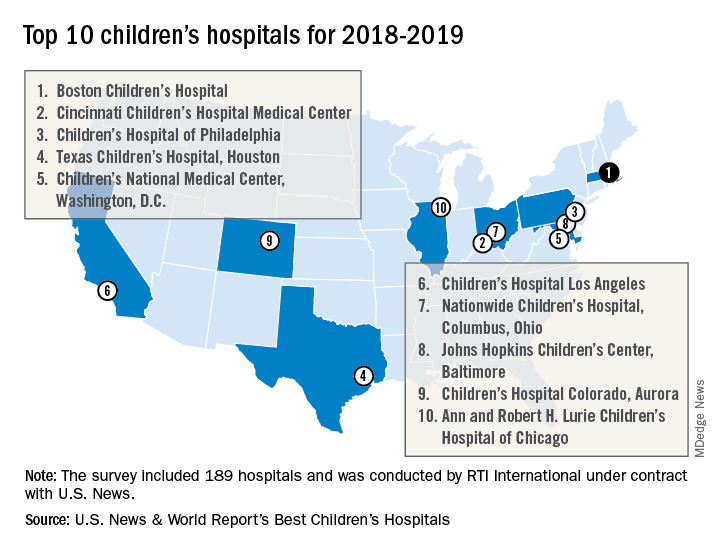
Of the 189 facilities that qualified for inclusion this year, 118 submitted sufficient data to be considered in at least 1 of the 10 specialties and 86 were ranked among the top 50 in at least 1 specialty. In addition, a survey of individuals conducted to establish the hospitals’ reputations – generally worth about 15% of a hospital’s score in each specialty – was completed by 4,165 physicians.
RTI International, a research and consulting firm, conducted the physician survey and produced the methodology and national rankings under contract with U.S. News.
For the fourth consecutive year, Boston Children’s Hospital has been named the top children’s hospital by U.S. News & World Report.
The hospital finished among the top five in all 10 pediatric specialties included in the rankings: cancer (third), cardiology and heart surgery (second), diabetes and endocrinology (second), gastroenterology and GI surgery (second), neonatology (third), nephrology (first), neurology and neurosurgery (first), orthopedics (first), pulmonology (fourth), and urology (third), according to the 2018-2019 Best Children’s Hospitals rankings.
Of the 189 facilities that qualified for inclusion this year, 118 submitted sufficient data to be considered in at least 1 of the 10 specialties and 86 were ranked among the top 50 in at least 1 specialty. In addition, a survey of individuals conducted to establish the hospitals’ reputations – generally worth about 15% of a hospital’s score in each specialty – was completed by 4,165 physicians.
RTI International, a research and consulting firm, conducted the physician survey and produced the methodology and national rankings under contract with U.S. News.
For the fourth consecutive year, Boston Children’s Hospital has been named the top children’s hospital by U.S. News & World Report.
The hospital finished among the top five in all 10 pediatric specialties included in the rankings: cancer (third), cardiology and heart surgery (second), diabetes and endocrinology (second), gastroenterology and GI surgery (second), neonatology (third), nephrology (first), neurology and neurosurgery (first), orthopedics (first), pulmonology (fourth), and urology (third), according to the 2018-2019 Best Children’s Hospitals rankings.
Of the 189 facilities that qualified for inclusion this year, 118 submitted sufficient data to be considered in at least 1 of the 10 specialties and 86 were ranked among the top 50 in at least 1 specialty. In addition, a survey of individuals conducted to establish the hospitals’ reputations – generally worth about 15% of a hospital’s score in each specialty – was completed by 4,165 physicians.
RTI International, a research and consulting firm, conducted the physician survey and produced the methodology and national rankings under contract with U.S. News.
Advocate for your LGBTQ patients
June 28, 1969, is the day that many consider to be the origin of the modern LGBTQ (Lesbian, Gay, Bisexual, Transgender, Queer/Questioning) movement.1 At that time, it was not uncommon for police officers to conduct raids on bars frequented by LGBTQ patrons, but this night was different. This night the patrons of the Stonewall Inn fought back. The subsequent violent clashes fueled the national organization of groups concentrated on the goal of advocating for LGBTQ rights. On June 28th, 1970, protests to commemorate the events at Stonewall occurred; many refer to these as the first Pride events. Since then the month of June has been seen as the unofficial Pride month for the LGBTQ community. These events began as demonstrations for equal rights and protections for LGBTQ individuals, but over time, events have grown also to become a celebration of queer lives and sexuality.2

I attended my first Pride event over 10 years ago in support of a friend who had recently come out. He told me that the event was a place where he could proudly be his full self, something that he felt was not safe to do at school or work. When I participated at that event years ago, I began to understand my straight, cisgender privilege: I could walk down the street holding hands with my partner, discuss the details of a first date with colleagues at work, and wear the clothes that aligned with my gender identity without fear of being harassed or attacked. This, I realized, was not the case for everyone. Since attending that Pride event, I have had the opportunity to attend and volunteer at many local Pride events. Some have been in pouring rain, some have been in scorching heat, but all have been rejuvenating, inspiring, and fun! They have been opportunities for me to visibly show support for the local LGBTQ community and meet with other LGBTQ-serving organizations and allies.
Ways to get involved
Find out about local Pride events in your community and consider attending or volunteering. One of the contributing factors to LGBTQ health disparities is limited access to competent care. Many LGBTQ youth and adults have reported experiences of discrimination in the health care setting.3,4 When we, as health care providers, are visible at Pride events, we can have important effects on our local communities by showing them that we recognize and affirm LGBTQ identities.
Consider asking your organization or institution to provide support at local Pride events, post messages of support during Pride month, or host educational sessions about the care of LGBTQ youth.
Dr. Chelvakumar is an attending physician in the division of adolescent medicine at Nationwide Children’s Hospital and an assistant professor of clinical pediatrics at Ohio State University, both in Columbus. She said she had no relevant financial disclosures. Email her at pdnews@mdedge.com.
Resources
Human Rights Campaign/Pride: You can learn more about the history of Pride and events in your state and community at www.hrc.org/pride.
How to contact your elected officials: You can find contact information for your local, state, and federal government representatives at www.usa.gov/elected-officials.
National LGBT Health Education Center: You can find educational resources to help optimize care of LGBT patients at www.lgbthealtheducation.org/.
U.S. Transgender Survey: You can read the report from a survey of almost 28,000 transgender respondents in the U.S. Specific information is available about experiences with health care; state level reports also available at www.ustranssurvey.org/reports/.
References
1. GLAAD Pride Month Resource Kit for Jounalists: www.glaad.org/publications/pridekit
2. Human Rights Campaign: History of LGBT Pride. www.hrc.org/blog/the-history-of-lgbt-pride-from-1970-to-now
3. The Report of the 2015 U.S. Transgender Survey (Washington, DC: National Center for Transgender Equality, 2016).
4. Healthy People 2020: Lesbian, Gay, Bisexual and Transgender Health.
June 28, 1969, is the day that many consider to be the origin of the modern LGBTQ (Lesbian, Gay, Bisexual, Transgender, Queer/Questioning) movement.1 At that time, it was not uncommon for police officers to conduct raids on bars frequented by LGBTQ patrons, but this night was different. This night the patrons of the Stonewall Inn fought back. The subsequent violent clashes fueled the national organization of groups concentrated on the goal of advocating for LGBTQ rights. On June 28th, 1970, protests to commemorate the events at Stonewall occurred; many refer to these as the first Pride events. Since then the month of June has been seen as the unofficial Pride month for the LGBTQ community. These events began as demonstrations for equal rights and protections for LGBTQ individuals, but over time, events have grown also to become a celebration of queer lives and sexuality.2
I attended my first Pride event over 10 years ago in support of a friend who had recently come out. He told me that the event was a place where he could proudly be his full self, something that he felt was not safe to do at school or work. When I participated at that event years ago, I began to understand my straight, cisgender privilege: I could walk down the street holding hands with my partner, discuss the details of a first date with colleagues at work, and wear the clothes that aligned with my gender identity without fear of being harassed or attacked. This, I realized, was not the case for everyone. Since attending that Pride event, I have had the opportunity to attend and volunteer at many local Pride events. Some have been in pouring rain, some have been in scorching heat, but all have been rejuvenating, inspiring, and fun! They have been opportunities for me to visibly show support for the local LGBTQ community and meet with other LGBTQ-serving organizations and allies.
Ways to get involved
Find out about local Pride events in your community and consider attending or volunteering. One of the contributing factors to LGBTQ health disparities is limited access to competent care. Many LGBTQ youth and adults have reported experiences of discrimination in the health care setting.3,4 When we, as health care providers, are visible at Pride events, we can have important effects on our local communities by showing them that we recognize and affirm LGBTQ identities.
Consider asking your organization or institution to provide support at local Pride events, post messages of support during Pride month, or host educational sessions about the care of LGBTQ youth.
Dr. Chelvakumar is an attending physician in the division of adolescent medicine at Nationwide Children’s Hospital and an assistant professor of clinical pediatrics at Ohio State University, both in Columbus. She said she had no relevant financial disclosures. Email her at pdnews@mdedge.com.
Resources
Human Rights Campaign/Pride: You can learn more about the history of Pride and events in your state and community at www.hrc.org/pride.
How to contact your elected officials: You can find contact information for your local, state, and federal government representatives at www.usa.gov/elected-officials.
National LGBT Health Education Center: You can find educational resources to help optimize care of LGBT patients at www.lgbthealtheducation.org/.
U.S. Transgender Survey: You can read the report from a survey of almost 28,000 transgender respondents in the U.S. Specific information is available about experiences with health care; state level reports also available at www.ustranssurvey.org/reports/.
References
1. GLAAD Pride Month Resource Kit for Jounalists: www.glaad.org/publications/pridekit
2. Human Rights Campaign: History of LGBT Pride. www.hrc.org/blog/the-history-of-lgbt-pride-from-1970-to-now
3. The Report of the 2015 U.S. Transgender Survey (Washington, DC: National Center for Transgender Equality, 2016).
4. Healthy People 2020: Lesbian, Gay, Bisexual and Transgender Health.
June 28, 1969, is the day that many consider to be the origin of the modern LGBTQ (Lesbian, Gay, Bisexual, Transgender, Queer/Questioning) movement.1 At that time, it was not uncommon for police officers to conduct raids on bars frequented by LGBTQ patrons, but this night was different. This night the patrons of the Stonewall Inn fought back. The subsequent violent clashes fueled the national organization of groups concentrated on the goal of advocating for LGBTQ rights. On June 28th, 1970, protests to commemorate the events at Stonewall occurred; many refer to these as the first Pride events. Since then the month of June has been seen as the unofficial Pride month for the LGBTQ community. These events began as demonstrations for equal rights and protections for LGBTQ individuals, but over time, events have grown also to become a celebration of queer lives and sexuality.2
I attended my first Pride event over 10 years ago in support of a friend who had recently come out. He told me that the event was a place where he could proudly be his full self, something that he felt was not safe to do at school or work. When I participated at that event years ago, I began to understand my straight, cisgender privilege: I could walk down the street holding hands with my partner, discuss the details of a first date with colleagues at work, and wear the clothes that aligned with my gender identity without fear of being harassed or attacked. This, I realized, was not the case for everyone. Since attending that Pride event, I have had the opportunity to attend and volunteer at many local Pride events. Some have been in pouring rain, some have been in scorching heat, but all have been rejuvenating, inspiring, and fun! They have been opportunities for me to visibly show support for the local LGBTQ community and meet with other LGBTQ-serving organizations and allies.
Ways to get involved
Find out about local Pride events in your community and consider attending or volunteering. One of the contributing factors to LGBTQ health disparities is limited access to competent care. Many LGBTQ youth and adults have reported experiences of discrimination in the health care setting.3,4 When we, as health care providers, are visible at Pride events, we can have important effects on our local communities by showing them that we recognize and affirm LGBTQ identities.
Consider asking your organization or institution to provide support at local Pride events, post messages of support during Pride month, or host educational sessions about the care of LGBTQ youth.
Dr. Chelvakumar is an attending physician in the division of adolescent medicine at Nationwide Children’s Hospital and an assistant professor of clinical pediatrics at Ohio State University, both in Columbus. She said she had no relevant financial disclosures. Email her at pdnews@mdedge.com.
Resources
Human Rights Campaign/Pride: You can learn more about the history of Pride and events in your state and community at www.hrc.org/pride.
How to contact your elected officials: You can find contact information for your local, state, and federal government representatives at www.usa.gov/elected-officials.
National LGBT Health Education Center: You can find educational resources to help optimize care of LGBT patients at www.lgbthealtheducation.org/.
U.S. Transgender Survey: You can read the report from a survey of almost 28,000 transgender respondents in the U.S. Specific information is available about experiences with health care; state level reports also available at www.ustranssurvey.org/reports/.
References
1. GLAAD Pride Month Resource Kit for Jounalists: www.glaad.org/publications/pridekit
2. Human Rights Campaign: History of LGBT Pride. www.hrc.org/blog/the-history-of-lgbt-pride-from-1970-to-now
3. The Report of the 2015 U.S. Transgender Survey (Washington, DC: National Center for Transgender Equality, 2016).
4. Healthy People 2020: Lesbian, Gay, Bisexual and Transgender Health.

FDA approves Epidiolex for Lennox-Gastaut syndrome and Dravet syndrome
The Food and Drug Administration has approved cannabidiol oral solution (Epidiolex, GW Pharmaceuticals) for the treatment of two rare pediatric seizure disorders.

“This product approval demonstrates that advancing sound scientific research to investigate ingredients derived from marijuana can lead to important therapies. This new treatment provides new options for patients,” said FDA Commissioner Scott Gottlieb, MD, in a statement.
However, he cautioned, “This is an important medical advance. But it’s also important to note that this is not an approval of marijuana or all of its components. This is the approval of one specific CBD medication for a specific use. And it was based on well-controlled clinical trials evaluating the use of this compound in the treatment of a specific condition.”
The FDA Peripheral and Central Nervous System Drugs Advisory Committee’s earlier positive recommendation was based on three randomized, double-blind, placebo-controlled clinical trials. These trials showed a 50% reduction of drop seizure frequency in 40%-44% of patients with Lennox-Gastaut syndrome, and a 39% decrease in convulsive seizure frequency for trial participants with Dravet Syndrome. A total of 516 patients with one of the two seizure disorders participated in the clinical trials.
“In addition to another important treatment option for Lennox-Gastaut patients, this first-ever approval of a drug specifically for Dravet patients will provide a significant and needed improvement in the therapeutic approach to caring for people with this condition,” said Billy Dunn, MD, director of the Division of Neurology Products in the FDA Center for Drug Evaluation and Research, in a statement.
After reviewing information provided by the drug’s sponsor and the FDA, the advisory committee judged that CBD-OS, derived from a non-psychoactive chemical found in marijuana, was very unlikely to have potential for abuse.
Sedation, sleepiness, and lethargy were among the most frequently reported adverse events for the patients taking CBD-OS. In data pooled from the clinical trials, 16.3% of patients taking CBD-OS at the higher dose of 20 mg/kg/day had liver transaminase elevations above three times the upper limit of normal; this level of transaminase elevation was seen in 0.9% of patients taking placebo.
A patient medication guide detailing risks and how the drug should be used will accompany CBD-OS when it is dispensed, according to the FDA approval.
In his statement, Dr. Gottlieb put the approval in the context of the FDA’s broader efforts to encourage a strong clinical development program for marijuana-derived drugs that does not compromise standards for ensuring safety and efficacy of drugs approved by the agency. He also noted that ongoing efforts to support high quality research into marijuana-based therapies involve other federal agencies, including the National Institute on Drug Abuse and the Drug Enforcement Administration.
The FDA’s actions against companies distributing unapproved products that contain cannabidiol and making unproven marketing claims will continue, said Dr. Gottlieb. Still, “Today’s approval demonstrates our commitment to the scientific process and working with product developers to bring marijuana-based products to market,” he said.
The Food and Drug Administration has approved cannabidiol oral solution (Epidiolex, GW Pharmaceuticals) for the treatment of two rare pediatric seizure disorders.
“This product approval demonstrates that advancing sound scientific research to investigate ingredients derived from marijuana can lead to important therapies. This new treatment provides new options for patients,” said FDA Commissioner Scott Gottlieb, MD, in a statement.
However, he cautioned, “This is an important medical advance. But it’s also important to note that this is not an approval of marijuana or all of its components. This is the approval of one specific CBD medication for a specific use. And it was based on well-controlled clinical trials evaluating the use of this compound in the treatment of a specific condition.”
The FDA Peripheral and Central Nervous System Drugs Advisory Committee’s earlier positive recommendation was based on three randomized, double-blind, placebo-controlled clinical trials. These trials showed a 50% reduction of drop seizure frequency in 40%-44% of patients with Lennox-Gastaut syndrome, and a 39% decrease in convulsive seizure frequency for trial participants with Dravet Syndrome. A total of 516 patients with one of the two seizure disorders participated in the clinical trials.
“In addition to another important treatment option for Lennox-Gastaut patients, this first-ever approval of a drug specifically for Dravet patients will provide a significant and needed improvement in the therapeutic approach to caring for people with this condition,” said Billy Dunn, MD, director of the Division of Neurology Products in the FDA Center for Drug Evaluation and Research, in a statement.
After reviewing information provided by the drug’s sponsor and the FDA, the advisory committee judged that CBD-OS, derived from a non-psychoactive chemical found in marijuana, was very unlikely to have potential for abuse.
Sedation, sleepiness, and lethargy were among the most frequently reported adverse events for the patients taking CBD-OS. In data pooled from the clinical trials, 16.3% of patients taking CBD-OS at the higher dose of 20 mg/kg/day had liver transaminase elevations above three times the upper limit of normal; this level of transaminase elevation was seen in 0.9% of patients taking placebo.
A patient medication guide detailing risks and how the drug should be used will accompany CBD-OS when it is dispensed, according to the FDA approval.
In his statement, Dr. Gottlieb put the approval in the context of the FDA’s broader efforts to encourage a strong clinical development program for marijuana-derived drugs that does not compromise standards for ensuring safety and efficacy of drugs approved by the agency. He also noted that ongoing efforts to support high quality research into marijuana-based therapies involve other federal agencies, including the National Institute on Drug Abuse and the Drug Enforcement Administration.
The FDA’s actions against companies distributing unapproved products that contain cannabidiol and making unproven marketing claims will continue, said Dr. Gottlieb. Still, “Today’s approval demonstrates our commitment to the scientific process and working with product developers to bring marijuana-based products to market,” he said.
The Food and Drug Administration has approved cannabidiol oral solution (Epidiolex, GW Pharmaceuticals) for the treatment of two rare pediatric seizure disorders.
“This product approval demonstrates that advancing sound scientific research to investigate ingredients derived from marijuana can lead to important therapies. This new treatment provides new options for patients,” said FDA Commissioner Scott Gottlieb, MD, in a statement.
However, he cautioned, “This is an important medical advance. But it’s also important to note that this is not an approval of marijuana or all of its components. This is the approval of one specific CBD medication for a specific use. And it was based on well-controlled clinical trials evaluating the use of this compound in the treatment of a specific condition.”
The FDA Peripheral and Central Nervous System Drugs Advisory Committee’s earlier positive recommendation was based on three randomized, double-blind, placebo-controlled clinical trials. These trials showed a 50% reduction of drop seizure frequency in 40%-44% of patients with Lennox-Gastaut syndrome, and a 39% decrease in convulsive seizure frequency for trial participants with Dravet Syndrome. A total of 516 patients with one of the two seizure disorders participated in the clinical trials.
“In addition to another important treatment option for Lennox-Gastaut patients, this first-ever approval of a drug specifically for Dravet patients will provide a significant and needed improvement in the therapeutic approach to caring for people with this condition,” said Billy Dunn, MD, director of the Division of Neurology Products in the FDA Center for Drug Evaluation and Research, in a statement.
After reviewing information provided by the drug’s sponsor and the FDA, the advisory committee judged that CBD-OS, derived from a non-psychoactive chemical found in marijuana, was very unlikely to have potential for abuse.
Sedation, sleepiness, and lethargy were among the most frequently reported adverse events for the patients taking CBD-OS. In data pooled from the clinical trials, 16.3% of patients taking CBD-OS at the higher dose of 20 mg/kg/day had liver transaminase elevations above three times the upper limit of normal; this level of transaminase elevation was seen in 0.9% of patients taking placebo.
A patient medication guide detailing risks and how the drug should be used will accompany CBD-OS when it is dispensed, according to the FDA approval.
In his statement, Dr. Gottlieb put the approval in the context of the FDA’s broader efforts to encourage a strong clinical development program for marijuana-derived drugs that does not compromise standards for ensuring safety and efficacy of drugs approved by the agency. He also noted that ongoing efforts to support high quality research into marijuana-based therapies involve other federal agencies, including the National Institute on Drug Abuse and the Drug Enforcement Administration.
The FDA’s actions against companies distributing unapproved products that contain cannabidiol and making unproven marketing claims will continue, said Dr. Gottlieb. Still, “Today’s approval demonstrates our commitment to the scientific process and working with product developers to bring marijuana-based products to market,” he said.