User login
For patients with advanced CKD, low risk of nephrogenic systemic fibrosis with group II GBCAs
Background: With more than 500 cases of NSF reported during 1997-2007, a black box warning advises against use of all GBCAs in at-risk CKD patients. However, newer literature has shown that group II GBCAs may have lower risks of causing NSF. The risk to patients with CKD IV and V is not clear.

Study design: Systematic review and meta-analysis.
Setting: 2,700 citations were screened for eligibility, of which 16 studies were selected.
Synopsis: The authors evaluated 4,931 administrations of group II GBCAs in patients with CKD stages IV and V to determine the pooled incidence of NSF in this population. The pooled incidence of NSF was 0% (0 out of 4,931) with an upper bound of the 95% confidence interval of 0.07%. The analysis did not examine sequential group II GBCA exposures or the use of group II GBCAs in the setting of acute kidney injury. The authors advocate that the harms of withholding group II GBCAs in patients with advanced CKD (e.g., underdiagnosis or delay in diagnosis) may outweigh the risk of group II GBCA administration in this population.
Bottom line: The risk of NSF with use of group II GBCAs in patients with advanced CKD is likely less than 0.7%.
Citation: Woolen SA et al. Risk of nephrogenic systemic fibrosis in patients with stage 4 or 5 chronic kidney disease receiving a group II gadolinium-based contrast agent: A systematic review and meta-analysis. JAMA Intern Med. 2020;180(2):223-30.
Dr. Midha is a hospitalist at Beth Israel Deaconess Medical Center, instructor of medicine, Boston University, and part-time instructor in medicine, Harvard Medical School, all in Boston.
Background: With more than 500 cases of NSF reported during 1997-2007, a black box warning advises against use of all GBCAs in at-risk CKD patients. However, newer literature has shown that group II GBCAs may have lower risks of causing NSF. The risk to patients with CKD IV and V is not clear.
Study design: Systematic review and meta-analysis.
Setting: 2,700 citations were screened for eligibility, of which 16 studies were selected.
Synopsis: The authors evaluated 4,931 administrations of group II GBCAs in patients with CKD stages IV and V to determine the pooled incidence of NSF in this population. The pooled incidence of NSF was 0% (0 out of 4,931) with an upper bound of the 95% confidence interval of 0.07%. The analysis did not examine sequential group II GBCA exposures or the use of group II GBCAs in the setting of acute kidney injury. The authors advocate that the harms of withholding group II GBCAs in patients with advanced CKD (e.g., underdiagnosis or delay in diagnosis) may outweigh the risk of group II GBCA administration in this population.
Bottom line: The risk of NSF with use of group II GBCAs in patients with advanced CKD is likely less than 0.7%.
Citation: Woolen SA et al. Risk of nephrogenic systemic fibrosis in patients with stage 4 or 5 chronic kidney disease receiving a group II gadolinium-based contrast agent: A systematic review and meta-analysis. JAMA Intern Med. 2020;180(2):223-30.
Dr. Midha is a hospitalist at Beth Israel Deaconess Medical Center, instructor of medicine, Boston University, and part-time instructor in medicine, Harvard Medical School, all in Boston.
Background: With more than 500 cases of NSF reported during 1997-2007, a black box warning advises against use of all GBCAs in at-risk CKD patients. However, newer literature has shown that group II GBCAs may have lower risks of causing NSF. The risk to patients with CKD IV and V is not clear.
Study design: Systematic review and meta-analysis.
Setting: 2,700 citations were screened for eligibility, of which 16 studies were selected.
Synopsis: The authors evaluated 4,931 administrations of group II GBCAs in patients with CKD stages IV and V to determine the pooled incidence of NSF in this population. The pooled incidence of NSF was 0% (0 out of 4,931) with an upper bound of the 95% confidence interval of 0.07%. The analysis did not examine sequential group II GBCA exposures or the use of group II GBCAs in the setting of acute kidney injury. The authors advocate that the harms of withholding group II GBCAs in patients with advanced CKD (e.g., underdiagnosis or delay in diagnosis) may outweigh the risk of group II GBCA administration in this population.
Bottom line: The risk of NSF with use of group II GBCAs in patients with advanced CKD is likely less than 0.7%.
Citation: Woolen SA et al. Risk of nephrogenic systemic fibrosis in patients with stage 4 or 5 chronic kidney disease receiving a group II gadolinium-based contrast agent: A systematic review and meta-analysis. JAMA Intern Med. 2020;180(2):223-30.
Dr. Midha is a hospitalist at Beth Israel Deaconess Medical Center, instructor of medicine, Boston University, and part-time instructor in medicine, Harvard Medical School, all in Boston.
CML: Ponatinib effective in TKI-resistant/intolerant patients
Key clinical point: Findings from routine clinical practice are in concordance with results from clinical trials and confirm the efficacy of ponatinib in patients with chronic myeloid leukemia (CML) who were resistant or intolerant to previous tyrosine kinase inhibitors (TKIs) or had T315I mutation. No new safety signals were identified.
Major finding: During a median follow-up of 15 months, major molecular response was achieved in 58% of patients with CML. Estimated 3-year overall survival and progression-free survival were 85.3% and 81.6%, respectively. Treatment termination because of adverse events occurred in 8 patients with CML.
Study details: Findings are from a prospective observational study including 33 patients with CML and 17 patients with Philadelphia chromosome-positive acute lymphoblastic leukemia. Patients were initiated on ponatinib following intolerance, relapse, or refractoriness to prior TKIs, disease progression, or T315I mutation.
Disclosures: This study was funded by Incyte Biosciences Benelux BV. Some investigators reported research funding, advisory board memberships, consultancy, honoraria, travel expenses, and membership of the board of directors for various pharmaceutical companies including Incyte Biosciences Benelux BV.
Source: Devos T et al. Ann Hematol. 2021 May 4. doi: 10.1007/s00277-021-04507-x.
Key clinical point: Findings from routine clinical practice are in concordance with results from clinical trials and confirm the efficacy of ponatinib in patients with chronic myeloid leukemia (CML) who were resistant or intolerant to previous tyrosine kinase inhibitors (TKIs) or had T315I mutation. No new safety signals were identified.
Major finding: During a median follow-up of 15 months, major molecular response was achieved in 58% of patients with CML. Estimated 3-year overall survival and progression-free survival were 85.3% and 81.6%, respectively. Treatment termination because of adverse events occurred in 8 patients with CML.
Study details: Findings are from a prospective observational study including 33 patients with CML and 17 patients with Philadelphia chromosome-positive acute lymphoblastic leukemia. Patients were initiated on ponatinib following intolerance, relapse, or refractoriness to prior TKIs, disease progression, or T315I mutation.
Disclosures: This study was funded by Incyte Biosciences Benelux BV. Some investigators reported research funding, advisory board memberships, consultancy, honoraria, travel expenses, and membership of the board of directors for various pharmaceutical companies including Incyte Biosciences Benelux BV.
Source: Devos T et al. Ann Hematol. 2021 May 4. doi: 10.1007/s00277-021-04507-x.
Key clinical point: Findings from routine clinical practice are in concordance with results from clinical trials and confirm the efficacy of ponatinib in patients with chronic myeloid leukemia (CML) who were resistant or intolerant to previous tyrosine kinase inhibitors (TKIs) or had T315I mutation. No new safety signals were identified.
Major finding: During a median follow-up of 15 months, major molecular response was achieved in 58% of patients with CML. Estimated 3-year overall survival and progression-free survival were 85.3% and 81.6%, respectively. Treatment termination because of adverse events occurred in 8 patients with CML.
Study details: Findings are from a prospective observational study including 33 patients with CML and 17 patients with Philadelphia chromosome-positive acute lymphoblastic leukemia. Patients were initiated on ponatinib following intolerance, relapse, or refractoriness to prior TKIs, disease progression, or T315I mutation.
Disclosures: This study was funded by Incyte Biosciences Benelux BV. Some investigators reported research funding, advisory board memberships, consultancy, honoraria, travel expenses, and membership of the board of directors for various pharmaceutical companies including Incyte Biosciences Benelux BV.
Source: Devos T et al. Ann Hematol. 2021 May 4. doi: 10.1007/s00277-021-04507-x.
CML-CP: SNPs in MDR-ABC transporters influence achievement of MR in nilotinib-treated patients
Key clinical point: Single nucleotide polymorphisms (SNPs) in the major multidrug resistance (MDR)-ATP-binding cassette (ABC) transporter genes, ABCB1, ABCC2, and ABCG2, influenced the achievement of molecular response (MR)3 and MR4 in patients with chronic-phase chronic myeloid leukemia (CML-CP) treated with nilotinib.
Major finding: Patients with ABCB1 rs1045642 TT (P = .01) or ABCC2 rs3740066 CT (P = .004) and CC (P = .02) genotypes achieved significantly higher rates of MR3 in a shorter period. Conversely, patients with ABCG2 rs2231137 GG genotype had a lower probability of achieving MR3 (P = .005). ABCC2 rs3740066 CC (P = .02) and ABCB1 rs1045642 CC (P = .007) and TT (P = .003) genotypes were associated with higher rates of MR4 achievement.
Study details: This observational study assessed 7 SNPs in 4 ABC transporter genes (ABCB1, ABCC1, ABCC2, and ABCG2) in 90 Caucasian adult patients with CML-CP treated with first-or second-line nilotinib.
Disclosures: This study was supported in part by AIL Pesaro Onlus. The authors declared no conflicts of interest.
Source: Loscocco F et al. Front Oncol. 2021 May 13. doi: 10.3389/fonc.2021.672287.
Key clinical point: Single nucleotide polymorphisms (SNPs) in the major multidrug resistance (MDR)-ATP-binding cassette (ABC) transporter genes, ABCB1, ABCC2, and ABCG2, influenced the achievement of molecular response (MR)3 and MR4 in patients with chronic-phase chronic myeloid leukemia (CML-CP) treated with nilotinib.
Major finding: Patients with ABCB1 rs1045642 TT (P = .01) or ABCC2 rs3740066 CT (P = .004) and CC (P = .02) genotypes achieved significantly higher rates of MR3 in a shorter period. Conversely, patients with ABCG2 rs2231137 GG genotype had a lower probability of achieving MR3 (P = .005). ABCC2 rs3740066 CC (P = .02) and ABCB1 rs1045642 CC (P = .007) and TT (P = .003) genotypes were associated with higher rates of MR4 achievement.
Study details: This observational study assessed 7 SNPs in 4 ABC transporter genes (ABCB1, ABCC1, ABCC2, and ABCG2) in 90 Caucasian adult patients with CML-CP treated with first-or second-line nilotinib.
Disclosures: This study was supported in part by AIL Pesaro Onlus. The authors declared no conflicts of interest.
Source: Loscocco F et al. Front Oncol. 2021 May 13. doi: 10.3389/fonc.2021.672287.
Key clinical point: Single nucleotide polymorphisms (SNPs) in the major multidrug resistance (MDR)-ATP-binding cassette (ABC) transporter genes, ABCB1, ABCC2, and ABCG2, influenced the achievement of molecular response (MR)3 and MR4 in patients with chronic-phase chronic myeloid leukemia (CML-CP) treated with nilotinib.
Major finding: Patients with ABCB1 rs1045642 TT (P = .01) or ABCC2 rs3740066 CT (P = .004) and CC (P = .02) genotypes achieved significantly higher rates of MR3 in a shorter period. Conversely, patients with ABCG2 rs2231137 GG genotype had a lower probability of achieving MR3 (P = .005). ABCC2 rs3740066 CC (P = .02) and ABCB1 rs1045642 CC (P = .007) and TT (P = .003) genotypes were associated with higher rates of MR4 achievement.
Study details: This observational study assessed 7 SNPs in 4 ABC transporter genes (ABCB1, ABCC1, ABCC2, and ABCG2) in 90 Caucasian adult patients with CML-CP treated with first-or second-line nilotinib.
Disclosures: This study was supported in part by AIL Pesaro Onlus. The authors declared no conflicts of interest.
Source: Loscocco F et al. Front Oncol. 2021 May 13. doi: 10.3389/fonc.2021.672287.
CML-CP: Optimal duration of imatinib treatment and MR4 for successful TFR
Key clinical point: In patients with chronic-phase chronic myeloid leukemia (CML-CP), imatinib treatment for at least 6 years and molecular response 4 (MR4) duration of a minimum of 4.5 years may be optimal for higher treatment-free remission (TFR) success after imatinib discontinuation.
Major finding: Patients with imatinib treatment duration of 6 years or more vs. less than 6 years (61.8% vs. 36.0%; P = .01) and those with MR4 duration of 4.5 years or longer vs. less than 4.5 years (64.2% vs. 41.9%; P = .003) had a superior molecular relapse-free survival at 12 months after imatinib discontinuation.
Study details: This prospective study reported findings from the TRAD study including 131 patients with CML-CP. Patients were treated with imatinib for at least 3 years (range, 3.0-17.5 years) and had a minimum of 2 years of MR4 or deeper response (range, 2.0-15.8 years) before imatinib discontinuation.
Disclosures: This study was supported by BMS Canada and the Princess Margaret Cancer Foundation. The lead author reported research funding from BMS and Novartis.
Source: Kim DDH et al. Br J Haematol. 2021 Apr 20. doi: 10.1111/bjh.17447.
Key clinical point: In patients with chronic-phase chronic myeloid leukemia (CML-CP), imatinib treatment for at least 6 years and molecular response 4 (MR4) duration of a minimum of 4.5 years may be optimal for higher treatment-free remission (TFR) success after imatinib discontinuation.
Major finding: Patients with imatinib treatment duration of 6 years or more vs. less than 6 years (61.8% vs. 36.0%; P = .01) and those with MR4 duration of 4.5 years or longer vs. less than 4.5 years (64.2% vs. 41.9%; P = .003) had a superior molecular relapse-free survival at 12 months after imatinib discontinuation.
Study details: This prospective study reported findings from the TRAD study including 131 patients with CML-CP. Patients were treated with imatinib for at least 3 years (range, 3.0-17.5 years) and had a minimum of 2 years of MR4 or deeper response (range, 2.0-15.8 years) before imatinib discontinuation.
Disclosures: This study was supported by BMS Canada and the Princess Margaret Cancer Foundation. The lead author reported research funding from BMS and Novartis.
Source: Kim DDH et al. Br J Haematol. 2021 Apr 20. doi: 10.1111/bjh.17447.
Key clinical point: In patients with chronic-phase chronic myeloid leukemia (CML-CP), imatinib treatment for at least 6 years and molecular response 4 (MR4) duration of a minimum of 4.5 years may be optimal for higher treatment-free remission (TFR) success after imatinib discontinuation.
Major finding: Patients with imatinib treatment duration of 6 years or more vs. less than 6 years (61.8% vs. 36.0%; P = .01) and those with MR4 duration of 4.5 years or longer vs. less than 4.5 years (64.2% vs. 41.9%; P = .003) had a superior molecular relapse-free survival at 12 months after imatinib discontinuation.
Study details: This prospective study reported findings from the TRAD study including 131 patients with CML-CP. Patients were treated with imatinib for at least 3 years (range, 3.0-17.5 years) and had a minimum of 2 years of MR4 or deeper response (range, 2.0-15.8 years) before imatinib discontinuation.
Disclosures: This study was supported by BMS Canada and the Princess Margaret Cancer Foundation. The lead author reported research funding from BMS and Novartis.
Source: Kim DDH et al. Br J Haematol. 2021 Apr 20. doi: 10.1111/bjh.17447.
Allo-SCT remains the only treatment tied to improved survival in atypical CML
Key clinical point: Response and survival with current therapies remain poor in patients with atypical chronic myeloid leukemia (aCML), with allogeneic stem cell transplantation (allo-SCT) being the only treatment associated with improved survival.
Major finding: Overall response rate was 29%, with only 3 patients achieving a complete response. The median overall survival (OS) was 25 (95% confidence interval, 20.0-30.0) months, with OS being worst in patients receiving intensive chemotherapy than those receiving hypomethylating agents, ruxolitinib, or hydroxyurea. Allo-SCT was associated with improved survival (hazard ratio, 0.144; P = .007).
Study details: This retrospective study included 65 patients (median age, 67 years) with aCML.
Disclosures: This study was funded by grants from The University of Texas MD Anderson Cancer Center. Some investigators reported financial and/or nonfinancial ties with various pharmaceutical companies.
Source: Montalban-Bravo G et al. Cancer. 2021 Apr 29. doi: 10.1002/cncr.33622.
Key clinical point: Response and survival with current therapies remain poor in patients with atypical chronic myeloid leukemia (aCML), with allogeneic stem cell transplantation (allo-SCT) being the only treatment associated with improved survival.
Major finding: Overall response rate was 29%, with only 3 patients achieving a complete response. The median overall survival (OS) was 25 (95% confidence interval, 20.0-30.0) months, with OS being worst in patients receiving intensive chemotherapy than those receiving hypomethylating agents, ruxolitinib, or hydroxyurea. Allo-SCT was associated with improved survival (hazard ratio, 0.144; P = .007).
Study details: This retrospective study included 65 patients (median age, 67 years) with aCML.
Disclosures: This study was funded by grants from The University of Texas MD Anderson Cancer Center. Some investigators reported financial and/or nonfinancial ties with various pharmaceutical companies.
Source: Montalban-Bravo G et al. Cancer. 2021 Apr 29. doi: 10.1002/cncr.33622.
Key clinical point: Response and survival with current therapies remain poor in patients with atypical chronic myeloid leukemia (aCML), with allogeneic stem cell transplantation (allo-SCT) being the only treatment associated with improved survival.
Major finding: Overall response rate was 29%, with only 3 patients achieving a complete response. The median overall survival (OS) was 25 (95% confidence interval, 20.0-30.0) months, with OS being worst in patients receiving intensive chemotherapy than those receiving hypomethylating agents, ruxolitinib, or hydroxyurea. Allo-SCT was associated with improved survival (hazard ratio, 0.144; P = .007).
Study details: This retrospective study included 65 patients (median age, 67 years) with aCML.
Disclosures: This study was funded by grants from The University of Texas MD Anderson Cancer Center. Some investigators reported financial and/or nonfinancial ties with various pharmaceutical companies.
Source: Montalban-Bravo G et al. Cancer. 2021 Apr 29. doi: 10.1002/cncr.33622.
CML-CP: Sustained TFR in patients switching from imatinib to nilotinib
Key clinical point: Treatment-free remission (TFR) was durable in a large proportion of patients with chronic-phase chronic myeloid leukemia (CML-CP) who switched to nilotinib from imatinib. However, careful management of adverse events (AEs) is required in patients reinitiating nilotinib after TFR.
Major finding: At 5 years, the rate of successful TFR and overall survival was 42.9% and 95.9%, respectively. Of 59 patients reinitiating nilotinib, 98.3% of patients regained major molecular response. Overall, AEs increased in nilotinib reinitiation vs. consolidation phase (67.8% vs. 28.2%) including a higher frequency of cardiovascular events (27.1% vs. 6.1%).
Study details: Findings are from an updated analysis of phase 2 ENESTop trial including patients with CML-CP who achieved sustained deep molecular response only after switching from imatinib to nilotinib. TFR was attempted by 126 patients following 1 year of nilotinib consolidation phase.
Disclosures: This study was funded by Novartis Pharmaceuticals. The lead author reported financial and nonfinancial ties with Bristol Myers Squibb and Novartis. Some investigators reported ties with various pharmaceutical companies including Novartis.
Source: Hughes TP et al. Leukemia. 2021 May 12. doi: 10.1038/s41375-021-01260-y.
Key clinical point: Treatment-free remission (TFR) was durable in a large proportion of patients with chronic-phase chronic myeloid leukemia (CML-CP) who switched to nilotinib from imatinib. However, careful management of adverse events (AEs) is required in patients reinitiating nilotinib after TFR.
Major finding: At 5 years, the rate of successful TFR and overall survival was 42.9% and 95.9%, respectively. Of 59 patients reinitiating nilotinib, 98.3% of patients regained major molecular response. Overall, AEs increased in nilotinib reinitiation vs. consolidation phase (67.8% vs. 28.2%) including a higher frequency of cardiovascular events (27.1% vs. 6.1%).
Study details: Findings are from an updated analysis of phase 2 ENESTop trial including patients with CML-CP who achieved sustained deep molecular response only after switching from imatinib to nilotinib. TFR was attempted by 126 patients following 1 year of nilotinib consolidation phase.
Disclosures: This study was funded by Novartis Pharmaceuticals. The lead author reported financial and nonfinancial ties with Bristol Myers Squibb and Novartis. Some investigators reported ties with various pharmaceutical companies including Novartis.
Source: Hughes TP et al. Leukemia. 2021 May 12. doi: 10.1038/s41375-021-01260-y.
Key clinical point: Treatment-free remission (TFR) was durable in a large proportion of patients with chronic-phase chronic myeloid leukemia (CML-CP) who switched to nilotinib from imatinib. However, careful management of adverse events (AEs) is required in patients reinitiating nilotinib after TFR.
Major finding: At 5 years, the rate of successful TFR and overall survival was 42.9% and 95.9%, respectively. Of 59 patients reinitiating nilotinib, 98.3% of patients regained major molecular response. Overall, AEs increased in nilotinib reinitiation vs. consolidation phase (67.8% vs. 28.2%) including a higher frequency of cardiovascular events (27.1% vs. 6.1%).
Study details: Findings are from an updated analysis of phase 2 ENESTop trial including patients with CML-CP who achieved sustained deep molecular response only after switching from imatinib to nilotinib. TFR was attempted by 126 patients following 1 year of nilotinib consolidation phase.
Disclosures: This study was funded by Novartis Pharmaceuticals. The lead author reported financial and nonfinancial ties with Bristol Myers Squibb and Novartis. Some investigators reported ties with various pharmaceutical companies including Novartis.
Source: Hughes TP et al. Leukemia. 2021 May 12. doi: 10.1038/s41375-021-01260-y.
Suppression of random mutations may reduce blast crisis risk in TKI-treated CML patients
Key clinical point: In patients with chronic myeloid leukemia (CML), the transformation from chronic phase (CP) to blast crisis (BC) was associated with accumulation of somatic mutations with time in the absence of effective therapy, which may be suppressed by tyrosine kinase inhibitor (TKI) therapy, thereby preventing disease progression.
Major finding: The number of genetic alterations increased during CP to BC progression with a mean of 5.3 nonsynonymous single-nucleotide variants acquired. The number of mutations acquired during CP to BC progression was positively correlated with interval between progression (P = 9.4×10⁻¹²) and negatively correlated with TKI therapy after CP diagnosis (P = 9.3×10⁻³).
Study details: This study used exome and targeted sequencing to evaluate genetic alterations in 136 BC and 148 CP samples from 216 patients with CML.
Disclosures: This work was supported by the Grant-in-Aid for JSPS KAKENHI and Scientific Research on Innovative Areas and grants from AMED, MEXT, “Stem Cell Aging and Disease,” Takeda Science Foundation, Ministry of Science and Technology (Taiwan), and others. S Bradford reported ties with various pharmaceutical companies. Other authors declared no conflicts of interest.
Source: Ochi Y et al. Nat Commun. 2021 May 14. doi: 10.1038/s41467-021-23097-w.
Key clinical point: In patients with chronic myeloid leukemia (CML), the transformation from chronic phase (CP) to blast crisis (BC) was associated with accumulation of somatic mutations with time in the absence of effective therapy, which may be suppressed by tyrosine kinase inhibitor (TKI) therapy, thereby preventing disease progression.
Major finding: The number of genetic alterations increased during CP to BC progression with a mean of 5.3 nonsynonymous single-nucleotide variants acquired. The number of mutations acquired during CP to BC progression was positively correlated with interval between progression (P = 9.4×10⁻¹²) and negatively correlated with TKI therapy after CP diagnosis (P = 9.3×10⁻³).
Study details: This study used exome and targeted sequencing to evaluate genetic alterations in 136 BC and 148 CP samples from 216 patients with CML.
Disclosures: This work was supported by the Grant-in-Aid for JSPS KAKENHI and Scientific Research on Innovative Areas and grants from AMED, MEXT, “Stem Cell Aging and Disease,” Takeda Science Foundation, Ministry of Science and Technology (Taiwan), and others. S Bradford reported ties with various pharmaceutical companies. Other authors declared no conflicts of interest.
Source: Ochi Y et al. Nat Commun. 2021 May 14. doi: 10.1038/s41467-021-23097-w.
Key clinical point: In patients with chronic myeloid leukemia (CML), the transformation from chronic phase (CP) to blast crisis (BC) was associated with accumulation of somatic mutations with time in the absence of effective therapy, which may be suppressed by tyrosine kinase inhibitor (TKI) therapy, thereby preventing disease progression.
Major finding: The number of genetic alterations increased during CP to BC progression with a mean of 5.3 nonsynonymous single-nucleotide variants acquired. The number of mutations acquired during CP to BC progression was positively correlated with interval between progression (P = 9.4×10⁻¹²) and negatively correlated with TKI therapy after CP diagnosis (P = 9.3×10⁻³).
Study details: This study used exome and targeted sequencing to evaluate genetic alterations in 136 BC and 148 CP samples from 216 patients with CML.
Disclosures: This work was supported by the Grant-in-Aid for JSPS KAKENHI and Scientific Research on Innovative Areas and grants from AMED, MEXT, “Stem Cell Aging and Disease,” Takeda Science Foundation, Ministry of Science and Technology (Taiwan), and others. S Bradford reported ties with various pharmaceutical companies. Other authors declared no conflicts of interest.
Source: Ochi Y et al. Nat Commun. 2021 May 14. doi: 10.1038/s41467-021-23097-w.
Clinical Edge Journal Scan Commentary: CML June 2021

In a comprehensive and detailed analysis, Ochi et al evaluated the genetic alterations in 136 blast crisis (BC) and 148 chronic phase (CP) samples from 216 patients with chronic myeloid leukemia (CML) by exome and targeted sequencing. The number of genetic alterations increased during CP to BC progression with a mean of 5.3 nonsynonymous single-nucleotide variants acquired. One or more genetic abnormalities are found in 126 (92.6%) out of the 136 BC patients. As expected, the lineage of the BC and prior use of tyrosine kinase inhibitors (TKIs) correlate with distinct molecular profiles. TKIs markedly suppressed the number of genetic alterations increase during the transition from CP to BC. Notably, genetic alterations such AXL1 mutations complex CNAs, i(17q), and +21, rather than clinical variables, contribute to a better prediction of BC prognosis in early therapy with TKI in CP.
Switching to a second generation TKI with the goal of obtaining a deeper response and therefore a chance for treatment-free remission (TFR), is an option for certain patients and has been investigated in a few trials. ENEStop may be the most popular and Hughes et al had updated the 5 years follow up in a recent publication. The study includes patients with chronic-phase chronic myeloid leukemia (CML-CP) who achieved sustained deep molecular response only after switching from imatinib to nilotinib and TFR was attempted by 126 patients following 1 year of nilotinib consolidation phase. At 5 years, the rate of successful TFR and overall survival was 42.9% and 95.9%, respectively. Of 59 patients reinitiating nilotinib, 98.3% of patients regained major molecular response. Overall, AEs increased in nilotinib reinitiation vs. consolidation phase including cardiovascular (CV) adverse events (AEs) as patients had a long duration of exposure for nilotinib.
After several publications and recommendations by NCCN and ELN, the optimal cut-off values of the duration of MR4 and deeper responses remain unresolved. Kim et al reported a large study of 131 patients enrolled into the Canadian TKI discontinuation study and evaluated the molecular relapse-free survival (mRFS) at 12 months after imatinib discontinuation. Based on this analysis they propose 6 years with imatinib treatment duration as the shortest imatinib duration- a superior success versus less than 6 years (61.8% vs. 36.0%; P = .01). Also a MR4 duration of 4.5 years or longer vs. less than 4.5 years (64.2% vs. 41.9%; P = .003) was associated with a superior molecular relapse-free survival at 12 months after imatinib discontinuation.
Fatigue is a common complain of patients taking TKI and has been well reported as adverse effects in most of the CML trials. However, when evaluating fatigue, it is always difficult to understand if there are additional factors that can contribute to it. Hyland et al investigated if the use of cognitive behavioral therapy for targeted-therapy related fatigue (CBT-TTF) targeting fatigue perpetuating factors change over time. By delivering CBT via FaceTime or wait list control in CML patients with moderate or severe fatigue, they were able to see an improvement in TKI-related fatigue in CML patients through changes in behavior (sleep, activity patterns) and cognitions about fatigue and cancer.
In a comprehensive and detailed analysis, Ochi et al evaluated the genetic alterations in 136 blast crisis (BC) and 148 chronic phase (CP) samples from 216 patients with chronic myeloid leukemia (CML) by exome and targeted sequencing. The number of genetic alterations increased during CP to BC progression with a mean of 5.3 nonsynonymous single-nucleotide variants acquired. One or more genetic abnormalities are found in 126 (92.6%) out of the 136 BC patients. As expected, the lineage of the BC and prior use of tyrosine kinase inhibitors (TKIs) correlate with distinct molecular profiles. TKIs markedly suppressed the number of genetic alterations increase during the transition from CP to BC. Notably, genetic alterations such AXL1 mutations complex CNAs, i(17q), and +21, rather than clinical variables, contribute to a better prediction of BC prognosis in early therapy with TKI in CP.
Switching to a second generation TKI with the goal of obtaining a deeper response and therefore a chance for treatment-free remission (TFR), is an option for certain patients and has been investigated in a few trials. ENEStop may be the most popular and Hughes et al had updated the 5 years follow up in a recent publication. The study includes patients with chronic-phase chronic myeloid leukemia (CML-CP) who achieved sustained deep molecular response only after switching from imatinib to nilotinib and TFR was attempted by 126 patients following 1 year of nilotinib consolidation phase. At 5 years, the rate of successful TFR and overall survival was 42.9% and 95.9%, respectively. Of 59 patients reinitiating nilotinib, 98.3% of patients regained major molecular response. Overall, AEs increased in nilotinib reinitiation vs. consolidation phase including cardiovascular (CV) adverse events (AEs) as patients had a long duration of exposure for nilotinib.
After several publications and recommendations by NCCN and ELN, the optimal cut-off values of the duration of MR4 and deeper responses remain unresolved. Kim et al reported a large study of 131 patients enrolled into the Canadian TKI discontinuation study and evaluated the molecular relapse-free survival (mRFS) at 12 months after imatinib discontinuation. Based on this analysis they propose 6 years with imatinib treatment duration as the shortest imatinib duration- a superior success versus less than 6 years (61.8% vs. 36.0%; P = .01). Also a MR4 duration of 4.5 years or longer vs. less than 4.5 years (64.2% vs. 41.9%; P = .003) was associated with a superior molecular relapse-free survival at 12 months after imatinib discontinuation.
Fatigue is a common complain of patients taking TKI and has been well reported as adverse effects in most of the CML trials. However, when evaluating fatigue, it is always difficult to understand if there are additional factors that can contribute to it. Hyland et al investigated if the use of cognitive behavioral therapy for targeted-therapy related fatigue (CBT-TTF) targeting fatigue perpetuating factors change over time. By delivering CBT via FaceTime or wait list control in CML patients with moderate or severe fatigue, they were able to see an improvement in TKI-related fatigue in CML patients through changes in behavior (sleep, activity patterns) and cognitions about fatigue and cancer.
In a comprehensive and detailed analysis, Ochi et al evaluated the genetic alterations in 136 blast crisis (BC) and 148 chronic phase (CP) samples from 216 patients with chronic myeloid leukemia (CML) by exome and targeted sequencing. The number of genetic alterations increased during CP to BC progression with a mean of 5.3 nonsynonymous single-nucleotide variants acquired. One or more genetic abnormalities are found in 126 (92.6%) out of the 136 BC patients. As expected, the lineage of the BC and prior use of tyrosine kinase inhibitors (TKIs) correlate with distinct molecular profiles. TKIs markedly suppressed the number of genetic alterations increase during the transition from CP to BC. Notably, genetic alterations such AXL1 mutations complex CNAs, i(17q), and +21, rather than clinical variables, contribute to a better prediction of BC prognosis in early therapy with TKI in CP.
Switching to a second generation TKI with the goal of obtaining a deeper response and therefore a chance for treatment-free remission (TFR), is an option for certain patients and has been investigated in a few trials. ENEStop may be the most popular and Hughes et al had updated the 5 years follow up in a recent publication. The study includes patients with chronic-phase chronic myeloid leukemia (CML-CP) who achieved sustained deep molecular response only after switching from imatinib to nilotinib and TFR was attempted by 126 patients following 1 year of nilotinib consolidation phase. At 5 years, the rate of successful TFR and overall survival was 42.9% and 95.9%, respectively. Of 59 patients reinitiating nilotinib, 98.3% of patients regained major molecular response. Overall, AEs increased in nilotinib reinitiation vs. consolidation phase including cardiovascular (CV) adverse events (AEs) as patients had a long duration of exposure for nilotinib.
After several publications and recommendations by NCCN and ELN, the optimal cut-off values of the duration of MR4 and deeper responses remain unresolved. Kim et al reported a large study of 131 patients enrolled into the Canadian TKI discontinuation study and evaluated the molecular relapse-free survival (mRFS) at 12 months after imatinib discontinuation. Based on this analysis they propose 6 years with imatinib treatment duration as the shortest imatinib duration- a superior success versus less than 6 years (61.8% vs. 36.0%; P = .01). Also a MR4 duration of 4.5 years or longer vs. less than 4.5 years (64.2% vs. 41.9%; P = .003) was associated with a superior molecular relapse-free survival at 12 months after imatinib discontinuation.
Fatigue is a common complain of patients taking TKI and has been well reported as adverse effects in most of the CML trials. However, when evaluating fatigue, it is always difficult to understand if there are additional factors that can contribute to it. Hyland et al investigated if the use of cognitive behavioral therapy for targeted-therapy related fatigue (CBT-TTF) targeting fatigue perpetuating factors change over time. By delivering CBT via FaceTime or wait list control in CML patients with moderate or severe fatigue, they were able to see an improvement in TKI-related fatigue in CML patients through changes in behavior (sleep, activity patterns) and cognitions about fatigue and cancer.
By the numbers: Children and COVID-19 prevention
Over 6.3 million doses of COVID-19 vaccine have been administered to children aged 12-17 years as of June 7, according to data from the Centers for Disease Control and Prevention.
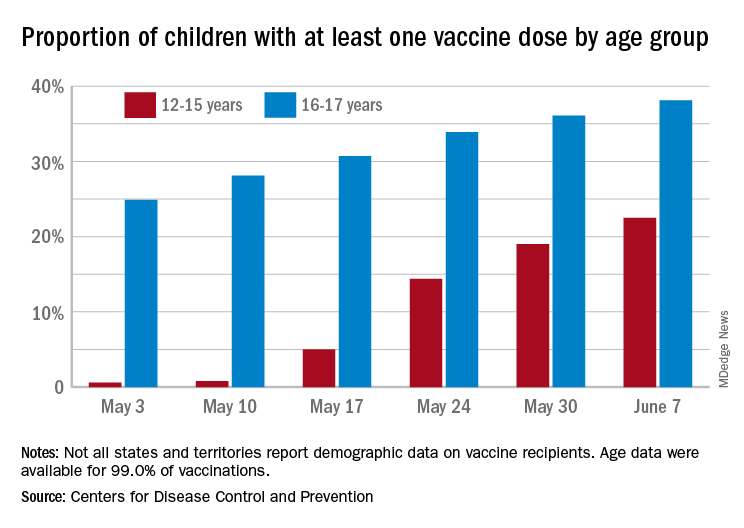
The latest results from the CDC’s COVID Data Tracker show that , with the corresponding figures for vaccine completion coming in at 4.1% and 26.4%. Compared with a week earlier, those numbers are up by 15.4% (one dose) and 486% (completion) for the younger group and by 4.7% and 8.6%, respectively, for the older children.
Children aged 12-15 represented 17.9% of all persons who initiated vaccination in the last 14 days up to June 7, while children aged 16-17 made up 4.8% of vaccine initiation over that period. The 25- to 39-year-olds, at 23.7% of all vaccine initiators, were the only group ahead of those aged 12-15, and the 50- to 64-year-olds were just behind at 17.7%, the CDC data show.
Both groups of children were on the low side, however, when it came to vaccine completion in the last 14 days, with those aged 12-15 at 6.7% of the total and those aged 16-17 years at 4.3%. The only age groups lower than that were ≥75 at 3.5% and <12 at 0.2%, and the highest share of vaccine completion was 26.0% for those aged 25-39, which also happens to be the group with the largest share of the U.S. population (20.5%), the CDC said.
People considered fully vaccinated are those who have received the second dose of a two-dose series or one dose of a single-shot vaccine, but children under age 18 years are eligible only for the Pfizer-BioNTech version, the CDC noted.
Meanwhile, back on the incidence side of the COVID-19 pandemic, the number of new cases in U.S. children for the week ending June 3 was at its lowest point (16,281) since mid-June of 2020, according to a report from the American Academy of Pediatrics and the Children’s Hospital Association.
Cases among children now total 3.99 million, which represents 14.1% of cases among all ages, a proportion that hasn’t increased since mid-May, which hasn’t happened since the two groups started keeping track in mid-April of 2020 in the 49 states (excluding New York), the District of Columbia, New York City, Puerto Rico, and Guam that report such data by age.
Less encouraging was the CDC’s report that “COVID-19-associated hospitalization rates among adolescents ages 12-17 years increased during March and April, following declines in January and February 2021.”
Children have been experiencing much lower rates of severe disease than those of adults throughout the pandemic, the CDC pointed out, but “recent increases in COVID-19-associated hospitalization rates and the potential for severe disease in adolescents reinforce the importance of continued prevention strategies, including vaccination and the correct and consistent use of masks in those who are not yet fully vaccinated.”
Over 6.3 million doses of COVID-19 vaccine have been administered to children aged 12-17 years as of June 7, according to data from the Centers for Disease Control and Prevention.
The latest results from the CDC’s COVID Data Tracker show that , with the corresponding figures for vaccine completion coming in at 4.1% and 26.4%. Compared with a week earlier, those numbers are up by 15.4% (one dose) and 486% (completion) for the younger group and by 4.7% and 8.6%, respectively, for the older children.
Children aged 12-15 represented 17.9% of all persons who initiated vaccination in the last 14 days up to June 7, while children aged 16-17 made up 4.8% of vaccine initiation over that period. The 25- to 39-year-olds, at 23.7% of all vaccine initiators, were the only group ahead of those aged 12-15, and the 50- to 64-year-olds were just behind at 17.7%, the CDC data show.
Both groups of children were on the low side, however, when it came to vaccine completion in the last 14 days, with those aged 12-15 at 6.7% of the total and those aged 16-17 years at 4.3%. The only age groups lower than that were ≥75 at 3.5% and <12 at 0.2%, and the highest share of vaccine completion was 26.0% for those aged 25-39, which also happens to be the group with the largest share of the U.S. population (20.5%), the CDC said.
People considered fully vaccinated are those who have received the second dose of a two-dose series or one dose of a single-shot vaccine, but children under age 18 years are eligible only for the Pfizer-BioNTech version, the CDC noted.
Meanwhile, back on the incidence side of the COVID-19 pandemic, the number of new cases in U.S. children for the week ending June 3 was at its lowest point (16,281) since mid-June of 2020, according to a report from the American Academy of Pediatrics and the Children’s Hospital Association.
Cases among children now total 3.99 million, which represents 14.1% of cases among all ages, a proportion that hasn’t increased since mid-May, which hasn’t happened since the two groups started keeping track in mid-April of 2020 in the 49 states (excluding New York), the District of Columbia, New York City, Puerto Rico, and Guam that report such data by age.
Less encouraging was the CDC’s report that “COVID-19-associated hospitalization rates among adolescents ages 12-17 years increased during March and April, following declines in January and February 2021.”
Children have been experiencing much lower rates of severe disease than those of adults throughout the pandemic, the CDC pointed out, but “recent increases in COVID-19-associated hospitalization rates and the potential for severe disease in adolescents reinforce the importance of continued prevention strategies, including vaccination and the correct and consistent use of masks in those who are not yet fully vaccinated.”
Over 6.3 million doses of COVID-19 vaccine have been administered to children aged 12-17 years as of June 7, according to data from the Centers for Disease Control and Prevention.
The latest results from the CDC’s COVID Data Tracker show that , with the corresponding figures for vaccine completion coming in at 4.1% and 26.4%. Compared with a week earlier, those numbers are up by 15.4% (one dose) and 486% (completion) for the younger group and by 4.7% and 8.6%, respectively, for the older children.
Children aged 12-15 represented 17.9% of all persons who initiated vaccination in the last 14 days up to June 7, while children aged 16-17 made up 4.8% of vaccine initiation over that period. The 25- to 39-year-olds, at 23.7% of all vaccine initiators, were the only group ahead of those aged 12-15, and the 50- to 64-year-olds were just behind at 17.7%, the CDC data show.
Both groups of children were on the low side, however, when it came to vaccine completion in the last 14 days, with those aged 12-15 at 6.7% of the total and those aged 16-17 years at 4.3%. The only age groups lower than that were ≥75 at 3.5% and <12 at 0.2%, and the highest share of vaccine completion was 26.0% for those aged 25-39, which also happens to be the group with the largest share of the U.S. population (20.5%), the CDC said.
People considered fully vaccinated are those who have received the second dose of a two-dose series or one dose of a single-shot vaccine, but children under age 18 years are eligible only for the Pfizer-BioNTech version, the CDC noted.
Meanwhile, back on the incidence side of the COVID-19 pandemic, the number of new cases in U.S. children for the week ending June 3 was at its lowest point (16,281) since mid-June of 2020, according to a report from the American Academy of Pediatrics and the Children’s Hospital Association.
Cases among children now total 3.99 million, which represents 14.1% of cases among all ages, a proportion that hasn’t increased since mid-May, which hasn’t happened since the two groups started keeping track in mid-April of 2020 in the 49 states (excluding New York), the District of Columbia, New York City, Puerto Rico, and Guam that report such data by age.
Less encouraging was the CDC’s report that “COVID-19-associated hospitalization rates among adolescents ages 12-17 years increased during March and April, following declines in January and February 2021.”
Children have been experiencing much lower rates of severe disease than those of adults throughout the pandemic, the CDC pointed out, but “recent increases in COVID-19-associated hospitalization rates and the potential for severe disease in adolescents reinforce the importance of continued prevention strategies, including vaccination and the correct and consistent use of masks in those who are not yet fully vaccinated.”
Air pollution linked to increased fibroid risk in Black women
Black women exposed to ozone air pollution have an increased risk of developing fibroids, according to new research published in Human Production.
Uterine fibroids are a common type of pelvic growth, affecting up to 80% of women by the time they reach age 50, according to the U.S. Department of Health and Human Services. Black women are hit hardest by fibroids; they are diagnosed two to three times the rate of White women and tend to have more severe symptoms.
Researchers are unclear on why exposure to ozone air pollution increases the risk of developing fibroids. However, they believe that when it comes to identifying causes of fibroids and explanations for racial disparities in fibroids, more research that focuses on environmental and neighborhood-level risk factors could help inform policy and interventions to improve gynecologic health.
“A large body of literature from the environmental justice field has documented that people of color, and Black people specifically, are inequitably exposed to air pollution,” study author Amelia K. Wesselink, PhD, assistant professor at Boston University School of Public Health, said in an interview. “And there is growing evidence that air pollution can influence gynecologic health and therefore may contribute to racial disparities in gynecologic outcomes.”
Dr. Wesselink and colleagues wanted to know the extent to which three air pollutants – particulate matter (PM2.5), nitrogen dioxide (NO2) and ozone (03) – were linked to the development of fibroids. To figure this out, they analyzed data on nearly 22,000 premenopausal Black women who lived in 56 metropolitan areas in the United States between 2007 and 2011. They assigned air pollution exposures to participants’ residential addresses collected at baseline and over follow-up and tried to capture long-term exposure to air pollutants.
During the study, nearly 30% of participants reported that they were diagnosed with fibroids. Researchers observed that the exposure to PM2.5 and NO2 was not associated with an increased risk of developing these fibroids.
Dr. Wesselink said the findings may have underestimated fibroid incidence, so they “need to be replicated in a prospective, ultrasound-based study that can identify all fibroid cases.”
“There has not been a lot of research on how air pollution influences fibroid risk, but the two studies that are out there show some evidence of an association,” said Dr. Wesselink. “The fact that our results were consistent with this is interesting. The surprising part of our findings was that we observed an association for ozone, but not for PM2.5 or NO2.”
Nathaniel DeNicola, MD, MSHP, FACOG, a Washington-based obstetrics and gynecology physician affiliated with John Hopkins Health System, applauded the methodology of the study and said the findings prove that patients and doctors should be talking about the environment and exposures to air pollutants.
“[Air pollution] has numerous components to it. And we should try to figure out exactly what components are most dangerous to human health and what doses and what times of life,” said Dr. DeNicola, an environmental health expert.
The increased risk of developing fibroids is a “historical observation” and air pollution may be part of a multifactorial cause of that, Dr. DeNicola said. He said he wouldn’t be surprised if future studies show that “higher exposure [to air pollution] – due to how city planning works, often communities of color are in the areas with the most dense air pollution – exacerbates some other mechanism already in place.
Although it’s unclear how ozone exposure increases fibroid risk, Dr. Wesselink said it may be through a mechanism that is unique to ozone.
“In other words, it might be that there is a factor related to ozone that we did not account for that explains our findings. Vitamin D is a factor that we were not able to account for in this study,” Dr. Wesselink said. “Future work on this topic should consider the role of vitamin D [exposure or deficiency].”
Dr. DeNicola said ozone’s impact may also be tied to its “known association” with hypertension. A 2017 study by Drew B. Day, PhD, of Duke University, Durham, N.C., and colleagues, found that ozone exposure has been linked to hypertension. Meanwhile, a 2015 study has found an association between hypertension and fibroids.
“[This study] does raise an important message. It shines a light where more research needs to be done,” Dr. DeNicola said. “The ozone connection to hypertension was probably most compelling as a true risk factor for uterine fibroids.”
Dr. Wesselink said future work on fibroid etiology should focus on environmental and neighborhood-level exposures to pollutants.
Black women exposed to ozone air pollution have an increased risk of developing fibroids, according to new research published in Human Production.
Uterine fibroids are a common type of pelvic growth, affecting up to 80% of women by the time they reach age 50, according to the U.S. Department of Health and Human Services. Black women are hit hardest by fibroids; they are diagnosed two to three times the rate of White women and tend to have more severe symptoms.
Researchers are unclear on why exposure to ozone air pollution increases the risk of developing fibroids. However, they believe that when it comes to identifying causes of fibroids and explanations for racial disparities in fibroids, more research that focuses on environmental and neighborhood-level risk factors could help inform policy and interventions to improve gynecologic health.
“A large body of literature from the environmental justice field has documented that people of color, and Black people specifically, are inequitably exposed to air pollution,” study author Amelia K. Wesselink, PhD, assistant professor at Boston University School of Public Health, said in an interview. “And there is growing evidence that air pollution can influence gynecologic health and therefore may contribute to racial disparities in gynecologic outcomes.”
Dr. Wesselink and colleagues wanted to know the extent to which three air pollutants – particulate matter (PM2.5), nitrogen dioxide (NO2) and ozone (03) – were linked to the development of fibroids. To figure this out, they analyzed data on nearly 22,000 premenopausal Black women who lived in 56 metropolitan areas in the United States between 2007 and 2011. They assigned air pollution exposures to participants’ residential addresses collected at baseline and over follow-up and tried to capture long-term exposure to air pollutants.
During the study, nearly 30% of participants reported that they were diagnosed with fibroids. Researchers observed that the exposure to PM2.5 and NO2 was not associated with an increased risk of developing these fibroids.
Dr. Wesselink said the findings may have underestimated fibroid incidence, so they “need to be replicated in a prospective, ultrasound-based study that can identify all fibroid cases.”
“There has not been a lot of research on how air pollution influences fibroid risk, but the two studies that are out there show some evidence of an association,” said Dr. Wesselink. “The fact that our results were consistent with this is interesting. The surprising part of our findings was that we observed an association for ozone, but not for PM2.5 or NO2.”
Nathaniel DeNicola, MD, MSHP, FACOG, a Washington-based obstetrics and gynecology physician affiliated with John Hopkins Health System, applauded the methodology of the study and said the findings prove that patients and doctors should be talking about the environment and exposures to air pollutants.
“[Air pollution] has numerous components to it. And we should try to figure out exactly what components are most dangerous to human health and what doses and what times of life,” said Dr. DeNicola, an environmental health expert.
The increased risk of developing fibroids is a “historical observation” and air pollution may be part of a multifactorial cause of that, Dr. DeNicola said. He said he wouldn’t be surprised if future studies show that “higher exposure [to air pollution] – due to how city planning works, often communities of color are in the areas with the most dense air pollution – exacerbates some other mechanism already in place.
Although it’s unclear how ozone exposure increases fibroid risk, Dr. Wesselink said it may be through a mechanism that is unique to ozone.
“In other words, it might be that there is a factor related to ozone that we did not account for that explains our findings. Vitamin D is a factor that we were not able to account for in this study,” Dr. Wesselink said. “Future work on this topic should consider the role of vitamin D [exposure or deficiency].”
Dr. DeNicola said ozone’s impact may also be tied to its “known association” with hypertension. A 2017 study by Drew B. Day, PhD, of Duke University, Durham, N.C., and colleagues, found that ozone exposure has been linked to hypertension. Meanwhile, a 2015 study has found an association between hypertension and fibroids.
“[This study] does raise an important message. It shines a light where more research needs to be done,” Dr. DeNicola said. “The ozone connection to hypertension was probably most compelling as a true risk factor for uterine fibroids.”
Dr. Wesselink said future work on fibroid etiology should focus on environmental and neighborhood-level exposures to pollutants.
Black women exposed to ozone air pollution have an increased risk of developing fibroids, according to new research published in Human Production.
Uterine fibroids are a common type of pelvic growth, affecting up to 80% of women by the time they reach age 50, according to the U.S. Department of Health and Human Services. Black women are hit hardest by fibroids; they are diagnosed two to three times the rate of White women and tend to have more severe symptoms.
Researchers are unclear on why exposure to ozone air pollution increases the risk of developing fibroids. However, they believe that when it comes to identifying causes of fibroids and explanations for racial disparities in fibroids, more research that focuses on environmental and neighborhood-level risk factors could help inform policy and interventions to improve gynecologic health.
“A large body of literature from the environmental justice field has documented that people of color, and Black people specifically, are inequitably exposed to air pollution,” study author Amelia K. Wesselink, PhD, assistant professor at Boston University School of Public Health, said in an interview. “And there is growing evidence that air pollution can influence gynecologic health and therefore may contribute to racial disparities in gynecologic outcomes.”
Dr. Wesselink and colleagues wanted to know the extent to which three air pollutants – particulate matter (PM2.5), nitrogen dioxide (NO2) and ozone (03) – were linked to the development of fibroids. To figure this out, they analyzed data on nearly 22,000 premenopausal Black women who lived in 56 metropolitan areas in the United States between 2007 and 2011. They assigned air pollution exposures to participants’ residential addresses collected at baseline and over follow-up and tried to capture long-term exposure to air pollutants.
During the study, nearly 30% of participants reported that they were diagnosed with fibroids. Researchers observed that the exposure to PM2.5 and NO2 was not associated with an increased risk of developing these fibroids.
Dr. Wesselink said the findings may have underestimated fibroid incidence, so they “need to be replicated in a prospective, ultrasound-based study that can identify all fibroid cases.”
“There has not been a lot of research on how air pollution influences fibroid risk, but the two studies that are out there show some evidence of an association,” said Dr. Wesselink. “The fact that our results were consistent with this is interesting. The surprising part of our findings was that we observed an association for ozone, but not for PM2.5 or NO2.”
Nathaniel DeNicola, MD, MSHP, FACOG, a Washington-based obstetrics and gynecology physician affiliated with John Hopkins Health System, applauded the methodology of the study and said the findings prove that patients and doctors should be talking about the environment and exposures to air pollutants.
“[Air pollution] has numerous components to it. And we should try to figure out exactly what components are most dangerous to human health and what doses and what times of life,” said Dr. DeNicola, an environmental health expert.
The increased risk of developing fibroids is a “historical observation” and air pollution may be part of a multifactorial cause of that, Dr. DeNicola said. He said he wouldn’t be surprised if future studies show that “higher exposure [to air pollution] – due to how city planning works, often communities of color are in the areas with the most dense air pollution – exacerbates some other mechanism already in place.
Although it’s unclear how ozone exposure increases fibroid risk, Dr. Wesselink said it may be through a mechanism that is unique to ozone.
“In other words, it might be that there is a factor related to ozone that we did not account for that explains our findings. Vitamin D is a factor that we were not able to account for in this study,” Dr. Wesselink said. “Future work on this topic should consider the role of vitamin D [exposure or deficiency].”
Dr. DeNicola said ozone’s impact may also be tied to its “known association” with hypertension. A 2017 study by Drew B. Day, PhD, of Duke University, Durham, N.C., and colleagues, found that ozone exposure has been linked to hypertension. Meanwhile, a 2015 study has found an association between hypertension and fibroids.
“[This study] does raise an important message. It shines a light where more research needs to be done,” Dr. DeNicola said. “The ozone connection to hypertension was probably most compelling as a true risk factor for uterine fibroids.”
Dr. Wesselink said future work on fibroid etiology should focus on environmental and neighborhood-level exposures to pollutants.