User login
Differentiating ADHD and bipolar disorder

VIDEO: Hepato-adrenal syndrome is an under-recognized source of ICU morbidity
BOSTON – Patients with serious liver disease who also had hepato-adrenal syndrome had significantly longer hospital stays; these patients had significantly longer ICU courses as well.
According to a recent study of this under-recognized syndrome, patients with cirrhosis, acute liver failure, or acute liver injury who also had clinically significant adrenocortical dysfunction had longer hospital stays when compared to patients without hepato-adrenal syndrome (HAS).
Presenting the study findings at a poster session at the annual meeting of the American Association for the Study of Liver Disease, Christina Lindenmeyer, MD, and her associates noted that the longer stays for HAS patients with serious liver disease held true even after adjustment for gender, blood glucose levels, and Child-Pugh score (median 29 days, HAS; 17 days, non-HAS; P = .001).
Further, the patients with HAS were more likely to have a prolonged ICU stay, after multivariable analysis adjusted for a variety of factors including the need for mechanical ventilation, age, bilirubin level, Model for End-stage Liver Disease (MELD) score, and severity of encephalopathy (13.5 vs. 4.9 days; P = .002).
The video associated with this article is no longer available on this site. Please view all of our videos on the MDedge YouTube channel
“Patients with cirrhosis commonly have hypotension, and I think it’s underrecognized that the elevated levels of endotoxin and the low levels of lipoprotein circulating in patients with cirrhosis can lead to adrenocortical dysfunction,” Dr. Lindenmeyer said in a video interview.
The single-center study enrolled ICU patients with cirrhosis, acute liver injury, and/or acute liver failure who had random cortisol or adrenocorticotropin-releasing hormone (ACTH) stimulation test results. From 2008 to 2014, the tertiary care center saw 69 patients meeting these criteria; 32 patients (46%) had HAS. The mean age was 57.4 years, and 63.8% of enrolled patients were male. There were no significant differences in these demographics between the groups. Serum bicarbonate was higher in patients with HAS (21.4 vs. 17.5 mEq/L; P = .020); other blood chemistries, mean arterial pressures, and the MELD and Child-Pugh scores did not differ significantly between groups.
Dr. Lindenmeyer, a fellow in the Cleveland Clinic’s department of gastroenterology and hepatology, said that the accepted definition of HAS is a random cortisol level of less than 15 mcg/dL in “patients who were highly stressed in the ICU, typically with respiratory failure or hypotension,” she said. For non-ICU patients, the random cortisol level should be less than 20 mcg/dL. An alternative criterion is a post-ACTH stimulation test cortisol level of less than 20 mcg/dL.
Though there was no statistically significant difference between in-hospital mortality for those patients meeting HAS criteria, the trend was actually for those patients to have lower in-hospital mortality (44% vs. 51%; P = .53). This was true even after correction for MELD scores and serum potassium levels. Dr. Lindenmeyer said these results were “a little surprising,” and noted that the study didn’t examine 90-day or 1-year mortality. “That would be something interesting to look at,” she said.
“Early recognition and treatment of HAS may improve judicious allocation of critical care and hospital resources,” wrote Dr. Lindenmeyer and her colleagues.
Dr. Lindenmeyer reported no conflicts of interest, and there were no outside sources of funding reported.
koakes@frontlinemedcom.com
On Twitter @karioakes
BOSTON – Patients with serious liver disease who also had hepato-adrenal syndrome had significantly longer hospital stays; these patients had significantly longer ICU courses as well.
According to a recent study of this under-recognized syndrome, patients with cirrhosis, acute liver failure, or acute liver injury who also had clinically significant adrenocortical dysfunction had longer hospital stays when compared to patients without hepato-adrenal syndrome (HAS).
Presenting the study findings at a poster session at the annual meeting of the American Association for the Study of Liver Disease, Christina Lindenmeyer, MD, and her associates noted that the longer stays for HAS patients with serious liver disease held true even after adjustment for gender, blood glucose levels, and Child-Pugh score (median 29 days, HAS; 17 days, non-HAS; P = .001).
Further, the patients with HAS were more likely to have a prolonged ICU stay, after multivariable analysis adjusted for a variety of factors including the need for mechanical ventilation, age, bilirubin level, Model for End-stage Liver Disease (MELD) score, and severity of encephalopathy (13.5 vs. 4.9 days; P = .002).
The video associated with this article is no longer available on this site. Please view all of our videos on the MDedge YouTube channel
“Patients with cirrhosis commonly have hypotension, and I think it’s underrecognized that the elevated levels of endotoxin and the low levels of lipoprotein circulating in patients with cirrhosis can lead to adrenocortical dysfunction,” Dr. Lindenmeyer said in a video interview.
The single-center study enrolled ICU patients with cirrhosis, acute liver injury, and/or acute liver failure who had random cortisol or adrenocorticotropin-releasing hormone (ACTH) stimulation test results. From 2008 to 2014, the tertiary care center saw 69 patients meeting these criteria; 32 patients (46%) had HAS. The mean age was 57.4 years, and 63.8% of enrolled patients were male. There were no significant differences in these demographics between the groups. Serum bicarbonate was higher in patients with HAS (21.4 vs. 17.5 mEq/L; P = .020); other blood chemistries, mean arterial pressures, and the MELD and Child-Pugh scores did not differ significantly between groups.
Dr. Lindenmeyer, a fellow in the Cleveland Clinic’s department of gastroenterology and hepatology, said that the accepted definition of HAS is a random cortisol level of less than 15 mcg/dL in “patients who were highly stressed in the ICU, typically with respiratory failure or hypotension,” she said. For non-ICU patients, the random cortisol level should be less than 20 mcg/dL. An alternative criterion is a post-ACTH stimulation test cortisol level of less than 20 mcg/dL.
Though there was no statistically significant difference between in-hospital mortality for those patients meeting HAS criteria, the trend was actually for those patients to have lower in-hospital mortality (44% vs. 51%; P = .53). This was true even after correction for MELD scores and serum potassium levels. Dr. Lindenmeyer said these results were “a little surprising,” and noted that the study didn’t examine 90-day or 1-year mortality. “That would be something interesting to look at,” she said.
“Early recognition and treatment of HAS may improve judicious allocation of critical care and hospital resources,” wrote Dr. Lindenmeyer and her colleagues.
Dr. Lindenmeyer reported no conflicts of interest, and there were no outside sources of funding reported.
koakes@frontlinemedcom.com
On Twitter @karioakes
BOSTON – Patients with serious liver disease who also had hepato-adrenal syndrome had significantly longer hospital stays; these patients had significantly longer ICU courses as well.
According to a recent study of this under-recognized syndrome, patients with cirrhosis, acute liver failure, or acute liver injury who also had clinically significant adrenocortical dysfunction had longer hospital stays when compared to patients without hepato-adrenal syndrome (HAS).
Presenting the study findings at a poster session at the annual meeting of the American Association for the Study of Liver Disease, Christina Lindenmeyer, MD, and her associates noted that the longer stays for HAS patients with serious liver disease held true even after adjustment for gender, blood glucose levels, and Child-Pugh score (median 29 days, HAS; 17 days, non-HAS; P = .001).
Further, the patients with HAS were more likely to have a prolonged ICU stay, after multivariable analysis adjusted for a variety of factors including the need for mechanical ventilation, age, bilirubin level, Model for End-stage Liver Disease (MELD) score, and severity of encephalopathy (13.5 vs. 4.9 days; P = .002).
The video associated with this article is no longer available on this site. Please view all of our videos on the MDedge YouTube channel
“Patients with cirrhosis commonly have hypotension, and I think it’s underrecognized that the elevated levels of endotoxin and the low levels of lipoprotein circulating in patients with cirrhosis can lead to adrenocortical dysfunction,” Dr. Lindenmeyer said in a video interview.
The single-center study enrolled ICU patients with cirrhosis, acute liver injury, and/or acute liver failure who had random cortisol or adrenocorticotropin-releasing hormone (ACTH) stimulation test results. From 2008 to 2014, the tertiary care center saw 69 patients meeting these criteria; 32 patients (46%) had HAS. The mean age was 57.4 years, and 63.8% of enrolled patients were male. There were no significant differences in these demographics between the groups. Serum bicarbonate was higher in patients with HAS (21.4 vs. 17.5 mEq/L; P = .020); other blood chemistries, mean arterial pressures, and the MELD and Child-Pugh scores did not differ significantly between groups.
Dr. Lindenmeyer, a fellow in the Cleveland Clinic’s department of gastroenterology and hepatology, said that the accepted definition of HAS is a random cortisol level of less than 15 mcg/dL in “patients who were highly stressed in the ICU, typically with respiratory failure or hypotension,” she said. For non-ICU patients, the random cortisol level should be less than 20 mcg/dL. An alternative criterion is a post-ACTH stimulation test cortisol level of less than 20 mcg/dL.
Though there was no statistically significant difference between in-hospital mortality for those patients meeting HAS criteria, the trend was actually for those patients to have lower in-hospital mortality (44% vs. 51%; P = .53). This was true even after correction for MELD scores and serum potassium levels. Dr. Lindenmeyer said these results were “a little surprising,” and noted that the study didn’t examine 90-day or 1-year mortality. “That would be something interesting to look at,” she said.
“Early recognition and treatment of HAS may improve judicious allocation of critical care and hospital resources,” wrote Dr. Lindenmeyer and her colleagues.
Dr. Lindenmeyer reported no conflicts of interest, and there were no outside sources of funding reported.
koakes@frontlinemedcom.com
On Twitter @karioakes
AT THE LIVER MEETING 2016
Key clinical point:
Major finding: Patients with HAS had a longer length of hospital stay (median 29 days, HAS; 17 days, non-HAS; P = .001)
Data source: Single-center study of 69 consecutively enrolled ICU patients with serious liver disease and random cortisol or adrenocorticotropin-releasing hormone results.
Disclosures: The study investigators reported no disclosures, and no external sources of funding.

VIDEO: Denosumab trumps risedronate in bone building for glucocorticoid-induced osteoporosis
WASHINGTON – Denosumab built significantly more bone at the hip and lumbar spine than did risedronate when given for 1 year to patients with glucocorticoid-induced osteoporosis in an ongoing 2-year, head-to-head, randomized trial.
Denosumab (Prolia) is currently approved for the treatment of postmenopausal osteoporosis, and it performed so well in the trial that it could be put forward for the indication of glucocorticoid-induced osteoporosis as well, Kenneth Saag, MD, said at the annual meeting of the American College of Rheumatology.
“I would say there is definitely potential for this as a new therapeutic option for these patients,” he said in a video interview about the trial’s primary outcome of denosumab’s noninferiority to risedronate in percentage change in bone mineral density (BMD) at the lumbar spine after 1 year and secondary outcomes of the superiority of denosumab over risedronate in total hip and lumbar spine BMD at 1 year.
Denosumab is a particularly intriguing treatment option for patients with glucocorticoid-induced osteoporosis. They experience a double hit on bone health: increased RANKL, a protein that stimulates osteoclast development, and decreased osteoprotegerin, a protein that inhibits osteoclasts. Denosumab is a RANKL-inhibitor and, as such, tamps down on osteoclastic bone remodeling, said Dr. Saag, vice chair of the department of medicine and director of the Center for Education and Research on Therapeutics at the University of Alabama at Birmingham.
The phase III trial comprised 795 patients who were taking corticosteroids for a variety of rheumatic diseases, including rheumatoid arthritis, polymyalgia rheumatica, and systemic lupus erythematosus, and randomized them to denosumab or risedronate, which is already FDA approved for glucocorticoid-induced bone loss. Patients were randomized to 24 months of subcutaneous denosumab 60 mg given every 6 months or oral risedronate 5-mg daily. The study is still ongoing to test secondary outcomes at 24 months.
The patients were split into those who were continuing glucocorticoid therapy (505) and those who were just initiating it (290). Patients’ mean age ranged from 61 to 67 years, with the glucocorticoid-initiating group (GC-I) being somewhat older. The mean daily prednisone-equivalent dose was 16 mg in that group and 12 mg in the glucocorticoid-continuing group (GC-C). The mean BMD T-scores in the GC-C group were –1.96 at the lumbar spine and –1.56 at the total hip. In the GC-I group, BMD T-scores were –1.06 at the lumbar spine and –0.98 at the total hip.
In the GC-C group, denosumab increased BMD significantly more than risedronate at both spine and hip. At the lumbar spine, denosumab was associated with a mean increase of 4.4% over baseline, compared with a 2.3% increase with risedronate. Total hip BMD increased 2.1% with denosumab and 0.6% with risedronate.
The results were similar in the GC-I group. Denosumab increased lumbar spine BMD by 3.8% over baseline, compared with an increase of 0.8% with risedronate. Total hip BMD increased 1.7% with denosumab and 0.2% with risedronate.
Denosumab was also associated with significantly greater increases in femoral neck BMD in both groups, Dr. Saag noted. There were no significant differences in markers of bone turnover between the treatment groups. Adverse events, including pneumonia, diverticulitis, and bronchitis, were similar.
Amgen, manufacturer of denosumab, is sponsoring the 24-month study. Dr. Saag has been a consultant for Amgen. One coauthor is an employee of Amgen, and others disclosed financial relationships with Amgen and other pharmaceutical companies.
The video associated with this article is no longer available on this site. Please view all of our videos on the MDedge YouTube channel
msullivan@frontlinemedcom.com
On Twitter @alz_gal
WASHINGTON – Denosumab built significantly more bone at the hip and lumbar spine than did risedronate when given for 1 year to patients with glucocorticoid-induced osteoporosis in an ongoing 2-year, head-to-head, randomized trial.
Denosumab (Prolia) is currently approved for the treatment of postmenopausal osteoporosis, and it performed so well in the trial that it could be put forward for the indication of glucocorticoid-induced osteoporosis as well, Kenneth Saag, MD, said at the annual meeting of the American College of Rheumatology.
“I would say there is definitely potential for this as a new therapeutic option for these patients,” he said in a video interview about the trial’s primary outcome of denosumab’s noninferiority to risedronate in percentage change in bone mineral density (BMD) at the lumbar spine after 1 year and secondary outcomes of the superiority of denosumab over risedronate in total hip and lumbar spine BMD at 1 year.
Denosumab is a particularly intriguing treatment option for patients with glucocorticoid-induced osteoporosis. They experience a double hit on bone health: increased RANKL, a protein that stimulates osteoclast development, and decreased osteoprotegerin, a protein that inhibits osteoclasts. Denosumab is a RANKL-inhibitor and, as such, tamps down on osteoclastic bone remodeling, said Dr. Saag, vice chair of the department of medicine and director of the Center for Education and Research on Therapeutics at the University of Alabama at Birmingham.
The phase III trial comprised 795 patients who were taking corticosteroids for a variety of rheumatic diseases, including rheumatoid arthritis, polymyalgia rheumatica, and systemic lupus erythematosus, and randomized them to denosumab or risedronate, which is already FDA approved for glucocorticoid-induced bone loss. Patients were randomized to 24 months of subcutaneous denosumab 60 mg given every 6 months or oral risedronate 5-mg daily. The study is still ongoing to test secondary outcomes at 24 months.
The patients were split into those who were continuing glucocorticoid therapy (505) and those who were just initiating it (290). Patients’ mean age ranged from 61 to 67 years, with the glucocorticoid-initiating group (GC-I) being somewhat older. The mean daily prednisone-equivalent dose was 16 mg in that group and 12 mg in the glucocorticoid-continuing group (GC-C). The mean BMD T-scores in the GC-C group were –1.96 at the lumbar spine and –1.56 at the total hip. In the GC-I group, BMD T-scores were –1.06 at the lumbar spine and –0.98 at the total hip.
In the GC-C group, denosumab increased BMD significantly more than risedronate at both spine and hip. At the lumbar spine, denosumab was associated with a mean increase of 4.4% over baseline, compared with a 2.3% increase with risedronate. Total hip BMD increased 2.1% with denosumab and 0.6% with risedronate.
The results were similar in the GC-I group. Denosumab increased lumbar spine BMD by 3.8% over baseline, compared with an increase of 0.8% with risedronate. Total hip BMD increased 1.7% with denosumab and 0.2% with risedronate.
Denosumab was also associated with significantly greater increases in femoral neck BMD in both groups, Dr. Saag noted. There were no significant differences in markers of bone turnover between the treatment groups. Adverse events, including pneumonia, diverticulitis, and bronchitis, were similar.
Amgen, manufacturer of denosumab, is sponsoring the 24-month study. Dr. Saag has been a consultant for Amgen. One coauthor is an employee of Amgen, and others disclosed financial relationships with Amgen and other pharmaceutical companies.
The video associated with this article is no longer available on this site. Please view all of our videos on the MDedge YouTube channel
msullivan@frontlinemedcom.com
On Twitter @alz_gal
WASHINGTON – Denosumab built significantly more bone at the hip and lumbar spine than did risedronate when given for 1 year to patients with glucocorticoid-induced osteoporosis in an ongoing 2-year, head-to-head, randomized trial.
Denosumab (Prolia) is currently approved for the treatment of postmenopausal osteoporosis, and it performed so well in the trial that it could be put forward for the indication of glucocorticoid-induced osteoporosis as well, Kenneth Saag, MD, said at the annual meeting of the American College of Rheumatology.
“I would say there is definitely potential for this as a new therapeutic option for these patients,” he said in a video interview about the trial’s primary outcome of denosumab’s noninferiority to risedronate in percentage change in bone mineral density (BMD) at the lumbar spine after 1 year and secondary outcomes of the superiority of denosumab over risedronate in total hip and lumbar spine BMD at 1 year.
Denosumab is a particularly intriguing treatment option for patients with glucocorticoid-induced osteoporosis. They experience a double hit on bone health: increased RANKL, a protein that stimulates osteoclast development, and decreased osteoprotegerin, a protein that inhibits osteoclasts. Denosumab is a RANKL-inhibitor and, as such, tamps down on osteoclastic bone remodeling, said Dr. Saag, vice chair of the department of medicine and director of the Center for Education and Research on Therapeutics at the University of Alabama at Birmingham.
The phase III trial comprised 795 patients who were taking corticosteroids for a variety of rheumatic diseases, including rheumatoid arthritis, polymyalgia rheumatica, and systemic lupus erythematosus, and randomized them to denosumab or risedronate, which is already FDA approved for glucocorticoid-induced bone loss. Patients were randomized to 24 months of subcutaneous denosumab 60 mg given every 6 months or oral risedronate 5-mg daily. The study is still ongoing to test secondary outcomes at 24 months.
The patients were split into those who were continuing glucocorticoid therapy (505) and those who were just initiating it (290). Patients’ mean age ranged from 61 to 67 years, with the glucocorticoid-initiating group (GC-I) being somewhat older. The mean daily prednisone-equivalent dose was 16 mg in that group and 12 mg in the glucocorticoid-continuing group (GC-C). The mean BMD T-scores in the GC-C group were –1.96 at the lumbar spine and –1.56 at the total hip. In the GC-I group, BMD T-scores were –1.06 at the lumbar spine and –0.98 at the total hip.
In the GC-C group, denosumab increased BMD significantly more than risedronate at both spine and hip. At the lumbar spine, denosumab was associated with a mean increase of 4.4% over baseline, compared with a 2.3% increase with risedronate. Total hip BMD increased 2.1% with denosumab and 0.6% with risedronate.
The results were similar in the GC-I group. Denosumab increased lumbar spine BMD by 3.8% over baseline, compared with an increase of 0.8% with risedronate. Total hip BMD increased 1.7% with denosumab and 0.2% with risedronate.
Denosumab was also associated with significantly greater increases in femoral neck BMD in both groups, Dr. Saag noted. There were no significant differences in markers of bone turnover between the treatment groups. Adverse events, including pneumonia, diverticulitis, and bronchitis, were similar.
Amgen, manufacturer of denosumab, is sponsoring the 24-month study. Dr. Saag has been a consultant for Amgen. One coauthor is an employee of Amgen, and others disclosed financial relationships with Amgen and other pharmaceutical companies.
The video associated with this article is no longer available on this site. Please view all of our videos on the MDedge YouTube channel
msullivan@frontlinemedcom.com
On Twitter @alz_gal
AT THE ACR ANNUAL MEETING
Key clinical point:
Major finding: In patients on continuous glucocorticoid therapy, denosumab increased BMD by 4.4% at the lumbar spine and 2.1% at the total hip, compared with increases of 2.3% and 0.6% with risedronate.
Data source: 12-month results of the 24-month, phase III study of 795 patients.
Disclosures: Amgen sponsored the study. Dr. Saag has been a consultant for the company. One coauthor is an employee of Amgen, and others disclosed financial relationships with Amgen and other pharmaceutical companies.

VIDEO: HeartMate 3 LVAD solves pump thrombosis
NEW ORLEANS – HeartMate 3, the latest left ventricular assist device in the HeartMate line, appears to have solved the problem of pump thrombosis, a complication that has dogged ventricular pumps since the issue leapt into medical awareness about 3 years ago (New Engl J Med. 2014 Jan 2;370:33-40).
During 6 months of follow-up, none of 152 heart failure patients assigned to receive a HeartMate 3 left ventricular assist device (LVAD) developed suspected or confirmed pump thrombosis, compared with 14 patients (10%) having pump thrombosis out of 138 recipients of the prior-generation HeartMate II LVAD who served as the control group for the study.
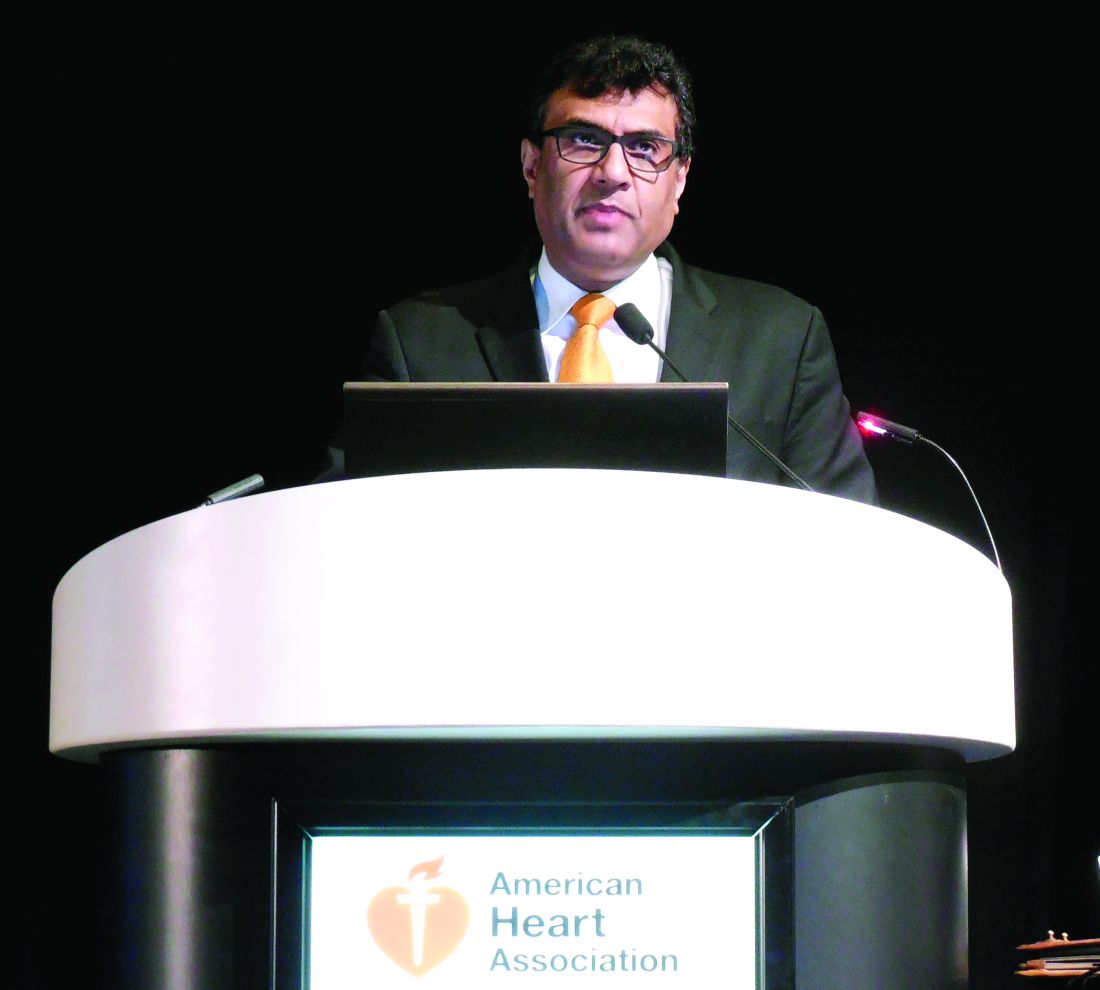
“Three years ago, when the issue of pump thrombosis was first revealed, there was a lot of consternation and some drop in LVAD use, especially as destination therapy. We think that seeing no pump thrombosis whatsoever will give people renewed confidence in this technology,” said Dr. Mehra, professor of medicine at Harvard Medical School and medical director of the Heart and Vascular Center of Brigham and Women’s Hospital, both in Boston.
Pump thrombosis has also been a problem for the patients who have received a competitor LVAD, the HeartWare HVAD device (Circulation. 2015 Nov 10;132[suppl 3]:A19675), approved for U.S. use as bridge to transplant. HeartMate II is approved for both bridge to transplant and for destination therapy.
In addition to apparently eliminating pump thrombosis, HeartMate 3’s size and potential implantation approach should make its placement during routine use as quick and minimally invasive as the HeartWare device, features that should further help broader use of HeartMate 3, commented Mark Slaughter, MD, professor and chairman of cardiovascular and thoracic surgery at the University of Louisville (Ky.). But Dr. Slaughter and others were also quick to highlight the shortcomings that remain with both devices that will continue to hamper a broader role for LVAD treatment of patients with advanced heart failure.
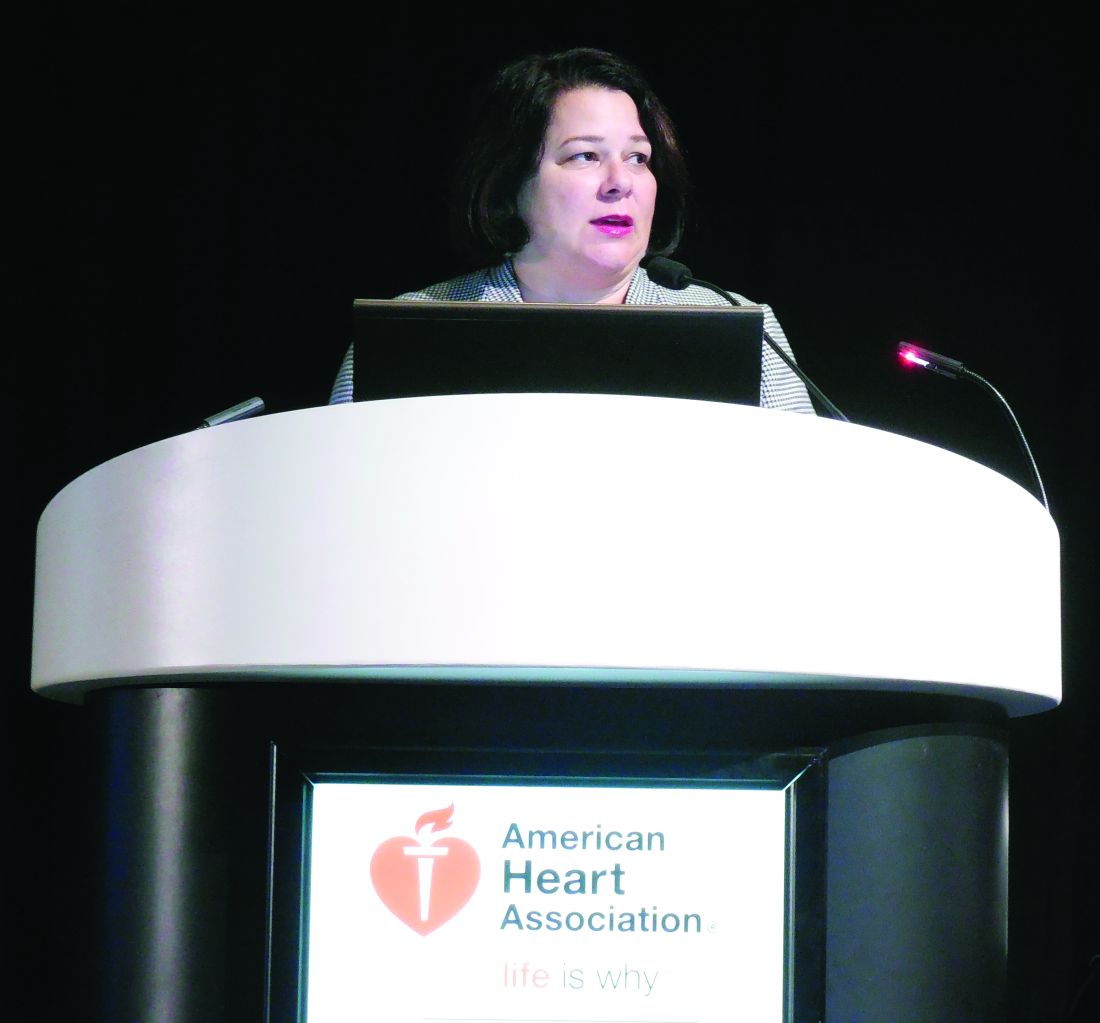
“We thought that if there was less pump thrombosis we’d see less stroke, but that is not what the data suggest. It’s the big puzzle we need to figure out before we see widespread acceptance of this treatment,” Dr. Sweitzer said.
“This will not shift LVAD use substantially,” commented Christopher B. Granger, MD, a professor of medicine and a heart failure specialist at Duke University, Durham, N.C. “Reducing the need for reoperation is good for the field, and is an incremental advance, but it is not transformational,” he said in an interview.
The MOMENTUM 3 (Multicenter Study of MagLev Technology in Patients Undergoing Mechanical Circulatory Support Therapy with HeartMate 3) trial randomized 294 patients at 69 U.S. centers. The study’s primary endpoint of 6-month survival free from disabling stroke or reoperation to repair or replace the LVAD occurred in 86% of 152 patients who received a HeartMate 3 and 77% of 142 patients randomized to HeartMate II, a statistical difference that met the prespecified criteria for both noninferiority and superiority. Concurrently with Dr. Mehra’s report at the meeting, a journal article appeared online (New Engl J Med. 2016 Nov 16. doi: 10.1056/NEJMoa1610426). He stated that as far as he understood, St. Jude would submit the 6-month data he reported to the Food and Drug Administration in an application for marketing approval for HeartMate 3.
“I agree that there are still morbid evens [with HeartMate 3] that need to be surmounted, but this is a confidence-building step in the right direction,” Dr. Mehra said.
mzoler@frontlinemedcom.com
On Twitter @mitchelzoler
By eliminating all episodes of pump thrombosis during 6-month follow-up, the HeartMate 3 appeared to resolve one of the major issues that has stood in the way of patients and physicians feeling comfortable with left ventricular assist devices. The smaller size of the HeartMate 3 pump and its ability to be placed with minimally invasive and fairly rapid surgery is another big advance, putting this device on par with the rival pump, the HeartWare HVAD.
But the performance of the HeartMate 3 left ventricular assist device (LVAD) in MOMENTUM 3 also highlighted the shortcomings that still remain for these devices: the unchanged rates of stroke, gastrointestinal bleeds, and infections with HeartMate 3, compared with HeartMate II in this trial, and similar 6-month survival rates in the two arms of the study.
The HeartMate 3 can be implanted without sternotomy, using an 8 cm incision on the lateral chest wall, resulting in a shorter postoperative stay and fewer perisurgical adverse events. Despite the less invasive surgery and absence of pump thrombosis, some patients and physicians will remain hesitant to use an LVAD unless it is unavoidable because of concern about strokes. Until further design and procedural refinements change the rate of serious strokes and other adverse events, LVADs will not be fully competitive with heart transplantation.
The competition between HeartMate and the HeartWare devices will help drive this field forward, leading to further improvements in outcomes and expanded LVAD use.
Mark Slaughter, MD, is professor of surgery and chairman of cardiovascular and thoracic surgery at the University of Louisville (Ky.). He was an investigator in MOMENTUM 3, he has been a consultant to EvaHeart and Oregon Heart, and he has received research support from Carmat and HeartWare. He made these comments as designated discussant for the report and in a video interview.
The video associated with this article is no longer available on this site. Please view all of our videos on the MDedge YouTube channel
By eliminating all episodes of pump thrombosis during 6-month follow-up, the HeartMate 3 appeared to resolve one of the major issues that has stood in the way of patients and physicians feeling comfortable with left ventricular assist devices. The smaller size of the HeartMate 3 pump and its ability to be placed with minimally invasive and fairly rapid surgery is another big advance, putting this device on par with the rival pump, the HeartWare HVAD.
But the performance of the HeartMate 3 left ventricular assist device (LVAD) in MOMENTUM 3 also highlighted the shortcomings that still remain for these devices: the unchanged rates of stroke, gastrointestinal bleeds, and infections with HeartMate 3, compared with HeartMate II in this trial, and similar 6-month survival rates in the two arms of the study.
The HeartMate 3 can be implanted without sternotomy, using an 8 cm incision on the lateral chest wall, resulting in a shorter postoperative stay and fewer perisurgical adverse events. Despite the less invasive surgery and absence of pump thrombosis, some patients and physicians will remain hesitant to use an LVAD unless it is unavoidable because of concern about strokes. Until further design and procedural refinements change the rate of serious strokes and other adverse events, LVADs will not be fully competitive with heart transplantation.
The competition between HeartMate and the HeartWare devices will help drive this field forward, leading to further improvements in outcomes and expanded LVAD use.
Mark Slaughter, MD, is professor of surgery and chairman of cardiovascular and thoracic surgery at the University of Louisville (Ky.). He was an investigator in MOMENTUM 3, he has been a consultant to EvaHeart and Oregon Heart, and he has received research support from Carmat and HeartWare. He made these comments as designated discussant for the report and in a video interview.
The video associated with this article is no longer available on this site. Please view all of our videos on the MDedge YouTube channel
By eliminating all episodes of pump thrombosis during 6-month follow-up, the HeartMate 3 appeared to resolve one of the major issues that has stood in the way of patients and physicians feeling comfortable with left ventricular assist devices. The smaller size of the HeartMate 3 pump and its ability to be placed with minimally invasive and fairly rapid surgery is another big advance, putting this device on par with the rival pump, the HeartWare HVAD.
But the performance of the HeartMate 3 left ventricular assist device (LVAD) in MOMENTUM 3 also highlighted the shortcomings that still remain for these devices: the unchanged rates of stroke, gastrointestinal bleeds, and infections with HeartMate 3, compared with HeartMate II in this trial, and similar 6-month survival rates in the two arms of the study.
The HeartMate 3 can be implanted without sternotomy, using an 8 cm incision on the lateral chest wall, resulting in a shorter postoperative stay and fewer perisurgical adverse events. Despite the less invasive surgery and absence of pump thrombosis, some patients and physicians will remain hesitant to use an LVAD unless it is unavoidable because of concern about strokes. Until further design and procedural refinements change the rate of serious strokes and other adverse events, LVADs will not be fully competitive with heart transplantation.
The competition between HeartMate and the HeartWare devices will help drive this field forward, leading to further improvements in outcomes and expanded LVAD use.
Mark Slaughter, MD, is professor of surgery and chairman of cardiovascular and thoracic surgery at the University of Louisville (Ky.). He was an investigator in MOMENTUM 3, he has been a consultant to EvaHeart and Oregon Heart, and he has received research support from Carmat and HeartWare. He made these comments as designated discussant for the report and in a video interview.
The video associated with this article is no longer available on this site. Please view all of our videos on the MDedge YouTube channel
NEW ORLEANS – HeartMate 3, the latest left ventricular assist device in the HeartMate line, appears to have solved the problem of pump thrombosis, a complication that has dogged ventricular pumps since the issue leapt into medical awareness about 3 years ago (New Engl J Med. 2014 Jan 2;370:33-40).
During 6 months of follow-up, none of 152 heart failure patients assigned to receive a HeartMate 3 left ventricular assist device (LVAD) developed suspected or confirmed pump thrombosis, compared with 14 patients (10%) having pump thrombosis out of 138 recipients of the prior-generation HeartMate II LVAD who served as the control group for the study.
“Three years ago, when the issue of pump thrombosis was first revealed, there was a lot of consternation and some drop in LVAD use, especially as destination therapy. We think that seeing no pump thrombosis whatsoever will give people renewed confidence in this technology,” said Dr. Mehra, professor of medicine at Harvard Medical School and medical director of the Heart and Vascular Center of Brigham and Women’s Hospital, both in Boston.
Pump thrombosis has also been a problem for the patients who have received a competitor LVAD, the HeartWare HVAD device (Circulation. 2015 Nov 10;132[suppl 3]:A19675), approved for U.S. use as bridge to transplant. HeartMate II is approved for both bridge to transplant and for destination therapy.
In addition to apparently eliminating pump thrombosis, HeartMate 3’s size and potential implantation approach should make its placement during routine use as quick and minimally invasive as the HeartWare device, features that should further help broader use of HeartMate 3, commented Mark Slaughter, MD, professor and chairman of cardiovascular and thoracic surgery at the University of Louisville (Ky.). But Dr. Slaughter and others were also quick to highlight the shortcomings that remain with both devices that will continue to hamper a broader role for LVAD treatment of patients with advanced heart failure.
“We thought that if there was less pump thrombosis we’d see less stroke, but that is not what the data suggest. It’s the big puzzle we need to figure out before we see widespread acceptance of this treatment,” Dr. Sweitzer said.
“This will not shift LVAD use substantially,” commented Christopher B. Granger, MD, a professor of medicine and a heart failure specialist at Duke University, Durham, N.C. “Reducing the need for reoperation is good for the field, and is an incremental advance, but it is not transformational,” he said in an interview.
The MOMENTUM 3 (Multicenter Study of MagLev Technology in Patients Undergoing Mechanical Circulatory Support Therapy with HeartMate 3) trial randomized 294 patients at 69 U.S. centers. The study’s primary endpoint of 6-month survival free from disabling stroke or reoperation to repair or replace the LVAD occurred in 86% of 152 patients who received a HeartMate 3 and 77% of 142 patients randomized to HeartMate II, a statistical difference that met the prespecified criteria for both noninferiority and superiority. Concurrently with Dr. Mehra’s report at the meeting, a journal article appeared online (New Engl J Med. 2016 Nov 16. doi: 10.1056/NEJMoa1610426). He stated that as far as he understood, St. Jude would submit the 6-month data he reported to the Food and Drug Administration in an application for marketing approval for HeartMate 3.
“I agree that there are still morbid evens [with HeartMate 3] that need to be surmounted, but this is a confidence-building step in the right direction,” Dr. Mehra said.
mzoler@frontlinemedcom.com
On Twitter @mitchelzoler
NEW ORLEANS – HeartMate 3, the latest left ventricular assist device in the HeartMate line, appears to have solved the problem of pump thrombosis, a complication that has dogged ventricular pumps since the issue leapt into medical awareness about 3 years ago (New Engl J Med. 2014 Jan 2;370:33-40).
During 6 months of follow-up, none of 152 heart failure patients assigned to receive a HeartMate 3 left ventricular assist device (LVAD) developed suspected or confirmed pump thrombosis, compared with 14 patients (10%) having pump thrombosis out of 138 recipients of the prior-generation HeartMate II LVAD who served as the control group for the study.
“Three years ago, when the issue of pump thrombosis was first revealed, there was a lot of consternation and some drop in LVAD use, especially as destination therapy. We think that seeing no pump thrombosis whatsoever will give people renewed confidence in this technology,” said Dr. Mehra, professor of medicine at Harvard Medical School and medical director of the Heart and Vascular Center of Brigham and Women’s Hospital, both in Boston.
Pump thrombosis has also been a problem for the patients who have received a competitor LVAD, the HeartWare HVAD device (Circulation. 2015 Nov 10;132[suppl 3]:A19675), approved for U.S. use as bridge to transplant. HeartMate II is approved for both bridge to transplant and for destination therapy.
In addition to apparently eliminating pump thrombosis, HeartMate 3’s size and potential implantation approach should make its placement during routine use as quick and minimally invasive as the HeartWare device, features that should further help broader use of HeartMate 3, commented Mark Slaughter, MD, professor and chairman of cardiovascular and thoracic surgery at the University of Louisville (Ky.). But Dr. Slaughter and others were also quick to highlight the shortcomings that remain with both devices that will continue to hamper a broader role for LVAD treatment of patients with advanced heart failure.
“We thought that if there was less pump thrombosis we’d see less stroke, but that is not what the data suggest. It’s the big puzzle we need to figure out before we see widespread acceptance of this treatment,” Dr. Sweitzer said.
“This will not shift LVAD use substantially,” commented Christopher B. Granger, MD, a professor of medicine and a heart failure specialist at Duke University, Durham, N.C. “Reducing the need for reoperation is good for the field, and is an incremental advance, but it is not transformational,” he said in an interview.
The MOMENTUM 3 (Multicenter Study of MagLev Technology in Patients Undergoing Mechanical Circulatory Support Therapy with HeartMate 3) trial randomized 294 patients at 69 U.S. centers. The study’s primary endpoint of 6-month survival free from disabling stroke or reoperation to repair or replace the LVAD occurred in 86% of 152 patients who received a HeartMate 3 and 77% of 142 patients randomized to HeartMate II, a statistical difference that met the prespecified criteria for both noninferiority and superiority. Concurrently with Dr. Mehra’s report at the meeting, a journal article appeared online (New Engl J Med. 2016 Nov 16. doi: 10.1056/NEJMoa1610426). He stated that as far as he understood, St. Jude would submit the 6-month data he reported to the Food and Drug Administration in an application for marketing approval for HeartMate 3.
“I agree that there are still morbid evens [with HeartMate 3] that need to be surmounted, but this is a confidence-building step in the right direction,” Dr. Mehra said.
mzoler@frontlinemedcom.com
On Twitter @mitchelzoler
AT THE AHA SCIENTIFIC SESSIONS
Key clinical point:
Major finding: During 6 months, suspected or confirmed pump thrombosis occurred in no HeartMate 3 patients and in 10% of HeartMate II recipients.
Data source: The MOMENTUM 3 trial, which randomized 294 patients at 69 U.S. centers.
Disclosures: MOMENTUM 3 was sponsored by St. Jude, the company developing the HeartMate 3 LVAD. Dr. Mehra has received travel reimbursements from St. Jude and has been a consultant to Medtronic, Stealth, and Teva. Dr. Sweitzer was an investigator in MOMENTUM 3 and has been a consultant to Acorda and Medtronic and received research support from Bayer, Corvia, and Novartis. Dr. Granger has been a consultant to Boehringer Ingelheim, and received research support from Medtronic and several other drug and device companies. Dr. Slaughter was an investigator in MOMENTUM 3, has been a consultant to EvaHeart and Oregon Heart, and has received research support from Carmat and HeartWare.
VIDEO: Appealing DAA denials is worth it for hepatitis C patients
BOSTON – Though criteria for insurance approval for direct-acting antivirals (DAAs) for hepatitis C virus (HCV) are loosening, many patients are still denied by both public and private carriers. Providers and patients should know that it’s worthwhile to appeal these denials; 78.1% (115 of 145) of initial DAA denials were approved on appeal, according to a recent study.
Jane Giang, PharmD, a clinical pharmacist at the University of North Carolina Health System, Chapel Hill, worked with colleagues to conduct a retrospective study of patients at her facility who were prescribed a DAA for HCV between October 2014 and April 2016.
Dr. Giang, in a video interview at the annual meeting of the American Association for the Study of Liver Diseases, said that she works alongside physicians in her clinic to craft appeals, tailoring appeal letters to individual patients’ circumstances.
The video associated with this article is no longer available on this site. Please view all of our videos on the MDedge YouTube channel
In a poster presentation, Dr. Giang and her colleagues presented results from a total of 1,017 patients who were prescribed DAAs for HCV during the study time frame. Of these, three-quarters (n = 794, 78.1%) received initial approval for their medication, while one in five patients (n = 206, 20.2%) had their initial applications denied. The remaining patients either had their cases closed for a variety of reasons, or had pending applications at the time of data analysis.
About half of the patients (n = 496, 48.8%) had commercial insurance. Medicare was the primary insurance for another 207 (n = 20.4%), and Medicaid for 140 (13.8%).
Of the patients whose DAAs were initially denied, 65 (31.6%) of the denials were for fibrosis less than stage F2. Another quarter of patients (n = 57, 27.7%) did not meet approval criteria, and 41 (19.9%) of denials said that the DAA was nonformulary or excluded by the plan. The remaining denials were for missing information or a variety of other reasons.
Half of the patients (n = 504, 49.6%) had F4 fibrosis at the time of application for DAA treatment; 241 (23.7%) had F0 or F1 fibrosis, and the remainder were approximately evenly split between F3 and F4 fibrosis.
When a subset of these denials went through an appeals process, most were eventually approved. Of the 42 denials for less than F2 fibrosis that were appealed, 20 (47.6%) were eventually approved. Of the 40 patients whose applications for DAAs were based on not meeting criteria, 37 (92.5%) were approved on appeal, and of the 32 denials based on plan exclusions or DAAs being nonformulary, 29 (90.6%) were approved on appeal.
When Dr. Giang and her colleagues broke down the numbers by type of insurance, they found that of the 496 patients who had commercial insurance, only 44 (8.9%) eventually received a final denial. Medicare patients had a 3.9% final denial rate, while just one of the 172 patients (0.6%) without insurance who received medication through programs directly from the manufacturer had a final denial.
The largest number of final denials occurred in the group of patients with Medicaid. Of these 140 patients, 25 (17.9%) had a final denial. Dr. Giang said that in North Carolina, providers cannot file appeals for DAA approval on behalf of patients; the paperwork is sent directly to the patient’s home, and patients have to complete and file the forms. She said that she and her colleagues learned to alert these patients to be on the lookout for paperwork, and counseled them to bring the appeal forms into the clinic so that staff could assist them in completing the appeal.
Though Dr. Giang said that her study showed that payer type matters when it comes to reimbursement for HCV care, the “impact of payer type on access to care remains incompletely explored, especially among noninsured patients,” she said.
Dr. Giang reported no outside sources of funding, and no conflicts of interest.
koakes@frontlinemedcom.com
On Twitter@karioakes
BOSTON – Though criteria for insurance approval for direct-acting antivirals (DAAs) for hepatitis C virus (HCV) are loosening, many patients are still denied by both public and private carriers. Providers and patients should know that it’s worthwhile to appeal these denials; 78.1% (115 of 145) of initial DAA denials were approved on appeal, according to a recent study.
Jane Giang, PharmD, a clinical pharmacist at the University of North Carolina Health System, Chapel Hill, worked with colleagues to conduct a retrospective study of patients at her facility who were prescribed a DAA for HCV between October 2014 and April 2016.
Dr. Giang, in a video interview at the annual meeting of the American Association for the Study of Liver Diseases, said that she works alongside physicians in her clinic to craft appeals, tailoring appeal letters to individual patients’ circumstances.
The video associated with this article is no longer available on this site. Please view all of our videos on the MDedge YouTube channel
In a poster presentation, Dr. Giang and her colleagues presented results from a total of 1,017 patients who were prescribed DAAs for HCV during the study time frame. Of these, three-quarters (n = 794, 78.1%) received initial approval for their medication, while one in five patients (n = 206, 20.2%) had their initial applications denied. The remaining patients either had their cases closed for a variety of reasons, or had pending applications at the time of data analysis.
About half of the patients (n = 496, 48.8%) had commercial insurance. Medicare was the primary insurance for another 207 (n = 20.4%), and Medicaid for 140 (13.8%).
Of the patients whose DAAs were initially denied, 65 (31.6%) of the denials were for fibrosis less than stage F2. Another quarter of patients (n = 57, 27.7%) did not meet approval criteria, and 41 (19.9%) of denials said that the DAA was nonformulary or excluded by the plan. The remaining denials were for missing information or a variety of other reasons.
Half of the patients (n = 504, 49.6%) had F4 fibrosis at the time of application for DAA treatment; 241 (23.7%) had F0 or F1 fibrosis, and the remainder were approximately evenly split between F3 and F4 fibrosis.
When a subset of these denials went through an appeals process, most were eventually approved. Of the 42 denials for less than F2 fibrosis that were appealed, 20 (47.6%) were eventually approved. Of the 40 patients whose applications for DAAs were based on not meeting criteria, 37 (92.5%) were approved on appeal, and of the 32 denials based on plan exclusions or DAAs being nonformulary, 29 (90.6%) were approved on appeal.
When Dr. Giang and her colleagues broke down the numbers by type of insurance, they found that of the 496 patients who had commercial insurance, only 44 (8.9%) eventually received a final denial. Medicare patients had a 3.9% final denial rate, while just one of the 172 patients (0.6%) without insurance who received medication through programs directly from the manufacturer had a final denial.
The largest number of final denials occurred in the group of patients with Medicaid. Of these 140 patients, 25 (17.9%) had a final denial. Dr. Giang said that in North Carolina, providers cannot file appeals for DAA approval on behalf of patients; the paperwork is sent directly to the patient’s home, and patients have to complete and file the forms. She said that she and her colleagues learned to alert these patients to be on the lookout for paperwork, and counseled them to bring the appeal forms into the clinic so that staff could assist them in completing the appeal.
Though Dr. Giang said that her study showed that payer type matters when it comes to reimbursement for HCV care, the “impact of payer type on access to care remains incompletely explored, especially among noninsured patients,” she said.
Dr. Giang reported no outside sources of funding, and no conflicts of interest.
koakes@frontlinemedcom.com
On Twitter@karioakes
BOSTON – Though criteria for insurance approval for direct-acting antivirals (DAAs) for hepatitis C virus (HCV) are loosening, many patients are still denied by both public and private carriers. Providers and patients should know that it’s worthwhile to appeal these denials; 78.1% (115 of 145) of initial DAA denials were approved on appeal, according to a recent study.
Jane Giang, PharmD, a clinical pharmacist at the University of North Carolina Health System, Chapel Hill, worked with colleagues to conduct a retrospective study of patients at her facility who were prescribed a DAA for HCV between October 2014 and April 2016.
Dr. Giang, in a video interview at the annual meeting of the American Association for the Study of Liver Diseases, said that she works alongside physicians in her clinic to craft appeals, tailoring appeal letters to individual patients’ circumstances.
The video associated with this article is no longer available on this site. Please view all of our videos on the MDedge YouTube channel
In a poster presentation, Dr. Giang and her colleagues presented results from a total of 1,017 patients who were prescribed DAAs for HCV during the study time frame. Of these, three-quarters (n = 794, 78.1%) received initial approval for their medication, while one in five patients (n = 206, 20.2%) had their initial applications denied. The remaining patients either had their cases closed for a variety of reasons, or had pending applications at the time of data analysis.
About half of the patients (n = 496, 48.8%) had commercial insurance. Medicare was the primary insurance for another 207 (n = 20.4%), and Medicaid for 140 (13.8%).
Of the patients whose DAAs were initially denied, 65 (31.6%) of the denials were for fibrosis less than stage F2. Another quarter of patients (n = 57, 27.7%) did not meet approval criteria, and 41 (19.9%) of denials said that the DAA was nonformulary or excluded by the plan. The remaining denials were for missing information or a variety of other reasons.
Half of the patients (n = 504, 49.6%) had F4 fibrosis at the time of application for DAA treatment; 241 (23.7%) had F0 or F1 fibrosis, and the remainder were approximately evenly split between F3 and F4 fibrosis.
When a subset of these denials went through an appeals process, most were eventually approved. Of the 42 denials for less than F2 fibrosis that were appealed, 20 (47.6%) were eventually approved. Of the 40 patients whose applications for DAAs were based on not meeting criteria, 37 (92.5%) were approved on appeal, and of the 32 denials based on plan exclusions or DAAs being nonformulary, 29 (90.6%) were approved on appeal.
When Dr. Giang and her colleagues broke down the numbers by type of insurance, they found that of the 496 patients who had commercial insurance, only 44 (8.9%) eventually received a final denial. Medicare patients had a 3.9% final denial rate, while just one of the 172 patients (0.6%) without insurance who received medication through programs directly from the manufacturer had a final denial.
The largest number of final denials occurred in the group of patients with Medicaid. Of these 140 patients, 25 (17.9%) had a final denial. Dr. Giang said that in North Carolina, providers cannot file appeals for DAA approval on behalf of patients; the paperwork is sent directly to the patient’s home, and patients have to complete and file the forms. She said that she and her colleagues learned to alert these patients to be on the lookout for paperwork, and counseled them to bring the appeal forms into the clinic so that staff could assist them in completing the appeal.
Though Dr. Giang said that her study showed that payer type matters when it comes to reimbursement for HCV care, the “impact of payer type on access to care remains incompletely explored, especially among noninsured patients,” she said.
Dr. Giang reported no outside sources of funding, and no conflicts of interest.
koakes@frontlinemedcom.com
On Twitter@karioakes
AT THE LIVER MEETING 2016

VIDEO: Statins cut mortality in ankylosing spondylitis, psoriatic arthritis
WASHINGTON – Statins lowered all-cause mortality by 32% in patients with ankylosing spondylitis (AS) and psoriatic arthritis (PsA) in a retrospective cohort study.
The magnitude of benefit from statins in these two disease states is greater than that found in the general population (estimated 9%-14% reduction in all-cause mortality) and than that reported in patients with rheumatoid arthritis (RA, 21% reduction), said Amar Oza, MD, a second-year rheumatology fellow at Massachusetts General Hospital and Harvard Medical School, both in Boston.
“This is a unique study. The benefit of statins has not been looked at in AS and PsA, specifically,” Dr. Oza explained. “More data are needed” to establish this benefit with certainty, he added.
The data were presented at the annual meeting of the American College of Rheumatology, and Dr. Oza discussed the findings in a video interview.
The study compared 2,904 patients with AS or PsA who initiated statins between 2000 and 2014 with 2,904 propensity-matched AS or PsA patients who did not initiate statins during that period. Patients were drawn from a United Kingdom general population database.
The investigators used a propensity score that accounted for 50 confounding variables to match the two cohorts. These variables included, but were not limited to, disease duration, socioeconomic status, body mass index, lifestyle factors, and medication use.
“This study is the first step in elucidating the benefit of statins in AS and PsA. It is a good step forward. If additional data substantiate that AS and PsA patients have a low threshold for statins, I can envision statins for both primary and secondary prevention in this patient population,” Dr. Oza stated.
The authors had no relevant financial disclosures.
The video associated with this article is no longer available on this site. Please view all of our videos on the MDedge YouTube channel
WASHINGTON – Statins lowered all-cause mortality by 32% in patients with ankylosing spondylitis (AS) and psoriatic arthritis (PsA) in a retrospective cohort study.
The magnitude of benefit from statins in these two disease states is greater than that found in the general population (estimated 9%-14% reduction in all-cause mortality) and than that reported in patients with rheumatoid arthritis (RA, 21% reduction), said Amar Oza, MD, a second-year rheumatology fellow at Massachusetts General Hospital and Harvard Medical School, both in Boston.
“This is a unique study. The benefit of statins has not been looked at in AS and PsA, specifically,” Dr. Oza explained. “More data are needed” to establish this benefit with certainty, he added.
The data were presented at the annual meeting of the American College of Rheumatology, and Dr. Oza discussed the findings in a video interview.
The study compared 2,904 patients with AS or PsA who initiated statins between 2000 and 2014 with 2,904 propensity-matched AS or PsA patients who did not initiate statins during that period. Patients were drawn from a United Kingdom general population database.
The investigators used a propensity score that accounted for 50 confounding variables to match the two cohorts. These variables included, but were not limited to, disease duration, socioeconomic status, body mass index, lifestyle factors, and medication use.
“This study is the first step in elucidating the benefit of statins in AS and PsA. It is a good step forward. If additional data substantiate that AS and PsA patients have a low threshold for statins, I can envision statins for both primary and secondary prevention in this patient population,” Dr. Oza stated.
The authors had no relevant financial disclosures.
The video associated with this article is no longer available on this site. Please view all of our videos on the MDedge YouTube channel
WASHINGTON – Statins lowered all-cause mortality by 32% in patients with ankylosing spondylitis (AS) and psoriatic arthritis (PsA) in a retrospective cohort study.
The magnitude of benefit from statins in these two disease states is greater than that found in the general population (estimated 9%-14% reduction in all-cause mortality) and than that reported in patients with rheumatoid arthritis (RA, 21% reduction), said Amar Oza, MD, a second-year rheumatology fellow at Massachusetts General Hospital and Harvard Medical School, both in Boston.
“This is a unique study. The benefit of statins has not been looked at in AS and PsA, specifically,” Dr. Oza explained. “More data are needed” to establish this benefit with certainty, he added.
The data were presented at the annual meeting of the American College of Rheumatology, and Dr. Oza discussed the findings in a video interview.
The study compared 2,904 patients with AS or PsA who initiated statins between 2000 and 2014 with 2,904 propensity-matched AS or PsA patients who did not initiate statins during that period. Patients were drawn from a United Kingdom general population database.
The investigators used a propensity score that accounted for 50 confounding variables to match the two cohorts. These variables included, but were not limited to, disease duration, socioeconomic status, body mass index, lifestyle factors, and medication use.
“This study is the first step in elucidating the benefit of statins in AS and PsA. It is a good step forward. If additional data substantiate that AS and PsA patients have a low threshold for statins, I can envision statins for both primary and secondary prevention in this patient population,” Dr. Oza stated.
The authors had no relevant financial disclosures.
The video associated with this article is no longer available on this site. Please view all of our videos on the MDedge YouTube channel
AT THE ACR ANNUAL MEETING

VIDEO: Challenging case – consider HSV with erythema multiforme
LAS VEGAS – In a presentation at Skin Disease Education Foundation’s annual Las Vegas dermatology seminar, Miriam S. Bettencourt, MD, shared a challenging diagnostic case of erythema multiforme associated with herpes simplex, in a patient who presented with blisters all over his body.
“We know that 90% of cases of erythema multiforme are related to herpetic infections,” but this patient had no recent history of herpes simplex outbreaks, Dr. Bettencourt, of the University of Nevada, Las Vegas, said in a video interview.
‘“Let’s remember that HSV [herpes simplex virus] ... can be associated with erythema multiforme even if a patient does not have any flares,” Dr. Bettencourt said. A consult with a rheumatologist can be helpful, as in this case, if a patient has a positive antinuclear antibody test, which could not be explained, she added, noting that the patient is doing well after 6 months of therapy.
Dr. Bettencourt disclosed relationships with AbbVie, Allergan, Aqua, Celgene, Janssen, IntraDerm, Leo, Promius, and Valeant.
SDEF and this news organization are owned by the same parent company.
The video associated with this article is no longer available on this site. Please view all of our videos on the MDedge YouTube channel
LAS VEGAS – In a presentation at Skin Disease Education Foundation’s annual Las Vegas dermatology seminar, Miriam S. Bettencourt, MD, shared a challenging diagnostic case of erythema multiforme associated with herpes simplex, in a patient who presented with blisters all over his body.
“We know that 90% of cases of erythema multiforme are related to herpetic infections,” but this patient had no recent history of herpes simplex outbreaks, Dr. Bettencourt, of the University of Nevada, Las Vegas, said in a video interview.
‘“Let’s remember that HSV [herpes simplex virus] ... can be associated with erythema multiforme even if a patient does not have any flares,” Dr. Bettencourt said. A consult with a rheumatologist can be helpful, as in this case, if a patient has a positive antinuclear antibody test, which could not be explained, she added, noting that the patient is doing well after 6 months of therapy.
Dr. Bettencourt disclosed relationships with AbbVie, Allergan, Aqua, Celgene, Janssen, IntraDerm, Leo, Promius, and Valeant.
SDEF and this news organization are owned by the same parent company.
The video associated with this article is no longer available on this site. Please view all of our videos on the MDedge YouTube channel
LAS VEGAS – In a presentation at Skin Disease Education Foundation’s annual Las Vegas dermatology seminar, Miriam S. Bettencourt, MD, shared a challenging diagnostic case of erythema multiforme associated with herpes simplex, in a patient who presented with blisters all over his body.
“We know that 90% of cases of erythema multiforme are related to herpetic infections,” but this patient had no recent history of herpes simplex outbreaks, Dr. Bettencourt, of the University of Nevada, Las Vegas, said in a video interview.
‘“Let’s remember that HSV [herpes simplex virus] ... can be associated with erythema multiforme even if a patient does not have any flares,” Dr. Bettencourt said. A consult with a rheumatologist can be helpful, as in this case, if a patient has a positive antinuclear antibody test, which could not be explained, she added, noting that the patient is doing well after 6 months of therapy.
Dr. Bettencourt disclosed relationships with AbbVie, Allergan, Aqua, Celgene, Janssen, IntraDerm, Leo, Promius, and Valeant.
SDEF and this news organization are owned by the same parent company.
The video associated with this article is no longer available on this site. Please view all of our videos on the MDedge YouTube channel
AT SDEF LAS VEGAS DERMATOLOGY SEMINAR

VIDEO: Bulk matters in body sculpting
LAS VEGAS – Both heating and cooling techniques can provide effective results for patients seeking to improve their appearance with body sculpting, Christopher Zachary, MD, said at Skin Disease Education Foundation’s annual Las Vegas dermatology seminar.
Whether the clinician chooses devices that use radiofrequency, laser, or cryolipolysis to target fat, the key is bulk treatment, Dr. Zachary, professor and chair of the department of dermatology at the University of California, Irvine, said in a video interview.
When cooling or heating the fat, “it has to been done in bulk; it has to be done for a certain length of time,” he said, noting that treatment times vary with devices, from 5 to 60 minutes. “I can’t stress enough the importance of bulk cooling or bulk heating,” which induce a chronic reaction “that results in localized fat reduction,” he added.
Dr. Zachary disclosed relationships with multiple companies, including Solta, Zeltiq, Scion, Amway, and Candela. SDEF and this news organization are owned by the same parent company.
The video associated with this article is no longer available on this site. Please view all of our videos on the MDedge YouTube channel
LAS VEGAS – Both heating and cooling techniques can provide effective results for patients seeking to improve their appearance with body sculpting, Christopher Zachary, MD, said at Skin Disease Education Foundation’s annual Las Vegas dermatology seminar.
Whether the clinician chooses devices that use radiofrequency, laser, or cryolipolysis to target fat, the key is bulk treatment, Dr. Zachary, professor and chair of the department of dermatology at the University of California, Irvine, said in a video interview.
When cooling or heating the fat, “it has to been done in bulk; it has to be done for a certain length of time,” he said, noting that treatment times vary with devices, from 5 to 60 minutes. “I can’t stress enough the importance of bulk cooling or bulk heating,” which induce a chronic reaction “that results in localized fat reduction,” he added.
Dr. Zachary disclosed relationships with multiple companies, including Solta, Zeltiq, Scion, Amway, and Candela. SDEF and this news organization are owned by the same parent company.
The video associated with this article is no longer available on this site. Please view all of our videos on the MDedge YouTube channel
LAS VEGAS – Both heating and cooling techniques can provide effective results for patients seeking to improve their appearance with body sculpting, Christopher Zachary, MD, said at Skin Disease Education Foundation’s annual Las Vegas dermatology seminar.
Whether the clinician chooses devices that use radiofrequency, laser, or cryolipolysis to target fat, the key is bulk treatment, Dr. Zachary, professor and chair of the department of dermatology at the University of California, Irvine, said in a video interview.
When cooling or heating the fat, “it has to been done in bulk; it has to be done for a certain length of time,” he said, noting that treatment times vary with devices, from 5 to 60 minutes. “I can’t stress enough the importance of bulk cooling or bulk heating,” which induce a chronic reaction “that results in localized fat reduction,” he added.
Dr. Zachary disclosed relationships with multiple companies, including Solta, Zeltiq, Scion, Amway, and Candela. SDEF and this news organization are owned by the same parent company.
The video associated with this article is no longer available on this site. Please view all of our videos on the MDedge YouTube channel
AT SDEF LAS VEGAS DERMATOLOGY SEMINAR

VIDEO: ACR recommendations for glucocorticoid-induced osteoporosis unveiled
WASHINGTON – New American College of Rheumatology recommendations for glucocorticoid-induced osteoporosis prevention and treatment include refinements in risk assessment and treatment.
“These are draft recommendations not yet accepted by ACR,” said Lenore M. Buckley, MD, of Yale University, New Haven, Conn. “They are intended to be dynamic, because risk factors change for patients over time,” she added.
The draft recommendations build upon the 2010 ACR recommendations.
“About 1% of the United States population is on glucocorticoid treatment. Fracture is the most common adverse event, and trabecular bone in the spine is the most vulnerable,” Dr. Buckley explained in her presentation of the recommendations at the annual meeting of the American College of Rheumatology. “The risk of glucocorticoid (GC)-induced fracture is related to dose level and cumulative dose.”
The video associated with this article is no longer available on this site. Please view all of our videos on the MDedge YouTube channel
The draft recommendations were developed via GRADE (Grading of Assessment, Development, and Evaluation) methodology by a core team of internists, rheumatologists, a GRADE expert, a voting panel, and an expert panel.
Recommendations for risk assessment
Risk assessment for GC-induced osteoporosis is individualized. “You need to know the patient in front of you. Fracture risk is not just related to GC use, but also to bone mass, age, and race. Older age, female gender, Caucasian race all increase risk, and these factors need to be brought in to assessment,” Dr. Buckley explained.
For men and women over age 40, the Fracture Risk Assessment Tool (FRAX), which calculates the 10-year fracture risk in adults over age 40, should be used for risk assessment, incorporating GC use as a risk factor, she said.
“Adjust risk of FRAX according to dose of glucocorticoid. For 2.5-7.5 mg/day, the FRAX risk is fine, but if the patient is on higher doses, adjust the FRAX accordingly,” she said.
FRAX is not valid for women and men under age 40, she continued. A new recommendation is the inclusion of a moderate risk group based on very low bone mass score (Z score less than –3 below the standard deviation of the mean) and/or rapid bone loss (greater than 10% in 1 year). Patients who had prior GC-associated fracture under 40 years are considered high risk.
A thorough history and physical exam are necessary for all patients, and risk assessment should be done within 6 months of GC initiation. Physical exam should be repeated annually, and bone mineral density (BMD) should be assessed every 2-3 years for patients who continue on GC.
Treatment
The proposed treatment recommendations were not age dependent. Patients with moderate to high risk should be treated, in descending order, with oral bisphosphonates, intravenous bisphosphonates, teriparatide (Forteo), and denosumab (Prolia). The order of preference for these treatments was based on cost, efficacy, toxicity, and patient preference.
All patients should take calcium and vitamin D, regardless of risk level.
The proposed recommendations also addressed four special groups considered at significant risk: women of childbearing potential, organ transplant recipients, children, and people on very high doses of GC (greater than 30 mg/day, cumulative dose of 5 g/year).
“For women of childbearing potential, there are emerging data suggesting that bisphosphonates are safe. For this group, consider oral bisphosphonate and teriparatide as a second choice. Animal data suggest that IV bisphosphonates and denosumab are harmful to the fetus,” Dr. Buckley said.
For organ transplant recipients, general recommendations can be followed with two provisions: Kidney transplant recipients should have a work-up for metabolic bone disease, and denosumab should not be used in people on multiple immunosuppressants.
Optimize calcium and vitamin D for children, and treat with oral bisphosphonate, Dr. Buckley continued. If oral bisphosphonates are contraindicated, IV bisphosphonates can be used.
Patients on very high GC dose should be treated with oral bisphosphonates if they are age 30 or older.
Osteoporosis medications can be discontinued in low-risk patients who stop taking GC, but should be continued for those at moderate to high risk.
Patients who benefit from osteoporosis medications but remain at moderate to high risk at the end of 3 years should continue GC treatment.
The authors and sponsors had no relevant financial disclosures.
WASHINGTON – New American College of Rheumatology recommendations for glucocorticoid-induced osteoporosis prevention and treatment include refinements in risk assessment and treatment.
“These are draft recommendations not yet accepted by ACR,” said Lenore M. Buckley, MD, of Yale University, New Haven, Conn. “They are intended to be dynamic, because risk factors change for patients over time,” she added.
The draft recommendations build upon the 2010 ACR recommendations.
“About 1% of the United States population is on glucocorticoid treatment. Fracture is the most common adverse event, and trabecular bone in the spine is the most vulnerable,” Dr. Buckley explained in her presentation of the recommendations at the annual meeting of the American College of Rheumatology. “The risk of glucocorticoid (GC)-induced fracture is related to dose level and cumulative dose.”
The video associated with this article is no longer available on this site. Please view all of our videos on the MDedge YouTube channel
The draft recommendations were developed via GRADE (Grading of Assessment, Development, and Evaluation) methodology by a core team of internists, rheumatologists, a GRADE expert, a voting panel, and an expert panel.
Recommendations for risk assessment
Risk assessment for GC-induced osteoporosis is individualized. “You need to know the patient in front of you. Fracture risk is not just related to GC use, but also to bone mass, age, and race. Older age, female gender, Caucasian race all increase risk, and these factors need to be brought in to assessment,” Dr. Buckley explained.
For men and women over age 40, the Fracture Risk Assessment Tool (FRAX), which calculates the 10-year fracture risk in adults over age 40, should be used for risk assessment, incorporating GC use as a risk factor, she said.
“Adjust risk of FRAX according to dose of glucocorticoid. For 2.5-7.5 mg/day, the FRAX risk is fine, but if the patient is on higher doses, adjust the FRAX accordingly,” she said.
FRAX is not valid for women and men under age 40, she continued. A new recommendation is the inclusion of a moderate risk group based on very low bone mass score (Z score less than –3 below the standard deviation of the mean) and/or rapid bone loss (greater than 10% in 1 year). Patients who had prior GC-associated fracture under 40 years are considered high risk.
A thorough history and physical exam are necessary for all patients, and risk assessment should be done within 6 months of GC initiation. Physical exam should be repeated annually, and bone mineral density (BMD) should be assessed every 2-3 years for patients who continue on GC.
Treatment
The proposed treatment recommendations were not age dependent. Patients with moderate to high risk should be treated, in descending order, with oral bisphosphonates, intravenous bisphosphonates, teriparatide (Forteo), and denosumab (Prolia). The order of preference for these treatments was based on cost, efficacy, toxicity, and patient preference.
All patients should take calcium and vitamin D, regardless of risk level.
The proposed recommendations also addressed four special groups considered at significant risk: women of childbearing potential, organ transplant recipients, children, and people on very high doses of GC (greater than 30 mg/day, cumulative dose of 5 g/year).
“For women of childbearing potential, there are emerging data suggesting that bisphosphonates are safe. For this group, consider oral bisphosphonate and teriparatide as a second choice. Animal data suggest that IV bisphosphonates and denosumab are harmful to the fetus,” Dr. Buckley said.
For organ transplant recipients, general recommendations can be followed with two provisions: Kidney transplant recipients should have a work-up for metabolic bone disease, and denosumab should not be used in people on multiple immunosuppressants.
Optimize calcium and vitamin D for children, and treat with oral bisphosphonate, Dr. Buckley continued. If oral bisphosphonates are contraindicated, IV bisphosphonates can be used.
Patients on very high GC dose should be treated with oral bisphosphonates if they are age 30 or older.
Osteoporosis medications can be discontinued in low-risk patients who stop taking GC, but should be continued for those at moderate to high risk.
Patients who benefit from osteoporosis medications but remain at moderate to high risk at the end of 3 years should continue GC treatment.
The authors and sponsors had no relevant financial disclosures.
WASHINGTON – New American College of Rheumatology recommendations for glucocorticoid-induced osteoporosis prevention and treatment include refinements in risk assessment and treatment.
“These are draft recommendations not yet accepted by ACR,” said Lenore M. Buckley, MD, of Yale University, New Haven, Conn. “They are intended to be dynamic, because risk factors change for patients over time,” she added.
The draft recommendations build upon the 2010 ACR recommendations.
“About 1% of the United States population is on glucocorticoid treatment. Fracture is the most common adverse event, and trabecular bone in the spine is the most vulnerable,” Dr. Buckley explained in her presentation of the recommendations at the annual meeting of the American College of Rheumatology. “The risk of glucocorticoid (GC)-induced fracture is related to dose level and cumulative dose.”
The video associated with this article is no longer available on this site. Please view all of our videos on the MDedge YouTube channel
The draft recommendations were developed via GRADE (Grading of Assessment, Development, and Evaluation) methodology by a core team of internists, rheumatologists, a GRADE expert, a voting panel, and an expert panel.
Recommendations for risk assessment
Risk assessment for GC-induced osteoporosis is individualized. “You need to know the patient in front of you. Fracture risk is not just related to GC use, but also to bone mass, age, and race. Older age, female gender, Caucasian race all increase risk, and these factors need to be brought in to assessment,” Dr. Buckley explained.
For men and women over age 40, the Fracture Risk Assessment Tool (FRAX), which calculates the 10-year fracture risk in adults over age 40, should be used for risk assessment, incorporating GC use as a risk factor, she said.
“Adjust risk of FRAX according to dose of glucocorticoid. For 2.5-7.5 mg/day, the FRAX risk is fine, but if the patient is on higher doses, adjust the FRAX accordingly,” she said.
FRAX is not valid for women and men under age 40, she continued. A new recommendation is the inclusion of a moderate risk group based on very low bone mass score (Z score less than –3 below the standard deviation of the mean) and/or rapid bone loss (greater than 10% in 1 year). Patients who had prior GC-associated fracture under 40 years are considered high risk.
A thorough history and physical exam are necessary for all patients, and risk assessment should be done within 6 months of GC initiation. Physical exam should be repeated annually, and bone mineral density (BMD) should be assessed every 2-3 years for patients who continue on GC.
Treatment
The proposed treatment recommendations were not age dependent. Patients with moderate to high risk should be treated, in descending order, with oral bisphosphonates, intravenous bisphosphonates, teriparatide (Forteo), and denosumab (Prolia). The order of preference for these treatments was based on cost, efficacy, toxicity, and patient preference.
All patients should take calcium and vitamin D, regardless of risk level.
The proposed recommendations also addressed four special groups considered at significant risk: women of childbearing potential, organ transplant recipients, children, and people on very high doses of GC (greater than 30 mg/day, cumulative dose of 5 g/year).
“For women of childbearing potential, there are emerging data suggesting that bisphosphonates are safe. For this group, consider oral bisphosphonate and teriparatide as a second choice. Animal data suggest that IV bisphosphonates and denosumab are harmful to the fetus,” Dr. Buckley said.
For organ transplant recipients, general recommendations can be followed with two provisions: Kidney transplant recipients should have a work-up for metabolic bone disease, and denosumab should not be used in people on multiple immunosuppressants.
Optimize calcium and vitamin D for children, and treat with oral bisphosphonate, Dr. Buckley continued. If oral bisphosphonates are contraindicated, IV bisphosphonates can be used.
Patients on very high GC dose should be treated with oral bisphosphonates if they are age 30 or older.
Osteoporosis medications can be discontinued in low-risk patients who stop taking GC, but should be continued for those at moderate to high risk.
Patients who benefit from osteoporosis medications but remain at moderate to high risk at the end of 3 years should continue GC treatment.
The authors and sponsors had no relevant financial disclosures.
AT THE ACR ANNUAL MEETING

VIDEO: PBC patients with compensated cirrhosis fare well on obeticholic acid
BOSTON – Patients with primary biliary cholangitis (PBC) who have compensated cirrhosis fared just as well on obeticholic acid (OCA) as did PBC patients without cirrhosis, according to an analysis of data from POISE, the pivotal clinical trial for approval of OCA for PBC.
The POISE trial included 36 individuals with PBC and compensated cirrhosis, since cirrhosis “is an endpoint for virtually all liver diseases,” John Vierling, MD, said in a video interview at the meeting.
The video associated with this article is no longer available on this site. Please view all of our videos on the MDedge YouTube channel
To see how this group fared, Dr. Vierling and his coinvestigators performed a post hoc analysis of the POISE data to examine OCA’s safety and efficacy for patients with compensated cirrhosis. Patients with decompensated cirrhosis were not included in the trial.
Dr. Vierling, chief of hepatology at Baylor College of Medicine, Houston, noted that investigators worked hard to set the bar high for inclusion in the group with cirrhosis, to achieve very high specificity. “We did this by using very stringent criteria of liver biopsy, or transient elastography adjusted for a very high range of kilopascals required to diagnose cirrhosis in cholestatic patients,” he said. To be included, patients also had to have elevated total bilirubin levels and a baseline alkaline phosphatase level greater than five times the upper limit of normal.
Statistically, the patients were evenly distributed across the placebo arm and the two treatment arms, one of which dosed OCA at 10 mg/day; the other treatment arm had flexible dosing at 5-10 mg/day.
The POISE trial used a composite primary efficacy endpoint of achieving an alkaline phosphatase (ALP) less than 1.67 times the upper limit of normal, with total bilirubin within normal limits, and at least a 15% reduction in ALP.
“Significantly more OCA-treated patients with cirrhosis achieved the primary composite endpoint compared to placebo,” Dr. Vierling and his coauthors wrote in a poster presented at the annual meeting for the American Association for the Study of Liver Diseases. The difference was individually significant for all three values that made up the composite primary endpoint as well.
Secondary endpoints included gamma-glutamyltransferase, alanine aminotrasferase, and aspartate aminotransferase, all of which were significantly reduced among patients taking OCA. Patients on placebo saw these values rise over the time period of the study.
There were no new safety signals seen in the post hoc analysis of the group with cirrhosis that were not seen in the trial at large, said Dr. Vierling. Two individuals in the subgroup dropped out of the trial because of pruritis, a similar proportion to that seen in the full trial population.
The drug’s manufacturer, Intercept Pharmaceuticals, is working with the Food and Drug Administration to establish appropriate doses and intervals for obeticholic acid so it may be used safely in individuals with decompensated cirrhosis, said Dr. Vierling.
Obeticholic acid, a farnesoid-X receptor agonist, is an approved agent to use as add-on therapy to ursodeoxycholic acid (UDCA), or as monotherapy for patients who can’t tolerate UDCA.
Dr. Vierling disclosed financial relationships with Intercept Pharmaceuticals and with several other pharmaceutical companies. The study was funded by Intercept Pharmaceuticals.
koakes@frontlinemedcom.com
On Twitter @karioakes
BOSTON – Patients with primary biliary cholangitis (PBC) who have compensated cirrhosis fared just as well on obeticholic acid (OCA) as did PBC patients without cirrhosis, according to an analysis of data from POISE, the pivotal clinical trial for approval of OCA for PBC.
The POISE trial included 36 individuals with PBC and compensated cirrhosis, since cirrhosis “is an endpoint for virtually all liver diseases,” John Vierling, MD, said in a video interview at the meeting.
The video associated with this article is no longer available on this site. Please view all of our videos on the MDedge YouTube channel
To see how this group fared, Dr. Vierling and his coinvestigators performed a post hoc analysis of the POISE data to examine OCA’s safety and efficacy for patients with compensated cirrhosis. Patients with decompensated cirrhosis were not included in the trial.
Dr. Vierling, chief of hepatology at Baylor College of Medicine, Houston, noted that investigators worked hard to set the bar high for inclusion in the group with cirrhosis, to achieve very high specificity. “We did this by using very stringent criteria of liver biopsy, or transient elastography adjusted for a very high range of kilopascals required to diagnose cirrhosis in cholestatic patients,” he said. To be included, patients also had to have elevated total bilirubin levels and a baseline alkaline phosphatase level greater than five times the upper limit of normal.
Statistically, the patients were evenly distributed across the placebo arm and the two treatment arms, one of which dosed OCA at 10 mg/day; the other treatment arm had flexible dosing at 5-10 mg/day.
The POISE trial used a composite primary efficacy endpoint of achieving an alkaline phosphatase (ALP) less than 1.67 times the upper limit of normal, with total bilirubin within normal limits, and at least a 15% reduction in ALP.
“Significantly more OCA-treated patients with cirrhosis achieved the primary composite endpoint compared to placebo,” Dr. Vierling and his coauthors wrote in a poster presented at the annual meeting for the American Association for the Study of Liver Diseases. The difference was individually significant for all three values that made up the composite primary endpoint as well.
Secondary endpoints included gamma-glutamyltransferase, alanine aminotrasferase, and aspartate aminotransferase, all of which were significantly reduced among patients taking OCA. Patients on placebo saw these values rise over the time period of the study.
There were no new safety signals seen in the post hoc analysis of the group with cirrhosis that were not seen in the trial at large, said Dr. Vierling. Two individuals in the subgroup dropped out of the trial because of pruritis, a similar proportion to that seen in the full trial population.
The drug’s manufacturer, Intercept Pharmaceuticals, is working with the Food and Drug Administration to establish appropriate doses and intervals for obeticholic acid so it may be used safely in individuals with decompensated cirrhosis, said Dr. Vierling.
Obeticholic acid, a farnesoid-X receptor agonist, is an approved agent to use as add-on therapy to ursodeoxycholic acid (UDCA), or as monotherapy for patients who can’t tolerate UDCA.
Dr. Vierling disclosed financial relationships with Intercept Pharmaceuticals and with several other pharmaceutical companies. The study was funded by Intercept Pharmaceuticals.
koakes@frontlinemedcom.com
On Twitter @karioakes
BOSTON – Patients with primary biliary cholangitis (PBC) who have compensated cirrhosis fared just as well on obeticholic acid (OCA) as did PBC patients without cirrhosis, according to an analysis of data from POISE, the pivotal clinical trial for approval of OCA for PBC.
The POISE trial included 36 individuals with PBC and compensated cirrhosis, since cirrhosis “is an endpoint for virtually all liver diseases,” John Vierling, MD, said in a video interview at the meeting.
The video associated with this article is no longer available on this site. Please view all of our videos on the MDedge YouTube channel
To see how this group fared, Dr. Vierling and his coinvestigators performed a post hoc analysis of the POISE data to examine OCA’s safety and efficacy for patients with compensated cirrhosis. Patients with decompensated cirrhosis were not included in the trial.
Dr. Vierling, chief of hepatology at Baylor College of Medicine, Houston, noted that investigators worked hard to set the bar high for inclusion in the group with cirrhosis, to achieve very high specificity. “We did this by using very stringent criteria of liver biopsy, or transient elastography adjusted for a very high range of kilopascals required to diagnose cirrhosis in cholestatic patients,” he said. To be included, patients also had to have elevated total bilirubin levels and a baseline alkaline phosphatase level greater than five times the upper limit of normal.
Statistically, the patients were evenly distributed across the placebo arm and the two treatment arms, one of which dosed OCA at 10 mg/day; the other treatment arm had flexible dosing at 5-10 mg/day.
The POISE trial used a composite primary efficacy endpoint of achieving an alkaline phosphatase (ALP) less than 1.67 times the upper limit of normal, with total bilirubin within normal limits, and at least a 15% reduction in ALP.
“Significantly more OCA-treated patients with cirrhosis achieved the primary composite endpoint compared to placebo,” Dr. Vierling and his coauthors wrote in a poster presented at the annual meeting for the American Association for the Study of Liver Diseases. The difference was individually significant for all three values that made up the composite primary endpoint as well.
Secondary endpoints included gamma-glutamyltransferase, alanine aminotrasferase, and aspartate aminotransferase, all of which were significantly reduced among patients taking OCA. Patients on placebo saw these values rise over the time period of the study.
There were no new safety signals seen in the post hoc analysis of the group with cirrhosis that were not seen in the trial at large, said Dr. Vierling. Two individuals in the subgroup dropped out of the trial because of pruritis, a similar proportion to that seen in the full trial population.
The drug’s manufacturer, Intercept Pharmaceuticals, is working with the Food and Drug Administration to establish appropriate doses and intervals for obeticholic acid so it may be used safely in individuals with decompensated cirrhosis, said Dr. Vierling.
Obeticholic acid, a farnesoid-X receptor agonist, is an approved agent to use as add-on therapy to ursodeoxycholic acid (UDCA), or as monotherapy for patients who can’t tolerate UDCA.
Dr. Vierling disclosed financial relationships with Intercept Pharmaceuticals and with several other pharmaceutical companies. The study was funded by Intercept Pharmaceuticals.
koakes@frontlinemedcom.com
On Twitter @karioakes
EXPERT ANALYSIS FROM THE LIVER MEETING