User login
Facial, hand, and foot dermatitis: Lebrikizumab and dupilumab show efficacy in new studies
in a secondary analysis of randomized, double-blind, placebo-controlled phase 3 trials of the drug, Jenny E. Murase, MD, reported at the annual Revolutionizing Atopic Dermatitis conference.
At week 16 in the ADvocate 1, ADvocate 2, and ADhere trials, with and without concomitant topical corticosteroid (TCS) use, at least 58% of treated patients experienced improvement in facial dermatitis, and 62% or more experienced improvement in hand dermatitis – statistically significant differences over placebo.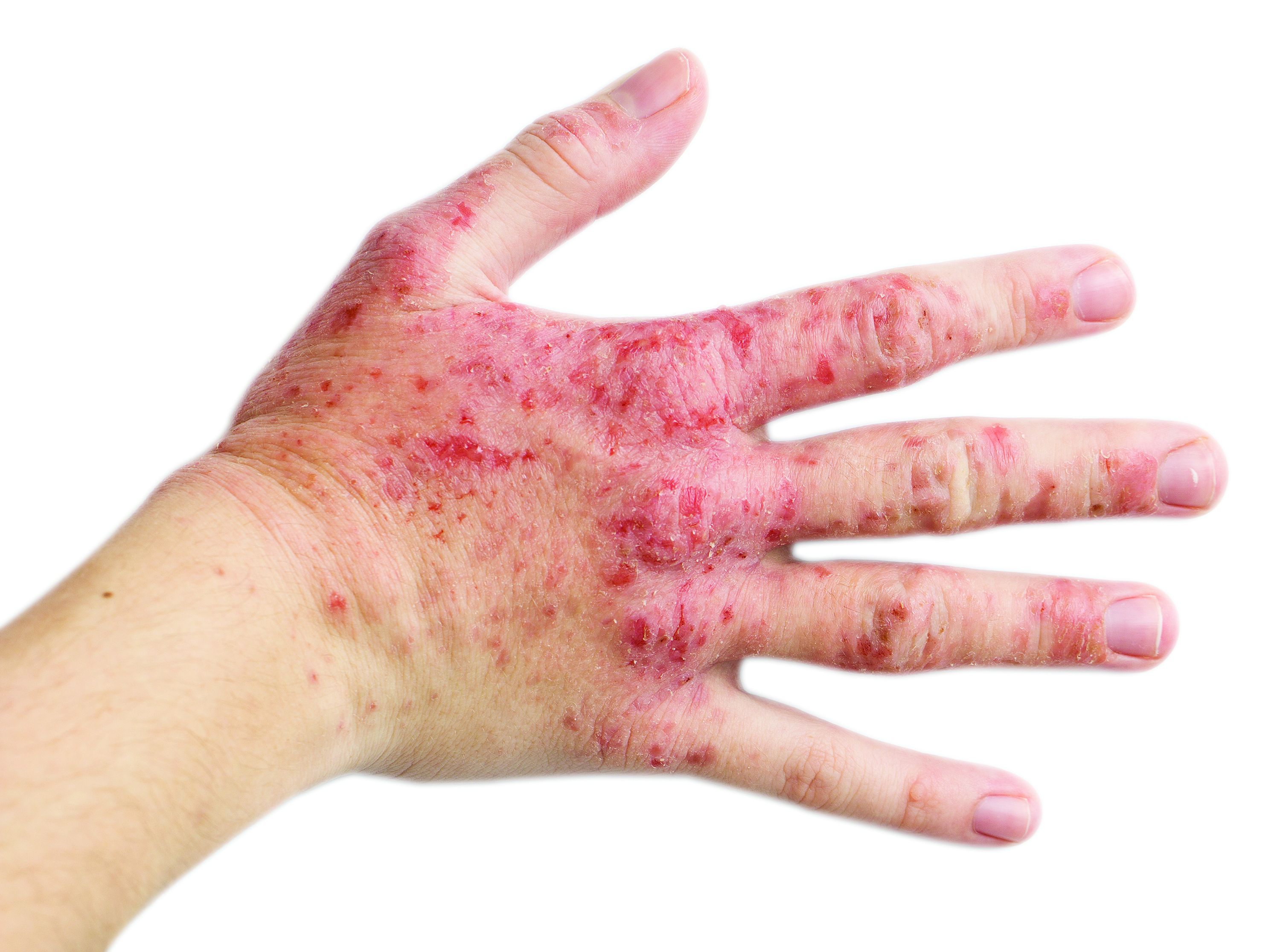
“Lebrikizumab was efficacious in clearing and improving facial and hand dermatitis, burdensome and difficult-to-treat areas, in most patients with moderate to severe AD,” said Dr. Murase, of the department of dermatology at the University of California, San Francisco, and director of medical dermatology consultative services and patch testing for the Palo Alto (Calf.) Foundation Medical Group.

In another late-breaking abstract presented at the RAD conference, the injectable biologic dupilumab – now in its 6th year on the market – was reported by Jonathan I. Silverberg, MD, PhD, MPH, to “rapidly and significantly” improve the signs, symptoms, and quality of life in some adults and adolescents with moderate to severe hand and foot AD in a recently completed phase 3 trial of dupilumab.
Lebrikizumab results for facial, hand dermatitis
The ADvocate 1 and ADvocate 2 trials evaluated lebrikizumab monotherapy and randomized patients to receive 250 mg subcutaneously every 2 weeks (after a 500-mg loading dose at baseline and week 2) or placebo. (Patients who received any corticosteroid as a rescue medication were considered nonresponders.) The ADhere trial compared low to mid–potency TCS plus lebrikizumab, using the same dosing of lebrikizumab as in the ADvocate studies, versus TCS plus placebo.
In all three trials, with a total of more than 1,000 participants, clinicians assessed for the presence or absence of facial or hand dermatitis at baseline. At week 16, they then assessed the change from baseline based on a 4-point scale of cleared, improved, no change, and worsened. “Improvement” was defined as cleared or improved.
Both facial and hand dermatitis were identified in a majority of patients at baseline. For instance, in ADvocate 1, facial dermatitis was identified in 71.4% of patients in the lebrikizumab group and 80.9% of those in the placebo group. Hand dermatitis was identified in 72% and 73% of the treatment and placebo groups, respectively.
Across the trials, at 16 weeks, 58%-69% of adult and adolescent patients receiving lebrikizumab had improvement in facial dermatitis, compared with 22%-46% on placebo. For hand dermatitis, 62%-73% experienced improvement, compared with 19%-43% on placebo, respectively. Proportions of improved patients in both the lebrikizumab and placebo groups were highest in the ADhere trial, Dr. Murase reported.
In the ADvocate trials, 16 weeks marked the end of the induction phase and the start of a 36-week maintenance period. The ADhere trial was a 16-week study. Overall results from ADhere were published in January in JAMA Dermatology, and results from the 16-week induction period of the ADvocate trials were published in March in the New England Journal of Medicine.
Lebrikizumab received fast-track designation for AD by the Food and Drug Administration in 2019. Regulatory decisions in the United States and the European Union are expected later this year, according to a press release from Eli Lilly, the drug’s developer.

Asked to comment on the study results, Zelma Chiesa Fuxench, MD, MSCE, assistant professor of dermatology at the University of Pennsylvania, Philadelphia, called the post-hoc results promising. “While newer, more targeted treatments for AD offer the possibility of overall improvement and long-term disease control, we do not have sufficient data to help guide us when it comes to selecting treatment based on which area of the body is affected,” she explained. Most published findings have used “overall scores and not scores stratified by body region.”
The new findings, “help expand our current understanding of how the drug works for different areas of the body,” which can help inform treatment discussions with patients, she added.
AD can be especially challenging to treat when it involves “what are considered to be more sensitive areas such as the face or hands,” said Dr. Chiesa Fuxench. Challenges may include poor tolerance to topical medications, concerns for safety with long-term use, and the need for constant reapplication.
“Those of us who treat a large number of AD patients suspect that the impact and/or burden of AD may be different depending on what areas of the body are affected,” but more data are needed, she added. Limitations of the study, she noted, include “that the study may not have been adequately powered and that the sample size was small.”
Dupilumab result for hand, foot dermatitis
The phase 3 LIBERTY-AD-HAFT trial randomized 133 patients with moderate to severe atopic hand and/or foot dermatitis to a 16-week course of dupilumab (Dupixent) monotherapy, 300 mg every 2 weeks in adults and 200 or 300 mg every 2 weeks in adolescents, or placebo. Patients were then followed during a 12-week safety follow-up period.

Significantly more patients in the dupilumab group achieved the primary endpoint of a hand and foot Investigator Global Assessment (IGA) score of 0/1 at 16 weeks: 40.3% vs. 16.7% in the placebo group (P = .003). Statistical significance was reached at week 8, reported Dr. Silverberg, professor of dermatology and director of clinical research at George Washington University, Washington. Dupilumab, a human monoclonal IgG4 antibody that inhibits IL-4 and IL-13 signaling, is FDA approved for treating moderate to severe AD in patients age 6 months and older, among other indications.
In addition, the proportion of patients achieving a 4-point or greater improvement in the weekly average of daily hand and foot Peak Pruritus Numerical Rating Scale (PPNRS), the key secondary endpoint, was about fourfold greater with dupilumab: 52.2%, compared with 13.6% on placebo (P < .0001). This reduction in itch reached statistical significance by week 1. Dupilumab-treated patients also experienced significant improvement in other lesion measures and in Quality of Life in Hand Eczema Questionnaire scores, Dr. Silverberg noted.
The patients had a mean age in their 30s and a mean duration of atopic hand and/or foot dermatitis of 15-16 years. For more than one-quarter of patients, morphology was hyperkeratotic, which “has to be one of the toughest subsets to affect positive change in,” he said.
About 40% of patients had lesions on the hands only, and more than half had lesions on both hands and feet. “This is pretty realistic – we generally don’t see much isolated foot dermatitis in the AD population,” Dr. Silverberg said.
About 70%-75% had concomitant AD outside of the hands and feet, mostly of moderate severity. Patients with positive patch tests or whose hand and foot eczema was believed to be driven by irritants were excluded from the trial, as were patients who had used TCS or other topical treatments within 2 weeks of the baseline visit.
Rescue medication use was low (3% with dupilumab vs. 21% with placebo), and adverse events were “pretty consistent with everything we’ve seen with dupilumab,” said Dr. Silverberg.
Commenting on this study, Dr. Chiesa Fuxench said she was “excited to see [the findings], as hand and foot AD can often be quite challenging to treat in clinic.” The improvements in overall disease scores, itch, and quality of life scores – with fairly good tolerance – are “reassuring and what we would expect based on our current experience with dupilumab,” she said.
The lebrikizumab study was funded by Dermira, a wholly owned subsidiary of Eli Lilly. The dupilumab study was sponsored by Sanofi and Regeneron Pharmaceuticals. Some of the data were also reported by lead investigator Eric Simpson, MD, of Oregon Health and Science University at the annual meeting of the American Academy of Dermatology in March 2023.
Dr. Murase reported consulting/advising for Eli Lilly, Leo Pharma, UCB, Sanofi-Genzyme, and non-CME speaking/honoraria for UCB and Regeneron. Dr. Silverberg reported consulting fees and fees for non-CME services from Sanofi Genzyme, Regeneron, Pfizer, and other companies. Dr. Chiesa Fuxench, who was a speaker at the RAD meeting but was not involved in the studies, disclosed receiving honoraria for CME work in AD sponsored by education grants from Regeneron/Sanofi, and grant/research support from Lilly, Regeneron, and Sanofi, among other disclosures.
in a secondary analysis of randomized, double-blind, placebo-controlled phase 3 trials of the drug, Jenny E. Murase, MD, reported at the annual Revolutionizing Atopic Dermatitis conference.
At week 16 in the ADvocate 1, ADvocate 2, and ADhere trials, with and without concomitant topical corticosteroid (TCS) use, at least 58% of treated patients experienced improvement in facial dermatitis, and 62% or more experienced improvement in hand dermatitis – statistically significant differences over placebo.
“Lebrikizumab was efficacious in clearing and improving facial and hand dermatitis, burdensome and difficult-to-treat areas, in most patients with moderate to severe AD,” said Dr. Murase, of the department of dermatology at the University of California, San Francisco, and director of medical dermatology consultative services and patch testing for the Palo Alto (Calf.) Foundation Medical Group.
In another late-breaking abstract presented at the RAD conference, the injectable biologic dupilumab – now in its 6th year on the market – was reported by Jonathan I. Silverberg, MD, PhD, MPH, to “rapidly and significantly” improve the signs, symptoms, and quality of life in some adults and adolescents with moderate to severe hand and foot AD in a recently completed phase 3 trial of dupilumab.
Lebrikizumab results for facial, hand dermatitis
The ADvocate 1 and ADvocate 2 trials evaluated lebrikizumab monotherapy and randomized patients to receive 250 mg subcutaneously every 2 weeks (after a 500-mg loading dose at baseline and week 2) or placebo. (Patients who received any corticosteroid as a rescue medication were considered nonresponders.) The ADhere trial compared low to mid–potency TCS plus lebrikizumab, using the same dosing of lebrikizumab as in the ADvocate studies, versus TCS plus placebo.
In all three trials, with a total of more than 1,000 participants, clinicians assessed for the presence or absence of facial or hand dermatitis at baseline. At week 16, they then assessed the change from baseline based on a 4-point scale of cleared, improved, no change, and worsened. “Improvement” was defined as cleared or improved.
Both facial and hand dermatitis were identified in a majority of patients at baseline. For instance, in ADvocate 1, facial dermatitis was identified in 71.4% of patients in the lebrikizumab group and 80.9% of those in the placebo group. Hand dermatitis was identified in 72% and 73% of the treatment and placebo groups, respectively.
Across the trials, at 16 weeks, 58%-69% of adult and adolescent patients receiving lebrikizumab had improvement in facial dermatitis, compared with 22%-46% on placebo. For hand dermatitis, 62%-73% experienced improvement, compared with 19%-43% on placebo, respectively. Proportions of improved patients in both the lebrikizumab and placebo groups were highest in the ADhere trial, Dr. Murase reported.
In the ADvocate trials, 16 weeks marked the end of the induction phase and the start of a 36-week maintenance period. The ADhere trial was a 16-week study. Overall results from ADhere were published in January in JAMA Dermatology, and results from the 16-week induction period of the ADvocate trials were published in March in the New England Journal of Medicine.
Lebrikizumab received fast-track designation for AD by the Food and Drug Administration in 2019. Regulatory decisions in the United States and the European Union are expected later this year, according to a press release from Eli Lilly, the drug’s developer.
Asked to comment on the study results, Zelma Chiesa Fuxench, MD, MSCE, assistant professor of dermatology at the University of Pennsylvania, Philadelphia, called the post-hoc results promising. “While newer, more targeted treatments for AD offer the possibility of overall improvement and long-term disease control, we do not have sufficient data to help guide us when it comes to selecting treatment based on which area of the body is affected,” she explained. Most published findings have used “overall scores and not scores stratified by body region.”
The new findings, “help expand our current understanding of how the drug works for different areas of the body,” which can help inform treatment discussions with patients, she added.
AD can be especially challenging to treat when it involves “what are considered to be more sensitive areas such as the face or hands,” said Dr. Chiesa Fuxench. Challenges may include poor tolerance to topical medications, concerns for safety with long-term use, and the need for constant reapplication.
“Those of us who treat a large number of AD patients suspect that the impact and/or burden of AD may be different depending on what areas of the body are affected,” but more data are needed, she added. Limitations of the study, she noted, include “that the study may not have been adequately powered and that the sample size was small.”
Dupilumab result for hand, foot dermatitis
The phase 3 LIBERTY-AD-HAFT trial randomized 133 patients with moderate to severe atopic hand and/or foot dermatitis to a 16-week course of dupilumab (Dupixent) monotherapy, 300 mg every 2 weeks in adults and 200 or 300 mg every 2 weeks in adolescents, or placebo. Patients were then followed during a 12-week safety follow-up period.
Significantly more patients in the dupilumab group achieved the primary endpoint of a hand and foot Investigator Global Assessment (IGA) score of 0/1 at 16 weeks: 40.3% vs. 16.7% in the placebo group (P = .003). Statistical significance was reached at week 8, reported Dr. Silverberg, professor of dermatology and director of clinical research at George Washington University, Washington. Dupilumab, a human monoclonal IgG4 antibody that inhibits IL-4 and IL-13 signaling, is FDA approved for treating moderate to severe AD in patients age 6 months and older, among other indications.
In addition, the proportion of patients achieving a 4-point or greater improvement in the weekly average of daily hand and foot Peak Pruritus Numerical Rating Scale (PPNRS), the key secondary endpoint, was about fourfold greater with dupilumab: 52.2%, compared with 13.6% on placebo (P < .0001). This reduction in itch reached statistical significance by week 1. Dupilumab-treated patients also experienced significant improvement in other lesion measures and in Quality of Life in Hand Eczema Questionnaire scores, Dr. Silverberg noted.
The patients had a mean age in their 30s and a mean duration of atopic hand and/or foot dermatitis of 15-16 years. For more than one-quarter of patients, morphology was hyperkeratotic, which “has to be one of the toughest subsets to affect positive change in,” he said.
About 40% of patients had lesions on the hands only, and more than half had lesions on both hands and feet. “This is pretty realistic – we generally don’t see much isolated foot dermatitis in the AD population,” Dr. Silverberg said.
About 70%-75% had concomitant AD outside of the hands and feet, mostly of moderate severity. Patients with positive patch tests or whose hand and foot eczema was believed to be driven by irritants were excluded from the trial, as were patients who had used TCS or other topical treatments within 2 weeks of the baseline visit.
Rescue medication use was low (3% with dupilumab vs. 21% with placebo), and adverse events were “pretty consistent with everything we’ve seen with dupilumab,” said Dr. Silverberg.
Commenting on this study, Dr. Chiesa Fuxench said she was “excited to see [the findings], as hand and foot AD can often be quite challenging to treat in clinic.” The improvements in overall disease scores, itch, and quality of life scores – with fairly good tolerance – are “reassuring and what we would expect based on our current experience with dupilumab,” she said.
The lebrikizumab study was funded by Dermira, a wholly owned subsidiary of Eli Lilly. The dupilumab study was sponsored by Sanofi and Regeneron Pharmaceuticals. Some of the data were also reported by lead investigator Eric Simpson, MD, of Oregon Health and Science University at the annual meeting of the American Academy of Dermatology in March 2023.
Dr. Murase reported consulting/advising for Eli Lilly, Leo Pharma, UCB, Sanofi-Genzyme, and non-CME speaking/honoraria for UCB and Regeneron. Dr. Silverberg reported consulting fees and fees for non-CME services from Sanofi Genzyme, Regeneron, Pfizer, and other companies. Dr. Chiesa Fuxench, who was a speaker at the RAD meeting but was not involved in the studies, disclosed receiving honoraria for CME work in AD sponsored by education grants from Regeneron/Sanofi, and grant/research support from Lilly, Regeneron, and Sanofi, among other disclosures.
in a secondary analysis of randomized, double-blind, placebo-controlled phase 3 trials of the drug, Jenny E. Murase, MD, reported at the annual Revolutionizing Atopic Dermatitis conference.
At week 16 in the ADvocate 1, ADvocate 2, and ADhere trials, with and without concomitant topical corticosteroid (TCS) use, at least 58% of treated patients experienced improvement in facial dermatitis, and 62% or more experienced improvement in hand dermatitis – statistically significant differences over placebo.
“Lebrikizumab was efficacious in clearing and improving facial and hand dermatitis, burdensome and difficult-to-treat areas, in most patients with moderate to severe AD,” said Dr. Murase, of the department of dermatology at the University of California, San Francisco, and director of medical dermatology consultative services and patch testing for the Palo Alto (Calf.) Foundation Medical Group.
In another late-breaking abstract presented at the RAD conference, the injectable biologic dupilumab – now in its 6th year on the market – was reported by Jonathan I. Silverberg, MD, PhD, MPH, to “rapidly and significantly” improve the signs, symptoms, and quality of life in some adults and adolescents with moderate to severe hand and foot AD in a recently completed phase 3 trial of dupilumab.
Lebrikizumab results for facial, hand dermatitis
The ADvocate 1 and ADvocate 2 trials evaluated lebrikizumab monotherapy and randomized patients to receive 250 mg subcutaneously every 2 weeks (after a 500-mg loading dose at baseline and week 2) or placebo. (Patients who received any corticosteroid as a rescue medication were considered nonresponders.) The ADhere trial compared low to mid–potency TCS plus lebrikizumab, using the same dosing of lebrikizumab as in the ADvocate studies, versus TCS plus placebo.
In all three trials, with a total of more than 1,000 participants, clinicians assessed for the presence or absence of facial or hand dermatitis at baseline. At week 16, they then assessed the change from baseline based on a 4-point scale of cleared, improved, no change, and worsened. “Improvement” was defined as cleared or improved.
Both facial and hand dermatitis were identified in a majority of patients at baseline. For instance, in ADvocate 1, facial dermatitis was identified in 71.4% of patients in the lebrikizumab group and 80.9% of those in the placebo group. Hand dermatitis was identified in 72% and 73% of the treatment and placebo groups, respectively.
Across the trials, at 16 weeks, 58%-69% of adult and adolescent patients receiving lebrikizumab had improvement in facial dermatitis, compared with 22%-46% on placebo. For hand dermatitis, 62%-73% experienced improvement, compared with 19%-43% on placebo, respectively. Proportions of improved patients in both the lebrikizumab and placebo groups were highest in the ADhere trial, Dr. Murase reported.
In the ADvocate trials, 16 weeks marked the end of the induction phase and the start of a 36-week maintenance period. The ADhere trial was a 16-week study. Overall results from ADhere were published in January in JAMA Dermatology, and results from the 16-week induction period of the ADvocate trials were published in March in the New England Journal of Medicine.
Lebrikizumab received fast-track designation for AD by the Food and Drug Administration in 2019. Regulatory decisions in the United States and the European Union are expected later this year, according to a press release from Eli Lilly, the drug’s developer.
Asked to comment on the study results, Zelma Chiesa Fuxench, MD, MSCE, assistant professor of dermatology at the University of Pennsylvania, Philadelphia, called the post-hoc results promising. “While newer, more targeted treatments for AD offer the possibility of overall improvement and long-term disease control, we do not have sufficient data to help guide us when it comes to selecting treatment based on which area of the body is affected,” she explained. Most published findings have used “overall scores and not scores stratified by body region.”
The new findings, “help expand our current understanding of how the drug works for different areas of the body,” which can help inform treatment discussions with patients, she added.
AD can be especially challenging to treat when it involves “what are considered to be more sensitive areas such as the face or hands,” said Dr. Chiesa Fuxench. Challenges may include poor tolerance to topical medications, concerns for safety with long-term use, and the need for constant reapplication.
“Those of us who treat a large number of AD patients suspect that the impact and/or burden of AD may be different depending on what areas of the body are affected,” but more data are needed, she added. Limitations of the study, she noted, include “that the study may not have been adequately powered and that the sample size was small.”
Dupilumab result for hand, foot dermatitis
The phase 3 LIBERTY-AD-HAFT trial randomized 133 patients with moderate to severe atopic hand and/or foot dermatitis to a 16-week course of dupilumab (Dupixent) monotherapy, 300 mg every 2 weeks in adults and 200 or 300 mg every 2 weeks in adolescents, or placebo. Patients were then followed during a 12-week safety follow-up period.
Significantly more patients in the dupilumab group achieved the primary endpoint of a hand and foot Investigator Global Assessment (IGA) score of 0/1 at 16 weeks: 40.3% vs. 16.7% in the placebo group (P = .003). Statistical significance was reached at week 8, reported Dr. Silverberg, professor of dermatology and director of clinical research at George Washington University, Washington. Dupilumab, a human monoclonal IgG4 antibody that inhibits IL-4 and IL-13 signaling, is FDA approved for treating moderate to severe AD in patients age 6 months and older, among other indications.
In addition, the proportion of patients achieving a 4-point or greater improvement in the weekly average of daily hand and foot Peak Pruritus Numerical Rating Scale (PPNRS), the key secondary endpoint, was about fourfold greater with dupilumab: 52.2%, compared with 13.6% on placebo (P < .0001). This reduction in itch reached statistical significance by week 1. Dupilumab-treated patients also experienced significant improvement in other lesion measures and in Quality of Life in Hand Eczema Questionnaire scores, Dr. Silverberg noted.
The patients had a mean age in their 30s and a mean duration of atopic hand and/or foot dermatitis of 15-16 years. For more than one-quarter of patients, morphology was hyperkeratotic, which “has to be one of the toughest subsets to affect positive change in,” he said.
About 40% of patients had lesions on the hands only, and more than half had lesions on both hands and feet. “This is pretty realistic – we generally don’t see much isolated foot dermatitis in the AD population,” Dr. Silverberg said.
About 70%-75% had concomitant AD outside of the hands and feet, mostly of moderate severity. Patients with positive patch tests or whose hand and foot eczema was believed to be driven by irritants were excluded from the trial, as were patients who had used TCS or other topical treatments within 2 weeks of the baseline visit.
Rescue medication use was low (3% with dupilumab vs. 21% with placebo), and adverse events were “pretty consistent with everything we’ve seen with dupilumab,” said Dr. Silverberg.
Commenting on this study, Dr. Chiesa Fuxench said she was “excited to see [the findings], as hand and foot AD can often be quite challenging to treat in clinic.” The improvements in overall disease scores, itch, and quality of life scores – with fairly good tolerance – are “reassuring and what we would expect based on our current experience with dupilumab,” she said.
The lebrikizumab study was funded by Dermira, a wholly owned subsidiary of Eli Lilly. The dupilumab study was sponsored by Sanofi and Regeneron Pharmaceuticals. Some of the data were also reported by lead investigator Eric Simpson, MD, of Oregon Health and Science University at the annual meeting of the American Academy of Dermatology in March 2023.
Dr. Murase reported consulting/advising for Eli Lilly, Leo Pharma, UCB, Sanofi-Genzyme, and non-CME speaking/honoraria for UCB and Regeneron. Dr. Silverberg reported consulting fees and fees for non-CME services from Sanofi Genzyme, Regeneron, Pfizer, and other companies. Dr. Chiesa Fuxench, who was a speaker at the RAD meeting but was not involved in the studies, disclosed receiving honoraria for CME work in AD sponsored by education grants from Regeneron/Sanofi, and grant/research support from Lilly, Regeneron, and Sanofi, among other disclosures.
AT RAD 2023
Can this tool forecast peanut allergies?
Pediatricians may have a new aid to better predict peanut allergies among infants with atopic dermatitis.
Their study of the implementation of the scorecard was presented at the Pediatric Academic Societies annual meeting.
Infants with atopic dermatitis or eczema are six times more likely to have an egg allergy and eleven times more likely to have a peanut allergy at age 12 months than are infants without atopic dermatitis.
The scorecard reflects recent directives from the National Institute of Allergy and Infectious Diseases to help combat the public health problem.
“When the NIAID prevention of peanut allergy guidelines first came out, it asked pediatricians to serve as frontline practitioners in implementing them by identifying children at risk for peanut allergy and guiding families on what to do next,” said Waheeda Samady, MD, professor of pediatrics at Northwestern University, Chicago. “The impetus for the study was to further support pediatricians in this role.”
Although pediatricians are trained to identify and even treat mild to moderate cases of atopic dermatitis, little emphasis has gone to categorizing the condition on the basis of severity and to correlating peanut allergy risk.
The predictive scorecard captures 14 images from one infant of mixed race, two White infants, two Black infants, and two Hispanic infants.
To create the card, two in-house pediatric dermatologists assessed 58 images from 13 children and categorized images from 0 (no signs of atopic dermatitis) to 4 (severe signs of atopic dermatitis). After a first pass on categorization, the doctors agreed on 84% of images.
Of 189 pediatricians who used the card, fewer than half reported that they “sometimes,” “very often,” or “always” used the scorecard for atopic dermatitis evaluation. A little fewer than three-quarters reported that their ability to diagnose and categorize atopic dermatitis improved.
“Severity staging of atopic dermatitis is not something that the general pediatrician necessarily performs on a day-to-day basis,” said Kawaljit Brar, MD, professor of pediatrics in the division of allergy and immunology at Hassenfeld Children’s Hospital in New York.
Dr. Brar explained that children who are identified as being at high risk are often referred to specialists such as her, who then perform allergy screenings and can determine whether introduction of food at home is safe or whether office feedings supervised by an allergist are necessary. Researchers have found that early introduction to peanuts for children with moderate to severe atopic dermatitis could prevent peanut allergy.
“This represents a wonderful initiative to educate pediatricians so that they understand which patients require screening for peanut allergy and which patients don’t and can just get introduced to peanuts at home,” Dr. Brar said.
The atopic dermatitis scorecard reflects a growing recognition that varying skin tones show levels of severity incongruously.
“Many of us in clinical practice have recognized that our education has not always been inclusive of patients with varying skin tones,” Dr. Samady said. “When we looked for photos of patients with different skin tones, we simply could not find any that we thought were appropriate. So we decided to take some ourselves, and we’re currently continuing to take photos in order to improve the scorecard we currently have.”
The study was funded by the National Institute of Health and Food Allergy Research and Education. Dr. Samady and Dr. Brar reported no relevant financial relationships.
A version of this article first appeared on Medscape.com.
Pediatricians may have a new aid to better predict peanut allergies among infants with atopic dermatitis.
Their study of the implementation of the scorecard was presented at the Pediatric Academic Societies annual meeting.
Infants with atopic dermatitis or eczema are six times more likely to have an egg allergy and eleven times more likely to have a peanut allergy at age 12 months than are infants without atopic dermatitis.
The scorecard reflects recent directives from the National Institute of Allergy and Infectious Diseases to help combat the public health problem.
“When the NIAID prevention of peanut allergy guidelines first came out, it asked pediatricians to serve as frontline practitioners in implementing them by identifying children at risk for peanut allergy and guiding families on what to do next,” said Waheeda Samady, MD, professor of pediatrics at Northwestern University, Chicago. “The impetus for the study was to further support pediatricians in this role.”
Although pediatricians are trained to identify and even treat mild to moderate cases of atopic dermatitis, little emphasis has gone to categorizing the condition on the basis of severity and to correlating peanut allergy risk.
The predictive scorecard captures 14 images from one infant of mixed race, two White infants, two Black infants, and two Hispanic infants.
To create the card, two in-house pediatric dermatologists assessed 58 images from 13 children and categorized images from 0 (no signs of atopic dermatitis) to 4 (severe signs of atopic dermatitis). After a first pass on categorization, the doctors agreed on 84% of images.
Of 189 pediatricians who used the card, fewer than half reported that they “sometimes,” “very often,” or “always” used the scorecard for atopic dermatitis evaluation. A little fewer than three-quarters reported that their ability to diagnose and categorize atopic dermatitis improved.
“Severity staging of atopic dermatitis is not something that the general pediatrician necessarily performs on a day-to-day basis,” said Kawaljit Brar, MD, professor of pediatrics in the division of allergy and immunology at Hassenfeld Children’s Hospital in New York.
Dr. Brar explained that children who are identified as being at high risk are often referred to specialists such as her, who then perform allergy screenings and can determine whether introduction of food at home is safe or whether office feedings supervised by an allergist are necessary. Researchers have found that early introduction to peanuts for children with moderate to severe atopic dermatitis could prevent peanut allergy.
“This represents a wonderful initiative to educate pediatricians so that they understand which patients require screening for peanut allergy and which patients don’t and can just get introduced to peanuts at home,” Dr. Brar said.
The atopic dermatitis scorecard reflects a growing recognition that varying skin tones show levels of severity incongruously.
“Many of us in clinical practice have recognized that our education has not always been inclusive of patients with varying skin tones,” Dr. Samady said. “When we looked for photos of patients with different skin tones, we simply could not find any that we thought were appropriate. So we decided to take some ourselves, and we’re currently continuing to take photos in order to improve the scorecard we currently have.”
The study was funded by the National Institute of Health and Food Allergy Research and Education. Dr. Samady and Dr. Brar reported no relevant financial relationships.
A version of this article first appeared on Medscape.com.
Pediatricians may have a new aid to better predict peanut allergies among infants with atopic dermatitis.
Their study of the implementation of the scorecard was presented at the Pediatric Academic Societies annual meeting.
Infants with atopic dermatitis or eczema are six times more likely to have an egg allergy and eleven times more likely to have a peanut allergy at age 12 months than are infants without atopic dermatitis.
The scorecard reflects recent directives from the National Institute of Allergy and Infectious Diseases to help combat the public health problem.
“When the NIAID prevention of peanut allergy guidelines first came out, it asked pediatricians to serve as frontline practitioners in implementing them by identifying children at risk for peanut allergy and guiding families on what to do next,” said Waheeda Samady, MD, professor of pediatrics at Northwestern University, Chicago. “The impetus for the study was to further support pediatricians in this role.”
Although pediatricians are trained to identify and even treat mild to moderate cases of atopic dermatitis, little emphasis has gone to categorizing the condition on the basis of severity and to correlating peanut allergy risk.
The predictive scorecard captures 14 images from one infant of mixed race, two White infants, two Black infants, and two Hispanic infants.
To create the card, two in-house pediatric dermatologists assessed 58 images from 13 children and categorized images from 0 (no signs of atopic dermatitis) to 4 (severe signs of atopic dermatitis). After a first pass on categorization, the doctors agreed on 84% of images.
Of 189 pediatricians who used the card, fewer than half reported that they “sometimes,” “very often,” or “always” used the scorecard for atopic dermatitis evaluation. A little fewer than three-quarters reported that their ability to diagnose and categorize atopic dermatitis improved.
“Severity staging of atopic dermatitis is not something that the general pediatrician necessarily performs on a day-to-day basis,” said Kawaljit Brar, MD, professor of pediatrics in the division of allergy and immunology at Hassenfeld Children’s Hospital in New York.
Dr. Brar explained that children who are identified as being at high risk are often referred to specialists such as her, who then perform allergy screenings and can determine whether introduction of food at home is safe or whether office feedings supervised by an allergist are necessary. Researchers have found that early introduction to peanuts for children with moderate to severe atopic dermatitis could prevent peanut allergy.
“This represents a wonderful initiative to educate pediatricians so that they understand which patients require screening for peanut allergy and which patients don’t and can just get introduced to peanuts at home,” Dr. Brar said.
The atopic dermatitis scorecard reflects a growing recognition that varying skin tones show levels of severity incongruously.
“Many of us in clinical practice have recognized that our education has not always been inclusive of patients with varying skin tones,” Dr. Samady said. “When we looked for photos of patients with different skin tones, we simply could not find any that we thought were appropriate. So we decided to take some ourselves, and we’re currently continuing to take photos in order to improve the scorecard we currently have.”
The study was funded by the National Institute of Health and Food Allergy Research and Education. Dr. Samady and Dr. Brar reported no relevant financial relationships.
A version of this article first appeared on Medscape.com.
FROM PAS 2023
Commentary: Three New AD Treatments and a Study of Food Allergy, May 2023

Torrelo and colleagues described the efficacy and safety of baricitinib in combination with topical corticosteroids in pediatric patients with moderate to severe atopic dermatitis. At the high dose of 4 mg daily, the IGA success rate was about 40%, similar to what we expect for adults treated with dupilumab and less than what we might expect with upadacitinib.
Studies have already been done on efficacy and safety of baricitinib in adults with atopic dermatitis. But baricitinib is indicated for the treatment of adult patients with severe alopecia areata and is not currently indicated as a treatment for anyone with atopic dermatitis, at least not in the United States. At this time, I think the most useful aspect of Torrelo and colleagues' findings is being able to tell our adult patients with alopecia areata that baricitinib was safe enough that they could test it in children as young as 2 years old with eczema.
Perälä and colleagues' report comparing topical tacrolimus and topical corticosteroids (1% hydrocortisone acetate or, if needed, 0.1% hydrocortisone butyrate ointment) in young children with atopic dermatitis is fascinating. They saw patients back at 1 week and followed them for 3 years. In just 1 week, both groups had massive and similar improvement in their atopic dermatitis, and that improvement continued throughout the study. Here are some take-home points:
- Atopic dermatitis responds rapidly to low-to-medium–strength topical steroids.
- Bringing patients back at 1 week may have been a critical aspect of this study, as adherence to topicals can be abysmal; bringing patients back at 1 week probably enables them to use their treatment much better than they would otherwise.
- If we need a nonsteroidal topical, we have an excellent one available at low cost in the form of topical tacrolimus.
Perälä and colleagues also did this study to see whether good treatment of atopic dermatitis in these young children would have long-term benefits on atopic airway issues. Because the researchers didn't have a placebo group (and considered it unethical to have one), we cannot tell whether the topical treatment provided any benefit in that regard.
Yamamoto-Hanada and colleaguesexamined whether "enhanced" topical steroid treatment would prevent food allergy in children with eczema compared with standard topical steroid treatment. Perhaps a better word than "enhanced" would be "aggressive." The enhanced treatment entailed having infants receive alclometasone dipropionate for the whole face and betamethasone valerate for the whole body except face and scalp. While the researchers saw a reduction in egg allergy (from roughly 40% to 30%), they also saw reduced body weight and height. A key take-home message is that with extensive use of topical steroids, we can see systemic effects.
Torrelo and colleagues described the efficacy and safety of baricitinib in combination with topical corticosteroids in pediatric patients with moderate to severe atopic dermatitis. At the high dose of 4 mg daily, the IGA success rate was about 40%, similar to what we expect for adults treated with dupilumab and less than what we might expect with upadacitinib.
Studies have already been done on efficacy and safety of baricitinib in adults with atopic dermatitis. But baricitinib is indicated for the treatment of adult patients with severe alopecia areata and is not currently indicated as a treatment for anyone with atopic dermatitis, at least not in the United States. At this time, I think the most useful aspect of Torrelo and colleagues' findings is being able to tell our adult patients with alopecia areata that baricitinib was safe enough that they could test it in children as young as 2 years old with eczema.
Perälä and colleagues' report comparing topical tacrolimus and topical corticosteroids (1% hydrocortisone acetate or, if needed, 0.1% hydrocortisone butyrate ointment) in young children with atopic dermatitis is fascinating. They saw patients back at 1 week and followed them for 3 years. In just 1 week, both groups had massive and similar improvement in their atopic dermatitis, and that improvement continued throughout the study. Here are some take-home points:
- Atopic dermatitis responds rapidly to low-to-medium–strength topical steroids.
- Bringing patients back at 1 week may have been a critical aspect of this study, as adherence to topicals can be abysmal; bringing patients back at 1 week probably enables them to use their treatment much better than they would otherwise.
- If we need a nonsteroidal topical, we have an excellent one available at low cost in the form of topical tacrolimus.
Perälä and colleagues also did this study to see whether good treatment of atopic dermatitis in these young children would have long-term benefits on atopic airway issues. Because the researchers didn't have a placebo group (and considered it unethical to have one), we cannot tell whether the topical treatment provided any benefit in that regard.
Yamamoto-Hanada and colleaguesexamined whether "enhanced" topical steroid treatment would prevent food allergy in children with eczema compared with standard topical steroid treatment. Perhaps a better word than "enhanced" would be "aggressive." The enhanced treatment entailed having infants receive alclometasone dipropionate for the whole face and betamethasone valerate for the whole body except face and scalp. While the researchers saw a reduction in egg allergy (from roughly 40% to 30%), they also saw reduced body weight and height. A key take-home message is that with extensive use of topical steroids, we can see systemic effects.
Torrelo and colleagues described the efficacy and safety of baricitinib in combination with topical corticosteroids in pediatric patients with moderate to severe atopic dermatitis. At the high dose of 4 mg daily, the IGA success rate was about 40%, similar to what we expect for adults treated with dupilumab and less than what we might expect with upadacitinib.
Studies have already been done on efficacy and safety of baricitinib in adults with atopic dermatitis. But baricitinib is indicated for the treatment of adult patients with severe alopecia areata and is not currently indicated as a treatment for anyone with atopic dermatitis, at least not in the United States. At this time, I think the most useful aspect of Torrelo and colleagues' findings is being able to tell our adult patients with alopecia areata that baricitinib was safe enough that they could test it in children as young as 2 years old with eczema.
Perälä and colleagues' report comparing topical tacrolimus and topical corticosteroids (1% hydrocortisone acetate or, if needed, 0.1% hydrocortisone butyrate ointment) in young children with atopic dermatitis is fascinating. They saw patients back at 1 week and followed them for 3 years. In just 1 week, both groups had massive and similar improvement in their atopic dermatitis, and that improvement continued throughout the study. Here are some take-home points:
- Atopic dermatitis responds rapidly to low-to-medium–strength topical steroids.
- Bringing patients back at 1 week may have been a critical aspect of this study, as adherence to topicals can be abysmal; bringing patients back at 1 week probably enables them to use their treatment much better than they would otherwise.
- If we need a nonsteroidal topical, we have an excellent one available at low cost in the form of topical tacrolimus.
Perälä and colleagues also did this study to see whether good treatment of atopic dermatitis in these young children would have long-term benefits on atopic airway issues. Because the researchers didn't have a placebo group (and considered it unethical to have one), we cannot tell whether the topical treatment provided any benefit in that regard.
Yamamoto-Hanada and colleaguesexamined whether "enhanced" topical steroid treatment would prevent food allergy in children with eczema compared with standard topical steroid treatment. Perhaps a better word than "enhanced" would be "aggressive." The enhanced treatment entailed having infants receive alclometasone dipropionate for the whole face and betamethasone valerate for the whole body except face and scalp. While the researchers saw a reduction in egg allergy (from roughly 40% to 30%), they also saw reduced body weight and height. A key take-home message is that with extensive use of topical steroids, we can see systemic effects.
Study focuses on adolescent data in upadacitinib AD trials
(AD), an analysis of three clinical trials reports.
Upadacitinib (Rinvoq) was approved by the Food and Drug Administration for treating adults and pediatric patients 12 years of age and older with refractory, moderate to severe AD, in January 2022. This study analyzed the adolescent data in three double-blind, placebo-controlled phase 3 randomized clinical trials, which included adults and 552 adolescents between 12 and 17 years of age with moderate to severe AD in more than 20 countries in Europe, North and South America, the Middle East, Oceania, and the Asia-Pacific region from July 2018 through December 2020.
In the studies, “treatment of moderate to severe AD in adolescents with upadacitinib was effective and generally well tolerated, with an overall efficacy and safety profile similar to that observed in adults, and patient-reported outcomes indicated an overall better health-related quality of life compared with placebo,” lead study author Amy S. Paller, MD, chair of the department of dermatology and professor of dermatology and pediatrics, at Northwestern University, Chicago, and her colleagues write in JAMA Dermatology.
Adolescents in the three studies – Measure Up 1, Measure Up 2, and AD Up – received once-daily oral upadacitinib 15 mg, 30 mg, or placebo. All participants in AD Up used topical corticosteroids.
At 16 weeks, in Measure Up 1, Measure Up 2, and AD Up, respectively, a greater proportion of adolescents improved by at least 75% in the Eczema Area and Severity Index (EASI 75) with upadacitinib 15 mg (73%, 69%, 63%); and with upadacitinib 30 mg (78%, 73%, 84%), compared with placebo (12%, 13%, 30%), (P < .001 for all comparisons vs. placebo).
Upadacitinib was generally well tolerated among the adolescents, with mild or moderate acne being the most common adverse event, reported in 10%-13% of those on 15 mg and 15%-16% of those on 30 mg vs. 2%-3% of those on placebo.
Asked to comment on the study, Peck Ong, MD, a pediatric allergist and immunologist at Children’s Hospital Los Angeles, said that he was not surprised by the drug’s effectiveness because JAK inhibitors are potent immunosuppressants. Strengths of the studies include the many pediatric participants, its international reach, and its use of standardized and validated measures, said Dr. Ong, who was not involved in the study.
“The effect of JAK inhibitors is more specific than traditional immunosuppressants such as cyclosporine and methotrexate but not as specific as biologics; therefore, long-term safety data are needed,” he advised. “16 weeks is a very short time to study a chronic disease like atopic dermatitis. We need safety data longer than 1 year.”
Given the disease’s potential impact on self-esteem, sleep, and other important areas of life, Sean Reynolds, MBBCH, a pediatric dermatologist at Children’s Mercy Kansas City (Mo.), welcomed the data on the newer pharmacologic agents.
“FDA-approved systemic treatment options for adolescents with AD are currently limited, which necessitates studies such as this that explore additional treatment options,” said Dr. Reynolds, who also was not involved in the study, told this news organization.
He added that oral upadacitinib may especially help patients who have not found relief with other topical or systemic treatments or who are needle phobic. While the overall efficacy and relatively mild side effects for most patients taking upadacitinib in the trials are encouraging, “the long-term efficacy and side effects in this population require further study, especially considering the limited systemic AD treatment options available in this age group,” he added.
“Given the reported use of other JAK inhibitors to treat myriad inflammatory skin conditions beyond atopic dermatitis, the potential use of upadacitinib and other JAK inhibitors to treat these skin diseases in children and adolescents represents an exciting area for future study in the field of pediatric dermatology,” Dr. Reynolds noted.
The study was funded by AbbVie, the developer and manufacturer of upadacitinib. Dr. Paller and almost all other authors reported relevant financial relationships with AbbVie and other pharmaceutical companies. Dr. Ong reported serving on an AbbVie advisory board, and Dr. Reynolds reported no conflict of interest with the study.
(AD), an analysis of three clinical trials reports.
Upadacitinib (Rinvoq) was approved by the Food and Drug Administration for treating adults and pediatric patients 12 years of age and older with refractory, moderate to severe AD, in January 2022. This study analyzed the adolescent data in three double-blind, placebo-controlled phase 3 randomized clinical trials, which included adults and 552 adolescents between 12 and 17 years of age with moderate to severe AD in more than 20 countries in Europe, North and South America, the Middle East, Oceania, and the Asia-Pacific region from July 2018 through December 2020.
In the studies, “treatment of moderate to severe AD in adolescents with upadacitinib was effective and generally well tolerated, with an overall efficacy and safety profile similar to that observed in adults, and patient-reported outcomes indicated an overall better health-related quality of life compared with placebo,” lead study author Amy S. Paller, MD, chair of the department of dermatology and professor of dermatology and pediatrics, at Northwestern University, Chicago, and her colleagues write in JAMA Dermatology.
Adolescents in the three studies – Measure Up 1, Measure Up 2, and AD Up – received once-daily oral upadacitinib 15 mg, 30 mg, or placebo. All participants in AD Up used topical corticosteroids.
At 16 weeks, in Measure Up 1, Measure Up 2, and AD Up, respectively, a greater proportion of adolescents improved by at least 75% in the Eczema Area and Severity Index (EASI 75) with upadacitinib 15 mg (73%, 69%, 63%); and with upadacitinib 30 mg (78%, 73%, 84%), compared with placebo (12%, 13%, 30%), (P < .001 for all comparisons vs. placebo).
Upadacitinib was generally well tolerated among the adolescents, with mild or moderate acne being the most common adverse event, reported in 10%-13% of those on 15 mg and 15%-16% of those on 30 mg vs. 2%-3% of those on placebo.
Asked to comment on the study, Peck Ong, MD, a pediatric allergist and immunologist at Children’s Hospital Los Angeles, said that he was not surprised by the drug’s effectiveness because JAK inhibitors are potent immunosuppressants. Strengths of the studies include the many pediatric participants, its international reach, and its use of standardized and validated measures, said Dr. Ong, who was not involved in the study.
“The effect of JAK inhibitors is more specific than traditional immunosuppressants such as cyclosporine and methotrexate but not as specific as biologics; therefore, long-term safety data are needed,” he advised. “16 weeks is a very short time to study a chronic disease like atopic dermatitis. We need safety data longer than 1 year.”
Given the disease’s potential impact on self-esteem, sleep, and other important areas of life, Sean Reynolds, MBBCH, a pediatric dermatologist at Children’s Mercy Kansas City (Mo.), welcomed the data on the newer pharmacologic agents.
“FDA-approved systemic treatment options for adolescents with AD are currently limited, which necessitates studies such as this that explore additional treatment options,” said Dr. Reynolds, who also was not involved in the study, told this news organization.
He added that oral upadacitinib may especially help patients who have not found relief with other topical or systemic treatments or who are needle phobic. While the overall efficacy and relatively mild side effects for most patients taking upadacitinib in the trials are encouraging, “the long-term efficacy and side effects in this population require further study, especially considering the limited systemic AD treatment options available in this age group,” he added.
“Given the reported use of other JAK inhibitors to treat myriad inflammatory skin conditions beyond atopic dermatitis, the potential use of upadacitinib and other JAK inhibitors to treat these skin diseases in children and adolescents represents an exciting area for future study in the field of pediatric dermatology,” Dr. Reynolds noted.
The study was funded by AbbVie, the developer and manufacturer of upadacitinib. Dr. Paller and almost all other authors reported relevant financial relationships with AbbVie and other pharmaceutical companies. Dr. Ong reported serving on an AbbVie advisory board, and Dr. Reynolds reported no conflict of interest with the study.
(AD), an analysis of three clinical trials reports.
Upadacitinib (Rinvoq) was approved by the Food and Drug Administration for treating adults and pediatric patients 12 years of age and older with refractory, moderate to severe AD, in January 2022. This study analyzed the adolescent data in three double-blind, placebo-controlled phase 3 randomized clinical trials, which included adults and 552 adolescents between 12 and 17 years of age with moderate to severe AD in more than 20 countries in Europe, North and South America, the Middle East, Oceania, and the Asia-Pacific region from July 2018 through December 2020.
In the studies, “treatment of moderate to severe AD in adolescents with upadacitinib was effective and generally well tolerated, with an overall efficacy and safety profile similar to that observed in adults, and patient-reported outcomes indicated an overall better health-related quality of life compared with placebo,” lead study author Amy S. Paller, MD, chair of the department of dermatology and professor of dermatology and pediatrics, at Northwestern University, Chicago, and her colleagues write in JAMA Dermatology.
Adolescents in the three studies – Measure Up 1, Measure Up 2, and AD Up – received once-daily oral upadacitinib 15 mg, 30 mg, or placebo. All participants in AD Up used topical corticosteroids.
At 16 weeks, in Measure Up 1, Measure Up 2, and AD Up, respectively, a greater proportion of adolescents improved by at least 75% in the Eczema Area and Severity Index (EASI 75) with upadacitinib 15 mg (73%, 69%, 63%); and with upadacitinib 30 mg (78%, 73%, 84%), compared with placebo (12%, 13%, 30%), (P < .001 for all comparisons vs. placebo).
Upadacitinib was generally well tolerated among the adolescents, with mild or moderate acne being the most common adverse event, reported in 10%-13% of those on 15 mg and 15%-16% of those on 30 mg vs. 2%-3% of those on placebo.
Asked to comment on the study, Peck Ong, MD, a pediatric allergist and immunologist at Children’s Hospital Los Angeles, said that he was not surprised by the drug’s effectiveness because JAK inhibitors are potent immunosuppressants. Strengths of the studies include the many pediatric participants, its international reach, and its use of standardized and validated measures, said Dr. Ong, who was not involved in the study.
“The effect of JAK inhibitors is more specific than traditional immunosuppressants such as cyclosporine and methotrexate but not as specific as biologics; therefore, long-term safety data are needed,” he advised. “16 weeks is a very short time to study a chronic disease like atopic dermatitis. We need safety data longer than 1 year.”
Given the disease’s potential impact on self-esteem, sleep, and other important areas of life, Sean Reynolds, MBBCH, a pediatric dermatologist at Children’s Mercy Kansas City (Mo.), welcomed the data on the newer pharmacologic agents.
“FDA-approved systemic treatment options for adolescents with AD are currently limited, which necessitates studies such as this that explore additional treatment options,” said Dr. Reynolds, who also was not involved in the study, told this news organization.
He added that oral upadacitinib may especially help patients who have not found relief with other topical or systemic treatments or who are needle phobic. While the overall efficacy and relatively mild side effects for most patients taking upadacitinib in the trials are encouraging, “the long-term efficacy and side effects in this population require further study, especially considering the limited systemic AD treatment options available in this age group,” he added.
“Given the reported use of other JAK inhibitors to treat myriad inflammatory skin conditions beyond atopic dermatitis, the potential use of upadacitinib and other JAK inhibitors to treat these skin diseases in children and adolescents represents an exciting area for future study in the field of pediatric dermatology,” Dr. Reynolds noted.
The study was funded by AbbVie, the developer and manufacturer of upadacitinib. Dr. Paller and almost all other authors reported relevant financial relationships with AbbVie and other pharmaceutical companies. Dr. Ong reported serving on an AbbVie advisory board, and Dr. Reynolds reported no conflict of interest with the study.
FROM JAMA DERMATOLOGY
Atopic dermatitis positively linked with the risk for acne
Key clinical point: The overall risk for hospital-diagnosed acne is significantly higher in patients with atopic dermatitis (AD), highlighting the need to address comorbid skin diseases simultaneously along with the management of AD.
Major finding: Patients with AD vs control individuals had a 3-fold higher overall risk for hospital-diagnosed acne at ≤18 years (adjusted odds ratio [aOR] 3.44; 95% CI 3.13-3.78) and ≤30 years (aOR 3.15; 95% CI 2.90-3.42) of age.
Study details: The data come from a retrospective registry study that included 70,584 patients with AD aged ≤18 years at the time of their first AD diagnosis and 270,783 matched control individuals without AD.
Disclosures: This study did not receive any funding. Some authors declared serving as investigators and receiving educational grants, consulting fees, or speaker honoraria from various organizations.
Source: Sinikumpu SP et al. The association between atopic dermatitis and acne: A retrospective Finnish nationwide registry study. Br J Dermatol. 2023 (Mar 22). Doi: 10.1093/bjd/ljad086
Key clinical point: The overall risk for hospital-diagnosed acne is significantly higher in patients with atopic dermatitis (AD), highlighting the need to address comorbid skin diseases simultaneously along with the management of AD.
Major finding: Patients with AD vs control individuals had a 3-fold higher overall risk for hospital-diagnosed acne at ≤18 years (adjusted odds ratio [aOR] 3.44; 95% CI 3.13-3.78) and ≤30 years (aOR 3.15; 95% CI 2.90-3.42) of age.
Study details: The data come from a retrospective registry study that included 70,584 patients with AD aged ≤18 years at the time of their first AD diagnosis and 270,783 matched control individuals without AD.
Disclosures: This study did not receive any funding. Some authors declared serving as investigators and receiving educational grants, consulting fees, or speaker honoraria from various organizations.
Source: Sinikumpu SP et al. The association between atopic dermatitis and acne: A retrospective Finnish nationwide registry study. Br J Dermatol. 2023 (Mar 22). Doi: 10.1093/bjd/ljad086
Key clinical point: The overall risk for hospital-diagnosed acne is significantly higher in patients with atopic dermatitis (AD), highlighting the need to address comorbid skin diseases simultaneously along with the management of AD.
Major finding: Patients with AD vs control individuals had a 3-fold higher overall risk for hospital-diagnosed acne at ≤18 years (adjusted odds ratio [aOR] 3.44; 95% CI 3.13-3.78) and ≤30 years (aOR 3.15; 95% CI 2.90-3.42) of age.
Study details: The data come from a retrospective registry study that included 70,584 patients with AD aged ≤18 years at the time of their first AD diagnosis and 270,783 matched control individuals without AD.
Disclosures: This study did not receive any funding. Some authors declared serving as investigators and receiving educational grants, consulting fees, or speaker honoraria from various organizations.
Source: Sinikumpu SP et al. The association between atopic dermatitis and acne: A retrospective Finnish nationwide registry study. Br J Dermatol. 2023 (Mar 22). Doi: 10.1093/bjd/ljad086
Moderate-to-severe atopic dermatitis patients most likely to develop NMSC vs other malignancies
Key clinical point: Among malignancies, including breast cancer, melanoma, lymphoma, and non-melanoma skin cancer (NMSC), patients with moderate-to-severe atopic dermatitis (AD) had the highest incidence rate (IR) for NMSC followed by breast cancer and melanoma; NMSC incidence increased with age among patients with moderate but not severe AD.
Major finding: In patients with moderate and severe AD, the IR per 1000 person-years were 4.6 (95% CI 3.9-5.5) and 5.9 (95% CI 3.8-9.2) for NMSC, 2.2 (95% CI 1.6-3.0) and 0.5 (95% CI 0.1-3.9) for breast cancer, and 0.4 (95% CI 0.2-0.7) and 0.6 (95% CI 0.1-2.3) for melanoma, respectively. The NMSC IR increased with increasing age in patients with moderate AD (18-39 vs ≥65 years: 0.1 [95% CI 0.0-0.7] vs 18.0 [95% CI 13.9-23.2]).
Study details: This retrospective study analyzed the data of 7050 adults with moderate-to-severe AD from the Kaiser Permanente Northern California database.
Disclosures: This study was sponsored by Pfizer Inc. Some authors reported ties with various organizations, including Pfizer.
Source: Hedderson MM et al. Rates of malignancies among patients with moderate to severe atopic dermatitis: A retrospective cohort study. BMJ Open. 2023;13(3):e071172 (Mar 10). Doi: 10.1136/bmjopen-2022-071172
Key clinical point: Among malignancies, including breast cancer, melanoma, lymphoma, and non-melanoma skin cancer (NMSC), patients with moderate-to-severe atopic dermatitis (AD) had the highest incidence rate (IR) for NMSC followed by breast cancer and melanoma; NMSC incidence increased with age among patients with moderate but not severe AD.
Major finding: In patients with moderate and severe AD, the IR per 1000 person-years were 4.6 (95% CI 3.9-5.5) and 5.9 (95% CI 3.8-9.2) for NMSC, 2.2 (95% CI 1.6-3.0) and 0.5 (95% CI 0.1-3.9) for breast cancer, and 0.4 (95% CI 0.2-0.7) and 0.6 (95% CI 0.1-2.3) for melanoma, respectively. The NMSC IR increased with increasing age in patients with moderate AD (18-39 vs ≥65 years: 0.1 [95% CI 0.0-0.7] vs 18.0 [95% CI 13.9-23.2]).
Study details: This retrospective study analyzed the data of 7050 adults with moderate-to-severe AD from the Kaiser Permanente Northern California database.
Disclosures: This study was sponsored by Pfizer Inc. Some authors reported ties with various organizations, including Pfizer.
Source: Hedderson MM et al. Rates of malignancies among patients with moderate to severe atopic dermatitis: A retrospective cohort study. BMJ Open. 2023;13(3):e071172 (Mar 10). Doi: 10.1136/bmjopen-2022-071172
Key clinical point: Among malignancies, including breast cancer, melanoma, lymphoma, and non-melanoma skin cancer (NMSC), patients with moderate-to-severe atopic dermatitis (AD) had the highest incidence rate (IR) for NMSC followed by breast cancer and melanoma; NMSC incidence increased with age among patients with moderate but not severe AD.
Major finding: In patients with moderate and severe AD, the IR per 1000 person-years were 4.6 (95% CI 3.9-5.5) and 5.9 (95% CI 3.8-9.2) for NMSC, 2.2 (95% CI 1.6-3.0) and 0.5 (95% CI 0.1-3.9) for breast cancer, and 0.4 (95% CI 0.2-0.7) and 0.6 (95% CI 0.1-2.3) for melanoma, respectively. The NMSC IR increased with increasing age in patients with moderate AD (18-39 vs ≥65 years: 0.1 [95% CI 0.0-0.7] vs 18.0 [95% CI 13.9-23.2]).
Study details: This retrospective study analyzed the data of 7050 adults with moderate-to-severe AD from the Kaiser Permanente Northern California database.
Disclosures: This study was sponsored by Pfizer Inc. Some authors reported ties with various organizations, including Pfizer.
Source: Hedderson MM et al. Rates of malignancies among patients with moderate to severe atopic dermatitis: A retrospective cohort study. BMJ Open. 2023;13(3):e071172 (Mar 10). Doi: 10.1136/bmjopen-2022-071172
Enhanced topical treatment of infant atopic dermatitis prevents food allergy
Key clinical point: Compared with conventional treatment, enhanced treatment with topical corticosteroids (TCS) significantly reduced the incidence of hen’s egg allergy among infants with atopic dermatitis (AD) but retarded their growth.
Major finding: Infants receiving enhanced vs conventional treatment had a significantly lower incidence of hen’s egg allergy (31.4% vs 41.9%; P = .0028), but demonstrated lower body weight (mean difference −422 g; 95% CI −553 to −292 g) and height (mean difference −0.8 cm; 95% CI −1.22 to −0.33 cm) at 28 weeks of age.
Study details: This randomized controlled trial included 640 infants aged 7-13 weeks with AD who were randomly assigned to receive enhanced therapy (alclometasone dipropionate for the whole face and betamethasone valerate for whole body except face and scalp) followed by maintenance therapy (n = 318) or conventional therapy (alclometasone dipropionate and betamethasone valerate for the affected skin; n = 322).
Disclosures: This study was supported by the Japan Agency for Medical Research and Development (AMED). Some authors reported ties with various organizations, including AMED.
Source: Yamamoto-Hanada K et al on behalf of PACI Study Collaborators. Enhanced early skin treatment for atopic dermatitis in infants reduces food allergy. J Allergy Clin Immunol. 2023 (Mar 22). Doi: 10.1016/j.jaci.2023.03.008
Key clinical point: Compared with conventional treatment, enhanced treatment with topical corticosteroids (TCS) significantly reduced the incidence of hen’s egg allergy among infants with atopic dermatitis (AD) but retarded their growth.
Major finding: Infants receiving enhanced vs conventional treatment had a significantly lower incidence of hen’s egg allergy (31.4% vs 41.9%; P = .0028), but demonstrated lower body weight (mean difference −422 g; 95% CI −553 to −292 g) and height (mean difference −0.8 cm; 95% CI −1.22 to −0.33 cm) at 28 weeks of age.
Study details: This randomized controlled trial included 640 infants aged 7-13 weeks with AD who were randomly assigned to receive enhanced therapy (alclometasone dipropionate for the whole face and betamethasone valerate for whole body except face and scalp) followed by maintenance therapy (n = 318) or conventional therapy (alclometasone dipropionate and betamethasone valerate for the affected skin; n = 322).
Disclosures: This study was supported by the Japan Agency for Medical Research and Development (AMED). Some authors reported ties with various organizations, including AMED.
Source: Yamamoto-Hanada K et al on behalf of PACI Study Collaborators. Enhanced early skin treatment for atopic dermatitis in infants reduces food allergy. J Allergy Clin Immunol. 2023 (Mar 22). Doi: 10.1016/j.jaci.2023.03.008
Key clinical point: Compared with conventional treatment, enhanced treatment with topical corticosteroids (TCS) significantly reduced the incidence of hen’s egg allergy among infants with atopic dermatitis (AD) but retarded their growth.
Major finding: Infants receiving enhanced vs conventional treatment had a significantly lower incidence of hen’s egg allergy (31.4% vs 41.9%; P = .0028), but demonstrated lower body weight (mean difference −422 g; 95% CI −553 to −292 g) and height (mean difference −0.8 cm; 95% CI −1.22 to −0.33 cm) at 28 weeks of age.
Study details: This randomized controlled trial included 640 infants aged 7-13 weeks with AD who were randomly assigned to receive enhanced therapy (alclometasone dipropionate for the whole face and betamethasone valerate for whole body except face and scalp) followed by maintenance therapy (n = 318) or conventional therapy (alclometasone dipropionate and betamethasone valerate for the affected skin; n = 322).
Disclosures: This study was supported by the Japan Agency for Medical Research and Development (AMED). Some authors reported ties with various organizations, including AMED.
Source: Yamamoto-Hanada K et al on behalf of PACI Study Collaborators. Enhanced early skin treatment for atopic dermatitis in infants reduces food allergy. J Allergy Clin Immunol. 2023 (Mar 22). Doi: 10.1016/j.jaci.2023.03.008
Atopic dermatitis risk in children associated with residential distance from highly trafficked segments
Key clinical point: Children living closer to highly trafficked segments (HTS) are at a greater risk of developing atopic dermatitis (AD).
Major finding: Children living at ≥1,000 vs <500 m from an HTS had 27% lower odds of developing AD (P = .0009). The odds of AD decreased by 21% (P = .0002) with each factor of 10 increase in the distance from an HTS.
Study details: The data come from a retrospective cross-sectional analysis of 7247 children aged 0-18 years with AD and 7247 age- and sex-matched control individuals without AD.
Disclosures: This study was supported by the Department of Pediatrics, Division of Allergy and Clinical Immunology, National Jewish Health, Denver, Colorado, and Eugene F and Easton M Crawford Charitable Lead Unitrust, Chicago, Illinois. D Leung reported ties with various organizations.
Source: Nevid MZ et al. The association of residential distance from highly trafficked roads with atopic dermatitis risk. J Allergy Clin Immunol Pract. 2023 (Mar 20). Doi: 10.1016/j.jaip.2023.03.021
Key clinical point: Children living closer to highly trafficked segments (HTS) are at a greater risk of developing atopic dermatitis (AD).
Major finding: Children living at ≥1,000 vs <500 m from an HTS had 27% lower odds of developing AD (P = .0009). The odds of AD decreased by 21% (P = .0002) with each factor of 10 increase in the distance from an HTS.
Study details: The data come from a retrospective cross-sectional analysis of 7247 children aged 0-18 years with AD and 7247 age- and sex-matched control individuals without AD.
Disclosures: This study was supported by the Department of Pediatrics, Division of Allergy and Clinical Immunology, National Jewish Health, Denver, Colorado, and Eugene F and Easton M Crawford Charitable Lead Unitrust, Chicago, Illinois. D Leung reported ties with various organizations.
Source: Nevid MZ et al. The association of residential distance from highly trafficked roads with atopic dermatitis risk. J Allergy Clin Immunol Pract. 2023 (Mar 20). Doi: 10.1016/j.jaip.2023.03.021
Key clinical point: Children living closer to highly trafficked segments (HTS) are at a greater risk of developing atopic dermatitis (AD).
Major finding: Children living at ≥1,000 vs <500 m from an HTS had 27% lower odds of developing AD (P = .0009). The odds of AD decreased by 21% (P = .0002) with each factor of 10 increase in the distance from an HTS.
Study details: The data come from a retrospective cross-sectional analysis of 7247 children aged 0-18 years with AD and 7247 age- and sex-matched control individuals without AD.
Disclosures: This study was supported by the Department of Pediatrics, Division of Allergy and Clinical Immunology, National Jewish Health, Denver, Colorado, and Eugene F and Easton M Crawford Charitable Lead Unitrust, Chicago, Illinois. D Leung reported ties with various organizations.
Source: Nevid MZ et al. The association of residential distance from highly trafficked roads with atopic dermatitis risk. J Allergy Clin Immunol Pract. 2023 (Mar 20). Doi: 10.1016/j.jaip.2023.03.021
Abrocitinib offers comparable efficacy between adults and adolescents with moderate-to-severe atopic dermatitis
Key clinical point: An induction treatment of 200 mg abrocitinib followed by dose reduction (100 mg) or continuous dosing (200 mg) is efficacious and safe in adults and adolescents with moderate-to-severe atopic dermatitis (AD).
Major finding: In the 200 mg abrocitinib, 100 mg abrocitinib, and placebo arms, similar proportions of adolescents and adults experienced disease flare (14.9% and 16.9%, 42.9% and 38.9%, and 75.5% and 78.0%, respectively) and the Eczema Area and Severity Index response was recaptured by 28.6%, 25.0%, and 52.9% of adolescents and 34.3%, 33.7%, and 58.0% of adults, respectively. The safety profile was consistent in adolescents and adults.
Study details: This post hoc analysis of the JADE REGIMEN study included 246 adolescents (12-17 years) and 987 adults with moderate-to-severe AD who received 200 mg abrocitinib induction treatment; responders were randomly assigned to receive 40-week abrocitinib (200/100 mg) or placebo maintenance treatment and rescue treatment (if disease flared).
Disclosures: Pfizer Inc funded the study. Some authors reported various ties, including employment and stock ownership, with Pfizer or others.
Source: Flohr C et al. Efficacy and safety of abrocitinib monotherapy in adolescents and adults: A post hoc analysis of the phase 3 JAK1 atopic dermatitis efficacy and safety (JADE) REGIMEN clinical trial. J Dermatolog Treat. 2023;1-13 (Apr 10). Doi: 10.1080/09546634.2023.2200866
Key clinical point: An induction treatment of 200 mg abrocitinib followed by dose reduction (100 mg) or continuous dosing (200 mg) is efficacious and safe in adults and adolescents with moderate-to-severe atopic dermatitis (AD).
Major finding: In the 200 mg abrocitinib, 100 mg abrocitinib, and placebo arms, similar proportions of adolescents and adults experienced disease flare (14.9% and 16.9%, 42.9% and 38.9%, and 75.5% and 78.0%, respectively) and the Eczema Area and Severity Index response was recaptured by 28.6%, 25.0%, and 52.9% of adolescents and 34.3%, 33.7%, and 58.0% of adults, respectively. The safety profile was consistent in adolescents and adults.
Study details: This post hoc analysis of the JADE REGIMEN study included 246 adolescents (12-17 years) and 987 adults with moderate-to-severe AD who received 200 mg abrocitinib induction treatment; responders were randomly assigned to receive 40-week abrocitinib (200/100 mg) or placebo maintenance treatment and rescue treatment (if disease flared).
Disclosures: Pfizer Inc funded the study. Some authors reported various ties, including employment and stock ownership, with Pfizer or others.
Source: Flohr C et al. Efficacy and safety of abrocitinib monotherapy in adolescents and adults: A post hoc analysis of the phase 3 JAK1 atopic dermatitis efficacy and safety (JADE) REGIMEN clinical trial. J Dermatolog Treat. 2023;1-13 (Apr 10). Doi: 10.1080/09546634.2023.2200866
Key clinical point: An induction treatment of 200 mg abrocitinib followed by dose reduction (100 mg) or continuous dosing (200 mg) is efficacious and safe in adults and adolescents with moderate-to-severe atopic dermatitis (AD).
Major finding: In the 200 mg abrocitinib, 100 mg abrocitinib, and placebo arms, similar proportions of adolescents and adults experienced disease flare (14.9% and 16.9%, 42.9% and 38.9%, and 75.5% and 78.0%, respectively) and the Eczema Area and Severity Index response was recaptured by 28.6%, 25.0%, and 52.9% of adolescents and 34.3%, 33.7%, and 58.0% of adults, respectively. The safety profile was consistent in adolescents and adults.
Study details: This post hoc analysis of the JADE REGIMEN study included 246 adolescents (12-17 years) and 987 adults with moderate-to-severe AD who received 200 mg abrocitinib induction treatment; responders were randomly assigned to receive 40-week abrocitinib (200/100 mg) or placebo maintenance treatment and rescue treatment (if disease flared).
Disclosures: Pfizer Inc funded the study. Some authors reported various ties, including employment and stock ownership, with Pfizer or others.
Source: Flohr C et al. Efficacy and safety of abrocitinib monotherapy in adolescents and adults: A post hoc analysis of the phase 3 JAK1 atopic dermatitis efficacy and safety (JADE) REGIMEN clinical trial. J Dermatolog Treat. 2023;1-13 (Apr 10). Doi: 10.1080/09546634.2023.2200866
Maternal atopic dermatitis linked with the risk for childhood- and adult-onset atopic dermatitis
Key clinical point: Maternal atopic dermatitis (AD) significantly increases the risk for both childhood- and adult-onset AD, and active smoking is the main lifestyle risk factor for adult-onset AD.
Major finding: Compared with non-atopic and atopic control individuals, individuals with a maternal AD family history had a significantly higher risk for childhood-onset (adjusted odds ratio [aOR] 4.36, 95% CI 1.18-16.17; and aOR 32.97, 95% CI 4.03-269.68, respectively) and adult-onset AD (aOR 15.79, 95% CI 1.81-137.74; and aOR 34.15, 95% CI 3.15-370.28, respectively) and active smokers had an increased risk for adult-onset AD (aOR 5.54, 95% CI 1.06-29.01; and aOR 4.03, 95% CI 1.20-13.45, respectively).
Study details: This study analyzed the cross-sectional data of 736 adult individuals with childhood-onset (<18 years) or adult-onset (≥18 years) AD and 76 non-atopic and 91 atopic control individuals without AD.
Disclosures: This study was funded by the Christine Kühne-Center for Allergy Research and Education (CK-CARE), Switzerland. Some authors declared various ties, including employment, with CK-CARE or others.
Source: Maintz L et al. Atopic dermatitis: Correlation of distinct risk factors with age of onset in adulthood compared to childhood. Allergy. 2023 (Mar 22). Doi: 10.1111/all.15721
Key clinical point: Maternal atopic dermatitis (AD) significantly increases the risk for both childhood- and adult-onset AD, and active smoking is the main lifestyle risk factor for adult-onset AD.
Major finding: Compared with non-atopic and atopic control individuals, individuals with a maternal AD family history had a significantly higher risk for childhood-onset (adjusted odds ratio [aOR] 4.36, 95% CI 1.18-16.17; and aOR 32.97, 95% CI 4.03-269.68, respectively) and adult-onset AD (aOR 15.79, 95% CI 1.81-137.74; and aOR 34.15, 95% CI 3.15-370.28, respectively) and active smokers had an increased risk for adult-onset AD (aOR 5.54, 95% CI 1.06-29.01; and aOR 4.03, 95% CI 1.20-13.45, respectively).
Study details: This study analyzed the cross-sectional data of 736 adult individuals with childhood-onset (<18 years) or adult-onset (≥18 years) AD and 76 non-atopic and 91 atopic control individuals without AD.
Disclosures: This study was funded by the Christine Kühne-Center for Allergy Research and Education (CK-CARE), Switzerland. Some authors declared various ties, including employment, with CK-CARE or others.
Source: Maintz L et al. Atopic dermatitis: Correlation of distinct risk factors with age of onset in adulthood compared to childhood. Allergy. 2023 (Mar 22). Doi: 10.1111/all.15721
Key clinical point: Maternal atopic dermatitis (AD) significantly increases the risk for both childhood- and adult-onset AD, and active smoking is the main lifestyle risk factor for adult-onset AD.
Major finding: Compared with non-atopic and atopic control individuals, individuals with a maternal AD family history had a significantly higher risk for childhood-onset (adjusted odds ratio [aOR] 4.36, 95% CI 1.18-16.17; and aOR 32.97, 95% CI 4.03-269.68, respectively) and adult-onset AD (aOR 15.79, 95% CI 1.81-137.74; and aOR 34.15, 95% CI 3.15-370.28, respectively) and active smokers had an increased risk for adult-onset AD (aOR 5.54, 95% CI 1.06-29.01; and aOR 4.03, 95% CI 1.20-13.45, respectively).
Study details: This study analyzed the cross-sectional data of 736 adult individuals with childhood-onset (<18 years) or adult-onset (≥18 years) AD and 76 non-atopic and 91 atopic control individuals without AD.
Disclosures: This study was funded by the Christine Kühne-Center for Allergy Research and Education (CK-CARE), Switzerland. Some authors declared various ties, including employment, with CK-CARE or others.
Source: Maintz L et al. Atopic dermatitis: Correlation of distinct risk factors with age of onset in adulthood compared to childhood. Allergy. 2023 (Mar 22). Doi: 10.1111/all.15721