User login
States’ restrictions hinder ACA rollout

Credit: Rhoda Baer
As implementation of the Affordable Care Act (ACA) continues, a new report indicates that most community health centers across the US are attempting to help uninsured individuals obtain health insurance.
But health centers in certain states are hampered in their outreach and enrollment efforts and are significantly less optimistic about the impact of health reform in their communities.
“These findings show the effects of state policies that are designed to stand in the way of health reform,” said study author Sara Rosenbaum, of the George Washington University School of Public Health and Health Services in Washington, DC.
“These restrictive policies are measurably impairing community-level efforts to cover the uninsured. Without the Medicaid expansion or comprehensive enrollment assistance, millions of people in medically underserved communities could go without the benefits provided under the Affordable Care Act.”
Using data from a nationwide survey, Rosenbaum and her colleagues examined the early outreach and enrollment efforts of 606 community health centers across the US.
The data showed that, by early October 2013, virtually all of the responding health centers had received enhanced outreach funding.
And three quarters of them had already instituted expanded outreach and enrollment assistance efforts, such as one-on-one assistance with online and paper applications for health insurance, and enrollment help in multiple languages.
The researchers also compared health center outreach and enrollment in the 21 states (and Washington DC) that have embraced health reform to health centers in 9 states that have resisted or rejected key parts of the ACA.
The 9 “restrictive” states were those that had rejected an expansion of Medicaid and adopted policies or Navigator laws that make it harder to provide assistance to the uninsured.
The comparison showed that community health centers in the restrictive states had significantly more limited outreach and enrollment resources and had significantly fewer enrollment staff. Restrictive states had an average of 3 full-time enrollment staff members, compared to 6 staff members in full-implementation states.
Furthermore, health centers in restrictive states were significantly less likely than those in full-implementation states to be assessing patient eligibility for insurance coverage—59% and 79%, respectively.
And health centers in the 9 restrictive states were significantly less optimistic about the potential impact of the ACA on their patients.
In restrictive states, nearly 1 in 6 health center leaders expected at least half of their patients to remain uninsured. In full-implementation states, only 2% of leaders said the same.
For more details, see the full report, “Assessing the Potential Impact of State Policies on Community Health Centers’ Outreach and Enrollment Activities.” 
Credit: Rhoda Baer
As implementation of the Affordable Care Act (ACA) continues, a new report indicates that most community health centers across the US are attempting to help uninsured individuals obtain health insurance.
But health centers in certain states are hampered in their outreach and enrollment efforts and are significantly less optimistic about the impact of health reform in their communities.
“These findings show the effects of state policies that are designed to stand in the way of health reform,” said study author Sara Rosenbaum, of the George Washington University School of Public Health and Health Services in Washington, DC.
“These restrictive policies are measurably impairing community-level efforts to cover the uninsured. Without the Medicaid expansion or comprehensive enrollment assistance, millions of people in medically underserved communities could go without the benefits provided under the Affordable Care Act.”
Using data from a nationwide survey, Rosenbaum and her colleagues examined the early outreach and enrollment efforts of 606 community health centers across the US.
The data showed that, by early October 2013, virtually all of the responding health centers had received enhanced outreach funding.
And three quarters of them had already instituted expanded outreach and enrollment assistance efforts, such as one-on-one assistance with online and paper applications for health insurance, and enrollment help in multiple languages.
The researchers also compared health center outreach and enrollment in the 21 states (and Washington DC) that have embraced health reform to health centers in 9 states that have resisted or rejected key parts of the ACA.
The 9 “restrictive” states were those that had rejected an expansion of Medicaid and adopted policies or Navigator laws that make it harder to provide assistance to the uninsured.
The comparison showed that community health centers in the restrictive states had significantly more limited outreach and enrollment resources and had significantly fewer enrollment staff. Restrictive states had an average of 3 full-time enrollment staff members, compared to 6 staff members in full-implementation states.
Furthermore, health centers in restrictive states were significantly less likely than those in full-implementation states to be assessing patient eligibility for insurance coverage—59% and 79%, respectively.
And health centers in the 9 restrictive states were significantly less optimistic about the potential impact of the ACA on their patients.
In restrictive states, nearly 1 in 6 health center leaders expected at least half of their patients to remain uninsured. In full-implementation states, only 2% of leaders said the same.
For more details, see the full report, “Assessing the Potential Impact of State Policies on Community Health Centers’ Outreach and Enrollment Activities.”
Credit: Rhoda Baer
As implementation of the Affordable Care Act (ACA) continues, a new report indicates that most community health centers across the US are attempting to help uninsured individuals obtain health insurance.
But health centers in certain states are hampered in their outreach and enrollment efforts and are significantly less optimistic about the impact of health reform in their communities.
“These findings show the effects of state policies that are designed to stand in the way of health reform,” said study author Sara Rosenbaum, of the George Washington University School of Public Health and Health Services in Washington, DC.
“These restrictive policies are measurably impairing community-level efforts to cover the uninsured. Without the Medicaid expansion or comprehensive enrollment assistance, millions of people in medically underserved communities could go without the benefits provided under the Affordable Care Act.”
Using data from a nationwide survey, Rosenbaum and her colleagues examined the early outreach and enrollment efforts of 606 community health centers across the US.
The data showed that, by early October 2013, virtually all of the responding health centers had received enhanced outreach funding.
And three quarters of them had already instituted expanded outreach and enrollment assistance efforts, such as one-on-one assistance with online and paper applications for health insurance, and enrollment help in multiple languages.
The researchers also compared health center outreach and enrollment in the 21 states (and Washington DC) that have embraced health reform to health centers in 9 states that have resisted or rejected key parts of the ACA.
The 9 “restrictive” states were those that had rejected an expansion of Medicaid and adopted policies or Navigator laws that make it harder to provide assistance to the uninsured.
The comparison showed that community health centers in the restrictive states had significantly more limited outreach and enrollment resources and had significantly fewer enrollment staff. Restrictive states had an average of 3 full-time enrollment staff members, compared to 6 staff members in full-implementation states.
Furthermore, health centers in restrictive states were significantly less likely than those in full-implementation states to be assessing patient eligibility for insurance coverage—59% and 79%, respectively.
And health centers in the 9 restrictive states were significantly less optimistic about the potential impact of the ACA on their patients.
In restrictive states, nearly 1 in 6 health center leaders expected at least half of their patients to remain uninsured. In full-implementation states, only 2% of leaders said the same.
For more details, see the full report, “Assessing the Potential Impact of State Policies on Community Health Centers’ Outreach and Enrollment Activities.”
Interventions can ease insomnia in cancer patients

Credit: RelaxingMusic
A new study suggests cancer patients struggling with insomnia can choose between 2 behavioral interventions to obtain relief: cognitive behavioral therapy for insomnia (CBT-I) and mindfulness-based stress reduction (MBSR).
CBT-I is the gold standard of care, but the research showed that MBSR can also help improve sleep for cancer patients.
CBT-I involves stimulus control, sleep restriction, cognitive therapy, and relaxation training. When combined, these strategies target and reduce sleep-related physiologic and cognitive arousal to re-establish restorative sleep.
MBSR provides patients with psychoeducation on the relationship between stress and health. It also employs meditation techniques and gentle yoga to support mindful awareness and help patients respond better to stress.
Previous research has shown that MBSR can reduce distress and improve psychological well-being in patients with cancer. But this is the first study to directly compare MBSR to CBT-I in cancer patients.
The results are published in the Journal of Clinical Oncology.
“Insomnia and disturbed sleep are significant problems that can affect approximately half of all cancer patients,” said lead study author Sheila Garland, PhD, of Abramson Cancer Center at the University of Pennsylvania in Philadelphia.
“If not properly addressed, sleep disturbances can negatively influence therapeutic and supportive care measures for these patients, so it’s critical that clinicians can offer patients reliable, effective, and tailored interventions.”
With this in mind, Dr Garland and her colleagues tested behavioral interventions for insomnia in 111 patients recruited from a cancer center in Calgary, Alberta, Canada. Patients were randomized to either a CBT-I program (n=47) or an MBSR program (n=64) for 8 weeks.
Thirty-two patients completed the CBT-I program, and 40 completed the MBSR program. The researchers assessed patients immediately after program completion (at 2 months) and at 5 months from baseline.
Immediately after completion, MBSR was less effective than CBT-I at improving insomnia severity (P=0.35). But at the 5-month follow-up point, MBSR proved noninferior to CBT-I (P=0.02).
Patients in the CBT-I group showed greater overall improvement in subjectively measured sleep onset latency, sleep efficiency, sleep quality, and dysfunctional sleep beliefs than patients in the MBSR group.
But both groups showed progressive improvement over time when it came to subjectively measured total sleep time, wake after sleep onset, stress, and mood disturbance.
“That MBSR can produce similar improvements to CBT-I and that both [interventions] can effectively reduce stress and mood disturbance expands the available treatment options for insomnia in cancer patients,” Dr Garland said.
“This study suggests that we should not apply a ‘one-size-fits-all model’ to the treatment of insomnia and emphasizes the need to individualize treatment based on patient characteristics and preferences.”
Credit: RelaxingMusic
A new study suggests cancer patients struggling with insomnia can choose between 2 behavioral interventions to obtain relief: cognitive behavioral therapy for insomnia (CBT-I) and mindfulness-based stress reduction (MBSR).
CBT-I is the gold standard of care, but the research showed that MBSR can also help improve sleep for cancer patients.
CBT-I involves stimulus control, sleep restriction, cognitive therapy, and relaxation training. When combined, these strategies target and reduce sleep-related physiologic and cognitive arousal to re-establish restorative sleep.
MBSR provides patients with psychoeducation on the relationship between stress and health. It also employs meditation techniques and gentle yoga to support mindful awareness and help patients respond better to stress.
Previous research has shown that MBSR can reduce distress and improve psychological well-being in patients with cancer. But this is the first study to directly compare MBSR to CBT-I in cancer patients.
The results are published in the Journal of Clinical Oncology.
“Insomnia and disturbed sleep are significant problems that can affect approximately half of all cancer patients,” said lead study author Sheila Garland, PhD, of Abramson Cancer Center at the University of Pennsylvania in Philadelphia.
“If not properly addressed, sleep disturbances can negatively influence therapeutic and supportive care measures for these patients, so it’s critical that clinicians can offer patients reliable, effective, and tailored interventions.”
With this in mind, Dr Garland and her colleagues tested behavioral interventions for insomnia in 111 patients recruited from a cancer center in Calgary, Alberta, Canada. Patients were randomized to either a CBT-I program (n=47) or an MBSR program (n=64) for 8 weeks.
Thirty-two patients completed the CBT-I program, and 40 completed the MBSR program. The researchers assessed patients immediately after program completion (at 2 months) and at 5 months from baseline.
Immediately after completion, MBSR was less effective than CBT-I at improving insomnia severity (P=0.35). But at the 5-month follow-up point, MBSR proved noninferior to CBT-I (P=0.02).
Patients in the CBT-I group showed greater overall improvement in subjectively measured sleep onset latency, sleep efficiency, sleep quality, and dysfunctional sleep beliefs than patients in the MBSR group.
But both groups showed progressive improvement over time when it came to subjectively measured total sleep time, wake after sleep onset, stress, and mood disturbance.
“That MBSR can produce similar improvements to CBT-I and that both [interventions] can effectively reduce stress and mood disturbance expands the available treatment options for insomnia in cancer patients,” Dr Garland said.
“This study suggests that we should not apply a ‘one-size-fits-all model’ to the treatment of insomnia and emphasizes the need to individualize treatment based on patient characteristics and preferences.”
Credit: RelaxingMusic
A new study suggests cancer patients struggling with insomnia can choose between 2 behavioral interventions to obtain relief: cognitive behavioral therapy for insomnia (CBT-I) and mindfulness-based stress reduction (MBSR).
CBT-I is the gold standard of care, but the research showed that MBSR can also help improve sleep for cancer patients.
CBT-I involves stimulus control, sleep restriction, cognitive therapy, and relaxation training. When combined, these strategies target and reduce sleep-related physiologic and cognitive arousal to re-establish restorative sleep.
MBSR provides patients with psychoeducation on the relationship between stress and health. It also employs meditation techniques and gentle yoga to support mindful awareness and help patients respond better to stress.
Previous research has shown that MBSR can reduce distress and improve psychological well-being in patients with cancer. But this is the first study to directly compare MBSR to CBT-I in cancer patients.
The results are published in the Journal of Clinical Oncology.
“Insomnia and disturbed sleep are significant problems that can affect approximately half of all cancer patients,” said lead study author Sheila Garland, PhD, of Abramson Cancer Center at the University of Pennsylvania in Philadelphia.
“If not properly addressed, sleep disturbances can negatively influence therapeutic and supportive care measures for these patients, so it’s critical that clinicians can offer patients reliable, effective, and tailored interventions.”
With this in mind, Dr Garland and her colleagues tested behavioral interventions for insomnia in 111 patients recruited from a cancer center in Calgary, Alberta, Canada. Patients were randomized to either a CBT-I program (n=47) or an MBSR program (n=64) for 8 weeks.
Thirty-two patients completed the CBT-I program, and 40 completed the MBSR program. The researchers assessed patients immediately after program completion (at 2 months) and at 5 months from baseline.
Immediately after completion, MBSR was less effective than CBT-I at improving insomnia severity (P=0.35). But at the 5-month follow-up point, MBSR proved noninferior to CBT-I (P=0.02).
Patients in the CBT-I group showed greater overall improvement in subjectively measured sleep onset latency, sleep efficiency, sleep quality, and dysfunctional sleep beliefs than patients in the MBSR group.
But both groups showed progressive improvement over time when it came to subjectively measured total sleep time, wake after sleep onset, stress, and mood disturbance.
“That MBSR can produce similar improvements to CBT-I and that both [interventions] can effectively reduce stress and mood disturbance expands the available treatment options for insomnia in cancer patients,” Dr Garland said.
“This study suggests that we should not apply a ‘one-size-fits-all model’ to the treatment of insomnia and emphasizes the need to individualize treatment based on patient characteristics and preferences.”
Discovery may aid vaccine design for P vivax malaria

attached to syncytiotrophoblast
Credit: Fabio T.M. Costa
Plasmodium vivax malaria attacks red blood cells by clamping down on the cells with a pair of proteins, researchers have found.
Earlier studies suggested that a single P vivax protein binds to a protein on the surface of red blood cells.
But the new study showed that binding is a 2-step process that involves 2 copies of a parasite protein coming together like tongs around 2 copies of a host protein.
The researchers believe this discovery, detailed in PLOS Pathogens, could help scientists design better vaccines and treatments for P vivax, which is common in India, Southeast Asia, and South America.
“More people live at risk of infection by this strain of malaria than any other,” said senior study author Niraj Tolia, PhD, of the Washington University School of Medicine in St Louis, Missouri.
“We now are using what we have learned to create vaccines tailored to stop the infectious process by preventing the parasite from attaching to red blood cells.”
Dr Tolia and his colleagues knew that P vivax Duffy binding protein (DBP) recognizes the receptor Duffy antigen/receptor for chemokines (DARC) during the parasite’s invasion of red blood cells. But the team wanted to identify binding contacts during invasion and determine the molecular basis of DBP receptor recognition.
So they conducted structural studies on the minimal binding domain of DBP in complex with the minimal region from DARC. And they found that 2 DBP molecules bind 2 DARC molecules.
The researchers also performed erythrocyte binding assays with binding site mutants and identified essential receptor contacts.
“It’s a very intricate and chemically strong interaction that was not easily understood before,” Dr Tolia said. “We have had hints that other forms of malaria, including the African strain, may be binding in a similar fashion to host cells, but this is one of the first definitive proofs of this kind of attack.”
Dr Tolia suspects that blocking any of the proteins with drugs or vaccines will stop the infectious process.
“For example, some people have a mutation that eliminates the protein on red blood cell surfaces that P vivax binds to, and they tend to be resistant to the parasite,” he said. “This is why this strain isn’t prevalent in Africa. Evolutionary pressure has caused most of the populations there to stop making this protein.”
Dr Tolia and his colleagues also found evidence that other people with immunity to P vivax have developed naturally occurring antibodies that attach to a key part of the parasite’s binding protein, preventing infection.
“The parasite protein is very large, and human antibodies bind to it at many different points along its length,” Dr Tolia explained. “We have observed that the ones that are most effective, so far, are the antibodies that bind to the protein at the region highlighted by our new research.”
attached to syncytiotrophoblast
Credit: Fabio T.M. Costa
Plasmodium vivax malaria attacks red blood cells by clamping down on the cells with a pair of proteins, researchers have found.
Earlier studies suggested that a single P vivax protein binds to a protein on the surface of red blood cells.
But the new study showed that binding is a 2-step process that involves 2 copies of a parasite protein coming together like tongs around 2 copies of a host protein.
The researchers believe this discovery, detailed in PLOS Pathogens, could help scientists design better vaccines and treatments for P vivax, which is common in India, Southeast Asia, and South America.
“More people live at risk of infection by this strain of malaria than any other,” said senior study author Niraj Tolia, PhD, of the Washington University School of Medicine in St Louis, Missouri.
“We now are using what we have learned to create vaccines tailored to stop the infectious process by preventing the parasite from attaching to red blood cells.”
Dr Tolia and his colleagues knew that P vivax Duffy binding protein (DBP) recognizes the receptor Duffy antigen/receptor for chemokines (DARC) during the parasite’s invasion of red blood cells. But the team wanted to identify binding contacts during invasion and determine the molecular basis of DBP receptor recognition.
So they conducted structural studies on the minimal binding domain of DBP in complex with the minimal region from DARC. And they found that 2 DBP molecules bind 2 DARC molecules.
The researchers also performed erythrocyte binding assays with binding site mutants and identified essential receptor contacts.
“It’s a very intricate and chemically strong interaction that was not easily understood before,” Dr Tolia said. “We have had hints that other forms of malaria, including the African strain, may be binding in a similar fashion to host cells, but this is one of the first definitive proofs of this kind of attack.”
Dr Tolia suspects that blocking any of the proteins with drugs or vaccines will stop the infectious process.
“For example, some people have a mutation that eliminates the protein on red blood cell surfaces that P vivax binds to, and they tend to be resistant to the parasite,” he said. “This is why this strain isn’t prevalent in Africa. Evolutionary pressure has caused most of the populations there to stop making this protein.”
Dr Tolia and his colleagues also found evidence that other people with immunity to P vivax have developed naturally occurring antibodies that attach to a key part of the parasite’s binding protein, preventing infection.
“The parasite protein is very large, and human antibodies bind to it at many different points along its length,” Dr Tolia explained. “We have observed that the ones that are most effective, so far, are the antibodies that bind to the protein at the region highlighted by our new research.”
attached to syncytiotrophoblast
Credit: Fabio T.M. Costa
Plasmodium vivax malaria attacks red blood cells by clamping down on the cells with a pair of proteins, researchers have found.
Earlier studies suggested that a single P vivax protein binds to a protein on the surface of red blood cells.
But the new study showed that binding is a 2-step process that involves 2 copies of a parasite protein coming together like tongs around 2 copies of a host protein.
The researchers believe this discovery, detailed in PLOS Pathogens, could help scientists design better vaccines and treatments for P vivax, which is common in India, Southeast Asia, and South America.
“More people live at risk of infection by this strain of malaria than any other,” said senior study author Niraj Tolia, PhD, of the Washington University School of Medicine in St Louis, Missouri.
“We now are using what we have learned to create vaccines tailored to stop the infectious process by preventing the parasite from attaching to red blood cells.”
Dr Tolia and his colleagues knew that P vivax Duffy binding protein (DBP) recognizes the receptor Duffy antigen/receptor for chemokines (DARC) during the parasite’s invasion of red blood cells. But the team wanted to identify binding contacts during invasion and determine the molecular basis of DBP receptor recognition.
So they conducted structural studies on the minimal binding domain of DBP in complex with the minimal region from DARC. And they found that 2 DBP molecules bind 2 DARC molecules.
The researchers also performed erythrocyte binding assays with binding site mutants and identified essential receptor contacts.
“It’s a very intricate and chemically strong interaction that was not easily understood before,” Dr Tolia said. “We have had hints that other forms of malaria, including the African strain, may be binding in a similar fashion to host cells, but this is one of the first definitive proofs of this kind of attack.”
Dr Tolia suspects that blocking any of the proteins with drugs or vaccines will stop the infectious process.
“For example, some people have a mutation that eliminates the protein on red blood cell surfaces that P vivax binds to, and they tend to be resistant to the parasite,” he said. “This is why this strain isn’t prevalent in Africa. Evolutionary pressure has caused most of the populations there to stop making this protein.”
Dr Tolia and his colleagues also found evidence that other people with immunity to P vivax have developed naturally occurring antibodies that attach to a key part of the parasite’s binding protein, preventing infection.
“The parasite protein is very large, and human antibodies bind to it at many different points along its length,” Dr Tolia explained. “We have observed that the ones that are most effective, so far, are the antibodies that bind to the protein at the region highlighted by our new research.”
Method can detect malaria through the skin
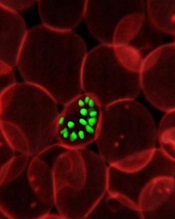
a red blood cell; Credit: St Jude
Children’s Research Hospital
Researchers say they have developed a diagnostic technique that can rapidly detect low levels of malaria infection through the skin.
The approach involves a low-powered laser that creates tiny vapor nanobubbles inside malaria-infected cells.
The bursting bubbles have a unique acoustic signature that allows for a sensitive diagnosis.
This method requires no dyes or diagnostic chemicals, and there is no need to draw blood.
A preclinical study published in PNAS showed that the method could detect a single malaria-infected cell among a million normal cells with 0 false-positive readings.
“Ours is the first through-the-skin method that’s been shown to rapidly and accurately detect malaria in seconds, without the use of blood sampling or reagents,” said lead investigator Dmitri Lapotko, PhD, of Rice University in Houston, Texas.
The transdermal diagnostic method takes advantage of the optical properties and nanosize of hemozoin, a nanoparticle produced by the malaria parasite inside a red blood cell. Hemozoin crystals are not found in normal red blood cells.
Dr Lapotko and his colleagues found that hemozoin absorbs the energy from a short laser pulse and creates a transient vapor nanobubble. This short-lived vapor nanobubble emerges around the hemozoin nanoparticle and is detected both acoustically and optically.
Acoustic detection of nanobubbles made it possible to detect malaria in whole blood and individual red blood cells infected with Plasmodium falciparum. The method also detected malaria infection as low as 0.00034% in mice infected with Plasmodium yoelii.
“The nanobubbles are generated on demand and only by hemozoin,” said study author Ekaterina Lukianova-Hleb, PhD, also of Rice University. “For this reason, we found that our tests never returned a false-positive result . . . .”
To determine the feasibility of this technique in humans, the researchers tested it on human ears.
The laser probe reliably detected capillaries through the skin, located the blood vessel in the ear in less than 10 seconds, and was reproducible in all 4 subjects studied. In addition, the method did not cause any discomfort or morphological damage to the ear skin.
Dr Lapotko said the first clinical trials of this technology are expected to begin in Houston soon.
He and his colleagues have also used nanobubble technology to deliver chemotherapy drugs directly to cancer cells.
a red blood cell; Credit: St Jude
Children’s Research Hospital
Researchers say they have developed a diagnostic technique that can rapidly detect low levels of malaria infection through the skin.
The approach involves a low-powered laser that creates tiny vapor nanobubbles inside malaria-infected cells.
The bursting bubbles have a unique acoustic signature that allows for a sensitive diagnosis.
This method requires no dyes or diagnostic chemicals, and there is no need to draw blood.
A preclinical study published in PNAS showed that the method could detect a single malaria-infected cell among a million normal cells with 0 false-positive readings.
“Ours is the first through-the-skin method that’s been shown to rapidly and accurately detect malaria in seconds, without the use of blood sampling or reagents,” said lead investigator Dmitri Lapotko, PhD, of Rice University in Houston, Texas.
The transdermal diagnostic method takes advantage of the optical properties and nanosize of hemozoin, a nanoparticle produced by the malaria parasite inside a red blood cell. Hemozoin crystals are not found in normal red blood cells.
Dr Lapotko and his colleagues found that hemozoin absorbs the energy from a short laser pulse and creates a transient vapor nanobubble. This short-lived vapor nanobubble emerges around the hemozoin nanoparticle and is detected both acoustically and optically.
Acoustic detection of nanobubbles made it possible to detect malaria in whole blood and individual red blood cells infected with Plasmodium falciparum. The method also detected malaria infection as low as 0.00034% in mice infected with Plasmodium yoelii.
“The nanobubbles are generated on demand and only by hemozoin,” said study author Ekaterina Lukianova-Hleb, PhD, also of Rice University. “For this reason, we found that our tests never returned a false-positive result . . . .”
To determine the feasibility of this technique in humans, the researchers tested it on human ears.
The laser probe reliably detected capillaries through the skin, located the blood vessel in the ear in less than 10 seconds, and was reproducible in all 4 subjects studied. In addition, the method did not cause any discomfort or morphological damage to the ear skin.
Dr Lapotko said the first clinical trials of this technology are expected to begin in Houston soon.
He and his colleagues have also used nanobubble technology to deliver chemotherapy drugs directly to cancer cells.
a red blood cell; Credit: St Jude
Children’s Research Hospital
Researchers say they have developed a diagnostic technique that can rapidly detect low levels of malaria infection through the skin.
The approach involves a low-powered laser that creates tiny vapor nanobubbles inside malaria-infected cells.
The bursting bubbles have a unique acoustic signature that allows for a sensitive diagnosis.
This method requires no dyes or diagnostic chemicals, and there is no need to draw blood.
A preclinical study published in PNAS showed that the method could detect a single malaria-infected cell among a million normal cells with 0 false-positive readings.
“Ours is the first through-the-skin method that’s been shown to rapidly and accurately detect malaria in seconds, without the use of blood sampling or reagents,” said lead investigator Dmitri Lapotko, PhD, of Rice University in Houston, Texas.
The transdermal diagnostic method takes advantage of the optical properties and nanosize of hemozoin, a nanoparticle produced by the malaria parasite inside a red blood cell. Hemozoin crystals are not found in normal red blood cells.
Dr Lapotko and his colleagues found that hemozoin absorbs the energy from a short laser pulse and creates a transient vapor nanobubble. This short-lived vapor nanobubble emerges around the hemozoin nanoparticle and is detected both acoustically and optically.
Acoustic detection of nanobubbles made it possible to detect malaria in whole blood and individual red blood cells infected with Plasmodium falciparum. The method also detected malaria infection as low as 0.00034% in mice infected with Plasmodium yoelii.
“The nanobubbles are generated on demand and only by hemozoin,” said study author Ekaterina Lukianova-Hleb, PhD, also of Rice University. “For this reason, we found that our tests never returned a false-positive result . . . .”
To determine the feasibility of this technique in humans, the researchers tested it on human ears.
The laser probe reliably detected capillaries through the skin, located the blood vessel in the ear in less than 10 seconds, and was reproducible in all 4 subjects studied. In addition, the method did not cause any discomfort or morphological damage to the ear skin.
Dr Lapotko said the first clinical trials of this technology are expected to begin in Houston soon.
He and his colleagues have also used nanobubble technology to deliver chemotherapy drugs directly to cancer cells.
Team identifies highly mutagenic compounds

Credit: Heather Luis
Researchers say they have discovered compounds that are hundreds of times more mutagenic than known carcinogens.
These compounds are produced by certain types of chemical reactions, such as those found in vehicle exhaust or the reactions that take place when meat is grilled over a flame.
The discovery of these compounds raises additional concerns about the health impacts of heavily polluted urban air and dietary exposure to carcinogens, according to the researchers.
Their findings were published in Environmental Science and Technology.
“Some of the compounds that we’ve discovered are far more mutagenic than we previously understood and may exist in the environment as a result of heavy air pollution from vehicles or some types of food preparation,” said Staci Simonich, PhD, of Oregon State University College of Agricultural Sciences.
“We don’t know at this point what levels may be present and will explore that in continued research.”
The parent compounds involved in this research are polycyclic aromatic hydrocarbons (PAHs), which are formed naturally as the result of almost any type of combustion.
Many PAHs, such as benzo[a]pyrene, have been shown to induce leukemias, lymphomas, and other cancers. PAHs are now believed to be more of a health concern than we thought in the past and are the subject of extensive research around the world.
PAHs can become even more of a problem when they chemically interact with nitrogen to become nitrated (NPAHs), according to scientists.
The newly discovered compounds are NPAHs that were unknown to this point. The researchers found the direct mutagenicity of the NPAHs with 1 nitrogen group can be 6 to 432 times more than the parent compound. NPAHs based on 2 nitrogen groups can be 272 to 467 times more mutagenic.
And the team said the mutagenic assays they used may actually have understated the increase in toxicity. It could be even higher.
Credit: Heather Luis
Researchers say they have discovered compounds that are hundreds of times more mutagenic than known carcinogens.
These compounds are produced by certain types of chemical reactions, such as those found in vehicle exhaust or the reactions that take place when meat is grilled over a flame.
The discovery of these compounds raises additional concerns about the health impacts of heavily polluted urban air and dietary exposure to carcinogens, according to the researchers.
Their findings were published in Environmental Science and Technology.
“Some of the compounds that we’ve discovered are far more mutagenic than we previously understood and may exist in the environment as a result of heavy air pollution from vehicles or some types of food preparation,” said Staci Simonich, PhD, of Oregon State University College of Agricultural Sciences.
“We don’t know at this point what levels may be present and will explore that in continued research.”
The parent compounds involved in this research are polycyclic aromatic hydrocarbons (PAHs), which are formed naturally as the result of almost any type of combustion.
Many PAHs, such as benzo[a]pyrene, have been shown to induce leukemias, lymphomas, and other cancers. PAHs are now believed to be more of a health concern than we thought in the past and are the subject of extensive research around the world.
PAHs can become even more of a problem when they chemically interact with nitrogen to become nitrated (NPAHs), according to scientists.
The newly discovered compounds are NPAHs that were unknown to this point. The researchers found the direct mutagenicity of the NPAHs with 1 nitrogen group can be 6 to 432 times more than the parent compound. NPAHs based on 2 nitrogen groups can be 272 to 467 times more mutagenic.
And the team said the mutagenic assays they used may actually have understated the increase in toxicity. It could be even higher.
Credit: Heather Luis
Researchers say they have discovered compounds that are hundreds of times more mutagenic than known carcinogens.
These compounds are produced by certain types of chemical reactions, such as those found in vehicle exhaust or the reactions that take place when meat is grilled over a flame.
The discovery of these compounds raises additional concerns about the health impacts of heavily polluted urban air and dietary exposure to carcinogens, according to the researchers.
Their findings were published in Environmental Science and Technology.
“Some of the compounds that we’ve discovered are far more mutagenic than we previously understood and may exist in the environment as a result of heavy air pollution from vehicles or some types of food preparation,” said Staci Simonich, PhD, of Oregon State University College of Agricultural Sciences.
“We don’t know at this point what levels may be present and will explore that in continued research.”
The parent compounds involved in this research are polycyclic aromatic hydrocarbons (PAHs), which are formed naturally as the result of almost any type of combustion.
Many PAHs, such as benzo[a]pyrene, have been shown to induce leukemias, lymphomas, and other cancers. PAHs are now believed to be more of a health concern than we thought in the past and are the subject of extensive research around the world.
PAHs can become even more of a problem when they chemically interact with nitrogen to become nitrated (NPAHs), according to scientists.
The newly discovered compounds are NPAHs that were unknown to this point. The researchers found the direct mutagenicity of the NPAHs with 1 nitrogen group can be 6 to 432 times more than the parent compound. NPAHs based on 2 nitrogen groups can be 272 to 467 times more mutagenic.
And the team said the mutagenic assays they used may actually have understated the increase in toxicity. It could be even higher.
US health spending growth slowed in 2012

Credit: Petr Kratochvil
In 2012, overall US health expenditures grew slower than the economy as a whole, according to a report by the Centers for Medicare & Medicaid Services (CMS).
US health spending grew at an annual rate of 3.7% in 2012, to reach $2.8 trillion, or $8915 per person. The rate of growth was 3.9%, and reached $2.7 trillion, in 2011.
Health spending as a share of gross domestic product also fell slightly, from 17.3% in 2011 to 17.2% in 2012.
According to the report, this low growth was driven by slower growth in expenditures on prescription drugs, nursing homes, private health insurance, and Medicare.
On the other hand, growth accelerated for hospital expenditures, physician and clinical services, home healthcare, Medicaid, and out-of-pocket spending.
An article summarizing these findings appears in the January issue of Health Affairs. The full report is available on the CMS National Health Expenditures website.
Areas of slow growth
Medicare spending growth increased by 4.8% in 2012, to reach $572.5 billion, but this was a slight slowdown compared to the 5.0% growth seen in 2011. Medicare expenditures represented 20% of national health spending in 2012.
Retail prescription drug spending also slowed in 2012, growing 0.4%, compared to 2.5% in 2011. This was the result of numerous drugs losing their patent protection, which lead to increased sales of lower-cost generics.
Private health insurance spending increased 3.2% in 2012, compared to 3.4% growth in 2011. The net cost ratio for private health insurance—the difference between premiums and benefits as a share of premiums—was 12.0% in 2012 and 12.4% in 2011.
Spending for freestanding nursing care facilities and continuing-care retirement communities increased by 1.6% in 2012, down from 4.3% growth in 2011, due to a one-time Medicare rate adjustment for skilled nursing facilities.
Accelerated spending
Total Medicaid spending grew 3.3% in 2012, to reach $421.2 billion, an increase over the 2.4% growth seen in 2011. Federal Medicaid expenditures decreased 4.2% in 2012, while state and local Medicaid expenditures grew 15.0%—a result of the expiration of enhanced federal aid to states in the middle of 2011.
Hospital spending increased 4.9% in 2012, up from the 3.5% growth seen in 2011. The accelerated growth in 2012 was influenced by a growth in prices, as well as increased use and intensity of services. Growth in spending from Medicare, Medicaid, and private health insurance hospital spending all accelerated in 2012 compared to 2011.
Spending on home healthcare increased 5.1% in 2012, up from 4.1% growth in 2011. Medicare and Medicaid spending accounted for about 81% of total home healthcare spending in 2012. Medicare spending grew at a faster rate in 2012, but Medicaid spending slowed.
Physician and clinical services spending grew 4.6% in 2012, compared to 4.1% growth in 2011.
Although the growth in prices slowed slightly in 2012, non-price factors such as the use and intensity of services increased faster in 2012.
Out-of-pocket spending increased 3.8% in 2012, to $328.2 billion, up from 3.5% growth in 2011. According to CMS, this reflects higher cost-sharing and increased enrollment in consumer-directed health plans.
Credit: Petr Kratochvil
In 2012, overall US health expenditures grew slower than the economy as a whole, according to a report by the Centers for Medicare & Medicaid Services (CMS).
US health spending grew at an annual rate of 3.7% in 2012, to reach $2.8 trillion, or $8915 per person. The rate of growth was 3.9%, and reached $2.7 trillion, in 2011.
Health spending as a share of gross domestic product also fell slightly, from 17.3% in 2011 to 17.2% in 2012.
According to the report, this low growth was driven by slower growth in expenditures on prescription drugs, nursing homes, private health insurance, and Medicare.
On the other hand, growth accelerated for hospital expenditures, physician and clinical services, home healthcare, Medicaid, and out-of-pocket spending.
An article summarizing these findings appears in the January issue of Health Affairs. The full report is available on the CMS National Health Expenditures website.
Areas of slow growth
Medicare spending growth increased by 4.8% in 2012, to reach $572.5 billion, but this was a slight slowdown compared to the 5.0% growth seen in 2011. Medicare expenditures represented 20% of national health spending in 2012.
Retail prescription drug spending also slowed in 2012, growing 0.4%, compared to 2.5% in 2011. This was the result of numerous drugs losing their patent protection, which lead to increased sales of lower-cost generics.
Private health insurance spending increased 3.2% in 2012, compared to 3.4% growth in 2011. The net cost ratio for private health insurance—the difference between premiums and benefits as a share of premiums—was 12.0% in 2012 and 12.4% in 2011.
Spending for freestanding nursing care facilities and continuing-care retirement communities increased by 1.6% in 2012, down from 4.3% growth in 2011, due to a one-time Medicare rate adjustment for skilled nursing facilities.
Accelerated spending
Total Medicaid spending grew 3.3% in 2012, to reach $421.2 billion, an increase over the 2.4% growth seen in 2011. Federal Medicaid expenditures decreased 4.2% in 2012, while state and local Medicaid expenditures grew 15.0%—a result of the expiration of enhanced federal aid to states in the middle of 2011.
Hospital spending increased 4.9% in 2012, up from the 3.5% growth seen in 2011. The accelerated growth in 2012 was influenced by a growth in prices, as well as increased use and intensity of services. Growth in spending from Medicare, Medicaid, and private health insurance hospital spending all accelerated in 2012 compared to 2011.
Spending on home healthcare increased 5.1% in 2012, up from 4.1% growth in 2011. Medicare and Medicaid spending accounted for about 81% of total home healthcare spending in 2012. Medicare spending grew at a faster rate in 2012, but Medicaid spending slowed.
Physician and clinical services spending grew 4.6% in 2012, compared to 4.1% growth in 2011.
Although the growth in prices slowed slightly in 2012, non-price factors such as the use and intensity of services increased faster in 2012.
Out-of-pocket spending increased 3.8% in 2012, to $328.2 billion, up from 3.5% growth in 2011. According to CMS, this reflects higher cost-sharing and increased enrollment in consumer-directed health plans.
Credit: Petr Kratochvil
In 2012, overall US health expenditures grew slower than the economy as a whole, according to a report by the Centers for Medicare & Medicaid Services (CMS).
US health spending grew at an annual rate of 3.7% in 2012, to reach $2.8 trillion, or $8915 per person. The rate of growth was 3.9%, and reached $2.7 trillion, in 2011.
Health spending as a share of gross domestic product also fell slightly, from 17.3% in 2011 to 17.2% in 2012.
According to the report, this low growth was driven by slower growth in expenditures on prescription drugs, nursing homes, private health insurance, and Medicare.
On the other hand, growth accelerated for hospital expenditures, physician and clinical services, home healthcare, Medicaid, and out-of-pocket spending.
An article summarizing these findings appears in the January issue of Health Affairs. The full report is available on the CMS National Health Expenditures website.
Areas of slow growth
Medicare spending growth increased by 4.8% in 2012, to reach $572.5 billion, but this was a slight slowdown compared to the 5.0% growth seen in 2011. Medicare expenditures represented 20% of national health spending in 2012.
Retail prescription drug spending also slowed in 2012, growing 0.4%, compared to 2.5% in 2011. This was the result of numerous drugs losing their patent protection, which lead to increased sales of lower-cost generics.
Private health insurance spending increased 3.2% in 2012, compared to 3.4% growth in 2011. The net cost ratio for private health insurance—the difference between premiums and benefits as a share of premiums—was 12.0% in 2012 and 12.4% in 2011.
Spending for freestanding nursing care facilities and continuing-care retirement communities increased by 1.6% in 2012, down from 4.3% growth in 2011, due to a one-time Medicare rate adjustment for skilled nursing facilities.
Accelerated spending
Total Medicaid spending grew 3.3% in 2012, to reach $421.2 billion, an increase over the 2.4% growth seen in 2011. Federal Medicaid expenditures decreased 4.2% in 2012, while state and local Medicaid expenditures grew 15.0%—a result of the expiration of enhanced federal aid to states in the middle of 2011.
Hospital spending increased 4.9% in 2012, up from the 3.5% growth seen in 2011. The accelerated growth in 2012 was influenced by a growth in prices, as well as increased use and intensity of services. Growth in spending from Medicare, Medicaid, and private health insurance hospital spending all accelerated in 2012 compared to 2011.
Spending on home healthcare increased 5.1% in 2012, up from 4.1% growth in 2011. Medicare and Medicaid spending accounted for about 81% of total home healthcare spending in 2012. Medicare spending grew at a faster rate in 2012, but Medicaid spending slowed.
Physician and clinical services spending grew 4.6% in 2012, compared to 4.1% growth in 2011.
Although the growth in prices slowed slightly in 2012, non-price factors such as the use and intensity of services increased faster in 2012.
Out-of-pocket spending increased 3.8% in 2012, to $328.2 billion, up from 3.5% growth in 2011. According to CMS, this reflects higher cost-sharing and increased enrollment in consumer-directed health plans.
Internists may be ill-equipped to care for childhood cancer survivors

Credit: CDC
A survey of general internists suggests a few obstacles may prevent these physicians from providing optimal care for childhood cancer survivors.
Most of the internists surveyed were unfamiliar with surveillance guidelines, felt “somewhat uncomfortable” caring for childhood cancer survivors, and would prefer to follow patients in collaboration with a cancer center.
Nevertheless, about half of the survey respondents had recently cared for at least 1 childhood cancer survivor.
And a majority of these physicians said they never received a summary of their patients’ cancer treatment.
Eugene Suh, MD, of Loyola University Medical Center in Maywood, Illinois, and his colleagues reported these findings in Annals of Internal Medicine.
The researchers surveyed 1110 general internists, gauging their care preferences, comfort levels with caring for childhood cancer survivors, and knowledge of surveillance guidelines.
Only 36.9% of respondents said they were “somewhat comfortable” or “comfortable” caring for survivors of Hodgkin lymphoma. Twenty-seven percent felt the same about survivors of acute lymphoblastic leukemia. And 25% felt that way about osteosarcoma survivors.
In all, 51.1% of respondents had cared for at least 1 childhood cancer survivor in the 5 years preceding the survey. But 72% of these physicians had never received treatment summaries for these patients.
Eighty-four percent of respondents said they would prefer to treat childhood cancer survivors in collaboration with a physician based at a cancer center or a long-term follow-up clinic. And 10.5% said they would refer survivors to a cancer center-based physician, long-term follow-up clinic, or another primary care physician.
Only 12% of respondents said they felt at least “somewhat familiar” with surveillance guidelines. And the internists’ responses to a vignette case supported this answer.
The survey included questions about surveillance for a hypothetical 16-year-old Hodgkin lymphoma survivor who had received mantle radiation and anthracycline chemotherapy.
Ninety-one percent of respondents failed to recommend appropriate breast cancer surveillance for this patient, 85% did not recommend appropriate cardiac surveillance, and 24% failed to recommend appropriate thyroid surveillance.
Dr Suh and his colleagues said these results suggest a need for improved education among general internists but also the need for better collaboration between oncologists and primary care physicians.
A related editorial includes suggestions for educational initiatives.
Credit: CDC
A survey of general internists suggests a few obstacles may prevent these physicians from providing optimal care for childhood cancer survivors.
Most of the internists surveyed were unfamiliar with surveillance guidelines, felt “somewhat uncomfortable” caring for childhood cancer survivors, and would prefer to follow patients in collaboration with a cancer center.
Nevertheless, about half of the survey respondents had recently cared for at least 1 childhood cancer survivor.
And a majority of these physicians said they never received a summary of their patients’ cancer treatment.
Eugene Suh, MD, of Loyola University Medical Center in Maywood, Illinois, and his colleagues reported these findings in Annals of Internal Medicine.
The researchers surveyed 1110 general internists, gauging their care preferences, comfort levels with caring for childhood cancer survivors, and knowledge of surveillance guidelines.
Only 36.9% of respondents said they were “somewhat comfortable” or “comfortable” caring for survivors of Hodgkin lymphoma. Twenty-seven percent felt the same about survivors of acute lymphoblastic leukemia. And 25% felt that way about osteosarcoma survivors.
In all, 51.1% of respondents had cared for at least 1 childhood cancer survivor in the 5 years preceding the survey. But 72% of these physicians had never received treatment summaries for these patients.
Eighty-four percent of respondents said they would prefer to treat childhood cancer survivors in collaboration with a physician based at a cancer center or a long-term follow-up clinic. And 10.5% said they would refer survivors to a cancer center-based physician, long-term follow-up clinic, or another primary care physician.
Only 12% of respondents said they felt at least “somewhat familiar” with surveillance guidelines. And the internists’ responses to a vignette case supported this answer.
The survey included questions about surveillance for a hypothetical 16-year-old Hodgkin lymphoma survivor who had received mantle radiation and anthracycline chemotherapy.
Ninety-one percent of respondents failed to recommend appropriate breast cancer surveillance for this patient, 85% did not recommend appropriate cardiac surveillance, and 24% failed to recommend appropriate thyroid surveillance.
Dr Suh and his colleagues said these results suggest a need for improved education among general internists but also the need for better collaboration between oncologists and primary care physicians.
A related editorial includes suggestions for educational initiatives.
Credit: CDC
A survey of general internists suggests a few obstacles may prevent these physicians from providing optimal care for childhood cancer survivors.
Most of the internists surveyed were unfamiliar with surveillance guidelines, felt “somewhat uncomfortable” caring for childhood cancer survivors, and would prefer to follow patients in collaboration with a cancer center.
Nevertheless, about half of the survey respondents had recently cared for at least 1 childhood cancer survivor.
And a majority of these physicians said they never received a summary of their patients’ cancer treatment.
Eugene Suh, MD, of Loyola University Medical Center in Maywood, Illinois, and his colleagues reported these findings in Annals of Internal Medicine.
The researchers surveyed 1110 general internists, gauging their care preferences, comfort levels with caring for childhood cancer survivors, and knowledge of surveillance guidelines.
Only 36.9% of respondents said they were “somewhat comfortable” or “comfortable” caring for survivors of Hodgkin lymphoma. Twenty-seven percent felt the same about survivors of acute lymphoblastic leukemia. And 25% felt that way about osteosarcoma survivors.
In all, 51.1% of respondents had cared for at least 1 childhood cancer survivor in the 5 years preceding the survey. But 72% of these physicians had never received treatment summaries for these patients.
Eighty-four percent of respondents said they would prefer to treat childhood cancer survivors in collaboration with a physician based at a cancer center or a long-term follow-up clinic. And 10.5% said they would refer survivors to a cancer center-based physician, long-term follow-up clinic, or another primary care physician.
Only 12% of respondents said they felt at least “somewhat familiar” with surveillance guidelines. And the internists’ responses to a vignette case supported this answer.
The survey included questions about surveillance for a hypothetical 16-year-old Hodgkin lymphoma survivor who had received mantle radiation and anthracycline chemotherapy.
Ninety-one percent of respondents failed to recommend appropriate breast cancer surveillance for this patient, 85% did not recommend appropriate cardiac surveillance, and 24% failed to recommend appropriate thyroid surveillance.
Dr Suh and his colleagues said these results suggest a need for improved education among general internists but also the need for better collaboration between oncologists and primary care physicians.
A related editorial includes suggestions for educational initiatives.
Promoting gender equity at scientific meetings

Credit: Darren Baker
Women are underrepresented among speakers at scientific meetings, but a new study has revealed a way to address this deficit.
An analysis of 460 scientific sessions showed that including at least 1 woman on a convening committee can increase the proportion of female speakers by as much as 86%.
And it significantly reduced the likelihood that a session would have an all-male list of speakers.
Arturo Casadevall, MD, PhD, of the Albert Einstein College of Medicine in the Bronx, New York, and Jo Handelsman, PhD, of Yale University in New Haven, Connecticut, recounted these discoveries in mBio.
The pair had analyzed data from 2 large meetings sponsored by the American Society for Microbiology—the General Meeting (GM) and the Interscience Conference on Antimicrobial Agents and Chemotherapy (ICAAC).
The data included 1845 speakers at 460 sessions from the annual meetings in 2011, 2012, and 2013.
The researchers classified sessions according to whether they had been convened by 2 men, a man and a woman, or 2 women, then tallied the gender representation among speakers for each symposium.
Despite differences in the operating procedures for the 2 meetings, the results for the GMs and ICAAC meetings closely paralleled one another. For both, there was a positive correlation between the participation of women as session conveners and participation by female scientists in those sessions.
At the 3 GMs, 104 sessions were convened by all-male teams, and 112 sessions had at least 1 female convener.
Sessions convened by 2 men had an average of 25% female speakers. And sessions including at least 1 female convener had an average of 43% female speakers, for a 72% increase in women speakers.
On average, 30% of GM sessions had all-male speakers if the conveners were both males. But 8.9% of the convener teams containing at least 1 woman had an all-male list of speakers (P=0.0002).
At the 3 ICAAC meetings, 145 sessions were convened by male-only teams, and 99 had at least 1 female convener.
Including at least 1 woman in the convening team increased the proportion of female speakers by 74%. Including a women also significantly reduced the number of sessions with all-male speakers (P=0.0042).
Dr Casadeveall cautioned that this study revealed correlations, not proof of causation. And further research is needed to explain why the presence of a woman on a convening committee is correlated with increased numbers of female speakers.
But the data suggest that involving women as conveners could have a significant effect on the gender distribution of the speakers and promote gender equity.
“Meeting program committees could carefully consider the gender composition of those assigned to pull together scientific sessions,” Dr Casadevall said, “and make efforts to involve women scientists as conveners for sessions and symposia.”
Credit: Darren Baker
Women are underrepresented among speakers at scientific meetings, but a new study has revealed a way to address this deficit.
An analysis of 460 scientific sessions showed that including at least 1 woman on a convening committee can increase the proportion of female speakers by as much as 86%.
And it significantly reduced the likelihood that a session would have an all-male list of speakers.
Arturo Casadevall, MD, PhD, of the Albert Einstein College of Medicine in the Bronx, New York, and Jo Handelsman, PhD, of Yale University in New Haven, Connecticut, recounted these discoveries in mBio.
The pair had analyzed data from 2 large meetings sponsored by the American Society for Microbiology—the General Meeting (GM) and the Interscience Conference on Antimicrobial Agents and Chemotherapy (ICAAC).
The data included 1845 speakers at 460 sessions from the annual meetings in 2011, 2012, and 2013.
The researchers classified sessions according to whether they had been convened by 2 men, a man and a woman, or 2 women, then tallied the gender representation among speakers for each symposium.
Despite differences in the operating procedures for the 2 meetings, the results for the GMs and ICAAC meetings closely paralleled one another. For both, there was a positive correlation between the participation of women as session conveners and participation by female scientists in those sessions.
At the 3 GMs, 104 sessions were convened by all-male teams, and 112 sessions had at least 1 female convener.
Sessions convened by 2 men had an average of 25% female speakers. And sessions including at least 1 female convener had an average of 43% female speakers, for a 72% increase in women speakers.
On average, 30% of GM sessions had all-male speakers if the conveners were both males. But 8.9% of the convener teams containing at least 1 woman had an all-male list of speakers (P=0.0002).
At the 3 ICAAC meetings, 145 sessions were convened by male-only teams, and 99 had at least 1 female convener.
Including at least 1 woman in the convening team increased the proportion of female speakers by 74%. Including a women also significantly reduced the number of sessions with all-male speakers (P=0.0042).
Dr Casadeveall cautioned that this study revealed correlations, not proof of causation. And further research is needed to explain why the presence of a woman on a convening committee is correlated with increased numbers of female speakers.
But the data suggest that involving women as conveners could have a significant effect on the gender distribution of the speakers and promote gender equity.
“Meeting program committees could carefully consider the gender composition of those assigned to pull together scientific sessions,” Dr Casadevall said, “and make efforts to involve women scientists as conveners for sessions and symposia.”
Credit: Darren Baker
Women are underrepresented among speakers at scientific meetings, but a new study has revealed a way to address this deficit.
An analysis of 460 scientific sessions showed that including at least 1 woman on a convening committee can increase the proportion of female speakers by as much as 86%.
And it significantly reduced the likelihood that a session would have an all-male list of speakers.
Arturo Casadevall, MD, PhD, of the Albert Einstein College of Medicine in the Bronx, New York, and Jo Handelsman, PhD, of Yale University in New Haven, Connecticut, recounted these discoveries in mBio.
The pair had analyzed data from 2 large meetings sponsored by the American Society for Microbiology—the General Meeting (GM) and the Interscience Conference on Antimicrobial Agents and Chemotherapy (ICAAC).
The data included 1845 speakers at 460 sessions from the annual meetings in 2011, 2012, and 2013.
The researchers classified sessions according to whether they had been convened by 2 men, a man and a woman, or 2 women, then tallied the gender representation among speakers for each symposium.
Despite differences in the operating procedures for the 2 meetings, the results for the GMs and ICAAC meetings closely paralleled one another. For both, there was a positive correlation between the participation of women as session conveners and participation by female scientists in those sessions.
At the 3 GMs, 104 sessions were convened by all-male teams, and 112 sessions had at least 1 female convener.
Sessions convened by 2 men had an average of 25% female speakers. And sessions including at least 1 female convener had an average of 43% female speakers, for a 72% increase in women speakers.
On average, 30% of GM sessions had all-male speakers if the conveners were both males. But 8.9% of the convener teams containing at least 1 woman had an all-male list of speakers (P=0.0002).
At the 3 ICAAC meetings, 145 sessions were convened by male-only teams, and 99 had at least 1 female convener.
Including at least 1 woman in the convening team increased the proportion of female speakers by 74%. Including a women also significantly reduced the number of sessions with all-male speakers (P=0.0042).
Dr Casadeveall cautioned that this study revealed correlations, not proof of causation. And further research is needed to explain why the presence of a woman on a convening committee is correlated with increased numbers of female speakers.
But the data suggest that involving women as conveners could have a significant effect on the gender distribution of the speakers and promote gender equity.
“Meeting program committees could carefully consider the gender composition of those assigned to pull together scientific sessions,” Dr Casadevall said, “and make efforts to involve women scientists as conveners for sessions and symposia.”
Receptor may play key role in sepsis

Staphylococcus infection
Credit: Bill Branson
Researchers have identified a receptor that may be instrumental in the body’s response to sepsis. And they believe this discovery could be the key to unlocking new treatments for the disease.
The nociceptin receptor activates the chemical nociceptin. Previous research revealed that nociceptin is involved in inflammation; it is known to affect white blood cell function.
This suggests nociceptin has an important role in the body’s response to inflammation and sepsis, according to David Lambert, PhD, of the University of Leicester in the UK, and his colleagues.
The group’s theory, which they have explored in 2 papers published in PLOS ONE, is that nociceptin makes inflammation or sepsis worse. And by blocking the nociceptin system, the symptoms of sepsis could be reduced, which could lead to new treatments.
“We have found that nociceptin, a chemical similar to endorphins produced in the body, is increased in inflammation and sepsis,” said study author Jonathan Thompson, MD, MB ChB, also of the University of Leicester.
“This suggests that drugs which block the nociceptin receptor could dampen the widespread inflammation that occurs in sepsis, and improve outcome. More work is needed, but these drugs are being developed. If they are effective, then we could potentially save many lives.”
In their first paper, the researchers described how they used fluorescent chemistry to find nociceptin receptors on blood vessels with no nerve supply. The team also showed, in a lab model of sepsis, that blocking these receptors has a protective effect.
In the second paper, the researchers recounted their discovery that bloodstream nociceptin levels are elevated in sepsis patients in intensive care. This suggests nociceptin activation might be important in critically ill patients suffering from sepsis.
Dr Lambert and his colleagues noted that sepsis remains a leading cause of admission to intensive care units, with high mortality, costs, and long-term morbidity in those who survive. The incidence of severe sepsis has increased in the last decade, making the discovery of new treatments highly desirable.
“Sepsis is a major health problem . . . that has often been under-recognized,” Dr Thompson said. “It can be rapidly fatal, especially if not diagnosed and treated early, because inflammation can spread and affect many different organs in the body.”
Dr Lambert added, “I am particularly excited by these findings, as they translate many years of laboratory work into a possible target for this disease.”
Staphylococcus infection
Credit: Bill Branson
Researchers have identified a receptor that may be instrumental in the body’s response to sepsis. And they believe this discovery could be the key to unlocking new treatments for the disease.
The nociceptin receptor activates the chemical nociceptin. Previous research revealed that nociceptin is involved in inflammation; it is known to affect white blood cell function.
This suggests nociceptin has an important role in the body’s response to inflammation and sepsis, according to David Lambert, PhD, of the University of Leicester in the UK, and his colleagues.
The group’s theory, which they have explored in 2 papers published in PLOS ONE, is that nociceptin makes inflammation or sepsis worse. And by blocking the nociceptin system, the symptoms of sepsis could be reduced, which could lead to new treatments.
“We have found that nociceptin, a chemical similar to endorphins produced in the body, is increased in inflammation and sepsis,” said study author Jonathan Thompson, MD, MB ChB, also of the University of Leicester.
“This suggests that drugs which block the nociceptin receptor could dampen the widespread inflammation that occurs in sepsis, and improve outcome. More work is needed, but these drugs are being developed. If they are effective, then we could potentially save many lives.”
In their first paper, the researchers described how they used fluorescent chemistry to find nociceptin receptors on blood vessels with no nerve supply. The team also showed, in a lab model of sepsis, that blocking these receptors has a protective effect.
In the second paper, the researchers recounted their discovery that bloodstream nociceptin levels are elevated in sepsis patients in intensive care. This suggests nociceptin activation might be important in critically ill patients suffering from sepsis.
Dr Lambert and his colleagues noted that sepsis remains a leading cause of admission to intensive care units, with high mortality, costs, and long-term morbidity in those who survive. The incidence of severe sepsis has increased in the last decade, making the discovery of new treatments highly desirable.
“Sepsis is a major health problem . . . that has often been under-recognized,” Dr Thompson said. “It can be rapidly fatal, especially if not diagnosed and treated early, because inflammation can spread and affect many different organs in the body.”
Dr Lambert added, “I am particularly excited by these findings, as they translate many years of laboratory work into a possible target for this disease.”
Staphylococcus infection
Credit: Bill Branson
Researchers have identified a receptor that may be instrumental in the body’s response to sepsis. And they believe this discovery could be the key to unlocking new treatments for the disease.
The nociceptin receptor activates the chemical nociceptin. Previous research revealed that nociceptin is involved in inflammation; it is known to affect white blood cell function.
This suggests nociceptin has an important role in the body’s response to inflammation and sepsis, according to David Lambert, PhD, of the University of Leicester in the UK, and his colleagues.
The group’s theory, which they have explored in 2 papers published in PLOS ONE, is that nociceptin makes inflammation or sepsis worse. And by blocking the nociceptin system, the symptoms of sepsis could be reduced, which could lead to new treatments.
“We have found that nociceptin, a chemical similar to endorphins produced in the body, is increased in inflammation and sepsis,” said study author Jonathan Thompson, MD, MB ChB, also of the University of Leicester.
“This suggests that drugs which block the nociceptin receptor could dampen the widespread inflammation that occurs in sepsis, and improve outcome. More work is needed, but these drugs are being developed. If they are effective, then we could potentially save many lives.”
In their first paper, the researchers described how they used fluorescent chemistry to find nociceptin receptors on blood vessels with no nerve supply. The team also showed, in a lab model of sepsis, that blocking these receptors has a protective effect.
In the second paper, the researchers recounted their discovery that bloodstream nociceptin levels are elevated in sepsis patients in intensive care. This suggests nociceptin activation might be important in critically ill patients suffering from sepsis.
Dr Lambert and his colleagues noted that sepsis remains a leading cause of admission to intensive care units, with high mortality, costs, and long-term morbidity in those who survive. The incidence of severe sepsis has increased in the last decade, making the discovery of new treatments highly desirable.
“Sepsis is a major health problem . . . that has often been under-recognized,” Dr Thompson said. “It can be rapidly fatal, especially if not diagnosed and treated early, because inflammation can spread and affect many different organs in the body.”
Dr Lambert added, “I am particularly excited by these findings, as they translate many years of laboratory work into a possible target for this disease.”
Team creates faster method for diagnosing sepsis
for Staphylococcus infection
Credit: Bill Branson
A new technique could cut hours off the time it takes to diagnose blood infections, according to a report published in mBio.
The
method combines a selective lysis step in which blood cells are destroyed, a centrifugation step to collect any bacteria or
fungi, and a fluorescence step that reveals the “fingerprint” of any
pathogens present in the blood sample.
In tests, this method identified
the species of bacteria or fungi in 96.5% of positive blood culture
samples.
“The primary benefit of getting a rapid identification is making sure the patient is on the right [antibiotic] therapy and to quickly make any needed adjustments to the initial therapy,” said study author John Walsh, of bioMérieux, Inc. in Durham, North Carolina.
Walsh added that the current standard approach to diagnosing bloodstream infections—Gram staining and overnight sub-culture followed by phenotypic ID tests—has limitations that can prevent timely treatment.
Gram staining provides early, low-level information about the type of microorganism present, but it sometimes takes hours to deliver a result, and technicians can make mistakes in the process that provide misleading results.
Other, more specific identification methods are also available for diagnosis, but they can take at least a day or two to produce results, and many require expensive equipment.
So Walsh and his colleagues developed a new technique. With this method, a sample of positive blood culture is treated with lysis buffer, to “pop” the blood cells, then transferred to a specialized optical tube.
Next, the tube is centrifuged, which drives bacteria or fungi down through a liquid density cushion to form a pellet at the bottom of the tube.
Then comes the intrinsic fluorescence spectroscopy. The microbial pellet is irradiated with light ranging from the deep ultraviolet to infrared. This excites certain organic molecules in the microorganisms—tryptophan, NADH, FAD, porphyrins, and others—and causes them to fluoresce in a characteristic way depending on the identity of the microbe.
The exact pattern of fluorescence is then compared with a database of 37 common pathogens to identify the organism present.
“We’re using intrinsic fluorescence to identify the microorganisms,” Walsh noted. “It’s an innate property of most living organisms. Because it’s intrinsic, no reagents are needed for the identification step.”
This removes many of the opportunities for mistakes and lowers test costs, he added.
In tests, this method correctly identified the species in 96.5% of all samples. In the 2.7% of samples for which no species identity was provided, the system was able to correctly identify 67% to the family level, which is often enough information to select an effective therapy.
More than 1000 samples were tested, and the method never gave an incorrect result as to the family level or the Gram type.
Walsh and his colleagues are now working on automating this system with robotics to make it a fully hands-off process. He noted that blood cultures grow in their own time, often producing a positive result at an inconvenient time of the day for clinical labs, so automation could speed up diagnosis significantly.
“Our vision is to have a system that will automatically identify the blood culture isolate within 15 minutes of the culture being called positive,” Walsh said.
If a culture is positive at 2 am, automating this method could make it possible to identify the organism by 2:15 am and send an electronic report to a patient’s physician.
The researchers hope to begin testing and evaluating the feasibility of an automated form of the system in a clinical environment within months.
for Staphylococcus infection
Credit: Bill Branson
A new technique could cut hours off the time it takes to diagnose blood infections, according to a report published in mBio.
The
method combines a selective lysis step in which blood cells are destroyed, a centrifugation step to collect any bacteria or
fungi, and a fluorescence step that reveals the “fingerprint” of any
pathogens present in the blood sample.
In tests, this method identified
the species of bacteria or fungi in 96.5% of positive blood culture
samples.
“The primary benefit of getting a rapid identification is making sure the patient is on the right [antibiotic] therapy and to quickly make any needed adjustments to the initial therapy,” said study author John Walsh, of bioMérieux, Inc. in Durham, North Carolina.
Walsh added that the current standard approach to diagnosing bloodstream infections—Gram staining and overnight sub-culture followed by phenotypic ID tests—has limitations that can prevent timely treatment.
Gram staining provides early, low-level information about the type of microorganism present, but it sometimes takes hours to deliver a result, and technicians can make mistakes in the process that provide misleading results.
Other, more specific identification methods are also available for diagnosis, but they can take at least a day or two to produce results, and many require expensive equipment.
So Walsh and his colleagues developed a new technique. With this method, a sample of positive blood culture is treated with lysis buffer, to “pop” the blood cells, then transferred to a specialized optical tube.
Next, the tube is centrifuged, which drives bacteria or fungi down through a liquid density cushion to form a pellet at the bottom of the tube.
Then comes the intrinsic fluorescence spectroscopy. The microbial pellet is irradiated with light ranging from the deep ultraviolet to infrared. This excites certain organic molecules in the microorganisms—tryptophan, NADH, FAD, porphyrins, and others—and causes them to fluoresce in a characteristic way depending on the identity of the microbe.
The exact pattern of fluorescence is then compared with a database of 37 common pathogens to identify the organism present.
“We’re using intrinsic fluorescence to identify the microorganisms,” Walsh noted. “It’s an innate property of most living organisms. Because it’s intrinsic, no reagents are needed for the identification step.”
This removes many of the opportunities for mistakes and lowers test costs, he added.
In tests, this method correctly identified the species in 96.5% of all samples. In the 2.7% of samples for which no species identity was provided, the system was able to correctly identify 67% to the family level, which is often enough information to select an effective therapy.
More than 1000 samples were tested, and the method never gave an incorrect result as to the family level or the Gram type.
Walsh and his colleagues are now working on automating this system with robotics to make it a fully hands-off process. He noted that blood cultures grow in their own time, often producing a positive result at an inconvenient time of the day for clinical labs, so automation could speed up diagnosis significantly.
“Our vision is to have a system that will automatically identify the blood culture isolate within 15 minutes of the culture being called positive,” Walsh said.
If a culture is positive at 2 am, automating this method could make it possible to identify the organism by 2:15 am and send an electronic report to a patient’s physician.
The researchers hope to begin testing and evaluating the feasibility of an automated form of the system in a clinical environment within months.
for Staphylococcus infection
Credit: Bill Branson
A new technique could cut hours off the time it takes to diagnose blood infections, according to a report published in mBio.
The
method combines a selective lysis step in which blood cells are destroyed, a centrifugation step to collect any bacteria or
fungi, and a fluorescence step that reveals the “fingerprint” of any
pathogens present in the blood sample.
In tests, this method identified
the species of bacteria or fungi in 96.5% of positive blood culture
samples.
“The primary benefit of getting a rapid identification is making sure the patient is on the right [antibiotic] therapy and to quickly make any needed adjustments to the initial therapy,” said study author John Walsh, of bioMérieux, Inc. in Durham, North Carolina.
Walsh added that the current standard approach to diagnosing bloodstream infections—Gram staining and overnight sub-culture followed by phenotypic ID tests—has limitations that can prevent timely treatment.
Gram staining provides early, low-level information about the type of microorganism present, but it sometimes takes hours to deliver a result, and technicians can make mistakes in the process that provide misleading results.
Other, more specific identification methods are also available for diagnosis, but they can take at least a day or two to produce results, and many require expensive equipment.
So Walsh and his colleagues developed a new technique. With this method, a sample of positive blood culture is treated with lysis buffer, to “pop” the blood cells, then transferred to a specialized optical tube.
Next, the tube is centrifuged, which drives bacteria or fungi down through a liquid density cushion to form a pellet at the bottom of the tube.
Then comes the intrinsic fluorescence spectroscopy. The microbial pellet is irradiated with light ranging from the deep ultraviolet to infrared. This excites certain organic molecules in the microorganisms—tryptophan, NADH, FAD, porphyrins, and others—and causes them to fluoresce in a characteristic way depending on the identity of the microbe.
The exact pattern of fluorescence is then compared with a database of 37 common pathogens to identify the organism present.
“We’re using intrinsic fluorescence to identify the microorganisms,” Walsh noted. “It’s an innate property of most living organisms. Because it’s intrinsic, no reagents are needed for the identification step.”
This removes many of the opportunities for mistakes and lowers test costs, he added.
In tests, this method correctly identified the species in 96.5% of all samples. In the 2.7% of samples for which no species identity was provided, the system was able to correctly identify 67% to the family level, which is often enough information to select an effective therapy.
More than 1000 samples were tested, and the method never gave an incorrect result as to the family level or the Gram type.
Walsh and his colleagues are now working on automating this system with robotics to make it a fully hands-off process. He noted that blood cultures grow in their own time, often producing a positive result at an inconvenient time of the day for clinical labs, so automation could speed up diagnosis significantly.
“Our vision is to have a system that will automatically identify the blood culture isolate within 15 minutes of the culture being called positive,” Walsh said.
If a culture is positive at 2 am, automating this method could make it possible to identify the organism by 2:15 am and send an electronic report to a patient’s physician.
The researchers hope to begin testing and evaluating the feasibility of an automated form of the system in a clinical environment within months.