User login
Time Is Money: Should Physicians Be Compensated for EHR Engagement?
Electronic health records (EHRs) make providing coordinated, efficient care easier and reduce medical errors and test duplications; research has also correlated EHR adoption with higher patient satisfaction and outcomes. However, for physicians, the benefits come at a cost.
“I spend at least the same amount of time in the portal that I do in scheduled clinical time with patients,” said Eve Rittenberg, MD, primary care physician at Brigham and Women’s Hospital and assistant professor at Harvard Medical School, Boston, Massachusetts. “So, if I have a 4-hour session of seeing patients, I spend at least another 4 or more hours in the patient portal.”
The latest data showed that primary care physicians logged a median of 36.2 minutes in the healthcare portal per patient visit, spending 58.9% more time on orders, 24.4% more time reading and responding to messages, and 13% more time on chart review compared to prepandemic portal use.
“EHRs can be very powerful tools,” said Ralph DeBiasi, MD, a clinical cardiac electrophysiologist at Yale New Haven Health. “We’re still working on how to best harness that power to make us better doctors and better care teams and to take better care of our patients because their use can take up a lot of time.”
Portal Time Isn’t Paid Time
Sharp increases in the amount of time spent in the EHR responding to messages or dispensing medical advice via the portal often aren’t linked to increases in compensation; most portal time is unpaid.
“There isn’t specific time allocated to working in the portal; it’s either done in the office while a patient is sitting in an exam room or in the mornings and evenings outside of traditional working hours,” Dr. DeBiasi said. “I think it’s reasonable to consider it being reimbursed because we’re taking our time and effort and making decisions to help the patient.”
Compensation for portal time affects all physicians, but the degree of impact depends on their specialties. Primary care physicians spent significantly more daily and after-hours time in the EHR, entering notes and orders, and doing clinical reviews compared to surgical and medical specialties.
In addition to the outsized impact on primary care, physician compensation for portal time is also an equity issue.
Dr. Rittenberg researched the issue and found a higher volume of communication from both patients and staff to female physicians than male physicians. As a result, female physicians spend 41.4 minutes more on the EHR than their male counterparts, which equates to more unpaid time. It’s likely no coincidence then that burnout rates are also higher among female physicians, who also leave the clinical workforce in higher numbers, especially in primary care.
“Finding ways to fairly compensate physicians for their work also will address some of the equity issues in workload and the consequences,” Dr. Rittenberg said.
Addressing the Issue
Some health systems have started charging patients who seek medical advice via patient portals, equating the communication to asynchronous acute care or an additional care touchpoint and billing based on the length and complexity of the messages. Patient fees for seeking medical advice via portals vary widely depending on their health system and insurance.
At University of California San Francisco Health, billing patients for EHR communication led to a sharp decrease in patient messages, which eased physician workload. At Cleveland Clinic, physicians receive “productivity credits” for the time spent in the EHR that can be used to reduce their clinic hours (but have no impact on their compensation).
Changes to the Medicare Physician Fee Schedule also allow physicians to bill for “digital evaluation and management” based on the time spent in an EHR responding to patient-initiated questions and requests.
However, more efforts are needed to ease burnout and reverse the number of physicians who are seeing fewer patients or leaving medical practice altogether as a direct result of spending increasing amounts of unpaid time in the EHR. Dr. Rittenberg, who spends an estimated 50% of her working hours in the portal, had to reduce her clinical workload by 25% due to such heavy portal requirements.
“The workload has become unsustainable,” she said. “The work has undergone a dramatic change over the past decade, and the compensation system has not kept up with that change.”
Prioritizing Patient and Physician Experiences
The ever-expanding use of EHR is a result of their value as a healthcare tool. Data showed that the electronic exchange of information between patients and physicians improves diagnostics, reduces medical errors, enhances communication, and leads to more patient-centered care — and physicians want their patients to use the portal to maximize their healthcare.
“[The EHR] is good for patients,” said Dr. DeBiasi. “Sometimes, patients have access issues with healthcare, whether that’s not knowing what number to call or getting the right message to the right person at the right office. If [the portal] is good for them and helps them get access to care, we should embrace that and figure out a way to work it into our day-to-day schedules.”
But maximizing the patient experience shouldn’t come at the physicians’ expense. Dr. Rittenberg advocates a model that compensates physicians for the time spent in the EHR and prioritizes a team approach to rebalance the EHR workload to ensure that physicians aren’t devoting too much time to administrative tasks and can, instead, focus their time on clinical tasks.
“The way in which we provide healthcare has fundamentally shifted, and compensation models need to reflect that new reality,” Dr. Rittenberg added.
A version of this article appeared on Medscape.com.
Electronic health records (EHRs) make providing coordinated, efficient care easier and reduce medical errors and test duplications; research has also correlated EHR adoption with higher patient satisfaction and outcomes. However, for physicians, the benefits come at a cost.
“I spend at least the same amount of time in the portal that I do in scheduled clinical time with patients,” said Eve Rittenberg, MD, primary care physician at Brigham and Women’s Hospital and assistant professor at Harvard Medical School, Boston, Massachusetts. “So, if I have a 4-hour session of seeing patients, I spend at least another 4 or more hours in the patient portal.”
The latest data showed that primary care physicians logged a median of 36.2 minutes in the healthcare portal per patient visit, spending 58.9% more time on orders, 24.4% more time reading and responding to messages, and 13% more time on chart review compared to prepandemic portal use.
“EHRs can be very powerful tools,” said Ralph DeBiasi, MD, a clinical cardiac electrophysiologist at Yale New Haven Health. “We’re still working on how to best harness that power to make us better doctors and better care teams and to take better care of our patients because their use can take up a lot of time.”
Portal Time Isn’t Paid Time
Sharp increases in the amount of time spent in the EHR responding to messages or dispensing medical advice via the portal often aren’t linked to increases in compensation; most portal time is unpaid.
“There isn’t specific time allocated to working in the portal; it’s either done in the office while a patient is sitting in an exam room or in the mornings and evenings outside of traditional working hours,” Dr. DeBiasi said. “I think it’s reasonable to consider it being reimbursed because we’re taking our time and effort and making decisions to help the patient.”
Compensation for portal time affects all physicians, but the degree of impact depends on their specialties. Primary care physicians spent significantly more daily and after-hours time in the EHR, entering notes and orders, and doing clinical reviews compared to surgical and medical specialties.
In addition to the outsized impact on primary care, physician compensation for portal time is also an equity issue.
Dr. Rittenberg researched the issue and found a higher volume of communication from both patients and staff to female physicians than male physicians. As a result, female physicians spend 41.4 minutes more on the EHR than their male counterparts, which equates to more unpaid time. It’s likely no coincidence then that burnout rates are also higher among female physicians, who also leave the clinical workforce in higher numbers, especially in primary care.
“Finding ways to fairly compensate physicians for their work also will address some of the equity issues in workload and the consequences,” Dr. Rittenberg said.
Addressing the Issue
Some health systems have started charging patients who seek medical advice via patient portals, equating the communication to asynchronous acute care or an additional care touchpoint and billing based on the length and complexity of the messages. Patient fees for seeking medical advice via portals vary widely depending on their health system and insurance.
At University of California San Francisco Health, billing patients for EHR communication led to a sharp decrease in patient messages, which eased physician workload. At Cleveland Clinic, physicians receive “productivity credits” for the time spent in the EHR that can be used to reduce their clinic hours (but have no impact on their compensation).
Changes to the Medicare Physician Fee Schedule also allow physicians to bill for “digital evaluation and management” based on the time spent in an EHR responding to patient-initiated questions and requests.
However, more efforts are needed to ease burnout and reverse the number of physicians who are seeing fewer patients or leaving medical practice altogether as a direct result of spending increasing amounts of unpaid time in the EHR. Dr. Rittenberg, who spends an estimated 50% of her working hours in the portal, had to reduce her clinical workload by 25% due to such heavy portal requirements.
“The workload has become unsustainable,” she said. “The work has undergone a dramatic change over the past decade, and the compensation system has not kept up with that change.”
Prioritizing Patient and Physician Experiences
The ever-expanding use of EHR is a result of their value as a healthcare tool. Data showed that the electronic exchange of information between patients and physicians improves diagnostics, reduces medical errors, enhances communication, and leads to more patient-centered care — and physicians want their patients to use the portal to maximize their healthcare.
“[The EHR] is good for patients,” said Dr. DeBiasi. “Sometimes, patients have access issues with healthcare, whether that’s not knowing what number to call or getting the right message to the right person at the right office. If [the portal] is good for them and helps them get access to care, we should embrace that and figure out a way to work it into our day-to-day schedules.”
But maximizing the patient experience shouldn’t come at the physicians’ expense. Dr. Rittenberg advocates a model that compensates physicians for the time spent in the EHR and prioritizes a team approach to rebalance the EHR workload to ensure that physicians aren’t devoting too much time to administrative tasks and can, instead, focus their time on clinical tasks.
“The way in which we provide healthcare has fundamentally shifted, and compensation models need to reflect that new reality,” Dr. Rittenberg added.
A version of this article appeared on Medscape.com.
Electronic health records (EHRs) make providing coordinated, efficient care easier and reduce medical errors and test duplications; research has also correlated EHR adoption with higher patient satisfaction and outcomes. However, for physicians, the benefits come at a cost.
“I spend at least the same amount of time in the portal that I do in scheduled clinical time with patients,” said Eve Rittenberg, MD, primary care physician at Brigham and Women’s Hospital and assistant professor at Harvard Medical School, Boston, Massachusetts. “So, if I have a 4-hour session of seeing patients, I spend at least another 4 or more hours in the patient portal.”
The latest data showed that primary care physicians logged a median of 36.2 minutes in the healthcare portal per patient visit, spending 58.9% more time on orders, 24.4% more time reading and responding to messages, and 13% more time on chart review compared to prepandemic portal use.
“EHRs can be very powerful tools,” said Ralph DeBiasi, MD, a clinical cardiac electrophysiologist at Yale New Haven Health. “We’re still working on how to best harness that power to make us better doctors and better care teams and to take better care of our patients because their use can take up a lot of time.”
Portal Time Isn’t Paid Time
Sharp increases in the amount of time spent in the EHR responding to messages or dispensing medical advice via the portal often aren’t linked to increases in compensation; most portal time is unpaid.
“There isn’t specific time allocated to working in the portal; it’s either done in the office while a patient is sitting in an exam room or in the mornings and evenings outside of traditional working hours,” Dr. DeBiasi said. “I think it’s reasonable to consider it being reimbursed because we’re taking our time and effort and making decisions to help the patient.”
Compensation for portal time affects all physicians, but the degree of impact depends on their specialties. Primary care physicians spent significantly more daily and after-hours time in the EHR, entering notes and orders, and doing clinical reviews compared to surgical and medical specialties.
In addition to the outsized impact on primary care, physician compensation for portal time is also an equity issue.
Dr. Rittenberg researched the issue and found a higher volume of communication from both patients and staff to female physicians than male physicians. As a result, female physicians spend 41.4 minutes more on the EHR than their male counterparts, which equates to more unpaid time. It’s likely no coincidence then that burnout rates are also higher among female physicians, who also leave the clinical workforce in higher numbers, especially in primary care.
“Finding ways to fairly compensate physicians for their work also will address some of the equity issues in workload and the consequences,” Dr. Rittenberg said.
Addressing the Issue
Some health systems have started charging patients who seek medical advice via patient portals, equating the communication to asynchronous acute care or an additional care touchpoint and billing based on the length and complexity of the messages. Patient fees for seeking medical advice via portals vary widely depending on their health system and insurance.
At University of California San Francisco Health, billing patients for EHR communication led to a sharp decrease in patient messages, which eased physician workload. At Cleveland Clinic, physicians receive “productivity credits” for the time spent in the EHR that can be used to reduce their clinic hours (but have no impact on their compensation).
Changes to the Medicare Physician Fee Schedule also allow physicians to bill for “digital evaluation and management” based on the time spent in an EHR responding to patient-initiated questions and requests.
However, more efforts are needed to ease burnout and reverse the number of physicians who are seeing fewer patients or leaving medical practice altogether as a direct result of spending increasing amounts of unpaid time in the EHR. Dr. Rittenberg, who spends an estimated 50% of her working hours in the portal, had to reduce her clinical workload by 25% due to such heavy portal requirements.
“The workload has become unsustainable,” she said. “The work has undergone a dramatic change over the past decade, and the compensation system has not kept up with that change.”
Prioritizing Patient and Physician Experiences
The ever-expanding use of EHR is a result of their value as a healthcare tool. Data showed that the electronic exchange of information between patients and physicians improves diagnostics, reduces medical errors, enhances communication, and leads to more patient-centered care — and physicians want their patients to use the portal to maximize their healthcare.
“[The EHR] is good for patients,” said Dr. DeBiasi. “Sometimes, patients have access issues with healthcare, whether that’s not knowing what number to call or getting the right message to the right person at the right office. If [the portal] is good for them and helps them get access to care, we should embrace that and figure out a way to work it into our day-to-day schedules.”
But maximizing the patient experience shouldn’t come at the physicians’ expense. Dr. Rittenberg advocates a model that compensates physicians for the time spent in the EHR and prioritizes a team approach to rebalance the EHR workload to ensure that physicians aren’t devoting too much time to administrative tasks and can, instead, focus their time on clinical tasks.
“The way in which we provide healthcare has fundamentally shifted, and compensation models need to reflect that new reality,” Dr. Rittenberg added.
A version of this article appeared on Medscape.com.
The Truth About Compounded GLP-1s That Doctors Need to Know
As a cardiologist specializing in obesity medicine, I often encounter patients who would greatly benefit from the new generation of weight loss drugs that work as glucagon-like peptide 1 (GLP-1) agonists. In the recently published SELECT trial results, for example, semaglutide (marketed by Novo Nordisk as Wegovy for weight loss and Ozempic for type 2 diabetes) demonstrated a 20% risk reduction of heart attacks and strokes in overweight and obese individuals without diabetes and with cardiovascular disease, establishing it as a cardiovascular disease–modifying medication in people without type 2 diabetes.
Unfortunately, the high demand for these new weight loss medications has resulted in a frustrating, long-lasting shortage.
To ensure continuation of patient care, federal law allows compounding pharmacies to make “essentially a copy” of the medications that are listed as “currently in shortage” on the US Food and Drug Administration (FDA) drug shortage list. Both semaglutide and tirzepatide are on that list. For Americans who suffer from obesity and other weight-related diseases, these drugs could be a lifeline.
Despite this, the medical community has broadly criticized the utilization of compounded GLP-1 agonists, even those obtained from reputable and legitimate compounding pharmacies.
Yes, high demand has led to the emergence of unregulated companies and scammers producing substandard or counterfeit versions of these medications.
The FDA has found fraudulent products (masquerading as the weight loss drugs) and has issued warning letters to stop the distribution of illegally marketed semaglutide. “These drugs may be counterfeit, which means they could contain the wrong ingredients, contain too little, too much or no active ingredient at all, or contain other harmful ingredients,” it cautions. Some products use a similar-sounding semaglutide sodium salt, which has uncertain safety and efficacy, and had generated warnings from the FDA and state boards of pharmacy.
Many of these products are marketed directly to consumers online through websites and social media, with little to no medical oversight. This practice is a significant concern, as it may affect patient safety, and should be discouraged.
However, according to a statement from the Alliance for Pharmacy Compounding (APC), legitimate compounding pharmacies aren’t the ones selling these dubious products on the black market, particularly online. This illegal practice has garnered media attention and is sometimes incorrectly associated with legitimate pharmacy compounding.
In contrast, legal and certified versions of GLP-1 agonist medications can be obtained from well-regulated and reputable compounding pharmacies. These pharmacies must adhere to all federal and state regulations and dispense medications only with a valid prescription from a licensed physician.
Meanwhile, the APC statement notes, Novo Nordisk and Eli Lilly have sued compounding companies in several states, questioning, among other things, the purity and potency of some compounded products.
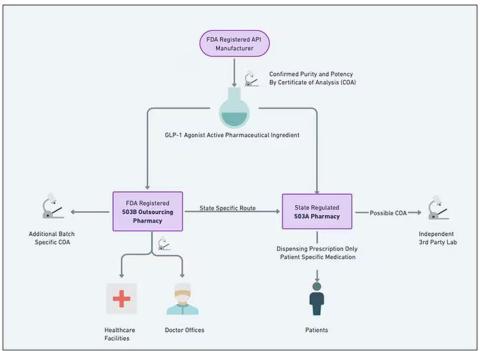
There are different designations for compounding pharmacies: 503A and 503B. 503As are state-licensed pharmacies and physicians, and 503B pharmacies are federally regulated outsourcing facilities that are strictly regulated by the FDA. This regulation, established following a 2012 fungal meningitis outbreak linked to a compounding pharmacy, ensures higher-quality control and oversight, especially for medications intended for intravenous or epidural use. These standards exceed those required for subcutaneous injections like GLP-1 analogs.
In the face of this Wild West climate, where compounded drugs may vary in their source, formulation, potency, and purity, The Obesity Society, the Obesity Medical Association, and the Obesity Action Coalition published a joint statement that advised against the use of compounded GLP-1 agonists, citing safety concerns and lack of regulatory oversight.
This stance, while aimed at ensuring patient safety, inadvertently raises a critical issue.
By completely dismissing compounded medications, experts may unintentionally bolster the black market and overlook the needs of patients who could benefit from these medications, contrary to the intentions of the exemption provided in federal law for compounding during a drug shortage. In fact, the presence of unreliable suppliers highlights the need to direct the public toward trustworthy sources, rather than imposing a total ban on medically appropriate alternatives.
The joint statement calls compounded GLP-1 agonists “counterfeit.” This inaccurate overgeneralization probably stems from a misunderstanding of the compounding process and its regulations. Legitimate and regulated pharmacies compound base GLP-1 agonists, which are “essentially a copy” of FDA-approved medications, not counterfeits. Recognizing this is crucial for maintaining trust in both compounding pharmacies and regulatory bodies.
It is correct that “the only FDA-approved manufacturers of these medications are the companies that created the active pharmaceutical ingredients — Novo Nordisk and Eli Lilly,” but the joint statement fails to mention the exemptions provided by law that allow compounding copies of the branded medications if they are on the shortage list.
Compounding pharmacies must obtain active pharmaceutical ingredients (APIs) from FDA-registered facilities, which are required to adhere to Current Good Manufacturing Practices (cGMP). This ensures the APIs’ quality, potency, and purity, crucial for the safety and efficacy of compounded medications.
Compounded drugs are not FDA approved, but they aren’t inherently unsafe. Compounded medications include critical drugs such as resuscitation medications and antibiotics, and are often used in healthcare settings, especially when there’s a shortage. This raises the question of why compounded GLP-1 agonists would be treated any differently in such scenarios.
And in the case of alternative drugs for individuals with obesity who have a higher risk for cardiovascular disease, the brand-name FDA-approved alternative may be of more concern than the compounded GLP-1 agonist. The obesity societies advise: “If you cannot find or get access to a GLP-1-based treatment now, there are other treatments available,” echoing experts. While the statement doesn’t specify the names of the alternatives, experts have advised using alternatives such as Qsymia and Contrave, despite their potential cardiovascular concerns. This recommendation to the public may not represent a responsible risk-benefit analysis.
Rather than outright banning compounded GLP-1 medications, expert associations can contribute to the solution by creating a “seal of approval,” recognizing high-quality compounded medications. This would contribute to informed decision-making for clinicians and patients.
Possible Solutions
When prescribing GLP-1 agonists for obesity treatment, doctors should consider all of the following steps to ensure patient safety and effective treatment:
Preference for FDA-approved brands: FDA-approved branded GLP-1 agonist medications should be the primary choice because of their established safety and efficacy.
Risk-benefit analysis for non–FDA-approved products: In cases where FDA-approved options are not available, doctors may consider prescribing a non–FDA-approved copy of the branded medication. Prior to this, conduct a thorough risk-benefit analysis with the patient, ensuring that they are fully informed about the potential risks and benefits of using a non–FDA-approved product.
Choosing semaglutide copies for specific cases: In patients with obesity and cardiovascular disease, the benefits of using a compounded copy of semaglutide, with its cardiovascular disease–modifying properties, may outweigh the risks compared with other FDA-approved antiobesity drugs that might pose cardiovascular risks or compared with no antiobesity treatment at all.
Informed consent and monitoring: When prescribing a non–FDA-approved version of a GLP-1 agonist, obtaining informed consent from the patient is advised. They should be made aware of the differences between the FDA-approved and nonapproved versions.
Choosing between 503A and 503B pharmacies: Prescriptions for non–FDA-approved GLP-1 agonists can be directed to either 503A or 503B compounding pharmacies. However, it’s advisable to check whether the product can be compounded by a 503B pharmacy, which is subject to an additional layer of FDA regulation, offering greater quality assurance.
Clear prescription specifications: Ensure that the prescription explicitly states that the compounded GLP-1 agonist should be the base compound without additives.
Requesting a Certificate of Analysis: To further ensure safety, request a Certificate of Analysis from the compounding pharmacy. This provides detailed quality and composition information about the product.
Ongoing monitoring: Continuously monitor the patient’s response to the medication and adjust the treatment plan as necessary, maintaining regular follow-ups.
By adhering to these guidelines, doctors can navigate the complexities of prescribing GLP-1 agonists in a way that prioritizes patient well-being, particularly in scenarios where conventional treatment options are limited.
Dr. Einav is a board-certified cardiologist and a Diplomate of the American Board of Obesity Medicine. He is a fellow of the American College of Cardiology and a member of the Obesity Medicine Association. He serves as the medical director of cardiometabolic health in Guthrie Lourdes in Binghamton, New York, and is the founder of myW8/Cardiometabolic Health located in Beverly Hills, California. This article solely reflects the personal views of Dr. Einav and should not be considered as representing the official stance of Guthrie Lourdes. Dr. Einav served as a promotional speaker for Novo Nordisk in 2022. As of now, he has not prescribed any compounded GLP-1 agonist medications in his medical practice.
A version of this article appeared on Medscape.com.
As a cardiologist specializing in obesity medicine, I often encounter patients who would greatly benefit from the new generation of weight loss drugs that work as glucagon-like peptide 1 (GLP-1) agonists. In the recently published SELECT trial results, for example, semaglutide (marketed by Novo Nordisk as Wegovy for weight loss and Ozempic for type 2 diabetes) demonstrated a 20% risk reduction of heart attacks and strokes in overweight and obese individuals without diabetes and with cardiovascular disease, establishing it as a cardiovascular disease–modifying medication in people without type 2 diabetes.
Unfortunately, the high demand for these new weight loss medications has resulted in a frustrating, long-lasting shortage.
To ensure continuation of patient care, federal law allows compounding pharmacies to make “essentially a copy” of the medications that are listed as “currently in shortage” on the US Food and Drug Administration (FDA) drug shortage list. Both semaglutide and tirzepatide are on that list. For Americans who suffer from obesity and other weight-related diseases, these drugs could be a lifeline.
Despite this, the medical community has broadly criticized the utilization of compounded GLP-1 agonists, even those obtained from reputable and legitimate compounding pharmacies.
Yes, high demand has led to the emergence of unregulated companies and scammers producing substandard or counterfeit versions of these medications.
The FDA has found fraudulent products (masquerading as the weight loss drugs) and has issued warning letters to stop the distribution of illegally marketed semaglutide. “These drugs may be counterfeit, which means they could contain the wrong ingredients, contain too little, too much or no active ingredient at all, or contain other harmful ingredients,” it cautions. Some products use a similar-sounding semaglutide sodium salt, which has uncertain safety and efficacy, and had generated warnings from the FDA and state boards of pharmacy.
Many of these products are marketed directly to consumers online through websites and social media, with little to no medical oversight. This practice is a significant concern, as it may affect patient safety, and should be discouraged.
However, according to a statement from the Alliance for Pharmacy Compounding (APC), legitimate compounding pharmacies aren’t the ones selling these dubious products on the black market, particularly online. This illegal practice has garnered media attention and is sometimes incorrectly associated with legitimate pharmacy compounding.
In contrast, legal and certified versions of GLP-1 agonist medications can be obtained from well-regulated and reputable compounding pharmacies. These pharmacies must adhere to all federal and state regulations and dispense medications only with a valid prescription from a licensed physician.
Meanwhile, the APC statement notes, Novo Nordisk and Eli Lilly have sued compounding companies in several states, questioning, among other things, the purity and potency of some compounded products.
There are different designations for compounding pharmacies: 503A and 503B. 503As are state-licensed pharmacies and physicians, and 503B pharmacies are federally regulated outsourcing facilities that are strictly regulated by the FDA. This regulation, established following a 2012 fungal meningitis outbreak linked to a compounding pharmacy, ensures higher-quality control and oversight, especially for medications intended for intravenous or epidural use. These standards exceed those required for subcutaneous injections like GLP-1 analogs.
In the face of this Wild West climate, where compounded drugs may vary in their source, formulation, potency, and purity, The Obesity Society, the Obesity Medical Association, and the Obesity Action Coalition published a joint statement that advised against the use of compounded GLP-1 agonists, citing safety concerns and lack of regulatory oversight.
This stance, while aimed at ensuring patient safety, inadvertently raises a critical issue.
By completely dismissing compounded medications, experts may unintentionally bolster the black market and overlook the needs of patients who could benefit from these medications, contrary to the intentions of the exemption provided in federal law for compounding during a drug shortage. In fact, the presence of unreliable suppliers highlights the need to direct the public toward trustworthy sources, rather than imposing a total ban on medically appropriate alternatives.
The joint statement calls compounded GLP-1 agonists “counterfeit.” This inaccurate overgeneralization probably stems from a misunderstanding of the compounding process and its regulations. Legitimate and regulated pharmacies compound base GLP-1 agonists, which are “essentially a copy” of FDA-approved medications, not counterfeits. Recognizing this is crucial for maintaining trust in both compounding pharmacies and regulatory bodies.
It is correct that “the only FDA-approved manufacturers of these medications are the companies that created the active pharmaceutical ingredients — Novo Nordisk and Eli Lilly,” but the joint statement fails to mention the exemptions provided by law that allow compounding copies of the branded medications if they are on the shortage list.
Compounding pharmacies must obtain active pharmaceutical ingredients (APIs) from FDA-registered facilities, which are required to adhere to Current Good Manufacturing Practices (cGMP). This ensures the APIs’ quality, potency, and purity, crucial for the safety and efficacy of compounded medications.
Compounded drugs are not FDA approved, but they aren’t inherently unsafe. Compounded medications include critical drugs such as resuscitation medications and antibiotics, and are often used in healthcare settings, especially when there’s a shortage. This raises the question of why compounded GLP-1 agonists would be treated any differently in such scenarios.
And in the case of alternative drugs for individuals with obesity who have a higher risk for cardiovascular disease, the brand-name FDA-approved alternative may be of more concern than the compounded GLP-1 agonist. The obesity societies advise: “If you cannot find or get access to a GLP-1-based treatment now, there are other treatments available,” echoing experts. While the statement doesn’t specify the names of the alternatives, experts have advised using alternatives such as Qsymia and Contrave, despite their potential cardiovascular concerns. This recommendation to the public may not represent a responsible risk-benefit analysis.
Rather than outright banning compounded GLP-1 medications, expert associations can contribute to the solution by creating a “seal of approval,” recognizing high-quality compounded medications. This would contribute to informed decision-making for clinicians and patients.
Possible Solutions
When prescribing GLP-1 agonists for obesity treatment, doctors should consider all of the following steps to ensure patient safety and effective treatment:
Preference for FDA-approved brands: FDA-approved branded GLP-1 agonist medications should be the primary choice because of their established safety and efficacy.
Risk-benefit analysis for non–FDA-approved products: In cases where FDA-approved options are not available, doctors may consider prescribing a non–FDA-approved copy of the branded medication. Prior to this, conduct a thorough risk-benefit analysis with the patient, ensuring that they are fully informed about the potential risks and benefits of using a non–FDA-approved product.
Choosing semaglutide copies for specific cases: In patients with obesity and cardiovascular disease, the benefits of using a compounded copy of semaglutide, with its cardiovascular disease–modifying properties, may outweigh the risks compared with other FDA-approved antiobesity drugs that might pose cardiovascular risks or compared with no antiobesity treatment at all.
Informed consent and monitoring: When prescribing a non–FDA-approved version of a GLP-1 agonist, obtaining informed consent from the patient is advised. They should be made aware of the differences between the FDA-approved and nonapproved versions.
Choosing between 503A and 503B pharmacies: Prescriptions for non–FDA-approved GLP-1 agonists can be directed to either 503A or 503B compounding pharmacies. However, it’s advisable to check whether the product can be compounded by a 503B pharmacy, which is subject to an additional layer of FDA regulation, offering greater quality assurance.
Clear prescription specifications: Ensure that the prescription explicitly states that the compounded GLP-1 agonist should be the base compound without additives.
Requesting a Certificate of Analysis: To further ensure safety, request a Certificate of Analysis from the compounding pharmacy. This provides detailed quality and composition information about the product.
Ongoing monitoring: Continuously monitor the patient’s response to the medication and adjust the treatment plan as necessary, maintaining regular follow-ups.
By adhering to these guidelines, doctors can navigate the complexities of prescribing GLP-1 agonists in a way that prioritizes patient well-being, particularly in scenarios where conventional treatment options are limited.
Dr. Einav is a board-certified cardiologist and a Diplomate of the American Board of Obesity Medicine. He is a fellow of the American College of Cardiology and a member of the Obesity Medicine Association. He serves as the medical director of cardiometabolic health in Guthrie Lourdes in Binghamton, New York, and is the founder of myW8/Cardiometabolic Health located in Beverly Hills, California. This article solely reflects the personal views of Dr. Einav and should not be considered as representing the official stance of Guthrie Lourdes. Dr. Einav served as a promotional speaker for Novo Nordisk in 2022. As of now, he has not prescribed any compounded GLP-1 agonist medications in his medical practice.
A version of this article appeared on Medscape.com.
As a cardiologist specializing in obesity medicine, I often encounter patients who would greatly benefit from the new generation of weight loss drugs that work as glucagon-like peptide 1 (GLP-1) agonists. In the recently published SELECT trial results, for example, semaglutide (marketed by Novo Nordisk as Wegovy for weight loss and Ozempic for type 2 diabetes) demonstrated a 20% risk reduction of heart attacks and strokes in overweight and obese individuals without diabetes and with cardiovascular disease, establishing it as a cardiovascular disease–modifying medication in people without type 2 diabetes.
Unfortunately, the high demand for these new weight loss medications has resulted in a frustrating, long-lasting shortage.
To ensure continuation of patient care, federal law allows compounding pharmacies to make “essentially a copy” of the medications that are listed as “currently in shortage” on the US Food and Drug Administration (FDA) drug shortage list. Both semaglutide and tirzepatide are on that list. For Americans who suffer from obesity and other weight-related diseases, these drugs could be a lifeline.
Despite this, the medical community has broadly criticized the utilization of compounded GLP-1 agonists, even those obtained from reputable and legitimate compounding pharmacies.
Yes, high demand has led to the emergence of unregulated companies and scammers producing substandard or counterfeit versions of these medications.
The FDA has found fraudulent products (masquerading as the weight loss drugs) and has issued warning letters to stop the distribution of illegally marketed semaglutide. “These drugs may be counterfeit, which means they could contain the wrong ingredients, contain too little, too much or no active ingredient at all, or contain other harmful ingredients,” it cautions. Some products use a similar-sounding semaglutide sodium salt, which has uncertain safety and efficacy, and had generated warnings from the FDA and state boards of pharmacy.
Many of these products are marketed directly to consumers online through websites and social media, with little to no medical oversight. This practice is a significant concern, as it may affect patient safety, and should be discouraged.
However, according to a statement from the Alliance for Pharmacy Compounding (APC), legitimate compounding pharmacies aren’t the ones selling these dubious products on the black market, particularly online. This illegal practice has garnered media attention and is sometimes incorrectly associated with legitimate pharmacy compounding.
In contrast, legal and certified versions of GLP-1 agonist medications can be obtained from well-regulated and reputable compounding pharmacies. These pharmacies must adhere to all federal and state regulations and dispense medications only with a valid prescription from a licensed physician.
Meanwhile, the APC statement notes, Novo Nordisk and Eli Lilly have sued compounding companies in several states, questioning, among other things, the purity and potency of some compounded products.
There are different designations for compounding pharmacies: 503A and 503B. 503As are state-licensed pharmacies and physicians, and 503B pharmacies are federally regulated outsourcing facilities that are strictly regulated by the FDA. This regulation, established following a 2012 fungal meningitis outbreak linked to a compounding pharmacy, ensures higher-quality control and oversight, especially for medications intended for intravenous or epidural use. These standards exceed those required for subcutaneous injections like GLP-1 analogs.
In the face of this Wild West climate, where compounded drugs may vary in their source, formulation, potency, and purity, The Obesity Society, the Obesity Medical Association, and the Obesity Action Coalition published a joint statement that advised against the use of compounded GLP-1 agonists, citing safety concerns and lack of regulatory oversight.
This stance, while aimed at ensuring patient safety, inadvertently raises a critical issue.
By completely dismissing compounded medications, experts may unintentionally bolster the black market and overlook the needs of patients who could benefit from these medications, contrary to the intentions of the exemption provided in federal law for compounding during a drug shortage. In fact, the presence of unreliable suppliers highlights the need to direct the public toward trustworthy sources, rather than imposing a total ban on medically appropriate alternatives.
The joint statement calls compounded GLP-1 agonists “counterfeit.” This inaccurate overgeneralization probably stems from a misunderstanding of the compounding process and its regulations. Legitimate and regulated pharmacies compound base GLP-1 agonists, which are “essentially a copy” of FDA-approved medications, not counterfeits. Recognizing this is crucial for maintaining trust in both compounding pharmacies and regulatory bodies.
It is correct that “the only FDA-approved manufacturers of these medications are the companies that created the active pharmaceutical ingredients — Novo Nordisk and Eli Lilly,” but the joint statement fails to mention the exemptions provided by law that allow compounding copies of the branded medications if they are on the shortage list.
Compounding pharmacies must obtain active pharmaceutical ingredients (APIs) from FDA-registered facilities, which are required to adhere to Current Good Manufacturing Practices (cGMP). This ensures the APIs’ quality, potency, and purity, crucial for the safety and efficacy of compounded medications.
Compounded drugs are not FDA approved, but they aren’t inherently unsafe. Compounded medications include critical drugs such as resuscitation medications and antibiotics, and are often used in healthcare settings, especially when there’s a shortage. This raises the question of why compounded GLP-1 agonists would be treated any differently in such scenarios.
And in the case of alternative drugs for individuals with obesity who have a higher risk for cardiovascular disease, the brand-name FDA-approved alternative may be of more concern than the compounded GLP-1 agonist. The obesity societies advise: “If you cannot find or get access to a GLP-1-based treatment now, there are other treatments available,” echoing experts. While the statement doesn’t specify the names of the alternatives, experts have advised using alternatives such as Qsymia and Contrave, despite their potential cardiovascular concerns. This recommendation to the public may not represent a responsible risk-benefit analysis.
Rather than outright banning compounded GLP-1 medications, expert associations can contribute to the solution by creating a “seal of approval,” recognizing high-quality compounded medications. This would contribute to informed decision-making for clinicians and patients.
Possible Solutions
When prescribing GLP-1 agonists for obesity treatment, doctors should consider all of the following steps to ensure patient safety and effective treatment:
Preference for FDA-approved brands: FDA-approved branded GLP-1 agonist medications should be the primary choice because of their established safety and efficacy.
Risk-benefit analysis for non–FDA-approved products: In cases where FDA-approved options are not available, doctors may consider prescribing a non–FDA-approved copy of the branded medication. Prior to this, conduct a thorough risk-benefit analysis with the patient, ensuring that they are fully informed about the potential risks and benefits of using a non–FDA-approved product.
Choosing semaglutide copies for specific cases: In patients with obesity and cardiovascular disease, the benefits of using a compounded copy of semaglutide, with its cardiovascular disease–modifying properties, may outweigh the risks compared with other FDA-approved antiobesity drugs that might pose cardiovascular risks or compared with no antiobesity treatment at all.
Informed consent and monitoring: When prescribing a non–FDA-approved version of a GLP-1 agonist, obtaining informed consent from the patient is advised. They should be made aware of the differences between the FDA-approved and nonapproved versions.
Choosing between 503A and 503B pharmacies: Prescriptions for non–FDA-approved GLP-1 agonists can be directed to either 503A or 503B compounding pharmacies. However, it’s advisable to check whether the product can be compounded by a 503B pharmacy, which is subject to an additional layer of FDA regulation, offering greater quality assurance.
Clear prescription specifications: Ensure that the prescription explicitly states that the compounded GLP-1 agonist should be the base compound without additives.
Requesting a Certificate of Analysis: To further ensure safety, request a Certificate of Analysis from the compounding pharmacy. This provides detailed quality and composition information about the product.
Ongoing monitoring: Continuously monitor the patient’s response to the medication and adjust the treatment plan as necessary, maintaining regular follow-ups.
By adhering to these guidelines, doctors can navigate the complexities of prescribing GLP-1 agonists in a way that prioritizes patient well-being, particularly in scenarios where conventional treatment options are limited.
Dr. Einav is a board-certified cardiologist and a Diplomate of the American Board of Obesity Medicine. He is a fellow of the American College of Cardiology and a member of the Obesity Medicine Association. He serves as the medical director of cardiometabolic health in Guthrie Lourdes in Binghamton, New York, and is the founder of myW8/Cardiometabolic Health located in Beverly Hills, California. This article solely reflects the personal views of Dr. Einav and should not be considered as representing the official stance of Guthrie Lourdes. Dr. Einav served as a promotional speaker for Novo Nordisk in 2022. As of now, he has not prescribed any compounded GLP-1 agonist medications in his medical practice.
A version of this article appeared on Medscape.com.
Common Household Chemicals Tied to Brain Cell Damage
Two classes of chemicals present in common household products may impair the development of oligodendrocytes, the myelinating cells of the central nervous system (CNS), which are critical to brain development and function. However, the researchers as well as outside experts agree more research is needed before any firm conclusions can be drawn.
Quaternary ammonium compounds, ubiquitous in disinfecting agents and personal care products, and organophosphate flame retardants, which are commonly found in household items such as furniture and electronics had “surprising effects specifically on the non-nerve cells in the brain,” said lead researcher Paul Tesar, PhD, professor and director of the Institute for Glial Sciences, Case Western Reserve University School of Medicine, Cleveland.
“Other studies have shown that our exposures to the chemicals in disinfecting agents nearly doubled during the pandemic,” Dr. Tesar noted. The finding that quaternary ammonium chemicals in disinfecting agents are harmful to specific brain cells suggests “we need to think about our increased utilization and exposure,” he added.
The results were published online on March 25 in Nature Neuroscience.
Motor Dysfunction
Exposure to various chemicals in the environment has been shown to impair brain development. However, most of this research has focused on neurons. Less is known about effects on oligodendrocytes, which form the electrical insulation around the axons of CNS cells.
The researchers analyzed the effects of 1823 chemicals on mouse oligodendrocyte development in cell cultures. They identified 292 chemicals that cause oligodendrocytes to die and 47 that inhibit oligodendrocyte generation. These chemicals belonged to two different classes.
They found that quaternary compounds were potently and selectively cytotoxic to developing oligodendrocytes and that organophosphate flame retardants prematurely arrested oligodendrocyte maturation. These effects were confirmed in mice and cultured human oligodendrocytes.
In addition, an analysis of epidemiologic data from the National Health and Nutrition Examination Survey (2013-2018) showed that one flame retardant metabolite, bis(1,3-dichloro-2-propy) phosphate (BDCIPP), was present in nearly all urine samples of children aged 3-11 years who were examined (1753 out of 1763 children).
After adjustment for multiple confounding factors, results showed that compared with children with urinary BDCIPP concentration in the lowest quartile, those with concentrations in the highest quartile were twice as likely to require special education (adjusted odds ratio [aOR], 2.0; 95% CI, 1.0-3.8) and were six times as likely to have gross motor dysfunction (aOR, 6.0; 95% CI, 1.7-21.9).
Children with urinary BDCIPP concentration within the third quartile also had significantly increased odds of motor dysfunction (aOR, 4.2; 95% CI, 1.1-16.2).
“These results suggest that the identified chemicals are potentially hazardous to human health. However, we want to be clear that more studies are needed to make definitive connections between chemical exposure and human disease,” said Dr. Tesar.
“Future studies will need to deepen our understanding of the duration and timing of exposure required to initiate or exacerbate disease. This information is needed before specific recommendations, such as behavioral interventions, can be made to reduce exposure. Some of these chemicals have useful roles in our homes, but we need to consider how they’re being used and what level of exposure might be considered safe,” Dr. Tesar said.
In his view, the results “provide a starting point to understand what exposure levels to these chemicals might be putting ourselves or kids at risk for toxicity.”
Too Soon to Tell
Commenting for this news organization, Shaheen Lakhan, MD, a neurologist and researcher based in Miami, who was not involved in the study, echoed the need for more research.
“The biological mechanisms uncovered provide plausible pathways by which these chemicals could potentially impact human brain development related to oligodendrocytes and myelination. Oligodendrocytes play a critical role in plastic neurological processes throughout life, not just early neurodevelopment. So, disrupting their maturation and function theoretically could contribute to neurodevelopmental disorders as well as adult conditions like multiple sclerosis,” Dr. Lakhan said.
“This study alone shouldn’t sound neurotoxicant alarms yet. We’ve seen many past chemical scares like saccharin and phthalates fizzle despite alarming lab results when real-world human brain impacts failed to materialize,” Dr. Lakhan cautioned.
“Far more rigorous research directly linking household chemical exposures to cognitive deficits in people is still needed before drawing firm conclusions or prompting overreactions from the general public. Policymakers will eventually need to weigh potential risks vs benefits, but no definitive human health threat has currently been established,” Dr. Lakhan said.
Sarah Evans, PhD, MPH, assistant professor in the Department of Environmental Medicine and Public Health, Icahn School of Medicine at Mount Sinai in New York, also emphasized the need for further study.
“Given that most of the experiments in this study were conducted in isolated cells and a mouse model, further research is needed to determine whether exposure to these chemicals at levels experienced by the general population during critical windows of development impairs myelination and leads to adverse health outcomes like learning and behavior problems in humans,” said Dr. Evans, who was involved in the study.
“The authors’ finding of an association between higher urinary levels of the organophosphate flame-retardant metabolite BDCIPP and gross motor problems or need for special education in children aged 3-11 years in the CDC National Health and Nutrition Examination Survey strengthens their laboratory findings and warrants further investigation,” Dr. Evans added.
The research was supported by grants from the National Institutes of Health, National Multiple Sclerosis Society, Howard Hughes Medical Institute and New York Stem Cell Foundation, and philanthropic support by sTF5 Care and the Long, Walter, Peterson, Goodman, and Geller families. Dr. Tesar, Dr. Lakhan, and Dr. Evans report no relevant disclosures.
A version of this article appeared on Medscape.com.
Two classes of chemicals present in common household products may impair the development of oligodendrocytes, the myelinating cells of the central nervous system (CNS), which are critical to brain development and function. However, the researchers as well as outside experts agree more research is needed before any firm conclusions can be drawn.
Quaternary ammonium compounds, ubiquitous in disinfecting agents and personal care products, and organophosphate flame retardants, which are commonly found in household items such as furniture and electronics had “surprising effects specifically on the non-nerve cells in the brain,” said lead researcher Paul Tesar, PhD, professor and director of the Institute for Glial Sciences, Case Western Reserve University School of Medicine, Cleveland.
“Other studies have shown that our exposures to the chemicals in disinfecting agents nearly doubled during the pandemic,” Dr. Tesar noted. The finding that quaternary ammonium chemicals in disinfecting agents are harmful to specific brain cells suggests “we need to think about our increased utilization and exposure,” he added.
The results were published online on March 25 in Nature Neuroscience.
Motor Dysfunction
Exposure to various chemicals in the environment has been shown to impair brain development. However, most of this research has focused on neurons. Less is known about effects on oligodendrocytes, which form the electrical insulation around the axons of CNS cells.
The researchers analyzed the effects of 1823 chemicals on mouse oligodendrocyte development in cell cultures. They identified 292 chemicals that cause oligodendrocytes to die and 47 that inhibit oligodendrocyte generation. These chemicals belonged to two different classes.
They found that quaternary compounds were potently and selectively cytotoxic to developing oligodendrocytes and that organophosphate flame retardants prematurely arrested oligodendrocyte maturation. These effects were confirmed in mice and cultured human oligodendrocytes.
In addition, an analysis of epidemiologic data from the National Health and Nutrition Examination Survey (2013-2018) showed that one flame retardant metabolite, bis(1,3-dichloro-2-propy) phosphate (BDCIPP), was present in nearly all urine samples of children aged 3-11 years who were examined (1753 out of 1763 children).
After adjustment for multiple confounding factors, results showed that compared with children with urinary BDCIPP concentration in the lowest quartile, those with concentrations in the highest quartile were twice as likely to require special education (adjusted odds ratio [aOR], 2.0; 95% CI, 1.0-3.8) and were six times as likely to have gross motor dysfunction (aOR, 6.0; 95% CI, 1.7-21.9).
Children with urinary BDCIPP concentration within the third quartile also had significantly increased odds of motor dysfunction (aOR, 4.2; 95% CI, 1.1-16.2).
“These results suggest that the identified chemicals are potentially hazardous to human health. However, we want to be clear that more studies are needed to make definitive connections between chemical exposure and human disease,” said Dr. Tesar.
“Future studies will need to deepen our understanding of the duration and timing of exposure required to initiate or exacerbate disease. This information is needed before specific recommendations, such as behavioral interventions, can be made to reduce exposure. Some of these chemicals have useful roles in our homes, but we need to consider how they’re being used and what level of exposure might be considered safe,” Dr. Tesar said.
In his view, the results “provide a starting point to understand what exposure levels to these chemicals might be putting ourselves or kids at risk for toxicity.”
Too Soon to Tell
Commenting for this news organization, Shaheen Lakhan, MD, a neurologist and researcher based in Miami, who was not involved in the study, echoed the need for more research.
“The biological mechanisms uncovered provide plausible pathways by which these chemicals could potentially impact human brain development related to oligodendrocytes and myelination. Oligodendrocytes play a critical role in plastic neurological processes throughout life, not just early neurodevelopment. So, disrupting their maturation and function theoretically could contribute to neurodevelopmental disorders as well as adult conditions like multiple sclerosis,” Dr. Lakhan said.
“This study alone shouldn’t sound neurotoxicant alarms yet. We’ve seen many past chemical scares like saccharin and phthalates fizzle despite alarming lab results when real-world human brain impacts failed to materialize,” Dr. Lakhan cautioned.
“Far more rigorous research directly linking household chemical exposures to cognitive deficits in people is still needed before drawing firm conclusions or prompting overreactions from the general public. Policymakers will eventually need to weigh potential risks vs benefits, but no definitive human health threat has currently been established,” Dr. Lakhan said.
Sarah Evans, PhD, MPH, assistant professor in the Department of Environmental Medicine and Public Health, Icahn School of Medicine at Mount Sinai in New York, also emphasized the need for further study.
“Given that most of the experiments in this study were conducted in isolated cells and a mouse model, further research is needed to determine whether exposure to these chemicals at levels experienced by the general population during critical windows of development impairs myelination and leads to adverse health outcomes like learning and behavior problems in humans,” said Dr. Evans, who was involved in the study.
“The authors’ finding of an association between higher urinary levels of the organophosphate flame-retardant metabolite BDCIPP and gross motor problems or need for special education in children aged 3-11 years in the CDC National Health and Nutrition Examination Survey strengthens their laboratory findings and warrants further investigation,” Dr. Evans added.
The research was supported by grants from the National Institutes of Health, National Multiple Sclerosis Society, Howard Hughes Medical Institute and New York Stem Cell Foundation, and philanthropic support by sTF5 Care and the Long, Walter, Peterson, Goodman, and Geller families. Dr. Tesar, Dr. Lakhan, and Dr. Evans report no relevant disclosures.
A version of this article appeared on Medscape.com.
Two classes of chemicals present in common household products may impair the development of oligodendrocytes, the myelinating cells of the central nervous system (CNS), which are critical to brain development and function. However, the researchers as well as outside experts agree more research is needed before any firm conclusions can be drawn.
Quaternary ammonium compounds, ubiquitous in disinfecting agents and personal care products, and organophosphate flame retardants, which are commonly found in household items such as furniture and electronics had “surprising effects specifically on the non-nerve cells in the brain,” said lead researcher Paul Tesar, PhD, professor and director of the Institute for Glial Sciences, Case Western Reserve University School of Medicine, Cleveland.
“Other studies have shown that our exposures to the chemicals in disinfecting agents nearly doubled during the pandemic,” Dr. Tesar noted. The finding that quaternary ammonium chemicals in disinfecting agents are harmful to specific brain cells suggests “we need to think about our increased utilization and exposure,” he added.
The results were published online on March 25 in Nature Neuroscience.
Motor Dysfunction
Exposure to various chemicals in the environment has been shown to impair brain development. However, most of this research has focused on neurons. Less is known about effects on oligodendrocytes, which form the electrical insulation around the axons of CNS cells.
The researchers analyzed the effects of 1823 chemicals on mouse oligodendrocyte development in cell cultures. They identified 292 chemicals that cause oligodendrocytes to die and 47 that inhibit oligodendrocyte generation. These chemicals belonged to two different classes.
They found that quaternary compounds were potently and selectively cytotoxic to developing oligodendrocytes and that organophosphate flame retardants prematurely arrested oligodendrocyte maturation. These effects were confirmed in mice and cultured human oligodendrocytes.
In addition, an analysis of epidemiologic data from the National Health and Nutrition Examination Survey (2013-2018) showed that one flame retardant metabolite, bis(1,3-dichloro-2-propy) phosphate (BDCIPP), was present in nearly all urine samples of children aged 3-11 years who were examined (1753 out of 1763 children).
After adjustment for multiple confounding factors, results showed that compared with children with urinary BDCIPP concentration in the lowest quartile, those with concentrations in the highest quartile were twice as likely to require special education (adjusted odds ratio [aOR], 2.0; 95% CI, 1.0-3.8) and were six times as likely to have gross motor dysfunction (aOR, 6.0; 95% CI, 1.7-21.9).
Children with urinary BDCIPP concentration within the third quartile also had significantly increased odds of motor dysfunction (aOR, 4.2; 95% CI, 1.1-16.2).
“These results suggest that the identified chemicals are potentially hazardous to human health. However, we want to be clear that more studies are needed to make definitive connections between chemical exposure and human disease,” said Dr. Tesar.
“Future studies will need to deepen our understanding of the duration and timing of exposure required to initiate or exacerbate disease. This information is needed before specific recommendations, such as behavioral interventions, can be made to reduce exposure. Some of these chemicals have useful roles in our homes, but we need to consider how they’re being used and what level of exposure might be considered safe,” Dr. Tesar said.
In his view, the results “provide a starting point to understand what exposure levels to these chemicals might be putting ourselves or kids at risk for toxicity.”
Too Soon to Tell
Commenting for this news organization, Shaheen Lakhan, MD, a neurologist and researcher based in Miami, who was not involved in the study, echoed the need for more research.
“The biological mechanisms uncovered provide plausible pathways by which these chemicals could potentially impact human brain development related to oligodendrocytes and myelination. Oligodendrocytes play a critical role in plastic neurological processes throughout life, not just early neurodevelopment. So, disrupting their maturation and function theoretically could contribute to neurodevelopmental disorders as well as adult conditions like multiple sclerosis,” Dr. Lakhan said.
“This study alone shouldn’t sound neurotoxicant alarms yet. We’ve seen many past chemical scares like saccharin and phthalates fizzle despite alarming lab results when real-world human brain impacts failed to materialize,” Dr. Lakhan cautioned.
“Far more rigorous research directly linking household chemical exposures to cognitive deficits in people is still needed before drawing firm conclusions or prompting overreactions from the general public. Policymakers will eventually need to weigh potential risks vs benefits, but no definitive human health threat has currently been established,” Dr. Lakhan said.
Sarah Evans, PhD, MPH, assistant professor in the Department of Environmental Medicine and Public Health, Icahn School of Medicine at Mount Sinai in New York, also emphasized the need for further study.
“Given that most of the experiments in this study were conducted in isolated cells and a mouse model, further research is needed to determine whether exposure to these chemicals at levels experienced by the general population during critical windows of development impairs myelination and leads to adverse health outcomes like learning and behavior problems in humans,” said Dr. Evans, who was involved in the study.
“The authors’ finding of an association between higher urinary levels of the organophosphate flame-retardant metabolite BDCIPP and gross motor problems or need for special education in children aged 3-11 years in the CDC National Health and Nutrition Examination Survey strengthens their laboratory findings and warrants further investigation,” Dr. Evans added.
The research was supported by grants from the National Institutes of Health, National Multiple Sclerosis Society, Howard Hughes Medical Institute and New York Stem Cell Foundation, and philanthropic support by sTF5 Care and the Long, Walter, Peterson, Goodman, and Geller families. Dr. Tesar, Dr. Lakhan, and Dr. Evans report no relevant disclosures.
A version of this article appeared on Medscape.com.
Meditating in the Mundane
I don’t recommend ice baths. Perhaps I should. On my podcast-filled commute, I am reminded for miles of the mental and physical benefits of this revolutionary wellness routine: Cold exposure causes a spike in adrenaline and raises your baseline dopamine, thereby giving you superhuman focus and energy. Goodbye procrastination! Eliminate your ADHD in one icy step! I’m trying to be the fashionable mustached-columnist here so maybe I should get on board.
In fact, a heavyset, similarly-mustached 32-year-old patient just asked if I do ice baths. It was meant as a compliment, I believe. Displaying poise wearing my Chief of Dermatology embroidered white coat in my toddler-art-adorned office, I could hear him thinking: “This doc is legit. On fleek.” (Note, this is an approximation and the patient’s actual thoughts may have varied). We were talking podcasts and he was curious about my daily routine.
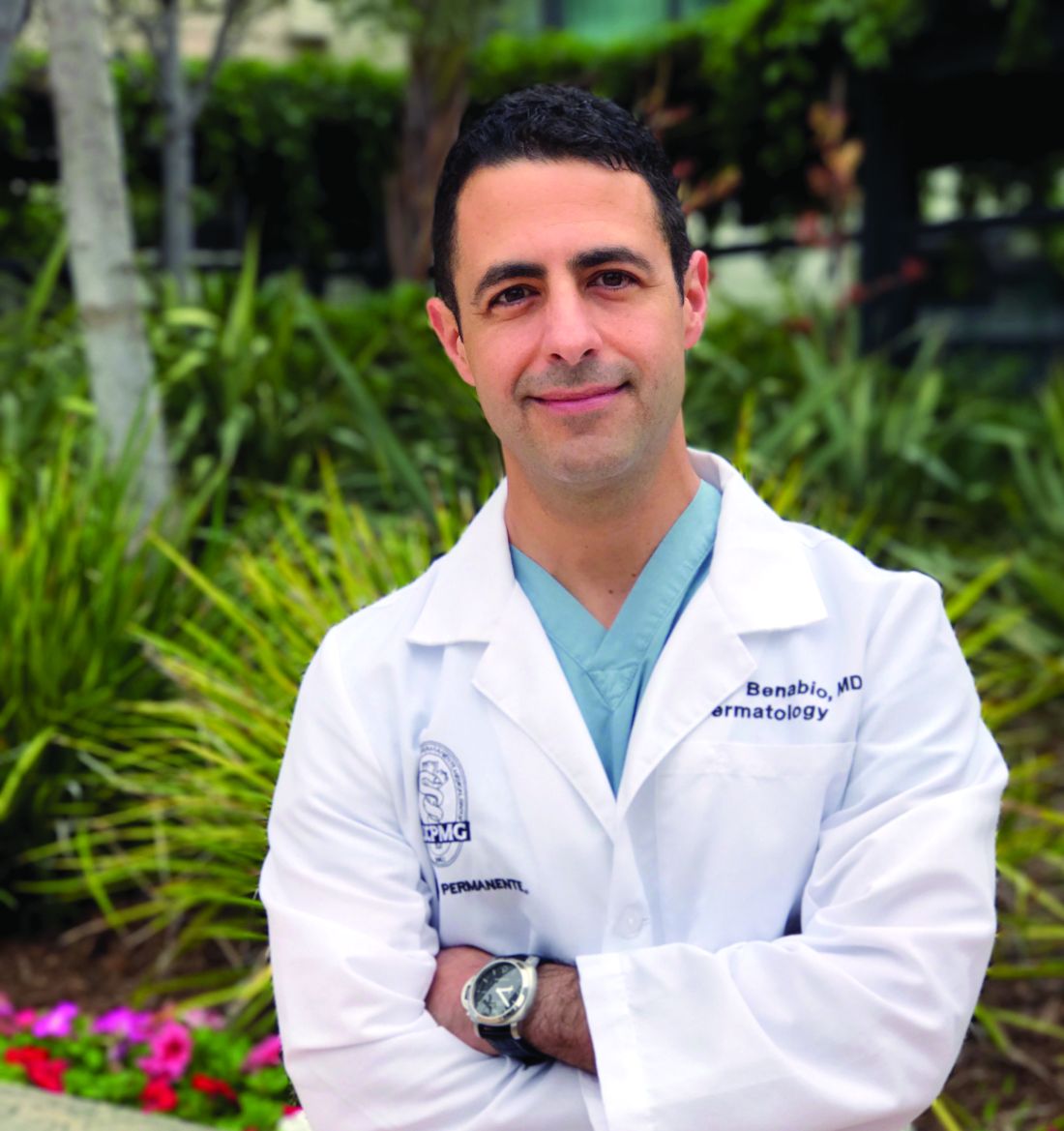
Now, ice baths probably do have the benefits that Andrew Huberman, Joe Rogan, and the others have described, I don’t argue. And the experience is oft described as invigorating with a runner’s high-like euphoria that follows a good dunk. I’ve tried it. I would describe it as “very uncomfortable.” To boot, following icy-cold morning showers, I wasn’t any better able to stave off opening my New York Times app on a newsy day. No, cold water isn’t my jams. But then again, I don’t journal like Marcus Aurelius or sleep on a mattress that keeps my body a chill 97 degrees like an inverse sous vide. If I were asked by Huberman in an interview what I do to be mentally strong, I’d answer, “I clean the pool.”
“Here’s how I do it, Dr. Huberman,” I’d say. “First, open the pool cover. Then with a cup with pool water from about 12 inches down, fill these little beakers with water and add a few drops of chemical reagents. Then calculate the ounces of calcium hypochlorite, muriatic acid, and other chemicals to make your pools sparkle. After skimming, take your pool brush and brush the bottom and sides of your pool. Rack your equipment when done and close the cover back up. This exercise takes about 15 minutes.” It’s a mundane task, but ah, there’s the point. Like folding the laundry, weeding the garden, emptying the dishwasher, they can be oh, so gratifying. Each of these has a crisp beginning and end and offer a lovely spot to be present. Let the thoughts flow with each stroke of the brush. Watch the water ripple the surface as you slowly pull the long pole out, dripping 7.4 pH water as you glide it in for the next pass. This is the Benabio secret to success.

I hope I’ve not disappointed you with this advice. Much as I’d like to think I’m on trend, I don’t believe self-improvement in the mundane will catch fire like taking magnesium or Wim Hof breathing. I wish it would. A distinction between gardening or pool cleaning or doing laundry and taking ice-baths is that the former aren’t just about you. I’ve got rows of spinach and Swiss chard that depend on me. My self-help is to water them. Feed them. Weed them. Because of me, they are growing deep green and beautiful. Although no one is swimming in our cool pool yet, they will soon. And the water will be sparkly clean, thanks to me. A stack of bright white towels is resting on our bathroom shelf waiting for someone to step out of the shower and need one. I did that.
Speaking of Huberman and the podcast gurus, Arnold Schwarzenegger is making the rounds lately hawking his book, “Be Useful.” It has the usual common sense ideas as most self-help books for the last 100 years.That’s the advice I passed along to my hirsute coming-of-manhood patient. I don’t do ice-baths, but each day I drop in deep on taking care of my patients, providing for my family, refilling the bird feeder in our yard. Why the heck would I sit in a currently 63-degree hot tub when I could be cleaning it? Then everyone is just a little better off, not just me.
Dr. Benabio is director of Healthcare Transformation and chief of dermatology at Kaiser Permanente San Diego. The opinions expressed in this column are his own and do not represent those of Kaiser Permanente. Dr. Benabio is @Dermdoc on X. Write to him at dermnews@mdedge.com.
I don’t recommend ice baths. Perhaps I should. On my podcast-filled commute, I am reminded for miles of the mental and physical benefits of this revolutionary wellness routine: Cold exposure causes a spike in adrenaline and raises your baseline dopamine, thereby giving you superhuman focus and energy. Goodbye procrastination! Eliminate your ADHD in one icy step! I’m trying to be the fashionable mustached-columnist here so maybe I should get on board.
In fact, a heavyset, similarly-mustached 32-year-old patient just asked if I do ice baths. It was meant as a compliment, I believe. Displaying poise wearing my Chief of Dermatology embroidered white coat in my toddler-art-adorned office, I could hear him thinking: “This doc is legit. On fleek.” (Note, this is an approximation and the patient’s actual thoughts may have varied). We were talking podcasts and he was curious about my daily routine.
Now, ice baths probably do have the benefits that Andrew Huberman, Joe Rogan, and the others have described, I don’t argue. And the experience is oft described as invigorating with a runner’s high-like euphoria that follows a good dunk. I’ve tried it. I would describe it as “very uncomfortable.” To boot, following icy-cold morning showers, I wasn’t any better able to stave off opening my New York Times app on a newsy day. No, cold water isn’t my jams. But then again, I don’t journal like Marcus Aurelius or sleep on a mattress that keeps my body a chill 97 degrees like an inverse sous vide. If I were asked by Huberman in an interview what I do to be mentally strong, I’d answer, “I clean the pool.”
“Here’s how I do it, Dr. Huberman,” I’d say. “First, open the pool cover. Then with a cup with pool water from about 12 inches down, fill these little beakers with water and add a few drops of chemical reagents. Then calculate the ounces of calcium hypochlorite, muriatic acid, and other chemicals to make your pools sparkle. After skimming, take your pool brush and brush the bottom and sides of your pool. Rack your equipment when done and close the cover back up. This exercise takes about 15 minutes.” It’s a mundane task, but ah, there’s the point. Like folding the laundry, weeding the garden, emptying the dishwasher, they can be oh, so gratifying. Each of these has a crisp beginning and end and offer a lovely spot to be present. Let the thoughts flow with each stroke of the brush. Watch the water ripple the surface as you slowly pull the long pole out, dripping 7.4 pH water as you glide it in for the next pass. This is the Benabio secret to success.
I hope I’ve not disappointed you with this advice. Much as I’d like to think I’m on trend, I don’t believe self-improvement in the mundane will catch fire like taking magnesium or Wim Hof breathing. I wish it would. A distinction between gardening or pool cleaning or doing laundry and taking ice-baths is that the former aren’t just about you. I’ve got rows of spinach and Swiss chard that depend on me. My self-help is to water them. Feed them. Weed them. Because of me, they are growing deep green and beautiful. Although no one is swimming in our cool pool yet, they will soon. And the water will be sparkly clean, thanks to me. A stack of bright white towels is resting on our bathroom shelf waiting for someone to step out of the shower and need one. I did that.
Speaking of Huberman and the podcast gurus, Arnold Schwarzenegger is making the rounds lately hawking his book, “Be Useful.” It has the usual common sense ideas as most self-help books for the last 100 years.That’s the advice I passed along to my hirsute coming-of-manhood patient. I don’t do ice-baths, but each day I drop in deep on taking care of my patients, providing for my family, refilling the bird feeder in our yard. Why the heck would I sit in a currently 63-degree hot tub when I could be cleaning it? Then everyone is just a little better off, not just me.
Dr. Benabio is director of Healthcare Transformation and chief of dermatology at Kaiser Permanente San Diego. The opinions expressed in this column are his own and do not represent those of Kaiser Permanente. Dr. Benabio is @Dermdoc on X. Write to him at dermnews@mdedge.com.
I don’t recommend ice baths. Perhaps I should. On my podcast-filled commute, I am reminded for miles of the mental and physical benefits of this revolutionary wellness routine: Cold exposure causes a spike in adrenaline and raises your baseline dopamine, thereby giving you superhuman focus and energy. Goodbye procrastination! Eliminate your ADHD in one icy step! I’m trying to be the fashionable mustached-columnist here so maybe I should get on board.
In fact, a heavyset, similarly-mustached 32-year-old patient just asked if I do ice baths. It was meant as a compliment, I believe. Displaying poise wearing my Chief of Dermatology embroidered white coat in my toddler-art-adorned office, I could hear him thinking: “This doc is legit. On fleek.” (Note, this is an approximation and the patient’s actual thoughts may have varied). We were talking podcasts and he was curious about my daily routine.
Now, ice baths probably do have the benefits that Andrew Huberman, Joe Rogan, and the others have described, I don’t argue. And the experience is oft described as invigorating with a runner’s high-like euphoria that follows a good dunk. I’ve tried it. I would describe it as “very uncomfortable.” To boot, following icy-cold morning showers, I wasn’t any better able to stave off opening my New York Times app on a newsy day. No, cold water isn’t my jams. But then again, I don’t journal like Marcus Aurelius or sleep on a mattress that keeps my body a chill 97 degrees like an inverse sous vide. If I were asked by Huberman in an interview what I do to be mentally strong, I’d answer, “I clean the pool.”
“Here’s how I do it, Dr. Huberman,” I’d say. “First, open the pool cover. Then with a cup with pool water from about 12 inches down, fill these little beakers with water and add a few drops of chemical reagents. Then calculate the ounces of calcium hypochlorite, muriatic acid, and other chemicals to make your pools sparkle. After skimming, take your pool brush and brush the bottom and sides of your pool. Rack your equipment when done and close the cover back up. This exercise takes about 15 minutes.” It’s a mundane task, but ah, there’s the point. Like folding the laundry, weeding the garden, emptying the dishwasher, they can be oh, so gratifying. Each of these has a crisp beginning and end and offer a lovely spot to be present. Let the thoughts flow with each stroke of the brush. Watch the water ripple the surface as you slowly pull the long pole out, dripping 7.4 pH water as you glide it in for the next pass. This is the Benabio secret to success.
I hope I’ve not disappointed you with this advice. Much as I’d like to think I’m on trend, I don’t believe self-improvement in the mundane will catch fire like taking magnesium or Wim Hof breathing. I wish it would. A distinction between gardening or pool cleaning or doing laundry and taking ice-baths is that the former aren’t just about you. I’ve got rows of spinach and Swiss chard that depend on me. My self-help is to water them. Feed them. Weed them. Because of me, they are growing deep green and beautiful. Although no one is swimming in our cool pool yet, they will soon. And the water will be sparkly clean, thanks to me. A stack of bright white towels is resting on our bathroom shelf waiting for someone to step out of the shower and need one. I did that.
Speaking of Huberman and the podcast gurus, Arnold Schwarzenegger is making the rounds lately hawking his book, “Be Useful.” It has the usual common sense ideas as most self-help books for the last 100 years.That’s the advice I passed along to my hirsute coming-of-manhood patient. I don’t do ice-baths, but each day I drop in deep on taking care of my patients, providing for my family, refilling the bird feeder in our yard. Why the heck would I sit in a currently 63-degree hot tub when I could be cleaning it? Then everyone is just a little better off, not just me.
Dr. Benabio is director of Healthcare Transformation and chief of dermatology at Kaiser Permanente San Diego. The opinions expressed in this column are his own and do not represent those of Kaiser Permanente. Dr. Benabio is @Dermdoc on X. Write to him at dermnews@mdedge.com.
Debate: Does ctDNA Have Role in Monitoring Tx Efficacy in Lung Cancer?
The clinical utility of circulating tumor DNA (ctDNA) for detecting minimal residual disease (MRD) and for treatment planning postoperatively was a topic of debate at the European Lung Cancer Congress 2024, held in Prague, Czech Republic.
PRO: Prognostic Value
Enriqueta Felip, MD, PhD, of Vall d’Hebron Institute of Oncology in Barcelona, Spain, argued in favor of using liquid biopsy for disease surveillance and decision making about adjuvant therapy.
“In early stage non–small cell lung cancer I think the evidence shows that pretreatment baseline ctDNA levels are clearly prognostic, and also, after surgical resection, the MRD predicts relapse, so we know that at present ctDNA and MRD are strong prognostic markers,” she said.
“I think ctDNA is useful as a noninvasive tool in both settings — at baseline pre surgery and also post surgery — to guide adjuvant therapy decision making,” she added.
Dr. Felip noted that so-called “tumor-informed” assays, such as sequencing of tumor tissue to identify mutations that can then be tracked in plasma samples, are high sensitivity methods, but have a long turnaround time, and approximately one in five patients does not have adequate tumor tissues for analysis.
In contrast, “tumor agnostic” methods rely on epigenetic features such as DNA methylation and cell-free DNA fragmentation patterns to detect tumor-derived DNA, but don’t rely on tumor tissue sample.
Dr. Felip cited a 2017 study published in Cancer Discovery showing that in patients with localized lung cancer post treatment ctDNA detection preceded radiographic progression in 72% of patients by a median of 5.2 months. In addition, the investigators found that 53% of patients had ctDNA mutation profiles that suggested they would respond favorably to tyrosine kinase inhibitors or immune checkpoint inhibitors.
She also pointed to 2022 European Society for Medical Oncology (ESMO) recommendations on the use of ctDNA in patients with cancer, which state that detection of residual tumor DNA after NSCLC therapy with curative intent is associated with a high risk of future relapse, as supported by evidence from multiple studies. The recommendation also states, however, that there is insufficient evidence to recommend ctDNA testing in routine clinical practice in the absence of evidence from prospective clinical trials.
Evidence to support a benefit of ctDNA detection for treatment planning in the adjuvant setting come from several clinical studies, Dr. Felip said. For example, in a 2020 study published in Nature Cancer, investigators found that patients with detectable ctDNA after chemoradiotherapy who had treatment consolidation with an immune checkpoint inhibitor had significantly better freedom from progression compared with patients who had detectable ctDNA but did not receive consolidation immunotherapy.
In the IMpower010 trial, patients who were ctDNA-positive post surgery and received adjuvant atezolizumab (Tecentriq) had a median disease-free survival of 19.1 months, compared with 7.9 months for patients who did not get the immune checkpoint inhibitor, further indicating the value of ctDNA in the adjuvant setting, she said.
Wrapping up her argument, Dr. Felip acknowledged that currently the negative predictive value of ctDNA/MRD is suboptimal.
“However, we have seen that high ctDNA levels pre surgery predict poor outcome, and MRD-positive following definitive therapy is strongly prognostic and has extremely high positive predictive value for recurrence,” she said.
Taken together, the evidence suggests that patients who are ctDNA-positive preoperatively should be considered for neoadjuvant chemotherapy and immune checkpoint inhibition. If ctDNA persists after neoadjuvant therapy, patients should have extensive re-staging before surgery, because their options for pathologic complete response are limited. Patients who are MRD-positive after surgery should be treated with the same therapeutic approach as for patients with metastatic disease, Dr. Felip concluded.
CON: No Data Supporting OS Benefit
Offering counterpoint to Dr. Felip’s argument, Jordi Remon Masip, MD, PhD, of Gustave Roussy cancer treatment center in Villejuif, France, said that the currently available evidence suggests that MRD helps identify a high-risk population, but that its utility in the clinic is still uncertain.
“Today, I am a believer that we need prospective clinical trials, but one of the most important points today is to elucidate if the minimal residual disease is just prognostic or whether we really can use this minimal residual disease for making treatment decisions, not only escalating [but] also de-escalating treatment strategies in early stage non–small cell lung cancer,” he said.
Risk stratification may help to identify those patients who can most benefit from intensive therapy, but it appears to be much more difficult to risk stratify patients with early stage NSCLC, he said, pointing to the International Tailored Chemotherapy Adjuvant (ITACA) trial, a phase III multicenter randomized trial comparing adjuvant pharmacogenomic-driven chemotherapy versus standard adjuvant chemotherapy in patients with completely resected stage II-IIIA NSCLC. In this study, chemotherapy customized to individual patients according to molecular diagnostic analysis after surgery did not improve overall survival outcomes.
Dr. Masip said that as a clinician he would like to have any reliable tool that could help him to decide which patients need more therapy and which can do well with less.
He agreed that MRD-positivity as signaled by ctDNA after surgery or by a tumor-informed method correlates with poor prognosis, but he noted that MRD status depends on clinical characteristics such as sex, smoking status, age, stage, tumor size, histology, and many other factors that need to be taken into account if the assay is to have value in clinical practice.
“It’s true that the minimal residual disease may capture a poor prognostic population. However, even if we apply the minimal residual disease in our daily clinical practice, we can only capture, or we can only rescue 20% of the patients with the wild type or oncogenic early stage non–small cell lung cancer,” he said.
In addition, as Dr. Felip acknowledged, the negative predictive value of MRD is not infallible, with a 63% false negative rate compared with only a 2% false-positive rate.
“Half of the patients with the recurrence of the disease have a very, very low circulating tumor DNA, and the techniques are not sensitive enough to capture this minimal residual disease,” Dr. Masip said.
It would also be a mistake to forgo giving adjuvant therapy to those patients deemed to be MRD-negative on the basis of ctDNA, given the high false-negative rates, he said.
Oncologists also have to put themselves in their patients’ shoes:
“If our patients accept that with minimal residual disease I can only improve the disease-free survival without improving the overall survival, they would accept having less toxicity but the same survival that they would if they started the treatment later, and also what would happen if the patient is randomized to no adjuvant treatment because the minimal residual disease is negative, and some months later there is a recurrence of disease?” Dr. Masip said.
“I think we need more prospective data, but we really, really need a more sensitive test to avoid or to decrease the percentage of patients with false-negative results, and also we need very motivated patients that would accept to be randomized to de-escalate treatment strategies,” he concluded.
Dr. Felip disclosed advisory or speakers bureau roles for AbbVie, Amgen, AstraZeneca, Bayer, Beigene, Boehringer Ingelheim, Bristol Myers Squibb, Daiichi Sankyo, Eli Lilly, F. Hoffman-La Roche, Genentech, Gilead, GlaxoSmithKline, Janssen, Medical Trends, Medscape, Merck Serono, MSD, Novartis, PeerVoice, Peptomyc, Pfizer, Regeneron, Sanofi, Takeda, and Turning Point Therapeutics. She has served as a board member of Grifols. Dr. Masip disclosed research support from MSD, AstraZeneca, and Sanofi, and other financial relationships with AstraZeneca, Sanofi, Takeda Roche, and Janssen.
The clinical utility of circulating tumor DNA (ctDNA) for detecting minimal residual disease (MRD) and for treatment planning postoperatively was a topic of debate at the European Lung Cancer Congress 2024, held in Prague, Czech Republic.
PRO: Prognostic Value
Enriqueta Felip, MD, PhD, of Vall d’Hebron Institute of Oncology in Barcelona, Spain, argued in favor of using liquid biopsy for disease surveillance and decision making about adjuvant therapy.
“In early stage non–small cell lung cancer I think the evidence shows that pretreatment baseline ctDNA levels are clearly prognostic, and also, after surgical resection, the MRD predicts relapse, so we know that at present ctDNA and MRD are strong prognostic markers,” she said.
“I think ctDNA is useful as a noninvasive tool in both settings — at baseline pre surgery and also post surgery — to guide adjuvant therapy decision making,” she added.
Dr. Felip noted that so-called “tumor-informed” assays, such as sequencing of tumor tissue to identify mutations that can then be tracked in plasma samples, are high sensitivity methods, but have a long turnaround time, and approximately one in five patients does not have adequate tumor tissues for analysis.
In contrast, “tumor agnostic” methods rely on epigenetic features such as DNA methylation and cell-free DNA fragmentation patterns to detect tumor-derived DNA, but don’t rely on tumor tissue sample.
Dr. Felip cited a 2017 study published in Cancer Discovery showing that in patients with localized lung cancer post treatment ctDNA detection preceded radiographic progression in 72% of patients by a median of 5.2 months. In addition, the investigators found that 53% of patients had ctDNA mutation profiles that suggested they would respond favorably to tyrosine kinase inhibitors or immune checkpoint inhibitors.
She also pointed to 2022 European Society for Medical Oncology (ESMO) recommendations on the use of ctDNA in patients with cancer, which state that detection of residual tumor DNA after NSCLC therapy with curative intent is associated with a high risk of future relapse, as supported by evidence from multiple studies. The recommendation also states, however, that there is insufficient evidence to recommend ctDNA testing in routine clinical practice in the absence of evidence from prospective clinical trials.
Evidence to support a benefit of ctDNA detection for treatment planning in the adjuvant setting come from several clinical studies, Dr. Felip said. For example, in a 2020 study published in Nature Cancer, investigators found that patients with detectable ctDNA after chemoradiotherapy who had treatment consolidation with an immune checkpoint inhibitor had significantly better freedom from progression compared with patients who had detectable ctDNA but did not receive consolidation immunotherapy.
In the IMpower010 trial, patients who were ctDNA-positive post surgery and received adjuvant atezolizumab (Tecentriq) had a median disease-free survival of 19.1 months, compared with 7.9 months for patients who did not get the immune checkpoint inhibitor, further indicating the value of ctDNA in the adjuvant setting, she said.
Wrapping up her argument, Dr. Felip acknowledged that currently the negative predictive value of ctDNA/MRD is suboptimal.
“However, we have seen that high ctDNA levels pre surgery predict poor outcome, and MRD-positive following definitive therapy is strongly prognostic and has extremely high positive predictive value for recurrence,” she said.
Taken together, the evidence suggests that patients who are ctDNA-positive preoperatively should be considered for neoadjuvant chemotherapy and immune checkpoint inhibition. If ctDNA persists after neoadjuvant therapy, patients should have extensive re-staging before surgery, because their options for pathologic complete response are limited. Patients who are MRD-positive after surgery should be treated with the same therapeutic approach as for patients with metastatic disease, Dr. Felip concluded.
CON: No Data Supporting OS Benefit
Offering counterpoint to Dr. Felip’s argument, Jordi Remon Masip, MD, PhD, of Gustave Roussy cancer treatment center in Villejuif, France, said that the currently available evidence suggests that MRD helps identify a high-risk population, but that its utility in the clinic is still uncertain.
“Today, I am a believer that we need prospective clinical trials, but one of the most important points today is to elucidate if the minimal residual disease is just prognostic or whether we really can use this minimal residual disease for making treatment decisions, not only escalating [but] also de-escalating treatment strategies in early stage non–small cell lung cancer,” he said.
Risk stratification may help to identify those patients who can most benefit from intensive therapy, but it appears to be much more difficult to risk stratify patients with early stage NSCLC, he said, pointing to the International Tailored Chemotherapy Adjuvant (ITACA) trial, a phase III multicenter randomized trial comparing adjuvant pharmacogenomic-driven chemotherapy versus standard adjuvant chemotherapy in patients with completely resected stage II-IIIA NSCLC. In this study, chemotherapy customized to individual patients according to molecular diagnostic analysis after surgery did not improve overall survival outcomes.
Dr. Masip said that as a clinician he would like to have any reliable tool that could help him to decide which patients need more therapy and which can do well with less.
He agreed that MRD-positivity as signaled by ctDNA after surgery or by a tumor-informed method correlates with poor prognosis, but he noted that MRD status depends on clinical characteristics such as sex, smoking status, age, stage, tumor size, histology, and many other factors that need to be taken into account if the assay is to have value in clinical practice.
“It’s true that the minimal residual disease may capture a poor prognostic population. However, even if we apply the minimal residual disease in our daily clinical practice, we can only capture, or we can only rescue 20% of the patients with the wild type or oncogenic early stage non–small cell lung cancer,” he said.
In addition, as Dr. Felip acknowledged, the negative predictive value of MRD is not infallible, with a 63% false negative rate compared with only a 2% false-positive rate.
“Half of the patients with the recurrence of the disease have a very, very low circulating tumor DNA, and the techniques are not sensitive enough to capture this minimal residual disease,” Dr. Masip said.
It would also be a mistake to forgo giving adjuvant therapy to those patients deemed to be MRD-negative on the basis of ctDNA, given the high false-negative rates, he said.
Oncologists also have to put themselves in their patients’ shoes:
“If our patients accept that with minimal residual disease I can only improve the disease-free survival without improving the overall survival, they would accept having less toxicity but the same survival that they would if they started the treatment later, and also what would happen if the patient is randomized to no adjuvant treatment because the minimal residual disease is negative, and some months later there is a recurrence of disease?” Dr. Masip said.
“I think we need more prospective data, but we really, really need a more sensitive test to avoid or to decrease the percentage of patients with false-negative results, and also we need very motivated patients that would accept to be randomized to de-escalate treatment strategies,” he concluded.
Dr. Felip disclosed advisory or speakers bureau roles for AbbVie, Amgen, AstraZeneca, Bayer, Beigene, Boehringer Ingelheim, Bristol Myers Squibb, Daiichi Sankyo, Eli Lilly, F. Hoffman-La Roche, Genentech, Gilead, GlaxoSmithKline, Janssen, Medical Trends, Medscape, Merck Serono, MSD, Novartis, PeerVoice, Peptomyc, Pfizer, Regeneron, Sanofi, Takeda, and Turning Point Therapeutics. She has served as a board member of Grifols. Dr. Masip disclosed research support from MSD, AstraZeneca, and Sanofi, and other financial relationships with AstraZeneca, Sanofi, Takeda Roche, and Janssen.
The clinical utility of circulating tumor DNA (ctDNA) for detecting minimal residual disease (MRD) and for treatment planning postoperatively was a topic of debate at the European Lung Cancer Congress 2024, held in Prague, Czech Republic.
PRO: Prognostic Value
Enriqueta Felip, MD, PhD, of Vall d’Hebron Institute of Oncology in Barcelona, Spain, argued in favor of using liquid biopsy for disease surveillance and decision making about adjuvant therapy.
“In early stage non–small cell lung cancer I think the evidence shows that pretreatment baseline ctDNA levels are clearly prognostic, and also, after surgical resection, the MRD predicts relapse, so we know that at present ctDNA and MRD are strong prognostic markers,” she said.
“I think ctDNA is useful as a noninvasive tool in both settings — at baseline pre surgery and also post surgery — to guide adjuvant therapy decision making,” she added.
Dr. Felip noted that so-called “tumor-informed” assays, such as sequencing of tumor tissue to identify mutations that can then be tracked in plasma samples, are high sensitivity methods, but have a long turnaround time, and approximately one in five patients does not have adequate tumor tissues for analysis.
In contrast, “tumor agnostic” methods rely on epigenetic features such as DNA methylation and cell-free DNA fragmentation patterns to detect tumor-derived DNA, but don’t rely on tumor tissue sample.
Dr. Felip cited a 2017 study published in Cancer Discovery showing that in patients with localized lung cancer post treatment ctDNA detection preceded radiographic progression in 72% of patients by a median of 5.2 months. In addition, the investigators found that 53% of patients had ctDNA mutation profiles that suggested they would respond favorably to tyrosine kinase inhibitors or immune checkpoint inhibitors.
She also pointed to 2022 European Society for Medical Oncology (ESMO) recommendations on the use of ctDNA in patients with cancer, which state that detection of residual tumor DNA after NSCLC therapy with curative intent is associated with a high risk of future relapse, as supported by evidence from multiple studies. The recommendation also states, however, that there is insufficient evidence to recommend ctDNA testing in routine clinical practice in the absence of evidence from prospective clinical trials.
Evidence to support a benefit of ctDNA detection for treatment planning in the adjuvant setting come from several clinical studies, Dr. Felip said. For example, in a 2020 study published in Nature Cancer, investigators found that patients with detectable ctDNA after chemoradiotherapy who had treatment consolidation with an immune checkpoint inhibitor had significantly better freedom from progression compared with patients who had detectable ctDNA but did not receive consolidation immunotherapy.
In the IMpower010 trial, patients who were ctDNA-positive post surgery and received adjuvant atezolizumab (Tecentriq) had a median disease-free survival of 19.1 months, compared with 7.9 months for patients who did not get the immune checkpoint inhibitor, further indicating the value of ctDNA in the adjuvant setting, she said.
Wrapping up her argument, Dr. Felip acknowledged that currently the negative predictive value of ctDNA/MRD is suboptimal.
“However, we have seen that high ctDNA levels pre surgery predict poor outcome, and MRD-positive following definitive therapy is strongly prognostic and has extremely high positive predictive value for recurrence,” she said.
Taken together, the evidence suggests that patients who are ctDNA-positive preoperatively should be considered for neoadjuvant chemotherapy and immune checkpoint inhibition. If ctDNA persists after neoadjuvant therapy, patients should have extensive re-staging before surgery, because their options for pathologic complete response are limited. Patients who are MRD-positive after surgery should be treated with the same therapeutic approach as for patients with metastatic disease, Dr. Felip concluded.
CON: No Data Supporting OS Benefit
Offering counterpoint to Dr. Felip’s argument, Jordi Remon Masip, MD, PhD, of Gustave Roussy cancer treatment center in Villejuif, France, said that the currently available evidence suggests that MRD helps identify a high-risk population, but that its utility in the clinic is still uncertain.
“Today, I am a believer that we need prospective clinical trials, but one of the most important points today is to elucidate if the minimal residual disease is just prognostic or whether we really can use this minimal residual disease for making treatment decisions, not only escalating [but] also de-escalating treatment strategies in early stage non–small cell lung cancer,” he said.
Risk stratification may help to identify those patients who can most benefit from intensive therapy, but it appears to be much more difficult to risk stratify patients with early stage NSCLC, he said, pointing to the International Tailored Chemotherapy Adjuvant (ITACA) trial, a phase III multicenter randomized trial comparing adjuvant pharmacogenomic-driven chemotherapy versus standard adjuvant chemotherapy in patients with completely resected stage II-IIIA NSCLC. In this study, chemotherapy customized to individual patients according to molecular diagnostic analysis after surgery did not improve overall survival outcomes.
Dr. Masip said that as a clinician he would like to have any reliable tool that could help him to decide which patients need more therapy and which can do well with less.
He agreed that MRD-positivity as signaled by ctDNA after surgery or by a tumor-informed method correlates with poor prognosis, but he noted that MRD status depends on clinical characteristics such as sex, smoking status, age, stage, tumor size, histology, and many other factors that need to be taken into account if the assay is to have value in clinical practice.
“It’s true that the minimal residual disease may capture a poor prognostic population. However, even if we apply the minimal residual disease in our daily clinical practice, we can only capture, or we can only rescue 20% of the patients with the wild type or oncogenic early stage non–small cell lung cancer,” he said.
In addition, as Dr. Felip acknowledged, the negative predictive value of MRD is not infallible, with a 63% false negative rate compared with only a 2% false-positive rate.
“Half of the patients with the recurrence of the disease have a very, very low circulating tumor DNA, and the techniques are not sensitive enough to capture this minimal residual disease,” Dr. Masip said.
It would also be a mistake to forgo giving adjuvant therapy to those patients deemed to be MRD-negative on the basis of ctDNA, given the high false-negative rates, he said.
Oncologists also have to put themselves in their patients’ shoes:
“If our patients accept that with minimal residual disease I can only improve the disease-free survival without improving the overall survival, they would accept having less toxicity but the same survival that they would if they started the treatment later, and also what would happen if the patient is randomized to no adjuvant treatment because the minimal residual disease is negative, and some months later there is a recurrence of disease?” Dr. Masip said.
“I think we need more prospective data, but we really, really need a more sensitive test to avoid or to decrease the percentage of patients with false-negative results, and also we need very motivated patients that would accept to be randomized to de-escalate treatment strategies,” he concluded.
Dr. Felip disclosed advisory or speakers bureau roles for AbbVie, Amgen, AstraZeneca, Bayer, Beigene, Boehringer Ingelheim, Bristol Myers Squibb, Daiichi Sankyo, Eli Lilly, F. Hoffman-La Roche, Genentech, Gilead, GlaxoSmithKline, Janssen, Medical Trends, Medscape, Merck Serono, MSD, Novartis, PeerVoice, Peptomyc, Pfizer, Regeneron, Sanofi, Takeda, and Turning Point Therapeutics. She has served as a board member of Grifols. Dr. Masip disclosed research support from MSD, AstraZeneca, and Sanofi, and other financial relationships with AstraZeneca, Sanofi, Takeda Roche, and Janssen.
FROM ELCC 2024
You Can’t Spell ‘Medicine’ Without D, E, and I
Please note that this is a commentary, an opinion piece: my opinion. The statements here do not necessarily represent those of this news organization or any of the myriad people or institutions that comprise this corner of the human universe.
Some days, speaking as a long-time physician and editor, I wish that there were no such things as race or ethnicity or even geographic origin for that matter. We can’t get away from sex, gender, disability, age, or culture. I’m not sure about religion. I wish people were just people.
But race is deeply embedded in the American experience — an almost invisible but inevitable presence in all of our thoughts and expressions about human activities.
In medical education (for eons it seems) the student has been taught to mention race in the first sentence of a given patient presentation, along with age and sex. In human epidemiologic research, race is almost always a studied variable. In clinical and basic medical research, looking at the impact of race on this, that, or the other is commonplace. “Mixed race not otherwise specified” is ubiquitous in the United States yet blithely ignored by most who tally these statistics. Race is rarely gene-specific. It is more of a social and cultural construct but with plainly visible overt phenotypic markers — an almost infinite mix of daily reality.
Our country, and much of Western civilization in 2024, is based on the principle that all men are created equal, although the originators of that notion were unaware of their own “equity-challenged” situation.
Many organizations, in and out of government, are now understanding, developing, and implementing programs (and thought/language patterns) to socialize diversity, equity, and inclusion (known as DEI) into their culture. It should not be surprising that many who prefer the status quo are not happy with the pressure from this movement and are using whatever methods are available to them to prevent full DEI. Such it always is.
The trusty Copilot from Bing provides these definitions:
- Diversity refers to the presence of variety within the organizational workforce. This includes aspects such as gender, culture, ethnicity, religion, disability, age, and opinion.
- Equity encompasses concepts of fairness and justice. It involves fair compensation, substantive equality, and addressing societal disparities. Equity also considers unique circumstances and adjusts treatment to achieve equal outcomes.
- Inclusion focuses on creating an organizational culture where all employees feel heard, fostering a sense of belonging and integration.
I am more than proud that my old domain of peer-reviewed, primary source, medical (and science) journals is taking a leading role in this noble, necessary, and long overdue movement for medicine.
As the central repository and transmitter of new medical information, including scientific studies, clinical medicine reports, ethics measures, and education, medical journals (including those deemed prestigious) have historically been among the worst offenders in perpetuating non-DEI objectives in their leadership, staffing, focus, instructions for authors, style manuals, and published materials.
This issue came to a head in March 2021 when a JAMA podcast about racism in American medicine was followed by this promotional tweet: “No physician is racist, so how can there be structural racism in health care?”
Reactions and actions were rapid, strong, and decisive. After an interregnum at JAMA, a new editor in chief, Kirsten Bibbins-Domingo, PhD, MD, MAS, was named. She and her large staff of editors and editorial board members from the multijournal JAMA Network joined a worldwide movement of (currently) 56 publishing organizations representing 15,000 journals called the Joint Commitment for Action on Inclusion and Diversity in Publishing.
A recent JAMA editorial with 29 authors describes the entire commitment initiative of publishers-editors. It reports JAMA Network data from 2023 and 2024 from surveys of 455 editors (a 91% response rate) about their own gender (five choices), ethnic origins or geographic ancestry (13 choices), and race (eight choices), demonstrating considerable progress toward DEI goals. The survey’s complex multinational classifications may not jibe with the categorizations used in some countries (too bad that “mixed” is not “mixed in” — a missed opportunity).
This encouraging movement will not fix it all. But when people of certain groups are represented at the table, that point of view is far more likely to make it into the lexicon, language, and omnipresent work products, potentially changing cultural norms. Even the measurement of movement related to disparity in healthcare is marred by frequent variations of data accuracy. More consistency in what to measure can help a lot, and the medical literature can be very influential.
A personal anecdote: When I was a professor at UC Davis in 1978, Allan Bakke, MD, was my student. Some of you will remember the saga of affirmative action on admissions, which was just revisited in the light of a recent decision by the US Supreme Court.
Back in 1978, the dean at UC Davis told me that he kept two file folders on the admission processes in different desk drawers. One categorized all applicants and enrollees by race, and the other did not. Depending on who came to visit and ask questions, he would choose one or the other file to share once he figured out what they were looking for (this is not a joke).
The strength of the current active political pushback against the entire DEI movement has deep roots and should not be underestimated. There will be a lot of to-ing and fro-ing.
French writer Victor Hugo is credited with stating, “There is nothing as powerful as an idea whose time has come.” A majority of Americans, physicians, and other healthcare professionals believe in basic fairness. The time for DEI in all aspects of medicine is now.
Dr. Lundberg, editor in chief of Cancer Commons, disclosed having no relevant financial relationships.
A version of this article appeared on Medscape.com.
Please note that this is a commentary, an opinion piece: my opinion. The statements here do not necessarily represent those of this news organization or any of the myriad people or institutions that comprise this corner of the human universe.
Some days, speaking as a long-time physician and editor, I wish that there were no such things as race or ethnicity or even geographic origin for that matter. We can’t get away from sex, gender, disability, age, or culture. I’m not sure about religion. I wish people were just people.
But race is deeply embedded in the American experience — an almost invisible but inevitable presence in all of our thoughts and expressions about human activities.
In medical education (for eons it seems) the student has been taught to mention race in the first sentence of a given patient presentation, along with age and sex. In human epidemiologic research, race is almost always a studied variable. In clinical and basic medical research, looking at the impact of race on this, that, or the other is commonplace. “Mixed race not otherwise specified” is ubiquitous in the United States yet blithely ignored by most who tally these statistics. Race is rarely gene-specific. It is more of a social and cultural construct but with plainly visible overt phenotypic markers — an almost infinite mix of daily reality.
Our country, and much of Western civilization in 2024, is based on the principle that all men are created equal, although the originators of that notion were unaware of their own “equity-challenged” situation.
Many organizations, in and out of government, are now understanding, developing, and implementing programs (and thought/language patterns) to socialize diversity, equity, and inclusion (known as DEI) into their culture. It should not be surprising that many who prefer the status quo are not happy with the pressure from this movement and are using whatever methods are available to them to prevent full DEI. Such it always is.
The trusty Copilot from Bing provides these definitions:
- Diversity refers to the presence of variety within the organizational workforce. This includes aspects such as gender, culture, ethnicity, religion, disability, age, and opinion.
- Equity encompasses concepts of fairness and justice. It involves fair compensation, substantive equality, and addressing societal disparities. Equity also considers unique circumstances and adjusts treatment to achieve equal outcomes.
- Inclusion focuses on creating an organizational culture where all employees feel heard, fostering a sense of belonging and integration.
I am more than proud that my old domain of peer-reviewed, primary source, medical (and science) journals is taking a leading role in this noble, necessary, and long overdue movement for medicine.
As the central repository and transmitter of new medical information, including scientific studies, clinical medicine reports, ethics measures, and education, medical journals (including those deemed prestigious) have historically been among the worst offenders in perpetuating non-DEI objectives in their leadership, staffing, focus, instructions for authors, style manuals, and published materials.
This issue came to a head in March 2021 when a JAMA podcast about racism in American medicine was followed by this promotional tweet: “No physician is racist, so how can there be structural racism in health care?”
Reactions and actions were rapid, strong, and decisive. After an interregnum at JAMA, a new editor in chief, Kirsten Bibbins-Domingo, PhD, MD, MAS, was named. She and her large staff of editors and editorial board members from the multijournal JAMA Network joined a worldwide movement of (currently) 56 publishing organizations representing 15,000 journals called the Joint Commitment for Action on Inclusion and Diversity in Publishing.
A recent JAMA editorial with 29 authors describes the entire commitment initiative of publishers-editors. It reports JAMA Network data from 2023 and 2024 from surveys of 455 editors (a 91% response rate) about their own gender (five choices), ethnic origins or geographic ancestry (13 choices), and race (eight choices), demonstrating considerable progress toward DEI goals. The survey’s complex multinational classifications may not jibe with the categorizations used in some countries (too bad that “mixed” is not “mixed in” — a missed opportunity).
This encouraging movement will not fix it all. But when people of certain groups are represented at the table, that point of view is far more likely to make it into the lexicon, language, and omnipresent work products, potentially changing cultural norms. Even the measurement of movement related to disparity in healthcare is marred by frequent variations of data accuracy. More consistency in what to measure can help a lot, and the medical literature can be very influential.
A personal anecdote: When I was a professor at UC Davis in 1978, Allan Bakke, MD, was my student. Some of you will remember the saga of affirmative action on admissions, which was just revisited in the light of a recent decision by the US Supreme Court.
Back in 1978, the dean at UC Davis told me that he kept two file folders on the admission processes in different desk drawers. One categorized all applicants and enrollees by race, and the other did not. Depending on who came to visit and ask questions, he would choose one or the other file to share once he figured out what they were looking for (this is not a joke).
The strength of the current active political pushback against the entire DEI movement has deep roots and should not be underestimated. There will be a lot of to-ing and fro-ing.
French writer Victor Hugo is credited with stating, “There is nothing as powerful as an idea whose time has come.” A majority of Americans, physicians, and other healthcare professionals believe in basic fairness. The time for DEI in all aspects of medicine is now.
Dr. Lundberg, editor in chief of Cancer Commons, disclosed having no relevant financial relationships.
A version of this article appeared on Medscape.com.
Please note that this is a commentary, an opinion piece: my opinion. The statements here do not necessarily represent those of this news organization or any of the myriad people or institutions that comprise this corner of the human universe.
Some days, speaking as a long-time physician and editor, I wish that there were no such things as race or ethnicity or even geographic origin for that matter. We can’t get away from sex, gender, disability, age, or culture. I’m not sure about religion. I wish people were just people.
But race is deeply embedded in the American experience — an almost invisible but inevitable presence in all of our thoughts and expressions about human activities.
In medical education (for eons it seems) the student has been taught to mention race in the first sentence of a given patient presentation, along with age and sex. In human epidemiologic research, race is almost always a studied variable. In clinical and basic medical research, looking at the impact of race on this, that, or the other is commonplace. “Mixed race not otherwise specified” is ubiquitous in the United States yet blithely ignored by most who tally these statistics. Race is rarely gene-specific. It is more of a social and cultural construct but with plainly visible overt phenotypic markers — an almost infinite mix of daily reality.
Our country, and much of Western civilization in 2024, is based on the principle that all men are created equal, although the originators of that notion were unaware of their own “equity-challenged” situation.
Many organizations, in and out of government, are now understanding, developing, and implementing programs (and thought/language patterns) to socialize diversity, equity, and inclusion (known as DEI) into their culture. It should not be surprising that many who prefer the status quo are not happy with the pressure from this movement and are using whatever methods are available to them to prevent full DEI. Such it always is.
The trusty Copilot from Bing provides these definitions:
- Diversity refers to the presence of variety within the organizational workforce. This includes aspects such as gender, culture, ethnicity, religion, disability, age, and opinion.
- Equity encompasses concepts of fairness and justice. It involves fair compensation, substantive equality, and addressing societal disparities. Equity also considers unique circumstances and adjusts treatment to achieve equal outcomes.
- Inclusion focuses on creating an organizational culture where all employees feel heard, fostering a sense of belonging and integration.
I am more than proud that my old domain of peer-reviewed, primary source, medical (and science) journals is taking a leading role in this noble, necessary, and long overdue movement for medicine.
As the central repository and transmitter of new medical information, including scientific studies, clinical medicine reports, ethics measures, and education, medical journals (including those deemed prestigious) have historically been among the worst offenders in perpetuating non-DEI objectives in their leadership, staffing, focus, instructions for authors, style manuals, and published materials.
This issue came to a head in March 2021 when a JAMA podcast about racism in American medicine was followed by this promotional tweet: “No physician is racist, so how can there be structural racism in health care?”
Reactions and actions were rapid, strong, and decisive. After an interregnum at JAMA, a new editor in chief, Kirsten Bibbins-Domingo, PhD, MD, MAS, was named. She and her large staff of editors and editorial board members from the multijournal JAMA Network joined a worldwide movement of (currently) 56 publishing organizations representing 15,000 journals called the Joint Commitment for Action on Inclusion and Diversity in Publishing.
A recent JAMA editorial with 29 authors describes the entire commitment initiative of publishers-editors. It reports JAMA Network data from 2023 and 2024 from surveys of 455 editors (a 91% response rate) about their own gender (five choices), ethnic origins or geographic ancestry (13 choices), and race (eight choices), demonstrating considerable progress toward DEI goals. The survey’s complex multinational classifications may not jibe with the categorizations used in some countries (too bad that “mixed” is not “mixed in” — a missed opportunity).
This encouraging movement will not fix it all. But when people of certain groups are represented at the table, that point of view is far more likely to make it into the lexicon, language, and omnipresent work products, potentially changing cultural norms. Even the measurement of movement related to disparity in healthcare is marred by frequent variations of data accuracy. More consistency in what to measure can help a lot, and the medical literature can be very influential.
A personal anecdote: When I was a professor at UC Davis in 1978, Allan Bakke, MD, was my student. Some of you will remember the saga of affirmative action on admissions, which was just revisited in the light of a recent decision by the US Supreme Court.
Back in 1978, the dean at UC Davis told me that he kept two file folders on the admission processes in different desk drawers. One categorized all applicants and enrollees by race, and the other did not. Depending on who came to visit and ask questions, he would choose one or the other file to share once he figured out what they were looking for (this is not a joke).
The strength of the current active political pushback against the entire DEI movement has deep roots and should not be underestimated. There will be a lot of to-ing and fro-ing.
French writer Victor Hugo is credited with stating, “There is nothing as powerful as an idea whose time has come.” A majority of Americans, physicians, and other healthcare professionals believe in basic fairness. The time for DEI in all aspects of medicine is now.
Dr. Lundberg, editor in chief of Cancer Commons, disclosed having no relevant financial relationships.
A version of this article appeared on Medscape.com.
New Data: Black Women More Likely to Die From Common Endometrial Cancer Subtype
A recent analysis identified significant disparities in survival outcomes as well as clinical and genetic features between Black and White women with a common subtype of endometrial cancer.
In addition to observing differences in clinical and molecular characteristics, the analysis of real-world registries and clinical trials revealed that Black patients with endometrioid endometrial carcinoma had about a twofold higher risk for cancer-related deaths than White patients.
“Even with propensity-score matching, Black patients had a significantly increased risk of death,” Zachary Kopelman, DO, with Walter Reed National Military Medical Center, Bethesda, Maryland, noted in a presentation at the Society of Gynecologic Oncology’s Annual Meeting on Women’s Cancer.
Importantly, Dr. Kopelman added, the analysis also confirmed “dramatic” underrepresentation of Black patients with endometrioid endometrial carcinoma in clinical trials.
Endometrial cancer is one of the most common cancers among women in the United States, with data showing rising incidence and mortality rates. “Worryingly, endometrial cancer is estimated to overtake ovarian cancer as the deadliest gynecologic malignancy this year,” Dr. Kopelman told attendees.
Previous studies have shown that Black patients with endometrial cancer consistently are more likely to have aggressive histologic subtypes, high-grade tumors, and advanced-stage disease and are twice as likely to die from the disease as White patients, he noted.
Within endometrial cancer, the most common histologic subtype is endometrioid, comprising 65%-75% of cases. In other studies examining racial disparities, the endometrioid histology is often combined with other subtypes, such as aggressive uterine serous carcinoma, which may influence study outcomes, Dr. Kopelman explained.
Dr. Kopelman and colleagues focused their analyses on Black and White women with endometrioid endometrial carcinoma, with the goal of identifying disparities in cancer-related and non-cancer deaths, as well as clinical and molecular features in this patient population.
All women included in the analysis had undergone hysterectomy with or without adjuvant treatment. The researchers used a four-pronged approach incorporating data from the SEER program (2004-2016), the National Cancer Database (2004-2017), eight National Cancer Institute-sponsored randomized phase 3 clinical trials, and the Genomics Evidence Neoplasia Information Exchange project.
Dr. Kopelman and colleagues then performed propensity score matching in the National Cancer Database and exact matching in the randomized controlled trials.
When comparing 47,959 White patients with 4397 Black patients in the SEER dataset, Dr. Kopelman and colleagues found that Black patients had more than two times the risk of dying from their cancer (hazard ratio [HR], 2.04) and a 22% greater risk for a non-cancer death compared with White patients (HR, 1.22).
In the overall National Cancer Database cohort comparing 155,706 White and 13,468 Black patients, Black patients had a 52% greater risk of dying from any cause (HR, 1.52). In the propensity score-matched cohort of 13,468 White and 13,468 Black patients, survival among Black patients remained significantly worse, with a 29% greater risk of dying from any cause (HR, 1.29).
When looking at clinical trial data, Black patients were more likely than White patients to have worse performance status and a higher grade or recurrent disease, Dr. Kopelman noted.
Black patients in the clinical trials also had significantly worse progression-free survival in both the original cohort (HR, 2.05) and the matched cohort (adjusted HR [aHR], 1.22), which matched patients for grade, stage, and treatment arm within each trial and balanced age and performance status. Black patients also had worse overall survival in the original cohort (HR, 2.19) and matched cohort (aHR, 1.32).
Looking at molecular features, Black patients had significantly fewer mutations in a handful of cancer-related gene pathways, including PTEN, PIK3R1, FBXW7, NF1, mTOR, CCND1, and PI3K pathways.
One caveat, said Dr. Kopelman, is that mutations in PTEN are still present in a high percentage of both Black (62%) and White (72%), which «offers a potential attractive therapeutic opportunity.»
The analysis also revealed a major gap in the number of Black vs White patients enrolled in randomized clinical trials, which is a major “problem,” said Dr. Kopelman.
The study confirms “ongoing disparities in enrollment and underrepresentation of minorities in gynecologic cancer clinical trials, as well as poor outcomes, and should really promote us to enhance research in these areas,” said study discussant Mariam AlHilli, MD, with Cleveland Clinic Lerner College of Medicine and Case Western Reserve University, Cleveland, Ohio.
David M. O’Malley, MD, who gave a separate talk during the same session on practical considerations for implication of clinical trials, encouraged clinicians to “just ask.”
“Just ask the patient in front of you — no matter what their ethnicity, their race, or where they’re coming from — are they interested in participating in a clinical trial?” Or better yet, “I have a clinical trial now which I’m excited about for you,” said Dr. O’Malley, with The Ohio State University, James Comprehensive Cancer Center, Columbus, Ohio.The study had no commercial funding. Dr. Kopelman, Dr. O’Malley, and Dr. AlHilli had no relevant disclosures.
A version of this article appeared on Medscape.com .
A recent analysis identified significant disparities in survival outcomes as well as clinical and genetic features between Black and White women with a common subtype of endometrial cancer.
In addition to observing differences in clinical and molecular characteristics, the analysis of real-world registries and clinical trials revealed that Black patients with endometrioid endometrial carcinoma had about a twofold higher risk for cancer-related deaths than White patients.
“Even with propensity-score matching, Black patients had a significantly increased risk of death,” Zachary Kopelman, DO, with Walter Reed National Military Medical Center, Bethesda, Maryland, noted in a presentation at the Society of Gynecologic Oncology’s Annual Meeting on Women’s Cancer.
Importantly, Dr. Kopelman added, the analysis also confirmed “dramatic” underrepresentation of Black patients with endometrioid endometrial carcinoma in clinical trials.
Endometrial cancer is one of the most common cancers among women in the United States, with data showing rising incidence and mortality rates. “Worryingly, endometrial cancer is estimated to overtake ovarian cancer as the deadliest gynecologic malignancy this year,” Dr. Kopelman told attendees.
Previous studies have shown that Black patients with endometrial cancer consistently are more likely to have aggressive histologic subtypes, high-grade tumors, and advanced-stage disease and are twice as likely to die from the disease as White patients, he noted.
Within endometrial cancer, the most common histologic subtype is endometrioid, comprising 65%-75% of cases. In other studies examining racial disparities, the endometrioid histology is often combined with other subtypes, such as aggressive uterine serous carcinoma, which may influence study outcomes, Dr. Kopelman explained.
Dr. Kopelman and colleagues focused their analyses on Black and White women with endometrioid endometrial carcinoma, with the goal of identifying disparities in cancer-related and non-cancer deaths, as well as clinical and molecular features in this patient population.
All women included in the analysis had undergone hysterectomy with or without adjuvant treatment. The researchers used a four-pronged approach incorporating data from the SEER program (2004-2016), the National Cancer Database (2004-2017), eight National Cancer Institute-sponsored randomized phase 3 clinical trials, and the Genomics Evidence Neoplasia Information Exchange project.
Dr. Kopelman and colleagues then performed propensity score matching in the National Cancer Database and exact matching in the randomized controlled trials.
When comparing 47,959 White patients with 4397 Black patients in the SEER dataset, Dr. Kopelman and colleagues found that Black patients had more than two times the risk of dying from their cancer (hazard ratio [HR], 2.04) and a 22% greater risk for a non-cancer death compared with White patients (HR, 1.22).
In the overall National Cancer Database cohort comparing 155,706 White and 13,468 Black patients, Black patients had a 52% greater risk of dying from any cause (HR, 1.52). In the propensity score-matched cohort of 13,468 White and 13,468 Black patients, survival among Black patients remained significantly worse, with a 29% greater risk of dying from any cause (HR, 1.29).
When looking at clinical trial data, Black patients were more likely than White patients to have worse performance status and a higher grade or recurrent disease, Dr. Kopelman noted.
Black patients in the clinical trials also had significantly worse progression-free survival in both the original cohort (HR, 2.05) and the matched cohort (adjusted HR [aHR], 1.22), which matched patients for grade, stage, and treatment arm within each trial and balanced age and performance status. Black patients also had worse overall survival in the original cohort (HR, 2.19) and matched cohort (aHR, 1.32).
Looking at molecular features, Black patients had significantly fewer mutations in a handful of cancer-related gene pathways, including PTEN, PIK3R1, FBXW7, NF1, mTOR, CCND1, and PI3K pathways.
One caveat, said Dr. Kopelman, is that mutations in PTEN are still present in a high percentage of both Black (62%) and White (72%), which «offers a potential attractive therapeutic opportunity.»
The analysis also revealed a major gap in the number of Black vs White patients enrolled in randomized clinical trials, which is a major “problem,” said Dr. Kopelman.
The study confirms “ongoing disparities in enrollment and underrepresentation of minorities in gynecologic cancer clinical trials, as well as poor outcomes, and should really promote us to enhance research in these areas,” said study discussant Mariam AlHilli, MD, with Cleveland Clinic Lerner College of Medicine and Case Western Reserve University, Cleveland, Ohio.
David M. O’Malley, MD, who gave a separate talk during the same session on practical considerations for implication of clinical trials, encouraged clinicians to “just ask.”
“Just ask the patient in front of you — no matter what their ethnicity, their race, or where they’re coming from — are they interested in participating in a clinical trial?” Or better yet, “I have a clinical trial now which I’m excited about for you,” said Dr. O’Malley, with The Ohio State University, James Comprehensive Cancer Center, Columbus, Ohio.The study had no commercial funding. Dr. Kopelman, Dr. O’Malley, and Dr. AlHilli had no relevant disclosures.
A version of this article appeared on Medscape.com .
A recent analysis identified significant disparities in survival outcomes as well as clinical and genetic features between Black and White women with a common subtype of endometrial cancer.
In addition to observing differences in clinical and molecular characteristics, the analysis of real-world registries and clinical trials revealed that Black patients with endometrioid endometrial carcinoma had about a twofold higher risk for cancer-related deaths than White patients.
“Even with propensity-score matching, Black patients had a significantly increased risk of death,” Zachary Kopelman, DO, with Walter Reed National Military Medical Center, Bethesda, Maryland, noted in a presentation at the Society of Gynecologic Oncology’s Annual Meeting on Women’s Cancer.
Importantly, Dr. Kopelman added, the analysis also confirmed “dramatic” underrepresentation of Black patients with endometrioid endometrial carcinoma in clinical trials.
Endometrial cancer is one of the most common cancers among women in the United States, with data showing rising incidence and mortality rates. “Worryingly, endometrial cancer is estimated to overtake ovarian cancer as the deadliest gynecologic malignancy this year,” Dr. Kopelman told attendees.
Previous studies have shown that Black patients with endometrial cancer consistently are more likely to have aggressive histologic subtypes, high-grade tumors, and advanced-stage disease and are twice as likely to die from the disease as White patients, he noted.
Within endometrial cancer, the most common histologic subtype is endometrioid, comprising 65%-75% of cases. In other studies examining racial disparities, the endometrioid histology is often combined with other subtypes, such as aggressive uterine serous carcinoma, which may influence study outcomes, Dr. Kopelman explained.
Dr. Kopelman and colleagues focused their analyses on Black and White women with endometrioid endometrial carcinoma, with the goal of identifying disparities in cancer-related and non-cancer deaths, as well as clinical and molecular features in this patient population.
All women included in the analysis had undergone hysterectomy with or without adjuvant treatment. The researchers used a four-pronged approach incorporating data from the SEER program (2004-2016), the National Cancer Database (2004-2017), eight National Cancer Institute-sponsored randomized phase 3 clinical trials, and the Genomics Evidence Neoplasia Information Exchange project.
Dr. Kopelman and colleagues then performed propensity score matching in the National Cancer Database and exact matching in the randomized controlled trials.
When comparing 47,959 White patients with 4397 Black patients in the SEER dataset, Dr. Kopelman and colleagues found that Black patients had more than two times the risk of dying from their cancer (hazard ratio [HR], 2.04) and a 22% greater risk for a non-cancer death compared with White patients (HR, 1.22).
In the overall National Cancer Database cohort comparing 155,706 White and 13,468 Black patients, Black patients had a 52% greater risk of dying from any cause (HR, 1.52). In the propensity score-matched cohort of 13,468 White and 13,468 Black patients, survival among Black patients remained significantly worse, with a 29% greater risk of dying from any cause (HR, 1.29).
When looking at clinical trial data, Black patients were more likely than White patients to have worse performance status and a higher grade or recurrent disease, Dr. Kopelman noted.
Black patients in the clinical trials also had significantly worse progression-free survival in both the original cohort (HR, 2.05) and the matched cohort (adjusted HR [aHR], 1.22), which matched patients for grade, stage, and treatment arm within each trial and balanced age and performance status. Black patients also had worse overall survival in the original cohort (HR, 2.19) and matched cohort (aHR, 1.32).
Looking at molecular features, Black patients had significantly fewer mutations in a handful of cancer-related gene pathways, including PTEN, PIK3R1, FBXW7, NF1, mTOR, CCND1, and PI3K pathways.
One caveat, said Dr. Kopelman, is that mutations in PTEN are still present in a high percentage of both Black (62%) and White (72%), which «offers a potential attractive therapeutic opportunity.»
The analysis also revealed a major gap in the number of Black vs White patients enrolled in randomized clinical trials, which is a major “problem,” said Dr. Kopelman.
The study confirms “ongoing disparities in enrollment and underrepresentation of minorities in gynecologic cancer clinical trials, as well as poor outcomes, and should really promote us to enhance research in these areas,” said study discussant Mariam AlHilli, MD, with Cleveland Clinic Lerner College of Medicine and Case Western Reserve University, Cleveland, Ohio.
David M. O’Malley, MD, who gave a separate talk during the same session on practical considerations for implication of clinical trials, encouraged clinicians to “just ask.”
“Just ask the patient in front of you — no matter what their ethnicity, their race, or where they’re coming from — are they interested in participating in a clinical trial?” Or better yet, “I have a clinical trial now which I’m excited about for you,” said Dr. O’Malley, with The Ohio State University, James Comprehensive Cancer Center, Columbus, Ohio.The study had no commercial funding. Dr. Kopelman, Dr. O’Malley, and Dr. AlHilli had no relevant disclosures.
A version of this article appeared on Medscape.com .
FROM SGO 2024
FDA’s Cancer-Drug Rebuff Hints at Stricter Stance
.
The company once had hoped to win this US clearance for odronextamab in relapsed/refractory (R/R) follicular lymphoma (FL) and in R/R diffuse large B-cell lymphoma (DLBCL) by March 31. Last year when Regeneron announced the FDA’s decision to grant priority review for odronextamab, the firm said that the end of this month was the US regulators’ target decision date.
But on March 25, Regeneron said the FDA issued two complete response letters (CRLs) in connection with odronextamab application. It will not approve the experimental medicine at this time.
In the release, Regeneron said the only approvability issue is related to the enrollment status of the confirmatory trials. The letters did not identify issues with the odronextamab clinical efficacy or safety, trial design, labeling, or manufacturing.
“While we acknowledge the general concerns that FDA has about sponsors failing to complete their postmarketing confirmatory trials, the relevant laws and regulatory guidances do not lay out rigid criteria for assessing whether the progress on a confirmatory trial is adequate to allow for an accelerated approval,” Tammy Allen, Regeneron’s director for product and pipeline communications, said in an email. “ And to our knowledge, this is the first time the FDA has issued a CRL for this reason.”
There has been rising concern in recent years about the gap between initial accelerated approvals for medicines and the completion of studies that show whether these promising therapies actually help patients live longer or better. Thus, a serious knowledge gap arises, often for many years, while patients and physicians use drugs with as yet unproven benefit. Recent studies highlighting this knowledge gap include work from Harvard’s Program on Regulation, Therapeutics, and Law (PORTAL) group and researchers at the University of Pennsylvania.
While Congress has long sought to speed approvals of new drugs, in 2022 lawmakers gave the FDA more clout for efforts to shorten the period of uncertainty between accelerated and traditional approval. Congress added a provision to a large spending package that said the federal government could require a study or studies to be underway prior to approval, or within a specified time period after the date of approval, of the applicable product.
“As this is new territory for us and for industry, we’re committed to working closely with them to address and plan on sharing updates on enrollment and regulatory timelines later this year,” Ms. Allen said.
The FDA generally does not comment on applications under review. In response to a question about Regeneron’s statements, an FDA spokeswoman pointed out by email that the 2022 law had made clear how the agency can decline approval if confirmatory clinical trials are not considered underway prior to approval.
Odronextamab is potentially part of a rapidly advancing field of lymphoma treatments, which include autologous chimeric antigen receptor (CAR T-cell) therapy in certain settings. There are severe constraints, though, on CAR-T therapy, including manufacturing delays and treatment-related toxicities. Odronextamab is part of what are called “off-the-shelf” drugs with the same aim as CAR-T. The bispecific antibodies (BsAb) are meant to teach the immune system to fight cancer.
Regeneron said it has been actively enrolling patients in multiple phase 3 trials for odronextamab as part of its OLYMPIA program. The company said this is intended to change the treatment paradigm of several B-cell non-Hodgkin lymphoma subtypes, including in earlier lines of therapy.
Enrollment in the dose-finding portion has begun, but the CRLs indicate that the confirmatory portions of these trials should be underway and that the timelines to completion should be agreed on prior to resubmission, Regeneron said. The company added that it is working closely with the FDA and investigators to bring odronextamab to patients with R/R FL and R/R DLBCL as quickly as possible. The company plans to share updates on enrollment and regulatory timelines later this year.
.
The company once had hoped to win this US clearance for odronextamab in relapsed/refractory (R/R) follicular lymphoma (FL) and in R/R diffuse large B-cell lymphoma (DLBCL) by March 31. Last year when Regeneron announced the FDA’s decision to grant priority review for odronextamab, the firm said that the end of this month was the US regulators’ target decision date.
But on March 25, Regeneron said the FDA issued two complete response letters (CRLs) in connection with odronextamab application. It will not approve the experimental medicine at this time.
In the release, Regeneron said the only approvability issue is related to the enrollment status of the confirmatory trials. The letters did not identify issues with the odronextamab clinical efficacy or safety, trial design, labeling, or manufacturing.
“While we acknowledge the general concerns that FDA has about sponsors failing to complete their postmarketing confirmatory trials, the relevant laws and regulatory guidances do not lay out rigid criteria for assessing whether the progress on a confirmatory trial is adequate to allow for an accelerated approval,” Tammy Allen, Regeneron’s director for product and pipeline communications, said in an email. “ And to our knowledge, this is the first time the FDA has issued a CRL for this reason.”
There has been rising concern in recent years about the gap between initial accelerated approvals for medicines and the completion of studies that show whether these promising therapies actually help patients live longer or better. Thus, a serious knowledge gap arises, often for many years, while patients and physicians use drugs with as yet unproven benefit. Recent studies highlighting this knowledge gap include work from Harvard’s Program on Regulation, Therapeutics, and Law (PORTAL) group and researchers at the University of Pennsylvania.
While Congress has long sought to speed approvals of new drugs, in 2022 lawmakers gave the FDA more clout for efforts to shorten the period of uncertainty between accelerated and traditional approval. Congress added a provision to a large spending package that said the federal government could require a study or studies to be underway prior to approval, or within a specified time period after the date of approval, of the applicable product.
“As this is new territory for us and for industry, we’re committed to working closely with them to address and plan on sharing updates on enrollment and regulatory timelines later this year,” Ms. Allen said.
The FDA generally does not comment on applications under review. In response to a question about Regeneron’s statements, an FDA spokeswoman pointed out by email that the 2022 law had made clear how the agency can decline approval if confirmatory clinical trials are not considered underway prior to approval.
Odronextamab is potentially part of a rapidly advancing field of lymphoma treatments, which include autologous chimeric antigen receptor (CAR T-cell) therapy in certain settings. There are severe constraints, though, on CAR-T therapy, including manufacturing delays and treatment-related toxicities. Odronextamab is part of what are called “off-the-shelf” drugs with the same aim as CAR-T. The bispecific antibodies (BsAb) are meant to teach the immune system to fight cancer.
Regeneron said it has been actively enrolling patients in multiple phase 3 trials for odronextamab as part of its OLYMPIA program. The company said this is intended to change the treatment paradigm of several B-cell non-Hodgkin lymphoma subtypes, including in earlier lines of therapy.
Enrollment in the dose-finding portion has begun, but the CRLs indicate that the confirmatory portions of these trials should be underway and that the timelines to completion should be agreed on prior to resubmission, Regeneron said. The company added that it is working closely with the FDA and investigators to bring odronextamab to patients with R/R FL and R/R DLBCL as quickly as possible. The company plans to share updates on enrollment and regulatory timelines later this year.
.
The company once had hoped to win this US clearance for odronextamab in relapsed/refractory (R/R) follicular lymphoma (FL) and in R/R diffuse large B-cell lymphoma (DLBCL) by March 31. Last year when Regeneron announced the FDA’s decision to grant priority review for odronextamab, the firm said that the end of this month was the US regulators’ target decision date.
But on March 25, Regeneron said the FDA issued two complete response letters (CRLs) in connection with odronextamab application. It will not approve the experimental medicine at this time.
In the release, Regeneron said the only approvability issue is related to the enrollment status of the confirmatory trials. The letters did not identify issues with the odronextamab clinical efficacy or safety, trial design, labeling, or manufacturing.
“While we acknowledge the general concerns that FDA has about sponsors failing to complete their postmarketing confirmatory trials, the relevant laws and regulatory guidances do not lay out rigid criteria for assessing whether the progress on a confirmatory trial is adequate to allow for an accelerated approval,” Tammy Allen, Regeneron’s director for product and pipeline communications, said in an email. “ And to our knowledge, this is the first time the FDA has issued a CRL for this reason.”
There has been rising concern in recent years about the gap between initial accelerated approvals for medicines and the completion of studies that show whether these promising therapies actually help patients live longer or better. Thus, a serious knowledge gap arises, often for many years, while patients and physicians use drugs with as yet unproven benefit. Recent studies highlighting this knowledge gap include work from Harvard’s Program on Regulation, Therapeutics, and Law (PORTAL) group and researchers at the University of Pennsylvania.
While Congress has long sought to speed approvals of new drugs, in 2022 lawmakers gave the FDA more clout for efforts to shorten the period of uncertainty between accelerated and traditional approval. Congress added a provision to a large spending package that said the federal government could require a study or studies to be underway prior to approval, or within a specified time period after the date of approval, of the applicable product.
“As this is new territory for us and for industry, we’re committed to working closely with them to address and plan on sharing updates on enrollment and regulatory timelines later this year,” Ms. Allen said.
The FDA generally does not comment on applications under review. In response to a question about Regeneron’s statements, an FDA spokeswoman pointed out by email that the 2022 law had made clear how the agency can decline approval if confirmatory clinical trials are not considered underway prior to approval.
Odronextamab is potentially part of a rapidly advancing field of lymphoma treatments, which include autologous chimeric antigen receptor (CAR T-cell) therapy in certain settings. There are severe constraints, though, on CAR-T therapy, including manufacturing delays and treatment-related toxicities. Odronextamab is part of what are called “off-the-shelf” drugs with the same aim as CAR-T. The bispecific antibodies (BsAb) are meant to teach the immune system to fight cancer.
Regeneron said it has been actively enrolling patients in multiple phase 3 trials for odronextamab as part of its OLYMPIA program. The company said this is intended to change the treatment paradigm of several B-cell non-Hodgkin lymphoma subtypes, including in earlier lines of therapy.
Enrollment in the dose-finding portion has begun, but the CRLs indicate that the confirmatory portions of these trials should be underway and that the timelines to completion should be agreed on prior to resubmission, Regeneron said. The company added that it is working closely with the FDA and investigators to bring odronextamab to patients with R/R FL and R/R DLBCL as quickly as possible. The company plans to share updates on enrollment and regulatory timelines later this year.
Hemorrhagic Stroke a Key Driver of Spike in US Stroke Rates
TOPLINE:
Age-standardized stroke rates decreased in the United States between 1990 and 2019, while absolute stroke incidence, prevalence, mortality, and disability-adjusted life years (DALYs) rates increased, a new study showed. Investigators noted the findings, which also show a significant increase in hemorrhagic stroke and an uptick in stroke among adults under 50 years in the South and Midwest, suggesting a significant shift in the US stroke burden.
METHODOLOGY:
- This in-depth, cross-sectional analysis of the 2019 Global Burden of Disease study included data on all-cause and ischemic strokes, intracerebral hemorrhages (ICHs), and subarachnoid hemorrhages (SAHs) between 1990 and 2019 in the United States.
- Researchers focused on both overall and age-standardized estimates, stroke incidence, prevalence, mortality, and DALYs per 100,000 people.
TAKEAWAY:
- In 2019, the United States recorded 7.09 million prevalent strokes, 83% of which were ischemic and 57% of which occurred in women.
- The absolute numbers of stroke cases, mortality, and DALYs increased from 1990 to 2019, but the age-standardized rates either declined or remained steady.
- Overall incidence increased by 40% for ICH, 51% for SAH, and 13% for , and stroke mortality increased by 56% for ICH, 72% for SAH, and 5.4% for ischemic stroke.
- Age-adjusted analyses showed the results were not uniform across all geographical areas, with older adults (ages, 50-74 years) experiencing decreased incidence in coastal areas and younger individuals (ages, 15-49 years) experiencing an uptick in the South and Midwest United States.
IN PRACTICE:
“As the country prepares for an imminent swell in the aging population, coupled with a noticeable plateau in advancements against stroke mortality, it becomes evident that future directions must focus on a multipronged strategy,” the authors wrote. “This involves both embracing precision medicine’s potential and fortifying widespread public health campaigns.”
SOURCE:
Kevin N. Sheth, MD, of the Yale Center for Brain and Mind Health, Yale School of Medicine, New Haven, Connecticut, was the senior and corresponding author of the study. It was published online in JAMA Neurology.
LIMITATIONS:
The accuracy of stroke ascertainment was limited by the data source, which may be prone to misclassification. The data lacked detailed information on race, ethnicity, and stroke characteristics other than stroke type.
DISCLOSURES:
This work was funded by the Bill and Melinda Gates Foundation, the American Heart Association Medical Student Research Fellowship, grants from the National Institutes of Health, the American Heart Association, the Yale Pepper Scholar Award, and the Neurocritical Care Society Research fellowship. Sheth reported receiving grants from the National Institutes of Health, American Heart Association, and Hyperfine; personal fees/monitoring board fees/equity from Astrocyte, CSL Behring, Zoll, Sense, Bexorg, Rhaeos, and Alva and having a patent for Alva licensed. The other authors’ disclosures are listed in the original paper.
A version of this article appeared on Medscape.com.
TOPLINE:
Age-standardized stroke rates decreased in the United States between 1990 and 2019, while absolute stroke incidence, prevalence, mortality, and disability-adjusted life years (DALYs) rates increased, a new study showed. Investigators noted the findings, which also show a significant increase in hemorrhagic stroke and an uptick in stroke among adults under 50 years in the South and Midwest, suggesting a significant shift in the US stroke burden.
METHODOLOGY:
- This in-depth, cross-sectional analysis of the 2019 Global Burden of Disease study included data on all-cause and ischemic strokes, intracerebral hemorrhages (ICHs), and subarachnoid hemorrhages (SAHs) between 1990 and 2019 in the United States.
- Researchers focused on both overall and age-standardized estimates, stroke incidence, prevalence, mortality, and DALYs per 100,000 people.
TAKEAWAY:
- In 2019, the United States recorded 7.09 million prevalent strokes, 83% of which were ischemic and 57% of which occurred in women.
- The absolute numbers of stroke cases, mortality, and DALYs increased from 1990 to 2019, but the age-standardized rates either declined or remained steady.
- Overall incidence increased by 40% for ICH, 51% for SAH, and 13% for , and stroke mortality increased by 56% for ICH, 72% for SAH, and 5.4% for ischemic stroke.
- Age-adjusted analyses showed the results were not uniform across all geographical areas, with older adults (ages, 50-74 years) experiencing decreased incidence in coastal areas and younger individuals (ages, 15-49 years) experiencing an uptick in the South and Midwest United States.
IN PRACTICE:
“As the country prepares for an imminent swell in the aging population, coupled with a noticeable plateau in advancements against stroke mortality, it becomes evident that future directions must focus on a multipronged strategy,” the authors wrote. “This involves both embracing precision medicine’s potential and fortifying widespread public health campaigns.”
SOURCE:
Kevin N. Sheth, MD, of the Yale Center for Brain and Mind Health, Yale School of Medicine, New Haven, Connecticut, was the senior and corresponding author of the study. It was published online in JAMA Neurology.
LIMITATIONS:
The accuracy of stroke ascertainment was limited by the data source, which may be prone to misclassification. The data lacked detailed information on race, ethnicity, and stroke characteristics other than stroke type.
DISCLOSURES:
This work was funded by the Bill and Melinda Gates Foundation, the American Heart Association Medical Student Research Fellowship, grants from the National Institutes of Health, the American Heart Association, the Yale Pepper Scholar Award, and the Neurocritical Care Society Research fellowship. Sheth reported receiving grants from the National Institutes of Health, American Heart Association, and Hyperfine; personal fees/monitoring board fees/equity from Astrocyte, CSL Behring, Zoll, Sense, Bexorg, Rhaeos, and Alva and having a patent for Alva licensed. The other authors’ disclosures are listed in the original paper.
A version of this article appeared on Medscape.com.
TOPLINE:
Age-standardized stroke rates decreased in the United States between 1990 and 2019, while absolute stroke incidence, prevalence, mortality, and disability-adjusted life years (DALYs) rates increased, a new study showed. Investigators noted the findings, which also show a significant increase in hemorrhagic stroke and an uptick in stroke among adults under 50 years in the South and Midwest, suggesting a significant shift in the US stroke burden.
METHODOLOGY:
- This in-depth, cross-sectional analysis of the 2019 Global Burden of Disease study included data on all-cause and ischemic strokes, intracerebral hemorrhages (ICHs), and subarachnoid hemorrhages (SAHs) between 1990 and 2019 in the United States.
- Researchers focused on both overall and age-standardized estimates, stroke incidence, prevalence, mortality, and DALYs per 100,000 people.
TAKEAWAY:
- In 2019, the United States recorded 7.09 million prevalent strokes, 83% of which were ischemic and 57% of which occurred in women.
- The absolute numbers of stroke cases, mortality, and DALYs increased from 1990 to 2019, but the age-standardized rates either declined or remained steady.
- Overall incidence increased by 40% for ICH, 51% for SAH, and 13% for , and stroke mortality increased by 56% for ICH, 72% for SAH, and 5.4% for ischemic stroke.
- Age-adjusted analyses showed the results were not uniform across all geographical areas, with older adults (ages, 50-74 years) experiencing decreased incidence in coastal areas and younger individuals (ages, 15-49 years) experiencing an uptick in the South and Midwest United States.
IN PRACTICE:
“As the country prepares for an imminent swell in the aging population, coupled with a noticeable plateau in advancements against stroke mortality, it becomes evident that future directions must focus on a multipronged strategy,” the authors wrote. “This involves both embracing precision medicine’s potential and fortifying widespread public health campaigns.”
SOURCE:
Kevin N. Sheth, MD, of the Yale Center for Brain and Mind Health, Yale School of Medicine, New Haven, Connecticut, was the senior and corresponding author of the study. It was published online in JAMA Neurology.
LIMITATIONS:
The accuracy of stroke ascertainment was limited by the data source, which may be prone to misclassification. The data lacked detailed information on race, ethnicity, and stroke characteristics other than stroke type.
DISCLOSURES:
This work was funded by the Bill and Melinda Gates Foundation, the American Heart Association Medical Student Research Fellowship, grants from the National Institutes of Health, the American Heart Association, the Yale Pepper Scholar Award, and the Neurocritical Care Society Research fellowship. Sheth reported receiving grants from the National Institutes of Health, American Heart Association, and Hyperfine; personal fees/monitoring board fees/equity from Astrocyte, CSL Behring, Zoll, Sense, Bexorg, Rhaeos, and Alva and having a patent for Alva licensed. The other authors’ disclosures are listed in the original paper.
A version of this article appeared on Medscape.com.
Understanding and Promoting Compassion in Medicine
In most Western countries, professional standards dictate that physicians should practice medicine with compassion. Patients also expect compassionate care from physicians because it represents a model capable of providing greater patient satisfaction, fostering better doctor-patient relationships, and enabling better psychological states among patients.
The etymology of the term “compassion” derives from the Latin roots “com,” meaning “together with,” and “pati,” meaning “to endure or suffer.” When discussing compassion, it is necessary to distinguish it from empathy, a term generally used to refer to cognitive or emotional processes in which the perspective of the other (in this case, the patient) is taken. Compassion implies or requires empathy and includes the desire to help or alleviate the suffering of others. Compassion in the medical context is likely a specific instance of a more complex adaptive system that has evolved, not only among humans, to motivate recognition and assistance when others suffer.
Compassion Fatigue
Physicians’ compassion is expected by patients and the profession. It is fundamental for effective clinical practice. Although compassion is central to medical practice, most research related to the topic has focused on “compassion fatigue,” which is understood as a specific type of professional burnout, as if physicians had a limited reserve of compassion that dwindles or becomes exhausted with use or overuse. This is one aspect of a much more complex problem, in which compassion represents the endpoint of a dynamic process that encompasses the influences of the physician, the patient, the clinic, and the institution.
Compassion Capacity: Conditioning Factors
Chronic exposure of physicians to conflicting work demands may be associated with the depletion of their psychological resources and, consequently, emotional and cognitive fatigue that can contribute to poorer work outcomes, including the ability to express compassion.
Rates of professional burnout in medicine are increasing. The driving factors of this phenomenon are largely rooted in organizations and healthcare systems and include excessive workloads, inefficient work processes, administrative burdens, and lack of input or control by physicians regarding issues concerning their work life. The outcome often is early retirement of physicians, a current, increasingly widespread phenomenon and a critical issue not only for the Italian National Health Service but also for other healthcare systems worldwide.
Organizational and Personal Values
There is no clear empirical evidence supporting the hypothesis that working in healthcare environments experienced as discrepant with one’s own values has negative effects on key professional outcomes. However, a study published in the Journal of Internal Medicine highlighted the overall negative effect of misalignment between system values and physicians’ personal values, including impaired ability to provide compassionate care, as well as reduced job satisfaction, burnout, absenteeism, and considering the possibility of early retirement. Results from 1000 surveyed professionals indicate that physicians’ subjective competence in providing compassionate care may remain high, but their ability to express it is compromised. From data analysis, the authors hypothesize that when working in environments with discrepant values, occupational contingencies may repeatedly require physicians to set aside their personal values, which can lead them to refrain from using available skills to keep their performance in line with organizational requirements.
These results and hypotheses are not consistent with the notion of compassion fatigue as a reflection of the cost of care resulting from exposure to repeated suffering. Previous evidence shows that expressing compassion in healthcare facilitates greater understanding, suggesting that providing compassion does not impoverish physicians but rather supports them in the effectiveness of interventions and in their satisfaction.
In summary, this study suggests that what prevents compassion is the inability to provide it when hindered by factors related to the situation in which the physician operates. Improving compassion does not simply depend on motivating individual professionals to be more compassionate or on promoting fundamental skills, but probably on the creation of organizational and clinical conditions in which physician compassion can thrive.
This story was translated from Univadis Italy, which is part of the Medscape professional network, using several editorial tools, including AI, as part of the process. Human editors reviewed this content before publication. A version of this article first appeared on Medscape.com.
In most Western countries, professional standards dictate that physicians should practice medicine with compassion. Patients also expect compassionate care from physicians because it represents a model capable of providing greater patient satisfaction, fostering better doctor-patient relationships, and enabling better psychological states among patients.
The etymology of the term “compassion” derives from the Latin roots “com,” meaning “together with,” and “pati,” meaning “to endure or suffer.” When discussing compassion, it is necessary to distinguish it from empathy, a term generally used to refer to cognitive or emotional processes in which the perspective of the other (in this case, the patient) is taken. Compassion implies or requires empathy and includes the desire to help or alleviate the suffering of others. Compassion in the medical context is likely a specific instance of a more complex adaptive system that has evolved, not only among humans, to motivate recognition and assistance when others suffer.
Compassion Fatigue
Physicians’ compassion is expected by patients and the profession. It is fundamental for effective clinical practice. Although compassion is central to medical practice, most research related to the topic has focused on “compassion fatigue,” which is understood as a specific type of professional burnout, as if physicians had a limited reserve of compassion that dwindles or becomes exhausted with use or overuse. This is one aspect of a much more complex problem, in which compassion represents the endpoint of a dynamic process that encompasses the influences of the physician, the patient, the clinic, and the institution.
Compassion Capacity: Conditioning Factors
Chronic exposure of physicians to conflicting work demands may be associated with the depletion of their psychological resources and, consequently, emotional and cognitive fatigue that can contribute to poorer work outcomes, including the ability to express compassion.
Rates of professional burnout in medicine are increasing. The driving factors of this phenomenon are largely rooted in organizations and healthcare systems and include excessive workloads, inefficient work processes, administrative burdens, and lack of input or control by physicians regarding issues concerning their work life. The outcome often is early retirement of physicians, a current, increasingly widespread phenomenon and a critical issue not only for the Italian National Health Service but also for other healthcare systems worldwide.
Organizational and Personal Values
There is no clear empirical evidence supporting the hypothesis that working in healthcare environments experienced as discrepant with one’s own values has negative effects on key professional outcomes. However, a study published in the Journal of Internal Medicine highlighted the overall negative effect of misalignment between system values and physicians’ personal values, including impaired ability to provide compassionate care, as well as reduced job satisfaction, burnout, absenteeism, and considering the possibility of early retirement. Results from 1000 surveyed professionals indicate that physicians’ subjective competence in providing compassionate care may remain high, but their ability to express it is compromised. From data analysis, the authors hypothesize that when working in environments with discrepant values, occupational contingencies may repeatedly require physicians to set aside their personal values, which can lead them to refrain from using available skills to keep their performance in line with organizational requirements.
These results and hypotheses are not consistent with the notion of compassion fatigue as a reflection of the cost of care resulting from exposure to repeated suffering. Previous evidence shows that expressing compassion in healthcare facilitates greater understanding, suggesting that providing compassion does not impoverish physicians but rather supports them in the effectiveness of interventions and in their satisfaction.
In summary, this study suggests that what prevents compassion is the inability to provide it when hindered by factors related to the situation in which the physician operates. Improving compassion does not simply depend on motivating individual professionals to be more compassionate or on promoting fundamental skills, but probably on the creation of organizational and clinical conditions in which physician compassion can thrive.
This story was translated from Univadis Italy, which is part of the Medscape professional network, using several editorial tools, including AI, as part of the process. Human editors reviewed this content before publication. A version of this article first appeared on Medscape.com.
In most Western countries, professional standards dictate that physicians should practice medicine with compassion. Patients also expect compassionate care from physicians because it represents a model capable of providing greater patient satisfaction, fostering better doctor-patient relationships, and enabling better psychological states among patients.
The etymology of the term “compassion” derives from the Latin roots “com,” meaning “together with,” and “pati,” meaning “to endure or suffer.” When discussing compassion, it is necessary to distinguish it from empathy, a term generally used to refer to cognitive or emotional processes in which the perspective of the other (in this case, the patient) is taken. Compassion implies or requires empathy and includes the desire to help or alleviate the suffering of others. Compassion in the medical context is likely a specific instance of a more complex adaptive system that has evolved, not only among humans, to motivate recognition and assistance when others suffer.
Compassion Fatigue
Physicians’ compassion is expected by patients and the profession. It is fundamental for effective clinical practice. Although compassion is central to medical practice, most research related to the topic has focused on “compassion fatigue,” which is understood as a specific type of professional burnout, as if physicians had a limited reserve of compassion that dwindles or becomes exhausted with use or overuse. This is one aspect of a much more complex problem, in which compassion represents the endpoint of a dynamic process that encompasses the influences of the physician, the patient, the clinic, and the institution.
Compassion Capacity: Conditioning Factors
Chronic exposure of physicians to conflicting work demands may be associated with the depletion of their psychological resources and, consequently, emotional and cognitive fatigue that can contribute to poorer work outcomes, including the ability to express compassion.
Rates of professional burnout in medicine are increasing. The driving factors of this phenomenon are largely rooted in organizations and healthcare systems and include excessive workloads, inefficient work processes, administrative burdens, and lack of input or control by physicians regarding issues concerning their work life. The outcome often is early retirement of physicians, a current, increasingly widespread phenomenon and a critical issue not only for the Italian National Health Service but also for other healthcare systems worldwide.
Organizational and Personal Values
There is no clear empirical evidence supporting the hypothesis that working in healthcare environments experienced as discrepant with one’s own values has negative effects on key professional outcomes. However, a study published in the Journal of Internal Medicine highlighted the overall negative effect of misalignment between system values and physicians’ personal values, including impaired ability to provide compassionate care, as well as reduced job satisfaction, burnout, absenteeism, and considering the possibility of early retirement. Results from 1000 surveyed professionals indicate that physicians’ subjective competence in providing compassionate care may remain high, but their ability to express it is compromised. From data analysis, the authors hypothesize that when working in environments with discrepant values, occupational contingencies may repeatedly require physicians to set aside their personal values, which can lead them to refrain from using available skills to keep their performance in line with organizational requirements.
These results and hypotheses are not consistent with the notion of compassion fatigue as a reflection of the cost of care resulting from exposure to repeated suffering. Previous evidence shows that expressing compassion in healthcare facilitates greater understanding, suggesting that providing compassion does not impoverish physicians but rather supports them in the effectiveness of interventions and in their satisfaction.
In summary, this study suggests that what prevents compassion is the inability to provide it when hindered by factors related to the situation in which the physician operates. Improving compassion does not simply depend on motivating individual professionals to be more compassionate or on promoting fundamental skills, but probably on the creation of organizational and clinical conditions in which physician compassion can thrive.
This story was translated from Univadis Italy, which is part of the Medscape professional network, using several editorial tools, including AI, as part of the process. Human editors reviewed this content before publication. A version of this article first appeared on Medscape.com.