User login
Quality Education
Northwestern University's graduate program in healthcare quality and patient safety can be a valuable tool for hospitalists looking to meld clinical expertise with practice management skills.
So says Kevin O'Leary, MD, MS, thought to be the only hospitalist to earn the master's degree in the program's four-year history. "It's definitely important for somebody who wants to take any role in leading quality improvement (QI) either for their hospital medicine group or for the hospital," says Dr. O'Leary, associate chief of hospital medicine at Northwestern University's Feinberg School of Medicine. "A traditional residency program does not prepare, really, any physician in any specialty to take a lead in quality improvement."
Dr. O'Leary graduated from the two-year, part-time program last summer. The program, led by co-directors Kevin B. Weiss, MD, MP, and Donna Woods, EdM, PhD, offers in-depth exposure for physicians taking a leadership role at their institutions. Dr. O'Leary says the program goes beyond the introductory level available at seminars or workshops. Courses in the track include lessons on risk assessment, error theories, the development of meaningful quality metrics, and the use of health information technology. Students interact with physicians, policy makers, and researchers.
The Feinberg School also offers a certification-level program, but because of logistical constraints, both the certification and master's degree tracks attract mostly Illinois physicians. Some out-of-state doctors have taken part in the program, and the school offers a faculty development program that is not limited to Chicago-area physicians. That is one area in which Dr. O'Leary hopes to see exponential growth in the coming years.
"We all realize we have the need to teach [QI] to our trainees and our residents," he adds. "Who are the faculty who are going to teach this? First you have to train the faculty to train the residents and the medical students."
Northwestern University's graduate program in healthcare quality and patient safety can be a valuable tool for hospitalists looking to meld clinical expertise with practice management skills.
So says Kevin O'Leary, MD, MS, thought to be the only hospitalist to earn the master's degree in the program's four-year history. "It's definitely important for somebody who wants to take any role in leading quality improvement (QI) either for their hospital medicine group or for the hospital," says Dr. O'Leary, associate chief of hospital medicine at Northwestern University's Feinberg School of Medicine. "A traditional residency program does not prepare, really, any physician in any specialty to take a lead in quality improvement."
Dr. O'Leary graduated from the two-year, part-time program last summer. The program, led by co-directors Kevin B. Weiss, MD, MP, and Donna Woods, EdM, PhD, offers in-depth exposure for physicians taking a leadership role at their institutions. Dr. O'Leary says the program goes beyond the introductory level available at seminars or workshops. Courses in the track include lessons on risk assessment, error theories, the development of meaningful quality metrics, and the use of health information technology. Students interact with physicians, policy makers, and researchers.
The Feinberg School also offers a certification-level program, but because of logistical constraints, both the certification and master's degree tracks attract mostly Illinois physicians. Some out-of-state doctors have taken part in the program, and the school offers a faculty development program that is not limited to Chicago-area physicians. That is one area in which Dr. O'Leary hopes to see exponential growth in the coming years.
"We all realize we have the need to teach [QI] to our trainees and our residents," he adds. "Who are the faculty who are going to teach this? First you have to train the faculty to train the residents and the medical students."
Northwestern University's graduate program in healthcare quality and patient safety can be a valuable tool for hospitalists looking to meld clinical expertise with practice management skills.
So says Kevin O'Leary, MD, MS, thought to be the only hospitalist to earn the master's degree in the program's four-year history. "It's definitely important for somebody who wants to take any role in leading quality improvement (QI) either for their hospital medicine group or for the hospital," says Dr. O'Leary, associate chief of hospital medicine at Northwestern University's Feinberg School of Medicine. "A traditional residency program does not prepare, really, any physician in any specialty to take a lead in quality improvement."
Dr. O'Leary graduated from the two-year, part-time program last summer. The program, led by co-directors Kevin B. Weiss, MD, MP, and Donna Woods, EdM, PhD, offers in-depth exposure for physicians taking a leadership role at their institutions. Dr. O'Leary says the program goes beyond the introductory level available at seminars or workshops. Courses in the track include lessons on risk assessment, error theories, the development of meaningful quality metrics, and the use of health information technology. Students interact with physicians, policy makers, and researchers.
The Feinberg School also offers a certification-level program, but because of logistical constraints, both the certification and master's degree tracks attract mostly Illinois physicians. Some out-of-state doctors have taken part in the program, and the school offers a faculty development program that is not limited to Chicago-area physicians. That is one area in which Dr. O'Leary hopes to see exponential growth in the coming years.
"We all realize we have the need to teach [QI] to our trainees and our residents," he adds. "Who are the faculty who are going to teach this? First you have to train the faculty to train the residents and the medical students."
In the Literature: Research You Need to Know
Clinical question: What is the effectiveness of a procalcitonin (PCT)-based algorithm for the treatment of lower-respiratory-tract infections (LRTIs) compared with standard, evidence-based practice guidelines?
Background: PCT is produced in response to bacterial infection and correlates with disease severity. Prior clinical trials have suggested that the use of serum PCT cutoffs to guide LRTI treatment can reduce antibiotic usage. These previous trials were small in scale, lacked sufficient power, or were compared against nonstandardized controls.
Study design:Multicenter, noninferiority, randomized, controlled trial.
Setting:EDs at six tertiary-care hospitals in Switzerland.
Synopsis:1,381 consecutive ED patients with LRTI were randomized to receive antibiotic therapy based on a PCT-based algorithm or standard evidence-based guidelines. LRTI infections were categorized as acute bronchitis, chronic obstructive pulmonary disease (COPD) exacerbation, or community-acquired pneumonia (CAP). The primary endpoint was a composite of death, ICU admission, disease-specific complication, or recurrent LRTI requiring antibiotics within 30 days.
The composite outcome was similar in both groups. Overall antibiotic exposure was reduced by an average of three days using the PCT-based algorithm (5.7 days vs. 8.7 days), largely because of decreased initiation of antibiotics among patients with acute bronchitis (50.0% vs. 23.2%) and a decreased duration of antibiotic therapy with CAP. This translated into an 8.2% reduction in antibiotic-related complications. Overall antibiotic prescription rates were lower with PCT-based guidelines (75.4% vs. 87.7%); 30-day mortality in the PCT group was slightly higher (5.1% vs. 4.8%), which trended toward significance.
Bottom line: The use of a PCT-based algorithm demonstrates promise as a clinical tool that could help refine LRTI treatment and decrease antibiotic exposure. Questions of long-term safety and generalizability remain unanswered.
Citation: Schuetz P, Christ-Crain M, Thomann R, et al for the ProHOSP Study Group. Effect of procalcitonin-based guidelines vs. standard guidelines on antibiotic use in lower respiratory tract infections: the ProHOSP randomized controlled trial. JAMA. 2009;302(10):1059-1066.
Reviewed for TH eWireby Anneliese M. Schleyer, MD, MHA, Mark C. Zaros, MD, Angelena Labella, MD, Heather L. Davidson, MD, Reena K. Julka, MD, Anna S. Loge, MD, and Paul R. Sutton, MD, PhD, University of Washington Medicine Hospital and Consultative Medicine Program, Seattle
For more HM-related literature reviews, visit our Web site.
Clinical question: What is the effectiveness of a procalcitonin (PCT)-based algorithm for the treatment of lower-respiratory-tract infections (LRTIs) compared with standard, evidence-based practice guidelines?
Background: PCT is produced in response to bacterial infection and correlates with disease severity. Prior clinical trials have suggested that the use of serum PCT cutoffs to guide LRTI treatment can reduce antibiotic usage. These previous trials were small in scale, lacked sufficient power, or were compared against nonstandardized controls.
Study design:Multicenter, noninferiority, randomized, controlled trial.
Setting:EDs at six tertiary-care hospitals in Switzerland.
Synopsis:1,381 consecutive ED patients with LRTI were randomized to receive antibiotic therapy based on a PCT-based algorithm or standard evidence-based guidelines. LRTI infections were categorized as acute bronchitis, chronic obstructive pulmonary disease (COPD) exacerbation, or community-acquired pneumonia (CAP). The primary endpoint was a composite of death, ICU admission, disease-specific complication, or recurrent LRTI requiring antibiotics within 30 days.
The composite outcome was similar in both groups. Overall antibiotic exposure was reduced by an average of three days using the PCT-based algorithm (5.7 days vs. 8.7 days), largely because of decreased initiation of antibiotics among patients with acute bronchitis (50.0% vs. 23.2%) and a decreased duration of antibiotic therapy with CAP. This translated into an 8.2% reduction in antibiotic-related complications. Overall antibiotic prescription rates were lower with PCT-based guidelines (75.4% vs. 87.7%); 30-day mortality in the PCT group was slightly higher (5.1% vs. 4.8%), which trended toward significance.
Bottom line: The use of a PCT-based algorithm demonstrates promise as a clinical tool that could help refine LRTI treatment and decrease antibiotic exposure. Questions of long-term safety and generalizability remain unanswered.
Citation: Schuetz P, Christ-Crain M, Thomann R, et al for the ProHOSP Study Group. Effect of procalcitonin-based guidelines vs. standard guidelines on antibiotic use in lower respiratory tract infections: the ProHOSP randomized controlled trial. JAMA. 2009;302(10):1059-1066.
Reviewed for TH eWireby Anneliese M. Schleyer, MD, MHA, Mark C. Zaros, MD, Angelena Labella, MD, Heather L. Davidson, MD, Reena K. Julka, MD, Anna S. Loge, MD, and Paul R. Sutton, MD, PhD, University of Washington Medicine Hospital and Consultative Medicine Program, Seattle
For more HM-related literature reviews, visit our Web site.
Clinical question: What is the effectiveness of a procalcitonin (PCT)-based algorithm for the treatment of lower-respiratory-tract infections (LRTIs) compared with standard, evidence-based practice guidelines?
Background: PCT is produced in response to bacterial infection and correlates with disease severity. Prior clinical trials have suggested that the use of serum PCT cutoffs to guide LRTI treatment can reduce antibiotic usage. These previous trials were small in scale, lacked sufficient power, or were compared against nonstandardized controls.
Study design:Multicenter, noninferiority, randomized, controlled trial.
Setting:EDs at six tertiary-care hospitals in Switzerland.
Synopsis:1,381 consecutive ED patients with LRTI were randomized to receive antibiotic therapy based on a PCT-based algorithm or standard evidence-based guidelines. LRTI infections were categorized as acute bronchitis, chronic obstructive pulmonary disease (COPD) exacerbation, or community-acquired pneumonia (CAP). The primary endpoint was a composite of death, ICU admission, disease-specific complication, or recurrent LRTI requiring antibiotics within 30 days.
The composite outcome was similar in both groups. Overall antibiotic exposure was reduced by an average of three days using the PCT-based algorithm (5.7 days vs. 8.7 days), largely because of decreased initiation of antibiotics among patients with acute bronchitis (50.0% vs. 23.2%) and a decreased duration of antibiotic therapy with CAP. This translated into an 8.2% reduction in antibiotic-related complications. Overall antibiotic prescription rates were lower with PCT-based guidelines (75.4% vs. 87.7%); 30-day mortality in the PCT group was slightly higher (5.1% vs. 4.8%), which trended toward significance.
Bottom line: The use of a PCT-based algorithm demonstrates promise as a clinical tool that could help refine LRTI treatment and decrease antibiotic exposure. Questions of long-term safety and generalizability remain unanswered.
Citation: Schuetz P, Christ-Crain M, Thomann R, et al for the ProHOSP Study Group. Effect of procalcitonin-based guidelines vs. standard guidelines on antibiotic use in lower respiratory tract infections: the ProHOSP randomized controlled trial. JAMA. 2009;302(10):1059-1066.
Reviewed for TH eWireby Anneliese M. Schleyer, MD, MHA, Mark C. Zaros, MD, Angelena Labella, MD, Heather L. Davidson, MD, Reena K. Julka, MD, Anna S. Loge, MD, and Paul R. Sutton, MD, PhD, University of Washington Medicine Hospital and Consultative Medicine Program, Seattle
For more HM-related literature reviews, visit our Web site.
BEST PRACTICES IN: NSAIDS for Analgesia of Acute Pain
A supplement to Internal Medicine News. This supplement was supported by Wyeth.
•Topics
•Faculty/Faculty Disclosures
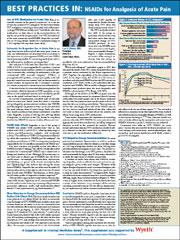
To view the supplement, click the image above. | 
To view video podcast of this Best Practice, click the image above. |
• Use of OTC Medication for Acute Pain
• Rationale for Ibuprofen Use in Acute Pain
• NSAID Side Effects
• More Attention to Dosage Recommendations Will Reduce Side Effects Risk
• OTC Ibuprofen Dosage Recommendations
• Conclusion
Faculty/Faculty Disclosure
Lee S. Simon, MD
Principal
SDG, LLC.
Cambridge, Mass.
Dr Simon previously served as the Division Director of the Arthritis, Analgesic & Ophthalmologic Drug Product Division at the US Food and Drug Administration Center for Drug Evaluation and Research. He is a Principal in SDG, LLC., a consulting company.
A supplement to Internal Medicine News. This supplement was supported by Wyeth.
•Topics
•Faculty/Faculty Disclosures
|
To view the supplement, click the image above. |
To view video podcast of this Best Practice, click the image above. |
• Use of OTC Medication for Acute Pain
• Rationale for Ibuprofen Use in Acute Pain
• NSAID Side Effects
• More Attention to Dosage Recommendations Will Reduce Side Effects Risk
• OTC Ibuprofen Dosage Recommendations
• Conclusion
Faculty/Faculty Disclosure
Lee S. Simon, MD
Principal
SDG, LLC.
Cambridge, Mass.
Dr Simon previously served as the Division Director of the Arthritis, Analgesic & Ophthalmologic Drug Product Division at the US Food and Drug Administration Center for Drug Evaluation and Research. He is a Principal in SDG, LLC., a consulting company.
A supplement to Internal Medicine News. This supplement was supported by Wyeth.
•Topics
•Faculty/Faculty Disclosures
|
To view the supplement, click the image above. |
To view video podcast of this Best Practice, click the image above. |
• Use of OTC Medication for Acute Pain
• Rationale for Ibuprofen Use in Acute Pain
• NSAID Side Effects
• More Attention to Dosage Recommendations Will Reduce Side Effects Risk
• OTC Ibuprofen Dosage Recommendations
• Conclusion
Faculty/Faculty Disclosure
Lee S. Simon, MD
Principal
SDG, LLC.
Cambridge, Mass.
Dr Simon previously served as the Division Director of the Arthritis, Analgesic & Ophthalmologic Drug Product Division at the US Food and Drug Administration Center for Drug Evaluation and Research. He is a Principal in SDG, LLC., a consulting company.
Hospitalists Can Lead Fall-Prevention Projects
Hospitalized patients continue to suffer from falls despite the use of criteria to identify the highest-risk admissions, according to a study published in this month's Journal of Hospital Medicine.
The report, "Predictors of Serious Injury Among Hospitalized Patients Evaluated for Falls" (JHM. 2010;5:63-68), is a retrospective study of inpatients at 13 medical and surgical units at Mount Sinai Medical Center in New York City. A total of 513 patients experienced 636 falls during that timeframe, according to the study. The incidence rate of falls was 1.97 per 1,000 patient days. Evidence of trauma after a fall (odds ratio=24.6, P<0.001) and ambulatory status (OR=7.3, P<0.01) were found to be "independent predictors of injury being found on imaging studies."
Sara Bradley, MD, associate medical director at the Martha Stewart Center for Living, assistant professor at the Brookdale Department of Geriatrics, and assistant professor at the palliative-care department at Mount Sinai School of Medicine, says the study is the first step in trying to reduce the rate of falls. She says hospitalists are in prime position to trumpet the issue as a QI initiative, particularly as federal funding sources pull back from reimbursement for such preventable errors as falls.
"It's multifactorial, but the doctors, in many ways, are leading this charge," Dr. Bradley says. "If they think it's important and they're leading the nurses and the physical therapists and the family in seeing this as important, that's how it happens."
At Mount Sinai, a pilot program launched last fall implemented a checklist to further the identification of high-risk patients. Risk factors include cognitive status, environment, mobility, hydration, and nutrition. Future risks that may be added to the checklist include medication.
"None of this high-tech," Dr. Bradley acknowledges. "It's all about little interventions, but each of those interventions adds up."
Hospitalized patients continue to suffer from falls despite the use of criteria to identify the highest-risk admissions, according to a study published in this month's Journal of Hospital Medicine.
The report, "Predictors of Serious Injury Among Hospitalized Patients Evaluated for Falls" (JHM. 2010;5:63-68), is a retrospective study of inpatients at 13 medical and surgical units at Mount Sinai Medical Center in New York City. A total of 513 patients experienced 636 falls during that timeframe, according to the study. The incidence rate of falls was 1.97 per 1,000 patient days. Evidence of trauma after a fall (odds ratio=24.6, P<0.001) and ambulatory status (OR=7.3, P<0.01) were found to be "independent predictors of injury being found on imaging studies."
Sara Bradley, MD, associate medical director at the Martha Stewart Center for Living, assistant professor at the Brookdale Department of Geriatrics, and assistant professor at the palliative-care department at Mount Sinai School of Medicine, says the study is the first step in trying to reduce the rate of falls. She says hospitalists are in prime position to trumpet the issue as a QI initiative, particularly as federal funding sources pull back from reimbursement for such preventable errors as falls.
"It's multifactorial, but the doctors, in many ways, are leading this charge," Dr. Bradley says. "If they think it's important and they're leading the nurses and the physical therapists and the family in seeing this as important, that's how it happens."
At Mount Sinai, a pilot program launched last fall implemented a checklist to further the identification of high-risk patients. Risk factors include cognitive status, environment, mobility, hydration, and nutrition. Future risks that may be added to the checklist include medication.
"None of this high-tech," Dr. Bradley acknowledges. "It's all about little interventions, but each of those interventions adds up."
Hospitalized patients continue to suffer from falls despite the use of criteria to identify the highest-risk admissions, according to a study published in this month's Journal of Hospital Medicine.
The report, "Predictors of Serious Injury Among Hospitalized Patients Evaluated for Falls" (JHM. 2010;5:63-68), is a retrospective study of inpatients at 13 medical and surgical units at Mount Sinai Medical Center in New York City. A total of 513 patients experienced 636 falls during that timeframe, according to the study. The incidence rate of falls was 1.97 per 1,000 patient days. Evidence of trauma after a fall (odds ratio=24.6, P<0.001) and ambulatory status (OR=7.3, P<0.01) were found to be "independent predictors of injury being found on imaging studies."
Sara Bradley, MD, associate medical director at the Martha Stewart Center for Living, assistant professor at the Brookdale Department of Geriatrics, and assistant professor at the palliative-care department at Mount Sinai School of Medicine, says the study is the first step in trying to reduce the rate of falls. She says hospitalists are in prime position to trumpet the issue as a QI initiative, particularly as federal funding sources pull back from reimbursement for such preventable errors as falls.
"It's multifactorial, but the doctors, in many ways, are leading this charge," Dr. Bradley says. "If they think it's important and they're leading the nurses and the physical therapists and the family in seeing this as important, that's how it happens."
At Mount Sinai, a pilot program launched last fall implemented a checklist to further the identification of high-risk patients. Risk factors include cognitive status, environment, mobility, hydration, and nutrition. Future risks that may be added to the checklist include medication.
"None of this high-tech," Dr. Bradley acknowledges. "It's all about little interventions, but each of those interventions adds up."
Stroke Treatment Variance Doesn't Affect Mortality
Research reported in the Archives of Neurology (2010;67(1):39-44) found that stroke patients admitted to hospitals over the weekend are more likely than those who arrive on weekdays to receive the FDA-approved clot-busting therapy intravenous tissue plasminogen activator (tPA).
Abby S. Kazley, PhD, assistant professor of health policy administration, and colleagues at Medical University of South Carolina in Charleston studied nearly 80,000 stroke patients admitted to Virginia hospitals from 1998 to 2006. The researchers found that those arriving on weekends were 20% more likely to receive tPA treatment, which has been shown to reverse the effects of ischemic stroke if given within a time-sensitive window of therapeutic opportunity. However, there was no statistically significant difference in death rates between the two groups.
University of Colorado Denver hospitalist Ethan Cumbler, MD (see “Spotlight on Stroke,” The Hospitalist, December 2009, p. 1), says the outcome was counter-intuitive, given prior research documenting limits in weekend hospital care, although lack of competition from elective hospital procedures and reduced road traffic on weekends might have contributed to the result. Stroke treatment benefits from well-designed systems of care that are able to respond quickly to emergent strokes, "especially in Joint Commission-certified primary stroke centers, which are mandated to provide rapid evaluation and response 24 hours a day." Dr. Cumbler notes, however, that in both groups, stroke patients received the critical treatment only about 1% of the time.
"It's hard to know what to make of this study," adds University of California at San Francisco neurohospitalist J. Andrew Josephson, MD. "We know we deliver different care on nights and weekends; in this case not better or worse—just different.”
Research reported in the Archives of Neurology (2010;67(1):39-44) found that stroke patients admitted to hospitals over the weekend are more likely than those who arrive on weekdays to receive the FDA-approved clot-busting therapy intravenous tissue plasminogen activator (tPA).
Abby S. Kazley, PhD, assistant professor of health policy administration, and colleagues at Medical University of South Carolina in Charleston studied nearly 80,000 stroke patients admitted to Virginia hospitals from 1998 to 2006. The researchers found that those arriving on weekends were 20% more likely to receive tPA treatment, which has been shown to reverse the effects of ischemic stroke if given within a time-sensitive window of therapeutic opportunity. However, there was no statistically significant difference in death rates between the two groups.
University of Colorado Denver hospitalist Ethan Cumbler, MD (see “Spotlight on Stroke,” The Hospitalist, December 2009, p. 1), says the outcome was counter-intuitive, given prior research documenting limits in weekend hospital care, although lack of competition from elective hospital procedures and reduced road traffic on weekends might have contributed to the result. Stroke treatment benefits from well-designed systems of care that are able to respond quickly to emergent strokes, "especially in Joint Commission-certified primary stroke centers, which are mandated to provide rapid evaluation and response 24 hours a day." Dr. Cumbler notes, however, that in both groups, stroke patients received the critical treatment only about 1% of the time.
"It's hard to know what to make of this study," adds University of California at San Francisco neurohospitalist J. Andrew Josephson, MD. "We know we deliver different care on nights and weekends; in this case not better or worse—just different.”
Research reported in the Archives of Neurology (2010;67(1):39-44) found that stroke patients admitted to hospitals over the weekend are more likely than those who arrive on weekdays to receive the FDA-approved clot-busting therapy intravenous tissue plasminogen activator (tPA).
Abby S. Kazley, PhD, assistant professor of health policy administration, and colleagues at Medical University of South Carolina in Charleston studied nearly 80,000 stroke patients admitted to Virginia hospitals from 1998 to 2006. The researchers found that those arriving on weekends were 20% more likely to receive tPA treatment, which has been shown to reverse the effects of ischemic stroke if given within a time-sensitive window of therapeutic opportunity. However, there was no statistically significant difference in death rates between the two groups.
University of Colorado Denver hospitalist Ethan Cumbler, MD (see “Spotlight on Stroke,” The Hospitalist, December 2009, p. 1), says the outcome was counter-intuitive, given prior research documenting limits in weekend hospital care, although lack of competition from elective hospital procedures and reduced road traffic on weekends might have contributed to the result. Stroke treatment benefits from well-designed systems of care that are able to respond quickly to emergent strokes, "especially in Joint Commission-certified primary stroke centers, which are mandated to provide rapid evaluation and response 24 hours a day." Dr. Cumbler notes, however, that in both groups, stroke patients received the critical treatment only about 1% of the time.
"It's hard to know what to make of this study," adds University of California at San Francisco neurohospitalist J. Andrew Josephson, MD. "We know we deliver different care on nights and weekends; in this case not better or worse—just different.”
Diagnosis and Management of Alpha-1 Antitrypsin Deficiency
A supplement to Internal Medicine News. This supplement was supported by Talecris Biotherapeutics.
•Topics
•Faculty/Faculty Disclosures
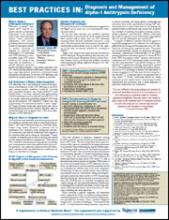
To view the supplement, click the image above.
Topics
•What is Alpha-1 Antitrypsin Deficiency?
•AAT Deficiency is Widely Underrecognized
•Why Are Rates of Diagnosis So Low?
•Optimal Diagnosis and Management Strategies
Faculty/Faculty Disclosures
Faculty/Faculty Disclosures
Leonard Fromer, MD
Assistant Clinical Professor, Family Medicine
David Geffen School of Medicine
University of California
Los Angeles
Dr. Fromer is a consultant for Talecris Biotherapeutics, Inc.
A supplement to Internal Medicine News. This supplement was supported by Talecris Biotherapeutics.
•Topics
•Faculty/Faculty Disclosures
To view the supplement, click the image above.
Topics
•What is Alpha-1 Antitrypsin Deficiency?
•AAT Deficiency is Widely Underrecognized
•Why Are Rates of Diagnosis So Low?
•Optimal Diagnosis and Management Strategies
Faculty/Faculty Disclosures
Faculty/Faculty Disclosures
Leonard Fromer, MD
Assistant Clinical Professor, Family Medicine
David Geffen School of Medicine
University of California
Los Angeles
Dr. Fromer is a consultant for Talecris Biotherapeutics, Inc.
A supplement to Internal Medicine News. This supplement was supported by Talecris Biotherapeutics.
•Topics
•Faculty/Faculty Disclosures
To view the supplement, click the image above.
Topics
•What is Alpha-1 Antitrypsin Deficiency?
•AAT Deficiency is Widely Underrecognized
•Why Are Rates of Diagnosis So Low?
•Optimal Diagnosis and Management Strategies
Faculty/Faculty Disclosures
Faculty/Faculty Disclosures
Leonard Fromer, MD
Assistant Clinical Professor, Family Medicine
David Geffen School of Medicine
University of California
Los Angeles
Dr. Fromer is a consultant for Talecris Biotherapeutics, Inc.
Chronic Inflammatory Demyelinating Polyradiculoneuropathy in the Internal Medicine Setting
A supplement to Internal Medicine News. This supplement was supported by Talecris Biotherapeutics.
•Topics
•Faculty/Faculty Disclosures
To view the supplement, click the image above.
Topics
•Clinical Scenario
•Presenting Symptoms of CIDP
•Differential Diagnosis/Concomitant Conditions
•Obtaining a Diagnosis
•Therapeutic Options
•Best Practices: Key Takeaways
Faculty/Faculty Disclosures
Faculty/Faculty Disclosures
Peter Donofrio, MD
Department of Neurology
Vanderbilt University
Nashville, Tennessee
Dr. Donofrio is a consultant for the Steering Committee of the Talecris Biotherapeutics ICE Study.
A supplement to Internal Medicine News. This supplement was supported by Talecris Biotherapeutics.
•Topics
•Faculty/Faculty Disclosures
To view the supplement, click the image above.
Topics
•Clinical Scenario
•Presenting Symptoms of CIDP
•Differential Diagnosis/Concomitant Conditions
•Obtaining a Diagnosis
•Therapeutic Options
•Best Practices: Key Takeaways
Faculty/Faculty Disclosures
Faculty/Faculty Disclosures
Peter Donofrio, MD
Department of Neurology
Vanderbilt University
Nashville, Tennessee
Dr. Donofrio is a consultant for the Steering Committee of the Talecris Biotherapeutics ICE Study.
A supplement to Internal Medicine News. This supplement was supported by Talecris Biotherapeutics.
•Topics
•Faculty/Faculty Disclosures
To view the supplement, click the image above.
Topics
•Clinical Scenario
•Presenting Symptoms of CIDP
•Differential Diagnosis/Concomitant Conditions
•Obtaining a Diagnosis
•Therapeutic Options
•Best Practices: Key Takeaways
Faculty/Faculty Disclosures
Faculty/Faculty Disclosures
Peter Donofrio, MD
Department of Neurology
Vanderbilt University
Nashville, Tennessee
Dr. Donofrio is a consultant for the Steering Committee of the Talecris Biotherapeutics ICE Study.
The Effective Management of Chronic Constipation and IBS-C
A supplement to Internal Medicine News and supported by Takeda Pharmaceuticals North America, Inc.

To view the supplement, click the image above.
This supplement has been designed to meet the educational needs of clinicians relative to the diagnosis and effective management of chronic constipation and IBS-C.
Faculty
Harold Fields, MD
Founder, Village Family Practice
Houston, TX
Wendy Wright, MS, RN, ARNP, FNP, FAANP
Owner, Wright & Associates
Family Healthcare
Amherst, NH
A supplement to Internal Medicine News and supported by Takeda Pharmaceuticals North America, Inc.
To view the supplement, click the image above.
This supplement has been designed to meet the educational needs of clinicians relative to the diagnosis and effective management of chronic constipation and IBS-C.
Faculty
Harold Fields, MD
Founder, Village Family Practice
Houston, TX
Wendy Wright, MS, RN, ARNP, FNP, FAANP
Owner, Wright & Associates
Family Healthcare
Amherst, NH
A supplement to Internal Medicine News and supported by Takeda Pharmaceuticals North America, Inc.
To view the supplement, click the image above.
This supplement has been designed to meet the educational needs of clinicians relative to the diagnosis and effective management of chronic constipation and IBS-C.
Faculty
Harold Fields, MD
Founder, Village Family Practice
Houston, TX
Wendy Wright, MS, RN, ARNP, FNP, FAANP
Owner, Wright & Associates
Family Healthcare
Amherst, NH

Phase 3 trial of pixantrone leaves FDA uneasy
The phase 3 EXTEND PIX301 trial, which will be reviewed by the US Food and Drug Administration’s (FDA) Oncologic Drugs Advisory Committee (ODAC) in the near future, is raising serious questions among members regarding the efficacy and safety of pixantrone.
The drug is intended to treat non-Hodgkin’s lymphoma (NHL) that has resisted at least 2 other treatments.
Among multiple concerns, the trial only included 40% of the original 320 participants that were to be enrolled.
A possible explanation is that third-line patients wanted to use multi-agent chemotherapy or supportive care. Regardless of the reason, ODAC members are unsure if 140 participants can provide enough evidence for reliable conclusions.
Twenty percent of patients receiving pixantrone achieved complete responses (CR) or unconfirmed complete responses (CRu), compared to less than 6% in the comparator group (P=0.021).
However, it has been noted that if only 2 fewer patients achieved CR or CRu, the data would not be statistically significant (P=0.06).
The comparator arm was the doctors’ choice of other single-agent chemotherapy.
Grade 3-4 serious adverse events, including neutropenia, anemia, leukopenia, and thrombocytopenia, were higher in the pixantrone arm (77% versus 52%).
There were 12 deaths from adverse events in the pixantrone arm of the study from cardiac failure, infection, respiratory failure, and other causes.
There were only 5 deaths from adverse events in the comparator arm, suggesting that pixantrone is cardiotoxic, although the FDA did not claim to be able to draw conclusions relative to other NHL drugs.
The committee moved 2 patients from the pixantrone arm of the study to a different response category and 1 from the comparator arm after reviewing radiology scans. No bias was detected during the review.
ODAC was scheduled to meet Wednesday, February 10, but the meeting was postponed due to heavy snow.
The EXTEND PIX301 trial is sponsored by Cell Therapeutics, the company developing pixantrone. 
The phase 3 EXTEND PIX301 trial, which will be reviewed by the US Food and Drug Administration’s (FDA) Oncologic Drugs Advisory Committee (ODAC) in the near future, is raising serious questions among members regarding the efficacy and safety of pixantrone.
The drug is intended to treat non-Hodgkin’s lymphoma (NHL) that has resisted at least 2 other treatments.
Among multiple concerns, the trial only included 40% of the original 320 participants that were to be enrolled.
A possible explanation is that third-line patients wanted to use multi-agent chemotherapy or supportive care. Regardless of the reason, ODAC members are unsure if 140 participants can provide enough evidence for reliable conclusions.
Twenty percent of patients receiving pixantrone achieved complete responses (CR) or unconfirmed complete responses (CRu), compared to less than 6% in the comparator group (P=0.021).
However, it has been noted that if only 2 fewer patients achieved CR or CRu, the data would not be statistically significant (P=0.06).
The comparator arm was the doctors’ choice of other single-agent chemotherapy.
Grade 3-4 serious adverse events, including neutropenia, anemia, leukopenia, and thrombocytopenia, were higher in the pixantrone arm (77% versus 52%).
There were 12 deaths from adverse events in the pixantrone arm of the study from cardiac failure, infection, respiratory failure, and other causes.
There were only 5 deaths from adverse events in the comparator arm, suggesting that pixantrone is cardiotoxic, although the FDA did not claim to be able to draw conclusions relative to other NHL drugs.
The committee moved 2 patients from the pixantrone arm of the study to a different response category and 1 from the comparator arm after reviewing radiology scans. No bias was detected during the review.
ODAC was scheduled to meet Wednesday, February 10, but the meeting was postponed due to heavy snow.
The EXTEND PIX301 trial is sponsored by Cell Therapeutics, the company developing pixantrone.
The phase 3 EXTEND PIX301 trial, which will be reviewed by the US Food and Drug Administration’s (FDA) Oncologic Drugs Advisory Committee (ODAC) in the near future, is raising serious questions among members regarding the efficacy and safety of pixantrone.
The drug is intended to treat non-Hodgkin’s lymphoma (NHL) that has resisted at least 2 other treatments.
Among multiple concerns, the trial only included 40% of the original 320 participants that were to be enrolled.
A possible explanation is that third-line patients wanted to use multi-agent chemotherapy or supportive care. Regardless of the reason, ODAC members are unsure if 140 participants can provide enough evidence for reliable conclusions.
Twenty percent of patients receiving pixantrone achieved complete responses (CR) or unconfirmed complete responses (CRu), compared to less than 6% in the comparator group (P=0.021).
However, it has been noted that if only 2 fewer patients achieved CR or CRu, the data would not be statistically significant (P=0.06).
The comparator arm was the doctors’ choice of other single-agent chemotherapy.
Grade 3-4 serious adverse events, including neutropenia, anemia, leukopenia, and thrombocytopenia, were higher in the pixantrone arm (77% versus 52%).
There were 12 deaths from adverse events in the pixantrone arm of the study from cardiac failure, infection, respiratory failure, and other causes.
There were only 5 deaths from adverse events in the comparator arm, suggesting that pixantrone is cardiotoxic, although the FDA did not claim to be able to draw conclusions relative to other NHL drugs.
The committee moved 2 patients from the pixantrone arm of the study to a different response category and 1 from the comparator arm after reviewing radiology scans. No bias was detected during the review.
ODAC was scheduled to meet Wednesday, February 10, but the meeting was postponed due to heavy snow.
The EXTEND PIX301 trial is sponsored by Cell Therapeutics, the company developing pixantrone.
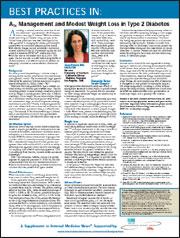
A1c Management and Modest Weight Loss in Type 2 Diabetes
A supplement to Internal Medicine News and supported by Amylin/Lilly.
To view the supplement, click the image above.
Faculty
Anne Peters, MD, FACP, CDE
Director
University of Southern
California Clinical
Diabetes Programs
Los Angeles, Calif.
A supplement to Internal Medicine News and supported by Amylin/Lilly.
To view the supplement, click the image above.
Faculty
Anne Peters, MD, FACP, CDE
Director
University of Southern
California Clinical
Diabetes Programs
Los Angeles, Calif.
A supplement to Internal Medicine News and supported by Amylin/Lilly.
To view the supplement, click the image above.
Faculty
Anne Peters, MD, FACP, CDE
Director
University of Southern
California Clinical
Diabetes Programs
Los Angeles, Calif.