User login
2013 Vascular Annual Meeting® activities for fellows, residents, and students
To allow residents and students to explore their interest in vascular surgery, the fellow/resident/student educational and networking program of the Vascular Annual Meeting will be held on Wednesday, May 29 through Saturday, June 1.
The program provides an excellent opportunity for learners of all levels (first year medical students to senior level surgical residents to vascular surgery trainees) to meet others with similar interests, along with leaders of the vascular surgical community. View the detailed educational program will be posted soon.
To ensure the best young medical professionals become vascular surgeons, SVS offers the following travel scholarships to aspiring vascular surgeons to underwrite expenses for Vascular Annual Meeting attendance: General Surgery Resident/Medical Student Travel Scholarship and Minority Medical Student Travel Scholarship. The deadline to apply for the scholarships is February 18.
To allow residents and students to explore their interest in vascular surgery, the fellow/resident/student educational and networking program of the Vascular Annual Meeting will be held on Wednesday, May 29 through Saturday, June 1.
The program provides an excellent opportunity for learners of all levels (first year medical students to senior level surgical residents to vascular surgery trainees) to meet others with similar interests, along with leaders of the vascular surgical community. View the detailed educational program will be posted soon.
To ensure the best young medical professionals become vascular surgeons, SVS offers the following travel scholarships to aspiring vascular surgeons to underwrite expenses for Vascular Annual Meeting attendance: General Surgery Resident/Medical Student Travel Scholarship and Minority Medical Student Travel Scholarship. The deadline to apply for the scholarships is February 18.
To allow residents and students to explore their interest in vascular surgery, the fellow/resident/student educational and networking program of the Vascular Annual Meeting will be held on Wednesday, May 29 through Saturday, June 1.
The program provides an excellent opportunity for learners of all levels (first year medical students to senior level surgical residents to vascular surgery trainees) to meet others with similar interests, along with leaders of the vascular surgical community. View the detailed educational program will be posted soon.
To ensure the best young medical professionals become vascular surgeons, SVS offers the following travel scholarships to aspiring vascular surgeons to underwrite expenses for Vascular Annual Meeting attendance: General Surgery Resident/Medical Student Travel Scholarship and Minority Medical Student Travel Scholarship. The deadline to apply for the scholarships is February 18.
New: International Forum followed by guest reception at Vascular Annual Meeting®
A new session, the International Forum, featuring abstracts by international authors, will be offered at the 2013 Vascular Annual Meeting. This concurrent session will be held at 5 p.m. on Wednesday, May 29.
The International Guest Reception will be held at a new time and date, immediately following the International Forum at 6:30 p.m. All International attendees are invited to attend.
A new session, the International Forum, featuring abstracts by international authors, will be offered at the 2013 Vascular Annual Meeting. This concurrent session will be held at 5 p.m. on Wednesday, May 29.
The International Guest Reception will be held at a new time and date, immediately following the International Forum at 6:30 p.m. All International attendees are invited to attend.
A new session, the International Forum, featuring abstracts by international authors, will be offered at the 2013 Vascular Annual Meeting. This concurrent session will be held at 5 p.m. on Wednesday, May 29.
The International Guest Reception will be held at a new time and date, immediately following the International Forum at 6:30 p.m. All International attendees are invited to attend.
Medicare cuts expected March 1
A two percent across-the-board cut to Medicare, which is part of sequestration along with defense and discretionary domestic programs, will be triggered on March 1 if Congress fails to act again to delay or prevent it.
On January 1, this cut was delayed for two months as part of the American Taxpayer Relief Act; this law also averted the “fiscal cliff” and provided another one year freeze for Medicare physician payment. President Obama is requesting another delay, but it is unclear what Congress will do.
Presently, there is no legislation that has been introduced to delay or prevent sequestration because of disagreement over how to pay for it – a delay of seven months is estimated to cost $85 billion.
A two percent across-the-board cut to Medicare, which is part of sequestration along with defense and discretionary domestic programs, will be triggered on March 1 if Congress fails to act again to delay or prevent it.
On January 1, this cut was delayed for two months as part of the American Taxpayer Relief Act; this law also averted the “fiscal cliff” and provided another one year freeze for Medicare physician payment. President Obama is requesting another delay, but it is unclear what Congress will do.
Presently, there is no legislation that has been introduced to delay or prevent sequestration because of disagreement over how to pay for it – a delay of seven months is estimated to cost $85 billion.
A two percent across-the-board cut to Medicare, which is part of sequestration along with defense and discretionary domestic programs, will be triggered on March 1 if Congress fails to act again to delay or prevent it.
On January 1, this cut was delayed for two months as part of the American Taxpayer Relief Act; this law also averted the “fiscal cliff” and provided another one year freeze for Medicare physician payment. President Obama is requesting another delay, but it is unclear what Congress will do.
Presently, there is no legislation that has been introduced to delay or prevent sequestration because of disagreement over how to pay for it – a delay of seven months is estimated to cost $85 billion.
Physician Compare website redesign planned during 2013
The Centers for Medicare and Medicaid Services (CMS) plans to launch a redesigned Physician Compare website in March 2013.
The new website will feature enhanced search functionality and support public reporting of quality data. In early 2014, CMS will begin publicly reporting clinical data at the medical group level collected as part of the Physician Quality Reporting Program and Accountable Care Organization quality programs.
Clinical and Group Consumer Assessment of Heathcare Providers and Systems data is also expected to be added in 2014. A transition to individual quality measures that can be publicly reported at the provider level is anticipated in 2015. CMS is still finalizing the format for displaying the quality measures on the website.
The Centers for Medicare and Medicaid Services (CMS) plans to launch a redesigned Physician Compare website in March 2013.
The new website will feature enhanced search functionality and support public reporting of quality data. In early 2014, CMS will begin publicly reporting clinical data at the medical group level collected as part of the Physician Quality Reporting Program and Accountable Care Organization quality programs.
Clinical and Group Consumer Assessment of Heathcare Providers and Systems data is also expected to be added in 2014. A transition to individual quality measures that can be publicly reported at the provider level is anticipated in 2015. CMS is still finalizing the format for displaying the quality measures on the website.
The Centers for Medicare and Medicaid Services (CMS) plans to launch a redesigned Physician Compare website in March 2013.
The new website will feature enhanced search functionality and support public reporting of quality data. In early 2014, CMS will begin publicly reporting clinical data at the medical group level collected as part of the Physician Quality Reporting Program and Accountable Care Organization quality programs.
Clinical and Group Consumer Assessment of Heathcare Providers and Systems data is also expected to be added in 2014. A transition to individual quality measures that can be publicly reported at the provider level is anticipated in 2015. CMS is still finalizing the format for displaying the quality measures on the website.
Error in Carotid Angiography Codes
It has come to the attention of the SVS Health Policy Committee that there appears to be an error in the 2013 Medicare Physician Fee Schedule for the new carotid angiography codes. (Codes 36222-36226).
The 2013 Medicare Physician Fee Schedule essentially prohibits the use of Modifier -50 when bilateral procedures are performed on CPT codes 36222-36226 because there is an indicator "0" attached to each. Payment is 100 percent for a unilateral procedure. It also means that when the -50 modifier is appended as per the CPT manual introductory guidelines for a bilateral procedure, payment is still only 100 percent and not 150 percent as would be the case if there was an indicator of "1".
Medicare will fix the carotid issue will be fixed by April 1, 2013, retroactive to January 1, 2013.
It has come to the attention of the SVS Health Policy Committee that there appears to be an error in the 2013 Medicare Physician Fee Schedule for the new carotid angiography codes. (Codes 36222-36226).
The 2013 Medicare Physician Fee Schedule essentially prohibits the use of Modifier -50 when bilateral procedures are performed on CPT codes 36222-36226 because there is an indicator "0" attached to each. Payment is 100 percent for a unilateral procedure. It also means that when the -50 modifier is appended as per the CPT manual introductory guidelines for a bilateral procedure, payment is still only 100 percent and not 150 percent as would be the case if there was an indicator of "1".
Medicare will fix the carotid issue will be fixed by April 1, 2013, retroactive to January 1, 2013.
It has come to the attention of the SVS Health Policy Committee that there appears to be an error in the 2013 Medicare Physician Fee Schedule for the new carotid angiography codes. (Codes 36222-36226).
The 2013 Medicare Physician Fee Schedule essentially prohibits the use of Modifier -50 when bilateral procedures are performed on CPT codes 36222-36226 because there is an indicator "0" attached to each. Payment is 100 percent for a unilateral procedure. It also means that when the -50 modifier is appended as per the CPT manual introductory guidelines for a bilateral procedure, payment is still only 100 percent and not 150 percent as would be the case if there was an indicator of "1".
Medicare will fix the carotid issue will be fixed by April 1, 2013, retroactive to January 1, 2013.
Stroke Research Priorities - NINDS report now available
The final report of the Stroke Research Priorities Meeting is now available on the National Institute of Neurological Disorders and Stroke (NINDS) public website.
This report is the result of an NINDS effort to identify the highest priorities for stroke research. Workgroups of experts in stroke prevention, treatment, and recovery research considered more than 180 proposals submitted by the broad stroke research community, and during a meeting in August of 2012, came up with nine research priorities for the field.
One of the priorities is treatment of asymptomatic carotid disease – one of the SVS clinical research priority areas. The opportunities described in this report will guide NINDS investments in stroke research over the next five to 10 years.
The final report of the Stroke Research Priorities Meeting is now available on the National Institute of Neurological Disorders and Stroke (NINDS) public website.
This report is the result of an NINDS effort to identify the highest priorities for stroke research. Workgroups of experts in stroke prevention, treatment, and recovery research considered more than 180 proposals submitted by the broad stroke research community, and during a meeting in August of 2012, came up with nine research priorities for the field.
One of the priorities is treatment of asymptomatic carotid disease – one of the SVS clinical research priority areas. The opportunities described in this report will guide NINDS investments in stroke research over the next five to 10 years.
The final report of the Stroke Research Priorities Meeting is now available on the National Institute of Neurological Disorders and Stroke (NINDS) public website.
This report is the result of an NINDS effort to identify the highest priorities for stroke research. Workgroups of experts in stroke prevention, treatment, and recovery research considered more than 180 proposals submitted by the broad stroke research community, and during a meeting in August of 2012, came up with nine research priorities for the field.
One of the priorities is treatment of asymptomatic carotid disease – one of the SVS clinical research priority areas. The opportunities described in this report will guide NINDS investments in stroke research over the next five to 10 years.
IVC Filter Study Task Force Overview: December 2012 (copy 1)
In 2010, the FDA issued a safety communication on retrievable Inferior Vena Cava (IVC) filters, which are frequently used in patients at risk for pulmonary embolism when anticoagulant therapy cannot be used or is ineffective. Since 2005, the FDA has received hundreds of device adverse event reports involving these IVC filters (device migration, embolizations, perforation of the IVC, filter fracture). Some of these events led to adverse clinical outcomes in patients. These events may be related to a filter remaining in the body for long periods of time, beyond the time when the risk of pulmonary embolism has subsided.
In response, the Society for Vascular Surgery (SVS) and Society of Interventional Radiology (SIR) formed an IVC Filter Study Task Force. The Task Force met throughout 2011 and 2012. Representatives from FDA, AHRQ, CMS, NIH, and IVC filter manufacturers have participated in meetings. SVS is represented by Dr. David Gillespie, Dr. Rodney White, Dr. John Rectenwald, and Dr. Marc Passman.
Select members of the Task Force submitted to FDA a pre-IDE protocol, entitled "Predicting the Safety and Effectiveness of Inferior Vena Cava Filters (PRESERVE)."
The PRESERVE trial is a multi-center, prospective, open-label, non-randomized investigation of all commercially available IVC filters in the United States placed in subjects for the prevention of death from fatal or symptomatic PE. This study will enroll approximately 1,800 IVC filter subjects at up to 50 sites in the United States. All treated subjects will be evaluated at procedure, 3-months, 6-months (phone), 12-months, 18-months (phone), and 24-months post-procedure. All subjects in whom the IVC filter is removed will be followed for 3-months post-retrieval. Mandated follow-up imaging will be performed at 3 (plain film) 12 and 24 months (non-contrast abdominal CT). Clinical visits with physical exam will be performed at 3, 12, and 24 months.
FDA has communicated its support of the SVS/SIR-sponsored PRESERVE trial as an acceptable alternative to an FDA-mandated 522 Post Market Surveillance study. FDA leaders reviewed the current use of IVC filters, their vision for collaboration on the PRESERVE trial, and outlined incentives for manufacturers to support the study, including its potential for providing evidence to expand device indications. To date, five IVC filter manufacturers have committed to participate in the PRESERVE trial.
Anticipating an IDE submission in early 2013, Task Force members are reviewing comments from manufacturers and FDA, evaluating information on sample size, and modifying the PRESERVE protocol.
In 2010, the FDA issued a safety communication on retrievable Inferior Vena Cava (IVC) filters, which are frequently used in patients at risk for pulmonary embolism when anticoagulant therapy cannot be used or is ineffective. Since 2005, the FDA has received hundreds of device adverse event reports involving these IVC filters (device migration, embolizations, perforation of the IVC, filter fracture). Some of these events led to adverse clinical outcomes in patients. These events may be related to a filter remaining in the body for long periods of time, beyond the time when the risk of pulmonary embolism has subsided.
In response, the Society for Vascular Surgery (SVS) and Society of Interventional Radiology (SIR) formed an IVC Filter Study Task Force. The Task Force met throughout 2011 and 2012. Representatives from FDA, AHRQ, CMS, NIH, and IVC filter manufacturers have participated in meetings. SVS is represented by Dr. David Gillespie, Dr. Rodney White, Dr. John Rectenwald, and Dr. Marc Passman.
Select members of the Task Force submitted to FDA a pre-IDE protocol, entitled "Predicting the Safety and Effectiveness of Inferior Vena Cava Filters (PRESERVE)."
The PRESERVE trial is a multi-center, prospective, open-label, non-randomized investigation of all commercially available IVC filters in the United States placed in subjects for the prevention of death from fatal or symptomatic PE. This study will enroll approximately 1,800 IVC filter subjects at up to 50 sites in the United States. All treated subjects will be evaluated at procedure, 3-months, 6-months (phone), 12-months, 18-months (phone), and 24-months post-procedure. All subjects in whom the IVC filter is removed will be followed for 3-months post-retrieval. Mandated follow-up imaging will be performed at 3 (plain film) 12 and 24 months (non-contrast abdominal CT). Clinical visits with physical exam will be performed at 3, 12, and 24 months.
FDA has communicated its support of the SVS/SIR-sponsored PRESERVE trial as an acceptable alternative to an FDA-mandated 522 Post Market Surveillance study. FDA leaders reviewed the current use of IVC filters, their vision for collaboration on the PRESERVE trial, and outlined incentives for manufacturers to support the study, including its potential for providing evidence to expand device indications. To date, five IVC filter manufacturers have committed to participate in the PRESERVE trial.
Anticipating an IDE submission in early 2013, Task Force members are reviewing comments from manufacturers and FDA, evaluating information on sample size, and modifying the PRESERVE protocol.
In 2010, the FDA issued a safety communication on retrievable Inferior Vena Cava (IVC) filters, which are frequently used in patients at risk for pulmonary embolism when anticoagulant therapy cannot be used or is ineffective. Since 2005, the FDA has received hundreds of device adverse event reports involving these IVC filters (device migration, embolizations, perforation of the IVC, filter fracture). Some of these events led to adverse clinical outcomes in patients. These events may be related to a filter remaining in the body for long periods of time, beyond the time when the risk of pulmonary embolism has subsided.
In response, the Society for Vascular Surgery (SVS) and Society of Interventional Radiology (SIR) formed an IVC Filter Study Task Force. The Task Force met throughout 2011 and 2012. Representatives from FDA, AHRQ, CMS, NIH, and IVC filter manufacturers have participated in meetings. SVS is represented by Dr. David Gillespie, Dr. Rodney White, Dr. John Rectenwald, and Dr. Marc Passman.
Select members of the Task Force submitted to FDA a pre-IDE protocol, entitled "Predicting the Safety and Effectiveness of Inferior Vena Cava Filters (PRESERVE)."
The PRESERVE trial is a multi-center, prospective, open-label, non-randomized investigation of all commercially available IVC filters in the United States placed in subjects for the prevention of death from fatal or symptomatic PE. This study will enroll approximately 1,800 IVC filter subjects at up to 50 sites in the United States. All treated subjects will be evaluated at procedure, 3-months, 6-months (phone), 12-months, 18-months (phone), and 24-months post-procedure. All subjects in whom the IVC filter is removed will be followed for 3-months post-retrieval. Mandated follow-up imaging will be performed at 3 (plain film) 12 and 24 months (non-contrast abdominal CT). Clinical visits with physical exam will be performed at 3, 12, and 24 months.
FDA has communicated its support of the SVS/SIR-sponsored PRESERVE trial as an acceptable alternative to an FDA-mandated 522 Post Market Surveillance study. FDA leaders reviewed the current use of IVC filters, their vision for collaboration on the PRESERVE trial, and outlined incentives for manufacturers to support the study, including its potential for providing evidence to expand device indications. To date, five IVC filter manufacturers have committed to participate in the PRESERVE trial.
Anticipating an IDE submission in early 2013, Task Force members are reviewing comments from manufacturers and FDA, evaluating information on sample size, and modifying the PRESERVE protocol.
New journal now available: JSV: Venous and Lymphatic Disorders
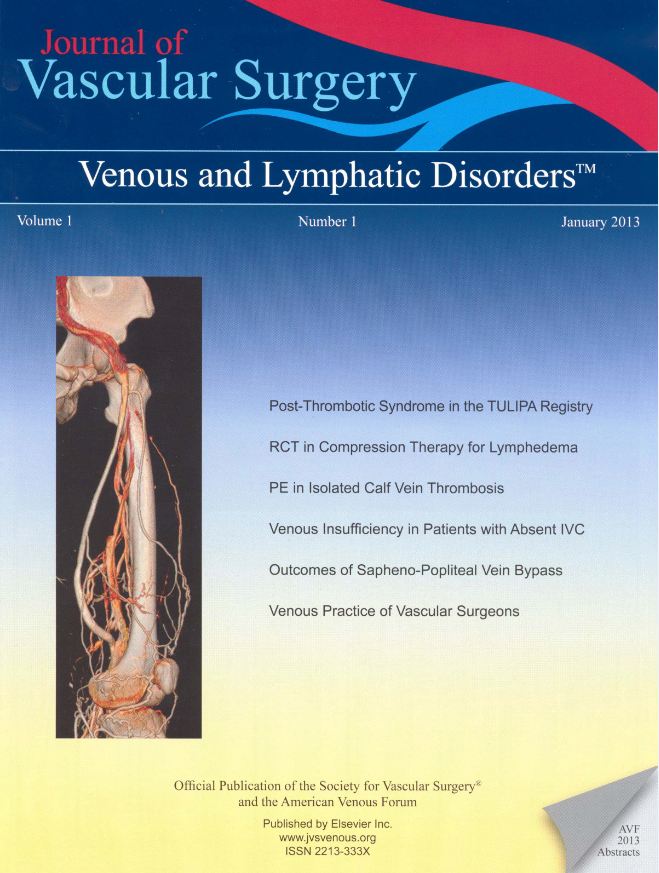
SVS members received a new journal, Journal of Vascular Surgery: Venous and Lymphatic Disorders. Published four times a year by SVS and the American Venous Forum, this new journal includes basic scientific research, case reports, venous images, techniques, review articles, and practice management manuscripts related to all aspects of venous disease, lymphatic disease, and wound care with an emphasis on the practicing clinician. The Journal is also online at www.jvsvenous.org.
SVS members received a new journal, Journal of Vascular Surgery: Venous and Lymphatic Disorders. Published four times a year by SVS and the American Venous Forum, this new journal includes basic scientific research, case reports, venous images, techniques, review articles, and practice management manuscripts related to all aspects of venous disease, lymphatic disease, and wound care with an emphasis on the practicing clinician. The Journal is also online at www.jvsvenous.org.
SVS members received a new journal, Journal of Vascular Surgery: Venous and Lymphatic Disorders. Published four times a year by SVS and the American Venous Forum, this new journal includes basic scientific research, case reports, venous images, techniques, review articles, and practice management manuscripts related to all aspects of venous disease, lymphatic disease, and wound care with an emphasis on the practicing clinician. The Journal is also online at www.jvsvenous.org.
Stem Cell Program at VRIC
Vascular surgeons interested in how to build a stem cell program should plan to attend the upcoming 27th Annual Vascular Research Initiatives Conference (VRIC). Designed to encourage interaction and collaboration between vascular surgeon investigators and scientists from other vascular biology-related disciplines, this year the VRIC is offering a special translational scientific session, "How to Put Together a Stem Cell Program for Therapeutic Angiogenesis: Challenges and Pitfalls."
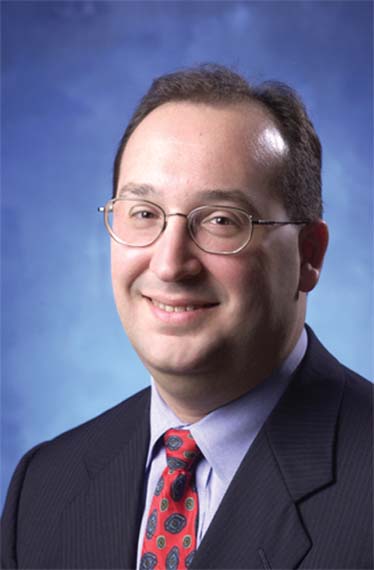
"There are new reports showing the value of these stem cell programs and there are many ways to do them," said Alan Dardik, MD, PhD, VRIC Course Director.
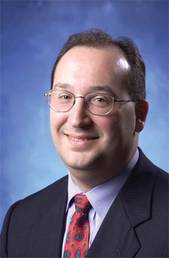
"Instead of reading about these programs in an abstract way in the scientific journals, attendees can learn about stem cell programs firsthand, from experts that are currently performing this type of therapy, and ask their detailed and specific questions in a small group format."
Experts in the field of stem cell research, all of whom have done stem cell therapy in human patients, have been selected as speakers by the SVS Research and Education Committee and the ATVB Program Committee. These speakers include: Drs. Michael Murphy, Omaida Velazquez, Douglas LoSordo and Richard Powell.
In addition to the translational session, VRIC, to be held April 30 Orlando, Florida, provides an opportunity for vascular surgeon investigators and vascular biologists to participate in this unique scientific collaborative prior to the Arteriosclerosis, Thrombosis, and Vascular Biology (ATVB) Scientific Sessions.
VRIC is aimed at vascular surgeons, vascular biologists, physicians with an interest in vascular disease, vascular surgery trainees, research trainees in vascular surgery and vascular biology, and industry personnel with an interest in vascular disease.
Abstracts can be submitted for VRIC until the Jan. 25 deadline. Selected high-impact abstracts that are presented at the VRIC session may also be invited for presentation by the principal investigator at the SVS 2013 Vascular Annual Meeting®, May 30 – June 1.
"Anyone with an interest in vascular biology and vascular surgery should be at VRIC," Dr. Dardik said. "Since one of the objectives of VRIC is to stimulate interest in research among aspiring academic vascular surgeons, trainees are especially welcome."
Plan to attend, experience, and contribute to this unique collaborative scientific environment while earning up to 7 AMA PRA Category 1 CreditsTM. For more information, visit VascularWeb.org.
Vascular surgeons interested in how to build a stem cell program should plan to attend the upcoming 27th Annual Vascular Research Initiatives Conference (VRIC). Designed to encourage interaction and collaboration between vascular surgeon investigators and scientists from other vascular biology-related disciplines, this year the VRIC is offering a special translational scientific session, "How to Put Together a Stem Cell Program for Therapeutic Angiogenesis: Challenges and Pitfalls."
"There are new reports showing the value of these stem cell programs and there are many ways to do them," said Alan Dardik, MD, PhD, VRIC Course Director.
"Instead of reading about these programs in an abstract way in the scientific journals, attendees can learn about stem cell programs firsthand, from experts that are currently performing this type of therapy, and ask their detailed and specific questions in a small group format."
Experts in the field of stem cell research, all of whom have done stem cell therapy in human patients, have been selected as speakers by the SVS Research and Education Committee and the ATVB Program Committee. These speakers include: Drs. Michael Murphy, Omaida Velazquez, Douglas LoSordo and Richard Powell.
In addition to the translational session, VRIC, to be held April 30 Orlando, Florida, provides an opportunity for vascular surgeon investigators and vascular biologists to participate in this unique scientific collaborative prior to the Arteriosclerosis, Thrombosis, and Vascular Biology (ATVB) Scientific Sessions.
VRIC is aimed at vascular surgeons, vascular biologists, physicians with an interest in vascular disease, vascular surgery trainees, research trainees in vascular surgery and vascular biology, and industry personnel with an interest in vascular disease.
Abstracts can be submitted for VRIC until the Jan. 25 deadline. Selected high-impact abstracts that are presented at the VRIC session may also be invited for presentation by the principal investigator at the SVS 2013 Vascular Annual Meeting®, May 30 – June 1.
"Anyone with an interest in vascular biology and vascular surgery should be at VRIC," Dr. Dardik said. "Since one of the objectives of VRIC is to stimulate interest in research among aspiring academic vascular surgeons, trainees are especially welcome."
Plan to attend, experience, and contribute to this unique collaborative scientific environment while earning up to 7 AMA PRA Category 1 CreditsTM. For more information, visit VascularWeb.org.
Vascular surgeons interested in how to build a stem cell program should plan to attend the upcoming 27th Annual Vascular Research Initiatives Conference (VRIC). Designed to encourage interaction and collaboration between vascular surgeon investigators and scientists from other vascular biology-related disciplines, this year the VRIC is offering a special translational scientific session, "How to Put Together a Stem Cell Program for Therapeutic Angiogenesis: Challenges and Pitfalls."
"There are new reports showing the value of these stem cell programs and there are many ways to do them," said Alan Dardik, MD, PhD, VRIC Course Director.
"Instead of reading about these programs in an abstract way in the scientific journals, attendees can learn about stem cell programs firsthand, from experts that are currently performing this type of therapy, and ask their detailed and specific questions in a small group format."
Experts in the field of stem cell research, all of whom have done stem cell therapy in human patients, have been selected as speakers by the SVS Research and Education Committee and the ATVB Program Committee. These speakers include: Drs. Michael Murphy, Omaida Velazquez, Douglas LoSordo and Richard Powell.
In addition to the translational session, VRIC, to be held April 30 Orlando, Florida, provides an opportunity for vascular surgeon investigators and vascular biologists to participate in this unique scientific collaborative prior to the Arteriosclerosis, Thrombosis, and Vascular Biology (ATVB) Scientific Sessions.
VRIC is aimed at vascular surgeons, vascular biologists, physicians with an interest in vascular disease, vascular surgery trainees, research trainees in vascular surgery and vascular biology, and industry personnel with an interest in vascular disease.
Abstracts can be submitted for VRIC until the Jan. 25 deadline. Selected high-impact abstracts that are presented at the VRIC session may also be invited for presentation by the principal investigator at the SVS 2013 Vascular Annual Meeting®, May 30 – June 1.
"Anyone with an interest in vascular biology and vascular surgery should be at VRIC," Dr. Dardik said. "Since one of the objectives of VRIC is to stimulate interest in research among aspiring academic vascular surgeons, trainees are especially welcome."
Plan to attend, experience, and contribute to this unique collaborative scientific environment while earning up to 7 AMA PRA Category 1 CreditsTM. For more information, visit VascularWeb.org.
Get the JVS iPAD app
The Journal of Vascular Surgery iPad app is now available. To download, go to the App Store via your iPad and search Journal of Vascular Surgery or JVS. Enter your current jvascsurg.org username and password to access JVS content. If you have not claimed online access to JVS, you will need to do so before accessing the app. For more information about how to claim access to JVS and its new iPad app, visit jvascsurg.org.
Body text starts here....
Second and subsequent grafs
Doctor’s Name and Bio
Body text starts here....
Second and subsequent grafs
Doctor’s Name and Bio
Body text starts here....
Second and subsequent grafs
Doctor’s Name and Bio
The Journal of Vascular Surgery iPad app is now available. To download, go to the App Store via your iPad and search Journal of Vascular Surgery or JVS. Enter your current jvascsurg.org username and password to access JVS content. If you have not claimed online access to JVS, you will need to do so before accessing the app. For more information about how to claim access to JVS and its new iPad app, visit jvascsurg.org.
The Journal of Vascular Surgery iPad app is now available. To download, go to the App Store via your iPad and search Journal of Vascular Surgery or JVS. Enter your current jvascsurg.org username and password to access JVS content. If you have not claimed online access to JVS, you will need to do so before accessing the app. For more information about how to claim access to JVS and its new iPad app, visit jvascsurg.org.
Major Finding: Key numerical finding (e.g., number needed to treat to prevent one death/event; number lived or died as result of intervention). Maximum 10 words/1 sentence.
Data Source: Include type of study (e.g., randomized, placebo controlled trial; retrospective case-control study). Include number in the study.
Disclosures: Sponsor of study, funding source, relevant disclosures. If author has no relevant disclosures, "Dr. X reported having no financial disclosures." If necessary, "Meeting Y did not require reports of financial disclosures." Check meeting website because many list disclosures. Written in sentence form.