User login
Don’t miss baby scabies
WAIKOLOA, HAWAII –
“It’s really important to think of scabies in any widespread rash that a baby presents with,” said Andrea Zaenglein, MD, professor of dermatology and pediatric dermatology at Penn State University, Hershey. It’s often missed in the ED because it’s not recognized.
While lesions might be limited to the webbing of the hands in older patients, infants generally have a widespread rash with many different lesion types involving the armpits, trunk, and even the scalp. “In older kids, we always think of itch as our primary criteria, but for infants with scabies, that’s not always the case. The younger the kid, the less able they’re to manifest the itch in a way that we recognize,” she said in an interview at the Hawaii Dermatology Seminar provided by Global Academy for Medical Education/Skin Disease Education Foundation.
Standard treatment for infants with scabies is permethrin cream, which, Dr. Zaenglein advises, should be applied from head to toe. “And make sure to treat all family members, even if they’re not demonstrating any symptoms. It’s really important, because that baby had to get scabies from somebody,” she said. Although permethrin isn’t approved for use under 2 months old, she said she has no problem with it in younger, otherwise healthy infants, but cases below 2 months are uncommon. Even if infants are exposed at birth, it takes several weeks for scabies to manifest.
Topical corticosteroids are useful as well to speed healing and help with itch. Ivermectin is held in reserve for older patients, especially in institutional settings where many people have to be treated at a time, or when permethrin cream is not effective.
SDEF/Global Academy for Medical Education and this news organization are owned by the same parent company.
WAIKOLOA, HAWAII –
“It’s really important to think of scabies in any widespread rash that a baby presents with,” said Andrea Zaenglein, MD, professor of dermatology and pediatric dermatology at Penn State University, Hershey. It’s often missed in the ED because it’s not recognized.
While lesions might be limited to the webbing of the hands in older patients, infants generally have a widespread rash with many different lesion types involving the armpits, trunk, and even the scalp. “In older kids, we always think of itch as our primary criteria, but for infants with scabies, that’s not always the case. The younger the kid, the less able they’re to manifest the itch in a way that we recognize,” she said in an interview at the Hawaii Dermatology Seminar provided by Global Academy for Medical Education/Skin Disease Education Foundation.
Standard treatment for infants with scabies is permethrin cream, which, Dr. Zaenglein advises, should be applied from head to toe. “And make sure to treat all family members, even if they’re not demonstrating any symptoms. It’s really important, because that baby had to get scabies from somebody,” she said. Although permethrin isn’t approved for use under 2 months old, she said she has no problem with it in younger, otherwise healthy infants, but cases below 2 months are uncommon. Even if infants are exposed at birth, it takes several weeks for scabies to manifest.
Topical corticosteroids are useful as well to speed healing and help with itch. Ivermectin is held in reserve for older patients, especially in institutional settings where many people have to be treated at a time, or when permethrin cream is not effective.
SDEF/Global Academy for Medical Education and this news organization are owned by the same parent company.
WAIKOLOA, HAWAII –
“It’s really important to think of scabies in any widespread rash that a baby presents with,” said Andrea Zaenglein, MD, professor of dermatology and pediatric dermatology at Penn State University, Hershey. It’s often missed in the ED because it’s not recognized.
While lesions might be limited to the webbing of the hands in older patients, infants generally have a widespread rash with many different lesion types involving the armpits, trunk, and even the scalp. “In older kids, we always think of itch as our primary criteria, but for infants with scabies, that’s not always the case. The younger the kid, the less able they’re to manifest the itch in a way that we recognize,” she said in an interview at the Hawaii Dermatology Seminar provided by Global Academy for Medical Education/Skin Disease Education Foundation.
Standard treatment for infants with scabies is permethrin cream, which, Dr. Zaenglein advises, should be applied from head to toe. “And make sure to treat all family members, even if they’re not demonstrating any symptoms. It’s really important, because that baby had to get scabies from somebody,” she said. Although permethrin isn’t approved for use under 2 months old, she said she has no problem with it in younger, otherwise healthy infants, but cases below 2 months are uncommon. Even if infants are exposed at birth, it takes several weeks for scabies to manifest.
Topical corticosteroids are useful as well to speed healing and help with itch. Ivermectin is held in reserve for older patients, especially in institutional settings where many people have to be treated at a time, or when permethrin cream is not effective.
SDEF/Global Academy for Medical Education and this news organization are owned by the same parent company.
EXPERT ANALYSIS FROM THE SDEF HAWAII DERMATOLOGY SEMINAR

How to manage infected eczema in children
WAIKOLOA, HAWAII – , according to Lawrence Eichenfield, MD, chief of pediatric and adolescent dermatology at the University of California, San Diego.
It’s the breach in skin integrity that gives skin flora – most commonly Staphylococcus or Streptococcus – an opening for infection.
Dr. Eichenfield shared his treatment approach in a pearl-filled interview at the Hawaii Dermatology Seminar, provided by Global Academy for Medical Education/Skin Disease Education Foundation.
“Many times, anti-inflammatories are going to be the effective therapy,” whether topical steroids or systemic therapies. But with a secondary infection, systemic antibiotics are in order, too, but topical ones aren’t much use, he said.
Dr. Eichenfield gets a lot of questions about steroid-sparing options for very young children, since topical calcineurin inhibitors and the like aren’t approved in children under 2 years old, and insurance coverage can be a problem. He noted, however, that various guidelines support their use even in the very young, “so I tell my physicians to fight for them ... If you need a steroid-sparing agent, push for it, because it may be the right thing for your patient,” he said.
He’s finding in his area that infected eczema often is resistant to clindamycin, which has been used heavily because of concerns about methicillin-resistant Staphylococcus aureus (MRSA). But it often will “respond to what we considered to be wimpier antibiotics in the past, such as cephalosporin ... So I’ll use cephalosporin or an extended-spectrum penicillin as my first-line agent, and then I’ll culture, depending on history, to see if I have to be concerned about methicillin resistance,” he said.
Be on the lookout for cutaneous herpes and show parents pictures of what it looks like so they recognize it and know to come in right away. It is a dangerous infection, but can be shut down quickly with oral acyclovir and similar agents, Dr. Eichenfield added.
SDEF/Global Academy for Medical Education and this news organization are owned by the same parent company.
WAIKOLOA, HAWAII – , according to Lawrence Eichenfield, MD, chief of pediatric and adolescent dermatology at the University of California, San Diego.
It’s the breach in skin integrity that gives skin flora – most commonly Staphylococcus or Streptococcus – an opening for infection.
Dr. Eichenfield shared his treatment approach in a pearl-filled interview at the Hawaii Dermatology Seminar, provided by Global Academy for Medical Education/Skin Disease Education Foundation.
“Many times, anti-inflammatories are going to be the effective therapy,” whether topical steroids or systemic therapies. But with a secondary infection, systemic antibiotics are in order, too, but topical ones aren’t much use, he said.
Dr. Eichenfield gets a lot of questions about steroid-sparing options for very young children, since topical calcineurin inhibitors and the like aren’t approved in children under 2 years old, and insurance coverage can be a problem. He noted, however, that various guidelines support their use even in the very young, “so I tell my physicians to fight for them ... If you need a steroid-sparing agent, push for it, because it may be the right thing for your patient,” he said.
He’s finding in his area that infected eczema often is resistant to clindamycin, which has been used heavily because of concerns about methicillin-resistant Staphylococcus aureus (MRSA). But it often will “respond to what we considered to be wimpier antibiotics in the past, such as cephalosporin ... So I’ll use cephalosporin or an extended-spectrum penicillin as my first-line agent, and then I’ll culture, depending on history, to see if I have to be concerned about methicillin resistance,” he said.
Be on the lookout for cutaneous herpes and show parents pictures of what it looks like so they recognize it and know to come in right away. It is a dangerous infection, but can be shut down quickly with oral acyclovir and similar agents, Dr. Eichenfield added.
SDEF/Global Academy for Medical Education and this news organization are owned by the same parent company.
WAIKOLOA, HAWAII – , according to Lawrence Eichenfield, MD, chief of pediatric and adolescent dermatology at the University of California, San Diego.
It’s the breach in skin integrity that gives skin flora – most commonly Staphylococcus or Streptococcus – an opening for infection.
Dr. Eichenfield shared his treatment approach in a pearl-filled interview at the Hawaii Dermatology Seminar, provided by Global Academy for Medical Education/Skin Disease Education Foundation.
“Many times, anti-inflammatories are going to be the effective therapy,” whether topical steroids or systemic therapies. But with a secondary infection, systemic antibiotics are in order, too, but topical ones aren’t much use, he said.
Dr. Eichenfield gets a lot of questions about steroid-sparing options for very young children, since topical calcineurin inhibitors and the like aren’t approved in children under 2 years old, and insurance coverage can be a problem. He noted, however, that various guidelines support their use even in the very young, “so I tell my physicians to fight for them ... If you need a steroid-sparing agent, push for it, because it may be the right thing for your patient,” he said.
He’s finding in his area that infected eczema often is resistant to clindamycin, which has been used heavily because of concerns about methicillin-resistant Staphylococcus aureus (MRSA). But it often will “respond to what we considered to be wimpier antibiotics in the past, such as cephalosporin ... So I’ll use cephalosporin or an extended-spectrum penicillin as my first-line agent, and then I’ll culture, depending on history, to see if I have to be concerned about methicillin resistance,” he said.
Be on the lookout for cutaneous herpes and show parents pictures of what it looks like so they recognize it and know to come in right away. It is a dangerous infection, but can be shut down quickly with oral acyclovir and similar agents, Dr. Eichenfield added.
SDEF/Global Academy for Medical Education and this news organization are owned by the same parent company.
EXPERT ANALYSIS FROM SDEF HAWAII DERMATOLOGY SEMINAR

Industry-funded rheumatology RCTs are higher quality
MAUI, HAWAII – Industry-funded randomized, controlled clinical trials published in the three top-rated rheumatology journals during the past 20 years are of significantly higher overall quality than the nonindustry-funded ones, Michael Putman, MD, said at the 2019 Rheumatology Winter Clinical Symposium.

Dr. Putman, a second-year rheumatology fellow at Northwestern University, Chicago, analyzed all randomized, controlled trials (RCTs) of pharmacotherapy featuring a comparator – either placebo or an active agent – published in 1998, 2008, and 2018 in Annals of the Rheumatic Diseases, Rheumatology, and Arthritis & Rheumatology.
His main takeaway: “Rheumatologic interventions seem to work pretty well. The mean absolute risk reduction in the trials is 17.5%, so the average number of patients who need to be treated with a rheumatologic intervention is about five. This is why it’s such a great specialty to be a part of: A lot of our patients get better.”
He created an RCT quality rating scale that captured the strength of study design, methodology, and findings based upon whether a randomized trial used a double-blind design; identified a prespecified primary outcome; and featured patient-reported outcomes, power calculations, sensitivity analysis, adjustment for multiple hypotheses, and intention-to-treat analysis. He then applied the rating scale to the 85 published RCTs in the three study years.
Of note, 84% of the trials published in 2018 were industry funded, up from 74% in 2008 and 1998.
“Industry funds the vast majority of studies. Industry studies are significantly more likely to be appropriately double blinded, report patient-reported outcome measures, use intention to treat, and they have a higher overall quality,” according to Dr. Putman.
Indeed, the industry-funded studies averaged a 66% score on his quality grading scale, compared with 45% for nonindustry-funded studies.
Utilization of most of the quality metrics remained stable over time. The exceptions: Incorporation of intent-to-treat analysis increased from 58% in 1998 to 87% in 2018, and sensitivity analysis was employed in just 5% of the trials published in 1998, compared with 37% in 2008 and 26% in 2018.
The most important change over the past 2 decades, in his view, has been the shrinking proportion of RCTs featuring an active-drug, head-to-head comparator arm. In 1998, 42% of studies featured that design; for example, comparing methotrexate to sulfasalazine. By 2018, that figure had dropped to just 13%.
“Most of our trials today compare an active compound, such an interleukin-17 inhibitor, to a placebo. I think that’s a big change in how we do things,” Dr. Putman observed. “With 84% of our studies being funded by industry, the incentives in medicine right now don’t support active comparator research. It’s harder to show a difference between two things that work than it is to show a difference between something and nothing.”
However, he’d welcome a revival of head-to-head active comparator trials.
“I’d really love to have that happen,” he said. “We have basic questions we haven’t answered yet about a lot of our basic drugs: Like in myositis, should you start with Imuran [azathioprine], CellCept [mycophenolate mofetil], or methotrexate?”
Another striking change over time has been the dwindling proportion of published trials with a statistically significant finding for the primary outcome: 79% in 1998, 46% in 2008, and 36% last year. Dr. Putman suspects the explanation lies in the steady improvement in the effectiveness of standard background therapy for many conditions, which makes it tougher to show a striking difference between the add-on study drug and add-on placebo.
“We’re a victim of our own success,” he commented.
In any event, many key secondary outcomes in the RCTs were positive, even when the primary endpoint wasn’t, according to Dr. Putman, and there was a notable dearth of completely negative clinical RCTs published in the three top journals.
“The more cynical interpretation is there’s an incredible amount of publication bias, where we’re only publishing studies that show an effect and the journals or investigators are censoring the ones that don’t. The more charitable explanation, which is probably also true, is that by the time you get to putting on an RCT you kind of think, ‘This thing works.’ You’re not testing random stuff, so your pretest probability of a drug being effective when it enters into an RCT is probably shifted toward effectiveness,” Dr. Putman speculated.
He reported having no financial conflicts regarding his study.
MAUI, HAWAII – Industry-funded randomized, controlled clinical trials published in the three top-rated rheumatology journals during the past 20 years are of significantly higher overall quality than the nonindustry-funded ones, Michael Putman, MD, said at the 2019 Rheumatology Winter Clinical Symposium.
Dr. Putman, a second-year rheumatology fellow at Northwestern University, Chicago, analyzed all randomized, controlled trials (RCTs) of pharmacotherapy featuring a comparator – either placebo or an active agent – published in 1998, 2008, and 2018 in Annals of the Rheumatic Diseases, Rheumatology, and Arthritis & Rheumatology.
His main takeaway: “Rheumatologic interventions seem to work pretty well. The mean absolute risk reduction in the trials is 17.5%, so the average number of patients who need to be treated with a rheumatologic intervention is about five. This is why it’s such a great specialty to be a part of: A lot of our patients get better.”
He created an RCT quality rating scale that captured the strength of study design, methodology, and findings based upon whether a randomized trial used a double-blind design; identified a prespecified primary outcome; and featured patient-reported outcomes, power calculations, sensitivity analysis, adjustment for multiple hypotheses, and intention-to-treat analysis. He then applied the rating scale to the 85 published RCTs in the three study years.
Of note, 84% of the trials published in 2018 were industry funded, up from 74% in 2008 and 1998.
“Industry funds the vast majority of studies. Industry studies are significantly more likely to be appropriately double blinded, report patient-reported outcome measures, use intention to treat, and they have a higher overall quality,” according to Dr. Putman.
Indeed, the industry-funded studies averaged a 66% score on his quality grading scale, compared with 45% for nonindustry-funded studies.
Utilization of most of the quality metrics remained stable over time. The exceptions: Incorporation of intent-to-treat analysis increased from 58% in 1998 to 87% in 2018, and sensitivity analysis was employed in just 5% of the trials published in 1998, compared with 37% in 2008 and 26% in 2018.
The most important change over the past 2 decades, in his view, has been the shrinking proportion of RCTs featuring an active-drug, head-to-head comparator arm. In 1998, 42% of studies featured that design; for example, comparing methotrexate to sulfasalazine. By 2018, that figure had dropped to just 13%.
“Most of our trials today compare an active compound, such an interleukin-17 inhibitor, to a placebo. I think that’s a big change in how we do things,” Dr. Putman observed. “With 84% of our studies being funded by industry, the incentives in medicine right now don’t support active comparator research. It’s harder to show a difference between two things that work than it is to show a difference between something and nothing.”
However, he’d welcome a revival of head-to-head active comparator trials.
“I’d really love to have that happen,” he said. “We have basic questions we haven’t answered yet about a lot of our basic drugs: Like in myositis, should you start with Imuran [azathioprine], CellCept [mycophenolate mofetil], or methotrexate?”
Another striking change over time has been the dwindling proportion of published trials with a statistically significant finding for the primary outcome: 79% in 1998, 46% in 2008, and 36% last year. Dr. Putman suspects the explanation lies in the steady improvement in the effectiveness of standard background therapy for many conditions, which makes it tougher to show a striking difference between the add-on study drug and add-on placebo.
“We’re a victim of our own success,” he commented.
In any event, many key secondary outcomes in the RCTs were positive, even when the primary endpoint wasn’t, according to Dr. Putman, and there was a notable dearth of completely negative clinical RCTs published in the three top journals.
“The more cynical interpretation is there’s an incredible amount of publication bias, where we’re only publishing studies that show an effect and the journals or investigators are censoring the ones that don’t. The more charitable explanation, which is probably also true, is that by the time you get to putting on an RCT you kind of think, ‘This thing works.’ You’re not testing random stuff, so your pretest probability of a drug being effective when it enters into an RCT is probably shifted toward effectiveness,” Dr. Putman speculated.
He reported having no financial conflicts regarding his study.
MAUI, HAWAII – Industry-funded randomized, controlled clinical trials published in the three top-rated rheumatology journals during the past 20 years are of significantly higher overall quality than the nonindustry-funded ones, Michael Putman, MD, said at the 2019 Rheumatology Winter Clinical Symposium.
Dr. Putman, a second-year rheumatology fellow at Northwestern University, Chicago, analyzed all randomized, controlled trials (RCTs) of pharmacotherapy featuring a comparator – either placebo or an active agent – published in 1998, 2008, and 2018 in Annals of the Rheumatic Diseases, Rheumatology, and Arthritis & Rheumatology.
His main takeaway: “Rheumatologic interventions seem to work pretty well. The mean absolute risk reduction in the trials is 17.5%, so the average number of patients who need to be treated with a rheumatologic intervention is about five. This is why it’s such a great specialty to be a part of: A lot of our patients get better.”
He created an RCT quality rating scale that captured the strength of study design, methodology, and findings based upon whether a randomized trial used a double-blind design; identified a prespecified primary outcome; and featured patient-reported outcomes, power calculations, sensitivity analysis, adjustment for multiple hypotheses, and intention-to-treat analysis. He then applied the rating scale to the 85 published RCTs in the three study years.
Of note, 84% of the trials published in 2018 were industry funded, up from 74% in 2008 and 1998.
“Industry funds the vast majority of studies. Industry studies are significantly more likely to be appropriately double blinded, report patient-reported outcome measures, use intention to treat, and they have a higher overall quality,” according to Dr. Putman.
Indeed, the industry-funded studies averaged a 66% score on his quality grading scale, compared with 45% for nonindustry-funded studies.
Utilization of most of the quality metrics remained stable over time. The exceptions: Incorporation of intent-to-treat analysis increased from 58% in 1998 to 87% in 2018, and sensitivity analysis was employed in just 5% of the trials published in 1998, compared with 37% in 2008 and 26% in 2018.
The most important change over the past 2 decades, in his view, has been the shrinking proportion of RCTs featuring an active-drug, head-to-head comparator arm. In 1998, 42% of studies featured that design; for example, comparing methotrexate to sulfasalazine. By 2018, that figure had dropped to just 13%.
“Most of our trials today compare an active compound, such an interleukin-17 inhibitor, to a placebo. I think that’s a big change in how we do things,” Dr. Putman observed. “With 84% of our studies being funded by industry, the incentives in medicine right now don’t support active comparator research. It’s harder to show a difference between two things that work than it is to show a difference between something and nothing.”
However, he’d welcome a revival of head-to-head active comparator trials.
“I’d really love to have that happen,” he said. “We have basic questions we haven’t answered yet about a lot of our basic drugs: Like in myositis, should you start with Imuran [azathioprine], CellCept [mycophenolate mofetil], or methotrexate?”
Another striking change over time has been the dwindling proportion of published trials with a statistically significant finding for the primary outcome: 79% in 1998, 46% in 2008, and 36% last year. Dr. Putman suspects the explanation lies in the steady improvement in the effectiveness of standard background therapy for many conditions, which makes it tougher to show a striking difference between the add-on study drug and add-on placebo.
“We’re a victim of our own success,” he commented.
In any event, many key secondary outcomes in the RCTs were positive, even when the primary endpoint wasn’t, according to Dr. Putman, and there was a notable dearth of completely negative clinical RCTs published in the three top journals.
“The more cynical interpretation is there’s an incredible amount of publication bias, where we’re only publishing studies that show an effect and the journals or investigators are censoring the ones that don’t. The more charitable explanation, which is probably also true, is that by the time you get to putting on an RCT you kind of think, ‘This thing works.’ You’re not testing random stuff, so your pretest probability of a drug being effective when it enters into an RCT is probably shifted toward effectiveness,” Dr. Putman speculated.
He reported having no financial conflicts regarding his study.
REPORTING FROM RWCS 2019
Home oxygen therapy for children: New guidelines combine limited evidence, expert experience
Based on the very limited evidence available, an expert panel convened by the .

The guideline authors not only addressed specific indications for chronic lung and pulmonary vascular diseases, but also defined hypoxemia in children – noting that Medicare and Medicaid coverage determinations for home oxygen therapy in children are based on decades-old studies that lacked pediatric patients – and offer expert advice on how to wean and discontinue oxygen, when warranted.
The disease-specific recommendations on whether or not to prescribe home oxygen therapy are characterized either as strong, meaning that it’s the right course of action for at least 95% of patients; or conditional, meaning it might not be right for a “sizable minority” of patients, authors explained in the guideline.
Home oxygen therapy gets a strong recommendation, for example, in patients with cystic fibrosis complicated by severe chronic hypoxemia, but gets a conditional recommendation for sickle cell disease with severe chronic hypoxemia, according to the guideline, published in the American Journal of Respiratory and Critical Care Medicine.
Regardless of strong or conditional, the recommendations were largely based on “very low-quality evidence,” according to ad hoc subcommittee of the ATS Assembly on Pediatrics, cochaired by Don Hayes Jr., MD, of Nationwide Children’s Hospital, Columbus, Ohio, and Robin R. Deterding, MD, of Children’s Hospital Colorado, Denver.
“Despite widespread use of home oxygen therapy for various lung and pulmonary vascular diseases, there is a striking paucity of data regarding its implementation, efficacy, monitoring, and discontinuation,” Dr. Hayes, Dr. Deterding, and 20 additional committee members wrote in their report.
Accordingly, the panel sought to add expert opinion and experience to the limited evidence, in the hope that it would aid clinicians in the management of complex pediatric patients, they said.
One new tool they provide, toward that end, is a definition of hypoxemia in children based on oxygen saturation as quantified by pulse oximetry (SpO2).
Based on a review of 31 selected studies measuring oxygenation in healthy children, the expert panel defined hypoxemia (at or near sea level) as SpO2 of 90% or lower for 5% of the recording time in children under 1 year old, and an SpO2 of 93% or lower in older children; or alternately, as three independent measurements of SpO2 less than or equal to 90% in the younger children and 93% in the older children.
By contrast, an SpO2 of less than 88% is one of the indications for funding home oxygen therapy as determined by the Centers for Medicare & Medicaid Services for both pediatric and adult patients, according to the committee.
The CMS indications derived from “seminal studies” showing that continuous oxygen therapy reduced mortality in adults with chronic obstructive pulmonary disease, they said in the guideline document.
“Despite the lack of pediatric patients in these historic studies performed over 35 years ago, the CMS coverage determination for [home oxygen therapy] is the same for pediatric patients of all ages compared with adult patients,” they wrote in the report.
The committee unanimously agreed that 2 weeks of low SpO2 was “sufficient evidence” to indicate chronic hypoxemia, their report says.
Dr. Hayes reported no relationships with relevant commercial interests, while Dr. Deterding provided disclosures related to Boehringer Ingelheim, Novartis, and Elsevier Publishing, among others. Fellow committee members provided disclosures related to Shire Pharmaceuticals, United Therapeutics, and others as listed in the clinical practice guideline document.
SOURCE: Hayes D Jr. et al. J Respir Crit Care Med. 2019 Feb 1;199(3):e5-e23. doi: 10.1164/rccm.201812-2276ST.
It is unfortunate that over the course of a decade, the evidence base supporting home oxygen therapy in children has not substantially changed, according to Ian Balfour-Lynn, MD, a member of the American Thoracic Society (ATS) committee that developed the clinical practice guideline.
The ATS clinical practice guideline on home oxygen therapy for children echoes conclusions reached in a 2009 guideline published by the British Thoracic Society (BTS), he wrote in The Lancet Respiratory Medicine.
Dr. Balfour-Lynn, who chaired the BTS guideline committee, said new research is sorely needed, particularly in the prevention of preterm births, which he said constitute the commonest cause of home oxygen need among children, according to the Lancet report.
In addition, a large prospective trial is needed to evaluate strategies for weaning or discontinuing oxygen, he said, noting that the ATS recommendations on weaning were almost entirely based on the expert panel’s combined clinical experience.
Dr. Balfour-Lynn is a consultant in pediatric respiratory medicine at Royal Brompton Hospital, London. This summary of his opinions is based on his comments in a report that appeared March 8 in The Lancet Respiratory Medicine . He reported no relationships with commercial interests relevant to his work on the ATS clinical practice guideline.
It is unfortunate that over the course of a decade, the evidence base supporting home oxygen therapy in children has not substantially changed, according to Ian Balfour-Lynn, MD, a member of the American Thoracic Society (ATS) committee that developed the clinical practice guideline.
The ATS clinical practice guideline on home oxygen therapy for children echoes conclusions reached in a 2009 guideline published by the British Thoracic Society (BTS), he wrote in The Lancet Respiratory Medicine.
Dr. Balfour-Lynn, who chaired the BTS guideline committee, said new research is sorely needed, particularly in the prevention of preterm births, which he said constitute the commonest cause of home oxygen need among children, according to the Lancet report.
In addition, a large prospective trial is needed to evaluate strategies for weaning or discontinuing oxygen, he said, noting that the ATS recommendations on weaning were almost entirely based on the expert panel’s combined clinical experience.
Dr. Balfour-Lynn is a consultant in pediatric respiratory medicine at Royal Brompton Hospital, London. This summary of his opinions is based on his comments in a report that appeared March 8 in The Lancet Respiratory Medicine . He reported no relationships with commercial interests relevant to his work on the ATS clinical practice guideline.
It is unfortunate that over the course of a decade, the evidence base supporting home oxygen therapy in children has not substantially changed, according to Ian Balfour-Lynn, MD, a member of the American Thoracic Society (ATS) committee that developed the clinical practice guideline.
The ATS clinical practice guideline on home oxygen therapy for children echoes conclusions reached in a 2009 guideline published by the British Thoracic Society (BTS), he wrote in The Lancet Respiratory Medicine.
Dr. Balfour-Lynn, who chaired the BTS guideline committee, said new research is sorely needed, particularly in the prevention of preterm births, which he said constitute the commonest cause of home oxygen need among children, according to the Lancet report.
In addition, a large prospective trial is needed to evaluate strategies for weaning or discontinuing oxygen, he said, noting that the ATS recommendations on weaning were almost entirely based on the expert panel’s combined clinical experience.
Dr. Balfour-Lynn is a consultant in pediatric respiratory medicine at Royal Brompton Hospital, London. This summary of his opinions is based on his comments in a report that appeared March 8 in The Lancet Respiratory Medicine . He reported no relationships with commercial interests relevant to his work on the ATS clinical practice guideline.
Based on the very limited evidence available, an expert panel convened by the .
The guideline authors not only addressed specific indications for chronic lung and pulmonary vascular diseases, but also defined hypoxemia in children – noting that Medicare and Medicaid coverage determinations for home oxygen therapy in children are based on decades-old studies that lacked pediatric patients – and offer expert advice on how to wean and discontinue oxygen, when warranted.
The disease-specific recommendations on whether or not to prescribe home oxygen therapy are characterized either as strong, meaning that it’s the right course of action for at least 95% of patients; or conditional, meaning it might not be right for a “sizable minority” of patients, authors explained in the guideline.
Home oxygen therapy gets a strong recommendation, for example, in patients with cystic fibrosis complicated by severe chronic hypoxemia, but gets a conditional recommendation for sickle cell disease with severe chronic hypoxemia, according to the guideline, published in the American Journal of Respiratory and Critical Care Medicine.
Regardless of strong or conditional, the recommendations were largely based on “very low-quality evidence,” according to ad hoc subcommittee of the ATS Assembly on Pediatrics, cochaired by Don Hayes Jr., MD, of Nationwide Children’s Hospital, Columbus, Ohio, and Robin R. Deterding, MD, of Children’s Hospital Colorado, Denver.
“Despite widespread use of home oxygen therapy for various lung and pulmonary vascular diseases, there is a striking paucity of data regarding its implementation, efficacy, monitoring, and discontinuation,” Dr. Hayes, Dr. Deterding, and 20 additional committee members wrote in their report.
Accordingly, the panel sought to add expert opinion and experience to the limited evidence, in the hope that it would aid clinicians in the management of complex pediatric patients, they said.
One new tool they provide, toward that end, is a definition of hypoxemia in children based on oxygen saturation as quantified by pulse oximetry (SpO2).
Based on a review of 31 selected studies measuring oxygenation in healthy children, the expert panel defined hypoxemia (at or near sea level) as SpO2 of 90% or lower for 5% of the recording time in children under 1 year old, and an SpO2 of 93% or lower in older children; or alternately, as three independent measurements of SpO2 less than or equal to 90% in the younger children and 93% in the older children.
By contrast, an SpO2 of less than 88% is one of the indications for funding home oxygen therapy as determined by the Centers for Medicare & Medicaid Services for both pediatric and adult patients, according to the committee.
The CMS indications derived from “seminal studies” showing that continuous oxygen therapy reduced mortality in adults with chronic obstructive pulmonary disease, they said in the guideline document.
“Despite the lack of pediatric patients in these historic studies performed over 35 years ago, the CMS coverage determination for [home oxygen therapy] is the same for pediatric patients of all ages compared with adult patients,” they wrote in the report.
The committee unanimously agreed that 2 weeks of low SpO2 was “sufficient evidence” to indicate chronic hypoxemia, their report says.
Dr. Hayes reported no relationships with relevant commercial interests, while Dr. Deterding provided disclosures related to Boehringer Ingelheim, Novartis, and Elsevier Publishing, among others. Fellow committee members provided disclosures related to Shire Pharmaceuticals, United Therapeutics, and others as listed in the clinical practice guideline document.
SOURCE: Hayes D Jr. et al. J Respir Crit Care Med. 2019 Feb 1;199(3):e5-e23. doi: 10.1164/rccm.201812-2276ST.
Based on the very limited evidence available, an expert panel convened by the .
The guideline authors not only addressed specific indications for chronic lung and pulmonary vascular diseases, but also defined hypoxemia in children – noting that Medicare and Medicaid coverage determinations for home oxygen therapy in children are based on decades-old studies that lacked pediatric patients – and offer expert advice on how to wean and discontinue oxygen, when warranted.
The disease-specific recommendations on whether or not to prescribe home oxygen therapy are characterized either as strong, meaning that it’s the right course of action for at least 95% of patients; or conditional, meaning it might not be right for a “sizable minority” of patients, authors explained in the guideline.
Home oxygen therapy gets a strong recommendation, for example, in patients with cystic fibrosis complicated by severe chronic hypoxemia, but gets a conditional recommendation for sickle cell disease with severe chronic hypoxemia, according to the guideline, published in the American Journal of Respiratory and Critical Care Medicine.
Regardless of strong or conditional, the recommendations were largely based on “very low-quality evidence,” according to ad hoc subcommittee of the ATS Assembly on Pediatrics, cochaired by Don Hayes Jr., MD, of Nationwide Children’s Hospital, Columbus, Ohio, and Robin R. Deterding, MD, of Children’s Hospital Colorado, Denver.
“Despite widespread use of home oxygen therapy for various lung and pulmonary vascular diseases, there is a striking paucity of data regarding its implementation, efficacy, monitoring, and discontinuation,” Dr. Hayes, Dr. Deterding, and 20 additional committee members wrote in their report.
Accordingly, the panel sought to add expert opinion and experience to the limited evidence, in the hope that it would aid clinicians in the management of complex pediatric patients, they said.
One new tool they provide, toward that end, is a definition of hypoxemia in children based on oxygen saturation as quantified by pulse oximetry (SpO2).
Based on a review of 31 selected studies measuring oxygenation in healthy children, the expert panel defined hypoxemia (at or near sea level) as SpO2 of 90% or lower for 5% of the recording time in children under 1 year old, and an SpO2 of 93% or lower in older children; or alternately, as three independent measurements of SpO2 less than or equal to 90% in the younger children and 93% in the older children.
By contrast, an SpO2 of less than 88% is one of the indications for funding home oxygen therapy as determined by the Centers for Medicare & Medicaid Services for both pediatric and adult patients, according to the committee.
The CMS indications derived from “seminal studies” showing that continuous oxygen therapy reduced mortality in adults with chronic obstructive pulmonary disease, they said in the guideline document.
“Despite the lack of pediatric patients in these historic studies performed over 35 years ago, the CMS coverage determination for [home oxygen therapy] is the same for pediatric patients of all ages compared with adult patients,” they wrote in the report.
The committee unanimously agreed that 2 weeks of low SpO2 was “sufficient evidence” to indicate chronic hypoxemia, their report says.
Dr. Hayes reported no relationships with relevant commercial interests, while Dr. Deterding provided disclosures related to Boehringer Ingelheim, Novartis, and Elsevier Publishing, among others. Fellow committee members provided disclosures related to Shire Pharmaceuticals, United Therapeutics, and others as listed in the clinical practice guideline document.
SOURCE: Hayes D Jr. et al. J Respir Crit Care Med. 2019 Feb 1;199(3):e5-e23. doi: 10.1164/rccm.201812-2276ST.
FROM THE AMERICAN JOURNAL OF RESPIRATORY AND CRITICAL CARE MEDICINE
A 13-month-old, healthy black male presented with a 6-month history of dry, scaly skin on the body
Ichthyosis vulgaris
Ichthyoses describe a group of disorders of cornification in which the epidermis differentiates abnormally, leading to generalized scaling of the skin. Ichthyosis is derived from the Greek word for fish, “ichthys.” Ichthyosis vulgaris is the most common of these conditions and often presents in early childhood during the first year of life. It is inherited in an autosomal-dominant pattern. Skin is dry and scaly over the entire body, although the antecubital and popliteal fossa may be uninvolved. The scalp may be involved as well. Atopy and keratosis pilaris may be associated. By adulthood, symptoms tend to abate.
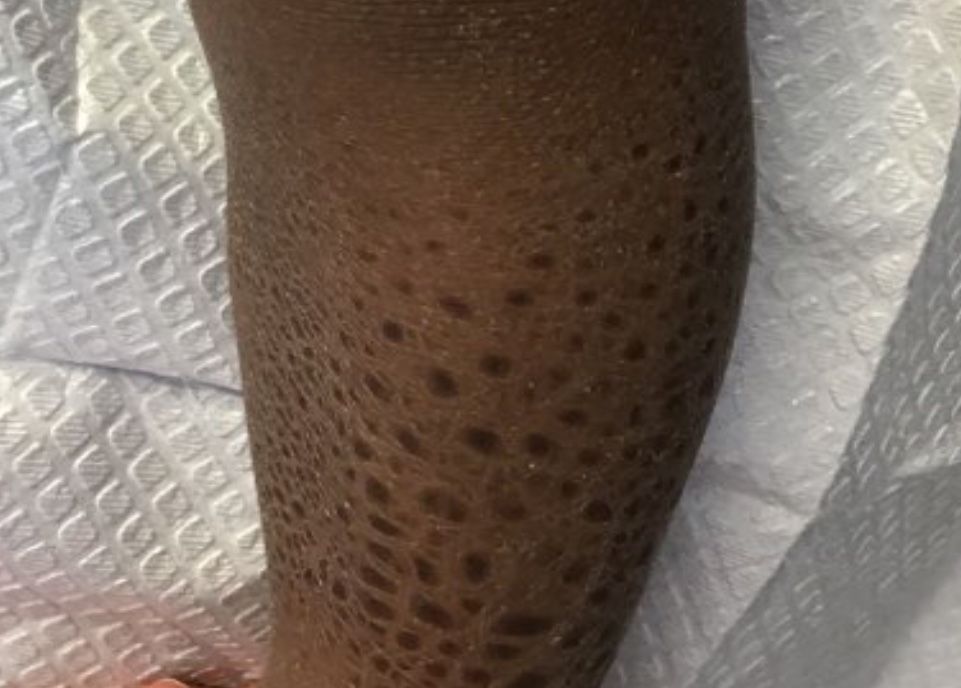
X-linked ichthyosis is an X-linked recessive trait, in which males are affected and mothers are carriers. The condition is caused by a deficiency of steroid sulfatase. This deficiency can result in low levels of estrogen during pregnancy in the mother of an affected fetus, hampering labor progression, and often requiring C-section. Children usually present before 3 months of age. Scales are large and dark. The antecubital and popliteal fossa are usually spared. The neck almost always is involved, coining the term “dirty neck disease.” Corneal opacities are present upon ophthalmologic examination. There is an increased risk of cryptorchidism and testicular cancer. Skin symptoms tend to worsen into adulthood.
Lamellar ichthyosis generally occurs at birth with a striking collodion-type membrane covering the body and underlying erythroderma, which then desquamates. Ectropion is usually present as well. Resulting scales are large and gray-brown. Lamellar ichthyosis is inherited in an autosomal recessive pattern. Mutations in transglutaminase 1 (TGM1), ALOXE3, ALOX12B, and ABCA12 genes have been implicated in this disorder.
Acquired ichthyosis can appear clinically similar to ichthyosis vulgaris. It occurs in patients with systemic diseases such as Hodgkin disease, non-Hodgkin lymphoma, mycosis fungoides, multiple myeloma, hypothyroidism, sarcoidosis, AIDS, and others.
improve hyperkeratosis. Urea-containing products can be helpful. Salicylic acid may be used but merit caution in children because of salicylate toxicity. Oral and topical retinoid can be helpful in lamellar ichthyosis.

This case and photo were submitted by Dr. Bilu Martin.
Dr. Bilu Martin is a board-certified dermatologist in private practice at Premier Dermatology, MD, in Aventura, Fla. More diagnostic cases are available at mdedge.com/edermatologynews.com. To submit a case for possible publication, send an email to dermnews@mdedge.com.
Ichthyosis vulgaris
Ichthyoses describe a group of disorders of cornification in which the epidermis differentiates abnormally, leading to generalized scaling of the skin. Ichthyosis is derived from the Greek word for fish, “ichthys.” Ichthyosis vulgaris is the most common of these conditions and often presents in early childhood during the first year of life. It is inherited in an autosomal-dominant pattern. Skin is dry and scaly over the entire body, although the antecubital and popliteal fossa may be uninvolved. The scalp may be involved as well. Atopy and keratosis pilaris may be associated. By adulthood, symptoms tend to abate.
X-linked ichthyosis is an X-linked recessive trait, in which males are affected and mothers are carriers. The condition is caused by a deficiency of steroid sulfatase. This deficiency can result in low levels of estrogen during pregnancy in the mother of an affected fetus, hampering labor progression, and often requiring C-section. Children usually present before 3 months of age. Scales are large and dark. The antecubital and popliteal fossa are usually spared. The neck almost always is involved, coining the term “dirty neck disease.” Corneal opacities are present upon ophthalmologic examination. There is an increased risk of cryptorchidism and testicular cancer. Skin symptoms tend to worsen into adulthood.
Lamellar ichthyosis generally occurs at birth with a striking collodion-type membrane covering the body and underlying erythroderma, which then desquamates. Ectropion is usually present as well. Resulting scales are large and gray-brown. Lamellar ichthyosis is inherited in an autosomal recessive pattern. Mutations in transglutaminase 1 (TGM1), ALOXE3, ALOX12B, and ABCA12 genes have been implicated in this disorder.
Acquired ichthyosis can appear clinically similar to ichthyosis vulgaris. It occurs in patients with systemic diseases such as Hodgkin disease, non-Hodgkin lymphoma, mycosis fungoides, multiple myeloma, hypothyroidism, sarcoidosis, AIDS, and others.
improve hyperkeratosis. Urea-containing products can be helpful. Salicylic acid may be used but merit caution in children because of salicylate toxicity. Oral and topical retinoid can be helpful in lamellar ichthyosis.
This case and photo were submitted by Dr. Bilu Martin.
Dr. Bilu Martin is a board-certified dermatologist in private practice at Premier Dermatology, MD, in Aventura, Fla. More diagnostic cases are available at mdedge.com/edermatologynews.com. To submit a case for possible publication, send an email to dermnews@mdedge.com.
Ichthyosis vulgaris
Ichthyoses describe a group of disorders of cornification in which the epidermis differentiates abnormally, leading to generalized scaling of the skin. Ichthyosis is derived from the Greek word for fish, “ichthys.” Ichthyosis vulgaris is the most common of these conditions and often presents in early childhood during the first year of life. It is inherited in an autosomal-dominant pattern. Skin is dry and scaly over the entire body, although the antecubital and popliteal fossa may be uninvolved. The scalp may be involved as well. Atopy and keratosis pilaris may be associated. By adulthood, symptoms tend to abate.
X-linked ichthyosis is an X-linked recessive trait, in which males are affected and mothers are carriers. The condition is caused by a deficiency of steroid sulfatase. This deficiency can result in low levels of estrogen during pregnancy in the mother of an affected fetus, hampering labor progression, and often requiring C-section. Children usually present before 3 months of age. Scales are large and dark. The antecubital and popliteal fossa are usually spared. The neck almost always is involved, coining the term “dirty neck disease.” Corneal opacities are present upon ophthalmologic examination. There is an increased risk of cryptorchidism and testicular cancer. Skin symptoms tend to worsen into adulthood.
Lamellar ichthyosis generally occurs at birth with a striking collodion-type membrane covering the body and underlying erythroderma, which then desquamates. Ectropion is usually present as well. Resulting scales are large and gray-brown. Lamellar ichthyosis is inherited in an autosomal recessive pattern. Mutations in transglutaminase 1 (TGM1), ALOXE3, ALOX12B, and ABCA12 genes have been implicated in this disorder.
Acquired ichthyosis can appear clinically similar to ichthyosis vulgaris. It occurs in patients with systemic diseases such as Hodgkin disease, non-Hodgkin lymphoma, mycosis fungoides, multiple myeloma, hypothyroidism, sarcoidosis, AIDS, and others.
improve hyperkeratosis. Urea-containing products can be helpful. Salicylic acid may be used but merit caution in children because of salicylate toxicity. Oral and topical retinoid can be helpful in lamellar ichthyosis.
This case and photo were submitted by Dr. Bilu Martin.
Dr. Bilu Martin is a board-certified dermatologist in private practice at Premier Dermatology, MD, in Aventura, Fla. More diagnostic cases are available at mdedge.com/edermatologynews.com. To submit a case for possible publication, send an email to dermnews@mdedge.com.
A 13-month-old, healthy black male presented with a 6-month history of dry, scaly skin on the body, including scalp and extremities. His neck was unaffected. His mother reports an uneventful pregnancy and natural childbirth. He had been prescribed triamcinolone in the past for eczema.
Adolescent psychiatric ED visits more than doubled in 4 years
a study found.

Visits by African American youth and Latino youth both increased by a significant amount, yet only a minority of all youth (16%) were seen by mental health professionals during their psychiatric ED visits.
“This study unmistakably reveals that adolescents are a population with urgent mental health needs,” Luther G. Kalb, PhD, of the Johns Hopkins Bloomberg School of Public Health and the Kennedy Krieger Institute in Baltimore, and his colleagues reported in Pediatrics. “Not only were their visits the most acute, but their probability of suicidal attempt and/or self-harm increased as well,” a finding that matches recent national increases in suicidal ideation.
The researchers used the 2011-2015 National Hospital Ambulatory Medical Care Survey to analyze data on psychiatric ED visits among U.S. youth aged 6-24 years. A psychiatric visit was identified based on the patient’s reason for visit and the International Classification of Diseases, ninth revision, codes for mood, behavioral, or substance use disorders; psychosis; or other psychiatric reasons. Suicide attempt or intentional self-harm were identified with reason for visit codes.
Psychiatric ED visits among all youth increased 28%, from 31 to 40 visits per 1,000 U.S. youth, in the period from 2011 to 2015, a finding “heavily driven by 2015, in which the largest increase in visits was observed,” the authors noted.
The biggest jump occurred among adolescents, whose visits increased 54%, and among black and Latino patients, whose visits rose 53% and 91%, respectively. Adolescent suicide-related and self-injury ED visits more than doubled from 2011 to 2015, from 5 to 12 visits per 1,000 U.S. youth. They were the only age group to see an increase in odds of a suicide-related visit over time (odds ratio, 1.27, P less than .01)
“Ultimately, it is unclear if the findings represent a change in identification (by providers) or reporting (by patients or family members) of mental health in the ED, a shift in the epidemiology of psychiatric disorders in the United States, or fluctuations in referral patterns or service-seeking behavior,” Dr. Kalb and his associates reported.
Study limitations included “an inability to confirm diagnostic validity” and some missing data for visit acuity and race/ethnicity, they said.
The research was funded by the National Institute of Health, and in part by the National Institute of Mental Health Intramural Research program. The authors reported no relevant financial disclosures.
SOURCE: Kalb LG et al. Pediatrics. 2019 Mar 18. doi: 10.1542/peds.2018-2192.
Even though the “fast-paced, stimulating environment” of an emergency department is not the ideal setting for children and families to receive care for mental health concerns, it remains a crucial safety net – particularly for lower-income individuals – because so many children lack access to mental health services, Dr. Chun and his associates wrote in an accompanying editorial.
“Some of the factors contributing to deficiencies in ED preparedness include a lack of staff trained in the identification and management of acute mental health problems; safe and quiet spaces within the ED; appropriate milieu for respectful, safe care; policies and procedures for ensuring best practices and consistent care; professional expertise to evaluate children’s mental health problems; and access to appropriate and timely follow-up care.”
Yet rates of youth’s psychiatric visits to the ED continue to climb because of a combination of increasing awareness, decreasing stigma for care seeking, limited mental health services, a shortage of pediatric mental health providers, insufficient specialty services, and true increases in mental health needs.
Solving this problem will require multiple coordinated approaches, but innovative options already are being explored, such as integrating child psychiatry services into EDs and “instituting next-day or other timely mental health evaluations,” they wrote. Other approaches include telepsychiatry; bringing mental health resources into schools and clinics; mental health resource sharing among communities; and mobile crisis units that visit schools, homes, primary care clinics, and low-resourced EDs.
Finally, medical training programs must change to adapt to the increasing need for pediatric mental health needs. “Embracing mental health problems as a routine component of pediatric medicine may be part of the solution to addressing the crisis,” they wrote.
Thomas H. Chun, MD, MPH, and Susan J. Duffy, MD, MPH, are at the Hasbro Children’s Hospital in Providence, R.I., and Jacqueline Grupp-Phelan, MD, MPH, is at the University of California, San Francisco, Benioff Children’s Hospital. These comments are a summary of a commentary accompanying Kalb et al. Pediatrics. 2019 Mar 18. doi: 10.1542/peds.2019-0251. The physicians used no external funding and had no financial disclosures relevant to their commentary.
Even though the “fast-paced, stimulating environment” of an emergency department is not the ideal setting for children and families to receive care for mental health concerns, it remains a crucial safety net – particularly for lower-income individuals – because so many children lack access to mental health services, Dr. Chun and his associates wrote in an accompanying editorial.
“Some of the factors contributing to deficiencies in ED preparedness include a lack of staff trained in the identification and management of acute mental health problems; safe and quiet spaces within the ED; appropriate milieu for respectful, safe care; policies and procedures for ensuring best practices and consistent care; professional expertise to evaluate children’s mental health problems; and access to appropriate and timely follow-up care.”
Yet rates of youth’s psychiatric visits to the ED continue to climb because of a combination of increasing awareness, decreasing stigma for care seeking, limited mental health services, a shortage of pediatric mental health providers, insufficient specialty services, and true increases in mental health needs.
Solving this problem will require multiple coordinated approaches, but innovative options already are being explored, such as integrating child psychiatry services into EDs and “instituting next-day or other timely mental health evaluations,” they wrote. Other approaches include telepsychiatry; bringing mental health resources into schools and clinics; mental health resource sharing among communities; and mobile crisis units that visit schools, homes, primary care clinics, and low-resourced EDs.
Finally, medical training programs must change to adapt to the increasing need for pediatric mental health needs. “Embracing mental health problems as a routine component of pediatric medicine may be part of the solution to addressing the crisis,” they wrote.
Thomas H. Chun, MD, MPH, and Susan J. Duffy, MD, MPH, are at the Hasbro Children’s Hospital in Providence, R.I., and Jacqueline Grupp-Phelan, MD, MPH, is at the University of California, San Francisco, Benioff Children’s Hospital. These comments are a summary of a commentary accompanying Kalb et al. Pediatrics. 2019 Mar 18. doi: 10.1542/peds.2019-0251. The physicians used no external funding and had no financial disclosures relevant to their commentary.
Even though the “fast-paced, stimulating environment” of an emergency department is not the ideal setting for children and families to receive care for mental health concerns, it remains a crucial safety net – particularly for lower-income individuals – because so many children lack access to mental health services, Dr. Chun and his associates wrote in an accompanying editorial.
“Some of the factors contributing to deficiencies in ED preparedness include a lack of staff trained in the identification and management of acute mental health problems; safe and quiet spaces within the ED; appropriate milieu for respectful, safe care; policies and procedures for ensuring best practices and consistent care; professional expertise to evaluate children’s mental health problems; and access to appropriate and timely follow-up care.”
Yet rates of youth’s psychiatric visits to the ED continue to climb because of a combination of increasing awareness, decreasing stigma for care seeking, limited mental health services, a shortage of pediatric mental health providers, insufficient specialty services, and true increases in mental health needs.
Solving this problem will require multiple coordinated approaches, but innovative options already are being explored, such as integrating child psychiatry services into EDs and “instituting next-day or other timely mental health evaluations,” they wrote. Other approaches include telepsychiatry; bringing mental health resources into schools and clinics; mental health resource sharing among communities; and mobile crisis units that visit schools, homes, primary care clinics, and low-resourced EDs.
Finally, medical training programs must change to adapt to the increasing need for pediatric mental health needs. “Embracing mental health problems as a routine component of pediatric medicine may be part of the solution to addressing the crisis,” they wrote.
Thomas H. Chun, MD, MPH, and Susan J. Duffy, MD, MPH, are at the Hasbro Children’s Hospital in Providence, R.I., and Jacqueline Grupp-Phelan, MD, MPH, is at the University of California, San Francisco, Benioff Children’s Hospital. These comments are a summary of a commentary accompanying Kalb et al. Pediatrics. 2019 Mar 18. doi: 10.1542/peds.2019-0251. The physicians used no external funding and had no financial disclosures relevant to their commentary.
a study found.
Visits by African American youth and Latino youth both increased by a significant amount, yet only a minority of all youth (16%) were seen by mental health professionals during their psychiatric ED visits.
“This study unmistakably reveals that adolescents are a population with urgent mental health needs,” Luther G. Kalb, PhD, of the Johns Hopkins Bloomberg School of Public Health and the Kennedy Krieger Institute in Baltimore, and his colleagues reported in Pediatrics. “Not only were their visits the most acute, but their probability of suicidal attempt and/or self-harm increased as well,” a finding that matches recent national increases in suicidal ideation.
The researchers used the 2011-2015 National Hospital Ambulatory Medical Care Survey to analyze data on psychiatric ED visits among U.S. youth aged 6-24 years. A psychiatric visit was identified based on the patient’s reason for visit and the International Classification of Diseases, ninth revision, codes for mood, behavioral, or substance use disorders; psychosis; or other psychiatric reasons. Suicide attempt or intentional self-harm were identified with reason for visit codes.
Psychiatric ED visits among all youth increased 28%, from 31 to 40 visits per 1,000 U.S. youth, in the period from 2011 to 2015, a finding “heavily driven by 2015, in which the largest increase in visits was observed,” the authors noted.
The biggest jump occurred among adolescents, whose visits increased 54%, and among black and Latino patients, whose visits rose 53% and 91%, respectively. Adolescent suicide-related and self-injury ED visits more than doubled from 2011 to 2015, from 5 to 12 visits per 1,000 U.S. youth. They were the only age group to see an increase in odds of a suicide-related visit over time (odds ratio, 1.27, P less than .01)
“Ultimately, it is unclear if the findings represent a change in identification (by providers) or reporting (by patients or family members) of mental health in the ED, a shift in the epidemiology of psychiatric disorders in the United States, or fluctuations in referral patterns or service-seeking behavior,” Dr. Kalb and his associates reported.
Study limitations included “an inability to confirm diagnostic validity” and some missing data for visit acuity and race/ethnicity, they said.
The research was funded by the National Institute of Health, and in part by the National Institute of Mental Health Intramural Research program. The authors reported no relevant financial disclosures.
SOURCE: Kalb LG et al. Pediatrics. 2019 Mar 18. doi: 10.1542/peds.2018-2192.
a study found.
Visits by African American youth and Latino youth both increased by a significant amount, yet only a minority of all youth (16%) were seen by mental health professionals during their psychiatric ED visits.
“This study unmistakably reveals that adolescents are a population with urgent mental health needs,” Luther G. Kalb, PhD, of the Johns Hopkins Bloomberg School of Public Health and the Kennedy Krieger Institute in Baltimore, and his colleagues reported in Pediatrics. “Not only were their visits the most acute, but their probability of suicidal attempt and/or self-harm increased as well,” a finding that matches recent national increases in suicidal ideation.
The researchers used the 2011-2015 National Hospital Ambulatory Medical Care Survey to analyze data on psychiatric ED visits among U.S. youth aged 6-24 years. A psychiatric visit was identified based on the patient’s reason for visit and the International Classification of Diseases, ninth revision, codes for mood, behavioral, or substance use disorders; psychosis; or other psychiatric reasons. Suicide attempt or intentional self-harm were identified with reason for visit codes.
Psychiatric ED visits among all youth increased 28%, from 31 to 40 visits per 1,000 U.S. youth, in the period from 2011 to 2015, a finding “heavily driven by 2015, in which the largest increase in visits was observed,” the authors noted.
The biggest jump occurred among adolescents, whose visits increased 54%, and among black and Latino patients, whose visits rose 53% and 91%, respectively. Adolescent suicide-related and self-injury ED visits more than doubled from 2011 to 2015, from 5 to 12 visits per 1,000 U.S. youth. They were the only age group to see an increase in odds of a suicide-related visit over time (odds ratio, 1.27, P less than .01)
“Ultimately, it is unclear if the findings represent a change in identification (by providers) or reporting (by patients or family members) of mental health in the ED, a shift in the epidemiology of psychiatric disorders in the United States, or fluctuations in referral patterns or service-seeking behavior,” Dr. Kalb and his associates reported.
Study limitations included “an inability to confirm diagnostic validity” and some missing data for visit acuity and race/ethnicity, they said.
The research was funded by the National Institute of Health, and in part by the National Institute of Mental Health Intramural Research program. The authors reported no relevant financial disclosures.
SOURCE: Kalb LG et al. Pediatrics. 2019 Mar 18. doi: 10.1542/peds.2018-2192.
FROM PEDIATRICS
Policy statement on drowning highlights high-risk groups
Wider availability of low-cost swim lessons could reduce drowning risk in children over 1 year old, but such lessons are only one component of reducing drowning risk and cannot “drown-proof” children, who should still be fully supervised around water, according to a new policy statement from the American Academy of Pediatrics.
These strategies include barriers, supervision, swim lessons, use of life jackets, and training in cardiopulmonary resuscitation (CPR). Parents should be advised to restrict unsupervised access to pools and other bodies of water, as well as understand the risks of substance use around water, Sarah A. Denny, MD, and the members of the AAP’s Council on Injury, Violence, and Poison Prevention, wrote.

The committee made five major recommendations for pediatricians:
• Recognize high-risk groups and leading causes of drowning in their area and customize advice to parents about drowning risk accordingly.
• Pay special attention to needs of children with medical conditions that increase drowning risk, such as seizure disorders, autism spectrum disorder and cardiac arrhythmias, and advise uninterrupted supervision for these children even in baths.
• Inform parents and children of the increased risk of drowning with substance use, especially for teen boys.
• Discuss water skill levels with parents and children to avoid either overestimating a youth’s competency.
• Encourage CPR training in high schools.
Accidental drowning rates have declined from 2.7 per 100,000 children in 1985 to 1.1 per 100,000 children in 2017, yet drowning remains the top cause of injury death among children ages 1-4 years, reported Dr. Denny, of Nationwide Hospital in Columbus, Ohio, and her colleagues (Pediatrics. March 15, 2019). For those ages 5-19 years old, drowning is the third leading cause of accidental death.
Nearly 1,000 children and adolescents under 20 years old die from drowning each year. An estimated 8,700 others went to the emergency department for drowning-related incidents in 2017. Of these children, 25% required admission or additional care.
“Most victims of nonfatal drowning recover fully with no neurologic deficits, but severe long-term neurologic deficits are seen with extended submersion times (over 6 minutes), prolonged resuscitation efforts, and lack of early bystander-initiated cardiopulmonary resuscitation (CPR),” the committee wrote.
Children at highest drowning risk include toddlers and teen boys of all races/ethnicities as well as black and Native American/Alaska Native children. Black male teens had the highest overall rates, 4 drowning deaths per 100,000 children, for 2013-2017.
Among those aged 4 years and under, drowning risk was primarily related to the lack of barriers to prevent unanticipated, unsupervised access to water, including swimming pools, hot tubs and spas, bathtubs, natural bodies of water, and standing water in homes (buckets, tubs, and toilets), the committee wrote.
Teens are most likely to die in natural water settings, such as ponds, rivers, lakes and sea water. “The increased risk for fatal drowning in adolescents can be attributed to multiple factors, including overestimation of skills, underestimation of dangerous situations, engaging in high-risk and impulsive behaviors, and substance use,” particularly alcohol consumption, according to the statement.
Children with seizure disorders have up to a 10-times greater risk of drowning, and therefore require constant supervision around water. Whenever possible, children with seizure disorders should shower instead of bathe and swim only at locations where there is a lifeguard.
Similarly, supervision is essential for children with autism spectrum disorder, especially those under age 15 and with greater intellectual disability. Wandering is the most commonly reported behavior leading to drowning, accounting for nearly 74% of fatal drowning incidents among children with autism.
The committee also recommended four community advocacy activities:
• Actively work with legislators to develop policy aimed at reducing the risk of drowning, such as pool/water fencing requirements and laws related to boating, life jacket use, EMS systems and overall water safety.
• Use “non-fatal drowning” — not “near drowning” — to describe drowning incidents that do not result in death and inform parents that “dry drowning” and “secondary drowning” are not medically accurate terms.
• Work with community groups to ensure life jackets are accessible for all people at pools and boating sites.
• Encourage, identify and support “high-quality, culturally sensitive, and affordable” swim lesson programs, particularly for children in low-income, disability or other high-risk groups.“Socioeconomic and cultural disparities in water safety knowledge, swimming skills and drowning risk can be addressed through “community-based programs targeting high-risk groups by providing free or low-cost swim lessons, developing special programs that address cultural concerns as well as swim lessons for youth with developmental disabilities, and changing pool policies to meet the needs of specific communities,” the committee wrote.
The statement did not use external funding, and the authors reported no financial conflicts.
SOURCE: Denny SA et al. Pediatrics.
Wider availability of low-cost swim lessons could reduce drowning risk in children over 1 year old, but such lessons are only one component of reducing drowning risk and cannot “drown-proof” children, who should still be fully supervised around water, according to a new policy statement from the American Academy of Pediatrics.
These strategies include barriers, supervision, swim lessons, use of life jackets, and training in cardiopulmonary resuscitation (CPR). Parents should be advised to restrict unsupervised access to pools and other bodies of water, as well as understand the risks of substance use around water, Sarah A. Denny, MD, and the members of the AAP’s Council on Injury, Violence, and Poison Prevention, wrote.
The committee made five major recommendations for pediatricians:
• Recognize high-risk groups and leading causes of drowning in their area and customize advice to parents about drowning risk accordingly.
• Pay special attention to needs of children with medical conditions that increase drowning risk, such as seizure disorders, autism spectrum disorder and cardiac arrhythmias, and advise uninterrupted supervision for these children even in baths.
• Inform parents and children of the increased risk of drowning with substance use, especially for teen boys.
• Discuss water skill levels with parents and children to avoid either overestimating a youth’s competency.
• Encourage CPR training in high schools.
Accidental drowning rates have declined from 2.7 per 100,000 children in 1985 to 1.1 per 100,000 children in 2017, yet drowning remains the top cause of injury death among children ages 1-4 years, reported Dr. Denny, of Nationwide Hospital in Columbus, Ohio, and her colleagues (Pediatrics. March 15, 2019). For those ages 5-19 years old, drowning is the third leading cause of accidental death.
Nearly 1,000 children and adolescents under 20 years old die from drowning each year. An estimated 8,700 others went to the emergency department for drowning-related incidents in 2017. Of these children, 25% required admission or additional care.
“Most victims of nonfatal drowning recover fully with no neurologic deficits, but severe long-term neurologic deficits are seen with extended submersion times (over 6 minutes), prolonged resuscitation efforts, and lack of early bystander-initiated cardiopulmonary resuscitation (CPR),” the committee wrote.
Children at highest drowning risk include toddlers and teen boys of all races/ethnicities as well as black and Native American/Alaska Native children. Black male teens had the highest overall rates, 4 drowning deaths per 100,000 children, for 2013-2017.
Among those aged 4 years and under, drowning risk was primarily related to the lack of barriers to prevent unanticipated, unsupervised access to water, including swimming pools, hot tubs and spas, bathtubs, natural bodies of water, and standing water in homes (buckets, tubs, and toilets), the committee wrote.
Teens are most likely to die in natural water settings, such as ponds, rivers, lakes and sea water. “The increased risk for fatal drowning in adolescents can be attributed to multiple factors, including overestimation of skills, underestimation of dangerous situations, engaging in high-risk and impulsive behaviors, and substance use,” particularly alcohol consumption, according to the statement.
Children with seizure disorders have up to a 10-times greater risk of drowning, and therefore require constant supervision around water. Whenever possible, children with seizure disorders should shower instead of bathe and swim only at locations where there is a lifeguard.
Similarly, supervision is essential for children with autism spectrum disorder, especially those under age 15 and with greater intellectual disability. Wandering is the most commonly reported behavior leading to drowning, accounting for nearly 74% of fatal drowning incidents among children with autism.
The committee also recommended four community advocacy activities:
• Actively work with legislators to develop policy aimed at reducing the risk of drowning, such as pool/water fencing requirements and laws related to boating, life jacket use, EMS systems and overall water safety.
• Use “non-fatal drowning” — not “near drowning” — to describe drowning incidents that do not result in death and inform parents that “dry drowning” and “secondary drowning” are not medically accurate terms.
• Work with community groups to ensure life jackets are accessible for all people at pools and boating sites.
• Encourage, identify and support “high-quality, culturally sensitive, and affordable” swim lesson programs, particularly for children in low-income, disability or other high-risk groups.“Socioeconomic and cultural disparities in water safety knowledge, swimming skills and drowning risk can be addressed through “community-based programs targeting high-risk groups by providing free or low-cost swim lessons, developing special programs that address cultural concerns as well as swim lessons for youth with developmental disabilities, and changing pool policies to meet the needs of specific communities,” the committee wrote.
The statement did not use external funding, and the authors reported no financial conflicts.
SOURCE: Denny SA et al. Pediatrics.
Wider availability of low-cost swim lessons could reduce drowning risk in children over 1 year old, but such lessons are only one component of reducing drowning risk and cannot “drown-proof” children, who should still be fully supervised around water, according to a new policy statement from the American Academy of Pediatrics.
These strategies include barriers, supervision, swim lessons, use of life jackets, and training in cardiopulmonary resuscitation (CPR). Parents should be advised to restrict unsupervised access to pools and other bodies of water, as well as understand the risks of substance use around water, Sarah A. Denny, MD, and the members of the AAP’s Council on Injury, Violence, and Poison Prevention, wrote.
The committee made five major recommendations for pediatricians:
• Recognize high-risk groups and leading causes of drowning in their area and customize advice to parents about drowning risk accordingly.
• Pay special attention to needs of children with medical conditions that increase drowning risk, such as seizure disorders, autism spectrum disorder and cardiac arrhythmias, and advise uninterrupted supervision for these children even in baths.
• Inform parents and children of the increased risk of drowning with substance use, especially for teen boys.
• Discuss water skill levels with parents and children to avoid either overestimating a youth’s competency.
• Encourage CPR training in high schools.
Accidental drowning rates have declined from 2.7 per 100,000 children in 1985 to 1.1 per 100,000 children in 2017, yet drowning remains the top cause of injury death among children ages 1-4 years, reported Dr. Denny, of Nationwide Hospital in Columbus, Ohio, and her colleagues (Pediatrics. March 15, 2019). For those ages 5-19 years old, drowning is the third leading cause of accidental death.
Nearly 1,000 children and adolescents under 20 years old die from drowning each year. An estimated 8,700 others went to the emergency department for drowning-related incidents in 2017. Of these children, 25% required admission or additional care.
“Most victims of nonfatal drowning recover fully with no neurologic deficits, but severe long-term neurologic deficits are seen with extended submersion times (over 6 minutes), prolonged resuscitation efforts, and lack of early bystander-initiated cardiopulmonary resuscitation (CPR),” the committee wrote.
Children at highest drowning risk include toddlers and teen boys of all races/ethnicities as well as black and Native American/Alaska Native children. Black male teens had the highest overall rates, 4 drowning deaths per 100,000 children, for 2013-2017.
Among those aged 4 years and under, drowning risk was primarily related to the lack of barriers to prevent unanticipated, unsupervised access to water, including swimming pools, hot tubs and spas, bathtubs, natural bodies of water, and standing water in homes (buckets, tubs, and toilets), the committee wrote.
Teens are most likely to die in natural water settings, such as ponds, rivers, lakes and sea water. “The increased risk for fatal drowning in adolescents can be attributed to multiple factors, including overestimation of skills, underestimation of dangerous situations, engaging in high-risk and impulsive behaviors, and substance use,” particularly alcohol consumption, according to the statement.
Children with seizure disorders have up to a 10-times greater risk of drowning, and therefore require constant supervision around water. Whenever possible, children with seizure disorders should shower instead of bathe and swim only at locations where there is a lifeguard.
Similarly, supervision is essential for children with autism spectrum disorder, especially those under age 15 and with greater intellectual disability. Wandering is the most commonly reported behavior leading to drowning, accounting for nearly 74% of fatal drowning incidents among children with autism.
The committee also recommended four community advocacy activities:
• Actively work with legislators to develop policy aimed at reducing the risk of drowning, such as pool/water fencing requirements and laws related to boating, life jacket use, EMS systems and overall water safety.
• Use “non-fatal drowning” — not “near drowning” — to describe drowning incidents that do not result in death and inform parents that “dry drowning” and “secondary drowning” are not medically accurate terms.
• Work with community groups to ensure life jackets are accessible for all people at pools and boating sites.
• Encourage, identify and support “high-quality, culturally sensitive, and affordable” swim lesson programs, particularly for children in low-income, disability or other high-risk groups.“Socioeconomic and cultural disparities in water safety knowledge, swimming skills and drowning risk can be addressed through “community-based programs targeting high-risk groups by providing free or low-cost swim lessons, developing special programs that address cultural concerns as well as swim lessons for youth with developmental disabilities, and changing pool policies to meet the needs of specific communities,” the committee wrote.
The statement did not use external funding, and the authors reported no financial conflicts.
SOURCE: Denny SA et al. Pediatrics.
FROM PEDIATRICS
What is your diagnosis?
A skin biopsy of one of the lesions on the right toe showed dermal edema with an associated lymphohistiocytic infiltrate. There are scattered areas of perieccrine involvement and areas of vasculitis. Laboratory work up showed a normal complete blood count, a negative antinuclear antibodies (ANA) titer, a negative double-stranded DNA, normal levels of inflammatory markers, and negative cryoglobulins and cold agglutinins. The patient was diagnosed with pernio. The lesions improved within several weeks. She now wears thicker socks when she is ice skating.
Children, women, and the elderly are at a higher risk.1 This condition is frequently described in Northwestern Europe and the United Kingdom, especially in those living in houses without central heating.2
Clinically, the lesions appear a few hours or days after cold exposure on the toes, fingers, and in some unusual cases on the nose and the ears. The lesions present as erythematous to violaceous macules, papules, or nodules that in severe cases may blister and ulcerate. The lesions may be asymptomatic, pruritic, or tender. In children, pernio can be associated with the presence of cryoglobulins, cold agglutinins, anorexia nervosa, and genetic interferonopathy; it may precede the diagnosis of chronic myelomonocytic leukemia and may occur as a presenting sign of a blast crisis in acute lymphoblastic leukemia.3,4 The skin lesions usually resolve within days to a few weeks. Histopathologic analysis shows dermal edema with associated superficial and deep lymphohistiocytic infiltrate and perieccrine involvement.
The differential diagnosis of pernio includes other cold-induced syndromes such as Raynaud’s syndrome, cold panniculitis, cold urticaria, livedo reticularis, acrocyanosis, and chilblain lupus. In chilblain lupus (a form of chronic cutaneous lupus), the lesions may be very similar to pernio but the histopathology is consistent with changes of discoid lupus. Lesions of idiopathic palmoplantar hidradenitis present as erythematous tender nodules on the palms and the soles.5 The lesions can be triggered by vigorous physical activity, exposure to moisture, and excessive sweating. White, blue, and red discoloration of the fingers is seen in Raynaud’s phenomenon rather than the fixed erythematous to violaceous macules, papules, or nodules seen in pernio. Patients with erythromelalgia present with red painful palms and soles triggered by heat and, in contrast to pernio, relieved by cooling. Sweet syndrome, a febrile neutrophilic dermatoses, is characterized by tender erythematous papules and plaques with associated systemic symptoms. These patients may have an associated internal malignancy or infection, or the disorder may be triggered by medications or pregnancy.
Our patient had no systemic symptoms, and the pathology didn’t show any neutrophils. When the diagnosis is in doubt, a skin biopsy may help elucidate the diagnosis.
Once the diagnosis of pernio is made, it is recommended to order a complete blood count to rule out blood malignancies and cryoproteins.
Treatment of this condition consists of rewarming the extremity. If rewarming does not improve the patient’s symptoms, systemic treatment with nifedipine may be warranted.
Dr. Matiz is a pediatric dermatologist at Southern California Permanente Medical Group, San Diego. Dr. Matiz said she had no relevant financial disclosures. Email her at pdnews@mdedge.com.
References
1. Pediatrics. 2005 Sep;116(3):e472-5.
2. Mayo Clin Proc. 2014 Feb;89(2):207-15.
3. Pediatr Dermatol. 2018 Jan;35(1):e74-5.
4. Pediatr Dermatol. 2000 Mar-Apr;17(2):97-9.
5. Eur J Pediatr. 2001 Mar;160(3):189-91.
A skin biopsy of one of the lesions on the right toe showed dermal edema with an associated lymphohistiocytic infiltrate. There are scattered areas of perieccrine involvement and areas of vasculitis. Laboratory work up showed a normal complete blood count, a negative antinuclear antibodies (ANA) titer, a negative double-stranded DNA, normal levels of inflammatory markers, and negative cryoglobulins and cold agglutinins. The patient was diagnosed with pernio. The lesions improved within several weeks. She now wears thicker socks when she is ice skating.
Children, women, and the elderly are at a higher risk.1 This condition is frequently described in Northwestern Europe and the United Kingdom, especially in those living in houses without central heating.2
Clinically, the lesions appear a few hours or days after cold exposure on the toes, fingers, and in some unusual cases on the nose and the ears. The lesions present as erythematous to violaceous macules, papules, or nodules that in severe cases may blister and ulcerate. The lesions may be asymptomatic, pruritic, or tender. In children, pernio can be associated with the presence of cryoglobulins, cold agglutinins, anorexia nervosa, and genetic interferonopathy; it may precede the diagnosis of chronic myelomonocytic leukemia and may occur as a presenting sign of a blast crisis in acute lymphoblastic leukemia.3,4 The skin lesions usually resolve within days to a few weeks. Histopathologic analysis shows dermal edema with associated superficial and deep lymphohistiocytic infiltrate and perieccrine involvement.
The differential diagnosis of pernio includes other cold-induced syndromes such as Raynaud’s syndrome, cold panniculitis, cold urticaria, livedo reticularis, acrocyanosis, and chilblain lupus. In chilblain lupus (a form of chronic cutaneous lupus), the lesions may be very similar to pernio but the histopathology is consistent with changes of discoid lupus. Lesions of idiopathic palmoplantar hidradenitis present as erythematous tender nodules on the palms and the soles.5 The lesions can be triggered by vigorous physical activity, exposure to moisture, and excessive sweating. White, blue, and red discoloration of the fingers is seen in Raynaud’s phenomenon rather than the fixed erythematous to violaceous macules, papules, or nodules seen in pernio. Patients with erythromelalgia present with red painful palms and soles triggered by heat and, in contrast to pernio, relieved by cooling. Sweet syndrome, a febrile neutrophilic dermatoses, is characterized by tender erythematous papules and plaques with associated systemic symptoms. These patients may have an associated internal malignancy or infection, or the disorder may be triggered by medications or pregnancy.
Our patient had no systemic symptoms, and the pathology didn’t show any neutrophils. When the diagnosis is in doubt, a skin biopsy may help elucidate the diagnosis.
Once the diagnosis of pernio is made, it is recommended to order a complete blood count to rule out blood malignancies and cryoproteins.
Treatment of this condition consists of rewarming the extremity. If rewarming does not improve the patient’s symptoms, systemic treatment with nifedipine may be warranted.
Dr. Matiz is a pediatric dermatologist at Southern California Permanente Medical Group, San Diego. Dr. Matiz said she had no relevant financial disclosures. Email her at pdnews@mdedge.com.
References
1. Pediatrics. 2005 Sep;116(3):e472-5.
2. Mayo Clin Proc. 2014 Feb;89(2):207-15.
3. Pediatr Dermatol. 2018 Jan;35(1):e74-5.
4. Pediatr Dermatol. 2000 Mar-Apr;17(2):97-9.
5. Eur J Pediatr. 2001 Mar;160(3):189-91.
A skin biopsy of one of the lesions on the right toe showed dermal edema with an associated lymphohistiocytic infiltrate. There are scattered areas of perieccrine involvement and areas of vasculitis. Laboratory work up showed a normal complete blood count, a negative antinuclear antibodies (ANA) titer, a negative double-stranded DNA, normal levels of inflammatory markers, and negative cryoglobulins and cold agglutinins. The patient was diagnosed with pernio. The lesions improved within several weeks. She now wears thicker socks when she is ice skating.
Children, women, and the elderly are at a higher risk.1 This condition is frequently described in Northwestern Europe and the United Kingdom, especially in those living in houses without central heating.2
Clinically, the lesions appear a few hours or days after cold exposure on the toes, fingers, and in some unusual cases on the nose and the ears. The lesions present as erythematous to violaceous macules, papules, or nodules that in severe cases may blister and ulcerate. The lesions may be asymptomatic, pruritic, or tender. In children, pernio can be associated with the presence of cryoglobulins, cold agglutinins, anorexia nervosa, and genetic interferonopathy; it may precede the diagnosis of chronic myelomonocytic leukemia and may occur as a presenting sign of a blast crisis in acute lymphoblastic leukemia.3,4 The skin lesions usually resolve within days to a few weeks. Histopathologic analysis shows dermal edema with associated superficial and deep lymphohistiocytic infiltrate and perieccrine involvement.
The differential diagnosis of pernio includes other cold-induced syndromes such as Raynaud’s syndrome, cold panniculitis, cold urticaria, livedo reticularis, acrocyanosis, and chilblain lupus. In chilblain lupus (a form of chronic cutaneous lupus), the lesions may be very similar to pernio but the histopathology is consistent with changes of discoid lupus. Lesions of idiopathic palmoplantar hidradenitis present as erythematous tender nodules on the palms and the soles.5 The lesions can be triggered by vigorous physical activity, exposure to moisture, and excessive sweating. White, blue, and red discoloration of the fingers is seen in Raynaud’s phenomenon rather than the fixed erythematous to violaceous macules, papules, or nodules seen in pernio. Patients with erythromelalgia present with red painful palms and soles triggered by heat and, in contrast to pernio, relieved by cooling. Sweet syndrome, a febrile neutrophilic dermatoses, is characterized by tender erythematous papules and plaques with associated systemic symptoms. These patients may have an associated internal malignancy or infection, or the disorder may be triggered by medications or pregnancy.
Our patient had no systemic symptoms, and the pathology didn’t show any neutrophils. When the diagnosis is in doubt, a skin biopsy may help elucidate the diagnosis.
Once the diagnosis of pernio is made, it is recommended to order a complete blood count to rule out blood malignancies and cryoproteins.
Treatment of this condition consists of rewarming the extremity. If rewarming does not improve the patient’s symptoms, systemic treatment with nifedipine may be warranted.
Dr. Matiz is a pediatric dermatologist at Southern California Permanente Medical Group, San Diego. Dr. Matiz said she had no relevant financial disclosures. Email her at pdnews@mdedge.com.
References
1. Pediatrics. 2005 Sep;116(3):e472-5.
2. Mayo Clin Proc. 2014 Feb;89(2):207-15.
3. Pediatr Dermatol. 2018 Jan;35(1):e74-5.
4. Pediatr Dermatol. 2000 Mar-Apr;17(2):97-9.
5. Eur J Pediatr. 2001 Mar;160(3):189-91.
An 8-year-old girl comes to our pediatric dermatology clinic in the company of her mother for evaluation of painless purple spots on her toes. The lesions have been present for about 2 weeks. She has not been treated with any medications or creams. She denies any fevers, weight loss, mouth ulcers, sun sensitivity, joint pain, or any other symptoms. The patient has been a very healthy girl with occasional colds and no recent illnesses. The girl has never been admitted to the hospital. All her vaccinations are up to date. She takes no chronic medications. She lives in San Diego with her parents and two siblings. The girl recently started practicing ice-skating several times a week. There is no family history of any chronic medical conditions. She has no pets.
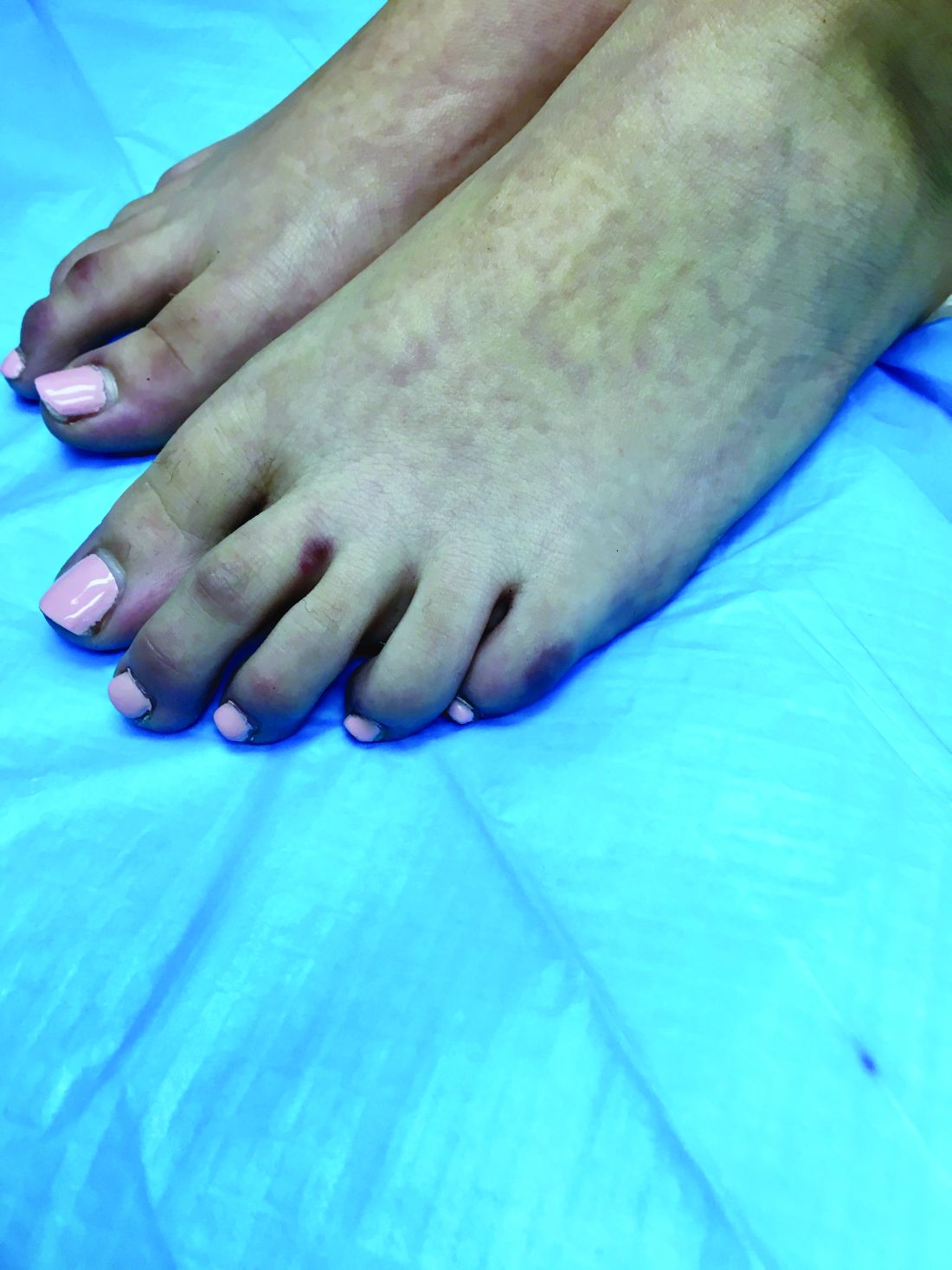
Immunomodulators for pediatric skin diseases
WASHINGTON – At the annual meeting of the American Academy of Dermatology, colleagues A. Yasmine Kirkorian, MD, a pediatric dermatologist at George Washington University, Washington, and interim chief of pediatric dermatology at Children’s National Health System, and Adam Friedman, MD, professor and interim chair of dermatology at the university, sat down with Dermatology News and discussed their presentations at a session on the use of immunomodulators for inflammatory and neoplastic skin diseases.
In this video, , with her clinical pearls and practical considerations for treating atopic dermatitis, psoriasis, and hidradenitis suppurativa in pediatric patients, covering both on- and off-label treatments.
“Children sometimes require systemic treatment and we shouldn’t hold it back from them because of their age; if they’re severely ill ... they need to be treated,” she said, summing up one of her main points.
During the interview immediately after the AAD meeting, she mentioned dupilumab, which was approved by the Food and Drug Administration for treatment of moderate to severe AD in patients aged 12-17 years.
Dr. Friedman and Dr. Kirkorian reported having no financial disclosures.
WASHINGTON – At the annual meeting of the American Academy of Dermatology, colleagues A. Yasmine Kirkorian, MD, a pediatric dermatologist at George Washington University, Washington, and interim chief of pediatric dermatology at Children’s National Health System, and Adam Friedman, MD, professor and interim chair of dermatology at the university, sat down with Dermatology News and discussed their presentations at a session on the use of immunomodulators for inflammatory and neoplastic skin diseases.
In this video, , with her clinical pearls and practical considerations for treating atopic dermatitis, psoriasis, and hidradenitis suppurativa in pediatric patients, covering both on- and off-label treatments.
“Children sometimes require systemic treatment and we shouldn’t hold it back from them because of their age; if they’re severely ill ... they need to be treated,” she said, summing up one of her main points.
During the interview immediately after the AAD meeting, she mentioned dupilumab, which was approved by the Food and Drug Administration for treatment of moderate to severe AD in patients aged 12-17 years.
Dr. Friedman and Dr. Kirkorian reported having no financial disclosures.
WASHINGTON – At the annual meeting of the American Academy of Dermatology, colleagues A. Yasmine Kirkorian, MD, a pediatric dermatologist at George Washington University, Washington, and interim chief of pediatric dermatology at Children’s National Health System, and Adam Friedman, MD, professor and interim chair of dermatology at the university, sat down with Dermatology News and discussed their presentations at a session on the use of immunomodulators for inflammatory and neoplastic skin diseases.
In this video, , with her clinical pearls and practical considerations for treating atopic dermatitis, psoriasis, and hidradenitis suppurativa in pediatric patients, covering both on- and off-label treatments.
“Children sometimes require systemic treatment and we shouldn’t hold it back from them because of their age; if they’re severely ill ... they need to be treated,” she said, summing up one of her main points.
During the interview immediately after the AAD meeting, she mentioned dupilumab, which was approved by the Food and Drug Administration for treatment of moderate to severe AD in patients aged 12-17 years.
Dr. Friedman and Dr. Kirkorian reported having no financial disclosures.

Genomic sequencing sheds light on development of pediatric cancer
Genome sequencing technologies are providing a valuable new window into the development and progression of pediatric cancers, according to the authors of a review.
In contrast to adult cancers, which are frequently driven by oncogenic mutations, many pediatric cancers have a low burden of somatic mutations, wrote E. Alejandro Sweet-Cordero, MD, from the University of California, San Francisco, and Jaclyn A. Biegel, MD, from the University of Southern California in Science. Instead, large-scale sequencing studies have found that childhood cancers have a much higher likelihood of being caused by germline mutations in genes that predispose development of cancer.
“Particularly surprising was the observation that even high-risk, highly aggressive cancers in many cases had no identifiable driver gene or pathway,” the authors wrote.
Some pediatric cancers do have identified driver genes, but even these are often different to those seen in adult cancers. The authors gave the example of one study of 1,699 patients and six types of cancer: This study identified 142 likely oncogenes, but only 45% of these matched those seen in the adult cancers.
Many pediatric cancers also have unique genetic features, such as the age-dependent gene fusion events, in which two genes join to form an oncogenic hybrid, and focal areas of gene deletion, which are often seen in pediatric acute myeloid leukemia but less so in adult forms of this cancer.
“In some instances, the fusion events involve genes that are known to be cancer drivers; this raises the intriguing possibility that some pediatric cancers are driven by ‘private’ oncogenic fusions,” the authors wrote, pointing out that this has daunting implications for the development of precision medicine. However they also noted that the presence of common gene fusion events could hold significance for choice of therapies; for example, central nervous system gliomas with the common BRAF V600E mutation may respond to specific BRAF inhibitors.
The authors drew particular attention to the role that genomic analysis could play in studying cancer during treatment and relapse, but they said few studies have explored this in pediatric patients.
“Such studies are critical given what we have learned from adult cancers, which show a capacity to evolve rapidly and acquire new driver mutations,” they wrote. One study found that only one-third of tumors with a potentially targetable genetic mutation had retained that target when analyzed at a later time.
On the issue of targeted therapy, the authors noted that no prospective study has yet looked at the use of sequencing approaches to define new therapies for pediatric cancer. However, they did refer to the Pediatric MATCH clinical trial, which is currently evaluating targeted therapies for relapsed solid tumors in children.
They also identified a need for research on predictors of treatment response in pediatric cancer.
“As the genetic variants that are associated with drug response are, by nature and design, variants present in the normal population, they are typically not included in DNA sequencing panels and are filtered out in WES [whole-exome sequencing] or WGS [whole-genome sequencing] bioinformatics pipelines,” they wrote.
They addressed the question of when to do germline testing in pediatric cancer, saying that, for most pediatric cancer patients, germline testing was indicated by the presence of a pathogenic genetic alternative affecting a gene known to be associated with a predisposition for germline cancer.
The authors suggested that data sharing was important to advancing genomic analysis in pediatric cancers because most of the studies so far had been relatively small. However, they highlighted emerging resources for large-scale analysis of pediatric cancer data, such as public portals for investigating discovery genomic data sets and data repositories of clinical-grade sequencing data.
The review was funded by the National Cancer Institute. No conflicts of interest were declared.
SOURCE: Sweet-Cordero A et al. Science 2019;363:1170-5.
Genome sequencing technologies are providing a valuable new window into the development and progression of pediatric cancers, according to the authors of a review.
In contrast to adult cancers, which are frequently driven by oncogenic mutations, many pediatric cancers have a low burden of somatic mutations, wrote E. Alejandro Sweet-Cordero, MD, from the University of California, San Francisco, and Jaclyn A. Biegel, MD, from the University of Southern California in Science. Instead, large-scale sequencing studies have found that childhood cancers have a much higher likelihood of being caused by germline mutations in genes that predispose development of cancer.
“Particularly surprising was the observation that even high-risk, highly aggressive cancers in many cases had no identifiable driver gene or pathway,” the authors wrote.
Some pediatric cancers do have identified driver genes, but even these are often different to those seen in adult cancers. The authors gave the example of one study of 1,699 patients and six types of cancer: This study identified 142 likely oncogenes, but only 45% of these matched those seen in the adult cancers.
Many pediatric cancers also have unique genetic features, such as the age-dependent gene fusion events, in which two genes join to form an oncogenic hybrid, and focal areas of gene deletion, which are often seen in pediatric acute myeloid leukemia but less so in adult forms of this cancer.
“In some instances, the fusion events involve genes that are known to be cancer drivers; this raises the intriguing possibility that some pediatric cancers are driven by ‘private’ oncogenic fusions,” the authors wrote, pointing out that this has daunting implications for the development of precision medicine. However they also noted that the presence of common gene fusion events could hold significance for choice of therapies; for example, central nervous system gliomas with the common BRAF V600E mutation may respond to specific BRAF inhibitors.
The authors drew particular attention to the role that genomic analysis could play in studying cancer during treatment and relapse, but they said few studies have explored this in pediatric patients.
“Such studies are critical given what we have learned from adult cancers, which show a capacity to evolve rapidly and acquire new driver mutations,” they wrote. One study found that only one-third of tumors with a potentially targetable genetic mutation had retained that target when analyzed at a later time.
On the issue of targeted therapy, the authors noted that no prospective study has yet looked at the use of sequencing approaches to define new therapies for pediatric cancer. However, they did refer to the Pediatric MATCH clinical trial, which is currently evaluating targeted therapies for relapsed solid tumors in children.
They also identified a need for research on predictors of treatment response in pediatric cancer.
“As the genetic variants that are associated with drug response are, by nature and design, variants present in the normal population, they are typically not included in DNA sequencing panels and are filtered out in WES [whole-exome sequencing] or WGS [whole-genome sequencing] bioinformatics pipelines,” they wrote.
They addressed the question of when to do germline testing in pediatric cancer, saying that, for most pediatric cancer patients, germline testing was indicated by the presence of a pathogenic genetic alternative affecting a gene known to be associated with a predisposition for germline cancer.
The authors suggested that data sharing was important to advancing genomic analysis in pediatric cancers because most of the studies so far had been relatively small. However, they highlighted emerging resources for large-scale analysis of pediatric cancer data, such as public portals for investigating discovery genomic data sets and data repositories of clinical-grade sequencing data.
The review was funded by the National Cancer Institute. No conflicts of interest were declared.
SOURCE: Sweet-Cordero A et al. Science 2019;363:1170-5.
Genome sequencing technologies are providing a valuable new window into the development and progression of pediatric cancers, according to the authors of a review.
In contrast to adult cancers, which are frequently driven by oncogenic mutations, many pediatric cancers have a low burden of somatic mutations, wrote E. Alejandro Sweet-Cordero, MD, from the University of California, San Francisco, and Jaclyn A. Biegel, MD, from the University of Southern California in Science. Instead, large-scale sequencing studies have found that childhood cancers have a much higher likelihood of being caused by germline mutations in genes that predispose development of cancer.
“Particularly surprising was the observation that even high-risk, highly aggressive cancers in many cases had no identifiable driver gene or pathway,” the authors wrote.
Some pediatric cancers do have identified driver genes, but even these are often different to those seen in adult cancers. The authors gave the example of one study of 1,699 patients and six types of cancer: This study identified 142 likely oncogenes, but only 45% of these matched those seen in the adult cancers.
Many pediatric cancers also have unique genetic features, such as the age-dependent gene fusion events, in which two genes join to form an oncogenic hybrid, and focal areas of gene deletion, which are often seen in pediatric acute myeloid leukemia but less so in adult forms of this cancer.
“In some instances, the fusion events involve genes that are known to be cancer drivers; this raises the intriguing possibility that some pediatric cancers are driven by ‘private’ oncogenic fusions,” the authors wrote, pointing out that this has daunting implications for the development of precision medicine. However they also noted that the presence of common gene fusion events could hold significance for choice of therapies; for example, central nervous system gliomas with the common BRAF V600E mutation may respond to specific BRAF inhibitors.
The authors drew particular attention to the role that genomic analysis could play in studying cancer during treatment and relapse, but they said few studies have explored this in pediatric patients.
“Such studies are critical given what we have learned from adult cancers, which show a capacity to evolve rapidly and acquire new driver mutations,” they wrote. One study found that only one-third of tumors with a potentially targetable genetic mutation had retained that target when analyzed at a later time.
On the issue of targeted therapy, the authors noted that no prospective study has yet looked at the use of sequencing approaches to define new therapies for pediatric cancer. However, they did refer to the Pediatric MATCH clinical trial, which is currently evaluating targeted therapies for relapsed solid tumors in children.
They also identified a need for research on predictors of treatment response in pediatric cancer.
“As the genetic variants that are associated with drug response are, by nature and design, variants present in the normal population, they are typically not included in DNA sequencing panels and are filtered out in WES [whole-exome sequencing] or WGS [whole-genome sequencing] bioinformatics pipelines,” they wrote.
They addressed the question of when to do germline testing in pediatric cancer, saying that, for most pediatric cancer patients, germline testing was indicated by the presence of a pathogenic genetic alternative affecting a gene known to be associated with a predisposition for germline cancer.
The authors suggested that data sharing was important to advancing genomic analysis in pediatric cancers because most of the studies so far had been relatively small. However, they highlighted emerging resources for large-scale analysis of pediatric cancer data, such as public portals for investigating discovery genomic data sets and data repositories of clinical-grade sequencing data.
The review was funded by the National Cancer Institute. No conflicts of interest were declared.
SOURCE: Sweet-Cordero A et al. Science 2019;363:1170-5.
FROM SCIENCE
Key clinical point: Genome sequencing is providing valuable information on pediatric cancer development and progression.
Major finding: Many pediatric cancers have very different oncogenic drivers to adult cancers.
Study details: Review.
Disclosures: The review was funded by the National Cancer Institute. No conflicts of interest were declared.
Source: Sweet-Cordero EA et al. Science. 2019;363:1170-5.