User login
Corporal punishment bans may reduce youth violence
with males in those countries about 30% less likely to engage in fighting and females almost 60% less likely to do so, according to a study of school-based health surveys completed by 403,604 adolescents in 88 different countries published in BMJ Open.
“These findings add to a growing body of evidence on links between corporal punishment and adolescent health and safety. A growing number of countries have banned corporal punishment as an acceptable means of child discipline, and this is an important step that should be encouraged,” said Frank J. Elgar, PhD, of McGill University in Montreal and his colleagues. “Health providers are well positioned to offer practical and effective tools that support such approaches to child discipline. Cultural shifts from punitive to positive discipline happen slowly.”
The researchers placed countries into three categories: those that have banned corporate punishment in the home and at school; those that have banned it in school only (which include the United States, Canada, and the United Kingdom); and those that have not banned corporal punishment in either setting.
Frequent fighting rates varied widely, Dr. Elgar and his colleagues noted, ranging from a low of less than 1% among females in Costa Rica, which bans all forms of corporal punishment, to a high of 35% among males in Samoa, which allows corporal punishment in both settings.
The 30 countries with full bans had rates of fighting 31% lower in males and 58% lower in females than the 20 countries with no ban. Thirty-eight countries with bans in schools but not in the home reported less fighting in females only – 44% lower than countries without bans.
The reasons for the gender difference in fighting rates among countries with partial bans is unclear, the authors said. “It could be that males, compared with females, experience more physical violence outside school settings or are affected differently by corporal punishment by teachers,” Dr. Elgar and his coauthors said. “Further investigation is needed.”
The study analyzed findings of two well-established surveys used internationally to measure fighting among adolescents: the World Health Organization Health Behavior in School-aged Children (HBSC) study and the Global School-based Health Survey (GSHS). The former is conducted among children ages 11, 13, and 15 in Canada, the United States, and most European countries every 4 years. The GSHS measures fighting among children aged 13-17 years in 55 low- and middle-income countries.
Among the limitations the study authors acknowledged was the inability to account for when the surveys were completed and when the bans were implemented, enforced, or modified, but they also pointed out the large and diverse sample of countries as a strength of the study.
Dr. Elgar and coauthors reported having no financial relationships. The work was supported by grants from the Canadian Institutes for Health Research, the Social Sciences and Humanities Research Council, and the Canada Research Chairs programme.
SOURCE: Elgar FJ et al. BMJ Open. 2018;8:e021616.
with males in those countries about 30% less likely to engage in fighting and females almost 60% less likely to do so, according to a study of school-based health surveys completed by 403,604 adolescents in 88 different countries published in BMJ Open.
“These findings add to a growing body of evidence on links between corporal punishment and adolescent health and safety. A growing number of countries have banned corporal punishment as an acceptable means of child discipline, and this is an important step that should be encouraged,” said Frank J. Elgar, PhD, of McGill University in Montreal and his colleagues. “Health providers are well positioned to offer practical and effective tools that support such approaches to child discipline. Cultural shifts from punitive to positive discipline happen slowly.”
The researchers placed countries into three categories: those that have banned corporate punishment in the home and at school; those that have banned it in school only (which include the United States, Canada, and the United Kingdom); and those that have not banned corporal punishment in either setting.
Frequent fighting rates varied widely, Dr. Elgar and his colleagues noted, ranging from a low of less than 1% among females in Costa Rica, which bans all forms of corporal punishment, to a high of 35% among males in Samoa, which allows corporal punishment in both settings.
The 30 countries with full bans had rates of fighting 31% lower in males and 58% lower in females than the 20 countries with no ban. Thirty-eight countries with bans in schools but not in the home reported less fighting in females only – 44% lower than countries without bans.
The reasons for the gender difference in fighting rates among countries with partial bans is unclear, the authors said. “It could be that males, compared with females, experience more physical violence outside school settings or are affected differently by corporal punishment by teachers,” Dr. Elgar and his coauthors said. “Further investigation is needed.”
The study analyzed findings of two well-established surveys used internationally to measure fighting among adolescents: the World Health Organization Health Behavior in School-aged Children (HBSC) study and the Global School-based Health Survey (GSHS). The former is conducted among children ages 11, 13, and 15 in Canada, the United States, and most European countries every 4 years. The GSHS measures fighting among children aged 13-17 years in 55 low- and middle-income countries.
Among the limitations the study authors acknowledged was the inability to account for when the surveys were completed and when the bans were implemented, enforced, or modified, but they also pointed out the large and diverse sample of countries as a strength of the study.
Dr. Elgar and coauthors reported having no financial relationships. The work was supported by grants from the Canadian Institutes for Health Research, the Social Sciences and Humanities Research Council, and the Canada Research Chairs programme.
SOURCE: Elgar FJ et al. BMJ Open. 2018;8:e021616.
with males in those countries about 30% less likely to engage in fighting and females almost 60% less likely to do so, according to a study of school-based health surveys completed by 403,604 adolescents in 88 different countries published in BMJ Open.
“These findings add to a growing body of evidence on links between corporal punishment and adolescent health and safety. A growing number of countries have banned corporal punishment as an acceptable means of child discipline, and this is an important step that should be encouraged,” said Frank J. Elgar, PhD, of McGill University in Montreal and his colleagues. “Health providers are well positioned to offer practical and effective tools that support such approaches to child discipline. Cultural shifts from punitive to positive discipline happen slowly.”
The researchers placed countries into three categories: those that have banned corporate punishment in the home and at school; those that have banned it in school only (which include the United States, Canada, and the United Kingdom); and those that have not banned corporal punishment in either setting.
Frequent fighting rates varied widely, Dr. Elgar and his colleagues noted, ranging from a low of less than 1% among females in Costa Rica, which bans all forms of corporal punishment, to a high of 35% among males in Samoa, which allows corporal punishment in both settings.
The 30 countries with full bans had rates of fighting 31% lower in males and 58% lower in females than the 20 countries with no ban. Thirty-eight countries with bans in schools but not in the home reported less fighting in females only – 44% lower than countries without bans.
The reasons for the gender difference in fighting rates among countries with partial bans is unclear, the authors said. “It could be that males, compared with females, experience more physical violence outside school settings or are affected differently by corporal punishment by teachers,” Dr. Elgar and his coauthors said. “Further investigation is needed.”
The study analyzed findings of two well-established surveys used internationally to measure fighting among adolescents: the World Health Organization Health Behavior in School-aged Children (HBSC) study and the Global School-based Health Survey (GSHS). The former is conducted among children ages 11, 13, and 15 in Canada, the United States, and most European countries every 4 years. The GSHS measures fighting among children aged 13-17 years in 55 low- and middle-income countries.
Among the limitations the study authors acknowledged was the inability to account for when the surveys were completed and when the bans were implemented, enforced, or modified, but they also pointed out the large and diverse sample of countries as a strength of the study.
Dr. Elgar and coauthors reported having no financial relationships. The work was supported by grants from the Canadian Institutes for Health Research, the Social Sciences and Humanities Research Council, and the Canada Research Chairs programme.
SOURCE: Elgar FJ et al. BMJ Open. 2018;8:e021616.
FROM BMJ OPEN
Key clinical point: Nations that ban corporal punishment of children have lower rates of youth violence.
Major finding: Countries with total bans on corporal punishment reported rates of fighting in males 31% lower than countries with no bans.
Study details: An ecological study evaluating school-based health surveys of 403,604 adolescents from 88 low- to high-income countries.
Disclosures: Dr. Elgar and coauthors reported having no financial relationships. The work was supported by grants from the Canadian Institutes for Health Research, the Social Sciences and Humanities Research Council, and the Canada Research Chairs programme.
Source: Elgar FJ et al. BMJ Open. 2018;8:e021616.
Group B strep: Short-course IV controls infant infection
Infants with bacteremia caused by group B streptococcus (GBS) who were treated with intravenous antimicrobial therapy for 8 days or less had similarly successful outcomes, compared with those treated longer, based on data from 775 infants.

Current guidelines recommend intravenous antibiotics for a prolonged period of 10 days for infants (defined as 7-90 days old) with uncomplicated, late-onset GBS bacteremia, “however, no studies have compared outcomes among infants who receive prolonged versus shortened durations of IV antibiotic therapy,” wrote Eric R. Coon, MD, of the University of Utah, Salt Lake City, and colleagues. In a retrospective study published in Pediatrics, the researchers compared recurrence rates in infants who received prolonged vs. shortened therapy.
The study population included 612 infants with uncomplicated late-onset GBS bacteremia aged 4 months and younger who received prolonged IV therapy and 163 who received shortened therapy (defined as 8 days or less). Demographics were not significantly different between the groups, although infants who received a shortened treatment were more likely to be older, were more often admitted in later years of the study, and more likely to have a concomitant urinary tract infection.
Overall, 17 infants experienced recurrence; 3 in the shortened therapy group (1.8%) and 14 in the prolonged therapy group (2.3%). The average time to recurrence was 25 days.
Of note, 27 infants in the shortened treatment group received oral antibiotics on the day of their hospital discharge, and none of them experienced GBS recurrence, which suggests that “Early transition to oral antibiotic therapy may be appropriate for carefully selected infants with GBS bacteremia,” the researchers wrote.
In the prolonged treatment group, recurrence rates were 4.0% and 1.5%, respectively, for infants discharged with and without a peripherally inserted central catheter (PICC), but complications from the catheter may have been misclassified as disease recurrence to cause the difference in rate, as the noncatheter patients had similar recurrence rates to the shortened treatment group, the researchers noted.
“We found striking variation in IV antibiotic treatment duration by hospital and whether patients received prolonged or shortened IV courses; rates of GBS disease recurrence and treatment failure were low,” the researchers said. The top three antibiotics prescribed were ampicillin plus a third-generation cephalosporin (37%), third-generation cephalosporin monotherapy (28%), and third-generation cephalosporin monotherapy plus vancomycin (7%).
The findings were limited by the observational design, potential for misclassification of outcomes, and a lack of data to address the total duration of antibiotic therapy, the researchers noted. However, the results suggest that shorter treatment can be an informed decision considered in appropriate patients.
“Beyond decreased health care costs, shortened IV antibiotic courses provide the advantage of a diminished burden for families, allowing for patients to leave the hospital sooner, making it easier to administer the antibiotic at home, and decreasing the likelihood that they would develop a treatment-related complication,” the researchers said. The researchers had no financial conflicts to disclose.
SOURCE: Coon E et al. Pediatrics. 2018 Oct 11. doi: 10.1542/peds.2018-0131.
The 2007 French study investigating oral amoxicillin for early-onset group B streptococcus is one of the few times in the past 3 decades where I changed my practice based on a single article. It was a large, conclusive study with 222 patients, so it doesn’t need a meta-analysis in the way American research often requires. The research showed that most of what I had been taught about oral amoxicillin was false. Amoxicillin is absorbed well even at doses above 50 mg/kg per day. It is absorbed reliably by neonates, even mildly sick ones. It crosses the blood-brain barrier adequately. The French researchers measured serum levels and proved all this using scientific principles as well as clinical trials.
I have used this oral protocol (10 days total after 2-3 days IV therapy) on two occasions to treat GBS sepsis when I had informed consent of the parents and buy-in from the primary care pediatrician. I waited for the Red Book to update its recommendations. That didn’t happen.
Meanwhile, I saw other babies kept for 10 days in the hospital for IV therapy, with resultant wasted costs and income loss for the parents. I’ve treated complications and readmissions due to PICC line issues. One baby at home got a syringe of gentamicin given IV push instead of a normal saline flush. Mistakes happen at home and in the hospital.
Since late-onset GBS can be acquired environmentally, there will always be recurrences. The issue isn’t the rate of recurrence. It is whether the more invasive intervention reduces that rate. Then balance any measured reduction against the adverse effects of the invasive intervention, like PICC line infections. This Bayesian decision making is hard for some risk-adverse humans to assimilate.
Dr. Coon and associates have confirmed, using Big Data, that prolonged IV therapy of late-onset GBS bacteremia does not generate a clinically significant benefit. It is certainly possible to sow doubt by asking for proof in a variety of subpopulations. But this new article is in the context of multiple articles over the past decade that have disproved the myth of the superiority of IV therapy. Given the known risks and costs of PICC lines and prolonged IV therapy, the default should be, absent a credible rationale to the contrary, that oral therapy at home is better.
Dr. Coon and associates show that, by 2015, 5 of 49 children’s hospitals were early adopters and had made the switch to mostly using short treatment courses. Fourteen of 49 hadn’t changed at all. Given this new analysis, what are you laggards waiting for?
Dr. Kevin Powell is a pediatric hospitalist and clinical ethics consultant living in St. Louis. He reported no relevant financial disclosures.
The 2007 French study investigating oral amoxicillin for early-onset group B streptococcus is one of the few times in the past 3 decades where I changed my practice based on a single article. It was a large, conclusive study with 222 patients, so it doesn’t need a meta-analysis in the way American research often requires. The research showed that most of what I had been taught about oral amoxicillin was false. Amoxicillin is absorbed well even at doses above 50 mg/kg per day. It is absorbed reliably by neonates, even mildly sick ones. It crosses the blood-brain barrier adequately. The French researchers measured serum levels and proved all this using scientific principles as well as clinical trials.
I have used this oral protocol (10 days total after 2-3 days IV therapy) on two occasions to treat GBS sepsis when I had informed consent of the parents and buy-in from the primary care pediatrician. I waited for the Red Book to update its recommendations. That didn’t happen.
Meanwhile, I saw other babies kept for 10 days in the hospital for IV therapy, with resultant wasted costs and income loss for the parents. I’ve treated complications and readmissions due to PICC line issues. One baby at home got a syringe of gentamicin given IV push instead of a normal saline flush. Mistakes happen at home and in the hospital.
Since late-onset GBS can be acquired environmentally, there will always be recurrences. The issue isn’t the rate of recurrence. It is whether the more invasive intervention reduces that rate. Then balance any measured reduction against the adverse effects of the invasive intervention, like PICC line infections. This Bayesian decision making is hard for some risk-adverse humans to assimilate.
Dr. Coon and associates have confirmed, using Big Data, that prolonged IV therapy of late-onset GBS bacteremia does not generate a clinically significant benefit. It is certainly possible to sow doubt by asking for proof in a variety of subpopulations. But this new article is in the context of multiple articles over the past decade that have disproved the myth of the superiority of IV therapy. Given the known risks and costs of PICC lines and prolonged IV therapy, the default should be, absent a credible rationale to the contrary, that oral therapy at home is better.
Dr. Coon and associates show that, by 2015, 5 of 49 children’s hospitals were early adopters and had made the switch to mostly using short treatment courses. Fourteen of 49 hadn’t changed at all. Given this new analysis, what are you laggards waiting for?
Dr. Kevin Powell is a pediatric hospitalist and clinical ethics consultant living in St. Louis. He reported no relevant financial disclosures.
The 2007 French study investigating oral amoxicillin for early-onset group B streptococcus is one of the few times in the past 3 decades where I changed my practice based on a single article. It was a large, conclusive study with 222 patients, so it doesn’t need a meta-analysis in the way American research often requires. The research showed that most of what I had been taught about oral amoxicillin was false. Amoxicillin is absorbed well even at doses above 50 mg/kg per day. It is absorbed reliably by neonates, even mildly sick ones. It crosses the blood-brain barrier adequately. The French researchers measured serum levels and proved all this using scientific principles as well as clinical trials.
I have used this oral protocol (10 days total after 2-3 days IV therapy) on two occasions to treat GBS sepsis when I had informed consent of the parents and buy-in from the primary care pediatrician. I waited for the Red Book to update its recommendations. That didn’t happen.
Meanwhile, I saw other babies kept for 10 days in the hospital for IV therapy, with resultant wasted costs and income loss for the parents. I’ve treated complications and readmissions due to PICC line issues. One baby at home got a syringe of gentamicin given IV push instead of a normal saline flush. Mistakes happen at home and in the hospital.
Since late-onset GBS can be acquired environmentally, there will always be recurrences. The issue isn’t the rate of recurrence. It is whether the more invasive intervention reduces that rate. Then balance any measured reduction against the adverse effects of the invasive intervention, like PICC line infections. This Bayesian decision making is hard for some risk-adverse humans to assimilate.
Dr. Coon and associates have confirmed, using Big Data, that prolonged IV therapy of late-onset GBS bacteremia does not generate a clinically significant benefit. It is certainly possible to sow doubt by asking for proof in a variety of subpopulations. But this new article is in the context of multiple articles over the past decade that have disproved the myth of the superiority of IV therapy. Given the known risks and costs of PICC lines and prolonged IV therapy, the default should be, absent a credible rationale to the contrary, that oral therapy at home is better.
Dr. Coon and associates show that, by 2015, 5 of 49 children’s hospitals were early adopters and had made the switch to mostly using short treatment courses. Fourteen of 49 hadn’t changed at all. Given this new analysis, what are you laggards waiting for?
Dr. Kevin Powell is a pediatric hospitalist and clinical ethics consultant living in St. Louis. He reported no relevant financial disclosures.
Infants with bacteremia caused by group B streptococcus (GBS) who were treated with intravenous antimicrobial therapy for 8 days or less had similarly successful outcomes, compared with those treated longer, based on data from 775 infants.
Current guidelines recommend intravenous antibiotics for a prolonged period of 10 days for infants (defined as 7-90 days old) with uncomplicated, late-onset GBS bacteremia, “however, no studies have compared outcomes among infants who receive prolonged versus shortened durations of IV antibiotic therapy,” wrote Eric R. Coon, MD, of the University of Utah, Salt Lake City, and colleagues. In a retrospective study published in Pediatrics, the researchers compared recurrence rates in infants who received prolonged vs. shortened therapy.
The study population included 612 infants with uncomplicated late-onset GBS bacteremia aged 4 months and younger who received prolonged IV therapy and 163 who received shortened therapy (defined as 8 days or less). Demographics were not significantly different between the groups, although infants who received a shortened treatment were more likely to be older, were more often admitted in later years of the study, and more likely to have a concomitant urinary tract infection.
Overall, 17 infants experienced recurrence; 3 in the shortened therapy group (1.8%) and 14 in the prolonged therapy group (2.3%). The average time to recurrence was 25 days.
Of note, 27 infants in the shortened treatment group received oral antibiotics on the day of their hospital discharge, and none of them experienced GBS recurrence, which suggests that “Early transition to oral antibiotic therapy may be appropriate for carefully selected infants with GBS bacteremia,” the researchers wrote.
In the prolonged treatment group, recurrence rates were 4.0% and 1.5%, respectively, for infants discharged with and without a peripherally inserted central catheter (PICC), but complications from the catheter may have been misclassified as disease recurrence to cause the difference in rate, as the noncatheter patients had similar recurrence rates to the shortened treatment group, the researchers noted.
“We found striking variation in IV antibiotic treatment duration by hospital and whether patients received prolonged or shortened IV courses; rates of GBS disease recurrence and treatment failure were low,” the researchers said. The top three antibiotics prescribed were ampicillin plus a third-generation cephalosporin (37%), third-generation cephalosporin monotherapy (28%), and third-generation cephalosporin monotherapy plus vancomycin (7%).
The findings were limited by the observational design, potential for misclassification of outcomes, and a lack of data to address the total duration of antibiotic therapy, the researchers noted. However, the results suggest that shorter treatment can be an informed decision considered in appropriate patients.
“Beyond decreased health care costs, shortened IV antibiotic courses provide the advantage of a diminished burden for families, allowing for patients to leave the hospital sooner, making it easier to administer the antibiotic at home, and decreasing the likelihood that they would develop a treatment-related complication,” the researchers said. The researchers had no financial conflicts to disclose.
SOURCE: Coon E et al. Pediatrics. 2018 Oct 11. doi: 10.1542/peds.2018-0131.
Infants with bacteremia caused by group B streptococcus (GBS) who were treated with intravenous antimicrobial therapy for 8 days or less had similarly successful outcomes, compared with those treated longer, based on data from 775 infants.
Current guidelines recommend intravenous antibiotics for a prolonged period of 10 days for infants (defined as 7-90 days old) with uncomplicated, late-onset GBS bacteremia, “however, no studies have compared outcomes among infants who receive prolonged versus shortened durations of IV antibiotic therapy,” wrote Eric R. Coon, MD, of the University of Utah, Salt Lake City, and colleagues. In a retrospective study published in Pediatrics, the researchers compared recurrence rates in infants who received prolonged vs. shortened therapy.
The study population included 612 infants with uncomplicated late-onset GBS bacteremia aged 4 months and younger who received prolonged IV therapy and 163 who received shortened therapy (defined as 8 days or less). Demographics were not significantly different between the groups, although infants who received a shortened treatment were more likely to be older, were more often admitted in later years of the study, and more likely to have a concomitant urinary tract infection.
Overall, 17 infants experienced recurrence; 3 in the shortened therapy group (1.8%) and 14 in the prolonged therapy group (2.3%). The average time to recurrence was 25 days.
Of note, 27 infants in the shortened treatment group received oral antibiotics on the day of their hospital discharge, and none of them experienced GBS recurrence, which suggests that “Early transition to oral antibiotic therapy may be appropriate for carefully selected infants with GBS bacteremia,” the researchers wrote.
In the prolonged treatment group, recurrence rates were 4.0% and 1.5%, respectively, for infants discharged with and without a peripherally inserted central catheter (PICC), but complications from the catheter may have been misclassified as disease recurrence to cause the difference in rate, as the noncatheter patients had similar recurrence rates to the shortened treatment group, the researchers noted.
“We found striking variation in IV antibiotic treatment duration by hospital and whether patients received prolonged or shortened IV courses; rates of GBS disease recurrence and treatment failure were low,” the researchers said. The top three antibiotics prescribed were ampicillin plus a third-generation cephalosporin (37%), third-generation cephalosporin monotherapy (28%), and third-generation cephalosporin monotherapy plus vancomycin (7%).
The findings were limited by the observational design, potential for misclassification of outcomes, and a lack of data to address the total duration of antibiotic therapy, the researchers noted. However, the results suggest that shorter treatment can be an informed decision considered in appropriate patients.
“Beyond decreased health care costs, shortened IV antibiotic courses provide the advantage of a diminished burden for families, allowing for patients to leave the hospital sooner, making it easier to administer the antibiotic at home, and decreasing the likelihood that they would develop a treatment-related complication,” the researchers said. The researchers had no financial conflicts to disclose.
SOURCE: Coon E et al. Pediatrics. 2018 Oct 11. doi: 10.1542/peds.2018-0131.
FROM PEDIATRICS
Key clinical point: Courses of IV antibiotics shorter than recommended for group B streptococcus bacteremia yield low rates of recurrence and treatment failure.
Major finding: Three children treated with a shorter IV duration had recurrence of group B strep, compared with 14 children in a longer treatment group (1.8% vs. 2.3%).
Study details: The data come from a multicenter retrospective cohort study of 775 infants aged 7 days to 4 months.
Disclosures: The researchers had no financial conflicts to disclose.
Source: Coon E et al. Pediatrics. 2018 Oct 11. doi: 10.1542/peds.2018-0345.
Early childhood developmental screening differs in the U.S., Scandinavia
Nearly every parent gets excited about their child’s first smile, steps, and words. Developmental and behavioral screening helps to better track young children’s progress in areas like communication, motor, cognitive, and social/emotional skills. Approximately one in four or five children are at risk for a developmental/behavioral delay, which might indicate an emerging developmental disability or mental health disorder.

Regular screenings raise awareness of children’s development, which makes it easier for parents to expect and celebrate milestones. They encourage parents and doctors to avoid the common pitfall of taking a “wait and see” approach. Regular screenings might even help doctors more easily diagnose co-occurring conditions like autism, sleep disorders, iron deficiencies, hearing impairment, metabolic disorders, genetic disorders, in utero drug/alcohol exposure, or child maltreatment.

High-quality interventions for children aged 0-5 years can decrease rates of special education, substance abuse, criminality/incarceration, suicidal attempts, and unemployment or welfare dependency. The trick is to swiftly identify and refer at-risk and delayed children to the most effective resources in a family-centered manner.
Our new study, which has been published online in Developmental Medicine and Child Neurology, investigated early childhood screening practices across the United States and Scandinavia (Denmark, Norway, and Sweden), which lie relatively far apart on the spectrum of preventive care models (2018 Sep 23. doi: 10.1111/dmcn.14044).
Just like many other developed areas of the world, the United States and Scandinavia are increasingly using two accurate, parent-reported screening tools – the Ages & Stages Questionnaire (ASQ) and ASQ:Social-Emotional (ASQ:SE) – to measure developmental and behavioral skills in children aged 0-5 years. We found that routine and periodic ASQ and/or ASQ:SE screening is low cost, feasible, and increases early detection and referral rates, plus they connect at-risk children to early intervention programs at significantly younger ages.
Surprisingly, the United States and Scandinavia tend to use these same two screening questionnaires quite differently. U.S. pediatricians and family physicians commonly use the ASQ and/or ASQ:SE in clinic settings to swiftly identify developmental/behavioral red flags in children from general and at-risk populations (See video at end of article). Scandinavian studies more commonly report the use of the ASQ and ASQ:SE to track developmental/behavioral differences in children in an intervention/exposure group and how they compare with children in a control group over time. In other words, the United States uses these screens clinically, and Scandinavia mostly uses them for research purposes.
In Scandinavia, home visit nurses and general practitioners commonly administer more narrowly focused, “hands-on” screens during infancy. Different municipalities use different screens. Language-focused screening typically is not performed until ages 2.5-3 years in preschools or child health centers. That’s probably too late. Scandinavian countries, which boast bountiful and equitable early childhood resources, are not routinely using parent-centered screening tools that measure all of a child’s developmental domains, including social/emotional skills. One reason is probably that Danish and Swedish ASQ and ASQ:SE norming (standardization) and validation (reliability and accuracy) studies are lacking and because Norwegian norms are out-of-date. Therefore, they are primarily used just for research. Every decade, the “good” screening questionnaires have to be scientifically tweaked and improved as the characteristics of populations (like ethnicity, socioeconomic status, or percentage of new immigrants) and cultural norms (like rotary versus cell phones) change over time.
Scandinavia likely would benefit from nationwide screening initiatives, which played key roles in implementing and sustaining developmental and social/emotional screening in numerous U.S. states. The American Academy of Pediatrics recommends routinely administering a standardized developmental screening tool at ages 9, 18, and 24-30 months, along with many other action steps and decision-making points. In reality, only 30% of U.S. children received a parent-centered, standardized developmental screening, and state-level screening rates varied wildly from 59% (Oregon) to 17% (Mississippi) in 2017-2018 (JAMA Pediatr. 2018;172[9]:857-66). Statewide screening initiatives made a big difference.
One implementation lesson is that U.S. and Scandinavian health care clinics probably should not bother mailing out the ASQ or ASQ:SE paper questionnaires to family’s homes. They will end up getting suboptimal return rates, most especially for preschoolers. Instead, clinics should instruct parents to complete the online ASQ or ASQ:SE at home 1-2 weeks before the office visit or, alternatively, the paper ASQ or ASQ:SE about 20 minutes before the clinician walks into the exam room. A number of study results support this.
According to U.S. studies, when primary care doctors share office space with developmental specialists or psychologists, children with concerning screens are more reliably connected to early interventions. Children and families can benefit from care coordinators, who supervise and bring doctors together with different specialists while monitoring and evaluating the care delivered.
According to Scandinavian studies, when mothers screen positive for depression, their at-risk children generally benefit from a social-emotional/behavioral (ASQ:SE) screening at 2 years old or younger. Currently, this is not routinely happening in U.S. primary care practices.
America could do a much better job of screening, and as it turns out, ditto with Scandinavia. We hope our systematic review inspires policy makers, medical professionals, early childhood educators, mental health providers, social workers, and parents, to learn more about developmental and behavioral screening and to perform ongoing, high-quality research in the United States, Scandinavia, and many other developed nations.
Here is a video Dr. Marks has developed showing how to integrate ASQ screening into your practice.
Dr. Marks is a pediatrician, clinical researcher, and coauthor of Developmental Screening in Your Community. Dr. Madsen Sjö is a certified pediatric neuropsychologist in Copenhagen. Dr. Marks and his family moved from the United States to Denmark in 2017. Email him at pdnews@mdedge.com.
Nearly every parent gets excited about their child’s first smile, steps, and words. Developmental and behavioral screening helps to better track young children’s progress in areas like communication, motor, cognitive, and social/emotional skills. Approximately one in four or five children are at risk for a developmental/behavioral delay, which might indicate an emerging developmental disability or mental health disorder.
Regular screenings raise awareness of children’s development, which makes it easier for parents to expect and celebrate milestones. They encourage parents and doctors to avoid the common pitfall of taking a “wait and see” approach. Regular screenings might even help doctors more easily diagnose co-occurring conditions like autism, sleep disorders, iron deficiencies, hearing impairment, metabolic disorders, genetic disorders, in utero drug/alcohol exposure, or child maltreatment.
High-quality interventions for children aged 0-5 years can decrease rates of special education, substance abuse, criminality/incarceration, suicidal attempts, and unemployment or welfare dependency. The trick is to swiftly identify and refer at-risk and delayed children to the most effective resources in a family-centered manner.
Our new study, which has been published online in Developmental Medicine and Child Neurology, investigated early childhood screening practices across the United States and Scandinavia (Denmark, Norway, and Sweden), which lie relatively far apart on the spectrum of preventive care models (2018 Sep 23. doi: 10.1111/dmcn.14044).
Just like many other developed areas of the world, the United States and Scandinavia are increasingly using two accurate, parent-reported screening tools – the Ages & Stages Questionnaire (ASQ) and ASQ:Social-Emotional (ASQ:SE) – to measure developmental and behavioral skills in children aged 0-5 years. We found that routine and periodic ASQ and/or ASQ:SE screening is low cost, feasible, and increases early detection and referral rates, plus they connect at-risk children to early intervention programs at significantly younger ages.
Surprisingly, the United States and Scandinavia tend to use these same two screening questionnaires quite differently. U.S. pediatricians and family physicians commonly use the ASQ and/or ASQ:SE in clinic settings to swiftly identify developmental/behavioral red flags in children from general and at-risk populations (See video at end of article). Scandinavian studies more commonly report the use of the ASQ and ASQ:SE to track developmental/behavioral differences in children in an intervention/exposure group and how they compare with children in a control group over time. In other words, the United States uses these screens clinically, and Scandinavia mostly uses them for research purposes.
In Scandinavia, home visit nurses and general practitioners commonly administer more narrowly focused, “hands-on” screens during infancy. Different municipalities use different screens. Language-focused screening typically is not performed until ages 2.5-3 years in preschools or child health centers. That’s probably too late. Scandinavian countries, which boast bountiful and equitable early childhood resources, are not routinely using parent-centered screening tools that measure all of a child’s developmental domains, including social/emotional skills. One reason is probably that Danish and Swedish ASQ and ASQ:SE norming (standardization) and validation (reliability and accuracy) studies are lacking and because Norwegian norms are out-of-date. Therefore, they are primarily used just for research. Every decade, the “good” screening questionnaires have to be scientifically tweaked and improved as the characteristics of populations (like ethnicity, socioeconomic status, or percentage of new immigrants) and cultural norms (like rotary versus cell phones) change over time.
Scandinavia likely would benefit from nationwide screening initiatives, which played key roles in implementing and sustaining developmental and social/emotional screening in numerous U.S. states. The American Academy of Pediatrics recommends routinely administering a standardized developmental screening tool at ages 9, 18, and 24-30 months, along with many other action steps and decision-making points. In reality, only 30% of U.S. children received a parent-centered, standardized developmental screening, and state-level screening rates varied wildly from 59% (Oregon) to 17% (Mississippi) in 2017-2018 (JAMA Pediatr. 2018;172[9]:857-66). Statewide screening initiatives made a big difference.
One implementation lesson is that U.S. and Scandinavian health care clinics probably should not bother mailing out the ASQ or ASQ:SE paper questionnaires to family’s homes. They will end up getting suboptimal return rates, most especially for preschoolers. Instead, clinics should instruct parents to complete the online ASQ or ASQ:SE at home 1-2 weeks before the office visit or, alternatively, the paper ASQ or ASQ:SE about 20 minutes before the clinician walks into the exam room. A number of study results support this.
According to U.S. studies, when primary care doctors share office space with developmental specialists or psychologists, children with concerning screens are more reliably connected to early interventions. Children and families can benefit from care coordinators, who supervise and bring doctors together with different specialists while monitoring and evaluating the care delivered.
According to Scandinavian studies, when mothers screen positive for depression, their at-risk children generally benefit from a social-emotional/behavioral (ASQ:SE) screening at 2 years old or younger. Currently, this is not routinely happening in U.S. primary care practices.
America could do a much better job of screening, and as it turns out, ditto with Scandinavia. We hope our systematic review inspires policy makers, medical professionals, early childhood educators, mental health providers, social workers, and parents, to learn more about developmental and behavioral screening and to perform ongoing, high-quality research in the United States, Scandinavia, and many other developed nations.
Here is a video Dr. Marks has developed showing how to integrate ASQ screening into your practice.
Dr. Marks is a pediatrician, clinical researcher, and coauthor of Developmental Screening in Your Community. Dr. Madsen Sjö is a certified pediatric neuropsychologist in Copenhagen. Dr. Marks and his family moved from the United States to Denmark in 2017. Email him at pdnews@mdedge.com.
Nearly every parent gets excited about their child’s first smile, steps, and words. Developmental and behavioral screening helps to better track young children’s progress in areas like communication, motor, cognitive, and social/emotional skills. Approximately one in four or five children are at risk for a developmental/behavioral delay, which might indicate an emerging developmental disability or mental health disorder.
Regular screenings raise awareness of children’s development, which makes it easier for parents to expect and celebrate milestones. They encourage parents and doctors to avoid the common pitfall of taking a “wait and see” approach. Regular screenings might even help doctors more easily diagnose co-occurring conditions like autism, sleep disorders, iron deficiencies, hearing impairment, metabolic disorders, genetic disorders, in utero drug/alcohol exposure, or child maltreatment.
High-quality interventions for children aged 0-5 years can decrease rates of special education, substance abuse, criminality/incarceration, suicidal attempts, and unemployment or welfare dependency. The trick is to swiftly identify and refer at-risk and delayed children to the most effective resources in a family-centered manner.
Our new study, which has been published online in Developmental Medicine and Child Neurology, investigated early childhood screening practices across the United States and Scandinavia (Denmark, Norway, and Sweden), which lie relatively far apart on the spectrum of preventive care models (2018 Sep 23. doi: 10.1111/dmcn.14044).
Just like many other developed areas of the world, the United States and Scandinavia are increasingly using two accurate, parent-reported screening tools – the Ages & Stages Questionnaire (ASQ) and ASQ:Social-Emotional (ASQ:SE) – to measure developmental and behavioral skills in children aged 0-5 years. We found that routine and periodic ASQ and/or ASQ:SE screening is low cost, feasible, and increases early detection and referral rates, plus they connect at-risk children to early intervention programs at significantly younger ages.
Surprisingly, the United States and Scandinavia tend to use these same two screening questionnaires quite differently. U.S. pediatricians and family physicians commonly use the ASQ and/or ASQ:SE in clinic settings to swiftly identify developmental/behavioral red flags in children from general and at-risk populations (See video at end of article). Scandinavian studies more commonly report the use of the ASQ and ASQ:SE to track developmental/behavioral differences in children in an intervention/exposure group and how they compare with children in a control group over time. In other words, the United States uses these screens clinically, and Scandinavia mostly uses them for research purposes.
In Scandinavia, home visit nurses and general practitioners commonly administer more narrowly focused, “hands-on” screens during infancy. Different municipalities use different screens. Language-focused screening typically is not performed until ages 2.5-3 years in preschools or child health centers. That’s probably too late. Scandinavian countries, which boast bountiful and equitable early childhood resources, are not routinely using parent-centered screening tools that measure all of a child’s developmental domains, including social/emotional skills. One reason is probably that Danish and Swedish ASQ and ASQ:SE norming (standardization) and validation (reliability and accuracy) studies are lacking and because Norwegian norms are out-of-date. Therefore, they are primarily used just for research. Every decade, the “good” screening questionnaires have to be scientifically tweaked and improved as the characteristics of populations (like ethnicity, socioeconomic status, or percentage of new immigrants) and cultural norms (like rotary versus cell phones) change over time.
Scandinavia likely would benefit from nationwide screening initiatives, which played key roles in implementing and sustaining developmental and social/emotional screening in numerous U.S. states. The American Academy of Pediatrics recommends routinely administering a standardized developmental screening tool at ages 9, 18, and 24-30 months, along with many other action steps and decision-making points. In reality, only 30% of U.S. children received a parent-centered, standardized developmental screening, and state-level screening rates varied wildly from 59% (Oregon) to 17% (Mississippi) in 2017-2018 (JAMA Pediatr. 2018;172[9]:857-66). Statewide screening initiatives made a big difference.
One implementation lesson is that U.S. and Scandinavian health care clinics probably should not bother mailing out the ASQ or ASQ:SE paper questionnaires to family’s homes. They will end up getting suboptimal return rates, most especially for preschoolers. Instead, clinics should instruct parents to complete the online ASQ or ASQ:SE at home 1-2 weeks before the office visit or, alternatively, the paper ASQ or ASQ:SE about 20 minutes before the clinician walks into the exam room. A number of study results support this.
According to U.S. studies, when primary care doctors share office space with developmental specialists or psychologists, children with concerning screens are more reliably connected to early interventions. Children and families can benefit from care coordinators, who supervise and bring doctors together with different specialists while monitoring and evaluating the care delivered.
According to Scandinavian studies, when mothers screen positive for depression, their at-risk children generally benefit from a social-emotional/behavioral (ASQ:SE) screening at 2 years old or younger. Currently, this is not routinely happening in U.S. primary care practices.
America could do a much better job of screening, and as it turns out, ditto with Scandinavia. We hope our systematic review inspires policy makers, medical professionals, early childhood educators, mental health providers, social workers, and parents, to learn more about developmental and behavioral screening and to perform ongoing, high-quality research in the United States, Scandinavia, and many other developed nations.
Here is a video Dr. Marks has developed showing how to integrate ASQ screening into your practice.
Dr. Marks is a pediatrician, clinical researcher, and coauthor of Developmental Screening in Your Community. Dr. Madsen Sjö is a certified pediatric neuropsychologist in Copenhagen. Dr. Marks and his family moved from the United States to Denmark in 2017. Email him at pdnews@mdedge.com.
What is your diagnosis?
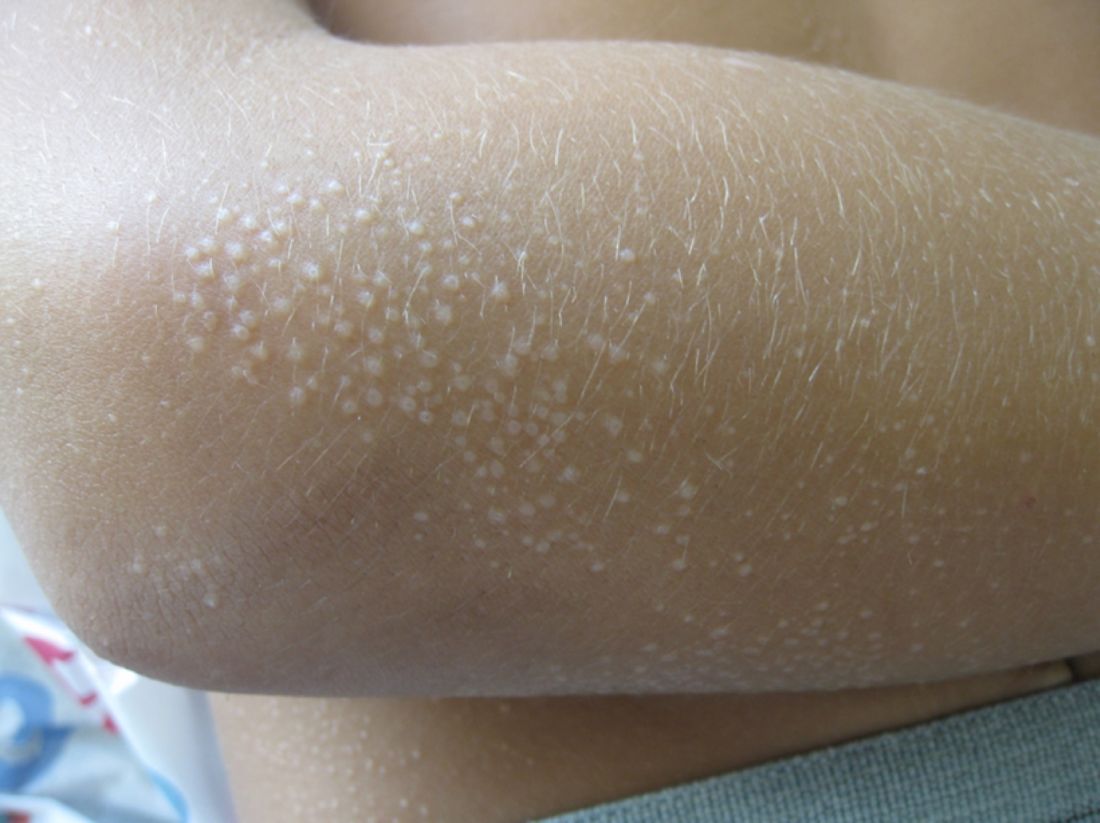
Lichen nitidus, which literally means “shiny moss,” is a relatively rare, chronic skin eruption that is characterized clinically by asymptomatic, flat-topped, sharply-demarcated, skin-colored papules, which are sometimes described as being “pinpoint.”

Lichen nitidus mainly affects children and young adults. The most common sites of involvement are the trunk, flexor aspects of upper extremities, dorsal aspects of hands, and genitalia, but lesions can occur anywhere on the skin. The lesions also can develop in sites of trauma (Koebner phenomenon), and this can be a significant clinical clue to aid in the diagnosis of lichen nitidus in favor of other conditions which may present as many small papules.1 Nail changes can occur but are rare, presenting as dystrophy, pitting, riding, or loss of nail(s).2
Lichen nitidus can be a challenging diagnosis to make, especially if a practitioner is not used to seeing it. Many dermatologic conditions present with many fine papules, including the other answer choices in the given quiz question (molluscum contagiosum, keratosis pilaris, verruca vulgaris, papular eczema). What allows for a clearer diagnosis of lichen nitidus is the history provided by the patient as well as the exam. Lichen nitidus lesions typically arise without a known trigger and often persist for months while remaining asymptomatic.
Molluscum contagiosum tends to include papules that are larger and more substantial than lichen nitidus papules and may be accompanied by background hyperpigmentation or erythema, known as the “beginning of the end” sign. Keratosis pilaris is commonly thought of as a skin type more so than a skin condition, and is more commonly seen in fair-skinned individuals along the lateral arms and cheeks. It is commonly paired with a background of erythema and skin than tends to be more xerotic. Verruca are typically larger lesions, sometimes with a rough surface, and are not typically shiny. Verruca are more likely to present as a single lesion or a few lesions at a given location, as opposed to lichen nitidus which has many individual papules at a single location. Papular eczema typically is intensely pruritic and is associated with xerosis and atopy.
The cause of lichen nitidus is unknown, and there are no reported genetic factors that contribute to its presentation.3 It is thought to be a subtype of lichen planus, although this is still debated. There is more work that needs to be done to find answers to these questions and to assess what triggers these fine papules to present and in whom.

The dermatoscopic features of lichen nitidus were reported in a series of eight cases and include absent dermatoglyphics, radial ridges, ill-defined hypopigmentation, diffuse erythema, linear vessels within the lesion, and peripheral scaling.4 These features are distinctive in combination and can in some cases be used to clinically diagnose lichen nitidus without the need for a skin biopsy, which is an invasive procedure that should be avoided when possible, especially given the benign nature of lichen nitidus.
If a biopsy is performed, the histologic features that commonly are seen include well-circumscribed granuloma-like lymphohistiocytic infiltrates in the papillary dermis adjacent to ridges, mimicking a “ball-and-claw” formation.1,5
Lichen nitidus generally is self-limiting, with minimal cosmetic disruption; therefore, treatment usually is not necessary. The lesions typically resolve within 1 year of presentation – and often sooner. Topical steroids can be used for symptomatic relief of pruritus, but generally do not hasten resolution of the papules themselves. Additionally, there have been reports in the literature of the successful resolution of lesions using topical calcineurin inhibitors and UVB therapy.
In a case report of an 8-year-old child with histologically confirmed lichen nitidus that had been present for 2 years, pimecrolimus 1% cream was used twice daily for 2 months with improvement and flattening of the papules.6 This report is compelling because the lesions persisted for twice the expected time of resolution without improvement and then showed relatively quick response to pimecrolimus. In a case of a 32-year-old male with lichen nitidus on his penis, tacrolimus 0.1% was used for 4 weeks with resolution of the papules.7 Although given that lichen nitidus can self-resolve in this same time period, it is unclear in this case whether the tacrolimus was the independent cause of the resolution.
With regard to UVB therapy, there have been reports of lichen nitidus resolution after 17-30 irradiation sessions in patients with lesions present for 3-6 months, although again, it is possible that the resolution observed was simply the natural course of the lichen nitidus for these patients rather than a therapeutic benefit of UVB therapy.8,9
Given that lichen nitidus is benign and typically asymptomatic or with mild pruritus, it is reasonable to monitor the lesions without treating them. If the lesions persist beyond 1 year, it also is reasonable to trial therapies, such as topical calcineurin inhibitors and UVB therapy, although using these treatments earlier in the disease course has only limited supporting data and any improvement seen within 1 year of onset may be attributed to the natural disease course as opposed to an effect of the intervention. Considerations of the cost of therapy, as well as the degree to which the patient is bothered by the lesions and how long the lesions have persisted, should be undertaken when considering whether an intervention should be made.
Ms. Natsis is a medical student at the University of California, San Diego. Dr. Eichenfield is chief of pediatric and adolescent dermatology at Rady Children’s Hospital–San Diego. He is vice chair of the department of dermatology and professor of dermatology and pediatrics at the University of California, San Diego. There are no conflicts of interest or financial disclosures for Ms. Natsis or Dr. Eichenfield. Email them at pdnews@mdedge.com.
References
1. Cutis. 1999 Aug 1;64(2):135-6.
2. J Am Acad Dermatol. 2004 Oct;51(4):606-24.
3. Papulosquamous diseases, in “Pediatric Dermatology,” 4th ed. (St Louis: Mosby; 2011, Vol. 2.
4. Pediatr Dermatol. 2018. doi: 10.1111/pde.13576.
5. Cutis. 2013 Dec;92(6):288, 297-8.
6. Dermatol Online J. 2011 Jul 15;17(7):11.
7. J Drugs Dermatol. 2004 Nov-Dec;3(6):683-4.
8. Int J Dermatol. 2004 Dec 23;45:615-7.
9. Photodermatol Photoimmunol Photomed. 2013 Aug;29(4):215-7.
Lichen nitidus, which literally means “shiny moss,” is a relatively rare, chronic skin eruption that is characterized clinically by asymptomatic, flat-topped, sharply-demarcated, skin-colored papules, which are sometimes described as being “pinpoint.”
Lichen nitidus mainly affects children and young adults. The most common sites of involvement are the trunk, flexor aspects of upper extremities, dorsal aspects of hands, and genitalia, but lesions can occur anywhere on the skin. The lesions also can develop in sites of trauma (Koebner phenomenon), and this can be a significant clinical clue to aid in the diagnosis of lichen nitidus in favor of other conditions which may present as many small papules.1 Nail changes can occur but are rare, presenting as dystrophy, pitting, riding, or loss of nail(s).2
Lichen nitidus can be a challenging diagnosis to make, especially if a practitioner is not used to seeing it. Many dermatologic conditions present with many fine papules, including the other answer choices in the given quiz question (molluscum contagiosum, keratosis pilaris, verruca vulgaris, papular eczema). What allows for a clearer diagnosis of lichen nitidus is the history provided by the patient as well as the exam. Lichen nitidus lesions typically arise without a known trigger and often persist for months while remaining asymptomatic.
Molluscum contagiosum tends to include papules that are larger and more substantial than lichen nitidus papules and may be accompanied by background hyperpigmentation or erythema, known as the “beginning of the end” sign. Keratosis pilaris is commonly thought of as a skin type more so than a skin condition, and is more commonly seen in fair-skinned individuals along the lateral arms and cheeks. It is commonly paired with a background of erythema and skin than tends to be more xerotic. Verruca are typically larger lesions, sometimes with a rough surface, and are not typically shiny. Verruca are more likely to present as a single lesion or a few lesions at a given location, as opposed to lichen nitidus which has many individual papules at a single location. Papular eczema typically is intensely pruritic and is associated with xerosis and atopy.
The cause of lichen nitidus is unknown, and there are no reported genetic factors that contribute to its presentation.3 It is thought to be a subtype of lichen planus, although this is still debated. There is more work that needs to be done to find answers to these questions and to assess what triggers these fine papules to present and in whom.
The dermatoscopic features of lichen nitidus were reported in a series of eight cases and include absent dermatoglyphics, radial ridges, ill-defined hypopigmentation, diffuse erythema, linear vessels within the lesion, and peripheral scaling.4 These features are distinctive in combination and can in some cases be used to clinically diagnose lichen nitidus without the need for a skin biopsy, which is an invasive procedure that should be avoided when possible, especially given the benign nature of lichen nitidus.
If a biopsy is performed, the histologic features that commonly are seen include well-circumscribed granuloma-like lymphohistiocytic infiltrates in the papillary dermis adjacent to ridges, mimicking a “ball-and-claw” formation.1,5
Lichen nitidus generally is self-limiting, with minimal cosmetic disruption; therefore, treatment usually is not necessary. The lesions typically resolve within 1 year of presentation – and often sooner. Topical steroids can be used for symptomatic relief of pruritus, but generally do not hasten resolution of the papules themselves. Additionally, there have been reports in the literature of the successful resolution of lesions using topical calcineurin inhibitors and UVB therapy.
In a case report of an 8-year-old child with histologically confirmed lichen nitidus that had been present for 2 years, pimecrolimus 1% cream was used twice daily for 2 months with improvement and flattening of the papules.6 This report is compelling because the lesions persisted for twice the expected time of resolution without improvement and then showed relatively quick response to pimecrolimus. In a case of a 32-year-old male with lichen nitidus on his penis, tacrolimus 0.1% was used for 4 weeks with resolution of the papules.7 Although given that lichen nitidus can self-resolve in this same time period, it is unclear in this case whether the tacrolimus was the independent cause of the resolution.
With regard to UVB therapy, there have been reports of lichen nitidus resolution after 17-30 irradiation sessions in patients with lesions present for 3-6 months, although again, it is possible that the resolution observed was simply the natural course of the lichen nitidus for these patients rather than a therapeutic benefit of UVB therapy.8,9
Given that lichen nitidus is benign and typically asymptomatic or with mild pruritus, it is reasonable to monitor the lesions without treating them. If the lesions persist beyond 1 year, it also is reasonable to trial therapies, such as topical calcineurin inhibitors and UVB therapy, although using these treatments earlier in the disease course has only limited supporting data and any improvement seen within 1 year of onset may be attributed to the natural disease course as opposed to an effect of the intervention. Considerations of the cost of therapy, as well as the degree to which the patient is bothered by the lesions and how long the lesions have persisted, should be undertaken when considering whether an intervention should be made.
Ms. Natsis is a medical student at the University of California, San Diego. Dr. Eichenfield is chief of pediatric and adolescent dermatology at Rady Children’s Hospital–San Diego. He is vice chair of the department of dermatology and professor of dermatology and pediatrics at the University of California, San Diego. There are no conflicts of interest or financial disclosures for Ms. Natsis or Dr. Eichenfield. Email them at pdnews@mdedge.com.
References
1. Cutis. 1999 Aug 1;64(2):135-6.
2. J Am Acad Dermatol. 2004 Oct;51(4):606-24.
3. Papulosquamous diseases, in “Pediatric Dermatology,” 4th ed. (St Louis: Mosby; 2011, Vol. 2.
4. Pediatr Dermatol. 2018. doi: 10.1111/pde.13576.
5. Cutis. 2013 Dec;92(6):288, 297-8.
6. Dermatol Online J. 2011 Jul 15;17(7):11.
7. J Drugs Dermatol. 2004 Nov-Dec;3(6):683-4.
8. Int J Dermatol. 2004 Dec 23;45:615-7.
9. Photodermatol Photoimmunol Photomed. 2013 Aug;29(4):215-7.
Lichen nitidus, which literally means “shiny moss,” is a relatively rare, chronic skin eruption that is characterized clinically by asymptomatic, flat-topped, sharply-demarcated, skin-colored papules, which are sometimes described as being “pinpoint.”
Lichen nitidus mainly affects children and young adults. The most common sites of involvement are the trunk, flexor aspects of upper extremities, dorsal aspects of hands, and genitalia, but lesions can occur anywhere on the skin. The lesions also can develop in sites of trauma (Koebner phenomenon), and this can be a significant clinical clue to aid in the diagnosis of lichen nitidus in favor of other conditions which may present as many small papules.1 Nail changes can occur but are rare, presenting as dystrophy, pitting, riding, or loss of nail(s).2
Lichen nitidus can be a challenging diagnosis to make, especially if a practitioner is not used to seeing it. Many dermatologic conditions present with many fine papules, including the other answer choices in the given quiz question (molluscum contagiosum, keratosis pilaris, verruca vulgaris, papular eczema). What allows for a clearer diagnosis of lichen nitidus is the history provided by the patient as well as the exam. Lichen nitidus lesions typically arise without a known trigger and often persist for months while remaining asymptomatic.
Molluscum contagiosum tends to include papules that are larger and more substantial than lichen nitidus papules and may be accompanied by background hyperpigmentation or erythema, known as the “beginning of the end” sign. Keratosis pilaris is commonly thought of as a skin type more so than a skin condition, and is more commonly seen in fair-skinned individuals along the lateral arms and cheeks. It is commonly paired with a background of erythema and skin than tends to be more xerotic. Verruca are typically larger lesions, sometimes with a rough surface, and are not typically shiny. Verruca are more likely to present as a single lesion or a few lesions at a given location, as opposed to lichen nitidus which has many individual papules at a single location. Papular eczema typically is intensely pruritic and is associated with xerosis and atopy.
The cause of lichen nitidus is unknown, and there are no reported genetic factors that contribute to its presentation.3 It is thought to be a subtype of lichen planus, although this is still debated. There is more work that needs to be done to find answers to these questions and to assess what triggers these fine papules to present and in whom.
The dermatoscopic features of lichen nitidus were reported in a series of eight cases and include absent dermatoglyphics, radial ridges, ill-defined hypopigmentation, diffuse erythema, linear vessels within the lesion, and peripheral scaling.4 These features are distinctive in combination and can in some cases be used to clinically diagnose lichen nitidus without the need for a skin biopsy, which is an invasive procedure that should be avoided when possible, especially given the benign nature of lichen nitidus.
If a biopsy is performed, the histologic features that commonly are seen include well-circumscribed granuloma-like lymphohistiocytic infiltrates in the papillary dermis adjacent to ridges, mimicking a “ball-and-claw” formation.1,5
Lichen nitidus generally is self-limiting, with minimal cosmetic disruption; therefore, treatment usually is not necessary. The lesions typically resolve within 1 year of presentation – and often sooner. Topical steroids can be used for symptomatic relief of pruritus, but generally do not hasten resolution of the papules themselves. Additionally, there have been reports in the literature of the successful resolution of lesions using topical calcineurin inhibitors and UVB therapy.
In a case report of an 8-year-old child with histologically confirmed lichen nitidus that had been present for 2 years, pimecrolimus 1% cream was used twice daily for 2 months with improvement and flattening of the papules.6 This report is compelling because the lesions persisted for twice the expected time of resolution without improvement and then showed relatively quick response to pimecrolimus. In a case of a 32-year-old male with lichen nitidus on his penis, tacrolimus 0.1% was used for 4 weeks with resolution of the papules.7 Although given that lichen nitidus can self-resolve in this same time period, it is unclear in this case whether the tacrolimus was the independent cause of the resolution.
With regard to UVB therapy, there have been reports of lichen nitidus resolution after 17-30 irradiation sessions in patients with lesions present for 3-6 months, although again, it is possible that the resolution observed was simply the natural course of the lichen nitidus for these patients rather than a therapeutic benefit of UVB therapy.8,9
Given that lichen nitidus is benign and typically asymptomatic or with mild pruritus, it is reasonable to monitor the lesions without treating them. If the lesions persist beyond 1 year, it also is reasonable to trial therapies, such as topical calcineurin inhibitors and UVB therapy, although using these treatments earlier in the disease course has only limited supporting data and any improvement seen within 1 year of onset may be attributed to the natural disease course as opposed to an effect of the intervention. Considerations of the cost of therapy, as well as the degree to which the patient is bothered by the lesions and how long the lesions have persisted, should be undertaken when considering whether an intervention should be made.
Ms. Natsis is a medical student at the University of California, San Diego. Dr. Eichenfield is chief of pediatric and adolescent dermatology at Rady Children’s Hospital–San Diego. He is vice chair of the department of dermatology and professor of dermatology and pediatrics at the University of California, San Diego. There are no conflicts of interest or financial disclosures for Ms. Natsis or Dr. Eichenfield. Email them at pdnews@mdedge.com.
References
1. Cutis. 1999 Aug 1;64(2):135-6.
2. J Am Acad Dermatol. 2004 Oct;51(4):606-24.
3. Papulosquamous diseases, in “Pediatric Dermatology,” 4th ed. (St Louis: Mosby; 2011, Vol. 2.
4. Pediatr Dermatol. 2018. doi: 10.1111/pde.13576.
5. Cutis. 2013 Dec;92(6):288, 297-8.
6. Dermatol Online J. 2011 Jul 15;17(7):11.
7. J Drugs Dermatol. 2004 Nov-Dec;3(6):683-4.
8. Int J Dermatol. 2004 Dec 23;45:615-7.
9. Photodermatol Photoimmunol Photomed. 2013 Aug;29(4):215-7.

Oligoclonal bands, initial seizures increase risk of post-ADEM epilepsy in children
BERLIN – Children with acute disseminated encephalomyelitis have a significantly increased risk of subsequent epilepsy when it occurs with oligoclonal bands in cerebrospinal fluid and seizures at presentation, Thomas Rossor, MD, reported at the annual congress of the European Committee for Treatment and Research in Multiple Sclerosis.

But fortunately, the seizures of postacute disseminated encephalomyelitis (post-ADEM) epilepsy are relatively easy to control and not clinically devastating, said Dr. Rossor of Great Ormond Street Hospital, London.
Of the 12 who developed epilepsy in Dr. Rossor’s retrospective, multicenter review of 74 children with ADEM, 11 were well controlled on one drug and 1 on two drugs.
Pediatric ADEM is usually monophasic with good clinical outcome, he said. But a benign course is not set in stone: Up to 40% of children experience seizures during the acute presentation. “In contrast,” Dr. Rossor said, “adult patients with relapsing-remitting multiple sclerosis have the same risk of developing epilepsy as the general population.” Among adults with cortical encephalitis, antibodies against myelin oligodendrocyte glycoprotein (MOG) have been associated with seizures and the need for antiepileptic medications, he added.
That finding was part of what spurred Dr. Rossor’s study, which aimed to identify predictors of relapse and post-ADEM epilepsy in children. The patients in the review had a median age of 4.5 years. All were tested for anti-MOG antibodies, and most (about 68%) were positive. Oligoclonal bands in cerebrospinal fluid (CSF) occurred in 22%. The median follow-up period was 5 years.
A total of 41% (n = 31) relapsed after the initial acute phase. Among these, the final diagnosis included multiphasic disseminated encephalomyelitis (n = 19); ADEM-optic neuritis (n = 3); and neuromyelitis optica spectrum disorder (n = 6).
Of the 74 patients, 16 (22%) had seizures during the acute phase, and 12 (16%) developed post-ADEM epilepsy at a median of 3 months. The most common clinical characteristics with post-ADEM epilepsy included oligoclonal bands (57% vs. 13%), anti-MOG antibodies (92% vs. 16%), and seizures at presentation (50% vs. 16%). When these were entered into a regression model, oligoclonal bands and initial seizures significantly predicted epilepsy, increasing the risk by 20.7 and 13.5 times, respectively.
Since relapse is known to be associated with post-ADEM epilepsy, Dr. Rossor first looked at relapse risk. He conducted a multivariate analysis that included several clinical characteristics: age, prodrome, increased CSF white cells and protein, oligoclonal bands, anti-MOG antibodies, and seizures both at presentation and after the acute phase.
Anti-MOG antibodies were significantly more common among the relapsed patients than among the monophasic patients (87% vs. 53%). Seizures at presentation also were more common among the relapsed patients (32% vs. 14%). These two factors were entered into a binary regression analysis; only anti-MOG antibodies remained significantly associated with relapse, increasing the risk fivefold (odds ratio = 5.4; P = .007).
Anti-MOG antibodies also were associated with both earlier and more relapses. Overall, 40% of anti–MOG-antibody–positive patients relapsed by 24 months. In contrast, only 20% of anti–MOG-antibody–negative patients had relapsed by 24 months, and this number remained steady throughout the follow-up period.
By 96 months, almost all the anti–MOG-antibody–positive patients had relapsed, and some experienced many relapses. “In the antibody-negative group, four patients did relapse, but they had relatively few relapses. In the antibody-positive group, some had relatively few relapses, but several had 15, 20, or 25 clinical relapses in the follow-up period,” he said.
Dr. Rossor and his coauthors had no financial disclosures.
SOURCE: Rossor T et al. Mult Scler. 2018;24(Suppl 2):27. Abstract 62.
BERLIN – Children with acute disseminated encephalomyelitis have a significantly increased risk of subsequent epilepsy when it occurs with oligoclonal bands in cerebrospinal fluid and seizures at presentation, Thomas Rossor, MD, reported at the annual congress of the European Committee for Treatment and Research in Multiple Sclerosis.
But fortunately, the seizures of postacute disseminated encephalomyelitis (post-ADEM) epilepsy are relatively easy to control and not clinically devastating, said Dr. Rossor of Great Ormond Street Hospital, London.
Of the 12 who developed epilepsy in Dr. Rossor’s retrospective, multicenter review of 74 children with ADEM, 11 were well controlled on one drug and 1 on two drugs.
Pediatric ADEM is usually monophasic with good clinical outcome, he said. But a benign course is not set in stone: Up to 40% of children experience seizures during the acute presentation. “In contrast,” Dr. Rossor said, “adult patients with relapsing-remitting multiple sclerosis have the same risk of developing epilepsy as the general population.” Among adults with cortical encephalitis, antibodies against myelin oligodendrocyte glycoprotein (MOG) have been associated with seizures and the need for antiepileptic medications, he added.
That finding was part of what spurred Dr. Rossor’s study, which aimed to identify predictors of relapse and post-ADEM epilepsy in children. The patients in the review had a median age of 4.5 years. All were tested for anti-MOG antibodies, and most (about 68%) were positive. Oligoclonal bands in cerebrospinal fluid (CSF) occurred in 22%. The median follow-up period was 5 years.
A total of 41% (n = 31) relapsed after the initial acute phase. Among these, the final diagnosis included multiphasic disseminated encephalomyelitis (n = 19); ADEM-optic neuritis (n = 3); and neuromyelitis optica spectrum disorder (n = 6).
Of the 74 patients, 16 (22%) had seizures during the acute phase, and 12 (16%) developed post-ADEM epilepsy at a median of 3 months. The most common clinical characteristics with post-ADEM epilepsy included oligoclonal bands (57% vs. 13%), anti-MOG antibodies (92% vs. 16%), and seizures at presentation (50% vs. 16%). When these were entered into a regression model, oligoclonal bands and initial seizures significantly predicted epilepsy, increasing the risk by 20.7 and 13.5 times, respectively.
Since relapse is known to be associated with post-ADEM epilepsy, Dr. Rossor first looked at relapse risk. He conducted a multivariate analysis that included several clinical characteristics: age, prodrome, increased CSF white cells and protein, oligoclonal bands, anti-MOG antibodies, and seizures both at presentation and after the acute phase.
Anti-MOG antibodies were significantly more common among the relapsed patients than among the monophasic patients (87% vs. 53%). Seizures at presentation also were more common among the relapsed patients (32% vs. 14%). These two factors were entered into a binary regression analysis; only anti-MOG antibodies remained significantly associated with relapse, increasing the risk fivefold (odds ratio = 5.4; P = .007).
Anti-MOG antibodies also were associated with both earlier and more relapses. Overall, 40% of anti–MOG-antibody–positive patients relapsed by 24 months. In contrast, only 20% of anti–MOG-antibody–negative patients had relapsed by 24 months, and this number remained steady throughout the follow-up period.
By 96 months, almost all the anti–MOG-antibody–positive patients had relapsed, and some experienced many relapses. “In the antibody-negative group, four patients did relapse, but they had relatively few relapses. In the antibody-positive group, some had relatively few relapses, but several had 15, 20, or 25 clinical relapses in the follow-up period,” he said.
Dr. Rossor and his coauthors had no financial disclosures.
SOURCE: Rossor T et al. Mult Scler. 2018;24(Suppl 2):27. Abstract 62.
BERLIN – Children with acute disseminated encephalomyelitis have a significantly increased risk of subsequent epilepsy when it occurs with oligoclonal bands in cerebrospinal fluid and seizures at presentation, Thomas Rossor, MD, reported at the annual congress of the European Committee for Treatment and Research in Multiple Sclerosis.
But fortunately, the seizures of postacute disseminated encephalomyelitis (post-ADEM) epilepsy are relatively easy to control and not clinically devastating, said Dr. Rossor of Great Ormond Street Hospital, London.
Of the 12 who developed epilepsy in Dr. Rossor’s retrospective, multicenter review of 74 children with ADEM, 11 were well controlled on one drug and 1 on two drugs.
Pediatric ADEM is usually monophasic with good clinical outcome, he said. But a benign course is not set in stone: Up to 40% of children experience seizures during the acute presentation. “In contrast,” Dr. Rossor said, “adult patients with relapsing-remitting multiple sclerosis have the same risk of developing epilepsy as the general population.” Among adults with cortical encephalitis, antibodies against myelin oligodendrocyte glycoprotein (MOG) have been associated with seizures and the need for antiepileptic medications, he added.
That finding was part of what spurred Dr. Rossor’s study, which aimed to identify predictors of relapse and post-ADEM epilepsy in children. The patients in the review had a median age of 4.5 years. All were tested for anti-MOG antibodies, and most (about 68%) were positive. Oligoclonal bands in cerebrospinal fluid (CSF) occurred in 22%. The median follow-up period was 5 years.
A total of 41% (n = 31) relapsed after the initial acute phase. Among these, the final diagnosis included multiphasic disseminated encephalomyelitis (n = 19); ADEM-optic neuritis (n = 3); and neuromyelitis optica spectrum disorder (n = 6).
Of the 74 patients, 16 (22%) had seizures during the acute phase, and 12 (16%) developed post-ADEM epilepsy at a median of 3 months. The most common clinical characteristics with post-ADEM epilepsy included oligoclonal bands (57% vs. 13%), anti-MOG antibodies (92% vs. 16%), and seizures at presentation (50% vs. 16%). When these were entered into a regression model, oligoclonal bands and initial seizures significantly predicted epilepsy, increasing the risk by 20.7 and 13.5 times, respectively.
Since relapse is known to be associated with post-ADEM epilepsy, Dr. Rossor first looked at relapse risk. He conducted a multivariate analysis that included several clinical characteristics: age, prodrome, increased CSF white cells and protein, oligoclonal bands, anti-MOG antibodies, and seizures both at presentation and after the acute phase.
Anti-MOG antibodies were significantly more common among the relapsed patients than among the monophasic patients (87% vs. 53%). Seizures at presentation also were more common among the relapsed patients (32% vs. 14%). These two factors were entered into a binary regression analysis; only anti-MOG antibodies remained significantly associated with relapse, increasing the risk fivefold (odds ratio = 5.4; P = .007).
Anti-MOG antibodies also were associated with both earlier and more relapses. Overall, 40% of anti–MOG-antibody–positive patients relapsed by 24 months. In contrast, only 20% of anti–MOG-antibody–negative patients had relapsed by 24 months, and this number remained steady throughout the follow-up period.
By 96 months, almost all the anti–MOG-antibody–positive patients had relapsed, and some experienced many relapses. “In the antibody-negative group, four patients did relapse, but they had relatively few relapses. In the antibody-positive group, some had relatively few relapses, but several had 15, 20, or 25 clinical relapses in the follow-up period,” he said.
Dr. Rossor and his coauthors had no financial disclosures.
SOURCE: Rossor T et al. Mult Scler. 2018;24(Suppl 2):27. Abstract 62.
REPORTING FROM ECTRIMS 2018
Key clinical point: .
Major finding: Oligoclonal bands in CSF increased the risk of post-ADEM epilepsy by more than 20 times.
Study details: The retrospective cohort review comprised 74 children.
Disclosures: Dr. Rossor and his coauthors had no financial disclosures.
Source: Rossor T et al. Mult Scler. 2018;24(Suppl 2):27. Abstract 62.
Dupilumab offers extra benefits to asthmatic teens
SAN ANTONIO – For adolescents with asthma, treatment with the biologic agent dupilumab provided benefits that were at least comparable with what was seen in adults, results from a retrospective analysis of a randomized, phase 3 study suggest.

Adolescents had reduced asthma exacerbations in line with what was seen in adults and had improvements in lung function that were at a greater magnitude than adults, according to study coauthor Neil M.H. Graham, MD, of Regeneron Pharmaceuticals, Tarrytown, N.Y.
“We think, overall, it’s a very good treatment response from this drug in this high-risk population, and it is generally well tolerated, as we’ve seen in other studies,” Dr. Graham said in a podium presentation at the annual meeting of the American College of Chest Physicians.
Dr. Graham presented results of an analysis of the 1,902-patient, phase 3 Liberty Asthma QUEST trial, published in May 2018 in the New England Journal of Medicine.
Top-line results of QUEST showed that treatment with dupilumab, a fully human anti–IL-4Ra monoclonal antibody, resulted in significantly lower rates of severe asthma exacerbation, along with improved lung function, in patients aged 12 years and older with moderate to severe asthma.
Now, this retrospective analysis shows that, in adolescents, improvements from baseline to week 12 in forced expiratory volume in 1 second (FEV1) were significant and at a greater magnitude than in adults, according to Dr. Graham and his coinvestigators.
The improvement over 12 weeks in FEV1 for adolescents was 0.36 L and 0.27 L, respectively, for the 200- and 300-mg doses of dupilumab (P less than .05 vs. placebo for both), Dr. Graham and his coinvestigators reported. In adults, the improvement was 0.12 L.
The annualized exacerbation rate dropped by 46.4% for those adolescents who received 200 mg dupilumab, though there was no treatment effect versus placebo for dupilumab 300 mg; the investigators said the lack of effect in this retrospective analysis could have been caused by imbalances in prior event rates or the small sample size.
A total of 107 out of 1,902 patients in QUEST were adolescents, and of those, 68 were randomly assigned to dupilumab, according to the report. Injection site reaction was the most common adverse event in adolescents in both dosing groups.
Dr. Graham reported disclosures related to his employment with Regeneron. Study coauthors reported disclosures related to Regeneron, AstraZeneca, Sanofi, Teva Pharmaceutical, GlaxoSmithKline, Boehringer Ingelheim, Merck, Genentech, and others.
SOURCE: Graham NMH et al. CHEST. 2018 Oct. doi: 10.1016/j.chest.2018.08.022.
SAN ANTONIO – For adolescents with asthma, treatment with the biologic agent dupilumab provided benefits that were at least comparable with what was seen in adults, results from a retrospective analysis of a randomized, phase 3 study suggest.
Adolescents had reduced asthma exacerbations in line with what was seen in adults and had improvements in lung function that were at a greater magnitude than adults, according to study coauthor Neil M.H. Graham, MD, of Regeneron Pharmaceuticals, Tarrytown, N.Y.
“We think, overall, it’s a very good treatment response from this drug in this high-risk population, and it is generally well tolerated, as we’ve seen in other studies,” Dr. Graham said in a podium presentation at the annual meeting of the American College of Chest Physicians.
Dr. Graham presented results of an analysis of the 1,902-patient, phase 3 Liberty Asthma QUEST trial, published in May 2018 in the New England Journal of Medicine.
Top-line results of QUEST showed that treatment with dupilumab, a fully human anti–IL-4Ra monoclonal antibody, resulted in significantly lower rates of severe asthma exacerbation, along with improved lung function, in patients aged 12 years and older with moderate to severe asthma.
Now, this retrospective analysis shows that, in adolescents, improvements from baseline to week 12 in forced expiratory volume in 1 second (FEV1) were significant and at a greater magnitude than in adults, according to Dr. Graham and his coinvestigators.
The improvement over 12 weeks in FEV1 for adolescents was 0.36 L and 0.27 L, respectively, for the 200- and 300-mg doses of dupilumab (P less than .05 vs. placebo for both), Dr. Graham and his coinvestigators reported. In adults, the improvement was 0.12 L.
The annualized exacerbation rate dropped by 46.4% for those adolescents who received 200 mg dupilumab, though there was no treatment effect versus placebo for dupilumab 300 mg; the investigators said the lack of effect in this retrospective analysis could have been caused by imbalances in prior event rates or the small sample size.
A total of 107 out of 1,902 patients in QUEST were adolescents, and of those, 68 were randomly assigned to dupilumab, according to the report. Injection site reaction was the most common adverse event in adolescents in both dosing groups.
Dr. Graham reported disclosures related to his employment with Regeneron. Study coauthors reported disclosures related to Regeneron, AstraZeneca, Sanofi, Teva Pharmaceutical, GlaxoSmithKline, Boehringer Ingelheim, Merck, Genentech, and others.
SOURCE: Graham NMH et al. CHEST. 2018 Oct. doi: 10.1016/j.chest.2018.08.022.
SAN ANTONIO – For adolescents with asthma, treatment with the biologic agent dupilumab provided benefits that were at least comparable with what was seen in adults, results from a retrospective analysis of a randomized, phase 3 study suggest.
Adolescents had reduced asthma exacerbations in line with what was seen in adults and had improvements in lung function that were at a greater magnitude than adults, according to study coauthor Neil M.H. Graham, MD, of Regeneron Pharmaceuticals, Tarrytown, N.Y.
“We think, overall, it’s a very good treatment response from this drug in this high-risk population, and it is generally well tolerated, as we’ve seen in other studies,” Dr. Graham said in a podium presentation at the annual meeting of the American College of Chest Physicians.
Dr. Graham presented results of an analysis of the 1,902-patient, phase 3 Liberty Asthma QUEST trial, published in May 2018 in the New England Journal of Medicine.
Top-line results of QUEST showed that treatment with dupilumab, a fully human anti–IL-4Ra monoclonal antibody, resulted in significantly lower rates of severe asthma exacerbation, along with improved lung function, in patients aged 12 years and older with moderate to severe asthma.
Now, this retrospective analysis shows that, in adolescents, improvements from baseline to week 12 in forced expiratory volume in 1 second (FEV1) were significant and at a greater magnitude than in adults, according to Dr. Graham and his coinvestigators.
The improvement over 12 weeks in FEV1 for adolescents was 0.36 L and 0.27 L, respectively, for the 200- and 300-mg doses of dupilumab (P less than .05 vs. placebo for both), Dr. Graham and his coinvestigators reported. In adults, the improvement was 0.12 L.
The annualized exacerbation rate dropped by 46.4% for those adolescents who received 200 mg dupilumab, though there was no treatment effect versus placebo for dupilumab 300 mg; the investigators said the lack of effect in this retrospective analysis could have been caused by imbalances in prior event rates or the small sample size.
A total of 107 out of 1,902 patients in QUEST were adolescents, and of those, 68 were randomly assigned to dupilumab, according to the report. Injection site reaction was the most common adverse event in adolescents in both dosing groups.
Dr. Graham reported disclosures related to his employment with Regeneron. Study coauthors reported disclosures related to Regeneron, AstraZeneca, Sanofi, Teva Pharmaceutical, GlaxoSmithKline, Boehringer Ingelheim, Merck, Genentech, and others.
SOURCE: Graham NMH et al. CHEST. 2018 Oct. doi: 10.1016/j.chest.2018.08.022.
REPORTING FROM CHEST 2018
Key clinical point: Dupilumab’s benefits in adolescents with moderate to severe asthma are at least comparable with what has been reported in adults.
Major finding: The improvement over 12 weeks in forced expiratory volume in 1 second for adolescents was 0.36 L and 0.27 L, respectively, for the 200- and 300-mg doses of dupilumab versus 0.12 L for adults.
Study details: A retrospective analysis of 1,902 patients (including 107 adolescents) in Liberty Asthma QUEST, a recently reported randomized, phase 3 trial.
Disclosures: Several study coauthors reported employment with Regeneron. Dr. Graham reported disclosures related to his employment with Regeneron. Other reported disclosures were related to AstraZeneca, Sanofi, Teva Pharmaceutical, GlaxoSmithKline, Boehringer Ingelheim, Merck, and Genentech, among other entities.
Source: Graham NMH et al. CHEST. 2018 Oct. doi: 10.1016/j/chest.2018.08.002.
Bacteremic sepsis in ALL tied to neurocognitive dysfunction
Bacteremic sepsis during acute lymphoblastic leukemia (ALL) treatment may contribute to neurocognitive dysfunction later in life, results of a cohort study suggest.
Pediatric ALL survivors who had sepsis while on treatment performed worse on measures of intelligence, attention, executive function, and processing speed than survivors with no sepsis history, according to study results.
Links between sepsis and impaired neurocognitive function found in this study have “practice-changing implications” for cancer survivors, investigators reported in JAMA Pediatrics.
“Prevention of infection, early recognition and appropriate management of sepsis, and preemptive neurocognitive interventions should be prioritized, because these might prevent or ameliorate neurologic damage,” said Joshua Wolf, MBBS, of St. Jude Children’s Research Hospital, Memphis, and the coauthors of the report.
The study included 212 children who, at a median age of 5 years, had received risk-adapted chemotherapy for ALL with no hematopoietic cell transplant or cranial irradiation.
Sixteen of the patients (7.5%) had a history of bacteremic sepsis during ALL therapy, according to retrospectively obtained data.
As a part of the study, all patients participated in neurocognitive testing, which was done at a median of 7.7 years after diagnosis.
Patients with a history of bacteremic sepsis performed poorly on multiple measures of neurocognitive function, as compared with all other patients, according to results of analyses that were adjusted for multiple potentially confounding factors, such as age, race, and leukemia risk category.
Although not all neurocognitive measures were significantly different between groups, survivors with a sepsis history performed worse on evaluations of spatial planning (difference, 0.78; 95% CI, 0.57-1.00), verbal fluency (0.38; 95% CI, 0.14-0.62), and attention (0.63; 95% CI, 0.30-0.95), among other measures.
This is believed to be the first published study looking at potential links between sepsis during ALL treatment and long-term neurocognitive dysfunction, investigators said. However, similar observations have been made in other patient populations, they added.
Exactly how sepsis might lead to neurocognitive deficits remains unclear.
“In the population of children with cancer, these mechanisms might be augmented by increased blood-brain barrier permeability to neurotoxic chemotherapy drugs,” the investigators said in their report.
Further study is needed to look at potential brain injury mechanisms and to validate the current findings in other ALL patient cohorts, they concluded.
The study was supported by the National Institute of Mental Health, the National Cancer Institute, and the American Lebanese Syrian Associated Charities. The researchers reported having no conflicts of interest.
Bacteremic sepsis during acute lymphoblastic leukemia (ALL) treatment may contribute to neurocognitive dysfunction later in life, results of a cohort study suggest.
Pediatric ALL survivors who had sepsis while on treatment performed worse on measures of intelligence, attention, executive function, and processing speed than survivors with no sepsis history, according to study results.
Links between sepsis and impaired neurocognitive function found in this study have “practice-changing implications” for cancer survivors, investigators reported in JAMA Pediatrics.
“Prevention of infection, early recognition and appropriate management of sepsis, and preemptive neurocognitive interventions should be prioritized, because these might prevent or ameliorate neurologic damage,” said Joshua Wolf, MBBS, of St. Jude Children’s Research Hospital, Memphis, and the coauthors of the report.
The study included 212 children who, at a median age of 5 years, had received risk-adapted chemotherapy for ALL with no hematopoietic cell transplant or cranial irradiation.
Sixteen of the patients (7.5%) had a history of bacteremic sepsis during ALL therapy, according to retrospectively obtained data.
As a part of the study, all patients participated in neurocognitive testing, which was done at a median of 7.7 years after diagnosis.
Patients with a history of bacteremic sepsis performed poorly on multiple measures of neurocognitive function, as compared with all other patients, according to results of analyses that were adjusted for multiple potentially confounding factors, such as age, race, and leukemia risk category.
Although not all neurocognitive measures were significantly different between groups, survivors with a sepsis history performed worse on evaluations of spatial planning (difference, 0.78; 95% CI, 0.57-1.00), verbal fluency (0.38; 95% CI, 0.14-0.62), and attention (0.63; 95% CI, 0.30-0.95), among other measures.
This is believed to be the first published study looking at potential links between sepsis during ALL treatment and long-term neurocognitive dysfunction, investigators said. However, similar observations have been made in other patient populations, they added.
Exactly how sepsis might lead to neurocognitive deficits remains unclear.
“In the population of children with cancer, these mechanisms might be augmented by increased blood-brain barrier permeability to neurotoxic chemotherapy drugs,” the investigators said in their report.
Further study is needed to look at potential brain injury mechanisms and to validate the current findings in other ALL patient cohorts, they concluded.
The study was supported by the National Institute of Mental Health, the National Cancer Institute, and the American Lebanese Syrian Associated Charities. The researchers reported having no conflicts of interest.
Bacteremic sepsis during acute lymphoblastic leukemia (ALL) treatment may contribute to neurocognitive dysfunction later in life, results of a cohort study suggest.
Pediatric ALL survivors who had sepsis while on treatment performed worse on measures of intelligence, attention, executive function, and processing speed than survivors with no sepsis history, according to study results.
Links between sepsis and impaired neurocognitive function found in this study have “practice-changing implications” for cancer survivors, investigators reported in JAMA Pediatrics.
“Prevention of infection, early recognition and appropriate management of sepsis, and preemptive neurocognitive interventions should be prioritized, because these might prevent or ameliorate neurologic damage,” said Joshua Wolf, MBBS, of St. Jude Children’s Research Hospital, Memphis, and the coauthors of the report.
The study included 212 children who, at a median age of 5 years, had received risk-adapted chemotherapy for ALL with no hematopoietic cell transplant or cranial irradiation.
Sixteen of the patients (7.5%) had a history of bacteremic sepsis during ALL therapy, according to retrospectively obtained data.
As a part of the study, all patients participated in neurocognitive testing, which was done at a median of 7.7 years after diagnosis.
Patients with a history of bacteremic sepsis performed poorly on multiple measures of neurocognitive function, as compared with all other patients, according to results of analyses that were adjusted for multiple potentially confounding factors, such as age, race, and leukemia risk category.
Although not all neurocognitive measures were significantly different between groups, survivors with a sepsis history performed worse on evaluations of spatial planning (difference, 0.78; 95% CI, 0.57-1.00), verbal fluency (0.38; 95% CI, 0.14-0.62), and attention (0.63; 95% CI, 0.30-0.95), among other measures.
This is believed to be the first published study looking at potential links between sepsis during ALL treatment and long-term neurocognitive dysfunction, investigators said. However, similar observations have been made in other patient populations, they added.
Exactly how sepsis might lead to neurocognitive deficits remains unclear.
“In the population of children with cancer, these mechanisms might be augmented by increased blood-brain barrier permeability to neurotoxic chemotherapy drugs,” the investigators said in their report.
Further study is needed to look at potential brain injury mechanisms and to validate the current findings in other ALL patient cohorts, they concluded.
The study was supported by the National Institute of Mental Health, the National Cancer Institute, and the American Lebanese Syrian Associated Charities. The researchers reported having no conflicts of interest.
Managing asthma in children: Pets don’t always have to go
SAN ANTONIO – It may not always be necessary to tell parents of children with asthma to get rid of the household pet, a recent study suggests.

Children with had significant improvements in a variety of asthma measures, regardless of whether parents reported pets or smoking at home, according to results of the 4-year, 471-patient prospective study.
Those results suggest that clinicians should be working to make sure the guidelines are being closely followed before, for example, telling parents they need to consider getting rid of the family pet, said Shahid Sheikh, MD, FCCP, of Nationwide Children’s Hospital, Columbus, Ohio.
“As the guidelines still work, we need to focus and develop the connections with the family to make sure the patients are on the right treatment, and that they’re getting the medications,” Dr. Sheikh said in an interview at the annual meeting of the American College of Chest Physicians.
The prospective cohort study by Dr. Sheikh and his colleagues, presented in a poster session, included children referred to a pediatric asthma center with the diagnosis of uncontrolled asthma. All patients received asthma care according to National Asthma Education and Prevention Program Expert Panel Report 3 guidelines.
Medications were changed as needed, and the asthma action plan was revised accordingly and reviewed with the family at each visit, Dr. Sheikh reported. After a baseline evaluation, clinic visits for the study occurred at 3 months, 6 months, and then at 1, 2, 3, and 4 years.
Out of 471 patients, 258 had pets, and 125 were in homes where smoking took place, according to parent reports.
Asthma control test scores were 15.1 at baseline for children in no-pet households, and 16.5 for those with pets; by the 3-month visit, scores increased to 20.1 and 20.3 for the no-pet and pet groups, and at 4 years, those scores had edged up to 22.2 and 22.7 (P = .371), Dr. Sheikh reported.
Similarly, after care was started, there was no significant difference between the no-pet and pet groups in mean percent of predicted forced expiratory volume in 1 second (FEV1), wheezing, nighttime cough, albuterol use, and other factors over the 4 years of follow-up, he said.
Likewise, looking at the data by nonsmoking vs. smoking households, asthma control test scores at baseline were 16.1 and 15.1, respectively, and at 4 years they were 22.2 and 22.3 (P = .078), with a similar lack of difference in predicted FEV1, wheezing, and all other factors evaluated.
Getting rid of the family pet may need to be a consideration for some families, but based on these data, that might not be necessary for the majority of families, Dr. Sheikh said in the interview.
“On the other hand, we are not saying that if you are smoking, you should continue to smoke,” he added.
“What we are saying is that smoking is bad, but if your child is not getting better, I don’t want to blame your smoking for it. There may be something else which may be more important than smoking which we are missing – the child may not be getting the medicine, or may not be on the right medicine, or may have other comorbidities.”
Dr. Sheikh and his coinvestigators disclosed that they had no relationships relevant to the study.
SOURCE: Sheikh S et al. CHEST 2018. doi: 10.1016/j.chest.2018.08.666.
SAN ANTONIO – It may not always be necessary to tell parents of children with asthma to get rid of the household pet, a recent study suggests.
Children with had significant improvements in a variety of asthma measures, regardless of whether parents reported pets or smoking at home, according to results of the 4-year, 471-patient prospective study.
Those results suggest that clinicians should be working to make sure the guidelines are being closely followed before, for example, telling parents they need to consider getting rid of the family pet, said Shahid Sheikh, MD, FCCP, of Nationwide Children’s Hospital, Columbus, Ohio.
“As the guidelines still work, we need to focus and develop the connections with the family to make sure the patients are on the right treatment, and that they’re getting the medications,” Dr. Sheikh said in an interview at the annual meeting of the American College of Chest Physicians.
The prospective cohort study by Dr. Sheikh and his colleagues, presented in a poster session, included children referred to a pediatric asthma center with the diagnosis of uncontrolled asthma. All patients received asthma care according to National Asthma Education and Prevention Program Expert Panel Report 3 guidelines.
Medications were changed as needed, and the asthma action plan was revised accordingly and reviewed with the family at each visit, Dr. Sheikh reported. After a baseline evaluation, clinic visits for the study occurred at 3 months, 6 months, and then at 1, 2, 3, and 4 years.
Out of 471 patients, 258 had pets, and 125 were in homes where smoking took place, according to parent reports.
Asthma control test scores were 15.1 at baseline for children in no-pet households, and 16.5 for those with pets; by the 3-month visit, scores increased to 20.1 and 20.3 for the no-pet and pet groups, and at 4 years, those scores had edged up to 22.2 and 22.7 (P = .371), Dr. Sheikh reported.
Similarly, after care was started, there was no significant difference between the no-pet and pet groups in mean percent of predicted forced expiratory volume in 1 second (FEV1), wheezing, nighttime cough, albuterol use, and other factors over the 4 years of follow-up, he said.
Likewise, looking at the data by nonsmoking vs. smoking households, asthma control test scores at baseline were 16.1 and 15.1, respectively, and at 4 years they were 22.2 and 22.3 (P = .078), with a similar lack of difference in predicted FEV1, wheezing, and all other factors evaluated.
Getting rid of the family pet may need to be a consideration for some families, but based on these data, that might not be necessary for the majority of families, Dr. Sheikh said in the interview.
“On the other hand, we are not saying that if you are smoking, you should continue to smoke,” he added.
“What we are saying is that smoking is bad, but if your child is not getting better, I don’t want to blame your smoking for it. There may be something else which may be more important than smoking which we are missing – the child may not be getting the medicine, or may not be on the right medicine, or may have other comorbidities.”
Dr. Sheikh and his coinvestigators disclosed that they had no relationships relevant to the study.
SOURCE: Sheikh S et al. CHEST 2018. doi: 10.1016/j.chest.2018.08.666.
SAN ANTONIO – It may not always be necessary to tell parents of children with asthma to get rid of the household pet, a recent study suggests.
Children with had significant improvements in a variety of asthma measures, regardless of whether parents reported pets or smoking at home, according to results of the 4-year, 471-patient prospective study.
Those results suggest that clinicians should be working to make sure the guidelines are being closely followed before, for example, telling parents they need to consider getting rid of the family pet, said Shahid Sheikh, MD, FCCP, of Nationwide Children’s Hospital, Columbus, Ohio.
“As the guidelines still work, we need to focus and develop the connections with the family to make sure the patients are on the right treatment, and that they’re getting the medications,” Dr. Sheikh said in an interview at the annual meeting of the American College of Chest Physicians.
The prospective cohort study by Dr. Sheikh and his colleagues, presented in a poster session, included children referred to a pediatric asthma center with the diagnosis of uncontrolled asthma. All patients received asthma care according to National Asthma Education and Prevention Program Expert Panel Report 3 guidelines.
Medications were changed as needed, and the asthma action plan was revised accordingly and reviewed with the family at each visit, Dr. Sheikh reported. After a baseline evaluation, clinic visits for the study occurred at 3 months, 6 months, and then at 1, 2, 3, and 4 years.
Out of 471 patients, 258 had pets, and 125 were in homes where smoking took place, according to parent reports.
Asthma control test scores were 15.1 at baseline for children in no-pet households, and 16.5 for those with pets; by the 3-month visit, scores increased to 20.1 and 20.3 for the no-pet and pet groups, and at 4 years, those scores had edged up to 22.2 and 22.7 (P = .371), Dr. Sheikh reported.
Similarly, after care was started, there was no significant difference between the no-pet and pet groups in mean percent of predicted forced expiratory volume in 1 second (FEV1), wheezing, nighttime cough, albuterol use, and other factors over the 4 years of follow-up, he said.
Likewise, looking at the data by nonsmoking vs. smoking households, asthma control test scores at baseline were 16.1 and 15.1, respectively, and at 4 years they were 22.2 and 22.3 (P = .078), with a similar lack of difference in predicted FEV1, wheezing, and all other factors evaluated.
Getting rid of the family pet may need to be a consideration for some families, but based on these data, that might not be necessary for the majority of families, Dr. Sheikh said in the interview.
“On the other hand, we are not saying that if you are smoking, you should continue to smoke,” he added.
“What we are saying is that smoking is bad, but if your child is not getting better, I don’t want to blame your smoking for it. There may be something else which may be more important than smoking which we are missing – the child may not be getting the medicine, or may not be on the right medicine, or may have other comorbidities.”
Dr. Sheikh and his coinvestigators disclosed that they had no relationships relevant to the study.
SOURCE: Sheikh S et al. CHEST 2018. doi: 10.1016/j.chest.2018.08.666.
REPORTING FROM CHEST 2018
Key clinical point: Exposure to pets and tobacco smoke may have very little effect on the improvement of asthma in children who are being managed according to guidelines.
Major finding: ACT scores were 15.1 and 16.5 at baseline for children in no-pet and pet households, respectively, and were 22.2 and 22.7 at the 4-year evaluation.
Study details: A 4-year prospective cohort study of 471 children with uncontrolled asthma seen in a pediatric asthma center.
Disclosures: The study authors had no disclosures.
Source: Sheikh S et al. CHEST 2018. doi: 10.1016/j.chest.2018.08.666.
Revamped MS criteria boost pediatric diagnoses
BERLIN –

The increased accuracy largely hinged on a positive finding of oligoclonal bands in cerebrospinal fluid – a diagnostic hallmark that was not included in the earlier criteria, Georgina Arrambide, MD, said at the annual congress of the European Committee for Treatment and Research in Multiple Sclerosis.
“Application to children of the new diagnostic criteria is limited,” said Dr. Arrambide, of the University Hospital Vall d’Hebron Multiple Sclerosis Centre of Catalonia, Barcelona. “And there are still some uncertainties with regard to fluid biomarkers and how they predict or confirm a diagnosis of MS in children, and also their relationship to the disease evolution.”
The updated McDonald criteria are intended to boost early, definitive MS diagnosis, leading to earlier initiation of therapy. They are intended primarily for patients aged 11 years and older who present with a typical clinically isolated syndrome and high probability of MS (Lancet Neurol. 2018;17[2]:162-73).
Dr. Arrambide and her colleagues used the revamped criteria to reassess MS diagnoses in a prospective Spanish cohort of children who experienced an acute first demyelinating event and were diagnosed with the 2010 criteria. The Kids-METOMS-MOGBCN Study enrolls children aged younger than 18 years within 1 year of a first acute demyelinating episode. It includes demographic, clinical, and imaging data, as well as data on oligoclonal bands and antibodies against aquaporin-4 and myelin oligodendrocyte glycoprotein (MoG). Of these fluid biomarkers, only oligoclonal bands are included in the new McDonald criteria.
The 55 children in Dr. Arrambide’s analysis were followed for a mean of 16 months. They included 25 (45%) girls with an overall median age of 6 years at the first acute event. Oligoclonal bands were present in 56%, and both anti-MoG and anti–aquaporin-4 antibodies in 82%.
All children had abnormal brain MRI at baseline, with about 33% having gadolinium-enhancing brain lesions. Spinal cord MRI was abnormal in 50%, with 39% having gadolinium-enhancing lesions. According to the 2010 criteria, only three had a definitive MS diagnosis at baseline. The diagnosis was acute disseminated encephalomyelitis in 51%, clinically isolated syndrome in 31%, radiologically isolated syndrome in 2%, and nonencephalopathic disseminated encephalomyelitis in the remainder.
At baseline, three of those had a definitive MS diagnosis, displaying dissemination in both space and time as required by both the 2010 and 2017 criteria. The addition of oligoclonal band positivity added one more patient over the 2010 criteria, and assessing the cohort with the complete 2017 criteria added three more definitive diagnoses. This was a significant increase in definitive MS diagnoses when compared against the earlier criteria (70% vs. 30%).
Diagnoses changed in 10 other patients during follow-up. The single patient with radiologically isolated syndrome was definitively diagnosed with MS. Of the seven with clinically isolated syndrome, six were diagnosed with MS and one with a relapsing optic neuritis. Of the 28 with a nonencephalopathic encephalitis, 2 were diagnosed with optic neuritis.
The study also confirmed the benefit of adding oligoclonal bands as a diagnostic marker in children. Of those with an MS diagnosis at last follow-up, 71% were positive for the cerebrospinal fluid finding, compared with just 4% of those with a non-MS diagnosis. However, none of those children had anti-MoG antibodies, compared with 58% of those with a non-MS diagnosis. None of the patients were positive for anti–aquaporin-4, regardless of diagnosis.
That finding does not necessarily mean that the absence of anti-MoG antibodies can rule out an MS diagnosis in children, Dr. Arrambide cautioned. Nevertheless, the finding is a useful clinical marker during a diagnostic work-up.
“The presence of oligoclonal bands and the absence of MOG-IgG are both useful biomarkers when evaluating the risk of MS in children with a first demyelinating event,” she said.
She disclosed financial relationships with several pharmaceutical companies.
SOURCE: Arrambide G et al. ECTRIMS 2018, Abstract 64
BERLIN –
The increased accuracy largely hinged on a positive finding of oligoclonal bands in cerebrospinal fluid – a diagnostic hallmark that was not included in the earlier criteria, Georgina Arrambide, MD, said at the annual congress of the European Committee for Treatment and Research in Multiple Sclerosis.
“Application to children of the new diagnostic criteria is limited,” said Dr. Arrambide, of the University Hospital Vall d’Hebron Multiple Sclerosis Centre of Catalonia, Barcelona. “And there are still some uncertainties with regard to fluid biomarkers and how they predict or confirm a diagnosis of MS in children, and also their relationship to the disease evolution.”
The updated McDonald criteria are intended to boost early, definitive MS diagnosis, leading to earlier initiation of therapy. They are intended primarily for patients aged 11 years and older who present with a typical clinically isolated syndrome and high probability of MS (Lancet Neurol. 2018;17[2]:162-73).
Dr. Arrambide and her colleagues used the revamped criteria to reassess MS diagnoses in a prospective Spanish cohort of children who experienced an acute first demyelinating event and were diagnosed with the 2010 criteria. The Kids-METOMS-MOGBCN Study enrolls children aged younger than 18 years within 1 year of a first acute demyelinating episode. It includes demographic, clinical, and imaging data, as well as data on oligoclonal bands and antibodies against aquaporin-4 and myelin oligodendrocyte glycoprotein (MoG). Of these fluid biomarkers, only oligoclonal bands are included in the new McDonald criteria.
The 55 children in Dr. Arrambide’s analysis were followed for a mean of 16 months. They included 25 (45%) girls with an overall median age of 6 years at the first acute event. Oligoclonal bands were present in 56%, and both anti-MoG and anti–aquaporin-4 antibodies in 82%.
All children had abnormal brain MRI at baseline, with about 33% having gadolinium-enhancing brain lesions. Spinal cord MRI was abnormal in 50%, with 39% having gadolinium-enhancing lesions. According to the 2010 criteria, only three had a definitive MS diagnosis at baseline. The diagnosis was acute disseminated encephalomyelitis in 51%, clinically isolated syndrome in 31%, radiologically isolated syndrome in 2%, and nonencephalopathic disseminated encephalomyelitis in the remainder.
At baseline, three of those had a definitive MS diagnosis, displaying dissemination in both space and time as required by both the 2010 and 2017 criteria. The addition of oligoclonal band positivity added one more patient over the 2010 criteria, and assessing the cohort with the complete 2017 criteria added three more definitive diagnoses. This was a significant increase in definitive MS diagnoses when compared against the earlier criteria (70% vs. 30%).
Diagnoses changed in 10 other patients during follow-up. The single patient with radiologically isolated syndrome was definitively diagnosed with MS. Of the seven with clinically isolated syndrome, six were diagnosed with MS and one with a relapsing optic neuritis. Of the 28 with a nonencephalopathic encephalitis, 2 were diagnosed with optic neuritis.
The study also confirmed the benefit of adding oligoclonal bands as a diagnostic marker in children. Of those with an MS diagnosis at last follow-up, 71% were positive for the cerebrospinal fluid finding, compared with just 4% of those with a non-MS diagnosis. However, none of those children had anti-MoG antibodies, compared with 58% of those with a non-MS diagnosis. None of the patients were positive for anti–aquaporin-4, regardless of diagnosis.
That finding does not necessarily mean that the absence of anti-MoG antibodies can rule out an MS diagnosis in children, Dr. Arrambide cautioned. Nevertheless, the finding is a useful clinical marker during a diagnostic work-up.
“The presence of oligoclonal bands and the absence of MOG-IgG are both useful biomarkers when evaluating the risk of MS in children with a first demyelinating event,” she said.
She disclosed financial relationships with several pharmaceutical companies.
SOURCE: Arrambide G et al. ECTRIMS 2018, Abstract 64
BERLIN –
The increased accuracy largely hinged on a positive finding of oligoclonal bands in cerebrospinal fluid – a diagnostic hallmark that was not included in the earlier criteria, Georgina Arrambide, MD, said at the annual congress of the European Committee for Treatment and Research in Multiple Sclerosis.
“Application to children of the new diagnostic criteria is limited,” said Dr. Arrambide, of the University Hospital Vall d’Hebron Multiple Sclerosis Centre of Catalonia, Barcelona. “And there are still some uncertainties with regard to fluid biomarkers and how they predict or confirm a diagnosis of MS in children, and also their relationship to the disease evolution.”
The updated McDonald criteria are intended to boost early, definitive MS diagnosis, leading to earlier initiation of therapy. They are intended primarily for patients aged 11 years and older who present with a typical clinically isolated syndrome and high probability of MS (Lancet Neurol. 2018;17[2]:162-73).
Dr. Arrambide and her colleagues used the revamped criteria to reassess MS diagnoses in a prospective Spanish cohort of children who experienced an acute first demyelinating event and were diagnosed with the 2010 criteria. The Kids-METOMS-MOGBCN Study enrolls children aged younger than 18 years within 1 year of a first acute demyelinating episode. It includes demographic, clinical, and imaging data, as well as data on oligoclonal bands and antibodies against aquaporin-4 and myelin oligodendrocyte glycoprotein (MoG). Of these fluid biomarkers, only oligoclonal bands are included in the new McDonald criteria.
The 55 children in Dr. Arrambide’s analysis were followed for a mean of 16 months. They included 25 (45%) girls with an overall median age of 6 years at the first acute event. Oligoclonal bands were present in 56%, and both anti-MoG and anti–aquaporin-4 antibodies in 82%.
All children had abnormal brain MRI at baseline, with about 33% having gadolinium-enhancing brain lesions. Spinal cord MRI was abnormal in 50%, with 39% having gadolinium-enhancing lesions. According to the 2010 criteria, only three had a definitive MS diagnosis at baseline. The diagnosis was acute disseminated encephalomyelitis in 51%, clinically isolated syndrome in 31%, radiologically isolated syndrome in 2%, and nonencephalopathic disseminated encephalomyelitis in the remainder.
At baseline, three of those had a definitive MS diagnosis, displaying dissemination in both space and time as required by both the 2010 and 2017 criteria. The addition of oligoclonal band positivity added one more patient over the 2010 criteria, and assessing the cohort with the complete 2017 criteria added three more definitive diagnoses. This was a significant increase in definitive MS diagnoses when compared against the earlier criteria (70% vs. 30%).
Diagnoses changed in 10 other patients during follow-up. The single patient with radiologically isolated syndrome was definitively diagnosed with MS. Of the seven with clinically isolated syndrome, six were diagnosed with MS and one with a relapsing optic neuritis. Of the 28 with a nonencephalopathic encephalitis, 2 were diagnosed with optic neuritis.
The study also confirmed the benefit of adding oligoclonal bands as a diagnostic marker in children. Of those with an MS diagnosis at last follow-up, 71% were positive for the cerebrospinal fluid finding, compared with just 4% of those with a non-MS diagnosis. However, none of those children had anti-MoG antibodies, compared with 58% of those with a non-MS diagnosis. None of the patients were positive for anti–aquaporin-4, regardless of diagnosis.
That finding does not necessarily mean that the absence of anti-MoG antibodies can rule out an MS diagnosis in children, Dr. Arrambide cautioned. Nevertheless, the finding is a useful clinical marker during a diagnostic work-up.
“The presence of oligoclonal bands and the absence of MOG-IgG are both useful biomarkers when evaluating the risk of MS in children with a first demyelinating event,” she said.
She disclosed financial relationships with several pharmaceutical companies.
SOURCE: Arrambide G et al. ECTRIMS 2018, Abstract 64
REPORTING FROM ECTRIMS 2018
Key clinical point: The revised McDonald criteria increased definitive multiple sclerosis diagnoses in children.
Major finding: The 2017 criteria boosted pediatric diagnostic accuracy by 40%.
Study details: The prospective cohort study comprised 55 patients.
Disclosures: Dr. Arrambide disclosed relationships with several pharmaceutical companies.
Source: Arrambide G et al. ECTRIMS 2018, Abstract 64.
Carl C. Bell: Fetal alcohol spectrum disorder Part I
And later, Dr. Renee Kohanski discusses the Frye Test.
And later, Dr. Renee Kohanski discusses the Frye Test.
And later, Dr. Renee Kohanski discusses the Frye Test.