User login
Beware of high blood pressure
High blood pressure may not have any symptoms except in the most extreme cases, but the effect it can have on the human body is real and severe.
The only symptom of high blood pressure is a very serious condition known as hypertensive crisis, which occurs only when blood pressure rises over 180/110 mm Hg. This condition requires immediate medical attention. High blood pressure can cause a series of other serious health issues, such as damage to the heart and arteries, stroke, kidney damage, vision loss, erectile dysfunction, memory loss, angina, and peripheral artery disease.
High blood pressure in combination with other risk factors such as age, heredity, gender, obesity, smoking, high cholesterol, diabetes, and physical inactivity can further increase risk of major health issues. Diet and exercise changes, however, can help lessen that risk.
Learn more at the American Heart Association website.
High blood pressure may not have any symptoms except in the most extreme cases, but the effect it can have on the human body is real and severe.
The only symptom of high blood pressure is a very serious condition known as hypertensive crisis, which occurs only when blood pressure rises over 180/110 mm Hg. This condition requires immediate medical attention. High blood pressure can cause a series of other serious health issues, such as damage to the heart and arteries, stroke, kidney damage, vision loss, erectile dysfunction, memory loss, angina, and peripheral artery disease.
High blood pressure in combination with other risk factors such as age, heredity, gender, obesity, smoking, high cholesterol, diabetes, and physical inactivity can further increase risk of major health issues. Diet and exercise changes, however, can help lessen that risk.
Learn more at the American Heart Association website.
High blood pressure may not have any symptoms except in the most extreme cases, but the effect it can have on the human body is real and severe.
The only symptom of high blood pressure is a very serious condition known as hypertensive crisis, which occurs only when blood pressure rises over 180/110 mm Hg. This condition requires immediate medical attention. High blood pressure can cause a series of other serious health issues, such as damage to the heart and arteries, stroke, kidney damage, vision loss, erectile dysfunction, memory loss, angina, and peripheral artery disease.
High blood pressure in combination with other risk factors such as age, heredity, gender, obesity, smoking, high cholesterol, diabetes, and physical inactivity can further increase risk of major health issues. Diet and exercise changes, however, can help lessen that risk.
Learn more at the American Heart Association website.
Lowering Systolic Blood Pressure Tied to Reduced Atrial Fibrillation Risk
NEW YORK (Reuters Health) - Lower systolic blood pressure in patients being treated for hypertension is associated with a reduced risk of atrial fibrillation (AF), according to data from the LIFE study.
"Among hypertensive patients at high risk of atrial fibrillation who can tolerate lower systolic blood pressure (SBP) levels, treating to a SBP of 130 or less may be able to reduce or retard the incidence of new AF," Dr. Peter M. Okin from Weill Cornell Medical College, New York, told Reuters Health by email, "but caution should be used when treating to these lower SBP levels to make sure that we are not harming patients in other ways."
Although hypertension clearly increases the risk of AF, studies have not consistently shown that reductions in blood pressure can reduce that risk.
Dr. Okin's team used data from the Losartan Intervention For Endpoint (LIFE) hypertension study to examine whether lower achieved SBP (no greater than 130 mm Hg) is associated with a lower incidence of AF compared with typical SBP control (131-141 mm Hg) and less-adequate SBP control (>=142 mm Hg) in hypertensive patients with left ventricular hypertrophy on ECG.
The post hoc study included more than 8,800 men and women whose age averaged 67 years.
Compared with the group with less-adequate SBP control, patients with typical SBP control had a 24% lower risk of developing AF. And patients with lower achieved SBP had a 40% lower risk, the researchers report in Hypertension, online June8.
Only at SBP levels <=125 mm Hg was lower SBP no longer associated with a significantly reduced risk of AF.
When SBP was included as a continuous variable in multivariate analyses, every 10-mm Hg decrease in SBP was associated with a 13% lower risk of new-onset AF.
"There are a number of concerns with regards to lowering SBP to these levels in older hypertensives," Dr. Okin cautioned. "First, there are a number of studies (including data from the LIFE study that we have published) that suggests that achieving lower target SBP levels can be associated with an increased mortality risk. Indeed, the most recent US guidelines for treatment of hypertension suggest treating to higher SBP goals in patients 60 years of age and older because of some evidence that treating to lower SBP levels may increase as opposed to decrease risk. However, there is significant disagreement regarding these new recommendations."
"Additional data from the LIFE study, that have been presented but not published in manuscript form, seem to support the notion that achieving SBP levels <140 in this patient population is associated with worse outcomes than a SBP between 140 and 149," he said. "Lastly, lower SBP levels in truly elderly patients can sometimes be associated with light-headedness and an increased risk of falling which can add additional morbidity."
Dr. Okin cautioned, "These findings are based on post-hoc analysis of data from a study that was not specifically designed to address this question. As a consequence, we should use caution when interpreting these findings until there are hopefully more specific studies that address the question of whether treating to a lower SBP goal can reduce the risk of developing new AF."
Dr. Kazem Rahimi from University of Oxford's George Institute for Global Health in the UK showed in a recent meta-analysis that antihypertensive therapy modestly reduced the risk of AF.
"There may be a greater risk of adverse events with very aggressive blood pressure control," Dr. Rahimi, who was not involved in the new study, told Reuters Health by email.
"In a trial (ACCORD), which targeted a blood pressure level of <120 mm Hg, BP reduction increased the risk of serious adverse events, particularly increasing the risk of hypotension and hyperkalemia," he said. "However, at the target blood pressure levels that the authors examined (<130 mm Hg SBP), the benefits of blood pressure lowering in older patients (preventing heart attacks and strokes) are likely to outweigh any risks."
Dr. Rahimi said the new analysis is unlikely to change clinical practice due to its observational nature. "However, in the context of randomized trials showing that blood pressure lowering prevents heart attacks and strokes in elderly hypertensive patients, the suggestive evidence from this and other studies that lowering blood pressure may also lower the risk of AF provides another reason for not withholding blood pressure lowering drugs."
The LIFE trial was sponsored by Merck & Co. The authors of the new report disclosed multiple ties to the company, including employment.
—Reuters Health
NEW YORK (Reuters Health) - Lower systolic blood pressure in patients being treated for hypertension is associated with a reduced risk of atrial fibrillation (AF), according to data from the LIFE study.
"Among hypertensive patients at high risk of atrial fibrillation who can tolerate lower systolic blood pressure (SBP) levels, treating to a SBP of 130 or less may be able to reduce or retard the incidence of new AF," Dr. Peter M. Okin from Weill Cornell Medical College, New York, told Reuters Health by email, "but caution should be used when treating to these lower SBP levels to make sure that we are not harming patients in other ways."
Although hypertension clearly increases the risk of AF, studies have not consistently shown that reductions in blood pressure can reduce that risk.
Dr. Okin's team used data from the Losartan Intervention For Endpoint (LIFE) hypertension study to examine whether lower achieved SBP (no greater than 130 mm Hg) is associated with a lower incidence of AF compared with typical SBP control (131-141 mm Hg) and less-adequate SBP control (>=142 mm Hg) in hypertensive patients with left ventricular hypertrophy on ECG.
The post hoc study included more than 8,800 men and women whose age averaged 67 years.
Compared with the group with less-adequate SBP control, patients with typical SBP control had a 24% lower risk of developing AF. And patients with lower achieved SBP had a 40% lower risk, the researchers report in Hypertension, online June8.
Only at SBP levels <=125 mm Hg was lower SBP no longer associated with a significantly reduced risk of AF.
When SBP was included as a continuous variable in multivariate analyses, every 10-mm Hg decrease in SBP was associated with a 13% lower risk of new-onset AF.
"There are a number of concerns with regards to lowering SBP to these levels in older hypertensives," Dr. Okin cautioned. "First, there are a number of studies (including data from the LIFE study that we have published) that suggests that achieving lower target SBP levels can be associated with an increased mortality risk. Indeed, the most recent US guidelines for treatment of hypertension suggest treating to higher SBP goals in patients 60 years of age and older because of some evidence that treating to lower SBP levels may increase as opposed to decrease risk. However, there is significant disagreement regarding these new recommendations."
"Additional data from the LIFE study, that have been presented but not published in manuscript form, seem to support the notion that achieving SBP levels <140 in this patient population is associated with worse outcomes than a SBP between 140 and 149," he said. "Lastly, lower SBP levels in truly elderly patients can sometimes be associated with light-headedness and an increased risk of falling which can add additional morbidity."
Dr. Okin cautioned, "These findings are based on post-hoc analysis of data from a study that was not specifically designed to address this question. As a consequence, we should use caution when interpreting these findings until there are hopefully more specific studies that address the question of whether treating to a lower SBP goal can reduce the risk of developing new AF."
Dr. Kazem Rahimi from University of Oxford's George Institute for Global Health in the UK showed in a recent meta-analysis that antihypertensive therapy modestly reduced the risk of AF.
"There may be a greater risk of adverse events with very aggressive blood pressure control," Dr. Rahimi, who was not involved in the new study, told Reuters Health by email.
"In a trial (ACCORD), which targeted a blood pressure level of <120 mm Hg, BP reduction increased the risk of serious adverse events, particularly increasing the risk of hypotension and hyperkalemia," he said. "However, at the target blood pressure levels that the authors examined (<130 mm Hg SBP), the benefits of blood pressure lowering in older patients (preventing heart attacks and strokes) are likely to outweigh any risks."
Dr. Rahimi said the new analysis is unlikely to change clinical practice due to its observational nature. "However, in the context of randomized trials showing that blood pressure lowering prevents heart attacks and strokes in elderly hypertensive patients, the suggestive evidence from this and other studies that lowering blood pressure may also lower the risk of AF provides another reason for not withholding blood pressure lowering drugs."
The LIFE trial was sponsored by Merck & Co. The authors of the new report disclosed multiple ties to the company, including employment.
—Reuters Health
NEW YORK (Reuters Health) - Lower systolic blood pressure in patients being treated for hypertension is associated with a reduced risk of atrial fibrillation (AF), according to data from the LIFE study.
"Among hypertensive patients at high risk of atrial fibrillation who can tolerate lower systolic blood pressure (SBP) levels, treating to a SBP of 130 or less may be able to reduce or retard the incidence of new AF," Dr. Peter M. Okin from Weill Cornell Medical College, New York, told Reuters Health by email, "but caution should be used when treating to these lower SBP levels to make sure that we are not harming patients in other ways."
Although hypertension clearly increases the risk of AF, studies have not consistently shown that reductions in blood pressure can reduce that risk.
Dr. Okin's team used data from the Losartan Intervention For Endpoint (LIFE) hypertension study to examine whether lower achieved SBP (no greater than 130 mm Hg) is associated with a lower incidence of AF compared with typical SBP control (131-141 mm Hg) and less-adequate SBP control (>=142 mm Hg) in hypertensive patients with left ventricular hypertrophy on ECG.
The post hoc study included more than 8,800 men and women whose age averaged 67 years.
Compared with the group with less-adequate SBP control, patients with typical SBP control had a 24% lower risk of developing AF. And patients with lower achieved SBP had a 40% lower risk, the researchers report in Hypertension, online June8.
Only at SBP levels <=125 mm Hg was lower SBP no longer associated with a significantly reduced risk of AF.
When SBP was included as a continuous variable in multivariate analyses, every 10-mm Hg decrease in SBP was associated with a 13% lower risk of new-onset AF.
"There are a number of concerns with regards to lowering SBP to these levels in older hypertensives," Dr. Okin cautioned. "First, there are a number of studies (including data from the LIFE study that we have published) that suggests that achieving lower target SBP levels can be associated with an increased mortality risk. Indeed, the most recent US guidelines for treatment of hypertension suggest treating to higher SBP goals in patients 60 years of age and older because of some evidence that treating to lower SBP levels may increase as opposed to decrease risk. However, there is significant disagreement regarding these new recommendations."
"Additional data from the LIFE study, that have been presented but not published in manuscript form, seem to support the notion that achieving SBP levels <140 in this patient population is associated with worse outcomes than a SBP between 140 and 149," he said. "Lastly, lower SBP levels in truly elderly patients can sometimes be associated with light-headedness and an increased risk of falling which can add additional morbidity."
Dr. Okin cautioned, "These findings are based on post-hoc analysis of data from a study that was not specifically designed to address this question. As a consequence, we should use caution when interpreting these findings until there are hopefully more specific studies that address the question of whether treating to a lower SBP goal can reduce the risk of developing new AF."
Dr. Kazem Rahimi from University of Oxford's George Institute for Global Health in the UK showed in a recent meta-analysis that antihypertensive therapy modestly reduced the risk of AF.
"There may be a greater risk of adverse events with very aggressive blood pressure control," Dr. Rahimi, who was not involved in the new study, told Reuters Health by email.
"In a trial (ACCORD), which targeted a blood pressure level of <120 mm Hg, BP reduction increased the risk of serious adverse events, particularly increasing the risk of hypotension and hyperkalemia," he said. "However, at the target blood pressure levels that the authors examined (<130 mm Hg SBP), the benefits of blood pressure lowering in older patients (preventing heart attacks and strokes) are likely to outweigh any risks."
Dr. Rahimi said the new analysis is unlikely to change clinical practice due to its observational nature. "However, in the context of randomized trials showing that blood pressure lowering prevents heart attacks and strokes in elderly hypertensive patients, the suggestive evidence from this and other studies that lowering blood pressure may also lower the risk of AF provides another reason for not withholding blood pressure lowering drugs."
The LIFE trial was sponsored by Merck & Co. The authors of the new report disclosed multiple ties to the company, including employment.
—Reuters Health
Nivolumab produces ‘dramatic’ responses in HL

Photo courtesy of UCLA
LUGANO—The PD-1 checkpoint inhibitor nivolumab produces rapid, durable, and, in some cases, “dramatic” responses in Hodgkin lymphoma (HL), according to a speaker at the 13th International Congress on Malignant Lymphoma.
The drug has also produced durable responses in follicular lymphoma (FL), cutaneous T-cell lymphoma (CTCL), and peripheral T-cell lymphoma (PTCL), although patient numbers for these malignancies are small.
John Timmerman, MD, of the University of California, Los Angeles, presented these results from a phase 1 study of patients with relapsed or refractory lymphoid malignancies and chronic HL (abstract 010).
Bristol-Myers Squibb and Ono Pharmaceutical Company are sponsors of the trial.
Original results of the study, with a data cutoff of June 2014, were reported at ASH 2014, with 40 weeks of median follow-up.
The update presented at 13-ICML, with a data lock in April 2015, includes an additional 10 months of data, for a median follow-up of 76 weeks.
Investigators enrolled 105 patients in this dose-escalation study to receive nivolumab at 1 mg/kg, then 3 mg/kg, every 2 weeks for 2 years.
Twenty-three patients had HL. Thirty-one had B-cell non-Hodgkin lymphoma (NHL), including 11 with FL and 10 with diffuse large B-cell lymphoma (DLBCL).
Twenty-three patients had T-cell NHL, including 5 with PTCL and 13 with CTCL/mycosis fungoides (MF). Twenty-seven patients had multiple myeloma (MM), and 1 had chronic myeloid leukemia.
Patients were heavily pretreated. Seventy-eight percent of HL patients and 26% of T-NHL patients had prior brentuximab vedotin. And 78% (HL), 14% (B-NHL), 9% (T-NHL), and 56% (MM) of patients had a prior autologous transplant.
The median number of prior therapies was 5 (range, 2-15) for HL patients and ranged from 1 to 16 for all patients.
The study’s primary endpoint was safety and tolerability, and the secondary endpoint was efficacy.
Safety and tolerability
Ninety-seven percent of patients had an adverse event, 69% of them related to study treatment and 21% of them treatment-related grade 3-4 events.
Fifteen patients (14%) discontinued treatment due to a related adverse event, including 3 with pneumonitis and 1 each with enteritis, stomatitis, pancreatitis, rash, conjunctivitis, sepsis, diplopia, myositis, neutropenia, myelodysplastic syndrome, increased creatinine phosphokinase, and peripheral neuropathy.
“Immune-related adverse events were generally seen early on and generally of low grade,” Dr Timmerman said. “However, it is notable that there were several grade 3 immune-related adverse events that can be seen as far as 6 months out after the start of therapy.”
These included skin, gastrointestinal, and pulmonary events. Most immune-related adverse events (83%) were resolved using protocol-prescribed procedures.
Efficacy
The overall response rate was 87% for HL, 36% for DLBCL, 40% for FL, 15% for CTCL/MF, 40% for PTCL, and 4% for MM.
Dr Timmerman pointed out that, since ASH, 2 additional conversions from partial response (PR) to complete response (CR) occurred in patients with HL. To date, 6 of 23 HL patients have achieved a CR and 14 a PR.
In B-cell NHL, there were additional conversions from PR to CR in DLBCL, while responses remained the same in FL and in the 4 responders with T-cell lymphomas.
“Intriguingly, there has been 1 late CR in the multiple myeloma cohort, which previously had shown no responses,” Dr Timmerman said.
Durability of response
This study suggests PD-1 blockade can produce durable responses in hematologic malignancies, as it does in melanoma and renal cell carcinoma.
In HL, the median response duration at a median follow-up of 86 weeks has not yet been reached, and half (n=10) of the responses are still ongoing.
In FL, CTCL, and PTCL, the median response duration has not been reached at a median follow-up of 81, 43, and 31 weeks, respectively. Of note, there are ongoing responses in at least half of patients in these tumor types.
In HL, none of the 6 patients in CR has progressed, although there have been some progressions in the PR group.
The rapidity of responses is also notable, Dr Timmerman said.
“[I]t’s very interesting that some patients have resolution of symptoms and improvement of symptoms within even 1 day of starting nivolumab therapy,” he said.
And responses to nivolumab in HL “can be very dramatic,” he added, as illustrated in the following case from the Mayo Clinic.
A patient with multiple sites of bulky FDG-avid tumors was scheduled to enter hospice. But first, he entered the nivolumab trial. Within 6 weeks of initiating treatment, he had achieved a near-CR. This response has been maintained for 2 years.
“The occurrence of very durable responses in the PR and CR groups has led us to question whether patients should go on to allogeneic stem cell transplantation after achieving responses with nivolumab or, rather, continue on nivolumab as long as their response remains,” Dr Timmerman said.
He added that an international, phase 2 trial in HL is underway and is accruing briskly.
Nivolumab was awarded breakthrough designation by the US Food and Drug Administration last year. Breakthrough designation is intended to expedite the development and review of drugs for serious or life-threatening conditions. 
Photo courtesy of UCLA
LUGANO—The PD-1 checkpoint inhibitor nivolumab produces rapid, durable, and, in some cases, “dramatic” responses in Hodgkin lymphoma (HL), according to a speaker at the 13th International Congress on Malignant Lymphoma.
The drug has also produced durable responses in follicular lymphoma (FL), cutaneous T-cell lymphoma (CTCL), and peripheral T-cell lymphoma (PTCL), although patient numbers for these malignancies are small.
John Timmerman, MD, of the University of California, Los Angeles, presented these results from a phase 1 study of patients with relapsed or refractory lymphoid malignancies and chronic HL (abstract 010).
Bristol-Myers Squibb and Ono Pharmaceutical Company are sponsors of the trial.
Original results of the study, with a data cutoff of June 2014, were reported at ASH 2014, with 40 weeks of median follow-up.
The update presented at 13-ICML, with a data lock in April 2015, includes an additional 10 months of data, for a median follow-up of 76 weeks.
Investigators enrolled 105 patients in this dose-escalation study to receive nivolumab at 1 mg/kg, then 3 mg/kg, every 2 weeks for 2 years.
Twenty-three patients had HL. Thirty-one had B-cell non-Hodgkin lymphoma (NHL), including 11 with FL and 10 with diffuse large B-cell lymphoma (DLBCL).
Twenty-three patients had T-cell NHL, including 5 with PTCL and 13 with CTCL/mycosis fungoides (MF). Twenty-seven patients had multiple myeloma (MM), and 1 had chronic myeloid leukemia.
Patients were heavily pretreated. Seventy-eight percent of HL patients and 26% of T-NHL patients had prior brentuximab vedotin. And 78% (HL), 14% (B-NHL), 9% (T-NHL), and 56% (MM) of patients had a prior autologous transplant.
The median number of prior therapies was 5 (range, 2-15) for HL patients and ranged from 1 to 16 for all patients.
The study’s primary endpoint was safety and tolerability, and the secondary endpoint was efficacy.
Safety and tolerability
Ninety-seven percent of patients had an adverse event, 69% of them related to study treatment and 21% of them treatment-related grade 3-4 events.
Fifteen patients (14%) discontinued treatment due to a related adverse event, including 3 with pneumonitis and 1 each with enteritis, stomatitis, pancreatitis, rash, conjunctivitis, sepsis, diplopia, myositis, neutropenia, myelodysplastic syndrome, increased creatinine phosphokinase, and peripheral neuropathy.
“Immune-related adverse events were generally seen early on and generally of low grade,” Dr Timmerman said. “However, it is notable that there were several grade 3 immune-related adverse events that can be seen as far as 6 months out after the start of therapy.”
These included skin, gastrointestinal, and pulmonary events. Most immune-related adverse events (83%) were resolved using protocol-prescribed procedures.
Efficacy
The overall response rate was 87% for HL, 36% for DLBCL, 40% for FL, 15% for CTCL/MF, 40% for PTCL, and 4% for MM.
Dr Timmerman pointed out that, since ASH, 2 additional conversions from partial response (PR) to complete response (CR) occurred in patients with HL. To date, 6 of 23 HL patients have achieved a CR and 14 a PR.
In B-cell NHL, there were additional conversions from PR to CR in DLBCL, while responses remained the same in FL and in the 4 responders with T-cell lymphomas.
“Intriguingly, there has been 1 late CR in the multiple myeloma cohort, which previously had shown no responses,” Dr Timmerman said.
Durability of response
This study suggests PD-1 blockade can produce durable responses in hematologic malignancies, as it does in melanoma and renal cell carcinoma.
In HL, the median response duration at a median follow-up of 86 weeks has not yet been reached, and half (n=10) of the responses are still ongoing.
In FL, CTCL, and PTCL, the median response duration has not been reached at a median follow-up of 81, 43, and 31 weeks, respectively. Of note, there are ongoing responses in at least half of patients in these tumor types.
In HL, none of the 6 patients in CR has progressed, although there have been some progressions in the PR group.
The rapidity of responses is also notable, Dr Timmerman said.
“[I]t’s very interesting that some patients have resolution of symptoms and improvement of symptoms within even 1 day of starting nivolumab therapy,” he said.
And responses to nivolumab in HL “can be very dramatic,” he added, as illustrated in the following case from the Mayo Clinic.
A patient with multiple sites of bulky FDG-avid tumors was scheduled to enter hospice. But first, he entered the nivolumab trial. Within 6 weeks of initiating treatment, he had achieved a near-CR. This response has been maintained for 2 years.
“The occurrence of very durable responses in the PR and CR groups has led us to question whether patients should go on to allogeneic stem cell transplantation after achieving responses with nivolumab or, rather, continue on nivolumab as long as their response remains,” Dr Timmerman said.
He added that an international, phase 2 trial in HL is underway and is accruing briskly.
Nivolumab was awarded breakthrough designation by the US Food and Drug Administration last year. Breakthrough designation is intended to expedite the development and review of drugs for serious or life-threatening conditions.
Photo courtesy of UCLA
LUGANO—The PD-1 checkpoint inhibitor nivolumab produces rapid, durable, and, in some cases, “dramatic” responses in Hodgkin lymphoma (HL), according to a speaker at the 13th International Congress on Malignant Lymphoma.
The drug has also produced durable responses in follicular lymphoma (FL), cutaneous T-cell lymphoma (CTCL), and peripheral T-cell lymphoma (PTCL), although patient numbers for these malignancies are small.
John Timmerman, MD, of the University of California, Los Angeles, presented these results from a phase 1 study of patients with relapsed or refractory lymphoid malignancies and chronic HL (abstract 010).
Bristol-Myers Squibb and Ono Pharmaceutical Company are sponsors of the trial.
Original results of the study, with a data cutoff of June 2014, were reported at ASH 2014, with 40 weeks of median follow-up.
The update presented at 13-ICML, with a data lock in April 2015, includes an additional 10 months of data, for a median follow-up of 76 weeks.
Investigators enrolled 105 patients in this dose-escalation study to receive nivolumab at 1 mg/kg, then 3 mg/kg, every 2 weeks for 2 years.
Twenty-three patients had HL. Thirty-one had B-cell non-Hodgkin lymphoma (NHL), including 11 with FL and 10 with diffuse large B-cell lymphoma (DLBCL).
Twenty-three patients had T-cell NHL, including 5 with PTCL and 13 with CTCL/mycosis fungoides (MF). Twenty-seven patients had multiple myeloma (MM), and 1 had chronic myeloid leukemia.
Patients were heavily pretreated. Seventy-eight percent of HL patients and 26% of T-NHL patients had prior brentuximab vedotin. And 78% (HL), 14% (B-NHL), 9% (T-NHL), and 56% (MM) of patients had a prior autologous transplant.
The median number of prior therapies was 5 (range, 2-15) for HL patients and ranged from 1 to 16 for all patients.
The study’s primary endpoint was safety and tolerability, and the secondary endpoint was efficacy.
Safety and tolerability
Ninety-seven percent of patients had an adverse event, 69% of them related to study treatment and 21% of them treatment-related grade 3-4 events.
Fifteen patients (14%) discontinued treatment due to a related adverse event, including 3 with pneumonitis and 1 each with enteritis, stomatitis, pancreatitis, rash, conjunctivitis, sepsis, diplopia, myositis, neutropenia, myelodysplastic syndrome, increased creatinine phosphokinase, and peripheral neuropathy.
“Immune-related adverse events were generally seen early on and generally of low grade,” Dr Timmerman said. “However, it is notable that there were several grade 3 immune-related adverse events that can be seen as far as 6 months out after the start of therapy.”
These included skin, gastrointestinal, and pulmonary events. Most immune-related adverse events (83%) were resolved using protocol-prescribed procedures.
Efficacy
The overall response rate was 87% for HL, 36% for DLBCL, 40% for FL, 15% for CTCL/MF, 40% for PTCL, and 4% for MM.
Dr Timmerman pointed out that, since ASH, 2 additional conversions from partial response (PR) to complete response (CR) occurred in patients with HL. To date, 6 of 23 HL patients have achieved a CR and 14 a PR.
In B-cell NHL, there were additional conversions from PR to CR in DLBCL, while responses remained the same in FL and in the 4 responders with T-cell lymphomas.
“Intriguingly, there has been 1 late CR in the multiple myeloma cohort, which previously had shown no responses,” Dr Timmerman said.
Durability of response
This study suggests PD-1 blockade can produce durable responses in hematologic malignancies, as it does in melanoma and renal cell carcinoma.
In HL, the median response duration at a median follow-up of 86 weeks has not yet been reached, and half (n=10) of the responses are still ongoing.
In FL, CTCL, and PTCL, the median response duration has not been reached at a median follow-up of 81, 43, and 31 weeks, respectively. Of note, there are ongoing responses in at least half of patients in these tumor types.
In HL, none of the 6 patients in CR has progressed, although there have been some progressions in the PR group.
The rapidity of responses is also notable, Dr Timmerman said.
“[I]t’s very interesting that some patients have resolution of symptoms and improvement of symptoms within even 1 day of starting nivolumab therapy,” he said.
And responses to nivolumab in HL “can be very dramatic,” he added, as illustrated in the following case from the Mayo Clinic.
A patient with multiple sites of bulky FDG-avid tumors was scheduled to enter hospice. But first, he entered the nivolumab trial. Within 6 weeks of initiating treatment, he had achieved a near-CR. This response has been maintained for 2 years.
“The occurrence of very durable responses in the PR and CR groups has led us to question whether patients should go on to allogeneic stem cell transplantation after achieving responses with nivolumab or, rather, continue on nivolumab as long as their response remains,” Dr Timmerman said.
He added that an international, phase 2 trial in HL is underway and is accruing briskly.
Nivolumab was awarded breakthrough designation by the US Food and Drug Administration last year. Breakthrough designation is intended to expedite the development and review of drugs for serious or life-threatening conditions.
CT after unexplained VTE unnecessary, study suggests
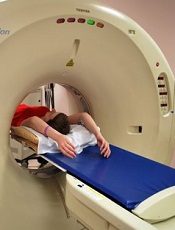
Photo by Angela Mary Butler
TORONTO—A CT scan of the abdomen and pelvis does not improve cancer detection in people with unexplained venous thromboembolism (VTE), results of the SOME trial suggest.
“Unexplained blood clots have long been thought of as a possible early warning sign of cancer, with previous studies suggesting that up to 10% of patients with unexplained clots will be diagnosed with cancer within the year,” said Marc Carrier, MD, of Ottawa Hospital Research Institute in Ontario, Canada.
“Some clinical guidelines recommend a CT scan of the abdomen and pelvis in these patients, in addition to other cancer screening, but there has been very little evidence to know if the added CT scan is helpful. We did this study to find out.”
Dr Carrier and his colleagues described this research in an article published in NEJM and in a presentation given at the 2015 ISTH Congress (abstract LB001*).
The trial involved 854 patients treated at 9 Canadian centers who had an unexplained VTE—deep vein thrombosis, pulmonary embolism, or both.
The patients were randomized to receive basic cancer screening or basic cancer screening plus a CT scan of the abdomen and pelvis. Basic cancer screening included blood work and a chest X-ray, in addition to gender-specific screening (such as a breast exam, Pap smear, and prostate exam) if it had not been conducted in the last year.
Overall, 33 patients (3.9%) had a new diagnosis of occult cancer during the 1-year follow-up period.
There was no significant difference in the rate of diagnosis between the patients who received only basic screening and the patients who underwent CT as well—3.2% (14/431) and 4.5% (19/423), respectively (P=0.28).
Likewise, there was no significant difference in the number of cancers that were not diagnosed by the screening strategies. Basic screening failed to uncover 4 cancers (29%), and basic screening plus CT failed to reveal 5 cancers (26%, P=1.0).
In addition, there was no significant difference between the screening strategies in the time to cancer diagnosis or cancer-related mortality. The mean time to cancer diagnosis was 4.2 months in the basic screening group and 4.0 months in the CT group (P=0.88). And the rate of cancer-related mortality was 1.4% and 0.9%, respectively (P=0.75).
“Although it is tempting to believe that more cancer screening is always better, our study shows that this is not necessarily the case,” Dr Carrier said. “And in fact, unnecessary CT scanning has real risks. It can cause stress and anxiety in patients, as well as radiation exposure, and it can lead to over-investigation of false-positive findings. Our study means many patients will now be able to avoid this.”
That could lead to significant savings for the healthcare system, according to the researchers. For example, approximately 30,000 Canadians suffer from an unexplained VTE every year, and a CT scan costs approximately $300. So avoiding unnecessary CT scans could result in a potential saving of $9 million per year in Canada alone.
*Information in the abstract differs from that presented at the meeting.
Photo by Angela Mary Butler
TORONTO—A CT scan of the abdomen and pelvis does not improve cancer detection in people with unexplained venous thromboembolism (VTE), results of the SOME trial suggest.
“Unexplained blood clots have long been thought of as a possible early warning sign of cancer, with previous studies suggesting that up to 10% of patients with unexplained clots will be diagnosed with cancer within the year,” said Marc Carrier, MD, of Ottawa Hospital Research Institute in Ontario, Canada.
“Some clinical guidelines recommend a CT scan of the abdomen and pelvis in these patients, in addition to other cancer screening, but there has been very little evidence to know if the added CT scan is helpful. We did this study to find out.”
Dr Carrier and his colleagues described this research in an article published in NEJM and in a presentation given at the 2015 ISTH Congress (abstract LB001*).
The trial involved 854 patients treated at 9 Canadian centers who had an unexplained VTE—deep vein thrombosis, pulmonary embolism, or both.
The patients were randomized to receive basic cancer screening or basic cancer screening plus a CT scan of the abdomen and pelvis. Basic cancer screening included blood work and a chest X-ray, in addition to gender-specific screening (such as a breast exam, Pap smear, and prostate exam) if it had not been conducted in the last year.
Overall, 33 patients (3.9%) had a new diagnosis of occult cancer during the 1-year follow-up period.
There was no significant difference in the rate of diagnosis between the patients who received only basic screening and the patients who underwent CT as well—3.2% (14/431) and 4.5% (19/423), respectively (P=0.28).
Likewise, there was no significant difference in the number of cancers that were not diagnosed by the screening strategies. Basic screening failed to uncover 4 cancers (29%), and basic screening plus CT failed to reveal 5 cancers (26%, P=1.0).
In addition, there was no significant difference between the screening strategies in the time to cancer diagnosis or cancer-related mortality. The mean time to cancer diagnosis was 4.2 months in the basic screening group and 4.0 months in the CT group (P=0.88). And the rate of cancer-related mortality was 1.4% and 0.9%, respectively (P=0.75).
“Although it is tempting to believe that more cancer screening is always better, our study shows that this is not necessarily the case,” Dr Carrier said. “And in fact, unnecessary CT scanning has real risks. It can cause stress and anxiety in patients, as well as radiation exposure, and it can lead to over-investigation of false-positive findings. Our study means many patients will now be able to avoid this.”
That could lead to significant savings for the healthcare system, according to the researchers. For example, approximately 30,000 Canadians suffer from an unexplained VTE every year, and a CT scan costs approximately $300. So avoiding unnecessary CT scans could result in a potential saving of $9 million per year in Canada alone.
*Information in the abstract differs from that presented at the meeting.
Photo by Angela Mary Butler
TORONTO—A CT scan of the abdomen and pelvis does not improve cancer detection in people with unexplained venous thromboembolism (VTE), results of the SOME trial suggest.
“Unexplained blood clots have long been thought of as a possible early warning sign of cancer, with previous studies suggesting that up to 10% of patients with unexplained clots will be diagnosed with cancer within the year,” said Marc Carrier, MD, of Ottawa Hospital Research Institute in Ontario, Canada.
“Some clinical guidelines recommend a CT scan of the abdomen and pelvis in these patients, in addition to other cancer screening, but there has been very little evidence to know if the added CT scan is helpful. We did this study to find out.”
Dr Carrier and his colleagues described this research in an article published in NEJM and in a presentation given at the 2015 ISTH Congress (abstract LB001*).
The trial involved 854 patients treated at 9 Canadian centers who had an unexplained VTE—deep vein thrombosis, pulmonary embolism, or both.
The patients were randomized to receive basic cancer screening or basic cancer screening plus a CT scan of the abdomen and pelvis. Basic cancer screening included blood work and a chest X-ray, in addition to gender-specific screening (such as a breast exam, Pap smear, and prostate exam) if it had not been conducted in the last year.
Overall, 33 patients (3.9%) had a new diagnosis of occult cancer during the 1-year follow-up period.
There was no significant difference in the rate of diagnosis between the patients who received only basic screening and the patients who underwent CT as well—3.2% (14/431) and 4.5% (19/423), respectively (P=0.28).
Likewise, there was no significant difference in the number of cancers that were not diagnosed by the screening strategies. Basic screening failed to uncover 4 cancers (29%), and basic screening plus CT failed to reveal 5 cancers (26%, P=1.0).
In addition, there was no significant difference between the screening strategies in the time to cancer diagnosis or cancer-related mortality. The mean time to cancer diagnosis was 4.2 months in the basic screening group and 4.0 months in the CT group (P=0.88). And the rate of cancer-related mortality was 1.4% and 0.9%, respectively (P=0.75).
“Although it is tempting to believe that more cancer screening is always better, our study shows that this is not necessarily the case,” Dr Carrier said. “And in fact, unnecessary CT scanning has real risks. It can cause stress and anxiety in patients, as well as radiation exposure, and it can lead to over-investigation of false-positive findings. Our study means many patients will now be able to avoid this.”
That could lead to significant savings for the healthcare system, according to the researchers. For example, approximately 30,000 Canadians suffer from an unexplained VTE every year, and a CT scan costs approximately $300. So avoiding unnecessary CT scans could result in a potential saving of $9 million per year in Canada alone.
*Information in the abstract differs from that presented at the meeting.
Targeted agent shows early promise for NHL

follicular lymphoma
LUGANO—An anti-CD37 antibody-radionuclide conjugate provides sustained efficacy and a manageable safety profile in patients with relapsed, CD37+ non-Hodgkin lymphoma (NHL), according to researchers.
The drug, 177Lu-DOTA-HH1 (Betalutin), consists of the tumor-specific antibody HH1, which targets the CD37 antigen on the surface of NHL cells, conjugated to the β-emitting isotope lutetium-177 (Lu-177) via the chemical linker DOTA.
In an ongoing, phase 1/2 trial, Betalutin has produced responses in 7 of 12 evaluable patients with relapsed NHL, and 5 of those responses are ongoing.
Grade 3/4 adverse events (AEs) were largely hematologic in nature, and many were transient and reversible. However, grade 3/4 AEs occurred at all 3 dose levels investigated in this study, as did serious AEs.
Arne Kolstad, MD, PhD, of Oslo University Hospital in Norway, and his colleagues reported these results at the 13th International Conference on Malignant Lymphoma (abstract 287*). The study was sponsored by Nordic Nanovector, the company developing Betalutin.
Thus far, the researchers have evaluated 13 patients with relapsed, CD37+ NHL. Twelve patients had a primary diagnosis of follicular lymphoma, and 1 had mantle cell lymphoma (MCL). The patients’ median age was 68 (range, 41-78), and they had received 1 to 8 prior treatments.
In this dose-finding study, the researchers investigated 3 dose levels of Betalutin. Four patients received Betalutin at 10 MBq/kg biweekly, 6 received 15 MBq/kg biweekly, and 3 (including the MCL patient) received 20 MBq/kg biweekly.
All patients received 50 mg of HH1 prior to Betalutin. Patients also received rituximab at 375 mg/m2 on days -28 and -21 (prior to Betalutin on day 0).
Safety and dosing
Dose-limiting toxicities occurred at the 20 MBq/kg biweekly dose, so researchers said 15 MBq/kg biweekly, with HH1 pre-dosing, is the current recommended dose of Betalutin.
Treatment-emergent grade 3 AEs in the 10 MBq/kg group included thrombocytopenia (n=1), neutropenia (n=2), pneumonia (n=1), and pulmonary embolism (n=1). There were no grade 4 AEs in this group.
In the 15 MBq/kg group, 2 patients had grade 3 thrombocytopenia, and 1 had grade 4. One patient each had grade 3 and 4 neutropenia.
Grade 3/4 AEs in the 20 MBq/kg group included grade 4 thrombocytopenia (n=3), grade 3 (n=1) and grade 4 (n=2) neutropenia, and grade 3 epistaxis (n=1).
Serious AEs included pulmonary embolism (1 in the 10 MBq/kg group), pneumonia (1 in the 10 MBq/kg group), atrial fibrillation (2 in the 15 MBq/kg group), thrombocytopenia (1 in the 20 MBq/kg group), and epistaxis (1 in the 20 MBq/kg group).
The researchers said all hematologic AEs were transient and reversible. They also pointed out that 6 patients in this trial have been followed for a year or more, and there have been no secondary malignancies or other events that would suggest long-term toxicity.
Efficacy and next steps
Twelve patients were evaluable for efficacy. Seven patients responded to treatment, including 4 complete responses (CRs) and 3 partial responses. Two patients had stable disease, and 3 progressed. Eight patients had a 50% or greater reduction in tumor volume.
The median response duration has not been reached, and 5 patients’ responses are ongoing. The duration of response in these patients ranges from 6 months to more than 21 months. All 4 patients who achieved a CR (including the MCL patient) are still in CR.
The researchers concluded that Betalutin delivers a highly favorable response rate, with durable clinical responses, and the drug has a predictable and manageable safety profile.
They have opened a new arm of this study to evaluate the safety and efficacy of Betalutin at 15 MBq/kg biweekly and 17.5 MBq/kg biweekly without HH1 pre-dosing.
*Information in the abstract differs from that presented at the meeting.
follicular lymphoma
LUGANO—An anti-CD37 antibody-radionuclide conjugate provides sustained efficacy and a manageable safety profile in patients with relapsed, CD37+ non-Hodgkin lymphoma (NHL), according to researchers.
The drug, 177Lu-DOTA-HH1 (Betalutin), consists of the tumor-specific antibody HH1, which targets the CD37 antigen on the surface of NHL cells, conjugated to the β-emitting isotope lutetium-177 (Lu-177) via the chemical linker DOTA.
In an ongoing, phase 1/2 trial, Betalutin has produced responses in 7 of 12 evaluable patients with relapsed NHL, and 5 of those responses are ongoing.
Grade 3/4 adverse events (AEs) were largely hematologic in nature, and many were transient and reversible. However, grade 3/4 AEs occurred at all 3 dose levels investigated in this study, as did serious AEs.
Arne Kolstad, MD, PhD, of Oslo University Hospital in Norway, and his colleagues reported these results at the 13th International Conference on Malignant Lymphoma (abstract 287*). The study was sponsored by Nordic Nanovector, the company developing Betalutin.
Thus far, the researchers have evaluated 13 patients with relapsed, CD37+ NHL. Twelve patients had a primary diagnosis of follicular lymphoma, and 1 had mantle cell lymphoma (MCL). The patients’ median age was 68 (range, 41-78), and they had received 1 to 8 prior treatments.
In this dose-finding study, the researchers investigated 3 dose levels of Betalutin. Four patients received Betalutin at 10 MBq/kg biweekly, 6 received 15 MBq/kg biweekly, and 3 (including the MCL patient) received 20 MBq/kg biweekly.
All patients received 50 mg of HH1 prior to Betalutin. Patients also received rituximab at 375 mg/m2 on days -28 and -21 (prior to Betalutin on day 0).
Safety and dosing
Dose-limiting toxicities occurred at the 20 MBq/kg biweekly dose, so researchers said 15 MBq/kg biweekly, with HH1 pre-dosing, is the current recommended dose of Betalutin.
Treatment-emergent grade 3 AEs in the 10 MBq/kg group included thrombocytopenia (n=1), neutropenia (n=2), pneumonia (n=1), and pulmonary embolism (n=1). There were no grade 4 AEs in this group.
In the 15 MBq/kg group, 2 patients had grade 3 thrombocytopenia, and 1 had grade 4. One patient each had grade 3 and 4 neutropenia.
Grade 3/4 AEs in the 20 MBq/kg group included grade 4 thrombocytopenia (n=3), grade 3 (n=1) and grade 4 (n=2) neutropenia, and grade 3 epistaxis (n=1).
Serious AEs included pulmonary embolism (1 in the 10 MBq/kg group), pneumonia (1 in the 10 MBq/kg group), atrial fibrillation (2 in the 15 MBq/kg group), thrombocytopenia (1 in the 20 MBq/kg group), and epistaxis (1 in the 20 MBq/kg group).
The researchers said all hematologic AEs were transient and reversible. They also pointed out that 6 patients in this trial have been followed for a year or more, and there have been no secondary malignancies or other events that would suggest long-term toxicity.
Efficacy and next steps
Twelve patients were evaluable for efficacy. Seven patients responded to treatment, including 4 complete responses (CRs) and 3 partial responses. Two patients had stable disease, and 3 progressed. Eight patients had a 50% or greater reduction in tumor volume.
The median response duration has not been reached, and 5 patients’ responses are ongoing. The duration of response in these patients ranges from 6 months to more than 21 months. All 4 patients who achieved a CR (including the MCL patient) are still in CR.
The researchers concluded that Betalutin delivers a highly favorable response rate, with durable clinical responses, and the drug has a predictable and manageable safety profile.
They have opened a new arm of this study to evaluate the safety and efficacy of Betalutin at 15 MBq/kg biweekly and 17.5 MBq/kg biweekly without HH1 pre-dosing.
*Information in the abstract differs from that presented at the meeting.
follicular lymphoma
LUGANO—An anti-CD37 antibody-radionuclide conjugate provides sustained efficacy and a manageable safety profile in patients with relapsed, CD37+ non-Hodgkin lymphoma (NHL), according to researchers.
The drug, 177Lu-DOTA-HH1 (Betalutin), consists of the tumor-specific antibody HH1, which targets the CD37 antigen on the surface of NHL cells, conjugated to the β-emitting isotope lutetium-177 (Lu-177) via the chemical linker DOTA.
In an ongoing, phase 1/2 trial, Betalutin has produced responses in 7 of 12 evaluable patients with relapsed NHL, and 5 of those responses are ongoing.
Grade 3/4 adverse events (AEs) were largely hematologic in nature, and many were transient and reversible. However, grade 3/4 AEs occurred at all 3 dose levels investigated in this study, as did serious AEs.
Arne Kolstad, MD, PhD, of Oslo University Hospital in Norway, and his colleagues reported these results at the 13th International Conference on Malignant Lymphoma (abstract 287*). The study was sponsored by Nordic Nanovector, the company developing Betalutin.
Thus far, the researchers have evaluated 13 patients with relapsed, CD37+ NHL. Twelve patients had a primary diagnosis of follicular lymphoma, and 1 had mantle cell lymphoma (MCL). The patients’ median age was 68 (range, 41-78), and they had received 1 to 8 prior treatments.
In this dose-finding study, the researchers investigated 3 dose levels of Betalutin. Four patients received Betalutin at 10 MBq/kg biweekly, 6 received 15 MBq/kg biweekly, and 3 (including the MCL patient) received 20 MBq/kg biweekly.
All patients received 50 mg of HH1 prior to Betalutin. Patients also received rituximab at 375 mg/m2 on days -28 and -21 (prior to Betalutin on day 0).
Safety and dosing
Dose-limiting toxicities occurred at the 20 MBq/kg biweekly dose, so researchers said 15 MBq/kg biweekly, with HH1 pre-dosing, is the current recommended dose of Betalutin.
Treatment-emergent grade 3 AEs in the 10 MBq/kg group included thrombocytopenia (n=1), neutropenia (n=2), pneumonia (n=1), and pulmonary embolism (n=1). There were no grade 4 AEs in this group.
In the 15 MBq/kg group, 2 patients had grade 3 thrombocytopenia, and 1 had grade 4. One patient each had grade 3 and 4 neutropenia.
Grade 3/4 AEs in the 20 MBq/kg group included grade 4 thrombocytopenia (n=3), grade 3 (n=1) and grade 4 (n=2) neutropenia, and grade 3 epistaxis (n=1).
Serious AEs included pulmonary embolism (1 in the 10 MBq/kg group), pneumonia (1 in the 10 MBq/kg group), atrial fibrillation (2 in the 15 MBq/kg group), thrombocytopenia (1 in the 20 MBq/kg group), and epistaxis (1 in the 20 MBq/kg group).
The researchers said all hematologic AEs were transient and reversible. They also pointed out that 6 patients in this trial have been followed for a year or more, and there have been no secondary malignancies or other events that would suggest long-term toxicity.
Efficacy and next steps
Twelve patients were evaluable for efficacy. Seven patients responded to treatment, including 4 complete responses (CRs) and 3 partial responses. Two patients had stable disease, and 3 progressed. Eight patients had a 50% or greater reduction in tumor volume.
The median response duration has not been reached, and 5 patients’ responses are ongoing. The duration of response in these patients ranges from 6 months to more than 21 months. All 4 patients who achieved a CR (including the MCL patient) are still in CR.
The researchers concluded that Betalutin delivers a highly favorable response rate, with durable clinical responses, and the drug has a predictable and manageable safety profile.
They have opened a new arm of this study to evaluate the safety and efficacy of Betalutin at 15 MBq/kg biweekly and 17.5 MBq/kg biweekly without HH1 pre-dosing.
*Information in the abstract differs from that presented at the meeting.
Inactivating an enzyme can eradicate T-ALL

Preclinical research suggests that inactivating a single enzyme could eradicate or prevent T-cell acute lymphoblastic leukemia (T-ALL).
The researchers knew that T-ALL onset is linked to microRNAs, and most are generated with the help of the enzyme Dicer1.
Now, the team has found evidence to suggest that Dicer1 is crucial for the development of T-ALL, and inhibiting Dicer1 can actually prevent the disease altogether.
They reported these findings in Blood.
The researchers used mice that were genetically modified to develop T-ALL and in which Dicer1 could be abrogated. The team “switched off” Dicer1 in the mice at different stages of T-ALL development to see what role the enzyme plays in disease evolution.
Switching Dicer1 off at an early stage completely prevented T-ALL. In mice where Dicer1 was completely abrogated, T-ALL cells were entirely eliminated, allowing all the mice to survive.
The researchers were able to confirm this effect by monitoring the few residual leukemic cells taken from these animals.
“You can actually see the cancer cells dying off after Dicer1 has been abrogated,” said study author Freddy Radtke, PhD, of Ecole Polytechnique Fédérale de Lausanne in Lausanne, Switzerland.
He and his colleagues found that the key to this cell death is Dicer1’s role in producing microRNAs. The team discovered that a previously unrecognized microRNA, miR-21, was deregulated in both mouse and human T-ALL.
In the context of T-ALL, miR-21 inhibits the tumor suppressor gene Pdcd4. Without Dicer1, there is no miR-21 to do this, which allows Pdcd4 to fight the disease.
This study is the first to conclusively demonstrate that Dicer1 plays a role in T-ALL, the researchers said. The work paves the way for a new set of treatment for this malignancy and possibly others.
However, the team also noted that it can be challenging to target cells of interest when dealing with molecules that are so fundamental to the cell’s life.
“We can’t just go shutting down Dicer1 across the board,” Dr Radtke explained. “Otherwise, we’ll end up killing healthy cells as well.”
His lab is now focused on tackling this obstacle.
Preclinical research suggests that inactivating a single enzyme could eradicate or prevent T-cell acute lymphoblastic leukemia (T-ALL).
The researchers knew that T-ALL onset is linked to microRNAs, and most are generated with the help of the enzyme Dicer1.
Now, the team has found evidence to suggest that Dicer1 is crucial for the development of T-ALL, and inhibiting Dicer1 can actually prevent the disease altogether.
They reported these findings in Blood.
The researchers used mice that were genetically modified to develop T-ALL and in which Dicer1 could be abrogated. The team “switched off” Dicer1 in the mice at different stages of T-ALL development to see what role the enzyme plays in disease evolution.
Switching Dicer1 off at an early stage completely prevented T-ALL. In mice where Dicer1 was completely abrogated, T-ALL cells were entirely eliminated, allowing all the mice to survive.
The researchers were able to confirm this effect by monitoring the few residual leukemic cells taken from these animals.
“You can actually see the cancer cells dying off after Dicer1 has been abrogated,” said study author Freddy Radtke, PhD, of Ecole Polytechnique Fédérale de Lausanne in Lausanne, Switzerland.
He and his colleagues found that the key to this cell death is Dicer1’s role in producing microRNAs. The team discovered that a previously unrecognized microRNA, miR-21, was deregulated in both mouse and human T-ALL.
In the context of T-ALL, miR-21 inhibits the tumor suppressor gene Pdcd4. Without Dicer1, there is no miR-21 to do this, which allows Pdcd4 to fight the disease.
This study is the first to conclusively demonstrate that Dicer1 plays a role in T-ALL, the researchers said. The work paves the way for a new set of treatment for this malignancy and possibly others.
However, the team also noted that it can be challenging to target cells of interest when dealing with molecules that are so fundamental to the cell’s life.
“We can’t just go shutting down Dicer1 across the board,” Dr Radtke explained. “Otherwise, we’ll end up killing healthy cells as well.”
His lab is now focused on tackling this obstacle.
Preclinical research suggests that inactivating a single enzyme could eradicate or prevent T-cell acute lymphoblastic leukemia (T-ALL).
The researchers knew that T-ALL onset is linked to microRNAs, and most are generated with the help of the enzyme Dicer1.
Now, the team has found evidence to suggest that Dicer1 is crucial for the development of T-ALL, and inhibiting Dicer1 can actually prevent the disease altogether.
They reported these findings in Blood.
The researchers used mice that were genetically modified to develop T-ALL and in which Dicer1 could be abrogated. The team “switched off” Dicer1 in the mice at different stages of T-ALL development to see what role the enzyme plays in disease evolution.
Switching Dicer1 off at an early stage completely prevented T-ALL. In mice where Dicer1 was completely abrogated, T-ALL cells were entirely eliminated, allowing all the mice to survive.
The researchers were able to confirm this effect by monitoring the few residual leukemic cells taken from these animals.
“You can actually see the cancer cells dying off after Dicer1 has been abrogated,” said study author Freddy Radtke, PhD, of Ecole Polytechnique Fédérale de Lausanne in Lausanne, Switzerland.
He and his colleagues found that the key to this cell death is Dicer1’s role in producing microRNAs. The team discovered that a previously unrecognized microRNA, miR-21, was deregulated in both mouse and human T-ALL.
In the context of T-ALL, miR-21 inhibits the tumor suppressor gene Pdcd4. Without Dicer1, there is no miR-21 to do this, which allows Pdcd4 to fight the disease.
This study is the first to conclusively demonstrate that Dicer1 plays a role in T-ALL, the researchers said. The work paves the way for a new set of treatment for this malignancy and possibly others.
However, the team also noted that it can be challenging to target cells of interest when dealing with molecules that are so fundamental to the cell’s life.
“We can’t just go shutting down Dicer1 across the board,” Dr Radtke explained. “Otherwise, we’ll end up killing healthy cells as well.”
His lab is now focused on tackling this obstacle.
Short on activity
One of the perks that comes with being a grandparent is that you may get the chance to watch your grandchildren practice, play, and perform in a variety of organized activities. If you are retired and are fortunate enough to live in the same town, the opportunities are limitless and change with the season.
Each event is a kaleidoscope of interpersonal and developmental tableaux. First, of course, you are interested to see how your grandchild is doing. Are her skills improving? How do they compare with her peers’? Is she having fun? But then, what is the goal of the activity? Are the coaches/instructors/organizers doing a good job of reaching that goal?
Last week, I was watching my 8-year-old grandson play the last baseball game of his career (“Grampy, baseball is boring. I’m only playing lacrosse next spring.”) Between innings, I thumbed through the June 2015 Pediatrics. I encountered an article that confirmed my suspicions about some of the organized youth activities I had been watching for the last decade, “Physical Activity in Youth Dance Classes” (Pediatrics 2015;135:1067-73). Using accelerometers, researchers from San Diego State University recorded the activity of more than 250 girls, both children and adolescents, in 21 dance studios, both private and community based.
They discovered that the young dancers were, on average, engaged in moderate to vigorous activity 17.2 minutes (plus or minus 8.9 minutes), which amounted to about 36% of the usual class session. Only 8% of the children and 6% of the adolescents met the Centers for Disease Control and Prevention 30-minute guideline for after-school physical activity during dance.
I’ve watched a fair share of dance classes, and these findings come as no surprise. Typically, there is a lot of sitting around cross-legged in a circle, “listening” to “instruction.” There is even more lining up and waiting, and, then of course, adjusting the line, and an abundance of relining up, followed by a 6-second burst of activity. There is considerable poking and/or hugging fellow line mates, that I suspect wouldn’t have budged an accelerometer.
Unfortunately, this degree of inactivity is not unique to little girls’ dance classes. I have observed the same phenomenon during soccer, baseball, lacrosse, and swim classes – in which the ratio of inactivity to activity often exceeds 4:1. Although it may be slightly more prevalent when the instructors are parent/volunteers, professional physical educators also are guilty of injecting too little physical activity into the activities they are managing. Remember gym class. How much time was spent having your attendance taken, being instructed on how to do the activity, and then standing in line waiting your turn?
There are simple solutions, but they require thinking outside the box. Why have two lines of participants? Wouldn’t six lines mean three times as many children would be active at one time? For example, it has taken a while for soccer and hockey programs to catch on, but now both have games on smaller surfaces with less than the usual number of team members, in hopes that more children will be involved and active. Most great coaches have a knack for creating drills that keep the maximum number of participants active, foster the necessary skills, and at the same time are fun for the participants. The bottom line is that most children, particularly the younger ones, learn by imitating, not by being lectured to. They learn even more quickly if they have older children from which to model their behavior.
You could ask, “What’s the big deal?” Am I just venting the frustrations of an efficiency-obsessed former athlete? Does every minute of a child’s organized activity need to be packed with physical activity? No, not if children were allowed more opportunities for free play at other times during the day. No, not if parents were more diligent in restricting screen time. But if parents are going to count on dance classes and organized sports as physically active time for their children, they need to look more carefully at how that time is being used. An hour of dance class or soccer practice may be better than an hour in front of the tube, but it may fall far short of what the child needs.
Dr. Wilkoff practiced primary care pediatrics in Brunswick, Maine, for nearly 40 years. He has authored several books on behavioral pediatrics, including “Coping with a Picky Eater.”
One of the perks that comes with being a grandparent is that you may get the chance to watch your grandchildren practice, play, and perform in a variety of organized activities. If you are retired and are fortunate enough to live in the same town, the opportunities are limitless and change with the season.
Each event is a kaleidoscope of interpersonal and developmental tableaux. First, of course, you are interested to see how your grandchild is doing. Are her skills improving? How do they compare with her peers’? Is she having fun? But then, what is the goal of the activity? Are the coaches/instructors/organizers doing a good job of reaching that goal?
Last week, I was watching my 8-year-old grandson play the last baseball game of his career (“Grampy, baseball is boring. I’m only playing lacrosse next spring.”) Between innings, I thumbed through the June 2015 Pediatrics. I encountered an article that confirmed my suspicions about some of the organized youth activities I had been watching for the last decade, “Physical Activity in Youth Dance Classes” (Pediatrics 2015;135:1067-73). Using accelerometers, researchers from San Diego State University recorded the activity of more than 250 girls, both children and adolescents, in 21 dance studios, both private and community based.
They discovered that the young dancers were, on average, engaged in moderate to vigorous activity 17.2 minutes (plus or minus 8.9 minutes), which amounted to about 36% of the usual class session. Only 8% of the children and 6% of the adolescents met the Centers for Disease Control and Prevention 30-minute guideline for after-school physical activity during dance.
I’ve watched a fair share of dance classes, and these findings come as no surprise. Typically, there is a lot of sitting around cross-legged in a circle, “listening” to “instruction.” There is even more lining up and waiting, and, then of course, adjusting the line, and an abundance of relining up, followed by a 6-second burst of activity. There is considerable poking and/or hugging fellow line mates, that I suspect wouldn’t have budged an accelerometer.
Unfortunately, this degree of inactivity is not unique to little girls’ dance classes. I have observed the same phenomenon during soccer, baseball, lacrosse, and swim classes – in which the ratio of inactivity to activity often exceeds 4:1. Although it may be slightly more prevalent when the instructors are parent/volunteers, professional physical educators also are guilty of injecting too little physical activity into the activities they are managing. Remember gym class. How much time was spent having your attendance taken, being instructed on how to do the activity, and then standing in line waiting your turn?
There are simple solutions, but they require thinking outside the box. Why have two lines of participants? Wouldn’t six lines mean three times as many children would be active at one time? For example, it has taken a while for soccer and hockey programs to catch on, but now both have games on smaller surfaces with less than the usual number of team members, in hopes that more children will be involved and active. Most great coaches have a knack for creating drills that keep the maximum number of participants active, foster the necessary skills, and at the same time are fun for the participants. The bottom line is that most children, particularly the younger ones, learn by imitating, not by being lectured to. They learn even more quickly if they have older children from which to model their behavior.
You could ask, “What’s the big deal?” Am I just venting the frustrations of an efficiency-obsessed former athlete? Does every minute of a child’s organized activity need to be packed with physical activity? No, not if children were allowed more opportunities for free play at other times during the day. No, not if parents were more diligent in restricting screen time. But if parents are going to count on dance classes and organized sports as physically active time for their children, they need to look more carefully at how that time is being used. An hour of dance class or soccer practice may be better than an hour in front of the tube, but it may fall far short of what the child needs.
Dr. Wilkoff practiced primary care pediatrics in Brunswick, Maine, for nearly 40 years. He has authored several books on behavioral pediatrics, including “Coping with a Picky Eater.”
One of the perks that comes with being a grandparent is that you may get the chance to watch your grandchildren practice, play, and perform in a variety of organized activities. If you are retired and are fortunate enough to live in the same town, the opportunities are limitless and change with the season.
Each event is a kaleidoscope of interpersonal and developmental tableaux. First, of course, you are interested to see how your grandchild is doing. Are her skills improving? How do they compare with her peers’? Is she having fun? But then, what is the goal of the activity? Are the coaches/instructors/organizers doing a good job of reaching that goal?
Last week, I was watching my 8-year-old grandson play the last baseball game of his career (“Grampy, baseball is boring. I’m only playing lacrosse next spring.”) Between innings, I thumbed through the June 2015 Pediatrics. I encountered an article that confirmed my suspicions about some of the organized youth activities I had been watching for the last decade, “Physical Activity in Youth Dance Classes” (Pediatrics 2015;135:1067-73). Using accelerometers, researchers from San Diego State University recorded the activity of more than 250 girls, both children and adolescents, in 21 dance studios, both private and community based.
They discovered that the young dancers were, on average, engaged in moderate to vigorous activity 17.2 minutes (plus or minus 8.9 minutes), which amounted to about 36% of the usual class session. Only 8% of the children and 6% of the adolescents met the Centers for Disease Control and Prevention 30-minute guideline for after-school physical activity during dance.
I’ve watched a fair share of dance classes, and these findings come as no surprise. Typically, there is a lot of sitting around cross-legged in a circle, “listening” to “instruction.” There is even more lining up and waiting, and, then of course, adjusting the line, and an abundance of relining up, followed by a 6-second burst of activity. There is considerable poking and/or hugging fellow line mates, that I suspect wouldn’t have budged an accelerometer.
Unfortunately, this degree of inactivity is not unique to little girls’ dance classes. I have observed the same phenomenon during soccer, baseball, lacrosse, and swim classes – in which the ratio of inactivity to activity often exceeds 4:1. Although it may be slightly more prevalent when the instructors are parent/volunteers, professional physical educators also are guilty of injecting too little physical activity into the activities they are managing. Remember gym class. How much time was spent having your attendance taken, being instructed on how to do the activity, and then standing in line waiting your turn?
There are simple solutions, but they require thinking outside the box. Why have two lines of participants? Wouldn’t six lines mean three times as many children would be active at one time? For example, it has taken a while for soccer and hockey programs to catch on, but now both have games on smaller surfaces with less than the usual number of team members, in hopes that more children will be involved and active. Most great coaches have a knack for creating drills that keep the maximum number of participants active, foster the necessary skills, and at the same time are fun for the participants. The bottom line is that most children, particularly the younger ones, learn by imitating, not by being lectured to. They learn even more quickly if they have older children from which to model their behavior.
You could ask, “What’s the big deal?” Am I just venting the frustrations of an efficiency-obsessed former athlete? Does every minute of a child’s organized activity need to be packed with physical activity? No, not if children were allowed more opportunities for free play at other times during the day. No, not if parents were more diligent in restricting screen time. But if parents are going to count on dance classes and organized sports as physically active time for their children, they need to look more carefully at how that time is being used. An hour of dance class or soccer practice may be better than an hour in front of the tube, but it may fall far short of what the child needs.
Dr. Wilkoff practiced primary care pediatrics in Brunswick, Maine, for nearly 40 years. He has authored several books on behavioral pediatrics, including “Coping with a Picky Eater.”

Paclitaxel-coated balloon boosts femoropopliteal angioplasty patency
For patients who have femoropopliteal peripheral artery disease, percutaneous transluminal angioplasty with a paclitaxel-coated balloon achieves better 1-year patency than does using a standard balloon, according to a report published online June 24 in the New England Journal of Medicine.
Angioplasty initially restores blood flow in most patients with this type of PAD, but more than 60% develop restenosis from vessel recoil and neointimal hyperplasia within 1 year. The LEVANT2 (Lutonix Paclitaxel-Coated Balloon for the Prevention of Femoropopliteal Restenosis) clinical trial assessed the performance of a drug-coated balloon (316 patients) against a standard balloon (160 patients) in participants treated at 54 sites in the U.S. and Europe, said Dr. Kenneth Rosenfield of Massachusetts General Hospital, Boston, and his associates.
The primary efficacy endpoint – the rate of patency of the target lesion at 1 year – was significantly higher with the paclitaxel-coated balloon (65.2%) than with the standard balloon (52.6%), the investigators said (N. Engl. J. Med. 2015 June 24 [doi:10.1056/NEJMoa1406235]).
However, secondary efficacy endpoints including the rates of event-free survival (86.7% vs. 81.5%), target-lesion revascularizations (12.3% vs. 16.8%), overall mortality (2.4% vs. 2.8%), amputation (0.3% vs. 0.0%) and thrombosis (0.4% vs. 0.7%) were not significantly different between the two study groups. Scores on a measure of walking distance improved significantly more with the paclitaxel-coated balloon, but ankle-brachial index and Rutherford scores measuring pain and symptoms of intermittent claudication did not differ significantly between the two study groups.
The primary safety endpoint – a composite of the proportion of patients free from perioperative death from any cause plus the proportion free from amputation, reintervention, or PAD-associated death at 1 year – was 83.9% with the paclitaxel-coated balloon and 79.0% with the standard balloon. This met the criterion for noninferiority.
“Our trial does not provide definitive guidance concerning the potential role of this paclitaxel-coated balloon in clinical practice. Although the findings are encouraging, long-term follow-up will be useful in determining whether the benefit of this intervention is sustained, increased, or attenuated over time,” Dr. Rosenfield and his associates said.
This study was funded by Lutonix-Bard, maker of the paclitaxel-coated balloon. Dr. Rosenfield reported ties to Lutonix/Bard, Cordis, Atrium, Abbott Vascular, and VIVA Physicians; his associates reported ties to numerous industry sources.
For patients who have femoropopliteal peripheral artery disease, percutaneous transluminal angioplasty with a paclitaxel-coated balloon achieves better 1-year patency than does using a standard balloon, according to a report published online June 24 in the New England Journal of Medicine.
Angioplasty initially restores blood flow in most patients with this type of PAD, but more than 60% develop restenosis from vessel recoil and neointimal hyperplasia within 1 year. The LEVANT2 (Lutonix Paclitaxel-Coated Balloon for the Prevention of Femoropopliteal Restenosis) clinical trial assessed the performance of a drug-coated balloon (316 patients) against a standard balloon (160 patients) in participants treated at 54 sites in the U.S. and Europe, said Dr. Kenneth Rosenfield of Massachusetts General Hospital, Boston, and his associates.
The primary efficacy endpoint – the rate of patency of the target lesion at 1 year – was significantly higher with the paclitaxel-coated balloon (65.2%) than with the standard balloon (52.6%), the investigators said (N. Engl. J. Med. 2015 June 24 [doi:10.1056/NEJMoa1406235]).
However, secondary efficacy endpoints including the rates of event-free survival (86.7% vs. 81.5%), target-lesion revascularizations (12.3% vs. 16.8%), overall mortality (2.4% vs. 2.8%), amputation (0.3% vs. 0.0%) and thrombosis (0.4% vs. 0.7%) were not significantly different between the two study groups. Scores on a measure of walking distance improved significantly more with the paclitaxel-coated balloon, but ankle-brachial index and Rutherford scores measuring pain and symptoms of intermittent claudication did not differ significantly between the two study groups.
The primary safety endpoint – a composite of the proportion of patients free from perioperative death from any cause plus the proportion free from amputation, reintervention, or PAD-associated death at 1 year – was 83.9% with the paclitaxel-coated balloon and 79.0% with the standard balloon. This met the criterion for noninferiority.
“Our trial does not provide definitive guidance concerning the potential role of this paclitaxel-coated balloon in clinical practice. Although the findings are encouraging, long-term follow-up will be useful in determining whether the benefit of this intervention is sustained, increased, or attenuated over time,” Dr. Rosenfield and his associates said.
This study was funded by Lutonix-Bard, maker of the paclitaxel-coated balloon. Dr. Rosenfield reported ties to Lutonix/Bard, Cordis, Atrium, Abbott Vascular, and VIVA Physicians; his associates reported ties to numerous industry sources.
For patients who have femoropopliteal peripheral artery disease, percutaneous transluminal angioplasty with a paclitaxel-coated balloon achieves better 1-year patency than does using a standard balloon, according to a report published online June 24 in the New England Journal of Medicine.
Angioplasty initially restores blood flow in most patients with this type of PAD, but more than 60% develop restenosis from vessel recoil and neointimal hyperplasia within 1 year. The LEVANT2 (Lutonix Paclitaxel-Coated Balloon for the Prevention of Femoropopliteal Restenosis) clinical trial assessed the performance of a drug-coated balloon (316 patients) against a standard balloon (160 patients) in participants treated at 54 sites in the U.S. and Europe, said Dr. Kenneth Rosenfield of Massachusetts General Hospital, Boston, and his associates.
The primary efficacy endpoint – the rate of patency of the target lesion at 1 year – was significantly higher with the paclitaxel-coated balloon (65.2%) than with the standard balloon (52.6%), the investigators said (N. Engl. J. Med. 2015 June 24 [doi:10.1056/NEJMoa1406235]).
However, secondary efficacy endpoints including the rates of event-free survival (86.7% vs. 81.5%), target-lesion revascularizations (12.3% vs. 16.8%), overall mortality (2.4% vs. 2.8%), amputation (0.3% vs. 0.0%) and thrombosis (0.4% vs. 0.7%) were not significantly different between the two study groups. Scores on a measure of walking distance improved significantly more with the paclitaxel-coated balloon, but ankle-brachial index and Rutherford scores measuring pain and symptoms of intermittent claudication did not differ significantly between the two study groups.
The primary safety endpoint – a composite of the proportion of patients free from perioperative death from any cause plus the proportion free from amputation, reintervention, or PAD-associated death at 1 year – was 83.9% with the paclitaxel-coated balloon and 79.0% with the standard balloon. This met the criterion for noninferiority.
“Our trial does not provide definitive guidance concerning the potential role of this paclitaxel-coated balloon in clinical practice. Although the findings are encouraging, long-term follow-up will be useful in determining whether the benefit of this intervention is sustained, increased, or attenuated over time,” Dr. Rosenfield and his associates said.
This study was funded by Lutonix-Bard, maker of the paclitaxel-coated balloon. Dr. Rosenfield reported ties to Lutonix/Bard, Cordis, Atrium, Abbott Vascular, and VIVA Physicians; his associates reported ties to numerous industry sources.
FROM THE NEW ENGLAND JOURNAL OF MEDICINE
Key clinical point: A paclitaxel-coated balloon confers better 1-year patency than a standard balloon in femoropopliteal angioplasty.
Major finding: The primary efficacy endpoint – the rate of patency of the target lesion at 1 year – was significantly higher with the paclitaxel-coated balloon (65.2%) than with the standard balloon (52.6%).
Data source: An industry-sponsored multicenter prospective randomized controlled trial comparing paclitaxel-coated against standard balloons in 476 patients undergoing femoropopliteal angioplasty who were followed for 1 year.
Disclosures: This study was funded by Lutonix-Bard, maker of the paclitaxel-coated balloon. Dr. Rosenfield reported ties to Lutonix/Bard, Cordis, Atrium, Abbott Vascular, and VIVA Physicians; his associates reported ties to numerous industry sources.
In youth, hours of screen viewing is associated with severity of depression
Spending time in front of a screen may increase adolescents’ risks of suffering from depression and anxiety, according to a study of 2,482 Canadian middle and high schoolers.
To assess the mental status of the participants, the researchers used self-report questionnaires, the Children’s Depression Inventory, and the Multidimensional Anxiety Scale for Children-10. The more time a student spent viewing a screen was significantly associated with depressive symptoms and the severity of anxiety symptoms, after controlling for the covariates of age, sex, ethnicity, parental education, body mass index, and physical activity. More severe depressive symptoms were significantly associated with the increased amounts of time a student played video games and used a computer, but not with the hours spent watching television. The duration of video game playing also was significantly associated with more severe symptoms of anxiety.
The study’s findings suggest that “screen time may represent a risk factor for, or a marker” of depression and anxiety disorders in adolescents, according to Danijela Maras of Carleton University, Ottawa, and her colleagues. The researchers recommended that future studies determine if “reducing screen time can have a significant impact on the prevention and treatment of anxiety and depression in adolescents.”
Read the full study in Preventive Medicine (doi:10.1016/j.ypmed2015.01.029).
Spending time in front of a screen may increase adolescents’ risks of suffering from depression and anxiety, according to a study of 2,482 Canadian middle and high schoolers.
To assess the mental status of the participants, the researchers used self-report questionnaires, the Children’s Depression Inventory, and the Multidimensional Anxiety Scale for Children-10. The more time a student spent viewing a screen was significantly associated with depressive symptoms and the severity of anxiety symptoms, after controlling for the covariates of age, sex, ethnicity, parental education, body mass index, and physical activity. More severe depressive symptoms were significantly associated with the increased amounts of time a student played video games and used a computer, but not with the hours spent watching television. The duration of video game playing also was significantly associated with more severe symptoms of anxiety.
The study’s findings suggest that “screen time may represent a risk factor for, or a marker” of depression and anxiety disorders in adolescents, according to Danijela Maras of Carleton University, Ottawa, and her colleagues. The researchers recommended that future studies determine if “reducing screen time can have a significant impact on the prevention and treatment of anxiety and depression in adolescents.”
Read the full study in Preventive Medicine (doi:10.1016/j.ypmed2015.01.029).
Spending time in front of a screen may increase adolescents’ risks of suffering from depression and anxiety, according to a study of 2,482 Canadian middle and high schoolers.
To assess the mental status of the participants, the researchers used self-report questionnaires, the Children’s Depression Inventory, and the Multidimensional Anxiety Scale for Children-10. The more time a student spent viewing a screen was significantly associated with depressive symptoms and the severity of anxiety symptoms, after controlling for the covariates of age, sex, ethnicity, parental education, body mass index, and physical activity. More severe depressive symptoms were significantly associated with the increased amounts of time a student played video games and used a computer, but not with the hours spent watching television. The duration of video game playing also was significantly associated with more severe symptoms of anxiety.
The study’s findings suggest that “screen time may represent a risk factor for, or a marker” of depression and anxiety disorders in adolescents, according to Danijela Maras of Carleton University, Ottawa, and her colleagues. The researchers recommended that future studies determine if “reducing screen time can have a significant impact on the prevention and treatment of anxiety and depression in adolescents.”
Read the full study in Preventive Medicine (doi:10.1016/j.ypmed2015.01.029).
FROM PREVENTIVE MEDICINE
ACOG, SMFM, and others address safety concerns in labor and delivery
At least half of all cases of maternal morbidity and mortality could be prevented, or so studies suggest.1,2
The main stumbling block?
Faulty communication.
That’s the word from the American College of Obstetricians and Gynecologists, the Society for Maternal-Fetal Medicine, the American College of Nurse-Midwives, and the Association of Women’s Health, Obstetric and Neonatal Nurses.3
In a joint “blueprint” to transform communication and enhance the safety culture in intrapartum care, these organizations, led by Audrey Lyndon, PhD, RN, from the University of California, San Francisco, School of Nursing, describe the extent of the problem, steps that various team members can take to improve safety, notable success stories, and communication strategies.3 In this article, the joint blueprint is summarized, with a focus on steps obstetricians can take to improve the intrapartum safety culture.
Scope of the problem
A study of more than 3,282 physicians, midwives, and registered nurses produced a troubling statistic: More than 90% of respondents said that they had “witnessed shortcuts, missing competencies, disrespect, or performance problems” during the preceding year of practice.4 Few of these clinicians reported that they had discussed their concerns with the parties involved.
A second study of 1,932 clinicians found that 34% of physicians, 40% of midwives, and 56% of registered nurses had witnessed patients being put at risk within the preceding 2 years by other team members’ inattentiveness or lack of responsiveness.5

These findings suggest that health care providers often witness weak links in intrapartum safety but do not always address or report them. Among the reasons team members may be hesitant to speak up when they perceive a potential problem:
- feelings of resignation or inability to change the situation
- fear of retribution or ridicule
- fear of interpersonal or intrateam conflict.
Although Lyndon and colleagues acknowledge that it is impossible to eliminate adverse outcomes entirely or completely eradicate human error, they argue that significant improvements can be made by adopting a number of manageable strategies.3
Recommended strategies
Lyndon and colleagues describe some of the challenges of effective communication in a health care setting:
Lyndon and colleagues go on to mention a number of strategies to improve communication, boost safety, and reduce medical errors.3
1. Remember that the patient is part of the team
The patient and her family play a key role in identifying the potential for harm during labor and delivery, Lyndon and colleagues assert. Patients should be considered members of the intrapartum team, care should be patient-focused, and any communications from the patient should not only be heard but fully considered. In fact, explicit elicitation of her experience and concerns is recommended.3
2. Consider that you might be part of the problem
It is human nature to attribute a communication problem to the other people involved, rather than take responsibility for it oneself. One potential solution to this mindset is team training, where all members are encouraged to communicate clearly and listen attentively. Organizations that have been successful at improving their culture of safety have implemented such training, as well as the use of checklists, training in fetal heart-rate monitoring, formation of a patient safety committee, external review of safety practices, and designation of a key clinicianto lead the safety program and oversee team training.
3. Structure handoffs
The team should standardize handoffs so that they occur smoothly and all channels of communication remain open and clear.
“Having structured formats for debriefing and handoffs are steps in the right direction, but solving the problem of communication breakdowns is more complicated than standardizing the flow and format of information transfer,” Lyndon and colleagues assert. “Indeed, solving communication breakdowns is a matter of individual, group, organizational, and professional responsibility for creating and sustaining an environment of mutual respect, curiosity, and accountability for behavior and performance.”3
4. Learn to communicate responsibly
“Differences of opinion about clinical assessments, goals of care, and the pathway to optimal outcomes are bound to occur with some regularity in the dynamic environment of labor and delivery,” note Lyndon and colleagues. “Every person has the responsibility to contribute to improving how we relate to and communicate with each other. Collectively, we must create environments in which every team member (woman, family member, physician, midwife, nurse, unit clerk, patient care assistant, or scrub tech) is comfortable expressing and discussing concerns about safety or performance, is encouraged to do so, and has the support of the team to articulate the rationale for and urgency of the concern without fear of put-downs, retribution, or receiving poor-quality care.”3
5. Be persistent and proactive
When team members have differing expectations and communication styles, useful approaches include structured communication tools such as situation, background, assessment, recommendation (SBAR); structured handoffs; board rounds; huddles; attentive listening; and explicit elicitation of the patient’s concerns and desires.3
If someone fails to pay attention to a concern you raise, be persistent about restating that concern until you elicit a response.
If someone exhibits disruptive behavior, point to or establish a code of conduct that clearly describes professional behavior.
If there is a difference of opinion on patient management, such as fetal monitoring and interpretation, conduct regular case reviews and standardize a plan for notification of complications.
6. If you’re a team leader, set clear goals
Then ask team members what will be needed to achieve the outcomes desired.
“Team leaders need to develop outstanding skills for listening and eliciting feedback and cross-monitoring (being aware of each other’s actions and performance) from other team members,” note Lyndon and colleagues.3
7. Increase public awareness of safety concepts
When these concepts and best practices are made known to the public, women and families become “empowered” to speak up when they have concerns about care.
And when they do speak up, it pays to listen.
Share your thoughts on this article! Send your Letter to the Editor to rbarbieri@frontlinemedcom.com. Please include your name and the city and state in which you practice.
1. Geller SE, Rosenberg D, Cox SM, et al. The continuum of maternal morbidity and mortality: factors associated with severity. Am J Obstet Gynecol. 2004;191(3):939–944.
2. Mitchell C, Lawton E, Morton C, McCain C, Holtby S, Main E. California Pregnancy-Associated Mortality Review: mixed methods approach for improved case identification, cause of death analyses and translation of findings. Matern Child Health J. 2014;18(3):518–526.
3. Lyndon A, Johnson MC, Bingham D, et al. Transforming communication and safety culture in intrapartum care: a multi-organization blueprint. Obstet Gynecol. 2015;125(5):1049–1055.
4. Maxfield DG, Lyndon A, Kennedy HP, O’Keeffe DF, Ziatnik MG. Confronting safety gaps across labor and delivery teams. Am J Obstet Gynecol. 2013;209(5):402–408.e3.
5. Lyndon A, Zlatnik MG, Maxfield DG, Lewis A, McMillan C, Kennedy HP. Contributions of clinical disconnections and unresolved conflict to failures in intrapartum safety. J Obstet Gynecol Neonatal Nurs. 2014;43(1):2–12.
At least half of all cases of maternal morbidity and mortality could be prevented, or so studies suggest.1,2
The main stumbling block?
Faulty communication.
That’s the word from the American College of Obstetricians and Gynecologists, the Society for Maternal-Fetal Medicine, the American College of Nurse-Midwives, and the Association of Women’s Health, Obstetric and Neonatal Nurses.3
In a joint “blueprint” to transform communication and enhance the safety culture in intrapartum care, these organizations, led by Audrey Lyndon, PhD, RN, from the University of California, San Francisco, School of Nursing, describe the extent of the problem, steps that various team members can take to improve safety, notable success stories, and communication strategies.3 In this article, the joint blueprint is summarized, with a focus on steps obstetricians can take to improve the intrapartum safety culture.
Scope of the problem
A study of more than 3,282 physicians, midwives, and registered nurses produced a troubling statistic: More than 90% of respondents said that they had “witnessed shortcuts, missing competencies, disrespect, or performance problems” during the preceding year of practice.4 Few of these clinicians reported that they had discussed their concerns with the parties involved.
A second study of 1,932 clinicians found that 34% of physicians, 40% of midwives, and 56% of registered nurses had witnessed patients being put at risk within the preceding 2 years by other team members’ inattentiveness or lack of responsiveness.5
These findings suggest that health care providers often witness weak links in intrapartum safety but do not always address or report them. Among the reasons team members may be hesitant to speak up when they perceive a potential problem:
- feelings of resignation or inability to change the situation
- fear of retribution or ridicule
- fear of interpersonal or intrateam conflict.
Although Lyndon and colleagues acknowledge that it is impossible to eliminate adverse outcomes entirely or completely eradicate human error, they argue that significant improvements can be made by adopting a number of manageable strategies.3
Recommended strategies
Lyndon and colleagues describe some of the challenges of effective communication in a health care setting:
Lyndon and colleagues go on to mention a number of strategies to improve communication, boost safety, and reduce medical errors.3
1. Remember that the patient is part of the team
The patient and her family play a key role in identifying the potential for harm during labor and delivery, Lyndon and colleagues assert. Patients should be considered members of the intrapartum team, care should be patient-focused, and any communications from the patient should not only be heard but fully considered. In fact, explicit elicitation of her experience and concerns is recommended.3
2. Consider that you might be part of the problem
It is human nature to attribute a communication problem to the other people involved, rather than take responsibility for it oneself. One potential solution to this mindset is team training, where all members are encouraged to communicate clearly and listen attentively. Organizations that have been successful at improving their culture of safety have implemented such training, as well as the use of checklists, training in fetal heart-rate monitoring, formation of a patient safety committee, external review of safety practices, and designation of a key clinicianto lead the safety program and oversee team training.
3. Structure handoffs
The team should standardize handoffs so that they occur smoothly and all channels of communication remain open and clear.
“Having structured formats for debriefing and handoffs are steps in the right direction, but solving the problem of communication breakdowns is more complicated than standardizing the flow and format of information transfer,” Lyndon and colleagues assert. “Indeed, solving communication breakdowns is a matter of individual, group, organizational, and professional responsibility for creating and sustaining an environment of mutual respect, curiosity, and accountability for behavior and performance.”3
4. Learn to communicate responsibly
“Differences of opinion about clinical assessments, goals of care, and the pathway to optimal outcomes are bound to occur with some regularity in the dynamic environment of labor and delivery,” note Lyndon and colleagues. “Every person has the responsibility to contribute to improving how we relate to and communicate with each other. Collectively, we must create environments in which every team member (woman, family member, physician, midwife, nurse, unit clerk, patient care assistant, or scrub tech) is comfortable expressing and discussing concerns about safety or performance, is encouraged to do so, and has the support of the team to articulate the rationale for and urgency of the concern without fear of put-downs, retribution, or receiving poor-quality care.”3
5. Be persistent and proactive
When team members have differing expectations and communication styles, useful approaches include structured communication tools such as situation, background, assessment, recommendation (SBAR); structured handoffs; board rounds; huddles; attentive listening; and explicit elicitation of the patient’s concerns and desires.3
If someone fails to pay attention to a concern you raise, be persistent about restating that concern until you elicit a response.
If someone exhibits disruptive behavior, point to or establish a code of conduct that clearly describes professional behavior.
If there is a difference of opinion on patient management, such as fetal monitoring and interpretation, conduct regular case reviews and standardize a plan for notification of complications.
6. If you’re a team leader, set clear goals
Then ask team members what will be needed to achieve the outcomes desired.
“Team leaders need to develop outstanding skills for listening and eliciting feedback and cross-monitoring (being aware of each other’s actions and performance) from other team members,” note Lyndon and colleagues.3
7. Increase public awareness of safety concepts
When these concepts and best practices are made known to the public, women and families become “empowered” to speak up when they have concerns about care.
And when they do speak up, it pays to listen.
Share your thoughts on this article! Send your Letter to the Editor to rbarbieri@frontlinemedcom.com. Please include your name and the city and state in which you practice.
At least half of all cases of maternal morbidity and mortality could be prevented, or so studies suggest.1,2
The main stumbling block?
Faulty communication.
That’s the word from the American College of Obstetricians and Gynecologists, the Society for Maternal-Fetal Medicine, the American College of Nurse-Midwives, and the Association of Women’s Health, Obstetric and Neonatal Nurses.3
In a joint “blueprint” to transform communication and enhance the safety culture in intrapartum care, these organizations, led by Audrey Lyndon, PhD, RN, from the University of California, San Francisco, School of Nursing, describe the extent of the problem, steps that various team members can take to improve safety, notable success stories, and communication strategies.3 In this article, the joint blueprint is summarized, with a focus on steps obstetricians can take to improve the intrapartum safety culture.
Scope of the problem
A study of more than 3,282 physicians, midwives, and registered nurses produced a troubling statistic: More than 90% of respondents said that they had “witnessed shortcuts, missing competencies, disrespect, or performance problems” during the preceding year of practice.4 Few of these clinicians reported that they had discussed their concerns with the parties involved.
A second study of 1,932 clinicians found that 34% of physicians, 40% of midwives, and 56% of registered nurses had witnessed patients being put at risk within the preceding 2 years by other team members’ inattentiveness or lack of responsiveness.5
These findings suggest that health care providers often witness weak links in intrapartum safety but do not always address or report them. Among the reasons team members may be hesitant to speak up when they perceive a potential problem:
- feelings of resignation or inability to change the situation
- fear of retribution or ridicule
- fear of interpersonal or intrateam conflict.
Although Lyndon and colleagues acknowledge that it is impossible to eliminate adverse outcomes entirely or completely eradicate human error, they argue that significant improvements can be made by adopting a number of manageable strategies.3
Recommended strategies
Lyndon and colleagues describe some of the challenges of effective communication in a health care setting:
Lyndon and colleagues go on to mention a number of strategies to improve communication, boost safety, and reduce medical errors.3
1. Remember that the patient is part of the team
The patient and her family play a key role in identifying the potential for harm during labor and delivery, Lyndon and colleagues assert. Patients should be considered members of the intrapartum team, care should be patient-focused, and any communications from the patient should not only be heard but fully considered. In fact, explicit elicitation of her experience and concerns is recommended.3
2. Consider that you might be part of the problem
It is human nature to attribute a communication problem to the other people involved, rather than take responsibility for it oneself. One potential solution to this mindset is team training, where all members are encouraged to communicate clearly and listen attentively. Organizations that have been successful at improving their culture of safety have implemented such training, as well as the use of checklists, training in fetal heart-rate monitoring, formation of a patient safety committee, external review of safety practices, and designation of a key clinicianto lead the safety program and oversee team training.
3. Structure handoffs
The team should standardize handoffs so that they occur smoothly and all channels of communication remain open and clear.
“Having structured formats for debriefing and handoffs are steps in the right direction, but solving the problem of communication breakdowns is more complicated than standardizing the flow and format of information transfer,” Lyndon and colleagues assert. “Indeed, solving communication breakdowns is a matter of individual, group, organizational, and professional responsibility for creating and sustaining an environment of mutual respect, curiosity, and accountability for behavior and performance.”3
4. Learn to communicate responsibly
“Differences of opinion about clinical assessments, goals of care, and the pathway to optimal outcomes are bound to occur with some regularity in the dynamic environment of labor and delivery,” note Lyndon and colleagues. “Every person has the responsibility to contribute to improving how we relate to and communicate with each other. Collectively, we must create environments in which every team member (woman, family member, physician, midwife, nurse, unit clerk, patient care assistant, or scrub tech) is comfortable expressing and discussing concerns about safety or performance, is encouraged to do so, and has the support of the team to articulate the rationale for and urgency of the concern without fear of put-downs, retribution, or receiving poor-quality care.”3
5. Be persistent and proactive
When team members have differing expectations and communication styles, useful approaches include structured communication tools such as situation, background, assessment, recommendation (SBAR); structured handoffs; board rounds; huddles; attentive listening; and explicit elicitation of the patient’s concerns and desires.3
If someone fails to pay attention to a concern you raise, be persistent about restating that concern until you elicit a response.
If someone exhibits disruptive behavior, point to or establish a code of conduct that clearly describes professional behavior.
If there is a difference of opinion on patient management, such as fetal monitoring and interpretation, conduct regular case reviews and standardize a plan for notification of complications.
6. If you’re a team leader, set clear goals
Then ask team members what will be needed to achieve the outcomes desired.
“Team leaders need to develop outstanding skills for listening and eliciting feedback and cross-monitoring (being aware of each other’s actions and performance) from other team members,” note Lyndon and colleagues.3
7. Increase public awareness of safety concepts
When these concepts and best practices are made known to the public, women and families become “empowered” to speak up when they have concerns about care.
And when they do speak up, it pays to listen.
Share your thoughts on this article! Send your Letter to the Editor to rbarbieri@frontlinemedcom.com. Please include your name and the city and state in which you practice.
1. Geller SE, Rosenberg D, Cox SM, et al. The continuum of maternal morbidity and mortality: factors associated with severity. Am J Obstet Gynecol. 2004;191(3):939–944.
2. Mitchell C, Lawton E, Morton C, McCain C, Holtby S, Main E. California Pregnancy-Associated Mortality Review: mixed methods approach for improved case identification, cause of death analyses and translation of findings. Matern Child Health J. 2014;18(3):518–526.
3. Lyndon A, Johnson MC, Bingham D, et al. Transforming communication and safety culture in intrapartum care: a multi-organization blueprint. Obstet Gynecol. 2015;125(5):1049–1055.
4. Maxfield DG, Lyndon A, Kennedy HP, O’Keeffe DF, Ziatnik MG. Confronting safety gaps across labor and delivery teams. Am J Obstet Gynecol. 2013;209(5):402–408.e3.
5. Lyndon A, Zlatnik MG, Maxfield DG, Lewis A, McMillan C, Kennedy HP. Contributions of clinical disconnections and unresolved conflict to failures in intrapartum safety. J Obstet Gynecol Neonatal Nurs. 2014;43(1):2–12.
1. Geller SE, Rosenberg D, Cox SM, et al. The continuum of maternal morbidity and mortality: factors associated with severity. Am J Obstet Gynecol. 2004;191(3):939–944.
2. Mitchell C, Lawton E, Morton C, McCain C, Holtby S, Main E. California Pregnancy-Associated Mortality Review: mixed methods approach for improved case identification, cause of death analyses and translation of findings. Matern Child Health J. 2014;18(3):518–526.
3. Lyndon A, Johnson MC, Bingham D, et al. Transforming communication and safety culture in intrapartum care: a multi-organization blueprint. Obstet Gynecol. 2015;125(5):1049–1055.
4. Maxfield DG, Lyndon A, Kennedy HP, O’Keeffe DF, Ziatnik MG. Confronting safety gaps across labor and delivery teams. Am J Obstet Gynecol. 2013;209(5):402–408.e3.
5. Lyndon A, Zlatnik MG, Maxfield DG, Lewis A, McMillan C, Kennedy HP. Contributions of clinical disconnections and unresolved conflict to failures in intrapartum safety. J Obstet Gynecol Neonatal Nurs. 2014;43(1):2–12.
In this article
- Why handoffs should be structured
- Goals for teamleaders