User login
Cabozantinib boosts dual immunotherapy in advanced RCC
PARIS – (PFS) in advanced renal cell carcinoma (aRCC), particularly in intermediate-risk patients, suggest results from the COSMIC-313 trial.
At present, dual checkpoint inhibition with nivolumab and ipilimumab is a standard of care for first-line treatment of aRCC that is deemed to be of intermediate or poor risk on the International Metastatic RCC Database Consortium (IMDC) risk score.
Cabozantinib, a tyrosine kinase inhibitor (TKI), is also a standard of care in aRCC, both as a single agent and in combination with nivolumab.
The new study investigated the use of the three drugs together as upfront first-line treatment and suggests that this triplet may become a new standard of care, especially in patients with intermediate-risk disease.
The research was presented at the European Society for Medical Oncology Congress in Paris.
The trial involved 855 previously untreated patients with aRCC, all of whom received dual immunotherapy with nivolumab and ipilimumab, who were randomly assigned to also receive either cabozantinib or matched placebo.
Patients given the triplet therapy had a significant 27% reduction in the risk for progression versus the doublet in the overall patient population.
The difference increased to 37% in patients with intermediate-risk disease on the IMDC risk score.
However, patients with poor-risk disease appeared not to derive any benefit from adding cabozantinib to nivolumab plus ipilimumab.
In addition, grade 3 or 4 treatment-related adverse events were more common with the triplet therapy.
The results suggest that adding cabozantinib results in a “statistically significant and clinically meaningful” PFS benefit, study presenter Toni Choueiri, MD, director of the Lank Center for Genitourinary Oncology at the Dana-Farber Cancer Institute, Boston, told a press conference.
He added that the safety profile of the triplet therapy was “generally manageable” and “consistent with the profiles of the treatment components.”
“The study will continue to the next analysis of overall survival, as this secondary endpoint was not met at first interim analysis,” Dr. Choueiri commented.
He told this news organization that, based on the current results, the triplet combination “may end up in intermediate-risk” patients, although it is not clear why there is a difference in response between risk groups, and the finding is “quite intriguing.”
Asked which therapy to choose now for first-line treatment of aRCC, given that there are now so many options, he said that there is now such “an embarrassment of riches of trials in the first-line” that it is perhaps easier to talk about which therapies “not to use.”
“We cannot use single TKIs anymore, so you have to use doublets and possibly now triplets,” he said.
“In my practice, patients that are progressing rapidly ... need a VEGF [vascular endothelial growth factor]–based combination. In patients that can wait and ... do not have a heavy disease burden, I still believe in nivolumab and ipilimumab, which has the longest follow-up, and the responses are durable.”
Approached for comment, Dominik Berthold, MD, Centre hospitalier universitaire vaudois, Lausanne, Switzerland, said that this is a “really important study” because it has a “modern” study comparator in the control arm.
He said in an interview, however, that the question now is “obviously” how much treatment should be escalated to triple therapy “upfront versus the sequencing of active drugs.” The answer, he said, is currently unclear, and overall survival data are awaited.
Alongside the potential “challenge” of the toxicity to patients of the triplet therapy, Dr. Berthold also highlighted that it is “currently a challenge for health systems to imagine giving such expensive combinations.”
So though it is “really interesting data” and potentially represents a “step forward” in the field, the combination of cabozantinib and nivolumab plus ipilimumab is “not for everybody.”
Dr. Choueiri said that he does “agree” that adding a third drug to an already expensive doublet therapy can mean that the costs end up being “exorbitant.”
However, he noted that in aRCC, “the paradigm is sequential, so if we’re able to delay the second line, and give drugs later, especially if there is some quality of life [benefit], I’m not sure it is more expensive” to give the three-drug combination.
Commenting for ESMO, Viktor Grünwald, MD, West German Cancer Center, University Hospital Essen, Germany, noted that this is the “first study” to report “successful treatment intensification” in metastatic RCC through the use of triple therapy.
“However, treatment intensification is rarely seen without additional risks. Patients experienced the benefit of superior disease control but also additional toxicities, treatment pauses and discontinuations,” he pointed out.
“The triplet may compete in the clinical landscape with recommended life-prolonging immune doublets but mature overall survival data is needed for it to become a novel standard of care,” Dr. Grünwald commented.
Details of the new results
The phase 3 COSMIC-313 trial enrolled intermediate- or poor-risk patients with aRCC and good performance status who had received no prior systemic therapy and had a clear cell component on histology, which, Dr. Choueiri noted, represents around 80% of patients.
They were randomly assigned to cabozantinib or a matched placebo against a background of four cycles of nivolumab plus ipilimumab followed by nivolumab for up to 2 years. No crossover was allowed between the two arms. Tumor assessment was performed every 8 weeks.
Overall, 855 patients were randomly assigned, 75% of whom had an intermediate risk on the IDMC risk score, and 25% had a poor risk. The median age of the patients was around 60 years, and between 73% and 76% were men. Prior nephrectomy had been performed in 65%.
The study met its primary endpoint of a significant improvement in PFS as assessed by blinded independent central review. The median PFS was not reached for the triplet versus 11.3 months for patients given the doublet, at a hazard ratio of 0.73 (P = 0.013).
At 12 months, 57% of patients in the triplet-therapy arm remained disease-free versus 49% of those on dual immunotherapy.
Moreover, there was a higher objective response rate with the triplet therapy, at 43% versus 36% for the doublet, and the median duration of response was not reached in either group.
Prespecified subgroup analysis suggested that most subgroups responded similarly to the overall patient population.
However, breaking the results down by IMDC risk group, Dr. Choueiri showed that PFS benefit was even greater in intermediate-risk patients, at an HR for the triplet versus the doublet therapy of 0.63 (95% confidence interval, 047-0.85), and a similar response rate as in the overall analysis.
But the benefit of adding cabozantinib to nivolumab plus ipilimumab appeared to be lost in poor-risk patients, at an HR for the triplet versus the doublet of 1.04 (95% CI, 0.65-1.69). And in this subgroup, the objective response rates were similar: 37% with the triplet and 38% with the doublet.
Also, the triplet had a higher rate of adverse events. Grade 3 or 4 treatment-related adverse events were observed in 73% of patients on the triplet versus 41% with the doublet; 1% of patients in each group had a grade 5 event.
Treatment-related adverse events leading to discontinuation of all treatment components occurred in 12% of patients receiving triplet therapy and in 5% of those assigned to placebo and nivolumab plus ipilimumab.
Dr. Choueiri highlighted that some adverse events, including elevated liver transaminases, diarrhea, and skin toxicity, were markedly more frequent with cabozantinib and nivolumab plus ipilimumab than with the doublet therapy. Discussing the study, Sumanta K. Pal, MD, co-director of the Kidney Cancer Program at City of Hope, Irvine, Calif., said that ESMO Congress 2022 has been a “high watermark” for trials in the RCC field and congratulated the researchers of COSMIC-313 for the number of “firsts” that it achieved.
However, he continued, the “elephant in the room” is the current lack of overall survival, and he pointed out that those hotly anticipated results could have a major impact on the future use of the triplet combination.
Dr. Pal questioned whether, in the meantime, it is even possible to make a decision about the combination and urged investigators of all trials to make overall survival data available sooner.
He also highlighted the high rates of elevated liver transaminases, and the apparent overlapping toxicities between the TKI and the immune checkpoint inhibitors, asking: “Does toxicity stand in the way of treatment?”
In conclusion, Dr. Pal acknowledged that the study did meet its PFS primary endpoint but asked whether a risk-adapted approach could be used to optimize delivery of triplet therapy.
He also called for investment into biomarker studies for regimens that are “actually used in the clinic” and wondered whether there could be a shift toward using drugs with novel modes of action that do not yield overlapping toxicities.
The study was funded by Exelixis.
Dr. Choueiri reports relationships with Bristol-Myers Squibb; Pfizer; Lilly; Merck; Exelixis; AstraZeneca; EMD Serono; Calithera; Ipsen; Infinity; Surface Oncology; Analysis Group; ww2.peerview.com; gotoper.com; researchtopractice.com; ResearchToPractice; National Association of Managed Care; Orien Network; Aptitude Health; Advent health; UAE Society of Onc; MJH life sciences; MDACC; Cancernet; Kidney Cancer Association; Springer; WebMed; ASiM, Caribou Publishing; Aravive; Roche, and others.
A version of this article first appeared on Medscape.com.
PARIS – (PFS) in advanced renal cell carcinoma (aRCC), particularly in intermediate-risk patients, suggest results from the COSMIC-313 trial.
At present, dual checkpoint inhibition with nivolumab and ipilimumab is a standard of care for first-line treatment of aRCC that is deemed to be of intermediate or poor risk on the International Metastatic RCC Database Consortium (IMDC) risk score.
Cabozantinib, a tyrosine kinase inhibitor (TKI), is also a standard of care in aRCC, both as a single agent and in combination with nivolumab.
The new study investigated the use of the three drugs together as upfront first-line treatment and suggests that this triplet may become a new standard of care, especially in patients with intermediate-risk disease.
The research was presented at the European Society for Medical Oncology Congress in Paris.
The trial involved 855 previously untreated patients with aRCC, all of whom received dual immunotherapy with nivolumab and ipilimumab, who were randomly assigned to also receive either cabozantinib or matched placebo.
Patients given the triplet therapy had a significant 27% reduction in the risk for progression versus the doublet in the overall patient population.
The difference increased to 37% in patients with intermediate-risk disease on the IMDC risk score.
However, patients with poor-risk disease appeared not to derive any benefit from adding cabozantinib to nivolumab plus ipilimumab.
In addition, grade 3 or 4 treatment-related adverse events were more common with the triplet therapy.
The results suggest that adding cabozantinib results in a “statistically significant and clinically meaningful” PFS benefit, study presenter Toni Choueiri, MD, director of the Lank Center for Genitourinary Oncology at the Dana-Farber Cancer Institute, Boston, told a press conference.
He added that the safety profile of the triplet therapy was “generally manageable” and “consistent with the profiles of the treatment components.”
“The study will continue to the next analysis of overall survival, as this secondary endpoint was not met at first interim analysis,” Dr. Choueiri commented.
He told this news organization that, based on the current results, the triplet combination “may end up in intermediate-risk” patients, although it is not clear why there is a difference in response between risk groups, and the finding is “quite intriguing.”
Asked which therapy to choose now for first-line treatment of aRCC, given that there are now so many options, he said that there is now such “an embarrassment of riches of trials in the first-line” that it is perhaps easier to talk about which therapies “not to use.”
“We cannot use single TKIs anymore, so you have to use doublets and possibly now triplets,” he said.
“In my practice, patients that are progressing rapidly ... need a VEGF [vascular endothelial growth factor]–based combination. In patients that can wait and ... do not have a heavy disease burden, I still believe in nivolumab and ipilimumab, which has the longest follow-up, and the responses are durable.”
Approached for comment, Dominik Berthold, MD, Centre hospitalier universitaire vaudois, Lausanne, Switzerland, said that this is a “really important study” because it has a “modern” study comparator in the control arm.
He said in an interview, however, that the question now is “obviously” how much treatment should be escalated to triple therapy “upfront versus the sequencing of active drugs.” The answer, he said, is currently unclear, and overall survival data are awaited.
Alongside the potential “challenge” of the toxicity to patients of the triplet therapy, Dr. Berthold also highlighted that it is “currently a challenge for health systems to imagine giving such expensive combinations.”
So though it is “really interesting data” and potentially represents a “step forward” in the field, the combination of cabozantinib and nivolumab plus ipilimumab is “not for everybody.”
Dr. Choueiri said that he does “agree” that adding a third drug to an already expensive doublet therapy can mean that the costs end up being “exorbitant.”
However, he noted that in aRCC, “the paradigm is sequential, so if we’re able to delay the second line, and give drugs later, especially if there is some quality of life [benefit], I’m not sure it is more expensive” to give the three-drug combination.
Commenting for ESMO, Viktor Grünwald, MD, West German Cancer Center, University Hospital Essen, Germany, noted that this is the “first study” to report “successful treatment intensification” in metastatic RCC through the use of triple therapy.
“However, treatment intensification is rarely seen without additional risks. Patients experienced the benefit of superior disease control but also additional toxicities, treatment pauses and discontinuations,” he pointed out.
“The triplet may compete in the clinical landscape with recommended life-prolonging immune doublets but mature overall survival data is needed for it to become a novel standard of care,” Dr. Grünwald commented.
Details of the new results
The phase 3 COSMIC-313 trial enrolled intermediate- or poor-risk patients with aRCC and good performance status who had received no prior systemic therapy and had a clear cell component on histology, which, Dr. Choueiri noted, represents around 80% of patients.
They were randomly assigned to cabozantinib or a matched placebo against a background of four cycles of nivolumab plus ipilimumab followed by nivolumab for up to 2 years. No crossover was allowed between the two arms. Tumor assessment was performed every 8 weeks.
Overall, 855 patients were randomly assigned, 75% of whom had an intermediate risk on the IDMC risk score, and 25% had a poor risk. The median age of the patients was around 60 years, and between 73% and 76% were men. Prior nephrectomy had been performed in 65%.
The study met its primary endpoint of a significant improvement in PFS as assessed by blinded independent central review. The median PFS was not reached for the triplet versus 11.3 months for patients given the doublet, at a hazard ratio of 0.73 (P = 0.013).
At 12 months, 57% of patients in the triplet-therapy arm remained disease-free versus 49% of those on dual immunotherapy.
Moreover, there was a higher objective response rate with the triplet therapy, at 43% versus 36% for the doublet, and the median duration of response was not reached in either group.
Prespecified subgroup analysis suggested that most subgroups responded similarly to the overall patient population.
However, breaking the results down by IMDC risk group, Dr. Choueiri showed that PFS benefit was even greater in intermediate-risk patients, at an HR for the triplet versus the doublet therapy of 0.63 (95% confidence interval, 047-0.85), and a similar response rate as in the overall analysis.
But the benefit of adding cabozantinib to nivolumab plus ipilimumab appeared to be lost in poor-risk patients, at an HR for the triplet versus the doublet of 1.04 (95% CI, 0.65-1.69). And in this subgroup, the objective response rates were similar: 37% with the triplet and 38% with the doublet.
Also, the triplet had a higher rate of adverse events. Grade 3 or 4 treatment-related adverse events were observed in 73% of patients on the triplet versus 41% with the doublet; 1% of patients in each group had a grade 5 event.
Treatment-related adverse events leading to discontinuation of all treatment components occurred in 12% of patients receiving triplet therapy and in 5% of those assigned to placebo and nivolumab plus ipilimumab.
Dr. Choueiri highlighted that some adverse events, including elevated liver transaminases, diarrhea, and skin toxicity, were markedly more frequent with cabozantinib and nivolumab plus ipilimumab than with the doublet therapy. Discussing the study, Sumanta K. Pal, MD, co-director of the Kidney Cancer Program at City of Hope, Irvine, Calif., said that ESMO Congress 2022 has been a “high watermark” for trials in the RCC field and congratulated the researchers of COSMIC-313 for the number of “firsts” that it achieved.
However, he continued, the “elephant in the room” is the current lack of overall survival, and he pointed out that those hotly anticipated results could have a major impact on the future use of the triplet combination.
Dr. Pal questioned whether, in the meantime, it is even possible to make a decision about the combination and urged investigators of all trials to make overall survival data available sooner.
He also highlighted the high rates of elevated liver transaminases, and the apparent overlapping toxicities between the TKI and the immune checkpoint inhibitors, asking: “Does toxicity stand in the way of treatment?”
In conclusion, Dr. Pal acknowledged that the study did meet its PFS primary endpoint but asked whether a risk-adapted approach could be used to optimize delivery of triplet therapy.
He also called for investment into biomarker studies for regimens that are “actually used in the clinic” and wondered whether there could be a shift toward using drugs with novel modes of action that do not yield overlapping toxicities.
The study was funded by Exelixis.
Dr. Choueiri reports relationships with Bristol-Myers Squibb; Pfizer; Lilly; Merck; Exelixis; AstraZeneca; EMD Serono; Calithera; Ipsen; Infinity; Surface Oncology; Analysis Group; ww2.peerview.com; gotoper.com; researchtopractice.com; ResearchToPractice; National Association of Managed Care; Orien Network; Aptitude Health; Advent health; UAE Society of Onc; MJH life sciences; MDACC; Cancernet; Kidney Cancer Association; Springer; WebMed; ASiM, Caribou Publishing; Aravive; Roche, and others.
A version of this article first appeared on Medscape.com.
PARIS – (PFS) in advanced renal cell carcinoma (aRCC), particularly in intermediate-risk patients, suggest results from the COSMIC-313 trial.
At present, dual checkpoint inhibition with nivolumab and ipilimumab is a standard of care for first-line treatment of aRCC that is deemed to be of intermediate or poor risk on the International Metastatic RCC Database Consortium (IMDC) risk score.
Cabozantinib, a tyrosine kinase inhibitor (TKI), is also a standard of care in aRCC, both as a single agent and in combination with nivolumab.
The new study investigated the use of the three drugs together as upfront first-line treatment and suggests that this triplet may become a new standard of care, especially in patients with intermediate-risk disease.
The research was presented at the European Society for Medical Oncology Congress in Paris.
The trial involved 855 previously untreated patients with aRCC, all of whom received dual immunotherapy with nivolumab and ipilimumab, who were randomly assigned to also receive either cabozantinib or matched placebo.
Patients given the triplet therapy had a significant 27% reduction in the risk for progression versus the doublet in the overall patient population.
The difference increased to 37% in patients with intermediate-risk disease on the IMDC risk score.
However, patients with poor-risk disease appeared not to derive any benefit from adding cabozantinib to nivolumab plus ipilimumab.
In addition, grade 3 or 4 treatment-related adverse events were more common with the triplet therapy.
The results suggest that adding cabozantinib results in a “statistically significant and clinically meaningful” PFS benefit, study presenter Toni Choueiri, MD, director of the Lank Center for Genitourinary Oncology at the Dana-Farber Cancer Institute, Boston, told a press conference.
He added that the safety profile of the triplet therapy was “generally manageable” and “consistent with the profiles of the treatment components.”
“The study will continue to the next analysis of overall survival, as this secondary endpoint was not met at first interim analysis,” Dr. Choueiri commented.
He told this news organization that, based on the current results, the triplet combination “may end up in intermediate-risk” patients, although it is not clear why there is a difference in response between risk groups, and the finding is “quite intriguing.”
Asked which therapy to choose now for first-line treatment of aRCC, given that there are now so many options, he said that there is now such “an embarrassment of riches of trials in the first-line” that it is perhaps easier to talk about which therapies “not to use.”
“We cannot use single TKIs anymore, so you have to use doublets and possibly now triplets,” he said.
“In my practice, patients that are progressing rapidly ... need a VEGF [vascular endothelial growth factor]–based combination. In patients that can wait and ... do not have a heavy disease burden, I still believe in nivolumab and ipilimumab, which has the longest follow-up, and the responses are durable.”
Approached for comment, Dominik Berthold, MD, Centre hospitalier universitaire vaudois, Lausanne, Switzerland, said that this is a “really important study” because it has a “modern” study comparator in the control arm.
He said in an interview, however, that the question now is “obviously” how much treatment should be escalated to triple therapy “upfront versus the sequencing of active drugs.” The answer, he said, is currently unclear, and overall survival data are awaited.
Alongside the potential “challenge” of the toxicity to patients of the triplet therapy, Dr. Berthold also highlighted that it is “currently a challenge for health systems to imagine giving such expensive combinations.”
So though it is “really interesting data” and potentially represents a “step forward” in the field, the combination of cabozantinib and nivolumab plus ipilimumab is “not for everybody.”
Dr. Choueiri said that he does “agree” that adding a third drug to an already expensive doublet therapy can mean that the costs end up being “exorbitant.”
However, he noted that in aRCC, “the paradigm is sequential, so if we’re able to delay the second line, and give drugs later, especially if there is some quality of life [benefit], I’m not sure it is more expensive” to give the three-drug combination.
Commenting for ESMO, Viktor Grünwald, MD, West German Cancer Center, University Hospital Essen, Germany, noted that this is the “first study” to report “successful treatment intensification” in metastatic RCC through the use of triple therapy.
“However, treatment intensification is rarely seen without additional risks. Patients experienced the benefit of superior disease control but also additional toxicities, treatment pauses and discontinuations,” he pointed out.
“The triplet may compete in the clinical landscape with recommended life-prolonging immune doublets but mature overall survival data is needed for it to become a novel standard of care,” Dr. Grünwald commented.
Details of the new results
The phase 3 COSMIC-313 trial enrolled intermediate- or poor-risk patients with aRCC and good performance status who had received no prior systemic therapy and had a clear cell component on histology, which, Dr. Choueiri noted, represents around 80% of patients.
They were randomly assigned to cabozantinib or a matched placebo against a background of four cycles of nivolumab plus ipilimumab followed by nivolumab for up to 2 years. No crossover was allowed between the two arms. Tumor assessment was performed every 8 weeks.
Overall, 855 patients were randomly assigned, 75% of whom had an intermediate risk on the IDMC risk score, and 25% had a poor risk. The median age of the patients was around 60 years, and between 73% and 76% were men. Prior nephrectomy had been performed in 65%.
The study met its primary endpoint of a significant improvement in PFS as assessed by blinded independent central review. The median PFS was not reached for the triplet versus 11.3 months for patients given the doublet, at a hazard ratio of 0.73 (P = 0.013).
At 12 months, 57% of patients in the triplet-therapy arm remained disease-free versus 49% of those on dual immunotherapy.
Moreover, there was a higher objective response rate with the triplet therapy, at 43% versus 36% for the doublet, and the median duration of response was not reached in either group.
Prespecified subgroup analysis suggested that most subgroups responded similarly to the overall patient population.
However, breaking the results down by IMDC risk group, Dr. Choueiri showed that PFS benefit was even greater in intermediate-risk patients, at an HR for the triplet versus the doublet therapy of 0.63 (95% confidence interval, 047-0.85), and a similar response rate as in the overall analysis.
But the benefit of adding cabozantinib to nivolumab plus ipilimumab appeared to be lost in poor-risk patients, at an HR for the triplet versus the doublet of 1.04 (95% CI, 0.65-1.69). And in this subgroup, the objective response rates were similar: 37% with the triplet and 38% with the doublet.
Also, the triplet had a higher rate of adverse events. Grade 3 or 4 treatment-related adverse events were observed in 73% of patients on the triplet versus 41% with the doublet; 1% of patients in each group had a grade 5 event.
Treatment-related adverse events leading to discontinuation of all treatment components occurred in 12% of patients receiving triplet therapy and in 5% of those assigned to placebo and nivolumab plus ipilimumab.
Dr. Choueiri highlighted that some adverse events, including elevated liver transaminases, diarrhea, and skin toxicity, were markedly more frequent with cabozantinib and nivolumab plus ipilimumab than with the doublet therapy. Discussing the study, Sumanta K. Pal, MD, co-director of the Kidney Cancer Program at City of Hope, Irvine, Calif., said that ESMO Congress 2022 has been a “high watermark” for trials in the RCC field and congratulated the researchers of COSMIC-313 for the number of “firsts” that it achieved.
However, he continued, the “elephant in the room” is the current lack of overall survival, and he pointed out that those hotly anticipated results could have a major impact on the future use of the triplet combination.
Dr. Pal questioned whether, in the meantime, it is even possible to make a decision about the combination and urged investigators of all trials to make overall survival data available sooner.
He also highlighted the high rates of elevated liver transaminases, and the apparent overlapping toxicities between the TKI and the immune checkpoint inhibitors, asking: “Does toxicity stand in the way of treatment?”
In conclusion, Dr. Pal acknowledged that the study did meet its PFS primary endpoint but asked whether a risk-adapted approach could be used to optimize delivery of triplet therapy.
He also called for investment into biomarker studies for regimens that are “actually used in the clinic” and wondered whether there could be a shift toward using drugs with novel modes of action that do not yield overlapping toxicities.
The study was funded by Exelixis.
Dr. Choueiri reports relationships with Bristol-Myers Squibb; Pfizer; Lilly; Merck; Exelixis; AstraZeneca; EMD Serono; Calithera; Ipsen; Infinity; Surface Oncology; Analysis Group; ww2.peerview.com; gotoper.com; researchtopractice.com; ResearchToPractice; National Association of Managed Care; Orien Network; Aptitude Health; Advent health; UAE Society of Onc; MJH life sciences; MDACC; Cancernet; Kidney Cancer Association; Springer; WebMed; ASiM, Caribou Publishing; Aravive; Roche, and others.
A version of this article first appeared on Medscape.com.
FDA approves oral TYK2 inhibitor deucravacitinib for treating psoriasis
the manufacturer announced on Sept. 9.
Deucravacitinib targets TYK2, which inhibits signaling of interleukin-23, interleukin-12, and type 1 interferons, key cytokines involved in the pathogenesis of multiple immune-mediated diseases, according to Bristol Myers Squibb (BMS). This is the first approval for deucravacitinib, which will be marketed as Sotyktu, and the first drug in this class to be approved.
It is also currently under review for the same indication in Europe and Japan, and elsewhere, and for treating pustular psoriasis and erythrodermic psoriasis in Japan.
FDA approval was based on the results of POETYK PSO-1 and POETYK PSO-2, phase 3 trials of almost 1,700 adults with moderate to severe plaque psoriasis. In these studies, treatment with once-daily deucravacitinib showed significant and clinically meaningful improvements in skin clearance and symptoms, compared with placebo and with apremilast (Otezla), according to the company.
In the two studies, patients were randomly assigned to receive 6 mg daily of deucravacitinib, placebo, or a 30-mg twice-daily dose of apremilast, the oral phosphodiesterase 4 inhibitor approved for psoriasis. The primary endpoints were the percentage of patients who achieved a Psoriasis Area and Severity Index (PASI) 75 response and a static Physician’s Global Assessment (sPGA) score of 0 or 1 (clear or almost clear) at 16 weeks.
At 16 weeks, 58% and 53% of patients receiving deucravacitinib in the POETYK PSO-1 and POETYK PSO-2 studies, respectively, achieved PASI 75 response, compared with 13% and 9% of those receiving placebo (P < .0001 for both) and 35% and 40% receiving apremilast (P < .0001, P = .0004, respectively), according to the company’s announcement of the approval. PASI 75 responses were maintained through 52 weeks among the patients who remained on treatment, in both studies, according to BMS.
In the POETYK PSO-1 and PSO-2 studies, respectively, 54% and 50% of those on deucravacitinib achieved an sPGA of 0/1 at 16 weeks, compared with 7% and 9% of those receiving placebo (P < .0001 for both) and 32% and 34% of those receiving apremilast (P < .0001 for both).
Across the two studies, at 16 weeks, the most common adverse events that affected at least 1% of patients on deucravacitinib and that occurred at higher rates than in the placebo group were upper respiratory infections (19.2%), increases in serum creatine phosphokinase (2.7%), herpes simplex (2%), mouth ulcers (1.9%), folliculitis (1.7%), and acne (1.4%). Adverse events resulting in discontinuation of treatment were reported in 2.4% of persons receiving deucravacitinib and 5.2% of those receiving apremilast, compared with 3.8% of those receiving placebo.
Up to 16 weeks, according to the BMS statement, 28% of persons receiving deucravacitinib had infections, most of which were mild to moderate and not serious and did not result in stopping treatment, compared with 22% of those receiving placebo. In addition, five patients treated with deucravacitinib and five patients receiving placebo had serious infections, and three patients receiving deucravacitinib had cancer (not including nonmelanoma skin cancer).
Deucravacitinib is also being evaluated in clinical trials for psoriatic arthritis, lupus, and inflammatory bowel disease. It is not recommended for use in combination with other potent immunosuppressants, according to BMS.
The prescribing information and patient medication guide are available online.
The POETYK PSO-1 and POETYK PSO-2 studies were funded by Bristol Myers Squibb.
A version of this article first appeared on Medscape.com.
the manufacturer announced on Sept. 9.
Deucravacitinib targets TYK2, which inhibits signaling of interleukin-23, interleukin-12, and type 1 interferons, key cytokines involved in the pathogenesis of multiple immune-mediated diseases, according to Bristol Myers Squibb (BMS). This is the first approval for deucravacitinib, which will be marketed as Sotyktu, and the first drug in this class to be approved.
It is also currently under review for the same indication in Europe and Japan, and elsewhere, and for treating pustular psoriasis and erythrodermic psoriasis in Japan.
FDA approval was based on the results of POETYK PSO-1 and POETYK PSO-2, phase 3 trials of almost 1,700 adults with moderate to severe plaque psoriasis. In these studies, treatment with once-daily deucravacitinib showed significant and clinically meaningful improvements in skin clearance and symptoms, compared with placebo and with apremilast (Otezla), according to the company.
In the two studies, patients were randomly assigned to receive 6 mg daily of deucravacitinib, placebo, or a 30-mg twice-daily dose of apremilast, the oral phosphodiesterase 4 inhibitor approved for psoriasis. The primary endpoints were the percentage of patients who achieved a Psoriasis Area and Severity Index (PASI) 75 response and a static Physician’s Global Assessment (sPGA) score of 0 or 1 (clear or almost clear) at 16 weeks.
At 16 weeks, 58% and 53% of patients receiving deucravacitinib in the POETYK PSO-1 and POETYK PSO-2 studies, respectively, achieved PASI 75 response, compared with 13% and 9% of those receiving placebo (P < .0001 for both) and 35% and 40% receiving apremilast (P < .0001, P = .0004, respectively), according to the company’s announcement of the approval. PASI 75 responses were maintained through 52 weeks among the patients who remained on treatment, in both studies, according to BMS.
In the POETYK PSO-1 and PSO-2 studies, respectively, 54% and 50% of those on deucravacitinib achieved an sPGA of 0/1 at 16 weeks, compared with 7% and 9% of those receiving placebo (P < .0001 for both) and 32% and 34% of those receiving apremilast (P < .0001 for both).
Across the two studies, at 16 weeks, the most common adverse events that affected at least 1% of patients on deucravacitinib and that occurred at higher rates than in the placebo group were upper respiratory infections (19.2%), increases in serum creatine phosphokinase (2.7%), herpes simplex (2%), mouth ulcers (1.9%), folliculitis (1.7%), and acne (1.4%). Adverse events resulting in discontinuation of treatment were reported in 2.4% of persons receiving deucravacitinib and 5.2% of those receiving apremilast, compared with 3.8% of those receiving placebo.
Up to 16 weeks, according to the BMS statement, 28% of persons receiving deucravacitinib had infections, most of which were mild to moderate and not serious and did not result in stopping treatment, compared with 22% of those receiving placebo. In addition, five patients treated with deucravacitinib and five patients receiving placebo had serious infections, and three patients receiving deucravacitinib had cancer (not including nonmelanoma skin cancer).
Deucravacitinib is also being evaluated in clinical trials for psoriatic arthritis, lupus, and inflammatory bowel disease. It is not recommended for use in combination with other potent immunosuppressants, according to BMS.
The prescribing information and patient medication guide are available online.
The POETYK PSO-1 and POETYK PSO-2 studies were funded by Bristol Myers Squibb.
A version of this article first appeared on Medscape.com.
the manufacturer announced on Sept. 9.
Deucravacitinib targets TYK2, which inhibits signaling of interleukin-23, interleukin-12, and type 1 interferons, key cytokines involved in the pathogenesis of multiple immune-mediated diseases, according to Bristol Myers Squibb (BMS). This is the first approval for deucravacitinib, which will be marketed as Sotyktu, and the first drug in this class to be approved.
It is also currently under review for the same indication in Europe and Japan, and elsewhere, and for treating pustular psoriasis and erythrodermic psoriasis in Japan.
FDA approval was based on the results of POETYK PSO-1 and POETYK PSO-2, phase 3 trials of almost 1,700 adults with moderate to severe plaque psoriasis. In these studies, treatment with once-daily deucravacitinib showed significant and clinically meaningful improvements in skin clearance and symptoms, compared with placebo and with apremilast (Otezla), according to the company.
In the two studies, patients were randomly assigned to receive 6 mg daily of deucravacitinib, placebo, or a 30-mg twice-daily dose of apremilast, the oral phosphodiesterase 4 inhibitor approved for psoriasis. The primary endpoints were the percentage of patients who achieved a Psoriasis Area and Severity Index (PASI) 75 response and a static Physician’s Global Assessment (sPGA) score of 0 or 1 (clear or almost clear) at 16 weeks.
At 16 weeks, 58% and 53% of patients receiving deucravacitinib in the POETYK PSO-1 and POETYK PSO-2 studies, respectively, achieved PASI 75 response, compared with 13% and 9% of those receiving placebo (P < .0001 for both) and 35% and 40% receiving apremilast (P < .0001, P = .0004, respectively), according to the company’s announcement of the approval. PASI 75 responses were maintained through 52 weeks among the patients who remained on treatment, in both studies, according to BMS.
In the POETYK PSO-1 and PSO-2 studies, respectively, 54% and 50% of those on deucravacitinib achieved an sPGA of 0/1 at 16 weeks, compared with 7% and 9% of those receiving placebo (P < .0001 for both) and 32% and 34% of those receiving apremilast (P < .0001 for both).
Across the two studies, at 16 weeks, the most common adverse events that affected at least 1% of patients on deucravacitinib and that occurred at higher rates than in the placebo group were upper respiratory infections (19.2%), increases in serum creatine phosphokinase (2.7%), herpes simplex (2%), mouth ulcers (1.9%), folliculitis (1.7%), and acne (1.4%). Adverse events resulting in discontinuation of treatment were reported in 2.4% of persons receiving deucravacitinib and 5.2% of those receiving apremilast, compared with 3.8% of those receiving placebo.
Up to 16 weeks, according to the BMS statement, 28% of persons receiving deucravacitinib had infections, most of which were mild to moderate and not serious and did not result in stopping treatment, compared with 22% of those receiving placebo. In addition, five patients treated with deucravacitinib and five patients receiving placebo had serious infections, and three patients receiving deucravacitinib had cancer (not including nonmelanoma skin cancer).
Deucravacitinib is also being evaluated in clinical trials for psoriatic arthritis, lupus, and inflammatory bowel disease. It is not recommended for use in combination with other potent immunosuppressants, according to BMS.
The prescribing information and patient medication guide are available online.
The POETYK PSO-1 and POETYK PSO-2 studies were funded by Bristol Myers Squibb.
A version of this article first appeared on Medscape.com.
Psychiatrists’ views on psychoactive drugs clash with U.S. policy
“The consensus among experts, including psychiatrists, about specific drugs is not consistent or congruent with the schedule of these drugs” in the United States, lead author Adam Levin, MD, third-year psychiatry resident, Ohio State University, Columbus, and affiliate scholar at the Center for Psychedelic Drug Research and Education, Ohio State College of Social Work, told this news organization.

Dr. Levin stressed the importance of appropriate drug scheduling to improve access to treatments such as psilocybin (psychedelic mushrooms) and 4-methylenedioxy methamphetamine (MDMA), which are now being tested for psychiatric disorders.
“We are in the middle of a mental health crisis so having any new tools would be really important,” he said.
The survey findings were published online in the International Journal of Drug Policy.
Five drug schedules
The Controlled Substances Act of 1970 created five “schedules” that organized drugs from most to least dangerous (schedule I-V). However, Dr. Levin said that the schedules do not accurately reflect the harms or therapeutic benefits of the various drugs.
Some drugs in lower, less restrictive schedules have greater potential for harm than do those in higher schedules, he noted. For example, methamphetamine, which has been recalled in multiple formulations because of concerns about abuse and limited medical use, remains a schedule II drug.
In addition, several schedule I drugs, including psilocybin and MDMA that are deemed dangerous and of no medical value, have shown therapeutic potential and low rates of misuse, addiction, or physical harm, the investigators noted.
In fact, the Food and Drug Administration has granted breakthrough therapy status to psilocybin for treatment-resistant depression and major depressive disorder (MDD) and to MDMA for posttraumatic stress disorder. This has positioned these drugs for possible FDA approval within the next few years.
Access to schedule I drugs for research purposes is tightly controlled. “Once psilocybin was placed in schedule I, there was this massive drop-off in the research funding and amount of research; and we’re just now starting to understand the potential therapeutic value of this drug,” said Dr. Levin.
Even with a recent research resurgence, most studies are funded by charitable donations or for-profit companies because of continued hesitancy on the part of grant-making organizations, he added.
Apparent contradictions
Given the pending approval of several schedule I drugs and escalating abuse of drugs in lower schedules, there is a growing need to understand physician attitudes surrounding the apparent contradictions in the drug schedule, the investigators noted.
Their survey included a geographically diverse group of 181 mostly middle-aged psychiatrists (65.2% were men) with an average of 16.2 years of practice after residency.
Participants were randomly assigned to respond to a vignette depicting a clinical scenario where a patient wants one of four drugs to help treat severe depression: psilocybin, a schedule I drug; methamphetamine (Desoxyn), a schedule II drug; ketamine, a Schedule III drug; or alprazolam (Xanax), a schedule IV drug.
Each of these therapies has established antidepressant properties, but none are FDA approved for treatment of MDD. However, an intranasal formulation of the ketamine enantiomer Spravato (esketamine) was recently approved for treatment-resistant depression.
There were significant differences among the groups presented with different vignettes. Participants were more likely to warn against repeated use of and development of a new psychiatric problem with methamphetamine and alprazolam compared with psilocybin or ketamine.
Respondents were most concerned about increased suicide risk after the nonprescribed use of alprazolam compared with psilocybin and ketamine.
Compared with all other drugs, ketamine was more likely to be integrated into treatment plans.
Therapeutic value, abuse potential
Participants were asked to rate the safety, therapeutic value, and abuse potential of the four drugs as well as alcohol, a nonscheduled legal drug, if used properly or as directed.
Respondents viewed psilocybin and ketamine as similarly safe – and safer than methamphetamine and alprazolam. They considered ketamine as having the highest therapeutic potential, followed by psilocybin, and then alprazolam and methamphetamine. “Last was alcohol, which we expected because alcohol is not used therapeutically,” said Dr. Levin.
Survey completers viewed methamphetamine, alprazolam, and alcohol as having similarly high abuse potential, and ketamine as having mid-level abuse potential. Psilocybin was rated as having the lowest abuse potential, “which is exactly the opposite of what is implied by its schedule I status,” noted Dr. Levin.
The results provide evidence these drugs “are incorrectly scheduled,” he said.
“This suggests the schedule does not reflect current evidence, which I think is really important to understand because there are consequences to the drug schedule,” including criminal justice and research consequences, he added.
Dr. Levin pointed out that possession of drugs in more harmful schedules is linked to sometimes lengthy prison sentences.
The psychiatrists’ perceptions of the drugs “overlaps pretty significantly” with recent surveys of other mental health professionals, including psychologists and addiction experts, he noted.
The study was funded by the Drug Enforcement and Policy Center, Moritz College of Law, and The Ohio State University. Dr. Levin reported no relevant financial relationships.
A version of this article first appeared on Medscape.com.
“The consensus among experts, including psychiatrists, about specific drugs is not consistent or congruent with the schedule of these drugs” in the United States, lead author Adam Levin, MD, third-year psychiatry resident, Ohio State University, Columbus, and affiliate scholar at the Center for Psychedelic Drug Research and Education, Ohio State College of Social Work, told this news organization.
Dr. Levin stressed the importance of appropriate drug scheduling to improve access to treatments such as psilocybin (psychedelic mushrooms) and 4-methylenedioxy methamphetamine (MDMA), which are now being tested for psychiatric disorders.
“We are in the middle of a mental health crisis so having any new tools would be really important,” he said.
The survey findings were published online in the International Journal of Drug Policy.
Five drug schedules
The Controlled Substances Act of 1970 created five “schedules” that organized drugs from most to least dangerous (schedule I-V). However, Dr. Levin said that the schedules do not accurately reflect the harms or therapeutic benefits of the various drugs.
Some drugs in lower, less restrictive schedules have greater potential for harm than do those in higher schedules, he noted. For example, methamphetamine, which has been recalled in multiple formulations because of concerns about abuse and limited medical use, remains a schedule II drug.
In addition, several schedule I drugs, including psilocybin and MDMA that are deemed dangerous and of no medical value, have shown therapeutic potential and low rates of misuse, addiction, or physical harm, the investigators noted.
In fact, the Food and Drug Administration has granted breakthrough therapy status to psilocybin for treatment-resistant depression and major depressive disorder (MDD) and to MDMA for posttraumatic stress disorder. This has positioned these drugs for possible FDA approval within the next few years.
Access to schedule I drugs for research purposes is tightly controlled. “Once psilocybin was placed in schedule I, there was this massive drop-off in the research funding and amount of research; and we’re just now starting to understand the potential therapeutic value of this drug,” said Dr. Levin.
Even with a recent research resurgence, most studies are funded by charitable donations or for-profit companies because of continued hesitancy on the part of grant-making organizations, he added.
Apparent contradictions
Given the pending approval of several schedule I drugs and escalating abuse of drugs in lower schedules, there is a growing need to understand physician attitudes surrounding the apparent contradictions in the drug schedule, the investigators noted.
Their survey included a geographically diverse group of 181 mostly middle-aged psychiatrists (65.2% were men) with an average of 16.2 years of practice after residency.
Participants were randomly assigned to respond to a vignette depicting a clinical scenario where a patient wants one of four drugs to help treat severe depression: psilocybin, a schedule I drug; methamphetamine (Desoxyn), a schedule II drug; ketamine, a Schedule III drug; or alprazolam (Xanax), a schedule IV drug.
Each of these therapies has established antidepressant properties, but none are FDA approved for treatment of MDD. However, an intranasal formulation of the ketamine enantiomer Spravato (esketamine) was recently approved for treatment-resistant depression.
There were significant differences among the groups presented with different vignettes. Participants were more likely to warn against repeated use of and development of a new psychiatric problem with methamphetamine and alprazolam compared with psilocybin or ketamine.
Respondents were most concerned about increased suicide risk after the nonprescribed use of alprazolam compared with psilocybin and ketamine.
Compared with all other drugs, ketamine was more likely to be integrated into treatment plans.
Therapeutic value, abuse potential
Participants were asked to rate the safety, therapeutic value, and abuse potential of the four drugs as well as alcohol, a nonscheduled legal drug, if used properly or as directed.
Respondents viewed psilocybin and ketamine as similarly safe – and safer than methamphetamine and alprazolam. They considered ketamine as having the highest therapeutic potential, followed by psilocybin, and then alprazolam and methamphetamine. “Last was alcohol, which we expected because alcohol is not used therapeutically,” said Dr. Levin.
Survey completers viewed methamphetamine, alprazolam, and alcohol as having similarly high abuse potential, and ketamine as having mid-level abuse potential. Psilocybin was rated as having the lowest abuse potential, “which is exactly the opposite of what is implied by its schedule I status,” noted Dr. Levin.
The results provide evidence these drugs “are incorrectly scheduled,” he said.
“This suggests the schedule does not reflect current evidence, which I think is really important to understand because there are consequences to the drug schedule,” including criminal justice and research consequences, he added.
Dr. Levin pointed out that possession of drugs in more harmful schedules is linked to sometimes lengthy prison sentences.
The psychiatrists’ perceptions of the drugs “overlaps pretty significantly” with recent surveys of other mental health professionals, including psychologists and addiction experts, he noted.
The study was funded by the Drug Enforcement and Policy Center, Moritz College of Law, and The Ohio State University. Dr. Levin reported no relevant financial relationships.
A version of this article first appeared on Medscape.com.
“The consensus among experts, including psychiatrists, about specific drugs is not consistent or congruent with the schedule of these drugs” in the United States, lead author Adam Levin, MD, third-year psychiatry resident, Ohio State University, Columbus, and affiliate scholar at the Center for Psychedelic Drug Research and Education, Ohio State College of Social Work, told this news organization.
Dr. Levin stressed the importance of appropriate drug scheduling to improve access to treatments such as psilocybin (psychedelic mushrooms) and 4-methylenedioxy methamphetamine (MDMA), which are now being tested for psychiatric disorders.
“We are in the middle of a mental health crisis so having any new tools would be really important,” he said.
The survey findings were published online in the International Journal of Drug Policy.
Five drug schedules
The Controlled Substances Act of 1970 created five “schedules” that organized drugs from most to least dangerous (schedule I-V). However, Dr. Levin said that the schedules do not accurately reflect the harms or therapeutic benefits of the various drugs.
Some drugs in lower, less restrictive schedules have greater potential for harm than do those in higher schedules, he noted. For example, methamphetamine, which has been recalled in multiple formulations because of concerns about abuse and limited medical use, remains a schedule II drug.
In addition, several schedule I drugs, including psilocybin and MDMA that are deemed dangerous and of no medical value, have shown therapeutic potential and low rates of misuse, addiction, or physical harm, the investigators noted.
In fact, the Food and Drug Administration has granted breakthrough therapy status to psilocybin for treatment-resistant depression and major depressive disorder (MDD) and to MDMA for posttraumatic stress disorder. This has positioned these drugs for possible FDA approval within the next few years.
Access to schedule I drugs for research purposes is tightly controlled. “Once psilocybin was placed in schedule I, there was this massive drop-off in the research funding and amount of research; and we’re just now starting to understand the potential therapeutic value of this drug,” said Dr. Levin.
Even with a recent research resurgence, most studies are funded by charitable donations or for-profit companies because of continued hesitancy on the part of grant-making organizations, he added.
Apparent contradictions
Given the pending approval of several schedule I drugs and escalating abuse of drugs in lower schedules, there is a growing need to understand physician attitudes surrounding the apparent contradictions in the drug schedule, the investigators noted.
Their survey included a geographically diverse group of 181 mostly middle-aged psychiatrists (65.2% were men) with an average of 16.2 years of practice after residency.
Participants were randomly assigned to respond to a vignette depicting a clinical scenario where a patient wants one of four drugs to help treat severe depression: psilocybin, a schedule I drug; methamphetamine (Desoxyn), a schedule II drug; ketamine, a Schedule III drug; or alprazolam (Xanax), a schedule IV drug.
Each of these therapies has established antidepressant properties, but none are FDA approved for treatment of MDD. However, an intranasal formulation of the ketamine enantiomer Spravato (esketamine) was recently approved for treatment-resistant depression.
There were significant differences among the groups presented with different vignettes. Participants were more likely to warn against repeated use of and development of a new psychiatric problem with methamphetamine and alprazolam compared with psilocybin or ketamine.
Respondents were most concerned about increased suicide risk after the nonprescribed use of alprazolam compared with psilocybin and ketamine.
Compared with all other drugs, ketamine was more likely to be integrated into treatment plans.
Therapeutic value, abuse potential
Participants were asked to rate the safety, therapeutic value, and abuse potential of the four drugs as well as alcohol, a nonscheduled legal drug, if used properly or as directed.
Respondents viewed psilocybin and ketamine as similarly safe – and safer than methamphetamine and alprazolam. They considered ketamine as having the highest therapeutic potential, followed by psilocybin, and then alprazolam and methamphetamine. “Last was alcohol, which we expected because alcohol is not used therapeutically,” said Dr. Levin.
Survey completers viewed methamphetamine, alprazolam, and alcohol as having similarly high abuse potential, and ketamine as having mid-level abuse potential. Psilocybin was rated as having the lowest abuse potential, “which is exactly the opposite of what is implied by its schedule I status,” noted Dr. Levin.
The results provide evidence these drugs “are incorrectly scheduled,” he said.
“This suggests the schedule does not reflect current evidence, which I think is really important to understand because there are consequences to the drug schedule,” including criminal justice and research consequences, he added.
Dr. Levin pointed out that possession of drugs in more harmful schedules is linked to sometimes lengthy prison sentences.
The psychiatrists’ perceptions of the drugs “overlaps pretty significantly” with recent surveys of other mental health professionals, including psychologists and addiction experts, he noted.
The study was funded by the Drug Enforcement and Policy Center, Moritz College of Law, and The Ohio State University. Dr. Levin reported no relevant financial relationships.
A version of this article first appeared on Medscape.com.
FROM THE INTERNATIONAL JOURNAL OF DRUG POLICY
DOJ: Indiana nurses allowed controlled substances during opioid recovery
, according to a statement released Sept. 1.
In March, the U.S. Department of Justice (DOJ) announced the findings of its investigation, stating that the board “violated the ADA by prohibiting nurses who take medication to treat OUD from participating in the Indiana State Nursing Assistance Program [ISNAP].”
ISNAP rehabilitates and monitors nurses with substance use disorders, and the nursing board contracts with vendors to administer the program. Nurses seeking recovery must typically enroll in ISNAP and complete the 1-year program to maintain an active nursing license or have a license reinstated.
Following the investigation, the nursing board was instructed to implement corrective measures, such as revising policies and handbooks and training nursing board staff and vendors on ADA guidelines and nondiscriminatory practices.
The state’s professional organization for nurses said the remediation efforts will help nurses who are struggling with opioid addiction.
Katherine Feley, DNP, RN, chief executive officer of the Indiana State Nurses Association, told this news organization, “Allowing nurses who take medication to treat OUD to remain on their medication when participating in [ISNAP] will avoid making nurses choose between their health and their profession. This improvement will increase access to treatment resources, enabling more nurses to complete treatment and progress toward a safe return to work.”
The DOJ opened an investigation after receiving a complaint from a nurse in which she alleged that she was denied participation in ISNAP because of her use of prescription medication for OUD. In 2013, while participating in a methadone maintenance program, the nurse was told she had to taper off the medication because ISNAP utilizes an “abstinence-based” model. Because of these restrictions, she could not complete the program, and her nursing license was suspended in late 2014.
In 2016, her physician prescribed a new medication, buprenorphine, and the nurse attempted to enroll in ISNAP again. The program vendor instructed her to taper off the drug within 3 months of enrollment, something her physician believed “would come with a significant risk of relapse [and possibly] death.” The nurse was unable to qualify for reinstatement of her license.
As part of the settlement, the nursing board has agreed to pay a total of $70,000 in damages to the complainant and report compliance with new guidelines to the DOJ every 6 months.
The DOJ says ISNAP’s OUD abstinence policy does not conform with the state’s statute, which mandates that substance abuse rehabilitation services be provided for nurses.
“Indiana may not deny individuals lifesaving medications, including medications that treat [OUD], based on stereotypes and misinformation,” Assistant Attorney General Kristen Clarke of the Justice Department’s Civil Rights Division said of the settlement. “Requiring nurses to stop taking prescribed medication as a condition of maintaining a nursing license violates the ADA and not only creates barriers to recovery but inappropriately limits employment opportunities based on disability.”
In April, the DOJ issued guidance for protecting the civil rights of people with OUD under the ADA to ensure that individuals seeking treatment or recovery can continue participating in society and the workplace.
“The opioid epidemic has greatly impacted professionals and families of all walks of life, and Indiana nurses have the right to seek medically approved treatment for [OUD] under federal law,” U.S. Attorney Zachary A. Myers, of the Southern District of Indiana, said of the settlement. “Following the Justice Department’s findings and the parties’ settlement agreement, Indiana must now enact policies to ensure that Hoosier nurses will not be forced to choose between their recovery and their livelihoods.”
Under the terms of the agreement, the nursing board must allow nurses who are taking OUD medication to participate in ISNAP when the medication is prescribed by a licensed practitioner as part of a medically necessary treatment plan and is incorporated into a recovery monitoring agreement.
A version of this article first appeared on Medscape.com.
, according to a statement released Sept. 1.
In March, the U.S. Department of Justice (DOJ) announced the findings of its investigation, stating that the board “violated the ADA by prohibiting nurses who take medication to treat OUD from participating in the Indiana State Nursing Assistance Program [ISNAP].”
ISNAP rehabilitates and monitors nurses with substance use disorders, and the nursing board contracts with vendors to administer the program. Nurses seeking recovery must typically enroll in ISNAP and complete the 1-year program to maintain an active nursing license or have a license reinstated.
Following the investigation, the nursing board was instructed to implement corrective measures, such as revising policies and handbooks and training nursing board staff and vendors on ADA guidelines and nondiscriminatory practices.
The state’s professional organization for nurses said the remediation efforts will help nurses who are struggling with opioid addiction.
Katherine Feley, DNP, RN, chief executive officer of the Indiana State Nurses Association, told this news organization, “Allowing nurses who take medication to treat OUD to remain on their medication when participating in [ISNAP] will avoid making nurses choose between their health and their profession. This improvement will increase access to treatment resources, enabling more nurses to complete treatment and progress toward a safe return to work.”
The DOJ opened an investigation after receiving a complaint from a nurse in which she alleged that she was denied participation in ISNAP because of her use of prescription medication for OUD. In 2013, while participating in a methadone maintenance program, the nurse was told she had to taper off the medication because ISNAP utilizes an “abstinence-based” model. Because of these restrictions, she could not complete the program, and her nursing license was suspended in late 2014.
In 2016, her physician prescribed a new medication, buprenorphine, and the nurse attempted to enroll in ISNAP again. The program vendor instructed her to taper off the drug within 3 months of enrollment, something her physician believed “would come with a significant risk of relapse [and possibly] death.” The nurse was unable to qualify for reinstatement of her license.
As part of the settlement, the nursing board has agreed to pay a total of $70,000 in damages to the complainant and report compliance with new guidelines to the DOJ every 6 months.
The DOJ says ISNAP’s OUD abstinence policy does not conform with the state’s statute, which mandates that substance abuse rehabilitation services be provided for nurses.
“Indiana may not deny individuals lifesaving medications, including medications that treat [OUD], based on stereotypes and misinformation,” Assistant Attorney General Kristen Clarke of the Justice Department’s Civil Rights Division said of the settlement. “Requiring nurses to stop taking prescribed medication as a condition of maintaining a nursing license violates the ADA and not only creates barriers to recovery but inappropriately limits employment opportunities based on disability.”
In April, the DOJ issued guidance for protecting the civil rights of people with OUD under the ADA to ensure that individuals seeking treatment or recovery can continue participating in society and the workplace.
“The opioid epidemic has greatly impacted professionals and families of all walks of life, and Indiana nurses have the right to seek medically approved treatment for [OUD] under federal law,” U.S. Attorney Zachary A. Myers, of the Southern District of Indiana, said of the settlement. “Following the Justice Department’s findings and the parties’ settlement agreement, Indiana must now enact policies to ensure that Hoosier nurses will not be forced to choose between their recovery and their livelihoods.”
Under the terms of the agreement, the nursing board must allow nurses who are taking OUD medication to participate in ISNAP when the medication is prescribed by a licensed practitioner as part of a medically necessary treatment plan and is incorporated into a recovery monitoring agreement.
A version of this article first appeared on Medscape.com.
, according to a statement released Sept. 1.
In March, the U.S. Department of Justice (DOJ) announced the findings of its investigation, stating that the board “violated the ADA by prohibiting nurses who take medication to treat OUD from participating in the Indiana State Nursing Assistance Program [ISNAP].”
ISNAP rehabilitates and monitors nurses with substance use disorders, and the nursing board contracts with vendors to administer the program. Nurses seeking recovery must typically enroll in ISNAP and complete the 1-year program to maintain an active nursing license or have a license reinstated.
Following the investigation, the nursing board was instructed to implement corrective measures, such as revising policies and handbooks and training nursing board staff and vendors on ADA guidelines and nondiscriminatory practices.
The state’s professional organization for nurses said the remediation efforts will help nurses who are struggling with opioid addiction.
Katherine Feley, DNP, RN, chief executive officer of the Indiana State Nurses Association, told this news organization, “Allowing nurses who take medication to treat OUD to remain on their medication when participating in [ISNAP] will avoid making nurses choose between their health and their profession. This improvement will increase access to treatment resources, enabling more nurses to complete treatment and progress toward a safe return to work.”
The DOJ opened an investigation after receiving a complaint from a nurse in which she alleged that she was denied participation in ISNAP because of her use of prescription medication for OUD. In 2013, while participating in a methadone maintenance program, the nurse was told she had to taper off the medication because ISNAP utilizes an “abstinence-based” model. Because of these restrictions, she could not complete the program, and her nursing license was suspended in late 2014.
In 2016, her physician prescribed a new medication, buprenorphine, and the nurse attempted to enroll in ISNAP again. The program vendor instructed her to taper off the drug within 3 months of enrollment, something her physician believed “would come with a significant risk of relapse [and possibly] death.” The nurse was unable to qualify for reinstatement of her license.
As part of the settlement, the nursing board has agreed to pay a total of $70,000 in damages to the complainant and report compliance with new guidelines to the DOJ every 6 months.
The DOJ says ISNAP’s OUD abstinence policy does not conform with the state’s statute, which mandates that substance abuse rehabilitation services be provided for nurses.
“Indiana may not deny individuals lifesaving medications, including medications that treat [OUD], based on stereotypes and misinformation,” Assistant Attorney General Kristen Clarke of the Justice Department’s Civil Rights Division said of the settlement. “Requiring nurses to stop taking prescribed medication as a condition of maintaining a nursing license violates the ADA and not only creates barriers to recovery but inappropriately limits employment opportunities based on disability.”
In April, the DOJ issued guidance for protecting the civil rights of people with OUD under the ADA to ensure that individuals seeking treatment or recovery can continue participating in society and the workplace.
“The opioid epidemic has greatly impacted professionals and families of all walks of life, and Indiana nurses have the right to seek medically approved treatment for [OUD] under federal law,” U.S. Attorney Zachary A. Myers, of the Southern District of Indiana, said of the settlement. “Following the Justice Department’s findings and the parties’ settlement agreement, Indiana must now enact policies to ensure that Hoosier nurses will not be forced to choose between their recovery and their livelihoods.”
Under the terms of the agreement, the nursing board must allow nurses who are taking OUD medication to participate in ISNAP when the medication is prescribed by a licensed practitioner as part of a medically necessary treatment plan and is incorporated into a recovery monitoring agreement.
A version of this article first appeared on Medscape.com.
Hepatitis C meds linked to improved PTSD symptoms
The combination of the two antiviral medications glecaprevir and pibrentasvir (Mavyret) is linked to improved symptoms in posttraumatic stress disorder, new research suggests.
A national cohort study of U.S. Veterans Affairs patients included more than 250 participants with PTSD and comorbid hepatitis C virus.
Results showed in the study, including ledipasvir/sofosbuvir.
“While there are great treatments available for PTSD, there’s a lot of desire in the field to find a new medication that will be helpful,” lead author Brian Shiner, MD, acting associate chief of staff for research, VA Medical Center, White River Junction, Vt., told this news organization.
“We had a great opportunity to use a novel data mining method to look in a wonderful database for a new treatment and we found something very promising,” said Dr. Shiner, who is also an associate professor of psychiatry at the Geisel School of Medicine at Dartmouth, Hanover, N.H.
The findings were published online in the American Journal of Epidemiology.
Common psychiatric disorder
PTSD is one of the most common psychiatric disorders, with an estimated lifetime prevalence of 6.4% in the United States. Yet only two drugs, the SSRIs sertraline (Zoloft) and paroxetine (Paxil), have been approved by the Food and Drug Administration to treat PTSD.
The VA recommends trauma-based psychotherapy, such as prolonged exposure and cognitive processing therapy, as first-line treatments for PTSD. However, not all patents respond to or have access to these approaches, said Dr. Shiner.
The investigators wanted to examine whether existing medications might reduce PTSD symptoms. Their previous exploratory study used “data mining” of national VA medical records.
Results from that study showed the three hepatitis C antivirals of GLE (an NS3/4A protease inhibitor), PIB (a NS5A protein inhibitor), and velpatasvir (another NS5A protein inhibitor) were associated with more than double the expected number of patients experiencing a clinically meaningful improvement in PTSD symptoms.
Sertraline was associated with only a slightly higher than expected improvement.
“SSRIs are effective, better than placebo, but the effects are not as good as we would hope,” Dr. Shiner said.
He noted that GLE and PIB are always prescribed together (Mavyret), whereas velpatasvir is commonly prescribed with the NS5B polymerase inhibitor sofosbuvir under the brand name Epclusa. Sofosbuvir is also commonly prescribed with the NS5A protein inhibitor ledipasvir under the brand name Harvoni.
Strong association
The new study included 253 VA users with a diagnosis of PTSD and hepatitis C. Of these, 54 were receiving GLE/PIB, 145 were receiving ledipasvir/sofosbuvir, and 54 were receiving sofosbuvir/velpatasvir.
Researchers compared the groups with respect to change over 8-12 weeks on the PTSD Checklist (PCL), a 20-item self-report scale.
In adjusted analyses, the largest mean improvement on the PCL was 14.9 points for the GLE/PIB group and the smallest adjusted mean improvement on the PCL was 7.5 points for the ledipasvir/sofosbuvir group (mean difference, 7.34 points; 95% confidence interval, 1.05-13.63).
The adjusted proportion of patients improving by 15 points or more on the PCL was highest for the GLE/PIB group at 43.6% and lowest for the ledipasvir/sofosbuvir group at 26.3%.
Even when accounting for patients receiving trauma-based therapy or SSRIs, “it still looks like there’s a strong association of the hepatitis C antivirals with PTSD symptom improvement,” said Dr. Shiner.
Researchers also carried out a sensitivity analysis among only patients who were cured of HCV (over 90% of the total sample), defined as having an undetectable HCV viral load up to a year after completion of therapy. The analysis showed PTSD outcomes were still superior for participants receiving GLE/PIB.
“The sensitivity analysis was not that robust because almost everyone was cured, so it included almost everybody, but it didn’t point us away from the possibility of an off-target effect,” Dr. Shiner said.
Why antivirals may improve PTSD symptoms is not clear, but they may affect the immune response in patients with hepatitis C – and there may also be an immune response in PTSD, he noted. “Some of those factors may be shared, and that could explain some of the off-target effect.”
However, he noted the GLE/PIB drug combination is costly and patients with PTSD can probably access it only through enrolling in a study.
“We are not recommending that people go out and purchase this very expensive drug to treat their PTSD at this point,” Dr. Shiner said.
He added that the research team has now received funding from the Department of Defense to conduct a randomized, placebo-controlled trial of GLE/PIB as a potential treatment for PTSD.
Promising potential treatment
PTSD expert Elspeth Cameron Ritchie, MD, chief of psychiatry at Medstar Washington Hospital Center, Washington, D.C., said the results suggest GLE/PIB is a promising potential treatment for PTSD.
“I definitely think this should be looked at further,” said Dr. Ritchie, who was not involved with the research.
She noted that current PTSD therapies have drawbacks. SSRIs have side effects, the most “troubling” being sexual dysfunction. And although cognitive-behavioral therapy is effective, “people have to stick with it” and studies show about two thirds of patients drop out, she said.
Potentially effective PTSD treatment approaches include “self-soothing” or “self-regulating” techniques such as exercise, meditation, yoga, and working with animals, she added.
Dr. Ritchie pointed out the numbers of participants in the study were relatively small, including two groups that had only 54 patients each.
And while the GLE/PIB combination should be explored further, cost, availability, and side effects of this medication need to be taken into consideration, she said.
Dr. Ritchie added she is not overly concerned that the mechanism of action for the combination on PTSD may not be well understood. She noted several psychiatric medications fall into that category, including electroconvulsive therapy and lithium.
“When lithium was first found to be effective against bipolar disorder, we had no clue why,” she said. “So I would not discount the antiviral based on us not knowing how it works.”
However, “we’re a long way off” from starting a patient with PTSD on an antiviral, said Dr. Ritchie, adding there are “a lot of steps to go through” to get FDA approval.
The study was funded by the National Institute of Mental Health. The cohort used for this study was developed through support from the Department of Defense. Dr. Shiner is a coinventor on a provisional patent application covering the use of glecaprevir, pibrentasvir, and velpatasvir for PTSD and other psychiatric indications. Dr. Ritchie reported no relevant financial relationships.
A version of this article first appeared on Medscape.com.
The combination of the two antiviral medications glecaprevir and pibrentasvir (Mavyret) is linked to improved symptoms in posttraumatic stress disorder, new research suggests.
A national cohort study of U.S. Veterans Affairs patients included more than 250 participants with PTSD and comorbid hepatitis C virus.
Results showed in the study, including ledipasvir/sofosbuvir.
“While there are great treatments available for PTSD, there’s a lot of desire in the field to find a new medication that will be helpful,” lead author Brian Shiner, MD, acting associate chief of staff for research, VA Medical Center, White River Junction, Vt., told this news organization.
“We had a great opportunity to use a novel data mining method to look in a wonderful database for a new treatment and we found something very promising,” said Dr. Shiner, who is also an associate professor of psychiatry at the Geisel School of Medicine at Dartmouth, Hanover, N.H.
The findings were published online in the American Journal of Epidemiology.
Common psychiatric disorder
PTSD is one of the most common psychiatric disorders, with an estimated lifetime prevalence of 6.4% in the United States. Yet only two drugs, the SSRIs sertraline (Zoloft) and paroxetine (Paxil), have been approved by the Food and Drug Administration to treat PTSD.
The VA recommends trauma-based psychotherapy, such as prolonged exposure and cognitive processing therapy, as first-line treatments for PTSD. However, not all patents respond to or have access to these approaches, said Dr. Shiner.
The investigators wanted to examine whether existing medications might reduce PTSD symptoms. Their previous exploratory study used “data mining” of national VA medical records.
Results from that study showed the three hepatitis C antivirals of GLE (an NS3/4A protease inhibitor), PIB (a NS5A protein inhibitor), and velpatasvir (another NS5A protein inhibitor) were associated with more than double the expected number of patients experiencing a clinically meaningful improvement in PTSD symptoms.
Sertraline was associated with only a slightly higher than expected improvement.
“SSRIs are effective, better than placebo, but the effects are not as good as we would hope,” Dr. Shiner said.
He noted that GLE and PIB are always prescribed together (Mavyret), whereas velpatasvir is commonly prescribed with the NS5B polymerase inhibitor sofosbuvir under the brand name Epclusa. Sofosbuvir is also commonly prescribed with the NS5A protein inhibitor ledipasvir under the brand name Harvoni.
Strong association
The new study included 253 VA users with a diagnosis of PTSD and hepatitis C. Of these, 54 were receiving GLE/PIB, 145 were receiving ledipasvir/sofosbuvir, and 54 were receiving sofosbuvir/velpatasvir.
Researchers compared the groups with respect to change over 8-12 weeks on the PTSD Checklist (PCL), a 20-item self-report scale.
In adjusted analyses, the largest mean improvement on the PCL was 14.9 points for the GLE/PIB group and the smallest adjusted mean improvement on the PCL was 7.5 points for the ledipasvir/sofosbuvir group (mean difference, 7.34 points; 95% confidence interval, 1.05-13.63).
The adjusted proportion of patients improving by 15 points or more on the PCL was highest for the GLE/PIB group at 43.6% and lowest for the ledipasvir/sofosbuvir group at 26.3%.
Even when accounting for patients receiving trauma-based therapy or SSRIs, “it still looks like there’s a strong association of the hepatitis C antivirals with PTSD symptom improvement,” said Dr. Shiner.
Researchers also carried out a sensitivity analysis among only patients who were cured of HCV (over 90% of the total sample), defined as having an undetectable HCV viral load up to a year after completion of therapy. The analysis showed PTSD outcomes were still superior for participants receiving GLE/PIB.
“The sensitivity analysis was not that robust because almost everyone was cured, so it included almost everybody, but it didn’t point us away from the possibility of an off-target effect,” Dr. Shiner said.
Why antivirals may improve PTSD symptoms is not clear, but they may affect the immune response in patients with hepatitis C – and there may also be an immune response in PTSD, he noted. “Some of those factors may be shared, and that could explain some of the off-target effect.”
However, he noted the GLE/PIB drug combination is costly and patients with PTSD can probably access it only through enrolling in a study.
“We are not recommending that people go out and purchase this very expensive drug to treat their PTSD at this point,” Dr. Shiner said.
He added that the research team has now received funding from the Department of Defense to conduct a randomized, placebo-controlled trial of GLE/PIB as a potential treatment for PTSD.
Promising potential treatment
PTSD expert Elspeth Cameron Ritchie, MD, chief of psychiatry at Medstar Washington Hospital Center, Washington, D.C., said the results suggest GLE/PIB is a promising potential treatment for PTSD.
“I definitely think this should be looked at further,” said Dr. Ritchie, who was not involved with the research.
She noted that current PTSD therapies have drawbacks. SSRIs have side effects, the most “troubling” being sexual dysfunction. And although cognitive-behavioral therapy is effective, “people have to stick with it” and studies show about two thirds of patients drop out, she said.
Potentially effective PTSD treatment approaches include “self-soothing” or “self-regulating” techniques such as exercise, meditation, yoga, and working with animals, she added.
Dr. Ritchie pointed out the numbers of participants in the study were relatively small, including two groups that had only 54 patients each.
And while the GLE/PIB combination should be explored further, cost, availability, and side effects of this medication need to be taken into consideration, she said.
Dr. Ritchie added she is not overly concerned that the mechanism of action for the combination on PTSD may not be well understood. She noted several psychiatric medications fall into that category, including electroconvulsive therapy and lithium.
“When lithium was first found to be effective against bipolar disorder, we had no clue why,” she said. “So I would not discount the antiviral based on us not knowing how it works.”
However, “we’re a long way off” from starting a patient with PTSD on an antiviral, said Dr. Ritchie, adding there are “a lot of steps to go through” to get FDA approval.
The study was funded by the National Institute of Mental Health. The cohort used for this study was developed through support from the Department of Defense. Dr. Shiner is a coinventor on a provisional patent application covering the use of glecaprevir, pibrentasvir, and velpatasvir for PTSD and other psychiatric indications. Dr. Ritchie reported no relevant financial relationships.
A version of this article first appeared on Medscape.com.
The combination of the two antiviral medications glecaprevir and pibrentasvir (Mavyret) is linked to improved symptoms in posttraumatic stress disorder, new research suggests.
A national cohort study of U.S. Veterans Affairs patients included more than 250 participants with PTSD and comorbid hepatitis C virus.
Results showed in the study, including ledipasvir/sofosbuvir.
“While there are great treatments available for PTSD, there’s a lot of desire in the field to find a new medication that will be helpful,” lead author Brian Shiner, MD, acting associate chief of staff for research, VA Medical Center, White River Junction, Vt., told this news organization.
“We had a great opportunity to use a novel data mining method to look in a wonderful database for a new treatment and we found something very promising,” said Dr. Shiner, who is also an associate professor of psychiatry at the Geisel School of Medicine at Dartmouth, Hanover, N.H.
The findings were published online in the American Journal of Epidemiology.
Common psychiatric disorder
PTSD is one of the most common psychiatric disorders, with an estimated lifetime prevalence of 6.4% in the United States. Yet only two drugs, the SSRIs sertraline (Zoloft) and paroxetine (Paxil), have been approved by the Food and Drug Administration to treat PTSD.
The VA recommends trauma-based psychotherapy, such as prolonged exposure and cognitive processing therapy, as first-line treatments for PTSD. However, not all patents respond to or have access to these approaches, said Dr. Shiner.
The investigators wanted to examine whether existing medications might reduce PTSD symptoms. Their previous exploratory study used “data mining” of national VA medical records.
Results from that study showed the three hepatitis C antivirals of GLE (an NS3/4A protease inhibitor), PIB (a NS5A protein inhibitor), and velpatasvir (another NS5A protein inhibitor) were associated with more than double the expected number of patients experiencing a clinically meaningful improvement in PTSD symptoms.
Sertraline was associated with only a slightly higher than expected improvement.
“SSRIs are effective, better than placebo, but the effects are not as good as we would hope,” Dr. Shiner said.
He noted that GLE and PIB are always prescribed together (Mavyret), whereas velpatasvir is commonly prescribed with the NS5B polymerase inhibitor sofosbuvir under the brand name Epclusa. Sofosbuvir is also commonly prescribed with the NS5A protein inhibitor ledipasvir under the brand name Harvoni.
Strong association
The new study included 253 VA users with a diagnosis of PTSD and hepatitis C. Of these, 54 were receiving GLE/PIB, 145 were receiving ledipasvir/sofosbuvir, and 54 were receiving sofosbuvir/velpatasvir.
Researchers compared the groups with respect to change over 8-12 weeks on the PTSD Checklist (PCL), a 20-item self-report scale.
In adjusted analyses, the largest mean improvement on the PCL was 14.9 points for the GLE/PIB group and the smallest adjusted mean improvement on the PCL was 7.5 points for the ledipasvir/sofosbuvir group (mean difference, 7.34 points; 95% confidence interval, 1.05-13.63).
The adjusted proportion of patients improving by 15 points or more on the PCL was highest for the GLE/PIB group at 43.6% and lowest for the ledipasvir/sofosbuvir group at 26.3%.
Even when accounting for patients receiving trauma-based therapy or SSRIs, “it still looks like there’s a strong association of the hepatitis C antivirals with PTSD symptom improvement,” said Dr. Shiner.
Researchers also carried out a sensitivity analysis among only patients who were cured of HCV (over 90% of the total sample), defined as having an undetectable HCV viral load up to a year after completion of therapy. The analysis showed PTSD outcomes were still superior for participants receiving GLE/PIB.
“The sensitivity analysis was not that robust because almost everyone was cured, so it included almost everybody, but it didn’t point us away from the possibility of an off-target effect,” Dr. Shiner said.
Why antivirals may improve PTSD symptoms is not clear, but they may affect the immune response in patients with hepatitis C – and there may also be an immune response in PTSD, he noted. “Some of those factors may be shared, and that could explain some of the off-target effect.”
However, he noted the GLE/PIB drug combination is costly and patients with PTSD can probably access it only through enrolling in a study.
“We are not recommending that people go out and purchase this very expensive drug to treat their PTSD at this point,” Dr. Shiner said.
He added that the research team has now received funding from the Department of Defense to conduct a randomized, placebo-controlled trial of GLE/PIB as a potential treatment for PTSD.
Promising potential treatment
PTSD expert Elspeth Cameron Ritchie, MD, chief of psychiatry at Medstar Washington Hospital Center, Washington, D.C., said the results suggest GLE/PIB is a promising potential treatment for PTSD.
“I definitely think this should be looked at further,” said Dr. Ritchie, who was not involved with the research.
She noted that current PTSD therapies have drawbacks. SSRIs have side effects, the most “troubling” being sexual dysfunction. And although cognitive-behavioral therapy is effective, “people have to stick with it” and studies show about two thirds of patients drop out, she said.
Potentially effective PTSD treatment approaches include “self-soothing” or “self-regulating” techniques such as exercise, meditation, yoga, and working with animals, she added.
Dr. Ritchie pointed out the numbers of participants in the study were relatively small, including two groups that had only 54 patients each.
And while the GLE/PIB combination should be explored further, cost, availability, and side effects of this medication need to be taken into consideration, she said.
Dr. Ritchie added she is not overly concerned that the mechanism of action for the combination on PTSD may not be well understood. She noted several psychiatric medications fall into that category, including electroconvulsive therapy and lithium.
“When lithium was first found to be effective against bipolar disorder, we had no clue why,” she said. “So I would not discount the antiviral based on us not knowing how it works.”
However, “we’re a long way off” from starting a patient with PTSD on an antiviral, said Dr. Ritchie, adding there are “a lot of steps to go through” to get FDA approval.
The study was funded by the National Institute of Mental Health. The cohort used for this study was developed through support from the Department of Defense. Dr. Shiner is a coinventor on a provisional patent application covering the use of glecaprevir, pibrentasvir, and velpatasvir for PTSD and other psychiatric indications. Dr. Ritchie reported no relevant financial relationships.
A version of this article first appeared on Medscape.com.
The Impact of a Pharmacist-Led Oral Anticancer Clinic on Patient Outcomes
Purpose
To evaluate the impact that a pharmacistmanaged oral anticancer clinic has on patient adherence to oral anticancer therapy in regard to medication adherence and adherence to lab monitoring.
Background
Oral anticancer therapy is typically preconceived to be safer than intravenous. However, these medications have a narrow therapeutic window and significant toxicities, requiring close monitoring to ensure patient safety. Previous studies have shown that pharmacist-led oral anticancer clinics have improved adherence and decreased toxicity.
Methods
A retrospective chart review was completed for patients prescribed abiraterone, enzalutamide, or ibrutinib. The primary outcome assessed medication adherence by comparing the medication possession ratio (MPR) before (phase 1) and after (phase 2) the initiation of the pharmacist-led oral anticancer therapy clinic. The secondary outcome assessed lab monitoring adherence by patients and providers in phase 1 vs. phase 2. This study also examined descriptive outcomes in phase 2.
Data Analysis
Independent sample t tests were used to analyze primary and secondary endpoints. For descriptive endpoints, standard deviations and range of scores were assessed for continuous variables.
Results
A statistically significant increase in the mean MPR ratio was shown between phase 1 vs phase 2 (0.98 vs 1.05; P = .027). For patient adherence to lab monitoring, there was a statistically significant improvement for patients on abiraterone (21.9% vs. 67%; P < .001) and enzalutamide (35.7% vs 90.5%; P = .006). There was a decline in lab monitoring adherence for patient on ibrutinib but this effect was not statistically significant (56.2% vs. 51%; P = .283). Similar results were shown for provider adherence to lab monitoring. Descriptive outcomes showed that the pharmacist had on average 6.7 encounters per patient.
Conclusions/Implications
A pharmacist-led oral anticancer clinic can improve MPR ratios and patient adherence to oral anticancer regimens. Patient and provider lab monitoring adherence was improved for abiraterone and enzalutamide. Improvement in patient/ provider lab monitoring adherence for ibrutinib was not shown, possibly due to the impact of the COVID-19 pandemic, small sample size, and retrospective nature of this study. The results of this study supports that overall, a pharmacist-led oral anticancer clinic can significantly improve patient outcomes, which aligns with previous smaller studies.
Purpose
To evaluate the impact that a pharmacistmanaged oral anticancer clinic has on patient adherence to oral anticancer therapy in regard to medication adherence and adherence to lab monitoring.
Background
Oral anticancer therapy is typically preconceived to be safer than intravenous. However, these medications have a narrow therapeutic window and significant toxicities, requiring close monitoring to ensure patient safety. Previous studies have shown that pharmacist-led oral anticancer clinics have improved adherence and decreased toxicity.
Methods
A retrospective chart review was completed for patients prescribed abiraterone, enzalutamide, or ibrutinib. The primary outcome assessed medication adherence by comparing the medication possession ratio (MPR) before (phase 1) and after (phase 2) the initiation of the pharmacist-led oral anticancer therapy clinic. The secondary outcome assessed lab monitoring adherence by patients and providers in phase 1 vs. phase 2. This study also examined descriptive outcomes in phase 2.
Data Analysis
Independent sample t tests were used to analyze primary and secondary endpoints. For descriptive endpoints, standard deviations and range of scores were assessed for continuous variables.
Results
A statistically significant increase in the mean MPR ratio was shown between phase 1 vs phase 2 (0.98 vs 1.05; P = .027). For patient adherence to lab monitoring, there was a statistically significant improvement for patients on abiraterone (21.9% vs. 67%; P < .001) and enzalutamide (35.7% vs 90.5%; P = .006). There was a decline in lab monitoring adherence for patient on ibrutinib but this effect was not statistically significant (56.2% vs. 51%; P = .283). Similar results were shown for provider adherence to lab monitoring. Descriptive outcomes showed that the pharmacist had on average 6.7 encounters per patient.
Conclusions/Implications
A pharmacist-led oral anticancer clinic can improve MPR ratios and patient adherence to oral anticancer regimens. Patient and provider lab monitoring adherence was improved for abiraterone and enzalutamide. Improvement in patient/ provider lab monitoring adherence for ibrutinib was not shown, possibly due to the impact of the COVID-19 pandemic, small sample size, and retrospective nature of this study. The results of this study supports that overall, a pharmacist-led oral anticancer clinic can significantly improve patient outcomes, which aligns with previous smaller studies.
Purpose
To evaluate the impact that a pharmacistmanaged oral anticancer clinic has on patient adherence to oral anticancer therapy in regard to medication adherence and adherence to lab monitoring.
Background
Oral anticancer therapy is typically preconceived to be safer than intravenous. However, these medications have a narrow therapeutic window and significant toxicities, requiring close monitoring to ensure patient safety. Previous studies have shown that pharmacist-led oral anticancer clinics have improved adherence and decreased toxicity.
Methods
A retrospective chart review was completed for patients prescribed abiraterone, enzalutamide, or ibrutinib. The primary outcome assessed medication adherence by comparing the medication possession ratio (MPR) before (phase 1) and after (phase 2) the initiation of the pharmacist-led oral anticancer therapy clinic. The secondary outcome assessed lab monitoring adherence by patients and providers in phase 1 vs. phase 2. This study also examined descriptive outcomes in phase 2.
Data Analysis
Independent sample t tests were used to analyze primary and secondary endpoints. For descriptive endpoints, standard deviations and range of scores were assessed for continuous variables.
Results
A statistically significant increase in the mean MPR ratio was shown between phase 1 vs phase 2 (0.98 vs 1.05; P = .027). For patient adherence to lab monitoring, there was a statistically significant improvement for patients on abiraterone (21.9% vs. 67%; P < .001) and enzalutamide (35.7% vs 90.5%; P = .006). There was a decline in lab monitoring adherence for patient on ibrutinib but this effect was not statistically significant (56.2% vs. 51%; P = .283). Similar results were shown for provider adherence to lab monitoring. Descriptive outcomes showed that the pharmacist had on average 6.7 encounters per patient.
Conclusions/Implications
A pharmacist-led oral anticancer clinic can improve MPR ratios and patient adherence to oral anticancer regimens. Patient and provider lab monitoring adherence was improved for abiraterone and enzalutamide. Improvement in patient/ provider lab monitoring adherence for ibrutinib was not shown, possibly due to the impact of the COVID-19 pandemic, small sample size, and retrospective nature of this study. The results of this study supports that overall, a pharmacist-led oral anticancer clinic can significantly improve patient outcomes, which aligns with previous smaller studies.
Checkpoint inhibitor combos show promise in advanced RCC
A systematic review of immune checkpoint inhibitor (ICI) combinations suggests that they have a significant survival benefit over the tyrosine kinase inhibitor (TKI) sunitinib and should be made generally available to patients with advanced renal cell carcinoma (RCC).
Until recently, first-line therapy for RCC has primarily been TKIs that target vascular endothelial growth factor (VEGF) and other receptors, including sunitinib and pazopanib. Explorations of novel therapeutic regimens focused on the use of multiple TKIs in combination with monoclonal antibodies that directly inhibit VEGF and inhibitors of the mammalian target of rapamycin (mTOR), such as everolimus.
. VEGF and VEGF receptors inhibitors are believed to have immunomodulatory effects, including boosting immune cell infiltration as a result of their effect on tumor vasculature. That idea has spurred recent clinical trials that have examined ICIs in combination with VEGF-directed therapies.
In a study published online in Therapeutic Advances in Medical Oncology, researchers examined six phase 3 clinical trials. Each compared ICI combinations versus sunitinib as first-line therapy for advanced or metastatic RCC. Four of the studies tested TKI/ICI combinations, and one each tested an ICI/anti-VEGF antibody and dual ICIs.
After median follow-ups of 20-30 months, there was no benefit to PD-L1 inhibitor combinations (atezolizumab plus bevacizumab or avelumab plus axitinib) compared with sunitinib. Final survival analyses from one of the trials have not been reported yet.
PD-1 inhibitor combinations fared better. Nivolumab plus ipilimumab led to a 32% reduced risk of death in intermediate/poor-risk patients, compared with sunitinib, but the combination led to more frequent discontinuation because of toxicity (21.8% versus 12.3%). Nivolumab plus cabozantinib produced a 34% reduction in risk of death (P = .003) and a 48% reduction in risk of progression (P < .0001). Rates of discontinuation because of toxicity were similar to sunitinib.
Pembrolizumab combined with TKIs led to a 32% reduced risk of death (P = .003) and a 29% reduced risk of progression (P < .001). Pembrolizumab plus lenvatinib reduced risk of death by 28% (P value not reported) and the risk of progression by 61% (P < .001). Both combinations had a higher frequency of discontinuation because of toxicity (25.9% versus 10.1% and 37.2% versus 14.4%, respectively).
Given that there are no head-to-head comparisons between dual ICI or PD-1/TKI combinations, the researchers suggested that response outcomes may assist in selection between the two approaches. Overall, PD-1/TKI combinations had better overall response rates. The highest was seen in pembrolizumab plus lenvatinib, where frequency of progressive disease ranged from 5.4% to 11.3%. Complete response rate ranged from 8% to 10%.
The authors suggest that upfront treatment with a PD-1 inhibitor and a TKI could be appropriate for patients with a high tumor burden or aggressive disease, in whom stopping tumor growth is urgent and progression could be particularly worrisome.
Safety concerns associated with dual-ICI combination therapy was similar to that seen in RCC and other cancers. Dose delays, rapid diagnostic workups, appropriate timing, and the use of glucocorticoids were among strategies used to manage treatment-related adverse events.
The authors note that five combinations are approved by either the Food and Drug Administration or the European Medicines Agency for first-line treatment of metastatic RCC. Factors to consider for treatment selection include patient and disease characteristics, IMDC risk status, treatment history during earlier disease stage, and eligibility for immunotherapy. Nivolumab plus ipilimumab may be a good choice for patients with an intermediate or poor IMDC risk since it provides a strong and durable overall survival benefit. Pembrolizumab plus axitinib, pembrolizumab plus lenvatinib, and nivolumab plus cabozantinib all have good overall response rates and can prolong life, though extended TKI use can lead to chronic toxicity. Nivolumab plus ipilimumab is not approved for those with a favorable IMDC risk in many regions.
Four of the authors reported receiving honoraria, research funding, or consulting for a variety of pharmaceutical companies, including AbbVie, Astellas, Bayer, BMS, Eisai, Ipsen, Janssen, Merck, Novartis, Pfizer, Roche, and TerSera.
A systematic review of immune checkpoint inhibitor (ICI) combinations suggests that they have a significant survival benefit over the tyrosine kinase inhibitor (TKI) sunitinib and should be made generally available to patients with advanced renal cell carcinoma (RCC).
Until recently, first-line therapy for RCC has primarily been TKIs that target vascular endothelial growth factor (VEGF) and other receptors, including sunitinib and pazopanib. Explorations of novel therapeutic regimens focused on the use of multiple TKIs in combination with monoclonal antibodies that directly inhibit VEGF and inhibitors of the mammalian target of rapamycin (mTOR), such as everolimus.
. VEGF and VEGF receptors inhibitors are believed to have immunomodulatory effects, including boosting immune cell infiltration as a result of their effect on tumor vasculature. That idea has spurred recent clinical trials that have examined ICIs in combination with VEGF-directed therapies.
In a study published online in Therapeutic Advances in Medical Oncology, researchers examined six phase 3 clinical trials. Each compared ICI combinations versus sunitinib as first-line therapy for advanced or metastatic RCC. Four of the studies tested TKI/ICI combinations, and one each tested an ICI/anti-VEGF antibody and dual ICIs.
After median follow-ups of 20-30 months, there was no benefit to PD-L1 inhibitor combinations (atezolizumab plus bevacizumab or avelumab plus axitinib) compared with sunitinib. Final survival analyses from one of the trials have not been reported yet.
PD-1 inhibitor combinations fared better. Nivolumab plus ipilimumab led to a 32% reduced risk of death in intermediate/poor-risk patients, compared with sunitinib, but the combination led to more frequent discontinuation because of toxicity (21.8% versus 12.3%). Nivolumab plus cabozantinib produced a 34% reduction in risk of death (P = .003) and a 48% reduction in risk of progression (P < .0001). Rates of discontinuation because of toxicity were similar to sunitinib.
Pembrolizumab combined with TKIs led to a 32% reduced risk of death (P = .003) and a 29% reduced risk of progression (P < .001). Pembrolizumab plus lenvatinib reduced risk of death by 28% (P value not reported) and the risk of progression by 61% (P < .001). Both combinations had a higher frequency of discontinuation because of toxicity (25.9% versus 10.1% and 37.2% versus 14.4%, respectively).
Given that there are no head-to-head comparisons between dual ICI or PD-1/TKI combinations, the researchers suggested that response outcomes may assist in selection between the two approaches. Overall, PD-1/TKI combinations had better overall response rates. The highest was seen in pembrolizumab plus lenvatinib, where frequency of progressive disease ranged from 5.4% to 11.3%. Complete response rate ranged from 8% to 10%.
The authors suggest that upfront treatment with a PD-1 inhibitor and a TKI could be appropriate for patients with a high tumor burden or aggressive disease, in whom stopping tumor growth is urgent and progression could be particularly worrisome.
Safety concerns associated with dual-ICI combination therapy was similar to that seen in RCC and other cancers. Dose delays, rapid diagnostic workups, appropriate timing, and the use of glucocorticoids were among strategies used to manage treatment-related adverse events.
The authors note that five combinations are approved by either the Food and Drug Administration or the European Medicines Agency for first-line treatment of metastatic RCC. Factors to consider for treatment selection include patient and disease characteristics, IMDC risk status, treatment history during earlier disease stage, and eligibility for immunotherapy. Nivolumab plus ipilimumab may be a good choice for patients with an intermediate or poor IMDC risk since it provides a strong and durable overall survival benefit. Pembrolizumab plus axitinib, pembrolizumab plus lenvatinib, and nivolumab plus cabozantinib all have good overall response rates and can prolong life, though extended TKI use can lead to chronic toxicity. Nivolumab plus ipilimumab is not approved for those with a favorable IMDC risk in many regions.
Four of the authors reported receiving honoraria, research funding, or consulting for a variety of pharmaceutical companies, including AbbVie, Astellas, Bayer, BMS, Eisai, Ipsen, Janssen, Merck, Novartis, Pfizer, Roche, and TerSera.
A systematic review of immune checkpoint inhibitor (ICI) combinations suggests that they have a significant survival benefit over the tyrosine kinase inhibitor (TKI) sunitinib and should be made generally available to patients with advanced renal cell carcinoma (RCC).
Until recently, first-line therapy for RCC has primarily been TKIs that target vascular endothelial growth factor (VEGF) and other receptors, including sunitinib and pazopanib. Explorations of novel therapeutic regimens focused on the use of multiple TKIs in combination with monoclonal antibodies that directly inhibit VEGF and inhibitors of the mammalian target of rapamycin (mTOR), such as everolimus.
. VEGF and VEGF receptors inhibitors are believed to have immunomodulatory effects, including boosting immune cell infiltration as a result of their effect on tumor vasculature. That idea has spurred recent clinical trials that have examined ICIs in combination with VEGF-directed therapies.
In a study published online in Therapeutic Advances in Medical Oncology, researchers examined six phase 3 clinical trials. Each compared ICI combinations versus sunitinib as first-line therapy for advanced or metastatic RCC. Four of the studies tested TKI/ICI combinations, and one each tested an ICI/anti-VEGF antibody and dual ICIs.
After median follow-ups of 20-30 months, there was no benefit to PD-L1 inhibitor combinations (atezolizumab plus bevacizumab or avelumab plus axitinib) compared with sunitinib. Final survival analyses from one of the trials have not been reported yet.
PD-1 inhibitor combinations fared better. Nivolumab plus ipilimumab led to a 32% reduced risk of death in intermediate/poor-risk patients, compared with sunitinib, but the combination led to more frequent discontinuation because of toxicity (21.8% versus 12.3%). Nivolumab plus cabozantinib produced a 34% reduction in risk of death (P = .003) and a 48% reduction in risk of progression (P < .0001). Rates of discontinuation because of toxicity were similar to sunitinib.
Pembrolizumab combined with TKIs led to a 32% reduced risk of death (P = .003) and a 29% reduced risk of progression (P < .001). Pembrolizumab plus lenvatinib reduced risk of death by 28% (P value not reported) and the risk of progression by 61% (P < .001). Both combinations had a higher frequency of discontinuation because of toxicity (25.9% versus 10.1% and 37.2% versus 14.4%, respectively).
Given that there are no head-to-head comparisons between dual ICI or PD-1/TKI combinations, the researchers suggested that response outcomes may assist in selection between the two approaches. Overall, PD-1/TKI combinations had better overall response rates. The highest was seen in pembrolizumab plus lenvatinib, where frequency of progressive disease ranged from 5.4% to 11.3%. Complete response rate ranged from 8% to 10%.
The authors suggest that upfront treatment with a PD-1 inhibitor and a TKI could be appropriate for patients with a high tumor burden or aggressive disease, in whom stopping tumor growth is urgent and progression could be particularly worrisome.
Safety concerns associated with dual-ICI combination therapy was similar to that seen in RCC and other cancers. Dose delays, rapid diagnostic workups, appropriate timing, and the use of glucocorticoids were among strategies used to manage treatment-related adverse events.
The authors note that five combinations are approved by either the Food and Drug Administration or the European Medicines Agency for first-line treatment of metastatic RCC. Factors to consider for treatment selection include patient and disease characteristics, IMDC risk status, treatment history during earlier disease stage, and eligibility for immunotherapy. Nivolumab plus ipilimumab may be a good choice for patients with an intermediate or poor IMDC risk since it provides a strong and durable overall survival benefit. Pembrolizumab plus axitinib, pembrolizumab plus lenvatinib, and nivolumab plus cabozantinib all have good overall response rates and can prolong life, though extended TKI use can lead to chronic toxicity. Nivolumab plus ipilimumab is not approved for those with a favorable IMDC risk in many regions.
Four of the authors reported receiving honoraria, research funding, or consulting for a variety of pharmaceutical companies, including AbbVie, Astellas, Bayer, BMS, Eisai, Ipsen, Janssen, Merck, Novartis, Pfizer, Roche, and TerSera.
FROM THERAPEUTIC ADVANCES IN MEDICAL ONCOLOGY
Evolocumab benefits accrue with longer follow-up: FOURIER OLE
Long-term lipid lowering with evolocumab (Repatha) further reduces cardiovascular events, including CV death, without a safety signal, according to results from the FOURIER open-label extension (OLE) study.
In the parent FOURIER trial, treatment with the proprotein convertase subtilisin/kexin type 9 (PCSK9) inhibitor over a median of 2.2 years reduced the primary efficacy endpoint by 15% but showed no CV mortality signal, compared with placebo, in patients with atherosclerotic disease on background statin therapy.
Now with follow-up out to 8.4 years – the longest to date in any PCSK9 study – cardiovascular mortality was cut by 23% in patients who remained on evolocumab, compared with those originally assigned to placebo (3.32% vs. 4.45%; hazard ratio, 0.77; 95% confidence interval, 0.60-0.99).
The Kaplan-Meier curves during FOURIER were “essentially superimposed and it was not until the open-label extension period had begun with longer-term follow up that the benefit in terms of cardiovascular mortality reduction became apparent,” said principal investigator Michelle O’Donoghue, MD, MPH, of Brigham and Women’s Hospital, Boston.
The results were reported at the annual congress of the European Society of Cardiology and published simultaneously in Circulation.
Pivotal statin trials have median follow-up times of 4-5 years and demonstrated both a lag effect, meaning clinical benefit grew over time, and a legacy effect, where clinical benefit persisted in extended follow-up after the parent study, Dr. O’Donoghue observed.
With shorter follow-up in the parent FOURIER trial, there was evidence of a lag effect with the risk reduction in CV death, MI, and stroke increasing from 16% in the first year to 25% over time with evolocumab.
FOURIER-OLE enrolled 6,635 patients (3355 randomly assigned to evolocumab and 3280 to placebo), who completed the parent study and self-injected evolocumab subcutaneously with the choice of 140 mg every 2 weeks or 420 mg monthly. Study visits were at week 12 and then every 24 weeks. Median follow-up was 5 years.
Their mean age was 62 years, three-fourths were men, a third had diabetes. Three-fourths were on a high-intensity statin at the time of enrollment in FOURIER, and median LDL cholesterol at randomization was 91 mg/dL (2.4 mmol/L).
At week 12, the median LDL cholesterol was 30 mg/dL (0.78 mmol/L), and this was sustained throughout follow-up, Dr. O’Donoghue reported. Most patients achieved very low LDL cholesterol levels, with 63.2% achieving levels less than 40 mg/dL (1.04 mmol/L) and 26.6% less than 20 mg/dL (0.52 mmol/L).
Patients randomly assigned in the parent trial to evolocumab versus placebo had a 15% lower risk of the primary outcome of CV death, MI, stroke, hospitalization for unstable angina, or coronary revascularization (15.4% vs. 17.5%; HR, 0.85; 95% CI, 0.75-0.96).
Their risk of CV death, MI, or stroke was 20% lower (9.7% vs. 11.9%; HR, 0.80; 95% CI, 0.68-0.93), and, as noted previously, 23% lower for CV death.
When major adverse cardiovascular events data were parsed out by year, the largest LDL cholesterol reduction was in years 1 and 2 of the parent study (delta, 62 mg/dL between treatment arms), “highlighting that lag of benefit that continued to accrue with time,” Dr. O’Donoghue said.
“There was then carryover into the extension period, such that there was legacy effect from the LDL [cholesterol] delta that was seen during the parent study,” she said. “This benefit was most apparent early on during open-label extension and then, as one might expect when all patients were being treated with the same therapy, it began to attenuate somewhat with time.”
Although early studies raised concerns that very low LDL cholesterol may be associated with an increased risk of hemorrhagic stroke and neurocognitive effects, the frequency of adverse events did not increase over time with evolocumab exposure.
Annualized incidence rates for patients initially randomized to evolocumab did not exceed those for placebo-treated patients for any of the following events of interest: serious safety events (10% vs. 13%), hemorrhagic stroke (0.04% vs. 0.05%), new-onset diabetes (1.2% vs. 2.3%), muscle-related events (1.2% vs. 1.9%), injection-site reactions (0.4% vs. 0.7%), and drug-related allergic reactions (0.6% vs. 1.1%).
“Long-term use of evolocumab with a median follow-up of more than 7 years appears both safe and well tolerated,” Dr. O’Donoghue said.
Taken together with the continued accrual of cardiovascular benefit, including CV mortality, “these findings argue for early initiation of a marked and sustained LDL cholesterol reduction to maximize benefit,” she concluded.
Translating the benefits
Ulrich Laufs, MD, Leipzig (Germany) University Hospital, Germany, and invited commentator for the session, said the trial addresses two key issues: the long-term safety of low LDL cholesterol lowering and the long-term safety of inhibiting PCSK9, which is highly expressed not only in the liver but also in the brain, small intestine, and kidneys. Indeed, an LDL cholesterol level below 30 mg/dL is lower than the ESC treatment recommendation for very-high-risk patients and is, in fact, lower than most assays are reliable to interpret.
“So it is very important that we have these very clear data showing us that there were no adverse events, also including cataracts and hemorrhagic stroke, and these were on the level of placebo and did not increase over time,” he said.
The question of efficacy is triggered by observations of another PCSK9, the humanized monoclonal antibody bococizumab, which was associated in the SPIRE trial with an increase in LDL cholesterol over time because of neutralizing antibodies. Reassuringly, there was “completely sustained LDL [cholesterol] reduction” with no neutralizing antibodies with the fully human antibody evolocumab in FOURIER-OLE and in recent data from the OSLER-1 study, Dr. Laufs observed.
Acknowledging the potential for selection bias with an OLE program, Dr. Laufs said there are two important open questions: “Can the safety data observed for extracellular PCSK9 inhibition using an antibody be transferred to other mechanisms of PCSK9 inhibition? And obviously, from the perspective of patient care, how can we implement these important data into patient care and improve access to PCSK9 inhibitors?”
With regard to the latter point, he said physicians should be cautious in using the term “plaque regression,” opting instead for prevention and stabilization of atherosclerosis, and when using the term “legacy,” which may be misinterpreted by patients to imply there was cessation of therapy.
“From my perspective, [what] the open-label extension really shows is that earlier treatment is better,” Dr. Laufs said. “This should be our message.”
In a press conference prior to the presentation, ESC commentator Johann Bauersachs, MD, Hannover (Germany) Medical School, said “this is extremely important data because it confirms that it’s safe, and the criticism of the FOURIER study that mortality, cardiovascular mortality, was not reduced is now also reduced.”
Dr. Bauersachs said it would have been unethical to wait 7 years for a placebo-controlled trial and questioned whether data are available and suggestive of a legacy effect among patients who did not participate in the open-label extension.
Dr. O’Donoghue said unfortunately those data aren’t available but that Kaplan-Meier curves for the primary endpoint in the parent trial continued to diverge over time and that there was somewhat of a lag in terms of that divergence. “So, a median follow-up of 2 years may have been insufficient, especially for the emerging cardiovascular mortality that took longer to appear.”
The study was funded by Amgen. Dr. O’Donoghue reported receiving research grants from Amgen, AstraZeneca, Janssen, Intarcia, and Novartis, and consulting fees from Amgen, Novartis, AstraZeneca, and Janssen. Dr. Laufs reported receiving honoraria/reimbursement for lecture, study participation, and scientific cooperation with Saarland or Leipzig University, as well as relationships with multiple pharmaceutical and device makers.
A version of this article first appeared on Medscape.com.
Long-term lipid lowering with evolocumab (Repatha) further reduces cardiovascular events, including CV death, without a safety signal, according to results from the FOURIER open-label extension (OLE) study.
In the parent FOURIER trial, treatment with the proprotein convertase subtilisin/kexin type 9 (PCSK9) inhibitor over a median of 2.2 years reduced the primary efficacy endpoint by 15% but showed no CV mortality signal, compared with placebo, in patients with atherosclerotic disease on background statin therapy.
Now with follow-up out to 8.4 years – the longest to date in any PCSK9 study – cardiovascular mortality was cut by 23% in patients who remained on evolocumab, compared with those originally assigned to placebo (3.32% vs. 4.45%; hazard ratio, 0.77; 95% confidence interval, 0.60-0.99).
The Kaplan-Meier curves during FOURIER were “essentially superimposed and it was not until the open-label extension period had begun with longer-term follow up that the benefit in terms of cardiovascular mortality reduction became apparent,” said principal investigator Michelle O’Donoghue, MD, MPH, of Brigham and Women’s Hospital, Boston.
The results were reported at the annual congress of the European Society of Cardiology and published simultaneously in Circulation.
Pivotal statin trials have median follow-up times of 4-5 years and demonstrated both a lag effect, meaning clinical benefit grew over time, and a legacy effect, where clinical benefit persisted in extended follow-up after the parent study, Dr. O’Donoghue observed.
With shorter follow-up in the parent FOURIER trial, there was evidence of a lag effect with the risk reduction in CV death, MI, and stroke increasing from 16% in the first year to 25% over time with evolocumab.
FOURIER-OLE enrolled 6,635 patients (3355 randomly assigned to evolocumab and 3280 to placebo), who completed the parent study and self-injected evolocumab subcutaneously with the choice of 140 mg every 2 weeks or 420 mg monthly. Study visits were at week 12 and then every 24 weeks. Median follow-up was 5 years.
Their mean age was 62 years, three-fourths were men, a third had diabetes. Three-fourths were on a high-intensity statin at the time of enrollment in FOURIER, and median LDL cholesterol at randomization was 91 mg/dL (2.4 mmol/L).
At week 12, the median LDL cholesterol was 30 mg/dL (0.78 mmol/L), and this was sustained throughout follow-up, Dr. O’Donoghue reported. Most patients achieved very low LDL cholesterol levels, with 63.2% achieving levels less than 40 mg/dL (1.04 mmol/L) and 26.6% less than 20 mg/dL (0.52 mmol/L).
Patients randomly assigned in the parent trial to evolocumab versus placebo had a 15% lower risk of the primary outcome of CV death, MI, stroke, hospitalization for unstable angina, or coronary revascularization (15.4% vs. 17.5%; HR, 0.85; 95% CI, 0.75-0.96).
Their risk of CV death, MI, or stroke was 20% lower (9.7% vs. 11.9%; HR, 0.80; 95% CI, 0.68-0.93), and, as noted previously, 23% lower for CV death.
When major adverse cardiovascular events data were parsed out by year, the largest LDL cholesterol reduction was in years 1 and 2 of the parent study (delta, 62 mg/dL between treatment arms), “highlighting that lag of benefit that continued to accrue with time,” Dr. O’Donoghue said.
“There was then carryover into the extension period, such that there was legacy effect from the LDL [cholesterol] delta that was seen during the parent study,” she said. “This benefit was most apparent early on during open-label extension and then, as one might expect when all patients were being treated with the same therapy, it began to attenuate somewhat with time.”
Although early studies raised concerns that very low LDL cholesterol may be associated with an increased risk of hemorrhagic stroke and neurocognitive effects, the frequency of adverse events did not increase over time with evolocumab exposure.
Annualized incidence rates for patients initially randomized to evolocumab did not exceed those for placebo-treated patients for any of the following events of interest: serious safety events (10% vs. 13%), hemorrhagic stroke (0.04% vs. 0.05%), new-onset diabetes (1.2% vs. 2.3%), muscle-related events (1.2% vs. 1.9%), injection-site reactions (0.4% vs. 0.7%), and drug-related allergic reactions (0.6% vs. 1.1%).
“Long-term use of evolocumab with a median follow-up of more than 7 years appears both safe and well tolerated,” Dr. O’Donoghue said.
Taken together with the continued accrual of cardiovascular benefit, including CV mortality, “these findings argue for early initiation of a marked and sustained LDL cholesterol reduction to maximize benefit,” she concluded.
Translating the benefits
Ulrich Laufs, MD, Leipzig (Germany) University Hospital, Germany, and invited commentator for the session, said the trial addresses two key issues: the long-term safety of low LDL cholesterol lowering and the long-term safety of inhibiting PCSK9, which is highly expressed not only in the liver but also in the brain, small intestine, and kidneys. Indeed, an LDL cholesterol level below 30 mg/dL is lower than the ESC treatment recommendation for very-high-risk patients and is, in fact, lower than most assays are reliable to interpret.
“So it is very important that we have these very clear data showing us that there were no adverse events, also including cataracts and hemorrhagic stroke, and these were on the level of placebo and did not increase over time,” he said.
The question of efficacy is triggered by observations of another PCSK9, the humanized monoclonal antibody bococizumab, which was associated in the SPIRE trial with an increase in LDL cholesterol over time because of neutralizing antibodies. Reassuringly, there was “completely sustained LDL [cholesterol] reduction” with no neutralizing antibodies with the fully human antibody evolocumab in FOURIER-OLE and in recent data from the OSLER-1 study, Dr. Laufs observed.
Acknowledging the potential for selection bias with an OLE program, Dr. Laufs said there are two important open questions: “Can the safety data observed for extracellular PCSK9 inhibition using an antibody be transferred to other mechanisms of PCSK9 inhibition? And obviously, from the perspective of patient care, how can we implement these important data into patient care and improve access to PCSK9 inhibitors?”
With regard to the latter point, he said physicians should be cautious in using the term “plaque regression,” opting instead for prevention and stabilization of atherosclerosis, and when using the term “legacy,” which may be misinterpreted by patients to imply there was cessation of therapy.
“From my perspective, [what] the open-label extension really shows is that earlier treatment is better,” Dr. Laufs said. “This should be our message.”
In a press conference prior to the presentation, ESC commentator Johann Bauersachs, MD, Hannover (Germany) Medical School, said “this is extremely important data because it confirms that it’s safe, and the criticism of the FOURIER study that mortality, cardiovascular mortality, was not reduced is now also reduced.”
Dr. Bauersachs said it would have been unethical to wait 7 years for a placebo-controlled trial and questioned whether data are available and suggestive of a legacy effect among patients who did not participate in the open-label extension.
Dr. O’Donoghue said unfortunately those data aren’t available but that Kaplan-Meier curves for the primary endpoint in the parent trial continued to diverge over time and that there was somewhat of a lag in terms of that divergence. “So, a median follow-up of 2 years may have been insufficient, especially for the emerging cardiovascular mortality that took longer to appear.”
The study was funded by Amgen. Dr. O’Donoghue reported receiving research grants from Amgen, AstraZeneca, Janssen, Intarcia, and Novartis, and consulting fees from Amgen, Novartis, AstraZeneca, and Janssen. Dr. Laufs reported receiving honoraria/reimbursement for lecture, study participation, and scientific cooperation with Saarland or Leipzig University, as well as relationships with multiple pharmaceutical and device makers.
A version of this article first appeared on Medscape.com.
Long-term lipid lowering with evolocumab (Repatha) further reduces cardiovascular events, including CV death, without a safety signal, according to results from the FOURIER open-label extension (OLE) study.
In the parent FOURIER trial, treatment with the proprotein convertase subtilisin/kexin type 9 (PCSK9) inhibitor over a median of 2.2 years reduced the primary efficacy endpoint by 15% but showed no CV mortality signal, compared with placebo, in patients with atherosclerotic disease on background statin therapy.
Now with follow-up out to 8.4 years – the longest to date in any PCSK9 study – cardiovascular mortality was cut by 23% in patients who remained on evolocumab, compared with those originally assigned to placebo (3.32% vs. 4.45%; hazard ratio, 0.77; 95% confidence interval, 0.60-0.99).
The Kaplan-Meier curves during FOURIER were “essentially superimposed and it was not until the open-label extension period had begun with longer-term follow up that the benefit in terms of cardiovascular mortality reduction became apparent,” said principal investigator Michelle O’Donoghue, MD, MPH, of Brigham and Women’s Hospital, Boston.
The results were reported at the annual congress of the European Society of Cardiology and published simultaneously in Circulation.
Pivotal statin trials have median follow-up times of 4-5 years and demonstrated both a lag effect, meaning clinical benefit grew over time, and a legacy effect, where clinical benefit persisted in extended follow-up after the parent study, Dr. O’Donoghue observed.
With shorter follow-up in the parent FOURIER trial, there was evidence of a lag effect with the risk reduction in CV death, MI, and stroke increasing from 16% in the first year to 25% over time with evolocumab.
FOURIER-OLE enrolled 6,635 patients (3355 randomly assigned to evolocumab and 3280 to placebo), who completed the parent study and self-injected evolocumab subcutaneously with the choice of 140 mg every 2 weeks or 420 mg monthly. Study visits were at week 12 and then every 24 weeks. Median follow-up was 5 years.
Their mean age was 62 years, three-fourths were men, a third had diabetes. Three-fourths were on a high-intensity statin at the time of enrollment in FOURIER, and median LDL cholesterol at randomization was 91 mg/dL (2.4 mmol/L).
At week 12, the median LDL cholesterol was 30 mg/dL (0.78 mmol/L), and this was sustained throughout follow-up, Dr. O’Donoghue reported. Most patients achieved very low LDL cholesterol levels, with 63.2% achieving levels less than 40 mg/dL (1.04 mmol/L) and 26.6% less than 20 mg/dL (0.52 mmol/L).
Patients randomly assigned in the parent trial to evolocumab versus placebo had a 15% lower risk of the primary outcome of CV death, MI, stroke, hospitalization for unstable angina, or coronary revascularization (15.4% vs. 17.5%; HR, 0.85; 95% CI, 0.75-0.96).
Their risk of CV death, MI, or stroke was 20% lower (9.7% vs. 11.9%; HR, 0.80; 95% CI, 0.68-0.93), and, as noted previously, 23% lower for CV death.
When major adverse cardiovascular events data were parsed out by year, the largest LDL cholesterol reduction was in years 1 and 2 of the parent study (delta, 62 mg/dL between treatment arms), “highlighting that lag of benefit that continued to accrue with time,” Dr. O’Donoghue said.
“There was then carryover into the extension period, such that there was legacy effect from the LDL [cholesterol] delta that was seen during the parent study,” she said. “This benefit was most apparent early on during open-label extension and then, as one might expect when all patients were being treated with the same therapy, it began to attenuate somewhat with time.”
Although early studies raised concerns that very low LDL cholesterol may be associated with an increased risk of hemorrhagic stroke and neurocognitive effects, the frequency of adverse events did not increase over time with evolocumab exposure.
Annualized incidence rates for patients initially randomized to evolocumab did not exceed those for placebo-treated patients for any of the following events of interest: serious safety events (10% vs. 13%), hemorrhagic stroke (0.04% vs. 0.05%), new-onset diabetes (1.2% vs. 2.3%), muscle-related events (1.2% vs. 1.9%), injection-site reactions (0.4% vs. 0.7%), and drug-related allergic reactions (0.6% vs. 1.1%).
“Long-term use of evolocumab with a median follow-up of more than 7 years appears both safe and well tolerated,” Dr. O’Donoghue said.
Taken together with the continued accrual of cardiovascular benefit, including CV mortality, “these findings argue for early initiation of a marked and sustained LDL cholesterol reduction to maximize benefit,” she concluded.
Translating the benefits
Ulrich Laufs, MD, Leipzig (Germany) University Hospital, Germany, and invited commentator for the session, said the trial addresses two key issues: the long-term safety of low LDL cholesterol lowering and the long-term safety of inhibiting PCSK9, which is highly expressed not only in the liver but also in the brain, small intestine, and kidneys. Indeed, an LDL cholesterol level below 30 mg/dL is lower than the ESC treatment recommendation for very-high-risk patients and is, in fact, lower than most assays are reliable to interpret.
“So it is very important that we have these very clear data showing us that there were no adverse events, also including cataracts and hemorrhagic stroke, and these were on the level of placebo and did not increase over time,” he said.
The question of efficacy is triggered by observations of another PCSK9, the humanized monoclonal antibody bococizumab, which was associated in the SPIRE trial with an increase in LDL cholesterol over time because of neutralizing antibodies. Reassuringly, there was “completely sustained LDL [cholesterol] reduction” with no neutralizing antibodies with the fully human antibody evolocumab in FOURIER-OLE and in recent data from the OSLER-1 study, Dr. Laufs observed.
Acknowledging the potential for selection bias with an OLE program, Dr. Laufs said there are two important open questions: “Can the safety data observed for extracellular PCSK9 inhibition using an antibody be transferred to other mechanisms of PCSK9 inhibition? And obviously, from the perspective of patient care, how can we implement these important data into patient care and improve access to PCSK9 inhibitors?”
With regard to the latter point, he said physicians should be cautious in using the term “plaque regression,” opting instead for prevention and stabilization of atherosclerosis, and when using the term “legacy,” which may be misinterpreted by patients to imply there was cessation of therapy.
“From my perspective, [what] the open-label extension really shows is that earlier treatment is better,” Dr. Laufs said. “This should be our message.”
In a press conference prior to the presentation, ESC commentator Johann Bauersachs, MD, Hannover (Germany) Medical School, said “this is extremely important data because it confirms that it’s safe, and the criticism of the FOURIER study that mortality, cardiovascular mortality, was not reduced is now also reduced.”
Dr. Bauersachs said it would have been unethical to wait 7 years for a placebo-controlled trial and questioned whether data are available and suggestive of a legacy effect among patients who did not participate in the open-label extension.
Dr. O’Donoghue said unfortunately those data aren’t available but that Kaplan-Meier curves for the primary endpoint in the parent trial continued to diverge over time and that there was somewhat of a lag in terms of that divergence. “So, a median follow-up of 2 years may have been insufficient, especially for the emerging cardiovascular mortality that took longer to appear.”
The study was funded by Amgen. Dr. O’Donoghue reported receiving research grants from Amgen, AstraZeneca, Janssen, Intarcia, and Novartis, and consulting fees from Amgen, Novartis, AstraZeneca, and Janssen. Dr. Laufs reported receiving honoraria/reimbursement for lecture, study participation, and scientific cooperation with Saarland or Leipzig University, as well as relationships with multiple pharmaceutical and device makers.
A version of this article first appeared on Medscape.com.
FROM ESC CONGRESS 2022
Paxlovid reduces risk of COVID death by 79% in older adults
The antiviral drug Paxlovid appears to reduce the risk of dying from COVID-19 by 79% and decrease hospitalizations by 73% in at-risk patients who are ages 65 and older, according to a new study published in The New England Journal of Medicine.
The pill, which is a combination of the drugs nirmatrelvir and ritonavir, received FDA emergency use authorization in December 2021 to treat mild to moderate disease in ages 12 and older who face high risks for having severe COVID-19, hospitalization, and death.
“The results of the study show unequivocally that treatment with Paxlovid significantly reduces the risk of hospitalization and death from COVID-19,” Doron Netzer, MD, the senior study author and a researcher with Clalit Health Services, Tel Aviv, told The Jerusalem Post.
“We are the country’s leader in the provision of giving Paxlovid to relevant patients,” he said. “It was given to patients all over the country, with medical teams monitoring the patients who took the pills.”
, the news outlet reported. The research team analyzed information from Clalit’s electronic medical records. The health care organization covers about 52% of the Israeli population and almost two-thirds of older adults. More than 30,000 COVID-19 patients in Israel have been treated with the drug so far.
Dr. Netzer and colleagues looked at hospitalization and death data for at-risk COVID-19 patients ages 40 and older between Jan. 9 and March 31, when the original Omicron variant was the dominant strain in Israel. During that time, more than 1.1 million Clalit patients were infected with COVID-19, 109,000 patients were considered at-risk, and 3,900 patients received the drug.
The average age of the patients was 60, and 39% of the patients were 65 and older. Overall, 78% of the patients had previous COVID-19 immunity due to vaccination, prior infection, or both.
Among ages 65 and older, the rate of COVID-19 hospitalization was 14.7 cases per 100,000 person-days among treated patients, compared with 58.9 cases per 100,000 person-days among untreated patients. This represented a 73% lower chance of being hospitalized.
Among ages 40-64, the rate of hospitalization due to COVID-19 was 15.2 cases per 100,000 person-days among treated patients, compared with 15.8 cases per 100,000 person-days among untreated patients. The risk of hospitalization wasn’t significantly lower for this age group.
Among ages 65 and older, there were two deaths from COVID-19 in 2,484 treated patients, compared with 158 in the 40,337 untreated patients. This represented a 79% lower chance of dying from COVID-19.
Among ages 40-64, there was one death from COVID-19 in 1,418 treated patients, compared with 16 in the 65,015 untreated patients. The risk of death wasn’t significantly lower for this age group.
For both age groups, a lack of previous COVID-19 immunity and a previous hospitalization were most strongly linked to high rates of hospitalization during the Omicron wave.
The researchers noted that they didn’t break down the data on ages 40-64 who had cancer and other severe conditions that weaken the immune system. These patients may be more likely to benefit from Paxlovid, they said, though future studies will need to analyze the data.
The study didn’t receive any financial or in-kind support, the authors said.
A version of this article first appeared on WebMD.com.
The antiviral drug Paxlovid appears to reduce the risk of dying from COVID-19 by 79% and decrease hospitalizations by 73% in at-risk patients who are ages 65 and older, according to a new study published in The New England Journal of Medicine.
The pill, which is a combination of the drugs nirmatrelvir and ritonavir, received FDA emergency use authorization in December 2021 to treat mild to moderate disease in ages 12 and older who face high risks for having severe COVID-19, hospitalization, and death.
“The results of the study show unequivocally that treatment with Paxlovid significantly reduces the risk of hospitalization and death from COVID-19,” Doron Netzer, MD, the senior study author and a researcher with Clalit Health Services, Tel Aviv, told The Jerusalem Post.
“We are the country’s leader in the provision of giving Paxlovid to relevant patients,” he said. “It was given to patients all over the country, with medical teams monitoring the patients who took the pills.”
, the news outlet reported. The research team analyzed information from Clalit’s electronic medical records. The health care organization covers about 52% of the Israeli population and almost two-thirds of older adults. More than 30,000 COVID-19 patients in Israel have been treated with the drug so far.
Dr. Netzer and colleagues looked at hospitalization and death data for at-risk COVID-19 patients ages 40 and older between Jan. 9 and March 31, when the original Omicron variant was the dominant strain in Israel. During that time, more than 1.1 million Clalit patients were infected with COVID-19, 109,000 patients were considered at-risk, and 3,900 patients received the drug.
The average age of the patients was 60, and 39% of the patients were 65 and older. Overall, 78% of the patients had previous COVID-19 immunity due to vaccination, prior infection, or both.
Among ages 65 and older, the rate of COVID-19 hospitalization was 14.7 cases per 100,000 person-days among treated patients, compared with 58.9 cases per 100,000 person-days among untreated patients. This represented a 73% lower chance of being hospitalized.
Among ages 40-64, the rate of hospitalization due to COVID-19 was 15.2 cases per 100,000 person-days among treated patients, compared with 15.8 cases per 100,000 person-days among untreated patients. The risk of hospitalization wasn’t significantly lower for this age group.
Among ages 65 and older, there were two deaths from COVID-19 in 2,484 treated patients, compared with 158 in the 40,337 untreated patients. This represented a 79% lower chance of dying from COVID-19.
Among ages 40-64, there was one death from COVID-19 in 1,418 treated patients, compared with 16 in the 65,015 untreated patients. The risk of death wasn’t significantly lower for this age group.
For both age groups, a lack of previous COVID-19 immunity and a previous hospitalization were most strongly linked to high rates of hospitalization during the Omicron wave.
The researchers noted that they didn’t break down the data on ages 40-64 who had cancer and other severe conditions that weaken the immune system. These patients may be more likely to benefit from Paxlovid, they said, though future studies will need to analyze the data.
The study didn’t receive any financial or in-kind support, the authors said.
A version of this article first appeared on WebMD.com.
The antiviral drug Paxlovid appears to reduce the risk of dying from COVID-19 by 79% and decrease hospitalizations by 73% in at-risk patients who are ages 65 and older, according to a new study published in The New England Journal of Medicine.
The pill, which is a combination of the drugs nirmatrelvir and ritonavir, received FDA emergency use authorization in December 2021 to treat mild to moderate disease in ages 12 and older who face high risks for having severe COVID-19, hospitalization, and death.
“The results of the study show unequivocally that treatment with Paxlovid significantly reduces the risk of hospitalization and death from COVID-19,” Doron Netzer, MD, the senior study author and a researcher with Clalit Health Services, Tel Aviv, told The Jerusalem Post.
“We are the country’s leader in the provision of giving Paxlovid to relevant patients,” he said. “It was given to patients all over the country, with medical teams monitoring the patients who took the pills.”
, the news outlet reported. The research team analyzed information from Clalit’s electronic medical records. The health care organization covers about 52% of the Israeli population and almost two-thirds of older adults. More than 30,000 COVID-19 patients in Israel have been treated with the drug so far.
Dr. Netzer and colleagues looked at hospitalization and death data for at-risk COVID-19 patients ages 40 and older between Jan. 9 and March 31, when the original Omicron variant was the dominant strain in Israel. During that time, more than 1.1 million Clalit patients were infected with COVID-19, 109,000 patients were considered at-risk, and 3,900 patients received the drug.
The average age of the patients was 60, and 39% of the patients were 65 and older. Overall, 78% of the patients had previous COVID-19 immunity due to vaccination, prior infection, or both.
Among ages 65 and older, the rate of COVID-19 hospitalization was 14.7 cases per 100,000 person-days among treated patients, compared with 58.9 cases per 100,000 person-days among untreated patients. This represented a 73% lower chance of being hospitalized.
Among ages 40-64, the rate of hospitalization due to COVID-19 was 15.2 cases per 100,000 person-days among treated patients, compared with 15.8 cases per 100,000 person-days among untreated patients. The risk of hospitalization wasn’t significantly lower for this age group.
Among ages 65 and older, there were two deaths from COVID-19 in 2,484 treated patients, compared with 158 in the 40,337 untreated patients. This represented a 79% lower chance of dying from COVID-19.
Among ages 40-64, there was one death from COVID-19 in 1,418 treated patients, compared with 16 in the 65,015 untreated patients. The risk of death wasn’t significantly lower for this age group.
For both age groups, a lack of previous COVID-19 immunity and a previous hospitalization were most strongly linked to high rates of hospitalization during the Omicron wave.
The researchers noted that they didn’t break down the data on ages 40-64 who had cancer and other severe conditions that weaken the immune system. These patients may be more likely to benefit from Paxlovid, they said, though future studies will need to analyze the data.
The study didn’t receive any financial or in-kind support, the authors said.
A version of this article first appeared on WebMD.com.
FROM THE NEW ENGLAND JOURNAL OF MEDICINE
Sacubitril/valsartan shows cognitive safety in heart failure: PERSPECTIVE
BARCELONA – Treatment of patients with chronic heart failure with sacubitril/valsartan (Entresto), a mainstay agent for people with this disorder, produced no hint of incremental adverse cognitive effects during 3 years of treatment in a prospective, controlled, multicenter study with nearly 600 patients, although some experts note that possible adverse cognitive effects of sacubitril were not an issue for many heart failure clinicians, even before the study ran.
The potential for an adverse effect of sacubitril on cognition had arisen as a hypothetical concern because sacubitril inhibits the human enzyme neprilysin. This activity results in beneficial effects for patients with heart failure by increasing levels of several endogenous vasoactive peptides. But neprilysin also degrades amyloid beta peptides and so inhibition of this enzyme could possibly result in accumulation of amyloid peptides in the brain with potential neurotoxic effects, which raised concern among some cardiologists and patients that sacubitril/valsartan could hasten cognitive decline.

Results from the new study, PERSPECTIVE, showed “no evidence that neprilysin inhibition increased the risk of cognitive impairment due to the accumulation of beta amyloid” in patients with heart failure with either mid-range or preserved ejection fraction,” John McMurray, MD, said at the annual congress of the European Society of Cardiology.
Dr. McMurray, professor of medical cardiology at the University of Glasgow, highlighted that the study enrolled only patients with heart failure with a left ventricular ejection fraction of greater than 40% because the study designers considered it “unethical” to withhold treatment with sacubitril/valsartan from patients with an ejection fraction of 40% or less (heart failure with reduced ejection fraction, HFrEF), whereas “no mandate” exists in current treatment guidelines for using sacubitril/valsartan in patients with heart failure and higher ejection fractions. He added that he could see no reason why the results seen in patients with higher ejection fractions would not also apply to those with HFrEF.
Reassuring results, but cost still a drag on uptake
“This was a well-designed trial” with results that are “very reassuring” for a lack of harm from sacubitril/valsartan, commented Biykem Bozkurt, MD, PhD, the study’s designated discussant and professor of medicine at Baylor College of Medicine, Houston. The findings “solidify the lack of risk and are very exciting for the heart failure community because the question has bothered a large number of people, especially older patients” with heart failure.
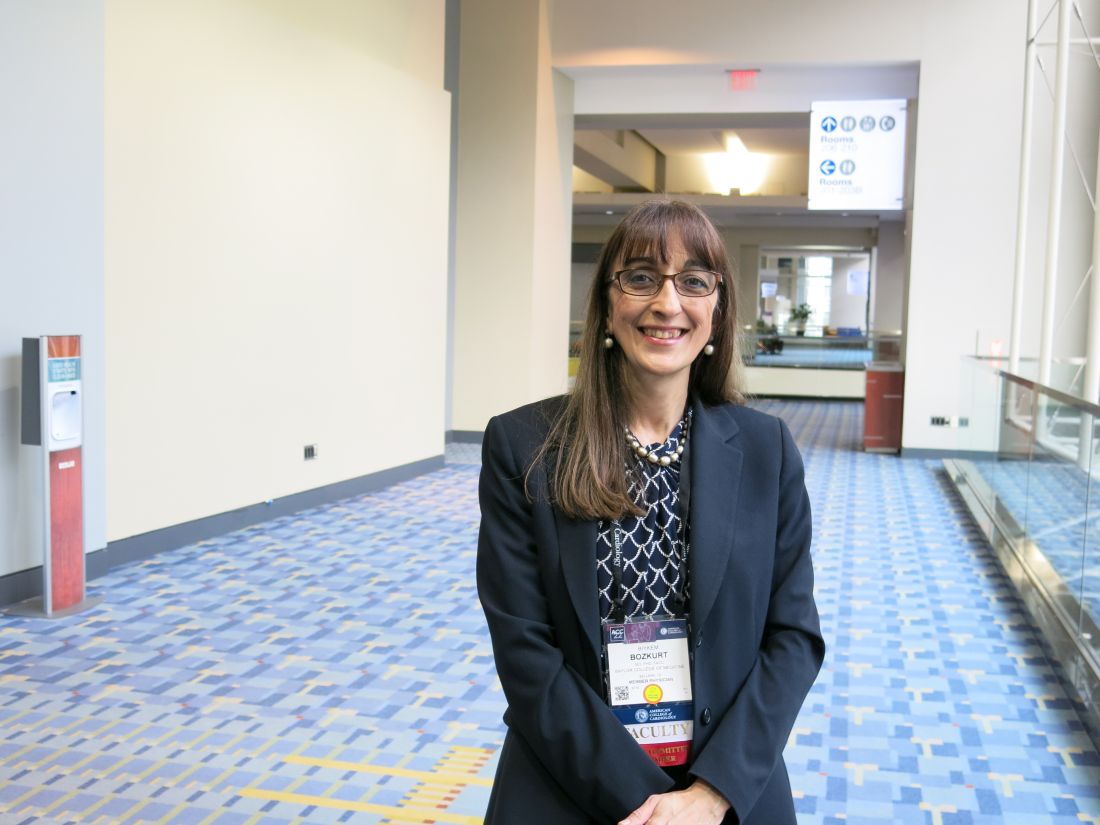
Following these results, “hopefully more patients with heart failure will receive” sacubitril/valsartan, agreed Dr. McMurray, but he added the caveat that the relatively high cost of the agent (which has a U.S. list price of roughly $6,000/year) has been the primary barrier to wider uptake of the drug for patients with heart failure. Treatment with sacubitril/valsartan is recommended in several society guidelines as a core intervention for patients with HFrEF and as a treatment option for patients with heart failure and higher ejection fractions.
“Cost remains the single biggest deterrent for use” of sacubitril/valsartan, agreed Dipti N. Itchhaporia, MD, director of disease management at the Hoag Heart and Vascular Institute in Newport Beach, Calif. “Concerns about cognitive impairment has not been why people have not been using sacubitril/valsartan,” Dr. Itchhaporia commented in an interview.

PERSPECTIVE enrolled patients with heart failure with an ejection fraction greater than 40% and at least 60 years old at any of 137 sites in 20 countries, with about a third of enrolled patients coming from U.S. centers. The study, which ran enrollment during January 2017–May 2019, excluded people with clinically discernible cognitive impairment at the time of entry.
Researchers randomized patients to either a standard regimen of sacubitril/valsartan (295) or valsartan (297) on top of their background treatment, with most patients also receiving a beta-blocker, a diuretic, and a statin. The enrolled patients averaged about 72 years of age, and more than one-third were at least 75 years old.
The study’s primary endpoint was the performance of these patients in seven different tests of cognitive function using a proprietary metric, the CogState Global Cognitive Composite Score, measured at baseline and then every 6 months during follow-up designed to run for 3 years on treatment (the researchers collected data for at least 30 months of follow-up from 71%-73% of enrolled patients). Average changes in these scores over time tracked nearly the same in both treatment arms and met the study’s prespecified criteria for noninferiority of the sacubitril valsartan treatment, Dr. McMurray reported. The results also showed that roughly 60% of patients in both arms had “some degree of cognitive impairment” during follow-up.
A secondary outcome measure used PET imaging to quantify cerebral accumulation of beta amyloid, and again the results met the study’s prespecified threshold for noninferiority for the patients treated with sacubitril/valsartan, said Dr. McMurray.
Another concern raised by some experts was the relatively brief follow-up of 3 years, and the complexity of heart failure patients who could face several other causes of cognitive decline. The findings “help reassure, but 3 years is not long enough, and I’m not sure the study eliminated all the other possible variables,” commented Dr. Itchhaporia.
But Dr. McMurray contended that 3 years represents robust follow-up in patients with heart failure who notoriously have limited life expectancy following their diagnosis. “Three years is a long time for patients with heart failure.”
The findings also raise the prospect of developing sacubitril/valsartan as an antihypertensive treatment, an indication that has been avoided until now because of the uncertain cognitive effects of the agent and the need for prolonged use when the treated disorder is hypertension instead of heart failure.
PERSPECTIVE was funded by Novartis, the company that markets sacubitril/valsartan (Entresto). Dr. McMurray has received consulting and lecture fees from Novartis and he and his institution have received research funding from Novartis. Dr. Bozkurt has been a consultant to numerous companies but has no relationship with Novartis. Dr. Itchhaporia had no disclosures.
BARCELONA – Treatment of patients with chronic heart failure with sacubitril/valsartan (Entresto), a mainstay agent for people with this disorder, produced no hint of incremental adverse cognitive effects during 3 years of treatment in a prospective, controlled, multicenter study with nearly 600 patients, although some experts note that possible adverse cognitive effects of sacubitril were not an issue for many heart failure clinicians, even before the study ran.
The potential for an adverse effect of sacubitril on cognition had arisen as a hypothetical concern because sacubitril inhibits the human enzyme neprilysin. This activity results in beneficial effects for patients with heart failure by increasing levels of several endogenous vasoactive peptides. But neprilysin also degrades amyloid beta peptides and so inhibition of this enzyme could possibly result in accumulation of amyloid peptides in the brain with potential neurotoxic effects, which raised concern among some cardiologists and patients that sacubitril/valsartan could hasten cognitive decline.
Results from the new study, PERSPECTIVE, showed “no evidence that neprilysin inhibition increased the risk of cognitive impairment due to the accumulation of beta amyloid” in patients with heart failure with either mid-range or preserved ejection fraction,” John McMurray, MD, said at the annual congress of the European Society of Cardiology.
Dr. McMurray, professor of medical cardiology at the University of Glasgow, highlighted that the study enrolled only patients with heart failure with a left ventricular ejection fraction of greater than 40% because the study designers considered it “unethical” to withhold treatment with sacubitril/valsartan from patients with an ejection fraction of 40% or less (heart failure with reduced ejection fraction, HFrEF), whereas “no mandate” exists in current treatment guidelines for using sacubitril/valsartan in patients with heart failure and higher ejection fractions. He added that he could see no reason why the results seen in patients with higher ejection fractions would not also apply to those with HFrEF.
Reassuring results, but cost still a drag on uptake
“This was a well-designed trial” with results that are “very reassuring” for a lack of harm from sacubitril/valsartan, commented Biykem Bozkurt, MD, PhD, the study’s designated discussant and professor of medicine at Baylor College of Medicine, Houston. The findings “solidify the lack of risk and are very exciting for the heart failure community because the question has bothered a large number of people, especially older patients” with heart failure.
Following these results, “hopefully more patients with heart failure will receive” sacubitril/valsartan, agreed Dr. McMurray, but he added the caveat that the relatively high cost of the agent (which has a U.S. list price of roughly $6,000/year) has been the primary barrier to wider uptake of the drug for patients with heart failure. Treatment with sacubitril/valsartan is recommended in several society guidelines as a core intervention for patients with HFrEF and as a treatment option for patients with heart failure and higher ejection fractions.
“Cost remains the single biggest deterrent for use” of sacubitril/valsartan, agreed Dipti N. Itchhaporia, MD, director of disease management at the Hoag Heart and Vascular Institute in Newport Beach, Calif. “Concerns about cognitive impairment has not been why people have not been using sacubitril/valsartan,” Dr. Itchhaporia commented in an interview.
PERSPECTIVE enrolled patients with heart failure with an ejection fraction greater than 40% and at least 60 years old at any of 137 sites in 20 countries, with about a third of enrolled patients coming from U.S. centers. The study, which ran enrollment during January 2017–May 2019, excluded people with clinically discernible cognitive impairment at the time of entry.
Researchers randomized patients to either a standard regimen of sacubitril/valsartan (295) or valsartan (297) on top of their background treatment, with most patients also receiving a beta-blocker, a diuretic, and a statin. The enrolled patients averaged about 72 years of age, and more than one-third were at least 75 years old.
The study’s primary endpoint was the performance of these patients in seven different tests of cognitive function using a proprietary metric, the CogState Global Cognitive Composite Score, measured at baseline and then every 6 months during follow-up designed to run for 3 years on treatment (the researchers collected data for at least 30 months of follow-up from 71%-73% of enrolled patients). Average changes in these scores over time tracked nearly the same in both treatment arms and met the study’s prespecified criteria for noninferiority of the sacubitril valsartan treatment, Dr. McMurray reported. The results also showed that roughly 60% of patients in both arms had “some degree of cognitive impairment” during follow-up.
A secondary outcome measure used PET imaging to quantify cerebral accumulation of beta amyloid, and again the results met the study’s prespecified threshold for noninferiority for the patients treated with sacubitril/valsartan, said Dr. McMurray.
Another concern raised by some experts was the relatively brief follow-up of 3 years, and the complexity of heart failure patients who could face several other causes of cognitive decline. The findings “help reassure, but 3 years is not long enough, and I’m not sure the study eliminated all the other possible variables,” commented Dr. Itchhaporia.
But Dr. McMurray contended that 3 years represents robust follow-up in patients with heart failure who notoriously have limited life expectancy following their diagnosis. “Three years is a long time for patients with heart failure.”
The findings also raise the prospect of developing sacubitril/valsartan as an antihypertensive treatment, an indication that has been avoided until now because of the uncertain cognitive effects of the agent and the need for prolonged use when the treated disorder is hypertension instead of heart failure.
PERSPECTIVE was funded by Novartis, the company that markets sacubitril/valsartan (Entresto). Dr. McMurray has received consulting and lecture fees from Novartis and he and his institution have received research funding from Novartis. Dr. Bozkurt has been a consultant to numerous companies but has no relationship with Novartis. Dr. Itchhaporia had no disclosures.
BARCELONA – Treatment of patients with chronic heart failure with sacubitril/valsartan (Entresto), a mainstay agent for people with this disorder, produced no hint of incremental adverse cognitive effects during 3 years of treatment in a prospective, controlled, multicenter study with nearly 600 patients, although some experts note that possible adverse cognitive effects of sacubitril were not an issue for many heart failure clinicians, even before the study ran.
The potential for an adverse effect of sacubitril on cognition had arisen as a hypothetical concern because sacubitril inhibits the human enzyme neprilysin. This activity results in beneficial effects for patients with heart failure by increasing levels of several endogenous vasoactive peptides. But neprilysin also degrades amyloid beta peptides and so inhibition of this enzyme could possibly result in accumulation of amyloid peptides in the brain with potential neurotoxic effects, which raised concern among some cardiologists and patients that sacubitril/valsartan could hasten cognitive decline.
Results from the new study, PERSPECTIVE, showed “no evidence that neprilysin inhibition increased the risk of cognitive impairment due to the accumulation of beta amyloid” in patients with heart failure with either mid-range or preserved ejection fraction,” John McMurray, MD, said at the annual congress of the European Society of Cardiology.
Dr. McMurray, professor of medical cardiology at the University of Glasgow, highlighted that the study enrolled only patients with heart failure with a left ventricular ejection fraction of greater than 40% because the study designers considered it “unethical” to withhold treatment with sacubitril/valsartan from patients with an ejection fraction of 40% or less (heart failure with reduced ejection fraction, HFrEF), whereas “no mandate” exists in current treatment guidelines for using sacubitril/valsartan in patients with heart failure and higher ejection fractions. He added that he could see no reason why the results seen in patients with higher ejection fractions would not also apply to those with HFrEF.
Reassuring results, but cost still a drag on uptake
“This was a well-designed trial” with results that are “very reassuring” for a lack of harm from sacubitril/valsartan, commented Biykem Bozkurt, MD, PhD, the study’s designated discussant and professor of medicine at Baylor College of Medicine, Houston. The findings “solidify the lack of risk and are very exciting for the heart failure community because the question has bothered a large number of people, especially older patients” with heart failure.
Following these results, “hopefully more patients with heart failure will receive” sacubitril/valsartan, agreed Dr. McMurray, but he added the caveat that the relatively high cost of the agent (which has a U.S. list price of roughly $6,000/year) has been the primary barrier to wider uptake of the drug for patients with heart failure. Treatment with sacubitril/valsartan is recommended in several society guidelines as a core intervention for patients with HFrEF and as a treatment option for patients with heart failure and higher ejection fractions.
“Cost remains the single biggest deterrent for use” of sacubitril/valsartan, agreed Dipti N. Itchhaporia, MD, director of disease management at the Hoag Heart and Vascular Institute in Newport Beach, Calif. “Concerns about cognitive impairment has not been why people have not been using sacubitril/valsartan,” Dr. Itchhaporia commented in an interview.
PERSPECTIVE enrolled patients with heart failure with an ejection fraction greater than 40% and at least 60 years old at any of 137 sites in 20 countries, with about a third of enrolled patients coming from U.S. centers. The study, which ran enrollment during January 2017–May 2019, excluded people with clinically discernible cognitive impairment at the time of entry.
Researchers randomized patients to either a standard regimen of sacubitril/valsartan (295) or valsartan (297) on top of their background treatment, with most patients also receiving a beta-blocker, a diuretic, and a statin. The enrolled patients averaged about 72 years of age, and more than one-third were at least 75 years old.
The study’s primary endpoint was the performance of these patients in seven different tests of cognitive function using a proprietary metric, the CogState Global Cognitive Composite Score, measured at baseline and then every 6 months during follow-up designed to run for 3 years on treatment (the researchers collected data for at least 30 months of follow-up from 71%-73% of enrolled patients). Average changes in these scores over time tracked nearly the same in both treatment arms and met the study’s prespecified criteria for noninferiority of the sacubitril valsartan treatment, Dr. McMurray reported. The results also showed that roughly 60% of patients in both arms had “some degree of cognitive impairment” during follow-up.
A secondary outcome measure used PET imaging to quantify cerebral accumulation of beta amyloid, and again the results met the study’s prespecified threshold for noninferiority for the patients treated with sacubitril/valsartan, said Dr. McMurray.
Another concern raised by some experts was the relatively brief follow-up of 3 years, and the complexity of heart failure patients who could face several other causes of cognitive decline. The findings “help reassure, but 3 years is not long enough, and I’m not sure the study eliminated all the other possible variables,” commented Dr. Itchhaporia.
But Dr. McMurray contended that 3 years represents robust follow-up in patients with heart failure who notoriously have limited life expectancy following their diagnosis. “Three years is a long time for patients with heart failure.”
The findings also raise the prospect of developing sacubitril/valsartan as an antihypertensive treatment, an indication that has been avoided until now because of the uncertain cognitive effects of the agent and the need for prolonged use when the treated disorder is hypertension instead of heart failure.
PERSPECTIVE was funded by Novartis, the company that markets sacubitril/valsartan (Entresto). Dr. McMurray has received consulting and lecture fees from Novartis and he and his institution have received research funding from Novartis. Dr. Bozkurt has been a consultant to numerous companies but has no relationship with Novartis. Dr. Itchhaporia had no disclosures.
AT ESC CONGRESS 2022